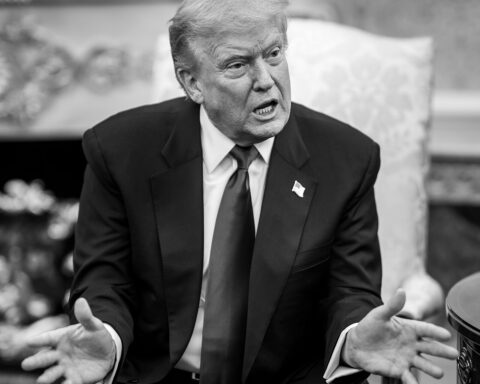

The ceasefire is real. The agreement behind it may not be. At 6:32 p.m. Eastern on April 7, less than ninety minutes before his own deadline to begin destroying Iran’s power grid and bridges, President Trump posted on Truth Social that the United States would suspend all offensive operations against Iran for two weeks — conditional on the “complete, immediate and safe opening” of the Strait of Hormuz. Hours later, Iran’s Supreme National Security Council confirmed it had accepted the truce, claimed that “nearly all war objectives have been achieved,” and in the same statement warned that its forces remain ready to respond “with full force” to “the slightest error.” Pakistan’s Prime Minister Shehbaz Sharif, who brokered the final hours alongside army chief General Asim Munir, invited both delegations to Islamabad for Friday, April 10, in what he called negotiations for “a conclusive agreement to settle all disputes.”
Forty days of war — 2,076 dead in Iran by Tehran’s count, several times that by independent estimates, at least 1,497 dead in Lebanon, 14 US service members killed, over 10,000 targets struck, 92% of the Iranian navy destroyed, the Strait of Hormuz closed for the first time in history, oil above $110, and a global supply crisis the IEA called the worst since 1973 — ended not with a signature in a marble hall but with competing social media posts from leaders who cannot agree on what they just agreed to.
That disagreement is not a detail. It is the architecture of the entire arrangement. The Islamabad Accords — already named, already being treated as a diplomatic milestone — are held together by five threads, and each one is fraying.
Thread One: Nobody Agreed to the Same Thing
Trump says Iran agreed to the complete and immediate reopening of Hormuz. Iran says passage will be “coordinated with Iran’s Armed Forces” under a framework that grants Tehran “a unique economic and geopolitical position” — language that describes not a reopened strait but a permanently controlled one. These are not two readings of the same text. They are two different outcomes wearing the same ceasefire label.
The 10-point proposal Iran submitted through Pakistani mediators contains demands that no US administration has accepted in nearly half a century of hostility: the withdrawal of all American combat forces from every base in the Middle East, full sanctions relief including the lifting of all UN Security Council resolutions targeting Iran, acceptance of Iran’s right to enrich uranium, compensation for war damages, and the termination of hostilities against “all components of the resistance axis” — which means Hezbollah, the Iraqi militias, and the Houthis. Trump called this proposal “a workable basis on which to negotiate.” His press secretary clarified that the president’s “words speak for themselves.” Neither she nor any administration official has publicly addressed any of the 10 points by name.
Iran’s SNSC statement said the ceasefire was the product of Washington accepting “the general framework” of the 10-point plan. The White House said Iran agreed to reopen Hormuz. Both cannot be true in the way each side requires, and the Islamabad talks on Friday will be the first moment either delegation is forced to confront the other’s version in the same room.
The Middle East briefing 3,000+ readers start their day with.
One email. Every weekday morning. Free.
Alex Vatanka of the Middle East Institute told The National that the two sides are “talking in a way that you at least have the ability to agree on a basic framework” — a carefully optimistic reading. Samuel Pinfold, a regional analyst, was less diplomatic, telling Al Jazeera that the agreement was “very similar” to the Gaza ceasefire structure: “All sides seem to have basically agreed to disagree and have kicked a lot of their disagreements into the long grass. No one is really clear who has agreed to what for the time being.”
Thread Two: Hormuz Is Open in Name Only
Two ships crossed the Strait of Hormuz on the morning of April 8 — the Liberia-flagged Daytona Beach and the Greek-owned NJ Earth, both confirmed by MarineTraffic. That is movement, and it matters symbolically. It does not matter operationally.
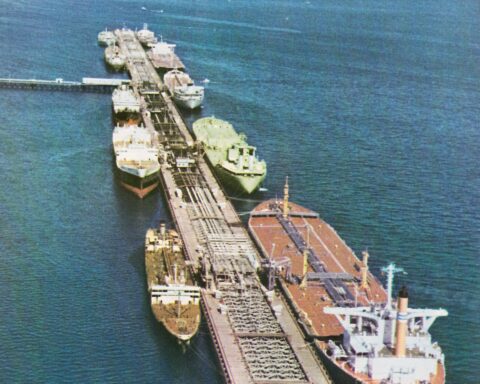
Behind those two ships sit approximately one thousand more. MarineTraffic data shows 426 tankers, 34 LPG carriers, and 19 LNG vessels still stranded in the Persian Gulf. Under Iranian military coordination, the expected throughput is 10-15 vessels per day — a rate that would clear 150-210 ships in two weeks and leave the vast majority still waiting when the ceasefire expires. Before the war, 110 ships transited daily without asking anyone’s permission.
Iran’s semi-official Tasnim News Agency reported on April 8 that Iran and Oman plan to charge transit fees for vessels passing through the Strait during the ceasefire, with revenue earmarked for reconstruction. This is the Hormuz toll system that Iran began building in late March, now formalised under the cover of a peace process. The Strait is not reopening. It is being rebranded as a managed corridor under Iranian military authority — precisely the “unique economic and geopolitical position” the 10-point plan describes.
For oil markets, the distinction between a fully open strait and a controlled corridor operating at 10% of pre-war capacity is the difference between a crisis ending and a crisis institutionalising. Brent eased on Wednesday but remains above $110. The market is pricing in the possibility that this is not a resolution but a new normal.
Thread Three: Lebanon
Pakistan says the ceasefire covers “everywhere including Lebanon and elsewhere.” Netanyahu’s office says it does not. Israel’s military confirmed on April 8 that it will continue intensified ground operations against Hezbollah in southern Lebanon regardless of the Iran truce. Hezbollah, for its part, said it had halted attacks on Israel and on Israeli soldiers inside Lebanon.
Iran’s 10-point proposal explicitly demands an end to hostilities against “all components of the resistance axis,” a phrase that includes Hezbollah by definition. If Israel continues its Lebanon campaign — and there is no indication it intends to stop, with Defence Minister Katz having barred 600,000 displaced residents from returning to the south — then Iran has grounds to declare the ceasefire breached from Day One. The question is whether Tehran wants to use that ground or whether it prefers the breathing room the truce provides.
The answer likely depends on which faction within the Iranian government is making the decision — which brings us to the fourth thread.
Thread Four: Who Is Actually in Charge in Tehran
The SNSC statement confirming the ceasefire said the terms had been “agreed upon by the country’s supreme leader, Mojtaba Khamenei.” This is the first attribution of a specific policy decision to Mojtaba since his appointment on March 9. It is also, if US and Israeli intelligence assessments shared with Gulf allies are accurate, physically implausible. The Times of London reported on April 7 that Mojtaba remains unable “to be involved in any decision-making by the regime.” He has not appeared on video or audio in 29 days. Every statement attributed to him has been transmitted in writing, read aloud by a television presenter over a still photograph.
Vice President Vance, speaking in Budapest on April 8, described the ceasefire as “a fragile truce” and said the Iranian response had varied depending on which faction was speaking. The foreign minister had responded favourably, Vance said, but others had been “lying” about the military situation and the contours of the deal. This is an extraordinary admission from the US vice president: that Washington does not believe the Iranian government is speaking with one voice, and that some elements of the regime are actively misrepresenting the agreement.
The IRGC triumvirate that has exercised sole command authority since late March — Commander Vahidi, SNSC Secretary Zolghadr, and military adviser Reza’i — was assessed by every major security institute as opposed to a negotiated end to the war. If they authorised this ceasefire, it represents either a genuine shift in calculation or a tactical pause to rearm and regroup. The SNSC’s own language — “our hands remain upon the trigger” — suggests the latter interpretation is the one Tehran wants its domestic audience to hear. Whether it is the one Washington should believe is the question that will define the next fourteen days.
Thread Five: The Clock
Two weeks is not a deadline for peace. It is a deadline for both sides to decide whether they want peace more than they want the version of victory they have been selling their own publics for 40 days.
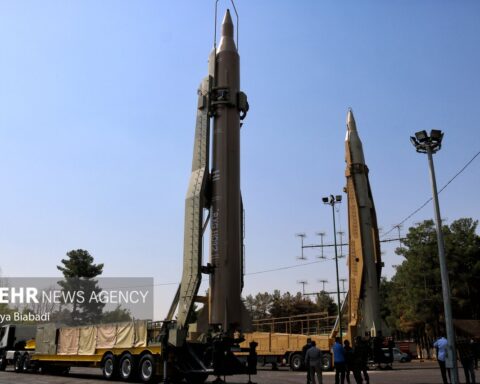
Trump has told Americans that every US military objective has been “met and exceeded” — that Iran’s missile capacity is destroyed, its navy eliminated, its nuclear programme set back years. The SNSC has told Iranians that “nearly all war objectives have been achieved” — that Iran held the Strait, downed American aircraft, forced the United States to negotiate on Iranian terms, and extracted a ceasefire by refusing to blink. Both narratives require the other side to have lost. Neither narrative survives a deal that treats both sides as equals at a negotiating table in Islamabad.
The 10-point plan contains items — US troop withdrawal, sanctions relief, enrichment rights, war reparations — that Trump cannot accept without dismantling his own victory narrative. The US position contains items — complete Hormuz reopening, nuclear constraints, an end to proxy operations — that Vahidi and the IRGC cannot accept without dismantling theirs. The two-week window is not a space for compromise. It is a space for both sides to discover whether the cost of resuming the war is higher than the cost of admitting their narrative was incomplete.
The delegation lists will tell us which way this goes. If Iran sends Araghchi to Islamabad with a negotiating mandate, there is diplomatic intent. If the IRGC sends a shadow delegation to supervise the foreign ministry — the pattern Vahidi has imposed on every institutional decision since March — then the talks are a performance and the ceasefire is a ceasefire in the way that the 2024 Gaza ceasefire was a ceasefire: a pause in killing that changes none of the conditions that produced the killing in the first place.
What the Gulf Is Watching
Riyadh, Abu Dhabi, Doha, and Kuwait City are not in these negotiations and are not mentioned in the 10-point plan except as implied beneficiaries of a Hormuz reopening. They are, however, the parties who absorbed 40 days of Iranian drone and missile strikes on their sovereign territory, whose refineries and airports and desalination plants were hit, whose citizens were killed by intercept debris, and whose economic losses the Arab Energy Organisation estimated at $120 billion by March 31.
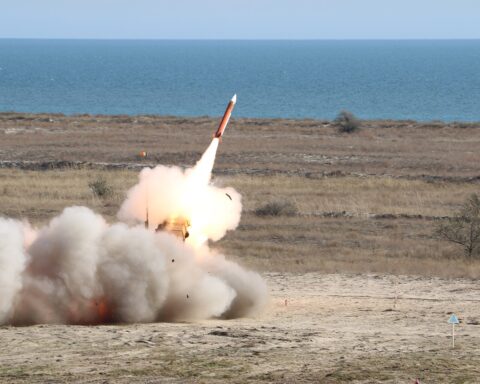
Saudi Arabia’s position is particularly exposed. The Kingdom was named co-guarantor of an earlier ceasefire framework it could not neutrally enforce, spent five weeks intercepting Iranian drones at a rate that depleted its Patriot missile stockpile, diverted crude oil through the East-West Pipeline to Yanbu at the cost of Red Sea vulnerability, and watched Trump simultaneously bomb Iran on its behalf and threaten to destroy Iranian civilian infrastructure in ways that made Saudi Arabia’s diplomatic position in the Muslim world untenable. If the Islamabad Accords produce a deal that grants Iran permanent control over Hormuz transit — the “unique economic and geopolitical position” the 10-point plan envisions — then Saudi Arabia’s entire security doctrine, which has been built since 1945 on the assumption that the United States guarantees freedom of navigation through the Gulf, collapses. Not eventually. Immediately.
The UAE’s position is adjacent but distinct. Anwar Gargash, the presidential adviser, said on April 6 that any settlement must guarantee Hormuz access and warned that a deal failing to address Iran’s nuclear programme and missile capability would produce “a more dangerous, more volatile Middle East.” The Emirates want a comprehensive deal. What they may get instead is a bilateral US-Iran arrangement negotiated in Islamabad without Gulf input, under Pakistani mediation, with Gulf security interests traded as bargaining chips between two parties that have spent 40 days destroying each other’s military infrastructure while Gulf states absorbed the collateral.
The Narrow Thread
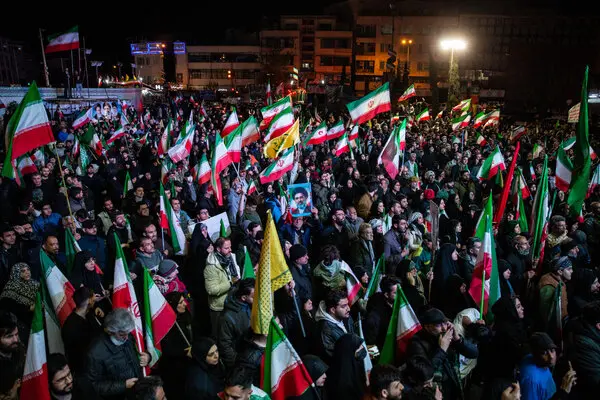
The Islamabad Accords exist because both sides needed them to — not because both sides want what the other thinks they agreed to. Trump needed to avoid following through on a threat to destroy a civilisation. Vahidi needed to avoid testing whether Iran’s remaining military capacity could survive another round of infrastructure strikes. Sharif needed a diplomatic achievement. The guns are quiet for the first time in 40 days, and that is worth something — worth a great deal, in fact, to the thousands of Iranians who gathered in Tehran’s streets on the morning of April 8 waving flags, and to the crew of the Daytona Beach crossing the Strait without a missile lock for the first time since February.
But the thread is narrow. The two sides have not agreed on Hormuz, on Lebanon, on enrichment, on sanctions, on troop withdrawal, on reparations, or on who within the Iranian government has the authority to make any of these agreements stick. They have agreed to stop shooting for fourteen days and to send people to a hotel in Islamabad to find out whether the gap between their positions is a negotiation or an abyss. The distance between those two outcomes is the distance between a durable peace and a war that resumes on April 22 with more dead, more infrastructure destroyed, and less willingness on either side to pretend the next ceasefire means anything at all.
The thread holds tonight. Whether it holds until Friday — and whether it survives whatever happens in that room in Islamabad — depends on answers that neither Trump nor the IRGC has given, and that neither may be willing to give until the cost of silence exceeds the cost of truth.