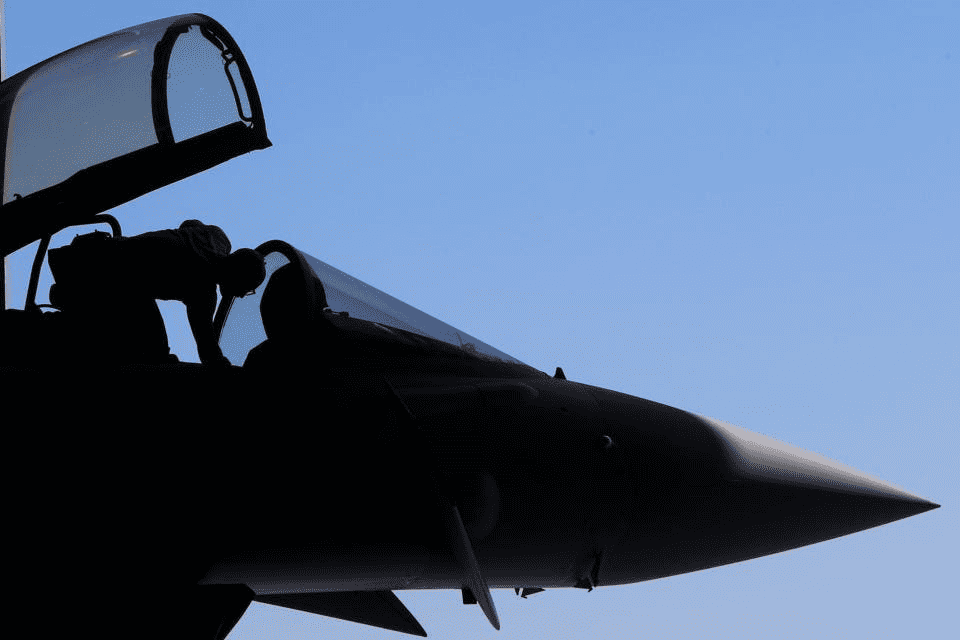

Turkey has recently been accorded a nod from the US to acquire 40 fresh-out-of-the-oven F-16 Block 70 Viper fighter jets. However, the nation also harbours expectations of a positive response for an additional request, on similar lines – the procurement of an equal quantity of Eurofighter Typhoons.
“Acquiring Eurofighters will not only serve to diversify Turkey’s fighter fleet but will also boost their military cooperation with Europe,” remarked Suleyman Ozeren, an esteemed fellow at the Orion Policy Institute. Despite the hopeful prospects, there lies a roadblock – Germany’s anticipated objection to the deal.
Intents of securing 40 Eurofighters have surfaced, as Turkey was found in dialogue with the United Kingdom and Spain in late 2023. While both the governments of London and Madrid express willingness to finalize the deal, Germany’s sanction stands as a requisite, given its integral role in the consortium that developed the Eurofighter. Considering Germany’s stiff stance towards several of Turkey’s policies, it’s uncertain whether this sanction will be granted.
Provided this approval from Berlin materializes, Turkey’s purchase will signify their first induction of sophisticated, non-US fighter jets. Dr. Ali Bakir, a known academic authority on Turkey, identifies the “strategic motives” asserting Turkey’s interest for the Eurofighter, that predominantly revolve around broadening defence assets, establishing technological independence and testing Europe’s readiness for defence collaborations.
Ozeren sheds light on how the evolving conflict in Ukraine could contribute to a more favourable ambiance for Turkey, with the European countries feeling the “pressure”. He points to Germany’s recent approval of Turkey as a European Sky Shield Initiative member, a potential doorway to unlocking profound military cooperation between Germany and Turkey.
Simultaneously, an exodus of refugees potentially stirring from Gaza might soften the German stance, according to Ozeren. Dr. Bakir, however, insists that forecasting Germany’s eventual decision might prove to be tricky, owing to intertwined regional and international dynamics. Despite concerted lobbying feats by Turkey and the UK, Bakir insists on Western states harbouring age-old reservations in contributing towards Turkey’s military assets.
As Ozeren recollects, the Saudi Eurofighter’s initial disapproval by Berlin was centred around concerns related to human rights and a contested air campaign over Yemen. Under the changing regional conditions, Saudi Arabia was viewed positively as a hand-in-glove relation against Houthis in Yemen, leading to Germany’s approval of the sale.
Dr. Bakir suggests a potential exploration of alternative routes by Turkey, if convincing Germany remains a tall order. Nevertheless, Ankara’s underlying strategy isn’t limited to obtaining a fighter jet substitute. The key objectives are to broaden the nation’s options beyond a singular supplier and augment independent technological capabilities. This, as per Bakir, paves the way towards greater autonomy in defence and tech development for Turkey, going far beyond the immediate procurement of fighter jets.