
Dammam is the food capital of Saudi Arabia’s Eastern Province and a city where the Arabian Gulf dictates the menu. Fishermen land their catch before dawn at the old port, chefs pull shrimp from the kitchens minutes later, and by lunch the Corniche is lined with families eating crab legs, grilled hammour and generous piles of saffron rice. Beyond the seafood, Dammam has a deep Saudi table — kabsa cooked the Dammami way, Hadhrami mandi slow-roasted in underground ovens, Levantine grills brought in by decades of Aramco-era migration, and a new specialty-coffee scene that has grown fast since 2022. This guide picks the restaurants locals actually go back to, organised by cuisine and neighbourhood, with specific dishes worth ordering at each one. It is built for visitors planning a weekend on the Eastern Province coast as part of a wider Saudi Arabia itinerary, and for long-stay residents looking to eat beyond the hotel buffet.
Best Time to Visit: November to March (outdoor Corniche dining is comfortable)
Getting There: King Fahd International Airport (DMM) — 15 minutes to city centre by taxi
Visa Required: Yes — tourist e-visa
Budget: $6–15 for casual meals; $25–60 mid-range; $80+ at Al Sanbok or hotel fine dining
Must-Try Dishes: Dammami kabsa, grilled hammour, chicken mandi, shrimp biryani, Hasawi rice
Avoid: Booking fish restaurants for 1pm Friday — families arrive in convoys and waits can hit 90 minutes
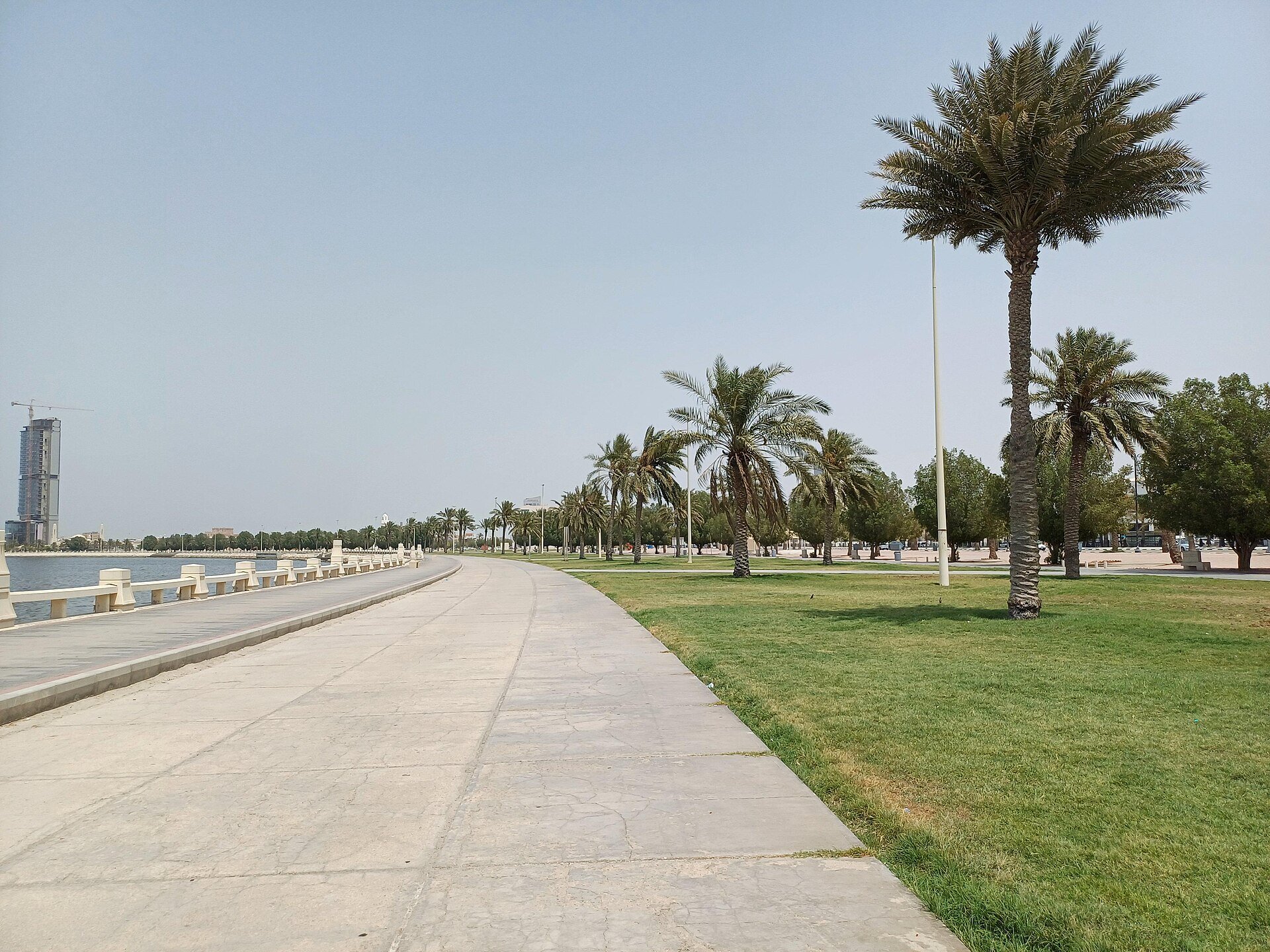
How Dammam Eats: A Quick Orientation
Dammam sits on the Arabian Gulf coast with Al Khobar to its south and Dhahran — the Saudi Aramco company town — in between. The three cities together form a single metropolitan area of around 1.5 million people, and for food purposes they operate as one dining region. Locals routinely drive 20 minutes between them for a specific restaurant. If you are staying in Dammam itself, expect to eat mostly on the Corniche, in Al Shati Al Gharbi, along King Fahd Road, or in the Mall of Dhahran food precinct.
The food DNA of the Eastern Province is unlike Riyadh or Jeddah. Proximity to the Gulf means seafood is cheap, plentiful and a legitimate daily dish rather than a treat. A large Shia population in towns like Qatif and Al-Ahsa has seeded the region with Hasawi rice, Persian-influenced stews and date syrups you will not easily find in the capital. Decades of Aramco recruitment from Yemen, Sudan, Kerala and the Levant have added layers — and unlike in some Gulf cities, those cuisines here are genuinely integrated rather than siloed in expat compounds.
One practical note before you go: restaurant timings shift for prayer. Expect a 15–25 minute pause around each of the five daily prayers, especially Maghrib (sunset). Kitchens often stay open but the cashier and doors close. Plan around it rather than fight it.
Seafood: Where the Gulf Lands on the Plate
Dammam’s seafood restaurants are the single strongest reason to eat in the city. Fish is still bought by the kilo and grilled whole, shrimp comes in butter-heavy Gulf styles that predate any international chain, and the mezze that precedes the main course is often excellent in its own right.
Al Sanbok (Al Khobar Corniche South)
A 25-minute drive south of Dammam to Al Khobar, Al Sanbok is widely regarded as the finest seafood restaurant in Saudi Arabia. It sits directly on the southern Corniche, a purpose-built building shaped like a traditional dhow (sanbok), and serves a menu developed under a former Michelin two-star consulting chef. It won the Saudi Excellence in Tourism Award for Best Fine Dining Restaurant in 2012 and has held a quiet benchmark position since. Order the grilled hammour with Arabic salt crust, the shrimp machbous, or the lobster thermidor if you are in the mood for the house’s European register. Hours are 12:00–15:00 and 18:00–23:00 Sunday–Thursday; 13:00–23:30 Friday and Saturday. Reservations are essential on weekend evenings — call +966 920 008 000.
Bait Al Robyan (Al Hamra, Khaleej Road)
Bait Al Robyan — literally “House of Shrimp” — is Dammam’s serious-but-casual seafood institution. It has a strong local following that rates it ahead of flashier places on King Fahd Road, and the kitchen still sources daily from local fishermen at the port. The signature crunchy shrimp meal with fries and rice sits at around SAR 59, which makes it one of the best seafood values in the city. Tuesday through Thursday evening they run a seafood, sushi and juice buffet for around SAR 125. Crab claws, calamari, shellfish pasta and a genuinely well-made shrimp toast round out the menu. Open 12:30–01:00 daily. Good for groups, good for families with kids — the dining room is noisy in a friendly way rather than a frustrating one.
Darin Seafood (near the Dammam Corniche)
One of the oldest seafood restaurants in Dammam, Darin works on the choose-your-fish model that still defines Gulf dining. Walk past the ice display, pick your hammour, sheri, shaari or subaity, and tell the kitchen exactly how you want it cooked: grilled on coals, fried in a light flour jacket, baked under salt, or stuffed with rice and tamarind Hasawi-style. Prices are quoted by the kilo and are noticeably fairer than hotel-linked venues. The dining room is plain but clean; the fish is the point. Family seating sections are curtained off. Worth pairing with a post-dinner walk along the Dammam Corniche.
Shrimp Shack (King Fahd Road, Al Faisaliyah)
Shrimp Shack has become Dammam’s most-Instagrammed seafood address over the past three years and the ranking is earned — the kitchen leans heavily on shrimp but the garlic butter mussels and the crispy calamari hold their own. Mains sit between SAR 50 and SAR 80, and the dining room is open 12:00 to 03:00, which makes it the best post-midnight seafood option in the city. It is not a hidden gem anymore, but it remains the right pick if you want a lively, casual seafood night rather than a formal sit-down.
Al-Mukhaza and Darwazat Al-Sayyad Al-Bahri (old-school picks)
Two other seafood names worth knowing. Al-Mukhaza is one of the oldest seafood-only restaurants in the city and has a loyal following among older Dammamis who remember it from before the 2000s wave of chains. Darwazat Al-Sayyad Al-Bahri — “The Sea Hunter’s Gate” — leans into antique-décor atmospherics and is a good pick if you want the theatre of Gulf dining as well as the food. Both are reliable rather than revelatory.
Traditional Saudi Cuisine: Kabsa, Mandi and the Dammami Table
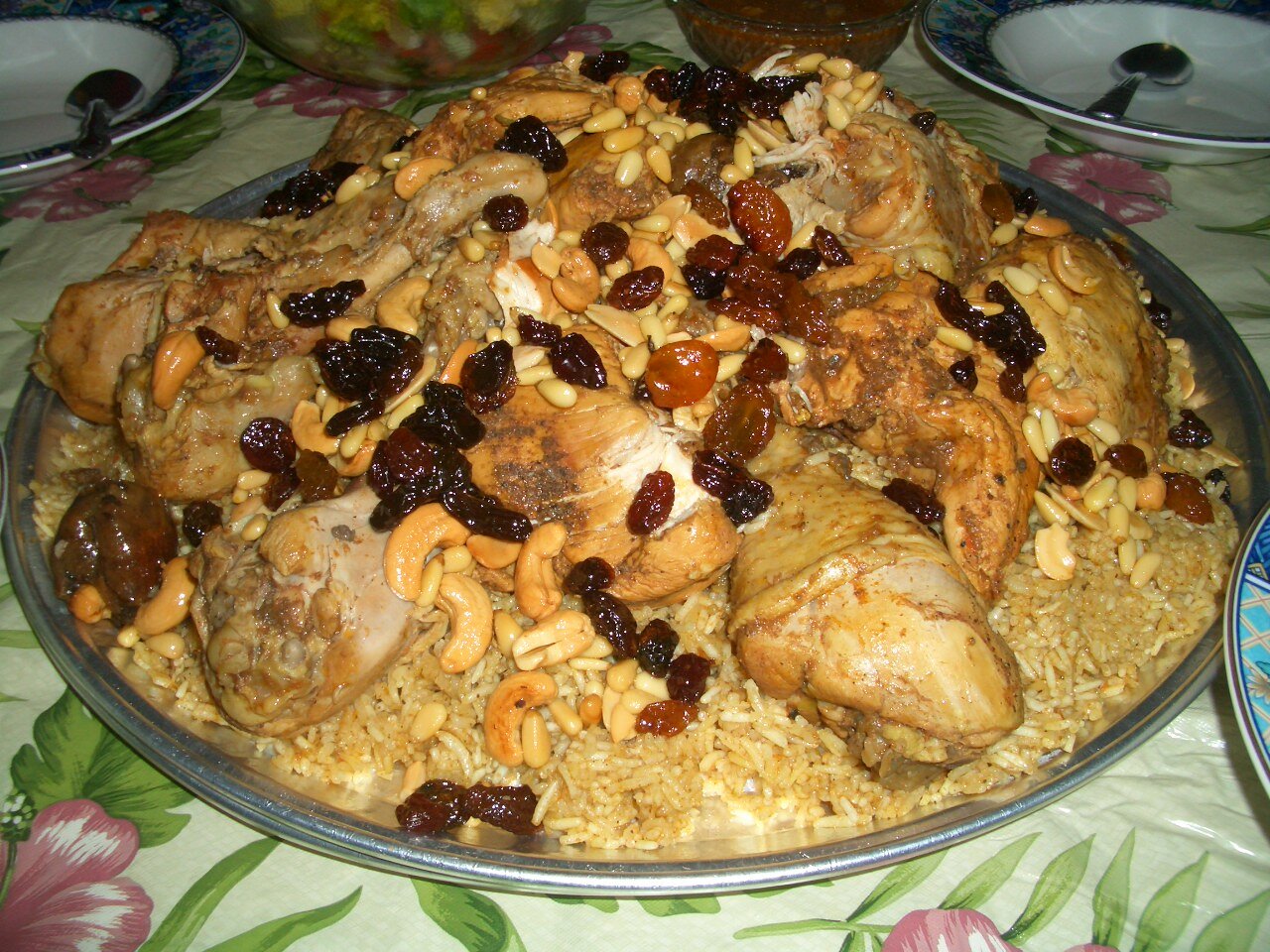
Saudi Arabia has no single cuisine — the Hejaz cooks differently from the Najd, which cooks differently from the Eastern Province. Dammam’s version of the national table has its own accent: a distinct kabsa style, a heavy reliance on the whole-animal mandi and madghout techniques adopted from Yemeni and Hadhrami cooks, and the Hasawi rice traditions that come up from Al-Ahsa oasis to the south. These are the places that do it best.
Heritage Village Restaurant (Corniche Walk)
Heritage Village is Dammam’s flagship traditional-Saudi dining experience and one of the city’s landmarks. It occupies a reconstructed traditional-house complex on the Corniche and operates as restaurant, museum, and cultural site in one. The menu runs through the full Saudi repertoire: Lahm Mandi, Dammamiyah rice, Asida broth with baladi meat (around SAR 54, roughly $14), Harira soup, lamb kebabs, and kunafa for dessert. You can eat at tables or on floor cushions in traditional majlis-style rooms. Arabic coffee and dates arrive at the table on arrival, no charge. The in-house museum of old weapons, coins, antique cars and manuscripts is free to wander through between courses. Hours are 12:00–24:00 daily. Reservations for Friday lunch are strongly advised — this is where Dammami families go for multigenerational meals.
Al-Romansiah (multiple branches across the Eastern Province)
Al-Romansiah is the Saudi family-restaurant chain that most reliably delivers traditional cuisine at sensible prices. Founded in 1997, it runs branches across Dammam, Al Khobar, Jeddah, Riyadh and Medina, and its menu is a master-class in Saudi regional specialities. Order the charcoal-grilled shawaiah, the madfoon (meat cooked in underground clay ovens), madhbi grilled chicken, zurbian lamb-and-rice from the Hadhramaut tradition, maqluba, and any of the chicken or lamb kabsa variations. Most main courses feed two comfortably for under SAR 70. Dining rooms are large, clean and family-partitioned. Good for visitors who want a reliable cross-section of the national table in one sitting.
Al Kabsa Al Damamiah (Ar Rakah Al Janubiyah)
The name translates to “The Dammami Kabsa” and it is a neighbourhood institution in Ar Rakah Al Janubiyah, technically across the border into Al Khobar but within the Dammam dining region. The specialty is Dammami kabsa — fresh meat, saffron-laden rice seasoned in the house’s particular way, served from a single large tray. It is not a tourist restaurant and the décor is basic, but this is where to eat a kabsa that tastes the way Dammamis actually cook it at home.
Restaurant Khobar Traditional Village (Aqrabiyah, Al Khobar)
A 20-minute drive south. Restaurant Khobar Traditional Village serves the city’s best-regarded Dammami Kabsah alongside a menu of regional Saudi dishes, inside a dining complex with plenty of private rooms for family parties. Reviews consistently praise the atmosphere and the authenticity of the food.
Yemeni Mandi and Madfoon Specialists
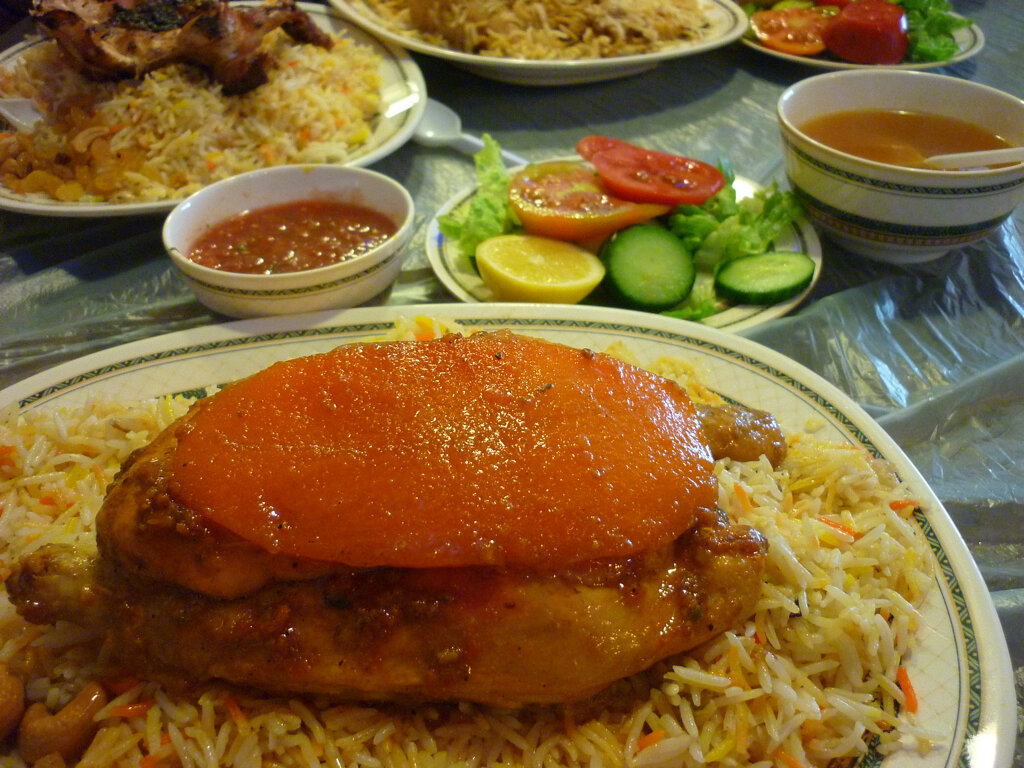
Mandi is the Hadhrami-Yemeni technique of slow-roasting meat over aromatic wood in a sealed underground oven, served on a bed of long-grain rice flavoured by the drippings. It has been a Dammam staple for generations thanks to the Yemeni migration that built much of the old city. Sadd Ma’arib is the name most often volunteered by Dammamis when you ask where to eat Yemeni food — the menu runs beyond mandi to haneeth (steam-cooked lamb), saltah (bubbling chilli-meat broth), fahsa and Yemeni flatbreads. Expect to sit on the floor at a shared communal mat and tear the meat by hand; it is part of the experience.
Lebanese and Levantine: The Middle Category
The Lebanese grill is the workhorse of Gulf dining — the restaurant category you pick when you want a shared mezze spread and aren’t in the mood for seafood or rice-mountain cuisine. Dammam has two reliable options.
Mijana
Mijana is the most consistently recommended Lebanese restaurant in the Dammam/Khobar axis. The menu is the expected Levantine canon — hummus, muhammara, fattoush, tabbouleh, a spread of hot mezze, and a charcoal-grilled mixed grill with lamb kofta, shish tawook, kebab hindi and sometimes a whole baby chicken done musakhan-style. The warm bread arrives straight from the oven to the table and is the single best indicator of Lebanese kitchen quality. Mijana passes that test. Service is attentive, and the dining room works for both business lunches and family dinners.
Beach Park Restaurant and Lounge (Corniche)
Beach Park is the other strong Lebanese-leaning option — a coastal venue with outdoor seating directly on the waterfront, a large international-leaning mezze menu, and live shisha service on the terrace. It is the pick for a long, unhurried dinner when the weather cooperates, roughly October through April.
Indian, Pakistani and Kerala: The Everyday Anchor
Roughly a third of the resident population of the Eastern Province comes from the Indian subcontinent, and the region’s Indian and Pakistani restaurants reflect that depth. This isn’t Anglo-curry-house cooking — these are regional kitchens serving Kerala, Punjab, Mughlai and Sindhi food to an audience that knows the difference.
Paragon Kerala (5th Street, Dammam)
Paragon began as a Calicut institution in the 1930s and has expanded carefully across the Gulf. The Dammam branch is one of the best Kerala restaurants outside Kerala itself. Order the Malabar chicken biryani, the meen pollichathu (fish in banana leaf), appam with stew, and the Nadan beef fry if you want to see the kitchen at full stretch. Pricing is moderate — expect SAR 60–90 per person.
Mughal Restaurant
The sharper pick if Mughlai cuisine is what you want. Signature dishes are Mughlai biryani, Peshawari karahi (lamb or chicken in a cast-iron pan finished tableside), and a dum biryani that sets a high local bar. The tandoor is in constant rotation through lamb chops, seekh kebabs and naans. Good for a celebratory dinner or a working lunch.
Anarkali and Masala House
Two further picks worth knowing. Anarkali runs partitioned family rooms and is the more atmospheric of the two, with highlights including tikka masala, butter chicken and a saffron biryani. Masala House leans Pakistani and is the spot for aromatic biryanis, charcoal kebabs, and haleem on Fridays.
Asian: Beyond the Usual
Dammam’s Asian scene is smaller than Riyadh’s or Jeddah’s but has sharpened considerably since 2023 as more specialised kitchens opened.
Bamboo Kitchen
A Thai-Chinese-Korean hybrid that works better than the genre suggests. The Thai side of the menu is strongest — green curry, tom kha gai, and a competent pad thai — but the bibimbap and the Chinese clay-pot rice are both recommendable. Pricing is mid-range and the dining room is one of the better-designed in the city.
Oceana (Corniche)
A Chinese-forward restaurant overlooking the Corniche. The Cantonese seafood menu is the draw — steamed whole fish with ginger and scallion, salt-and-pepper shrimp, and a serious lobster noodle. Family seating is well-designed and the outdoor terrace is among the better waterfront dining setups in Dammam.
Steakhouses and International: Mall-Anchored Fine Dining
Dammam’s international fine dining is mostly concentrated around the Mall of Dhahran and the Le Méridien hotel complex.
Butcher Shop & Grill (Mall of Dhahran)
A well-executed South African-origin steakhouse chain with a strong open-flame programme. Beef is sourced globally; the lamb cutlets are excellent and the house burgers punch above their weight. Wait times on weekend evenings can hit 45 minutes — worth making a reservation.
Steak House
The straightforward local competitor — no frills, good cuts, fair pricing. If Butcher Shop is booked out, this is the reliable fallback.
Maharaja by Vineet (Le Méridien Al Khobar)
A short drive from Dammam, but included because it is the only Michelin-starred chef operating in the Eastern Province. Vineet Bhatia’s Dubai-based restaurant concept, transplanted to Al Khobar, turns Indian fine dining into a multi-course tasting with modern plating. Budget SAR 300–450 per person. Worth it for a celebration; overkill for a weekday dinner.
Street Food, Shawarma and Breakfast
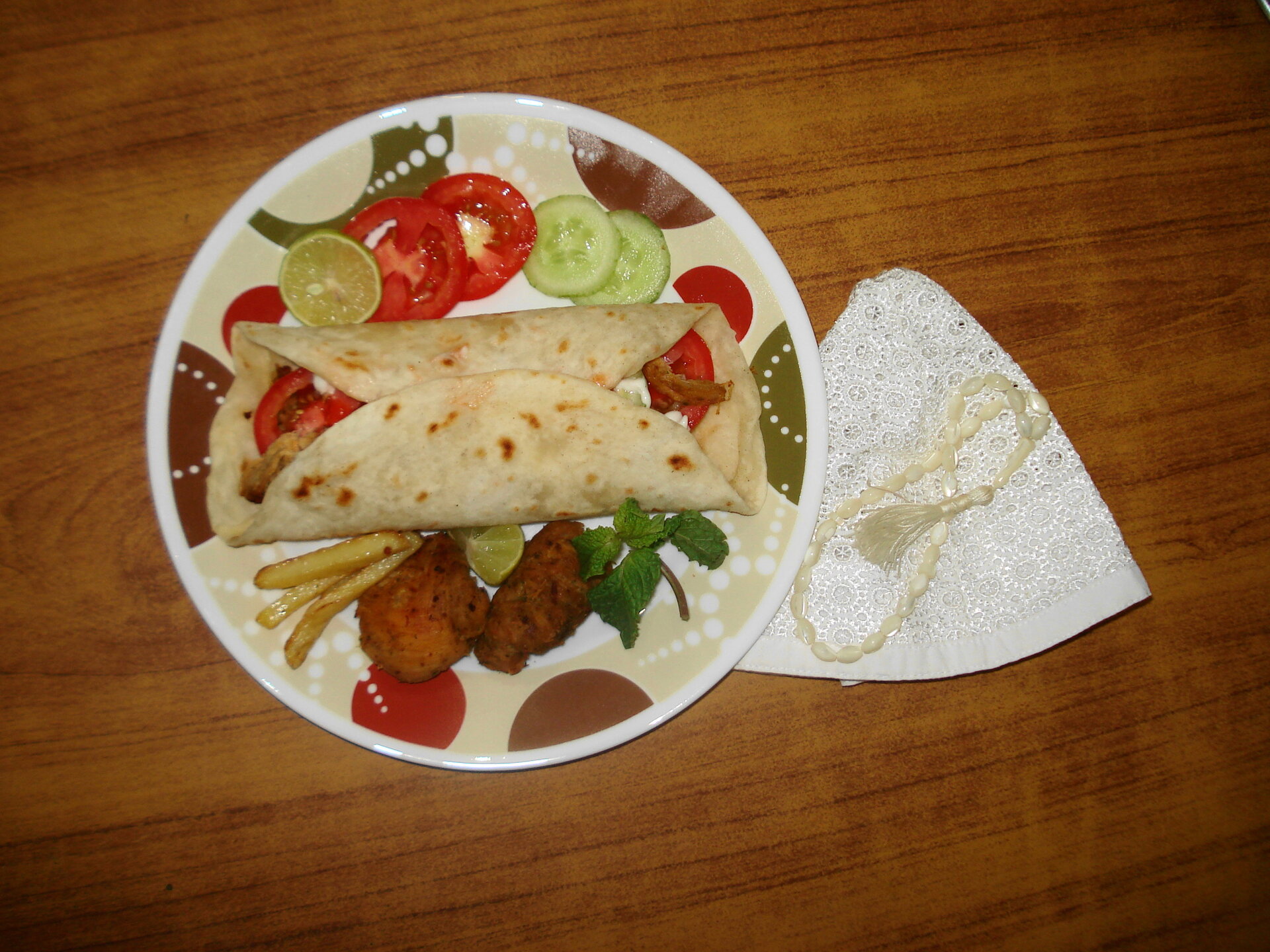
Street food in Dammam is cheap, good, and almost entirely overlooked by visitors. Most items sit well under SAR 10 — around $2.50 — and the best counters operate from dawn until well past midnight.
Shawarma
The default meal. Slow-roasted chicken or lamb carved off the spit, wrapped in flatbread with tahini, pickles, sumac onions and tomato. Shaw Shawarma on King Fahd Road is the local pick — simple counter operation, honest pricing, lamb version notably better than the chicken. Look for any shawarma counter with a long queue of Saudi men in thobes at 1 a.m. — that’s the one you want.
Mutabbaq
A crispy, pan-fried stuffed pancake filled with minced meat, egg, leek and spices, folded flat and served with hot sauce. The streets around Dammam’s central souq are where to find it — SAR 5–8 per piece. A legitimate Saudi breakfast and a serious late-night dish.
Foul Medames
Slow-cooked fava beans with olive oil, cumin and lemon, eaten with fresh Arabic bread for breakfast. Most hole-in-the-wall breakfast counters open by 6 a.m. and close by 10. Pair with a hot mint tea and a plate of shakshuka for the classic Saudi breakfast combination.
Specialty Coffee and Cafés
Dammam’s specialty coffee scene has grown rapidly since 2022 and now rivals Riyadh’s on quality, if not on density.
Woods Specialty Cafe & Roastery
The serious-coffee pick. Flat whites, iced V60s, cold brew, and a rotating single-origin list sourced from Ethiopia, Colombia and Panama. Pastry programme is small but well-executed.
Core Coffee
An Arabica-focused roaster with a wide menu of pour-overs, espresso-based drinks, specialty lattes, and house-baked waffles and pastries. Best for working from — the wifi is fast, the seats are comfortable, and the staff don’t rush you.
8oz Coffee
One of the most popular café addresses in the city, known for specialty coffee and buttery croissants. The airy, light-filled interior is the photogenic draw, but the coffee holds up on its own terms. Good for breakfast or a mid-afternoon reset.
Piccolo Coffee (near the Corniche)
The sea-view pick. Indoor and outdoor seating with direct lines to the Gulf. Weaker on coffee than Woods, stronger on atmosphere. Good for a morning after-walk stop.
Barn’s Cafe
A Saudi specialty-coffee chain with multiple Dammam branches, strong on breakfast — hearty full plates, fruit bowls, and indulgent desserts. A reliable fallback that can feed a group quickly.
Neighbourhood Map: Where to Eat by Area
| Neighbourhood | What It’s Good For | Anchor Restaurants |
|---|---|---|
| Corniche / Al Shati Al Gharbi | Seafood, waterfront dining, traditional Saudi | Heritage Village, Oceana, Beach Park, Piccolo Coffee |
| Al Hamra / Khaleej Road | Mid-range seafood, family dining | Bait Al Robyan, Darin Seafood |
| King Fahd Road / Al Faisaliyah | Shawarma, casual seafood, nightlife-adjacent eating | Shrimp Shack, Shaw Shawarma |
| Ar Rakah / south Dammam | Dammami kabsa, neighbourhood classics | Al Kabsa Al Damamiah, Al-Romansiah |
| Mall of Dhahran | Steakhouses, international chains, air-conditioned options | Butcher Shop & Grill, Steak House |
| Al Khobar (20–25 min south) | Fine dining, seafood flagships, Kerala/Mughlai | Al Sanbok, Maharaja by Vineet, Restaurant Khobar Traditional Village |
Sample One-Day Eating Itinerary
If you have a single day in Dammam and want to eat your way through the city’s best, this is the rhythm that works:
- Breakfast (7:30 a.m.): Foul medames, Arabic bread and mint tea at a central-souq breakfast counter. Budget around SAR 20.
- Mid-morning coffee (10:00): A V60 pour-over at Woods Specialty Cafe & Roastery.
- Lunch (13:00): Kabsa and Asida broth at Heritage Village on the Corniche — sit on the floor for the full experience.
- Afternoon stop (16:00): Arabic coffee and dates at Piccolo Coffee, right on the Corniche, with a walk afterwards.
- Sunset (18:30): Mutabbaq from a street vendor in the old souq — SAR 5–8, eaten while walking.
- Dinner (21:00): Grilled hammour and shrimp machbous at Al Sanbok in Al Khobar — the full sit-down finale.
- Late night (after 23:00): Shawarma from a King Fahd Road counter.
- Dammam & Al Khobar Travel Guide 2026 — Complete guide to the Eastern Province’s twin cities
- Best Hotels in Dammam — Business, budget and beachfront stays reviewed
- Best Hotels in Al Khobar — Corporate and weekend options in Dammam’s twin city
- Where to Eat in AlUla — Our companion food guide to Saudi’s heritage capital
- Saudi Arabia Travel Guide 2026 — The complete guide to visiting the Kingdom
- Saudi Arabia Visa Guide — Every visa type explained
Practical tip: Friday is the Saudi weekend and family restaurants are busiest between 13:00 and 16:00. If you want a calmer experience, eat lunch before 12:30 or after 16:00 on Fridays. Saturday lunch is noticeably quieter.
Dietary Notes and Practicalities
Every restaurant in Dammam is halal — this is universal across Saudi Arabia and not something you need to ask about. Alcohol is not served anywhere; what reads as “wine” on some hotel menus is a non-alcoholic Saudi production. Pork is not available at any restaurant in the Kingdom.
Vegetarian dining is straightforward at Indian and Lebanese restaurants, which run extensive meat-free menus. Vegan dining is more constrained — most Saudi dishes include ghee or yoghurt as a matter of course — but larger hotel restaurants in the Le Méridien and InterContinental can accommodate with notice. Gluten-free dining is generally available at international restaurants; ask the kitchen directly.
Tipping sits at 10–15% for sit-down restaurants and is appreciated but not mandatory. Service charges are not yet standard. Payment by card (Mada, Visa, Mastercard) is accepted everywhere — cash is useful only at street food counters.
If you plan to stay overnight to work through more of the list, our guide to the best hotels in Dammam covers business, budget and beachfront options, and our guide to the best hotels in Al Khobar covers the fine-dining-adjacent options in the twin city. Seasonal timing and practical logistics are covered more broadly in our Saudi Arabia travel guide, and every visitor will need to check the Saudi Arabia visa guide before arrival.
Reservations and Booking
Most mid-range and casual restaurants in Dammam do not take reservations — walk-in only. Fine-dining venues (Al Sanbok, Maharaja by Vineet, the Le Méridien restaurants), Heritage Village on weekends, and Beach Park on Corniche evenings all require reservations. The easiest booking channel is direct phone call — restaurants that accept OpenTable or Jahez reservations are still the minority. For seafood restaurants, book at least 48 hours ahead for Friday lunch or evening.
What’s Opening Next
Dammam’s restaurant scene has expanded rapidly since Vision 2030 relaxed entertainment-sector restrictions and the Eastern Province’s tourism strategy started funding waterfront regeneration. The Corniche north extension is adding more outdoor dining terraces through 2026, and Dhahran’s new Ithra cultural complex has already seeded several new cafés. If you are returning to the city in late 2026 or 2027, expect a visibly different scene.