
Riyadh is far more than Saudi Arabia’s political and financial capital. Beneath its glass towers and six-lane highways lies a city shaped by centuries of Islamic scholarship, tribal governance, and spiritual purpose. Its mosques, fortresses, and neighbourhood prayer houses tell the story of the First and Second Saudi States, the Wahhabi reform movement, and the Najdi architectural tradition that is unique to the heart of the Arabian Peninsula. Whether you are a Muslim visitor deepening your understanding of the Kingdom’s spiritual roots, or a non-Muslim traveller interested in history and architecture, this guide maps every significant Islamic heritage site in Riyadh — from ancient mud-brick mosques to a contemporary landmark that won the Aga Khan Award for Architecture.
This guide pairs naturally with the broader Hajj 2026 Guide, which covers pilgrimage logistics and Saudi Arabia’s holiest cities in full. If Riyadh is your base, the Riyadh Travel Guide covers neighbourhoods, hotels, and day trips across the city.
Best Time to Visit: October to March (cooler temperatures; avoid mid-summer heat)
Getting There: King Khalid International Airport (RUH) serves Riyadh; metro Line 4 and taxis connect to historic districts
Visa Required: Yes — tourist e-visa
Budget: Most sites are free or very low cost; allow $50–100/day for transport and food
Must-See: Imam Turki bin Abdullah Mosque, At-Turaif District (Diriyah), Al Masmak Fortress
Avoid: Visiting during Friday midday prayers when access is restricted; scheduling tight itineraries around prayer times
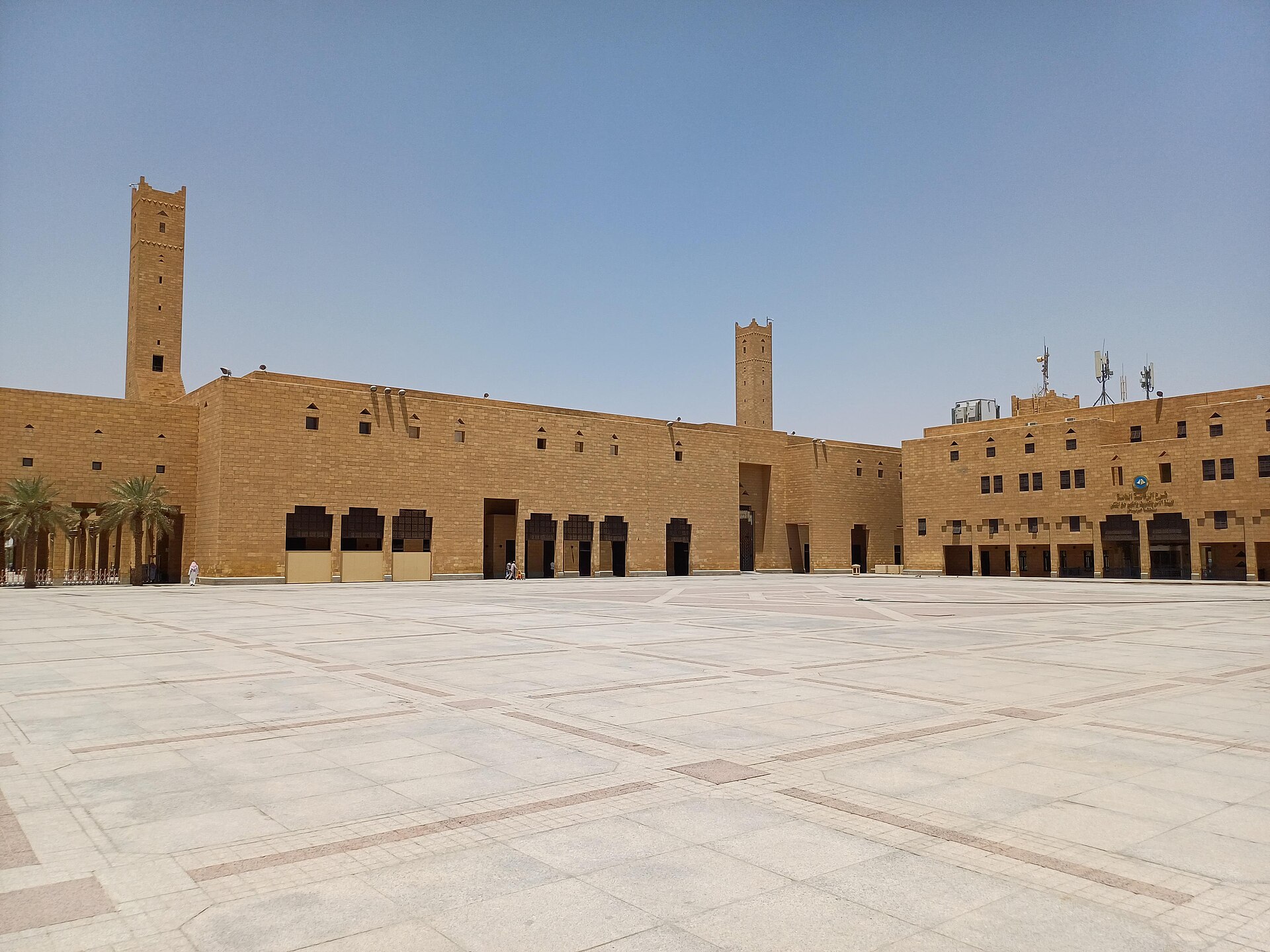
The Qasr al-Hukm Historic District
The Qasr al-Hukm area is the oldest and most symbolically loaded part of Riyadh. This is where the rulers of the Second Saudi State established their seat of power, where the Grand Mosque of Riyadh has stood since the early nineteenth century, and where Al Masmak Fortress — the clay-walled structure that catalysed the unification of modern Saudi Arabia — still rises from the dust of the ad-Dirah neighbourhood. The entire district was redeveloped in the 1980s and 1990s under a Royal Commission project that rebuilt mosques on their original footprints while expanding capacity dramatically, but preserved the Najdi architectural language of mudbrick, geometric crenellations, and square minarets.
Imam Turki bin Abdullah Mosque (The Grand Mosque of Riyadh)
The most important mosque in Riyadh is not the largest by capacity, but it is unquestionably the most historically significant. The Imam Turki bin Abdullah Mosque, known simply as the Grand Mosque of Riyadh, was originally constructed during the reign of Imam Turki bin Abdullah bin Mohammed bin Saud — the founder of the Second Saudi State — on land known as “al-Na’qa” in central Riyadh. The imam envisioned it not merely as a place of worship but as a scientific institution: a meeting ground for scholars, students, and the community, adjacent to the ruling Qasr al-Hukm palace.
The mosque was rebuilt by the Royal Commission for Riyadh City in 1993 on its original location, covering 16,800 square metres and accommodating around 17,000 worshippers. It won the Aga Khan Award for Architecture in 1995 — one of the most prestigious prizes in Islamic architecture — in recognition of how the rebuilding managed to preserve the spirit of the original Najdi form while meeting the demands of a modern congregation. The mosque’s twin square minarets, open courtyard paved in pale stone, and low-profile arched facade are characteristic of the Najdi style: restrained, sand-coloured, stripped of ornament.
The mosque anchors Deera Square, a large open plaza that has functioned as the civic heart of historic Riyadh for two centuries. Today the square is surrounded by restored commercial arcades and is an atmospheric place to visit at any time of day.
Visitor note: The Imam Turki bin Abdullah Mosque is an active place of worship. Muslim visitors are welcome at all prayer times. Non-Muslims should observe from the exterior of the courtyard and avoid entering during prayers. The architecture is fully visible and photographable from Deera Square.
Sheikh Mohammed bin Ibrahim Al-Sheikh Mosque
Within the Qasr al-Hukm District, a short distance from the Grand Mosque, stands the Sheikh Mohammed bin Ibrahim Al-Sheikh Mosque. Named after one of Saudi Arabia’s most influential twentieth-century religious scholars — the Grand Mufti who held the position from 1953 until his death in 1969 — this mosque served as a beacon of Islamic learning for several decades. The Royal Commission reconstructed it on its original site, covering 9,000 square metres. It continues to function as an active congregational mosque, with its Najdi facade and interior layout preserved in the reconstruction.
Al Masmak Fortress and Its Mosque
No visit to Islamic Riyadh is complete without Al Masmak. Built around 1865 during the reign of Mohammed bin Abdullah bin Rasheed, this thick-walled clay and mudbrick fortress takes its name from an Arabic word meaning “high, thick, and impenetrable.” Its historical importance is enormous: in January 1902, the young Abd al-Aziz ibn Saud led a small raiding party that stormed Al Masmak and killed its governor, reclaiming Riyadh for the Al Saud family. That night is considered the founding moment of the modern Kingdom of Saudi Arabia.
Inside the fortress walls, a small prayer room allowed soldiers and inhabitants to worship without leaving the protection of the walls — a practical feature of frontier Islamic fortifications across the Arabian Peninsula. The mosque adjacent to Al Masmak was rebuilt in a design echoing the fortress’s traditional local architecture, and remains a functioning place of worship.
Al Masmak today functions as a free museum open to all visitors, documenting the history of Saudi Arabia’s unification. Entry is free. It is open Sunday to Thursday from 8am to 9pm, and on Fridays from 4pm to 8pm. Note that as of early 2025, interior sections were under restoration — verify current access before visiting.
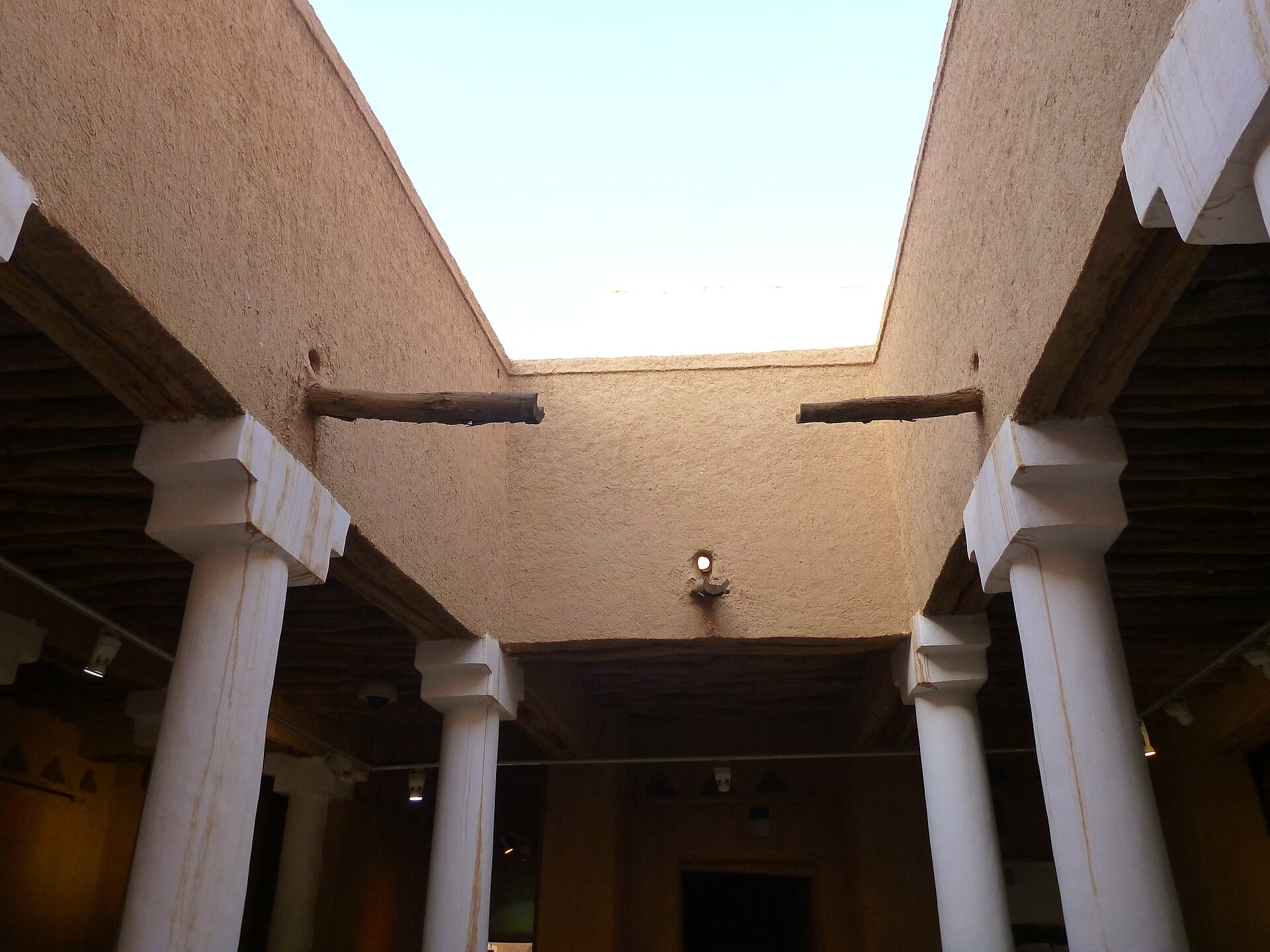
Diriyah: The Spiritual Birthplace of the Saudi State
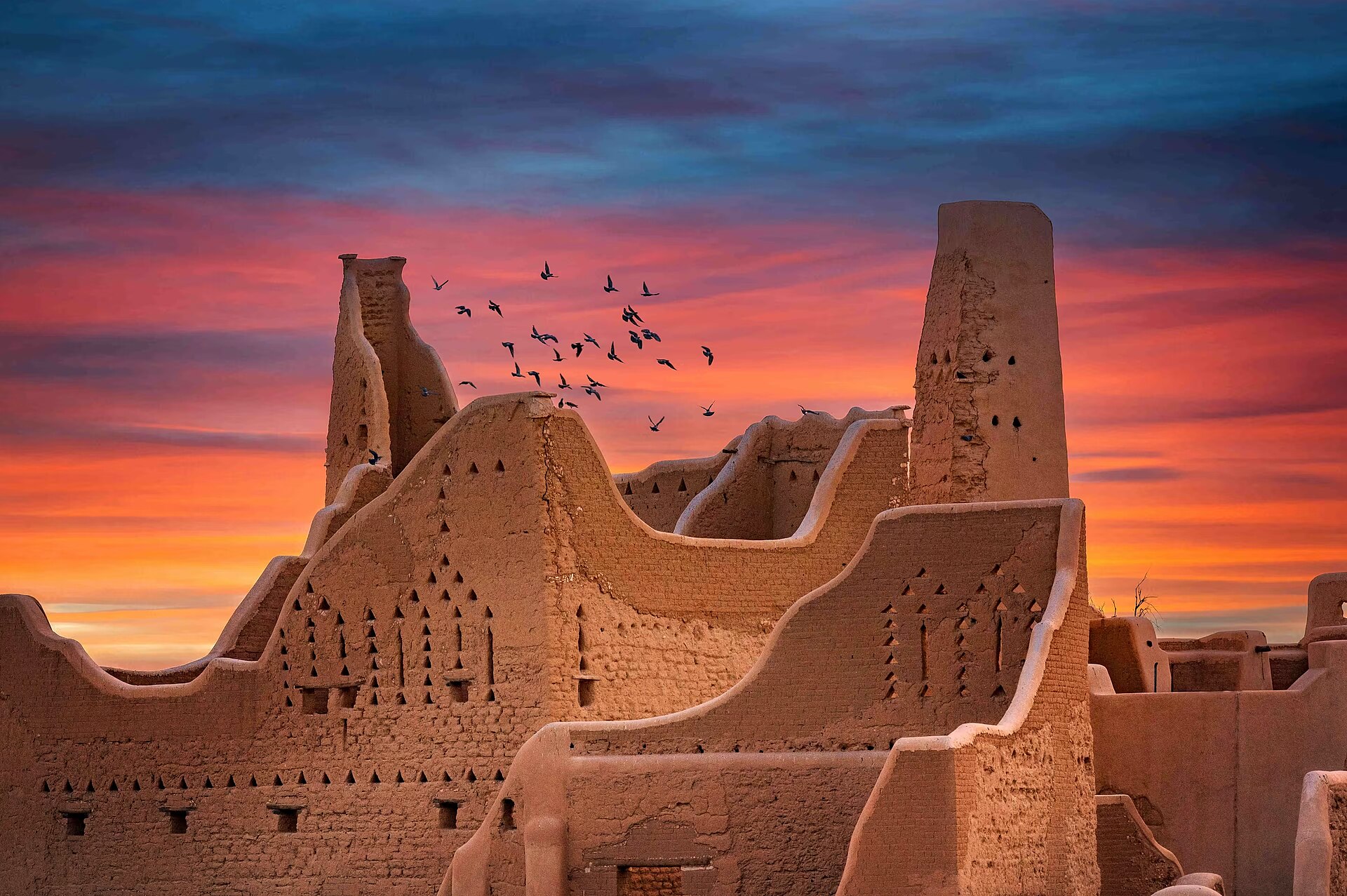
Fourteen kilometres northwest of central Riyadh, the ancient settlement of Diriyah is the single most important site for understanding the religious and political foundations of Saudi Arabia. This was the home of the Al Saud dynasty before Riyadh, the place where the religious reformer Sheikh Mohammed bin Abdulwahab forged his alliance with Muhammad bin Saud in 1744 — an alliance that bound political power to Islamic religious reform and created the template for what became the Kingdom of Saudi Arabia. Diriyah is now a UNESCO World Heritage Site, a major tourism investment, and one of the most atmospheric places in the entire country.
At-Turaif District: UNESCO World Heritage Site
The At-Turaif District was inscribed on the UNESCO World Heritage List in 2010 as the seat of the First Saudi State (1727–1818) and “the centre of the temporal power of the House of Saud and the spread of the Islamic reform movement in Arabia.” The site bears witness to the Najdi architectural style — unique to the central Arabian Peninsula — with its mud-brick palaces, mosques, and fortifications decorated with geometric incised patterns and triangular corbelling.
The At-Turaif District contains historically important structures including the Salwa Palace (the primary royal residence), the Saad bin Saud Palace, the Al-Turaif Bath House, and most significantly for Islamic heritage visitors, the Imam Mohammed bin Saud Mosque. Guided tours of the site are available from the Diriyah visitor centre and provide essential context for understanding the spiritual significance of the site within Islamic history.
Practical tip: Allow at least three hours for At-Turaif. The site is large and the guided tour takes approximately 90 minutes. The surrounding Bujairi Terrace area has been developed with restaurants and cafes that make for a comfortable evening visit after the heat of the day subsides.
Sheikh Mohammed bin Abdulwahab Mosque
Within the Diriyah complex, the Sheikh Mohammed bin Abdulwahab Mosque is a site of profound religious significance. Sheikh Mohammed bin Abdulwahab — whose teachings of Islamic reform and return to Salafi practice reshaped Islam across Arabia and, through Saudi political power, influenced Muslim communities worldwide — lived, preached, and died in Diriyah. The mosque where he taught gained its reputation as a centre of religious sciences that attracted students from across the Arabian Peninsula.
The Royal Commission for Riyadh City reconstructed the mosque as part of the wider Diriyah restoration project, preserving its footprint and architectural character. For Muslim visitors, it carries the same spiritual gravity as any site connected to the scholars who shaped the Hanbali tradition and the religious foundations of the Saudi state.
Imam Mohammed bin Saud Mosque
Also within the Diriyah complex, the Imam Mohammed bin Saud Mosque was rebuilt on a substantial 50,000-square-metre site by the Royal Commission, opening in 1998. It accommodates approximately 4,900 worshippers and serves the local Diriyah community as a Friday congregational mosque. The new structure respects the Najdi architectural tradition while meeting modern capacity requirements. The mosque is a functioning place of worship and open to Muslim visitors at prayer times.
Contemporary Mosques of Architectural Note
Riyadh has also produced several remarkable twenty-first-century mosques that represent contemporary Islamic architecture at a high level. These are not simply functional prayer spaces — they are deliberate architectural statements about how Islamic design traditions can evolve in dialogue with modernity.
Al Rajhi Grand Mosque
Opened in December 2004, the Al Rajhi Grand Mosque is the largest mosque in Riyadh by capacity and one of the most significant community Islamic institutions in the city. Built by the Al Rajhi family — founders of one of the world’s largest Islamic banks — it functions as a full Islamic centre with a men’s prayer hall accommodating 18,000 worshippers and a separate women’s section for 2,500. The mosque also contains two libraries, educational facilities, and community services.
Architecturally, the mosque combines traditional Islamic design elements — domed central hall, twin minarets, arcaded courtyard — with contemporary construction techniques. The facade’s warm tan stonework and the illuminated minarets make it a distinctive landmark in the western Riyadh skyline. The mosque offers guided tours for non-Muslim visitors through its official tour programme, providing an introduction to Islamic practice and architecture in an accessible format.
Non-Muslim visitors: The Al Rajhi Grand Mosque’s guided tour programme is one of the few opportunities in Riyadh for non-Muslim visitors to see the interior of an active congregational mosque. Tours should be booked in advance through the mosque’s official channels. Modest dress is required: long trousers or skirts, long sleeves, and women are asked to cover their hair.
KAFD Grand Mosque
The KAFD Grand Mosque in the King Abdullah Financial District represents perhaps the most architecturally ambitious mosque built in Saudi Arabia in the twenty-first century. Designed by Riyadh-based firm Omrania and completed in 2017, the 6,103-square-metre structure was inspired by the desert rose — the crystalline mineral formation found across the Arabian Peninsula. When viewed from the surrounding skyscrapers, the roof resembles a rose in bloom; from ground level, the mosque appears to burst upward from the earth, its geometric form piercing the urban plaza.
There are no internal columns supporting the roof — a structural achievement that creates an unusually open, unobstructed prayer space. Two sculpted 60-metre minarets frame the structure. The mosque accommodates over 1,400 worshippers and sits within an urban plaza that serves as an overflow prayer space on Fridays. It is open to visitors of all backgrounds for architecture and cultural visits, with guided tours available.
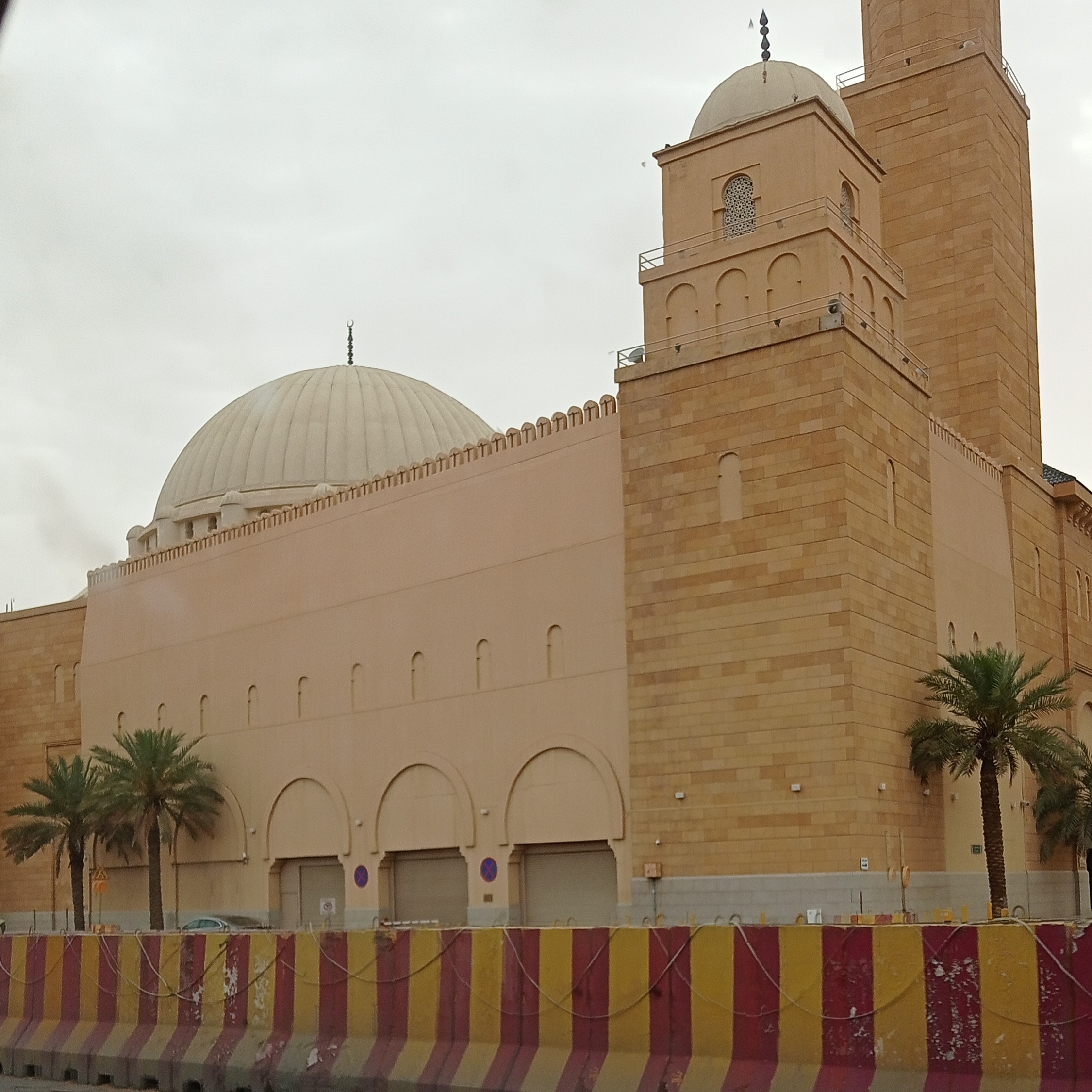
The Ancient Mosques of Old Riyadh
Beyond the major landmark sites, the historic heart of Riyadh once contained a network of neighbourhood mosques — modest, functional, architecturally humble — that served the various quarters of the old city. Islamic heritage scholars at Saudipedia have documented ten ancient mosques that once defined the spiritual geography of old Riyadh. Many were demolished during the Qasr al-Hukm redevelopment and rebuilt in modern form; others were relocated or absorbed into newer structures.
The most historically documented of these include:
- Al-Diwaniyah Mosque — situated within the original Imam Abdulrahman Palace grounds, accessed from al-Thumairi Street, still active for daily prayers after reconstruction.
- Al-Hillah Mosque — associated with the reign of Imam Faisal bin Turki; rebuilt in 1902 and still functioning.
- Al-Dhahirah Mosque — relocated from its original neighbourhood and renamed al-Shuwaier Mosque; now positioned facing Al Masmak Fortress on Imam Turki bin Abdullah Street, making it an easy combined visit.
- Sheikh Abdullah Mosque (Dakhnah Grand Mosque) — southwest of the Dakhnah neighbourhood, having undergone multiple renovation projects over its history.
- Women: Long trousers or skirts (below the knee), long sleeves, shoulders covered. An abaya is not legally required for tourists, but carrying a light scarf or shawl is useful for entering mosque courtyards or receiving unexpected hospitality. Cover hair when entering any mosque area.
- Men: Long trousers, shirt with sleeves. Shorts are not appropriate for mosque visits.
- Footwear: Remove shoes before entering any mosque interior. Many sites provide shoe racks at the entrance.
- The Al Rajhi Grand Mosque has a dedicated tour programme for non-Muslims via its website.
- The KAFD Grand Mosque welcomes cultural visitors of all backgrounds.
- The restored mosques within the At-Turaif and Diriyah complex can be visited as part of the guided heritage tour.
- Al Masmak’s internal prayer room is accessible within the museum visit.
- Hajj 2026 Guide — Dates, registration, costs and what to expect for pilgrimage to Mecca
- Islamic Heritage Sites of Jeddah — Mosques, history and a walking tour of al-Balad
- Islamic Heritage Sites in Saudi Arabia — Beyond Mecca and Medina: the full heritage landscape
- Mecca for Muslim Travellers — The complete Hajj and Umrah city guide
- Medina Travel Guide — The Prophet’s City for Muslim visitors
- Saudi Arabia Travel Guide 2026 — The complete guide to visiting the Kingdom
- Saudi Arabia Visa Guide — Every visa type explained
Walking through the al-Dirah and ad-Dirah neighbourhoods around Deera Square, attentive visitors will notice the rhythm of small mosque minarets punctuating the streetscape — a reminder that this was a city built around the five daily prayers, with every resident within earshot of an adhan.
Planning Your Visit: Practical Information
Visa and Entry
Most international visitors to Saudi Arabia can obtain a tourist e-visa online before travel. The e-visa covers tourism, including visits to heritage sites and mosques. Check the Saudi Arabia Visa Guide for the full process, eligible nationalities, and costs. Saudi Arabia has become significantly more welcoming to independent travellers since 2019, and Riyadh’s heritage sites are fully accessible to international tourists.
Dress Code
Saudi Arabia’s dress code requirements for tourists are more relaxed than they were before 2019, but visiting Islamic heritage sites calls for appropriate modesty out of respect — not just compliance. The practical guidance:
Non-Muslim Access to Mosques
Saudi Arabia’s mosques are, in general, open only to Muslims for worship. However, several Riyadh mosques offer structured tours for non-Muslim visitors:
For active congregational mosques not on the tour list, the respectful approach is to appreciate the exterior architecture and observe from the courtyard at non-prayer times. Never enter a mosque during prayers unless invited.
Prayer Times
The five daily prayers — Fajr (pre-dawn), Dhuhr (midday), Asr (afternoon), Maghrib (sunset), Isha (night) — shape the rhythm of any day in Riyadh. During prayer times (typically 15–30 minutes each), many shops close briefly and mosque access for non-worshippers is paused. The call to prayer (adhan) sounds from minarets across the city — an atmospheric and memorable part of being in Riyadh. Plan visits to active mosques for the windows between prayers, particularly the mid-morning and late afternoon periods.
Getting to the Heritage Sites
| Site | Location | How to Get There | Entry Fee |
|---|---|---|---|
| Imam Turki bin Abdullah Mosque | Deera Square, ad-Dirah | Metro Line 4 (Al Oud Station) or taxi | Free (exterior) |
| Al Masmak Fortress | ad-Dirah, central Riyadh | 5-minute walk from Deera Square | Free |
| At-Turaif / Diriyah | 14km northwest of centre | Taxi or car; metro extension under construction | Ticketed (check diriyah.sa) |
| Al Rajhi Grand Mosque | Al Nafal, northwestern Riyadh | Taxi recommended | Free (tours bookable) |
| KAFD Grand Mosque | King Abdullah Financial District | Metro Line 6 (KAFD station) | Free |
Best Time to Visit
The ideal window for Riyadh’s outdoor heritage sites — particularly At-Turaif in Diriyah — is October through March, when daytime temperatures are comfortable (15–25°C). From May to September, midday temperatures regularly exceed 40°C and outdoor exploration becomes genuinely difficult. If visiting in summer, plan heritage site tours for early morning (before 9am) or after Maghrib prayer (after sunset), when the heat subsides and the lit monuments take on a different, dramatic quality.
The Ramadan period brings a special atmosphere to Riyadh’s mosques and historic districts — the streets around al-Dirah come alive after Maghrib with iftar gatherings, and the sense of communal religious life is vivid. Non-Muslim visitors are welcome to experience this, though they should observe fasting etiquette during daylight hours in public spaces.
For a full city context, pair this Islamic heritage itinerary with the best neighbourhoods in Riyadh guide — the historic al-Dirah neighbourhood where most of these sites cluster is one of the city’s most atmospheric areas to explore on foot.
How Riyadh Fits into Saudi Arabia’s Broader Islamic Landscape
Riyadh’s Islamic heritage is distinct in character from what you will find in Mecca and Medina. The holy cities offer proximity to the sites of early Islam — the Masjid al-Haram, the Prophet’s Mosque, the earliest mosques in Islamic history. Riyadh, by contrast, offers the story of how Islam became the organising principle of a modern nation-state: how a reform movement born in the eighteenth century shaped a political dynasty, how that dynasty built its capital city around the mosque, and how the oil-funded transformation of the twentieth century tried to preserve that spiritual identity while building a global metropolis.
For visitors whose Islamic heritage journey extends beyond Riyadh, the Islamic Heritage Sites in Saudi Arabia guide covers the full breadth of the Kingdom’s religious landscape. The Islamic Heritage Sites of Jeddah examines the port city’s unique mosque architecture and its historic al-Balad district. For pilgrimage-focused travel, the Mecca travel guide for Muslim visitors, the Medina travel guide, and the dedicated Prophet’s Mosque visitor guide provide comprehensive planning resources. For a broader overview of travel in the Kingdom, visit the Saudi Arabia Travel Guide 2026.