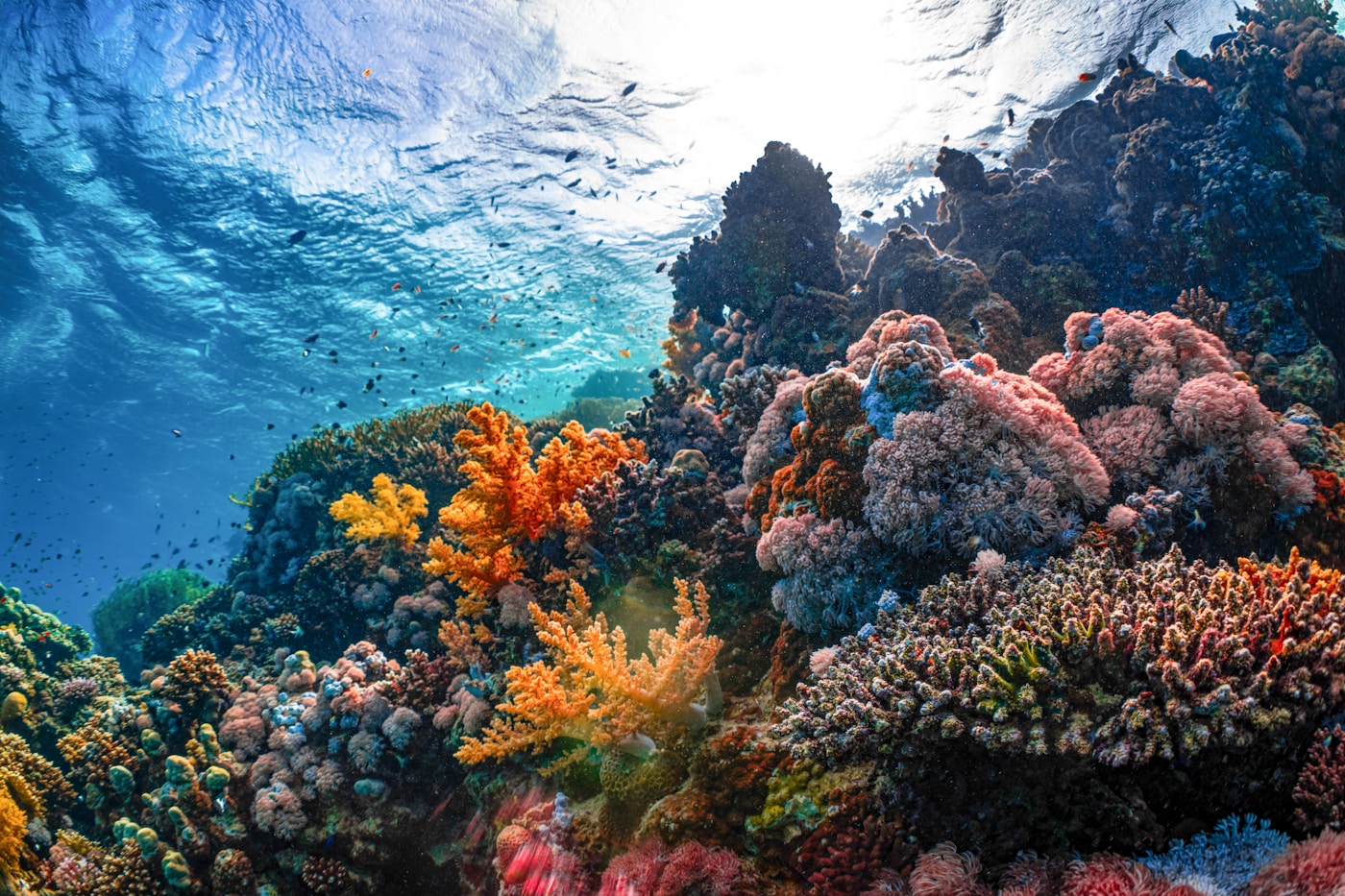

Saudi Arabia’s Red Sea coastline stretches for more than 1,800 kilometres from the Jordanian border in the north to the Yemeni border in the south. Along it lies one of the world’s last great undiscovered diving frontiers — a coral reef system that has been largely inaccessible to international tourists for decades and remains in far better condition than the heavily dived Egyptian coast on the opposite shore.
In 2026, this coastline is opening up. Red Sea Global’s luxury resorts are welcoming guests, liveaboard dive boats are exploring the Farasan Banks, and beach destinations like Umluj and Yanbu are drawing visitors who want pristine water without the crowds of Sharm El Sheikh. This guide covers everything you need to know about diving, beaches, and coral reefs along Saudi Arabia’s Red Sea coast.
Why the Saudi Red Sea Coast Matters for Divers
The Red Sea is one of the most biologically diverse marine environments on earth, hosting more than 1,200 fish species — 10 per cent of which are endemic, found nowhere else on the planet. The Red Sea’s coral reefs are also among the most heat-resistant in the world, having evolved in naturally warm, high-salinity conditions that give them a potential buffer against rising ocean temperatures.
The Saudi Arabian side of the Red Sea is the “last frontier” of diving in the region, according to the Scuba Diving magazine and the SSI (Scuba Schools International). While Egypt’s Red Sea coast has been a major dive tourism destination since the 1980s — with Sharm El Sheikh, Hurghada, and Marsa Alam receiving millions of visitors annually — the Saudi side remained effectively closed to international tourism until the Kingdom began issuing tourist eVisas in September 2019.
The result is a coastline where coral health is dramatically better than on the Egyptian side. The Khaled bin Sultan Living Oceans Foundation conducted extensive reef surveys along the Saudi Red Sea coast and found good to excellent reef health across most survey sites. The Farasan Banks in the south recorded nearly 30 per cent live coral cover — a figure that many degraded reef systems worldwide can only envy.
Decades of minimal human impact, restricted coastal access, and limited commercial fishing have created an ecosystem that divers describe as a time capsule — what the Egyptian Red Sea looked like 40 years ago, before mass tourism took its toll.
Red Sea Global Resorts — What Is Open in 2026
Red Sea Global (RSG), a PIF-backed developer, is building the largest luxury tourism project along the Saudi coast. The Red Sea destination spans 28,000 square kilometres of coastline, islands, and desert, with plans for 50 resorts and 8,000 hotel rooms at full build-out.
As of early 2026, nine resorts are operating across the Red Sea Global destination, with more opening through the year. The destination welcomed its first guests in November 2023, and the pace of openings has accelerated.
Resorts Open and Operating
| Resort | Type | Key Features |
|---|---|---|
| Nujuma, A Ritz-Carlton Reserve | Ultra-luxury island | First Ritz-Carlton Reserve in the Middle East. Overwater and beachfront villas |
| The St. Regis Red Sea Resort | Luxury island | Overwater suites, beachfront villas, Butler service |
| Six Senses Southern Dunes | Desert resort | Inland desert setting with wellness focus. Not on the coast |
| Shebara | Eco-luxury island | Distinctive spherical overwater pods |
| Rosewood Red Sea | Luxury island | 149 rooms and suites, three restaurants, Asaya wellness centre. Opened 2025 |
Opening in 2025-2026
Shura Island is becoming the main hub of the Red Sea destination. By the end of 2025, three resorts opened on Shura: SLS The Red Sea, InterContinental The Red Sea, and The Red Sea EDITION (which opened in November 2025 with 240 rooms). Shura also features Saudi Arabia’s first island golf course — Shura Links. Eight further resorts are planned for 2026, alongside 305 Red Sea Residences.
Miraval The Red Sea is slated to open in spring 2026, featuring 180 guest rooms and what will be the island’s largest spa, set on 69 acres of beachfront.
AMAALA, Red Sea Global’s ultra-luxury wellness destination further north where the Hijaz Mountains meet the Red Sea, is on track to welcome its first guests in 2026. AMAALA spans three naturally occurring bays and targets the ultra-premium wellness and arts tourism market.
How to Get to the Red Sea Resorts
Red Sea International Airport (IATA: RSI) is the primary gateway, located in Hanak, Tabuk Province. The airport began operations on 21 September 2023 and is expected to serve one million passengers per year by 2030.
| Route | Airline | Frequency |
|---|---|---|
| Riyadh (RUH) to Red Sea (RSI) | Saudia | 6 flights/week |
| Jeddah (JED) to Red Sea (RSI) | Saudia | 2 flights/week |
| Dammam (DMM) to Red Sea (RSI) | Saudia | 2 flights/week |
| Dubai (DXB) to Red Sea (RSI) | flyDubai | 2 flights/week |
From the airport, island resorts are reached by seaplane (25-30 minutes) or luxury boat transfer (45-60 minutes). Ground transfers serve the mainland resorts including Six Senses Southern Dunes.
The Best Diving Destinations on the Saudi Red Sea Coast
Yanbu — The Capital of Saudi Diving
Yanbu, approximately 350 kilometres north of Jeddah, is widely regarded as the diving capital of Saudi Arabia. The visibility here is exceptional — it is not uncommon to see the sea bed 20 metres below from the surface of the water.
Key dive sites near Yanbu include:
Iona Wreck. One of the most famous wreck dives in Saudi Arabia. The Iona, a cargo vessel, rests in relatively shallow water and is now encrusted with coral and home to a diverse community of reef fish, moray eels, and lionfish.
Seven Sisters Reef. A system of seven coral pinnacles rising from the sea floor, known for excellent hard and soft coral growth and frequent sightings of hammerhead sharks, particularly between June and September. This is one of the premier hammerhead sites in the Red Sea.
Abu Galawa. A coral garden with shallow reef formations ideal for less experienced divers and snorkellers, with abundant anemonefish, butterflyfish, and parrotfish.
Yanbu has a reasonable tourism infrastructure with hotels, restaurants, and several dive operators offering day trips and multi-day packages. The city is accessible by road from Jeddah (approximately 3.5 hours) or by domestic flight.
Farasan Islands and the Farasan Banks
The Farasan Islands are an archipelago of approximately 170 islands off the coast of Jizan in southwestern Saudi Arabia. The Farasan Banks — the submerged reef system surrounding the islands — represent some of the best-kept dive secrets in the Red Sea.
The Living Oceans Foundation recorded the highest live coral cover in the entire Saudi Red Sea survey at the Farasan Banks, at nearly 30 per cent. The area hosts 79 identified coral species, nesting areas for hawksbill and green sea turtles, and a rich pelagic environment including whale sharks, tiger sharks, and manta rays.
The Farasan Islands themselves are notable for their terrestrial wildlife, including the Arabian gazelle and large populations of migratory birds. The islands were designated as a protected area in 1996.
Access to the Farasan Banks for diving is primarily via liveaboard boats departing from Jizan or, increasingly, from Jeddah on extended multi-day itineraries. Shore-based diving infrastructure on the Farasan Islands is minimal. The best season for the Farasan Banks is November to May, when whale shark sightings are most frequent and sea conditions are calmest.
Jeddah — City Diving
Jeddah offers the most accessible diving on the Saudi Red Sea coast, with reef systems reachable within 30 minutes by boat from the city’s marinas. The reefs off Jeddah are not as pristine as those further north or south — they have been subject to more human pressure from the city’s population of over 4 million — but they still offer good diving with easy logistics.
Popular Jeddah dive sites include Sheraton Reef, Abu Madafi, and the Boiler Wreck. Several PADI and SSI dive centres operate from Jeddah, offering courses from beginner to advanced levels. Jeddah’s King Abdulaziz International Airport is the main international gateway to the Saudi Red Sea coast, with direct flights from most major global hubs.
Jabal Al-Lith — Whale Shark Central
Between February and May, the waters around Jabal Al-Lith — approximately 180 kilometres south of Jeddah — become one of the most reliable whale shark aggregation sites in the Red Sea. These gentle giants, the world’s largest fish, gather in the nutrient-rich waters to feed on plankton blooms. Swim-with-whale-shark excursions are offered by operators from Jeddah and Al-Lith, though the site remains relatively undeveloped compared to equivalent whale shark destinations in the Maldives or Mexico.
Umluj — The Maldives of Saudi Arabia
Umluj, located approximately 150 kilometres north of Yanbu and 800 kilometres north of Jeddah, has earned the nickname “the Maldives of Saudi Arabia” for its white sand beaches, turquoise lagoons, and scatter of more than 100 small coral islands.
Unlike the Red Sea Global resorts, which target the ultra-luxury market, Umluj offers a more accessible and authentic beach experience. The town itself is small and laid-back, with basic hotels, guesthouses, and local restaurants. Boat operators offer day trips to the offshore islands, where visitors can swim in shallow lagoons, snorkel over healthy coral reefs, and enjoy deserted beaches.
Al-Duqm Beach is the most popular, known for soft white sand and shallow, calm water suitable for families. The snorkelling directly off the beaches is excellent, with colourful reef fish, sea turtles, and healthy coral gardens accessible from shore.
The best time to visit Umluj is between October and March, when temperatures are comfortable for outdoor activities and the water is still warm enough for swimming. Summer temperatures regularly exceed 40 degrees Celsius.
Getting to Umluj requires a road trip — the town has no airport. From Jeddah, the drive takes 8-10 hours via Highway 5 and Highway 60. From Yanbu, it is approximately 2.5 hours. For most visitors, combining Umluj with Yanbu on a Red Sea road trip makes the most practical sense.
Saudi Red Sea Versus Egyptian Red Sea — An Honest Comparison
| Factor | Saudi Arabia | Egypt |
|---|---|---|
| Coral health | Excellent — decades of minimal human impact | Variable — degraded near resort areas, good in remote sites |
| Dive infrastructure | Developing — limited operators, few shore-based centres | World-class — hundreds of operators, dive centres everywhere |
| Cost | Higher — fewer budget options, luxury resorts dominate | More range — from budget to luxury |
| Crowds | Minimal — you may have entire reef systems to yourself | Heavy at popular sites like Ras Mohammed and the Brothers |
| Liveaboard quality | Premium — newer boats, smaller operations | Full range — from budget to premium |
| Visa ease | eVisa for 49 countries — straightforward | Visa on arrival for most nationalities — very easy |
| Alcohol | Not available anywhere | Available at resorts and in tourist areas |
| Marine life diversity | Exceptional — whale sharks, hammerheads, mantas, turtles | Exceptional — similar species, well-documented sites |
| Best for | Experienced divers seeking pristine, uncrowded reefs | All levels — beginner-friendly, wide choice |
The bottom line: Egypt’s Red Sea is the accessible, well-established choice with decades of infrastructure and competitive pricing. Saudi Arabia’s Red Sea is the frontier option — less developed, more expensive, but with reef quality that most Egyptian sites can no longer match. For experienced divers willing to pay a premium for uncrowded, pristine conditions, the Saudi side is increasingly the better choice.
Best Time for Diving on the Saudi Red Sea Coast
| Season | Conditions | Best Destinations |
|---|---|---|
| November to February | Water 24-26°C, air comfortable, good visibility. Peak tourist season | Farasan Banks (whale sharks), Jeddah, Al-Lith |
| March to May | Water warming to 27-29°C, whale shark season peaks at Al-Lith | Jabal Al-Lith (whale sharks), Farasan Banks, Umluj |
| June to September | Water 29-32°C, air extremely hot (40°C+), hammerhead season at Seven Sisters | Yanbu (hammerheads), Seven Sisters, northern reefs |
| October to November | Water cooling to 27-28°C, transition period, good all-round conditions | All destinations — excellent shoulder season |
Liveaboard operators typically follow the pelagic migrations: northern sites near Yanbu between June and September for hammerhead sharks, and the southern Farasan Banks between November and May for whale sharks, tiger sharks, and mantas.
Coral Reef Conservation on the Saudi Coast
Saudi Arabia’s relatively late entry into marine tourism gives it an opportunity that Egypt and other Red Sea nations squandered: the chance to develop dive tourism sustainably from the outset rather than trying to repair damage after the fact.
Red Sea Global has committed to a “net positive conservation” approach, aiming to enhance biodiversity by 30 per cent by 2040 across its project area. The developer claims to use environmental monitoring, coral nurseries, and strict construction protocols to minimise reef damage during resort development. Independent verification of these claims is ongoing.
The Farasan Islands Marine Protected Area, established in 1996, restricts fishing and development across a significant portion of the southern reef system. However, enforcement of marine protection in Saudi waters has historically been inconsistent, and the rapid expansion of tourism infrastructure raises legitimate concerns about whether environmental commitments will be maintained as visitor numbers grow.
For divers, the practical implication is that 2026 represents a window — possibly a narrow one — to experience Saudi Arabia’s Red Sea reefs in something close to their natural state before tourism infrastructure and visitor volumes potentially begin to degrade them.
Practical Information for Red Sea Visitors
| Detail | Information |
|---|---|
| Visa | eVisa available for 49 countries via visitsaudi.com |
| Currency | Saudi Riyal (SAR). 1 USD = approximately 3.75 SAR (fixed peg) |
| Dive certification | PADI and SSI recognised. Bring your card and logbook |
| Water temperature | 24°C (winter) to 32°C (summer). 3mm wetsuit sufficient year-round |
| Visibility | 15-40 metres depending on location and season |
| Alcohol | Not available. Saudi Arabia does not permit alcohol sales |
| Dress code | Modest clothing in towns. Swimwear and dive gear at resorts and beaches |
| Hyperbaric chambers | Available in Jeddah. Limited elsewhere — check with your operator |
| Best gateway city | Jeddah (King Abdulaziz International Airport — JED) |
Getting Around the Red Sea Coast
The Saudi Red Sea coast is long and the destinations are spread out. There is no coastal railway or bus service connecting dive destinations. Your options are:
Rental car. The most flexible option for visiting Yanbu, Umluj, and other coastal towns. Roads are good quality and well-maintained. International driving licences are accepted. Fuel is cheap by international standards. Drive on the right.
Domestic flights. Saudia, flynas, and flyadeal operate domestic routes connecting Jeddah to Yanbu, Jizan (for Farasan Islands), and Red Sea International Airport. Flights are frequent and affordable.
Liveaboard. For serious divers, a liveaboard itinerary is the best way to access remote sites. Multi-day trips depart from Jeddah and Yanbu, covering northern reef systems or southern Farasan Banks depending on season. Expect to pay $200-400 per person per day for a quality liveaboard operation.
Resort transfers. Red Sea Global resorts arrange seaplane and boat transfers from Red Sea International Airport. These are included in some packages or available for an additional fee.
The Saudi Red Sea coast is at the beginning of its tourism story. For divers, beach lovers, and marine life enthusiasts, 2026 offers the rare chance to experience a world-class reef system before the rest of the world discovers it. For more on planning your Saudi trip, see our Saudi Arabia travel hub
. For evening entertainment options along the coast, see our nightlife guide.
Couples will love our honeymoon guide featuring Red Sea luxury resorts, and photographers should check our photography guide for underwater and coastal shots. Our Yanbu guide covers one of the coast’s best-kept diving secrets., our NEOM guide, and our guide to the best time to visit Saudi Arabia.
Marine Life You Can Expect to See
The Saudi Red Sea is home to an extraordinary diversity of marine life, from tiny nudibranchs to the world’s largest fish. Here is what you can realistically expect to encounter at different experience levels.
Guaranteed on most dives. Butterflyfish, parrotfish, surgeonfish, lionfish, moray eels, anemonefish (clownfish), grouper, and a wide variety of hard and soft corals. The reef systems are healthy enough that even a basic snorkelling excursion from the beach at Umluj or Yanbu will deliver a rich experience.
Common with some luck. Green and hawksbill sea turtles are frequently seen, particularly around the Farasan Islands where nesting sites are protected. Napoleon wrasse, barracuda schools, and octopus are regular sightings on deeper reefs. Dolphins are commonly spotted from boats, particularly in the central Red Sea between Jeddah and Yanbu.
Seasonal highlights. Hammerhead sharks school at Seven Sisters Reef near Yanbu between June and September — this is one of the premier hammerhead sites in the Red Sea. Whale sharks aggregate at Jabal Al-Lith between February and May. Manta rays are seen at the Farasan Banks between November and April. Tiger sharks, while less predictable, are recorded at the Farasan Banks year-round.
Rare but documented. Dugongs (sea cows) inhabit the shallow seagrass beds along parts of the Saudi coast, though sightings are uncommon. Oceanic whitetip sharks, once common in the Red Sea but now critically endangered, are occasionally seen on offshore reefs.
Liveaboard Diving — The Premium Saudi Red Sea Experience
For serious divers, a liveaboard trip is the optimal way to experience the Saudi Red Sea. Shore-based dive infrastructure remains limited outside of Jeddah and Yanbu, and the best reef systems — particularly the Farasan Banks — are accessible only by boat.
Saudi Arabia’s liveaboard fleet is newer and smaller than Egypt’s, reflecting the relative youth of the market. Operations tend to be premium-quality, with modern boats, experienced crews, and small group sizes. The trade-off is price: Saudi liveaboards typically cost 30-50 per cent more than comparable Egyptian operations.
Typical itineraries include:
Northern Red Sea (from Yanbu). 5-7 day trips covering Seven Sisters, Abu Galawa, and offshore reef systems. Best June to September for hammerhead encounters. Visibility typically 25-40 metres.
Southern Red Sea / Farasan Banks (from Jeddah or Jizan). 7-10 day expeditions to the remote Farasan reef system. Best November to May for whale sharks, mantas, and big pelagic life. These trips often include stops at uninhabited islands for beach time between dives.
Full-length Red Sea (from Jeddah). Extended 10-14 day itineraries covering the full range of Saudi Red Sea environments, from the northern reefs to the Farasan Banks. These are expedition-style trips for experienced divers with a significant budget.
The Farasan Islands — Beyond Diving
The Farasan Islands deserve special attention because they offer more than just underwater experiences. The main island, Farasan Al-Kabir, is home to a small community with a rich cultural heritage, historical buildings from the Ottoman period, and unique wildlife.
The islands are designated as a protected area and support populations of the Arabian gazelle and significant migratory bird populations including flamingos, ospreys, and white-eyed gulls. Birdwatchers visiting between October and March can see thousands of migratory species using the Farasan Islands as a stopover on the East African-Asian flyway.
Historical sites on the islands include Ottoman-era buildings, old merchant houses with distinctive coral-stone architecture, and petroglyphs. A free ferry service operates from Jizan to Farasan Al-Kabir, with departures twice daily. The crossing takes approximately 90 minutes. Jizan is accessible by domestic flights from Jeddah (approximately 1.5 hours) and Riyadh (approximately 2 hours). Accommodation on the islands is limited to basic guesthouses — this is genuinely off-the-beaten-path travel.
Red Sea Coast Safety for Water Activities
The Saudi Red Sea is generally safe for swimming, snorkelling, and diving, but awareness of local conditions is important.
Currents. Open-water sites can have strong currents, particularly around headlands and channel mouths. Always dive with a local operator who knows the sites. Drift diving is common at some locations.
Marine hazards. Stonefish, scorpionfish, and lionfish are present on Saudi Red Sea reefs. Wear reef-safe footwear when wading in shallow areas. Fire coral is common — maintain buoyancy control and avoid touching the reef.
Sun and heat. The intensity of the sun on the Saudi Red Sea coast is severe, particularly between May and September. Sunburn can occur in under 20 minutes during peak hours. Use high-SPF reef-safe sunscreen, wear a rash guard or UV-protective clothing, and stay hydrated.
Medical facilities. Jeddah has excellent medical facilities including hyperbaric chambers for diving emergencies. Outside Jeddah, medical infrastructure is more limited. Ensure your travel insurance covers emergency medical evacuation and diving accidents. DAN (Divers Alert Network) insurance is recommended for all dive trips.
Accommodation Along the Coast
Outside of the Red Sea Global resorts, accommodation along the Saudi Red Sea coast ranges from serviceable to basic.
Jeddah. Full range from budget to five-star. The Rosewood Jeddah, Park Hyatt, and Waldorf Astoria serve the luxury market. Mid-range options are plentiful along the Corniche.
Yanbu. Several mid-range hotels and serviced apartments. Holiday Inn, Radisson Blu, and local properties serve the dive tourism market. Book in advance during peak season.
Umluj. Basic hotels, guesthouses, and apartment rentals. No luxury options. The charm is the simplicity — this is a beach town, not a resort destination.
Jizan / Farasan. Limited options. Jizan has a few business hotels. Farasan Islands have minimal formal accommodation. Self-catering may be necessary.
Red Sea Global resorts. Ultra-luxury to premium. St. Regis, Ritz-Carlton Reserve, Six Senses, Rosewood. Prices start from approximately $500 per night for entry-level rooms and rise steeply for overwater villas and island suites.
For more on planning your Saudi trip, see our Saudi Arabia travel hub, our NEOM guide, and our guide to the best time to visit Saudi Arabia.
Last updated: March 2026. This guide is reviewed monthly and updated as resort openings and dive conditions change.