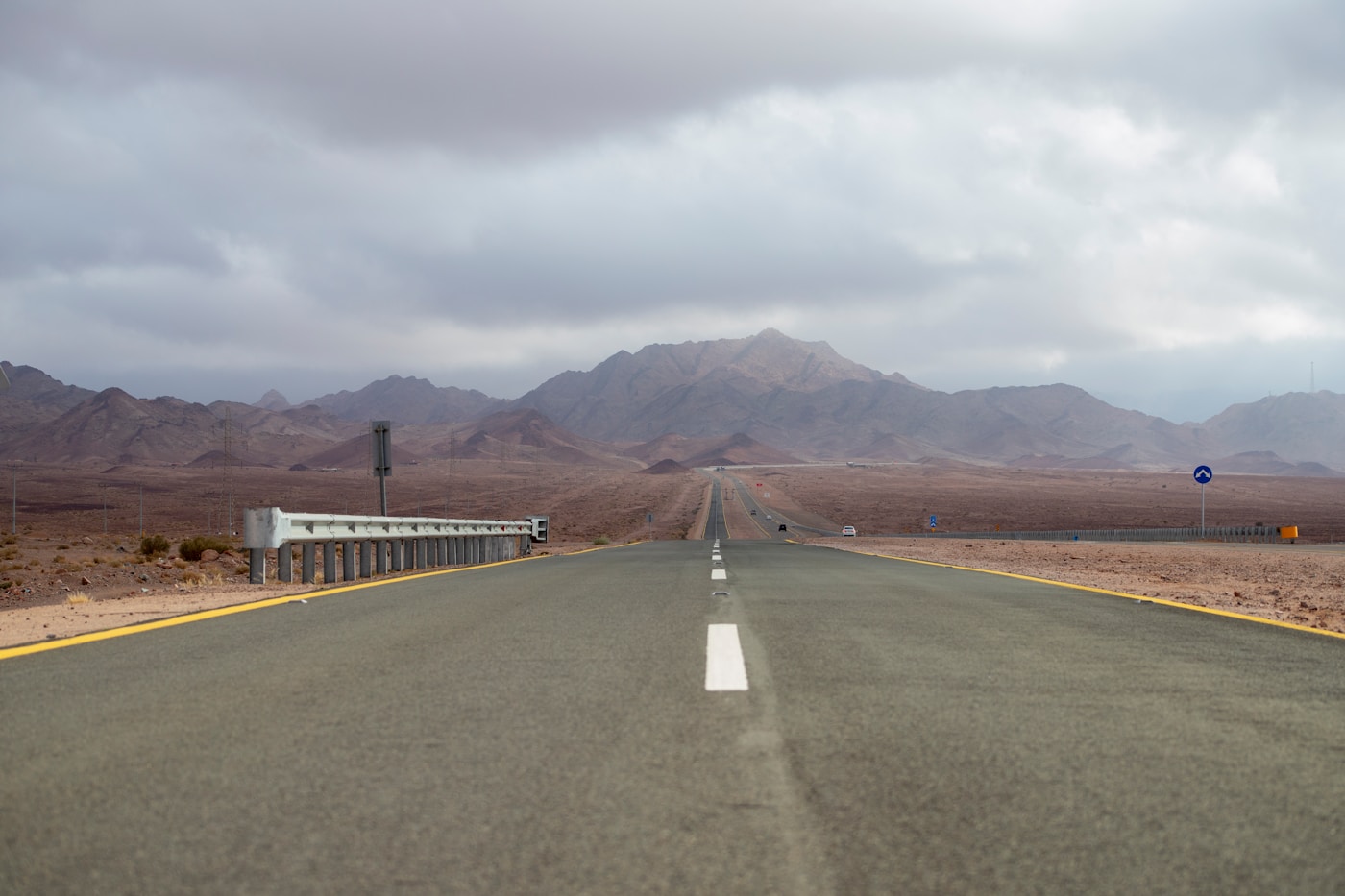

Saudi Arabia’s vast distances, modern highway network, and dramatic landscapes make it one of the most rewarding countries in the Middle East to explore by car. From the sandstone valleys of AlUla to the volcanic plains along the Red Sea coast, a rental car unlocks destinations that public transport and ride-hailing simply cannot reach. This comprehensive guide covers everything you need to know about renting a car in the Kingdom, from documentation and pricing to desert driving tips and the best road trips in the country.
Quick Facts: Car Rental in Saudi Arabia
- Minimum rental age: 21 (25 for luxury and high-performance vehicles)
- Side of road: Right-hand drive (left-hand traffic)
- Highway speed limit: Up to 140 km/h on expressways
- Fuel cost: SAR 2.18/litre (91 octane) or SAR 2.33/litre (95 octane) — roughly $0.58-$0.62/litre
- Tolls: None (the entire highway network is toll-free, except the King Fahd Causeway to Bahrain at around SAR 25)
- Economy rental: From SAR 90-150/day ($24-40)
- SUV rental: From SAR 170-300/day ($45-80)
- International Driving Permit: Required for most foreign visitors alongside your national licence
- Theeb Rent A Car — The largest Saudi car rental company, publicly listed on the Saudi stock exchange (Tadawul), with more than 19,000 vehicles across 48 branches nationwide. Theeb has been operating since 1991 and is a partner of Saudia’s Alfursan loyalty programme.
- Yelo — A growing Saudi brand with a modern fleet and strong online booking platform, offering competitive rates for daily, weekly, and monthly rentals.
- Hanco Automotive — One of the established local giants with branches across the Kingdom, particularly strong in the Eastern Province.
- Key Car Rental — Branches in Riyadh, Jeddah, Makkah, Madinah, and Dammam, with a reputation for competitive pricing.
- Lumi — Known for good online discounts and a generous 300 km daily allowance included in standard rentals.
- SelfDrive — Offers daily, weekly, and monthly self-drive rentals with long-term rates starting from SAR 1,399/month.
- A valid passport (for tourists) or Iqama residence permit (for residents)
- A credit card in the renter’s name for the security deposit — most companies require a credit card rather than a debit card, though some allow debit cards for economy vehicles
- Both the renter and credit card holder must be present at pick-up if using someone else’s card
- Windscreen damage, cracks, and chips
- Tyre punctures and replacements
- Headlight and underbody damage
- Damage caused while driving off-road (unless you have rented a vehicle with off-road insurance)
- Interior damage or loss of personal belongings
- Seatbelts are mandatory for all occupants — front and rear
- Using a mobile phone while driving is prohibited (hands-free is permitted)
- Right turns at red lights are permitted unless signs specifically forbid it
- Roundabouts are common — vehicles inside the roundabout have priority
- The blood alcohol limit is zero — Saudi Arabia prohibits all alcohol, and any trace in your system will result in severe penalties
- Headlights must be on during rain, dust storms, or reduced visibility
- Child car seats are mandatory for children under 10 years old
- Reduce tyre pressure to 15-18 psi before driving on sand to improve flotation — reinflate to normal levels as soon as you return to tarmac
- Build momentum before climbing dunes and maintain speed even if you need to downshift — stopping mid-climb will bury the vehicle
- Descend dunes in the direction of the slope using engine braking — never freewheel down a dune
- Carry a sand flag (a tall, visible flag mounted on the vehicle) for visibility over dune crests
- Keep at least 5 litres of extra water per person, a basic tool kit, a tow rope, and a shovel in the vehicle
- Never drive in the desert alone — travel in a convoy of at least two vehicles when possible
- Wind-blown sand on roads can be as slippery as ice — reduce speed when you see sand drifts across the tarmac
- Document the car thoroughly before driving away — take a video walkthrough of the exterior and interior, including mirrors, tyres, and any existing scratches or dents. This protects you against false damage claims at return.
- Check the mileage allowance — most rentals include 200-300 km per day. If you are planning a long road trip, negotiate an open-mileage deal or calculate whether the extra-kilometre charges will add up.
- Carry cash for emergencies — while most fuel stations accept cards, some smaller rest stops and parking facilities in rural areas may be cash-only.
- Keep your documents on you at all times — your licence, IDP, passport (or a copy), and rental agreement should always be in the car. Police checkpoints are common on intercity highways.
- Return the car with the same fuel level — most companies operate a full-to-full fuel policy. Returning with less fuel than pick-up will result in a refuelling charge at premium rates.
- Book during off-peak periods for the best rates — Hajj season, Ramadan, and the November-February tourist peak see the highest demand and prices.
- Ask about roadside assistance — reputable companies include 24-hour breakdown cover. Confirm this before you leave, and save the assistance number in your phone.
Do You Need a Car in Saudi Arabia?
The short answer for most visitors: yes. Saudi Arabia is a vast country — roughly five times the size of Germany — and its most compelling attractions are spread across enormous distances. While Riyadh, Jeddah, and Dammam have functioning ride-hailing networks, much of what makes Saudi Arabia extraordinary lies between cities, along desert highways, and at sites far from any urban centre.
A rental car is particularly valuable if you plan to visit AlUla, drive the Red Sea coastal road between Jeddah and Yanbu, explore the Asir mountain region near Abha, or venture to geological wonders like the Edge of the World near Riyadh. Public transport between cities is limited to Saudi Arabian Airlines domestic flights and the Haramain High-Speed Railway connecting Jeddah, Makkah, and Madinah.
That said, if your trip is confined to a single city — particularly Riyadh or Jeddah — ride-hailing apps like Uber and Careem can be a convenient and affordable alternative. We cover those options at the end of this guide.
Rental Companies: International and Local
Saudi Arabia’s car rental market is booming, projected to grow from $2.58 billion in 2025 to $5.59 billion by 2034. That growth means excellent competition and more choices for travellers. You will find both international brands and well-established Saudi companies operating at airports, city centres, and hotel areas across the Kingdom.
International Companies
All the major global brands have a strong presence in Saudi Arabia, with counters at King Khalid International Airport (RUH) in Riyadh, King Abdulaziz International Airport (JED) in Jeddah, and King Fahd International Airport (DMM) in Dammam. These include Hertz, Avis, Budget, Sixt, Enterprise, Europcar, National, and Alamo. Booking through international brands offers the convenience of familiar loyalty programmes, standardised insurance packages, and English-language customer support.
Local Saudi Companies
Local operators often provide better value, larger fleets of vehicles suited to local conditions, and a wider network of branches across smaller cities and towns. The leading local players include:
Where to Book
For the best rates, compare prices across aggregators like KAYAK, Booking.com, Carngo, and momondo before checking the direct websites of local companies like Theeb and Yelo, which sometimes offer lower rates than appear on aggregator platforms. Booking two to four weeks in advance is recommended, especially during Hajj, Umrah season, or the peak tourist months from November to February.
Prices by Vehicle Category
Rental prices in Saudi Arabia are competitive by international standards, though they vary significantly by city, season, and whether you book at the airport counter or online in advance. The following table provides approximate daily rates for the most common vehicle categories.
Approximate Daily Rental Rates
| Vehicle Category | Typical Models | Daily Rate (SAR) | Daily Rate (USD) | Best For |
|---|---|---|---|---|
| Economy | Toyota Yaris, Hyundai Accent | 90-150 | $24-40 | City driving, solo travellers |
| Compact | Toyota Corolla, Hyundai Elantra | 120-200 | $32-53 | Short intercity trips, couples |
| Mid-size | Toyota Camry, Hyundai Sonata | 180-280 | $48-75 | Highway comfort, small families |
| SUV / Crossover | Toyota RAV4, Hyundai Tucson | 200-350 | $53-93 | Road trips, families, light off-road |
| Full-size SUV / 4×4 | Toyota Land Cruiser, Nissan Patrol | 350-600 | $93-160 | Desert driving, large groups, remote areas |
| Luxury | BMW 5 Series, Mercedes E-Class | 500-900+ | $133-240+ | Business travel, special occasions |
Weekly rentals typically offer a 15-25% discount over the daily rate, and monthly rentals can reduce costs even further. One-way drop-off fees between cities are common and usually start around SAR 75 plus VAT, though they can be higher for longer distances. Always confirm one-way fees before booking, as some local companies waive them for certain popular routes.
Requirements and Documentation
Driving Licence and International Driving Permit
To rent and drive a car in Saudi Arabia as a tourist, you need a valid national driving licence from your home country. Saudi Arabia recognises physical home licences from 67 countries for a period of 90 days. However, an International Driving Permit (IDP) is strongly recommended — and effectively required by most rental companies — as it provides an official Arabic and English translation of your licence.
If your driving licence is not in Latin script (for example, licences from China, Japan, South Korea, or Russia), you will need either an IDP or a notarised Arabic translation of your licence. Digital copies and photographs of licences are not accepted at rental counters or police checkpoints — you must carry original physical documents at all times.
The IDP should be obtained from your home country before you travel. In most countries, it can be issued by the national automobile association (such as the AA in the UK or AAA in the United States) for a small fee, and is valid for one year.
Age Requirements
The minimum age to rent a standard vehicle in Saudi Arabia is 21 years. Luxury vehicles, sports cars, and high-performance models typically require the driver to be at least 25. Drivers under 25 may be subject to a young driver surcharge at some companies. Your driving licence must have been valid for at least one year (six months minimum for the Super Collision Damage Waiver option).
Other Requirements
Insurance and Deposits
Understanding your insurance coverage before picking up the car will save you money and stress.
Collision Damage Waiver (CDW)
CDW is included in most bookings in Saudi Arabia and reduces your liability in the event of damage. However, it comes with an excess (deductible) — the amount you would need to pay before the insurance kicks in. This excess can be substantial, sometimes reaching SAR 18,000 or more for standard vehicles.
Super Collision Damage Waiver (SCDW)
For an additional daily fee, you can upgrade to SCDW, which reduces or eliminates the excess entirely. This is worth considering if you plan to drive long distances, venture off main highways, or simply want peace of mind. Your driving licence must have been valid for at least six months to qualify for SCDW.
What CDW Typically Does Not Cover
Credit Card Insurance
Many premium credit cards offer rental car insurance as a benefit. Check your card’s terms before purchasing additional coverage — you may already be covered. However, be aware that some Saudi rental companies may still require you to purchase their CDW regardless of your credit card coverage.
Security Deposits
Rental companies will place a hold on your credit card as a security deposit at pick-up. This is typically SAR 1,000-3,000 depending on the vehicle category. The hold is released after the car is returned in good condition, though it may take several business days to appear back on your statement.
Driving Rules and Road Culture
Saudi Arabia drives on the right side of the road, the same as continental Europe, the United States, and most of the Middle East. If you are accustomed to driving in the UK, Australia, or Japan, this is an important adjustment.
Speed Limits
| Road Type | Speed Limit | Buffer Before Fine |
|---|---|---|
| Residential areas | 40 km/h | +10 km/h |
| Urban roads | 60-80 km/h | +10 km/h |
| Single carriageways | 80-100 km/h | +10 km/h |
| Dual carriageways / highways | 120 km/h | +10 km/h |
| Expressways | 140 km/h | +4 km/h |
The Saher Camera System
Saudi Arabia operates one of the most advanced automated traffic enforcement systems in the world. The Saher system uses AI-powered cameras with radar and 360-degree imaging deployed at intersections, highways, and even remote desert roads. These cameras monitor not just speed but also seatbelt compliance, mobile phone use while driving, unsafe lane changes, and red-light violations.
Fines are issued automatically and linked to the vehicle’s registration. If you are renting a car, traffic fines will be charged to your credit card or deducted from your deposit. Speeding fines start at SAR 150-300 for minor infractions and escalate quickly: exceeding the limit by 30-40 km/h carries a fine of SAR 800-1,000 plus six black points on your licence record.
The Black Points System
Saudi Arabia operates a 24-point system. Each traffic violation adds points to your record. Reaching 24 points can result in licence suspension for several months, and repeated offences can lead to permanent revocation. For tourists, accumulated fines may need to be settled before you can leave the country.
Key Rules to Remember
Road Culture: What to Expect
Saudi driving culture can be an adjustment for visitors accustomed to strict lane discipline. Drivers frequently change lanes without signalling, tailgating is common on highways, and the general pace of traffic in cities tends to be faster than posted limits. In Riyadh especially, the driving style is assertive — you will need to be confident and decisive at lane merges and roundabouts.
That said, Saudi Arabia’s road infrastructure is excellent. Major highways between cities are wide, well-maintained, and clearly signed in both Arabic and English. Rest stops, fuel stations, and mosques are placed at regular intervals on long-distance routes. The real challenge is not the roads themselves but the behaviour of other drivers — stay alert, maintain safe following distances, and do not take aggressive driving personally.
Navigation and Road Signs
Google Maps and Waze both work well in Saudi Arabia and are essential for navigating city traffic, avoiding construction zones, and finding the fastest routes. Download offline maps for your route before leaving urban areas, as mobile signal can be patchy in remote desert regions.
Road signs in Saudi Arabia are bilingual — Arabic and English — on major highways and in cities. In more remote rural areas, some signage may be in Arabic only. If you are driving to less-visited sites, having GPS navigation is not optional — it is essential.
City traffic is heaviest Sunday to Thursday (the Saudi working week), particularly during the morning commute (7:00-9:00 AM) and late afternoon (4:00-6:00 PM). If you can, schedule cross-city driving between 10:00 AM and 4:00 PM to avoid the worst congestion, especially in Riyadh.
Fuel: Among the Cheapest in the World
Saudi Arabia is an oil-producing nation, and that means fuel prices are a fraction of what you would pay in Europe or North America. Petrol prices are government-regulated and remain stable throughout the year, with Aramco reviewing rates monthly on the 10th of each month.
Current Fuel Prices (2026)
| Fuel Type | Price per Litre (SAR) | Price per Litre (USD) |
|---|---|---|
| Gasoline 91 (Regular) | 2.18 | $0.58 |
| Gasoline 95 (Premium) | 2.33 | $0.62 |
| Diesel | 1.79 | $0.48 |
To put this in perspective, filling a 60-litre tank with premium fuel costs roughly SAR 140 ($37) — less than a quarter of what you would pay in the UK or Germany. Fuel costs will be one of the smallest line items in your Saudi Arabia travel budget. Fuel stations are abundant on major highways and in all cities, and most accept both cash and card payment.
Women Drivers in Saudi Arabia
Saudi Arabia lifted its decades-long ban on women driving in June 2018, and today female visitors can rent and drive vehicles on exactly the same terms as men. All major rental companies, both international and local, serve female customers without restriction.
In practice, women driving in Saudi Arabia report no issues in major cities like Riyadh, Jeddah, and Dammam, where female drivers are now a common sight. In smaller towns and more rural or conservative areas, a woman behind the wheel may still attract occasional curiosity, but harassment is rare. Standard advice applies: dress modestly (as is customary throughout Saudi Arabia), keep your phone charged for navigation, and drive with the same confidence you would anywhere else.
Women travelling solo by car is increasingly common, and the rental process is identical — you will need the same documentation (licence, IDP, passport, credit card) and meet the same age requirements. The Kingdom’s ongoing social reforms under Vision 2030 have made the practical experience of driving as a woman in Saudi Arabia largely unremarkable, which is exactly the point.
Desert Driving Tips
Saudi Arabia’s desert landscapes are among the most spectacular in the world, but venturing off tarmac requires preparation, the right vehicle, and some basic knowledge of sand driving techniques.
Vehicle Choice
If you plan to drive on sand or unpaved desert tracks, rent a full-size SUV or 4×4 — a Toyota Land Cruiser, Nissan Patrol, or Jeep Wrangler are the most popular and reliable choices. Standard economy cars and crossover SUVs are not suitable for sand driving. Make sure your rental agreement explicitly permits off-road use, as most standard insurance policies exclude damage incurred on unpaved surfaces.
Essential Desert Driving Techniques
Wildlife Hazards
Camels roaming near highways are a genuine hazard, particularly at dawn and dusk when visibility is lower and camels are most active. A collision with a camel at highway speed is extremely dangerous. Stay alert on desert highways, especially in the hour after sunset, and use high beams when there is no oncoming traffic.
Best Time for Desert Driving
The optimal period for desert excursions is October to March, when temperatures are manageable (20-30C during the day). During summer months (June to August), daytime temperatures in the desert regularly exceed 50C, which is dangerous for both humans and vehicles. If you must drive in summer, carry extra coolant and water, and avoid stopping for extended periods in direct sun.
Best Road Trips in Saudi Arabia
Saudi Arabia’s highway network makes it possible to plan extraordinary road trips across diverse landscapes — from coastal roads to mountain passes to deep desert highways. Here are some of the most rewarding routes for visitors with a rental car.
Riyadh to AlUla (1,000 km via Hail)
This is the classic Saudi road trip, connecting the capital to one of the most extraordinary archaeological sites in the Middle East. The route passes through Buraydah and Hail, crossing the Nefud Desert with its distinctive red sand dunes. Plan for an overnight stop in Hail, which has its own historical sites and is a fascinating glimpse of traditional Najdi life. The road is excellent throughout, with highway-quality tarmac and regular fuel stops. At the end, AlUla rewards you with the UNESCO-listed Hegra (Madan Saleh), Elephant Rock, and the stunning old town.
Jeddah to Yanbu: The Red Sea Coastal Road (325 km)
One of Saudi Arabia’s most scenic drives, this route follows the Red Sea coast with turquoise waters on one side and volcanic plains on the other. The road passes through pristine beaches, fishing villages, and coral reef areas ideal for snorkelling stops. From Yanbu, you can continue north to AlUla for a comprehensive western Saudi loop.
Jeddah to Taif: The Escarpment Road (170 km)
The drive from Jeddah up to Taif climbs through the Hejaz Mountains on a winding road that gains over 1,500 metres in elevation. The temperature drops noticeably as you ascend, and the landscape transforms from arid coast to green terraced hillsides. Taif itself is famous for its roses, cooler climate, and traditional souks. This route is popular with residents escaping the coastal summer heat.
Abha and the Asir Mountain Loop
The southwestern Asir region around Abha offers Saudi Arabia’s most dramatic mountain driving. Winding roads traverse passes above 2,000 metres with misty valleys, terraced villages, and landscapes that look nothing like the stereotypical desert. The drive from Abha to the village of Rijal Almaa — a UNESCO-heritage listed settlement — is a particular highlight. A 4×4 is recommended for some of the mountain tracks.
Edge of the World (Riyadh Day Trip)
The Edge of the World (Jebel Fihrayn) is a dramatic 300-metre cliff overlooking the Tuwaiq Escarpment, located roughly 120 km from Riyadh. Note that independent self-drive access has been restricted following safety incidents — visitors are now required to join organised tours or convoys to reach the site. Check the latest regulations before planning this trip, and do not attempt to drive there independently without confirming current access rules.
AlUla to Tabuk and NEOM (400 km)
Heading north from AlUla toward Tabuk, the landscape shifts to golden plains and dramatic rocky outcrops. Tabuk itself is a gateway to the emerging NEOM development zone and the spectacular Wadi Disah, sometimes called the Grand Canyon of Saudi Arabia. This route can be combined with the AlUla section for an extended northwestern Saudi road trip of several days.
Ride-Hailing Alternatives: Uber and Careem
If you prefer not to drive — or need a car for just a few city trips — Saudi Arabia has a well-developed ride-hailing market dominated by two apps.
Uber
Uber operates across major Saudi cities including Riyadh, Jeddah, Makkah, Madinah, and Dammam. Service tiers include UberX (standard), UberBLACK (premium), and UberVAN (larger vehicles). Pricing is competitive and generally comparable to Careem.
Careem
Careem (now owned by Uber) is the dominant regional platform and often has more drivers available, particularly in Riyadh (over 10,000 registered drivers) and Jeddah (over 5,000). Careem offers multiple tiers: Careem Go (economy), Careem Business, and Careem Max. The Hala Taxi option, available in some cities, connects you to metered yellow taxis at lower rates than the standard ride-hailing service.
When to Use Ride-Hailing Instead of Renting
Ride-hailing makes sense if you are staying within a single city for a few days, visiting only during Hajj or Umrah (when traffic near the holy cities is intense and parking is extremely limited), or if you simply prefer not to navigate Saudi driving culture. For multi-city trips, road trips, or any itinerary that includes destinations outside the main urban centres, a rental car is almost always the better choice in terms of cost, convenience, and flexibility. For a full comparison of transport options in Saudi Arabia, see our dedicated guide.
Practical Tips for Renting in Saudi Arabia
Frequently Asked Questions
Can tourists rent cars in Saudi Arabia?
Yes. Tourists with a valid national driving licence, an International Driving Permit, a passport, and a credit card can rent vehicles from both international and local companies at airports and city locations across Saudi Arabia.
Do I need an International Driving Permit?
While Saudi Arabia recognises licences from 67 countries for up to 90 days, an IDP is strongly recommended and effectively required by most rental companies. If your licence is not in Latin script, an IDP or notarised Arabic translation is mandatory. Obtain your IDP from your home country’s automobile association before travelling.
Is driving in Saudi Arabia safe?
Road infrastructure in Saudi Arabia is modern and well-maintained. The main safety considerations are the driving culture (fast-paced, assertive lane changes), long distances that can cause fatigue, and wildlife hazards (camels) on desert highways. Drive defensively, obey speed limits, and take regular breaks on long journeys.
Can women rent and drive cars in Saudi Arabia?
Yes. Since June 2018, women have had the legal right to drive in Saudi Arabia, and all rental companies serve female customers on equal terms. There are no restrictions on women driving solo or renting vehicles independently.
What side of the road do they drive on in Saudi Arabia?
Saudi Arabia drives on the right side of the road, the same as the United States, continental Europe, and most of the Middle East.
How much does fuel cost in Saudi Arabia?
Fuel is very cheap by international standards. Regular petrol (91 octane) costs SAR 2.18 per litre (around $0.58), and premium (95 octane) costs SAR 2.33 per litre (around $0.62). Prices are government-regulated and remain stable throughout the year.
Are there tolls on Saudi highways?
No. The entire Saudi highway network is toll-free. The only exception is the King Fahd Causeway connecting Saudi Arabia to Bahrain, which charges approximately SAR 25.
What happens if I get a traffic fine while driving a rental car?
Traffic fines from Saher cameras are linked to the vehicle registration and will be passed on to you by the rental company, typically charged to the credit card on file. Fines range from SAR 150 for minor speeding to SAR 1,500+ for serious violations. Settle any outstanding fines before returning the vehicle.
Do I need a 4×4 for driving in Saudi Arabia?
For paved highways and city driving, a standard sedan is perfectly adequate. A 4×4 or full-size SUV is only necessary if you plan to drive on sand, unpaved desert tracks, or remote mountain roads. Most visitors exploring Saudi Arabia’s main tourism routes (AlUla, Jeddah, Taif, Abha) will be fine with a mid-size sedan or crossover SUV.
Can I drive my rental car to Bahrain?
Cross-border travel must be explicitly authorised by your rental company. Many companies prohibit taking vehicles outside Saudi Arabia, while others allow it for an additional fee and with advance notice. Check your rental agreement carefully and arrange any necessary documentation before attempting to cross the King Fahd Causeway to Bahrain.
For more practical travel information, visit our Saudi Arabia Travel Hub, including our guides to travel costs and getting around the Kingdom.