
Saudi Arabia is fast becoming one of the Middle East’s most compelling cycling destinations. From the 26-kilometre dedicated trail threading through the UNESCO World Heritage site of Hegra in AlUla to the 220 kilometres of cycling paths under construction along Riyadh’s Sports Boulevard, the Kingdom is building an infrastructure that matches the raw beauty of its terrain. Whether you are a road cyclist chasing desert horizons, a mountain biker hunting singletrack in the Sarawat range, or a leisure rider looking for a sunset spin along the Jeddah Corniche, this guide covers the routes, events, bike hire options and practical details you need. For a broader overview of planning a trip to the Kingdom, see our Saudi Arabia Travel Guide 2026.
Best Season: November to March (daytime highs of 15 – 28 °C)
Top Regions: AlUla, Riyadh (Wadi Hanifah / Sports Boulevard), Asir highlands
Visa Required: Yes — tourist e-visa available online
Bike Hire Cost: 55 – 160 SAR / day (~$15 – $43 USD) for standard bikes; carbon and e-bikes from 110 – 150 SAR
Key Event: AlUla Tour (UCI 2.1 stage race, late January)
Avoid: Riding between May and September — temperatures regularly exceed 45 °C
Why Cycle in Saudi Arabia
Until recently, cycling in Saudi Arabia was the preserve of a handful of expats and determined locals. That has changed rapidly. The Saudi government’s National Cycling Strategy, issued by the Ministry of Transport and Logistic Services in 2023, commits approximately $200 million to cycling infrastructure across the country, mandating dedicated bike lanes in new urban developments, safety standards, and public bike rental systems. The Saudi Cycling Federation — an affiliate of the UCI — now runs domestic race calendars for men and women. And the annual AlUla Tour, promoted by ASO (the company behind the Tour de France), brings WorldTour-calibre riders to race through sandstone canyons and Nabataean tombs every January.
The landscape rewards the effort. Within a single trip you can ride flat, paved trails alongside ancient rock-cut tombs in AlUla, tackle the cloud-shrouded Sarawat Mountain passes above Abha where gradients touch 12 per cent, or pedal a pancake-flat 30-kilometre corniche ride with the Red Sea on one side and Jeddah’s skyline on the other. For bikepackers, the 560-kilometre paved road crossing the Rub’ al Khali (Empty Quarter) — completed in 2021 — is one of the most extraordinary desert rides on earth.
Best Cycling Routes and Regions
AlUla — The Cycling Capital
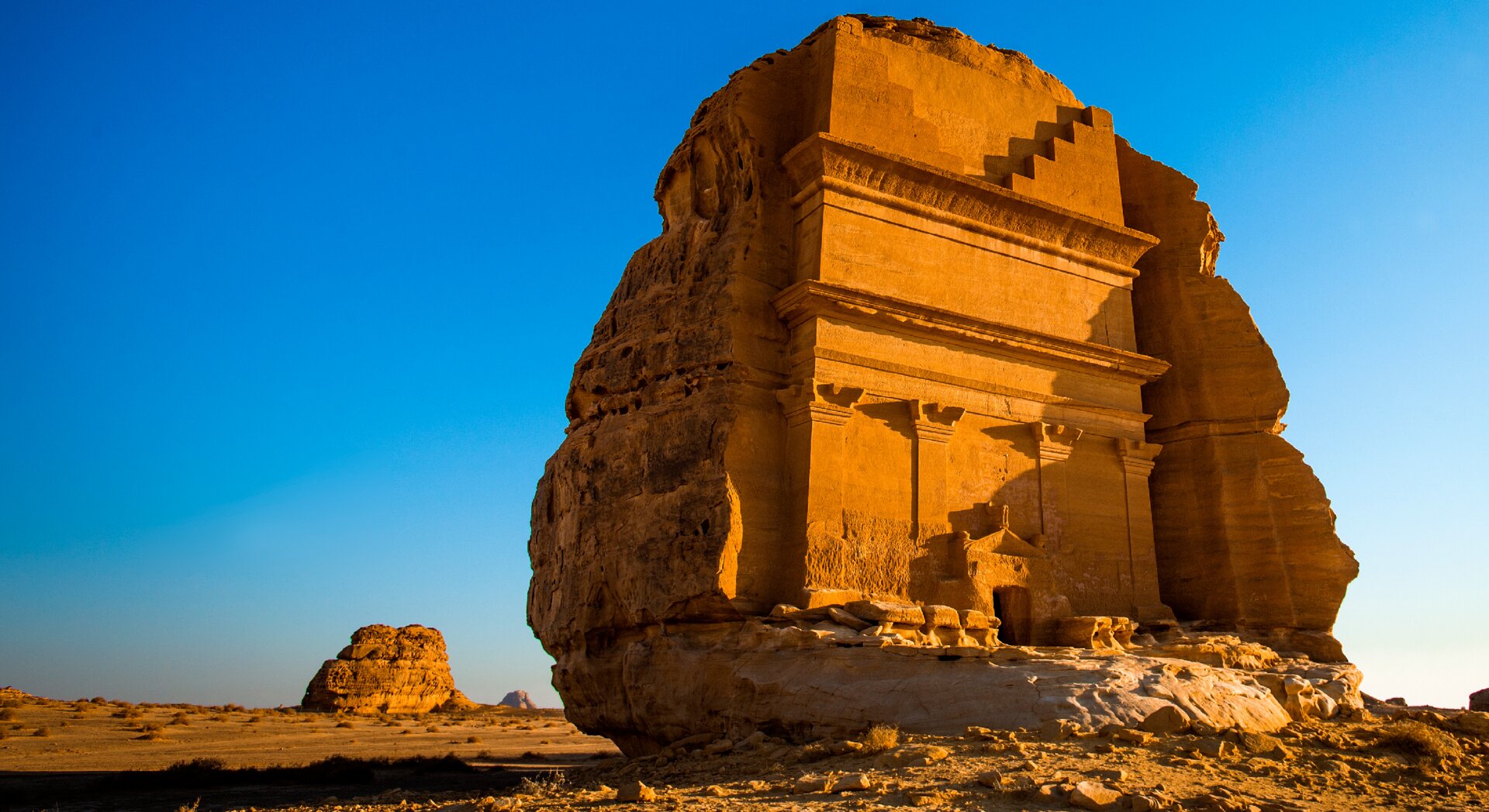
AlUla has positioned itself as Saudi Arabia’s flagship cycling destination, and the infrastructure backs up the claim. The Wheels Bike Hub serves as the starting point for a 26-kilometre uninterrupted trail running from the AlAtheeb area to the Hegra Visitor Centre and back. The route is mostly flat, winding through date-palm farms, ancient rock formations and open desert on quiet, dedicated paths. Riding time ranges from 30 minutes for fast riders to two hours for those stopping to photograph every tomb.
For longer rides, a 45-kilometre dedicated cycling track extends from the AlFareed Roundabout in AlUla Central to the Camel Cup grounds. More ambitious riders can tackle 50 to 76-kilometre loops that take in the full Hegra UNESCO territory, with its 101 Nabataean tombs carved into sandstone monoliths. Some organised routes finish with dinner at Awna, an open-air restaurant set among atmospherically lit rocks, which has hosted visiting Michelin-starred chefs.
The Heritage Oasis Trail is a shorter option within the AlUla Oasis itself, offering shaded paths past local farm stalls and ancient irrigation channels. For road cyclists seeking a serious challenge, the Harrat Uwayrid climb — used as a stage finish in the AlUla Tour — is a four-kilometre ascent with ramps exceeding 12 per cent gradient. Read more about this extraordinary region in our AlUla Travel Guide.
Riyadh — Wadi Hanifah and Sports Boulevard
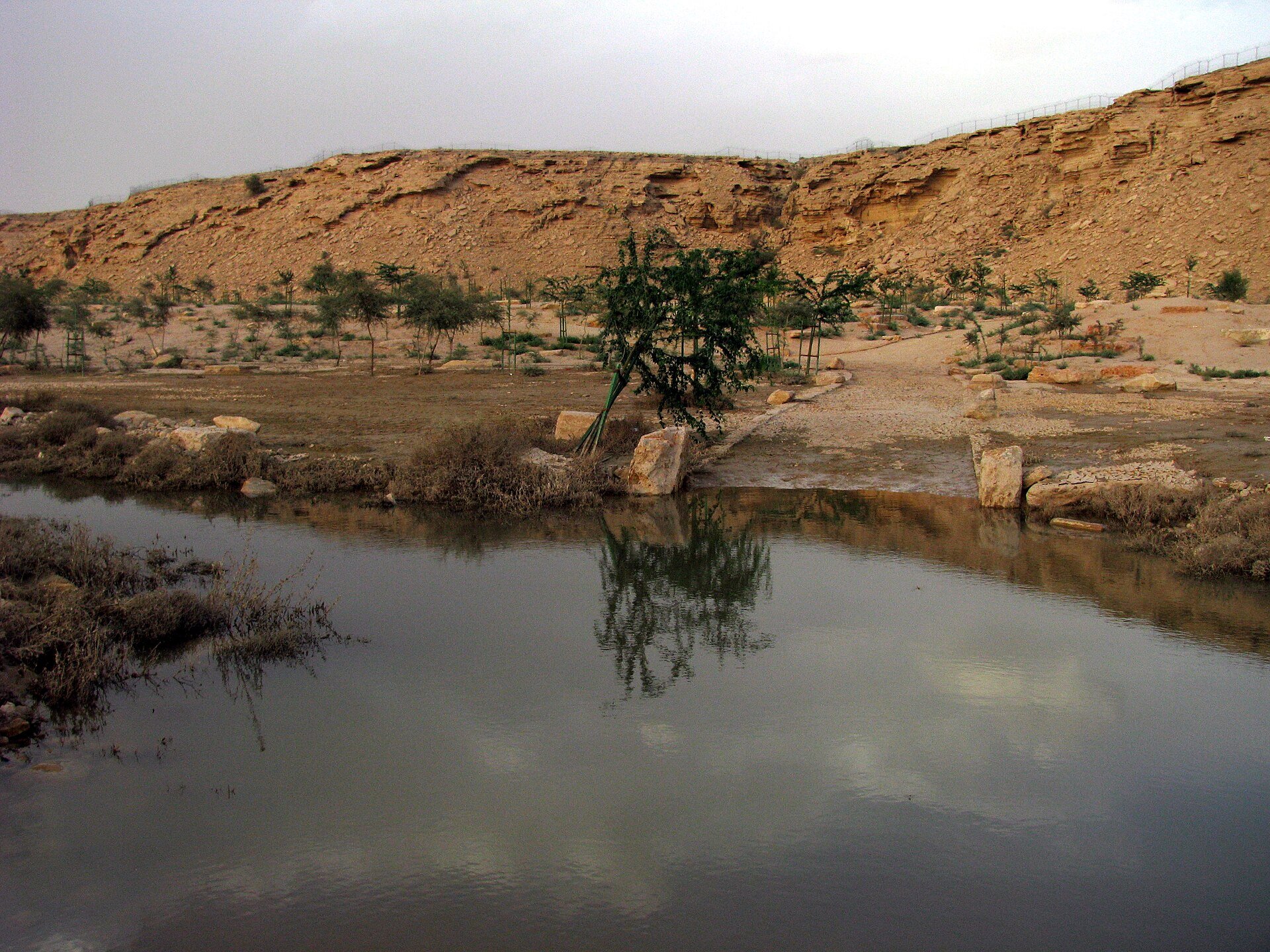
Riyadh’s cycling scene is being transformed by two mega-projects. Wadi Hanifah, a 120-kilometre-long valley cutting through the western edge of the capital, already has paved multi-use paths popular with weekend cyclists. The valley’s pools and sandstone escarpments provide welcome visual relief from the surrounding urban sprawl, and bioremediation has turned what was once a drainage channel into a genuine green corridor. Guided cycling tours of Wadi Hanifah and the nearby UNESCO-listed Diriyah district are available through operators such as CyTime, typically running in the cooler evening hours.
The Sports Boulevard is the bigger story. Launched by King Salman in 2019, this 135-kilometre linear park will stretch from Wadi Hanifah in the west to Wadi al-Sulay in the east, incorporating over 220 kilometres of dedicated cycling paths. The first phase — the 30-kilometre Hanifah Valley Zone — opened in early 2025, with the overall project approximately 40 per cent complete and 83 km of route accessible. When finished, an estimated 2.2 million residents will live within a 15-minute bike ride of the boulevard. The Sports Boulevard Foundation has also launched RIYDE, an immersive indoor cycling experience developed in partnership with BKOOL, available at air-conditioned locations across the city for when summer temperatures make outdoor riding impossible.
Jeddah — Corniche and Coastal Rides
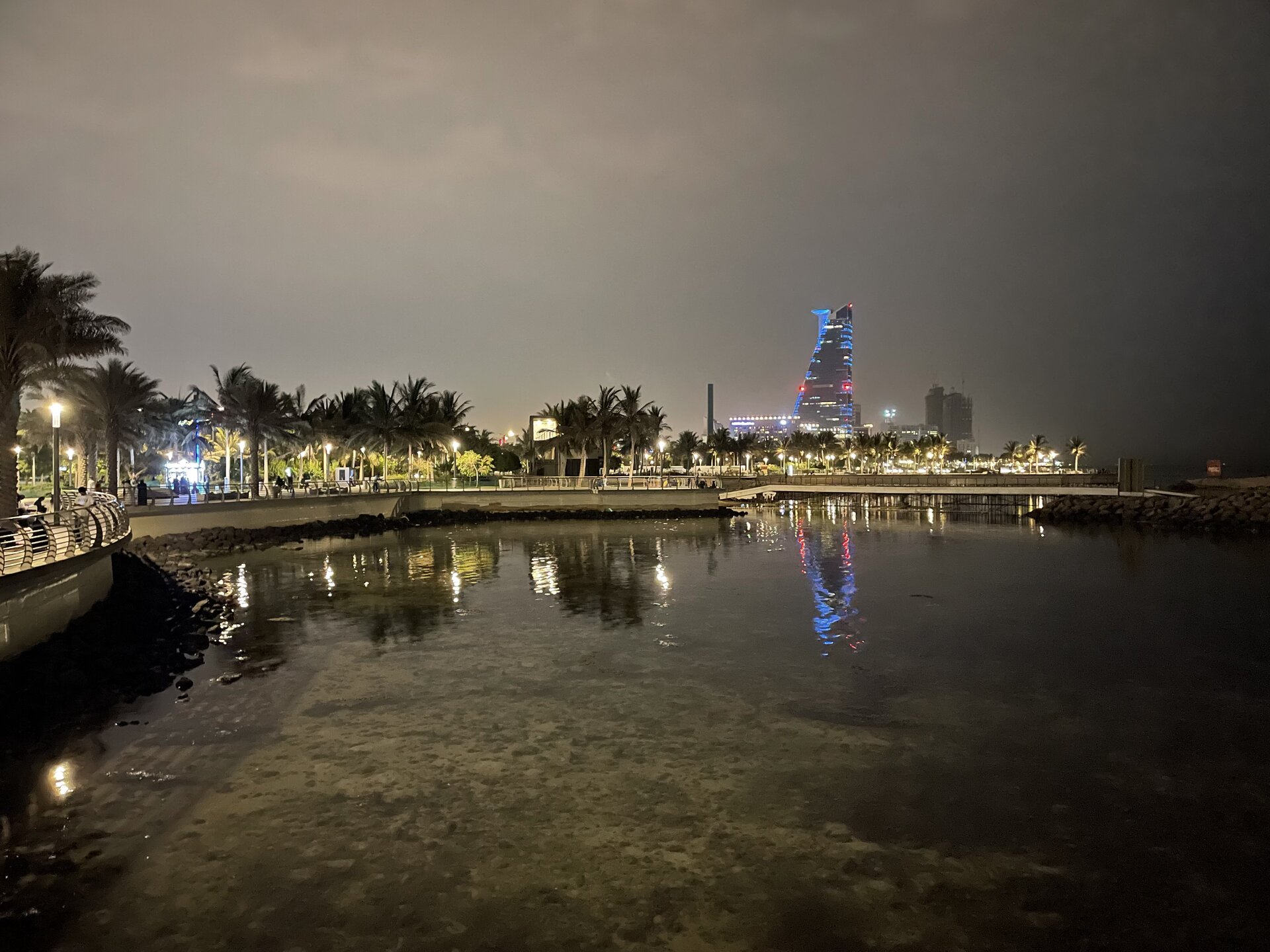
Jeddah’s 30-kilometre Corniche offers the Kingdom’s best coastal cycling. The ROSHN Jeddah Waterfront section features dedicated cycle corridors and jogging tracks shaded by trees, running several kilometres along the central promenade. The North Corniche is the most cyclist-friendly stretch, with well-maintained lanes paralleling the Red Sea coast. The terrain is completely flat, making it suitable for riders of all abilities.
Bike rentals are available on site along the Corniche. Organised community rides take place on specific days — typically Sundays and Tuesdays — and evening rides are popular during warmer months when sea breezes bring temperatures down. The women’s cycling team Bisklita (Arabic for bicycle) regularly rides the Corniche, and mixed-gender group rides have become increasingly common. For more on the waterfront itself, see our guide to Jeddah’s parks and waterfront promenades.
Asir Highlands — Mountain Climbs and the Trans Aseer Route
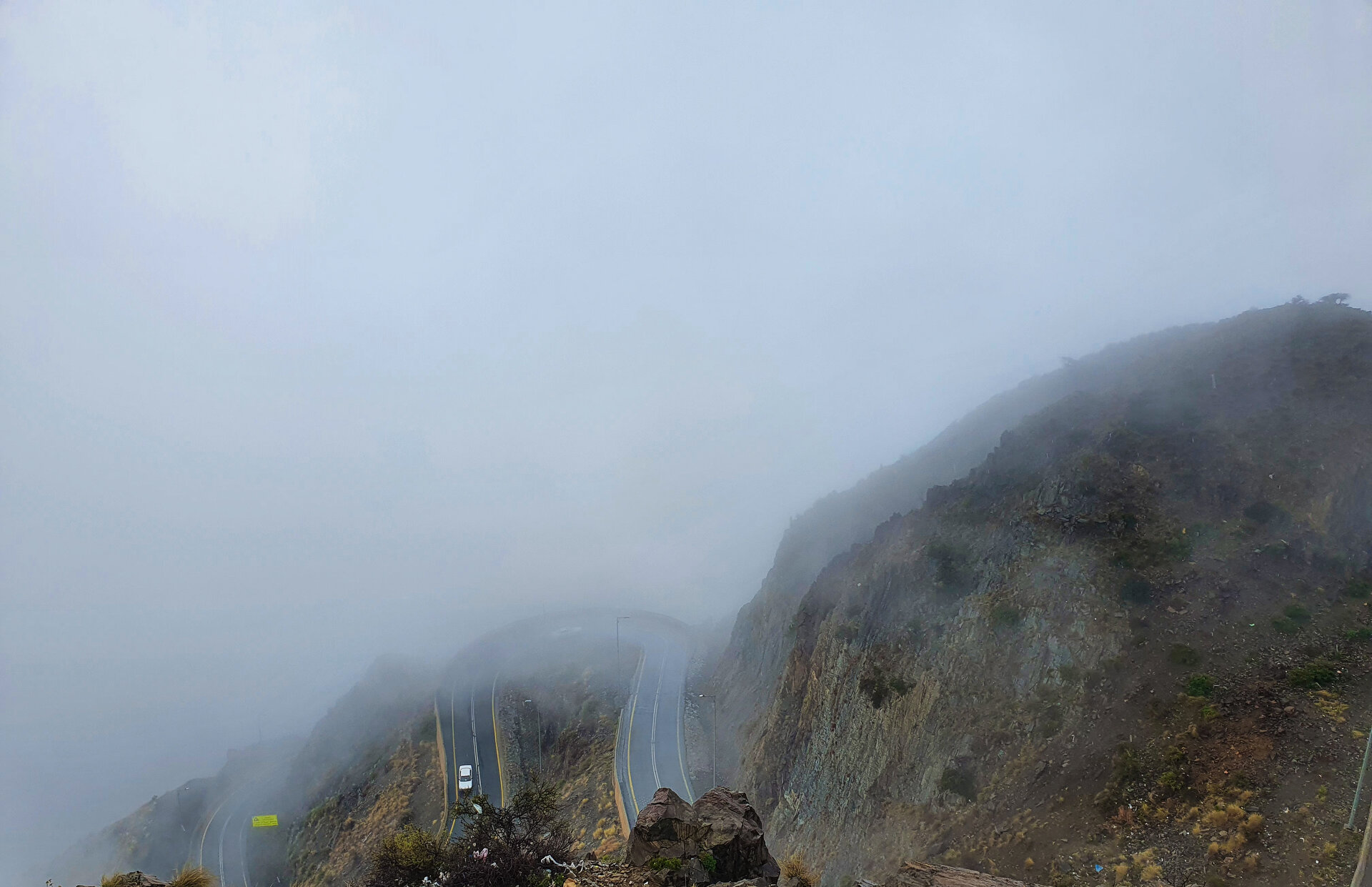
The Asir region in the southwest is where Saudi Arabia’s cycling terrain becomes genuinely world-class for climbers. The Sarawat Mountains here contain one of the highest concentrations of difficult climbing routes anywhere on earth, with 11 of the world’s hardest 100 bike climbs located within a 100-mile radius. Roads rise from sea level to Jabal Sawda, Saudi Arabia’s highest peak at 3,000 metres, on paved switchbacks that would not look out of place in the European Alps.
The Trans Aseer Mountain Range (TAMR) is Saudi Arabia’s first dedicated bikepacking route, spanning over 1,700 kilometres with more than 38,000 metres of cumulative climbing. The route follows a mix of paved roads, gravel tracks and remote backroads, with much of the riding above 1,500 metres. The dry season from November to March offers clear skies and mild temperatures at altitude. During the monsoon season (April to October), the southern sections see heavy rainfall and mist — atmospheric but impractical for extended riding.
A note for adventurous cyclists heading south: the Saudi police can be protective near the Yemen border and may provide a police escort for stretches of the route. This is a safety measure, not an obstruction, and locals are overwhelmingly hospitable. For more on the Asir region, see our Abha and Asir Travel Guide, and for dedicated off-road riding, see our mountain biking guide.
The Empty Quarter — Desert Bikepacking
The Rub’ al Khali, or Empty Quarter, is the largest sand desert on the planet — bigger than France. A paved highway completed in 2021 now runs 560 kilometres from the Oman border crossing at Rub’ al Khali to Al Batha in central Saudi Arabia, with only a couple of petrol stations along the way. Cycle tourers have crossed it in as few as eight days. The road is flat with gentle gradients never exceeding seven per cent, but the isolation and climate make it a serious undertaking. You must carry at least four to six litres of water per riding day and plan refuelling stops carefully.
For a less extreme introduction to desert riding, the roads around Tabuk and the northwest offer dramatic canyon and mesa landscapes on paved surfaces with light traffic. Wadi Disah — a deep canyon nicknamed Saudi Arabia’s Grand Canyon — has unpaved tracks suitable for gravel bikes and fat bikes, though no marked cycling infrastructure yet exists.
Dammam and the Eastern Province
The Dammam and Al Khobar corniche on the Arabian Gulf offers flat, accessible cycling along the waterfront. The Dammam Corniche path runs approximately 10 kilometres and connects to parks and leisure areas. Traffic is lighter than Riyadh or Jeddah, and the coastal breeze helps temper the heat during shoulder seasons. The area is primarily suited to leisure cycling rather than sport riding.
The AlUla Tour — Saudi Arabia’s Biggest Cycling Race
The AlUla Tour (formerly the Saudi Tour) is the Kingdom’s premier professional cycling event and the main reason Saudi Arabia appears on the international cycling calendar. First held in 1999, the race joined the UCI Asia Tour in 2020 and is now classified as a UCI 2.1 category event, promoted by Amaury Sport Organisation (ASO), the company behind the Tour de France, Paris-Roubaix and the Dakar Rally.
The 2025 edition ran from 28 January to 1 February, covering 764.4 km across five stages through the AlUla valley. Tom Pidcock (Ineos Grenadiers) won the overall classification, taking stage victories on both the Bir Jaydah Mountain Wirkah finish (Stage 2) and the Skyviews of Harrat Uwayrid summit finish (Stage 4). Tim Merlier won the opening sprint stage, and Matteo Moschetti took the final stage at the Camel Cup Track.
The race typically takes place in late January, when AlUla’s daytime temperatures sit between 15 and 22 degrees Celsius. For spectators, the start and finish areas at AlUla Old Town, the Maraya concert hall, and the Camel Cup grounds are freely accessible, and the desert terrain makes it easy to watch from the roadside along stage routes. The 2026 edition is scheduled for 27 – 31 January.
Spectator tip: The Stage 4 summit finish at Harrat Uwayrid offers the best vantage point. The four-kilometre climb with 12 per cent gradients forces the peloton to shatter, and the volcanic-plateau panorama is extraordinary. Arrive early — shuttle buses run from AlUla central.
Women’s Cycling in Saudi Arabia
Women’s cycling has grown significantly in the Kingdom. The Saudi Cycling Federation hosts the Saudi Women’s Cycling Championship, with the most recent edition held at King Saud University in Riyadh and won by Ahlam Al-Zaid. Doves Ride is Saudi Arabia’s first professional women’s cycling team, licensed both domestically and internationally. Four Saudi women became the first from the Kingdom to join the Global Biking Initiative (GBI) European tour, a seven-day charity ride.
In Jeddah, Samar Rahbini runs the mixed-gender cycling club Courage, while women’s group rides along the Corniche have become routine. Female tourists should feel entirely comfortable cycling in Saudi Arabia — there is no legal restriction on women riding bicycles, and cycling clothing (jerseys, shorts, helmets) is standard and accepted at dedicated cycling venues and trails.
Bike Hire and Equipment
Rental Shops by City
| City | Shop / Service | Bikes Available | Price (SAR) | Notes |
|---|---|---|---|---|
| AlUla | Wheels Bike Hub | Road, hybrid, mountain, carbon, e-bike | 55 – 150 / 2 hrs | Weekday rates from 55 SAR; weekends from 95 SAR. Carbon bikes 110 SAR, e-bikes 150 SAR. Advance booking recommended. |
| Riyadh | The Cycle Hub | Road (Specialized, Pinarello), MTB, fat bike | From 200 / day | Saudi Arabia’s first RETUL bike-fit studio. Book by phone: +966 11-239-7938. Group rides at beginner, intermediate and advanced levels (20 – 85 km). |
| Riyadh | Wheels Bikes (Sand Sports Park & Promenade) | Road, hybrid, mountain | 55 – 160 / 1 – 4 hrs | Two branches in Riyadh. Sand Sports Park is near King Khalid International Airport. |
| Riyadh | SPiN Rentals | City bikes, hybrids | From 40 / hr | Located on Al Nahdha Street in Jarir district. Walk-in rentals available. |
| Jeddah | Corniche rental kiosks | City bikes | 30 – 60 / hr | Available along the ROSHN Waterfront section. No advance booking required. |
Bringing Your Own Bike
Saudi Arabia’s major airports (Riyadh King Khalid, Jeddah King Abdulaziz, Dammam King Fahd) all accept bicycles as checked luggage on international flights. Most airlines serving Saudi Arabia charge a flat oversize baggage fee of $50 – $150 each way. Pack your bike in a hard case or padded bag — luggage handling can be rough. Upon arrival, there is no customs duty on personal sporting equipment brought for recreational use.
Wheels Bikes is the official Trek distributor in Saudi Arabia and stocks spares, tubes, tyres and accessories at their Riyadh and AlUla locations. The Cycle Hub in Riyadh stocks Specialized and Pinarello parts. Beyond these two, the availability of high-quality cycling components in the Kingdom is limited — bring critical spares (cleats, brake pads, derailleur hangers, spare tubes) with you.
E-Bike and Scooter Sharing
Urban e-mobility is growing. BSKL offers e-scooter and e-bike sharing in Riyadh and Jeddah via a smartphone app. Gazal is another app-based shared mobility platform operating in Saudi cities. These services are designed for short urban commutes (1 – 5 km) rather than recreational cycling, but they can be useful for last-mile transport between hotels and cycling trailheads.
Guided Cycling Tours
Grand Tours Project offers multi-day guided cycling tours in AlUla, typically structured as 5 – 7 day itineraries blending road riding with cultural excursions to Hegra, Dadan and the oasis. These tours include vehicle support, accommodation, meals and guide services. For a shorter option, MySaudiTours operates a combined Hegra hike-and-bike day tour from AlUla.
In Riyadh, CyTime runs evening bike tours of Wadi Hanifah and Diriyah, bookable through the Halayalla platform. The Cycle Hub organises regular group rides open to anyone — check their website for the weekly schedule. For self-guided touring, Komoot and Bikemap both have extensive Saudi Arabia route databases (3,595 routes at last count on Bikemap) with GPS tracks you can download to your cycling computer.
Best Season and Weather
Saudi Arabia’s cycling season runs from November to March. During these months, daytime temperatures across most of the country range from 15 to 28 degrees Celsius, with cooler nights. In the Asir highlands, temperatures can drop below 10 degrees Celsius at altitude, and morning frost is not unheard of above 2,500 metres.
| Month | Average High (°C) | Average Low (°C) | Riding Conditions |
|---|---|---|---|
| November | 28 | 14 | Excellent — warm but manageable, especially mornings and evenings |
| December | 22 | 9 | Ideal — peak season, dry and comfortable all day |
| January | 21 | 8 | Ideal — AlUla Tour month, best racing conditions |
| February | 24 | 11 | Ideal — still mild, occasional rain in the north |
| March | 28 | 14 | Good — warming up, ride early to avoid afternoon heat |
| April – October | 35 – 48 | 22 – 32 | Dangerous — heatstroke risk. Indoor cycling or high-altitude Asir only |
Heat warning: Between May and September, lowland temperatures routinely exceed 45 °C. Even experienced cyclists have been hospitalised with heat exhaustion in the Gulf region. If you must ride during summer, restrict activity to pre-dawn hours (4:30 – 7:00 AM), drink a minimum of 500 ml of water per hour, and carry electrolyte supplements. The Asir highlands above 2,000 metres are the only region where summer riding is feasible, with temperatures typically 10 – 15 degrees lower than the lowlands.
Practical Tips and Safety
Road Conditions and Traffic
Saudi Arabia’s main highways are smooth, wide and well-maintained, but they were not designed with cyclists in mind. Traffic moves fast — 120 km/h speed limits on inter-city roads are common — and many drivers are unaccustomed to sharing the road with cyclists. In cities, intersections can require crossing six or more lanes of traffic. Exercise extreme caution on any road without a dedicated cycle lane.
The safest riding is on dedicated trails (AlUla, Wadi Hanifah, Jeddah Corniche, Sports Boulevard) and quiet rural roads (Asir highlands, Tabuk region, Empty Quarter highway). Avoid riding on urban arterials during rush hours, and always use front and rear lights.
Helmet and Legal Requirements
Helmets are recommended but not legally mandatory for adult cyclists in Saudi Arabia. They are required for children. There is no specific cycling licence requirement. Bicycles must follow general traffic rules — ride on the right side of the road, obey signals, and signal turns.
Hydration and Supplies
Desalinated tap water is widely available and safe to drink. Public water dispensers are found at many mosques and roadside rest areas throughout the country. Convenience stores (Tamimi, Panda, Carrefour Express) stock water, energy bars and basic snacks even in smaller towns. On remote desert routes, however, you may go 100 kilometres or more between supply points — plan accordingly and carry reserve water.
What to Bring
- Sun protection: High-SPF sunscreen, UV-rated arm sleeves, a cycling cap under your helmet
- Hydration: Minimum two 750 ml bottles; a hydration pack for desert routes
- Navigation: GPS computer or phone with offline maps (Komoot or Bikemap). Mobile signal is strong on highways but patchy in remote wadis
- Repair kit: Tubes, tyre levers, mini pump, multi-tool, chain link. Bike shops are few outside Riyadh and Jeddah
- Lights: Front and rear — mandatory for any road riding, especially given fast traffic
- Clothing: Lightweight, moisture-wicking kit. A packable windbreaker for Asir descents. Modesty clothing is not required while cycling on dedicated trails, but off the bike, cover shoulders and knees in public areas
- Hiking — many cycling regions (Asir, AlUla, Tabuk) offer outstanding trekking
- Rock climbing — the sandstone formations at AlUla and the limestone cliffs near Riyadh are developing as climbing destinations
- Desert camping — wild camping is permitted across most of the Kingdom and pairs perfectly with bikepacking routes
- Horse riding — the Sports Boulevard in Riyadh includes 123 km of equestrian trails alongside the cycling paths
- Kayaking on the Red Sea coast near Jeddah or in the Farasan Islands
- Saudi Arabia Travel Guide 2026 — The complete guide to visiting the Kingdom
- Mountain Biking in Saudi Arabia — Trail riding, events and gear hire for off-road cyclists
- Best Hiking Trails in Saudi Arabia — From the Asir highlands to AlUla’s desert canyons
- Desert Camping in Saudi Arabia — Safety, sites and what to bring for overnight adventures
- Horse Riding in Saudi Arabia — Stables, trails and desert experiences across the Kingdom
- Saudi Arabia Visa Guide — Every visa type explained
Cultural Considerations
Saudi Arabia is a hospitable country. Expect drivers to stop and offer water or food if they see you cycling on a remote road — this is genuine generosity, not something to be suspicious of. In rural areas, you may be invited to tea or a meal. Accept graciously; it is a deeply valued social custom.
Do not cycle through military installations or near border areas without advance clearance. Near the southern border with Yemen, police may assign you an escort for safety. Photography is generally unrestricted at tourist sites but avoid photographing military or government buildings.
Visa and Entry for Cyclists
Most visitors need a tourist e-visa, which can be obtained online in minutes and is valid for one year with multiple entries (up to 90 days per visit). Citizens of 63 countries are eligible for the e-visa, including the US, UK, EU member states, Australia, Canada and Japan. There are no special permits required for cycling, and you can freely ride on public roads and trails across the country.
If you are entering Saudi Arabia overland from Bahrain, the UAE or Jordan, the same visa applies. The crossing from Oman into the Empty Quarter is straightforward for cyclists, though border officials may be surprised to see a bicycle — carry printed copies of your visa confirmation and accommodation bookings.
Getting Around with a Bike
Saudi Arabia is a vast country. The distance from Riyadh to AlUla is roughly 900 kilometres — not a casual day trip. Internal flights on Saudia, flynas and flyadeal connect the major cities, and all accept bikes as checked luggage (confirm oversize fees at booking). The Haramain High-Speed Railway between Mecca, Jeddah and Medina does not currently accommodate full-size bicycles, though folding bikes are permitted.
For cyclists wanting to ride between regions, renting a car with a roof rack or bike mount is the most practical option. Car rental is widely available from major airports, and fuel is extremely cheap by international standards (approximately 2.33 SAR per litre for 91-octane petrol). For off-road sections like Wadi Disah, a 4×4 vehicle is essential — see our 4×4 off-roading guide for recommendations.
Other Outdoor Activities
Cycling pairs naturally with Saudi Arabia’s expanding adventure tourism offerings. After a day on the bike, consider: