
Saudi Arabia is a country built for driving. With more than 200,000 kilometres of paved roads connecting modern cities, ancient ruins, and vast desert landscapes, a car gives you the freedom to explore the Kingdom on your own terms. Whether you are planning a broader trip across Saudi Arabia or simply need to navigate Riyadh or Jeddah during a short visit, this guide covers every practical detail: licence requirements, traffic laws, speed limits, fuel costs, car rental options, road conditions, and the specific hazards you need to watch for. Both men and women can drive freely in Saudi Arabia, and tourists from most countries can use their home licence for up to 90 days. The infrastructure is excellent, fuel is cheap, and the scenery between cities rivals anything you will find in the Middle East.
Best Time to Visit: October to March (cooler temperatures for road trips)
Getting There: International flights to Riyadh (RUH), Jeddah (JED), or Dammam (DMM); car rental desks at all airports
Visa Required: Yes — tourist e-visa available for 63 nationalities
Budget: USD 25–60/day for car rental; petrol around USD 0.58–0.62/litre
Must-See: Highway 40 coast-to-coast crossing, Al Hada mountain road near Taif, Edge of the World escarpment
Avoid: Night driving on unlit rural roads (camel strike risk); summer desert driving without preparation
Licence Requirements for Tourists
Saudi Arabia recognises valid driving licences from 67 countries. If your licence is from the United States, United Kingdom, any EU member state, Canada, Australia, New Zealand, or any GCC nation, you can drive on your home licence for up to 90 days from your date of arrival without any additional paperwork. After 90 days, or if you become a resident, you must convert to a Saudi driving licence.
International Driving Permit
An International Driving Permit (IDP) is strongly recommended and effectively required by most rental companies. The IDP is a certified translation booklet that converts your licence details into Arabic and several other languages. If your home licence is not in Latin script — for example, licences from China, Japan, South Korea, or Russia — you will need either an IDP or a notarised Arabic translation to drive or rent a car legally.
Practical tip: Obtain your IDP in your home country before travelling. In the US, the AAA issues them for around USD 20. In the UK, the Post Office and AA both process applications. Digital copies and photographs of licences are not accepted at rental counters or police checkpoints — you must carry original physical documents at all times.
Documents to Carry While Driving
Keep the following in the car at all times:
- Your original driving licence (not a photocopy)
- International Driving Permit (if applicable)
- Passport with valid visa
- Vehicle registration document (istimara) — provided with rental cars
- Proof of insurance — included with all rentals
- Seatbelts: Mandatory for all passengers, front and rear. Fines range from SAR 150 to SAR 300 (USD 40–80).
- Mobile phones: Using a phone while driving is strictly prohibited. Fines range from SAR 500 to SAR 900 (USD 133–240). Hands-free use is permitted.
- Red light violations: SAR 3,000 to SAR 6,000 (USD 800–1,600) — among the highest penalties in the system.
- Child seats: Children under 10 must sit in the rear using an age-appropriate car seat or booster. Seating a child in the front carries a SAR 300–500 fine.
- Alcohol: Saudi Arabia enforces a zero-tolerance policy for alcohol. Any detectable blood-alcohol level can result in heavy fines, imprisonment, and deportation for foreigners. There is no legal limit — zero means zero.
- Drifting (tafheet): Performing stunts or drifting on public roads carries a first-offence fine of SAR 20,000 (USD 5,300), doubling to SAR 40,000 for a second offence and SAR 60,000 for a third. The vehicle may also be confiscated.
- Minimum age: 21 years for standard vehicles, 25 for luxury and high-performance cars
- Licence: Valid home-country licence (Latin script) plus IDP recommended. Non-Latin licences require IDP or notarised Arabic translation
- Credit card: Required for deposit (typically SAR 1,000–3,000 hold)
- Passport: Original with valid Saudi visa
- Riyadh–Taif Highway: 750 km through central Arabian desert and the western highlands
- Taif–Abha–Jizan Highway: 750 km along the Asir mountain range, one of the most scenic drives in the Middle East
- Mecca–Medina Highway: 421 km connecting the two holiest cities (non-Muslims cannot enter Mecca or Medina city limits)
- Jeddah–Yanbu Coastal Road: A stunning Red Sea drive linking the port city to the northern coast, with turquoise water on one side and volcanic plains on the other
- 4WD vehicle: Non-negotiable for any off-tarmac excursion. AWD is not enough in soft sand
- Tyre deflation kit: Reducing tyre pressure to 15–18 PSI is essential for sand traction
- Portable compressor: To re-inflate tyres before returning to tarmac
- Recovery tracks (MaxTrax or similar): For self-recovery when stuck
- Tow strap: At least 5-tonne rated
- Sand shovel
- GPS device or offline maps: Mobile signal drops in remote desert areas
- Extra water and fuel: Minimum 10 litres of water, and start with a full tank
- Camels on the road: Nearly invisible in darkness. This alone is the strongest reason to avoid rural night driving
- Slow-moving trucks: Some intercity trucks drive without functioning tail lights
- Sand on the road: Drifted sand can cover lane markings and hard shoulders
- Fatigue: Long, straight desert highways are hypnotic. Take breaks every two hours
- Stop immediately. Leaving the scene of an accident is a criminal offence.
- Call 993 (traffic police) or 911 (emergency services). Both numbers work from any phone.
- Do not move the vehicles until police arrive and document the scene, unless they are blocking traffic dangerously.
- Take photos of the damage, licence plates, and the scene from multiple angles.
- Exchange details with the other driver: name, licence number, insurance details, vehicle registration (istimara).
- Wait for the police report. An official report (taqrir) is required to process any insurance claim. The police will determine fault at the scene.
- Contact your rental company to report the incident and follow their procedure.
- Saudi Arabia Travel Guide 2026 — The complete guide to visiting the Kingdom
- Saudi Arabia Car Rental Guide — Rental companies, prices, and road trip routes compared
- Getting Around Saudi Arabia — Every transport option from trains to taxis
- Saudi Arabia Itinerary — Detailed 7, 10, and 14-day road trip plans
- 4×4 Off-Roading in Saudi Arabia — Best tracks and vehicle recommendations
- Saudi Arabia Visa Guide — Every visa type explained
Police may stop you at routine checkpoints, particularly near city exits and on intercity highways. Having all documents ready avoids unnecessary delays. For details on visa types and application processes, see the Saudi Arabia Visa Guide.
Traffic Rules and Regulations
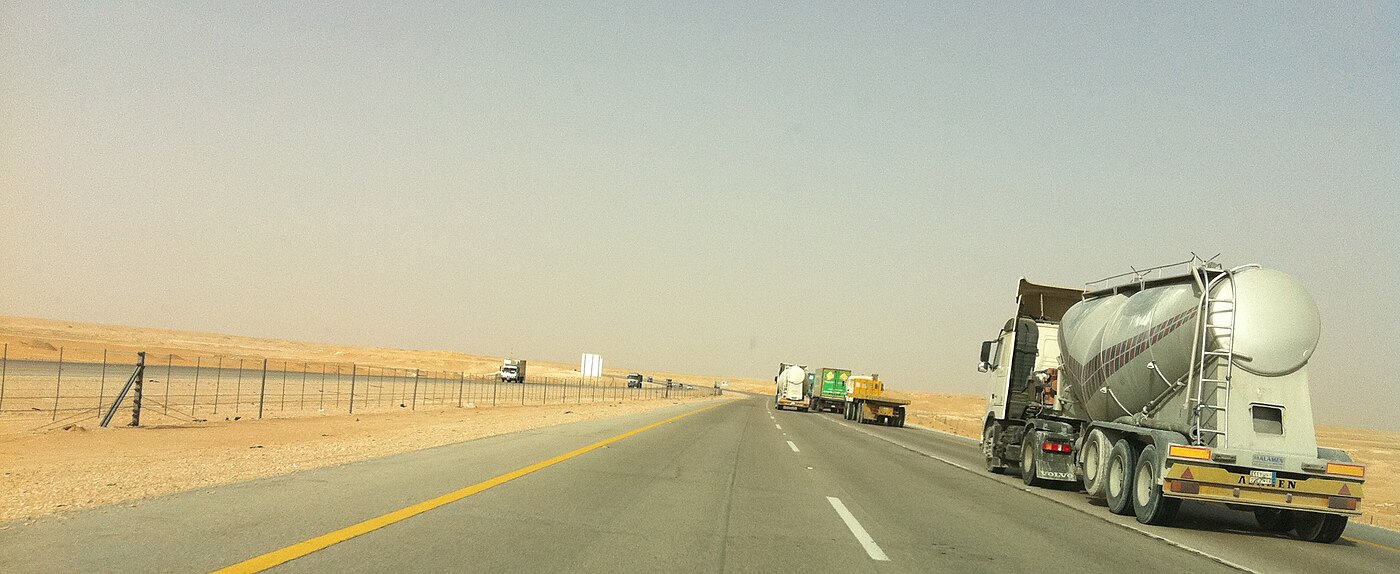
Saudi Arabia drives on the right-hand side of the road. Traffic signs are in both Arabic and English, and road markings follow international conventions. The rules are straightforward, but enforcement is strict and increasingly automated.
Speed Limits
| Road Type | Speed Limit | Notes |
|---|---|---|
| Urban residential areas | 50 km/h (31 mph) | Often reduced near schools |
| Urban main roads | 60–80 km/h (37–50 mph) | Clearly signposted |
| Dual carriageways | 100–120 km/h (62–75 mph) | Variable by road section |
| Expressways and highways | 120–140 km/h (75–87 mph) | 140 km/h on major inter-city routes |
| Trucks | 80 km/h (50 mph) | On all road types |
| Buses | 100 km/h (62 mph) | On highways only |
Speed cameras are ubiquitous. A small buffer of roughly 10 km/h is generally tolerated above the posted limit, but this varies by location. Exceeding the limit by 25 km/h or more triggers a fine of SAR 900 (around USD 240).
The Saher Camera System
Saudi Arabia operates over 8,200 Saher smart cameras nationwide. These AI-powered units use radar and 360-degree imaging to detect speeding, red-light violations, seatbelt misuse, mobile phone use while driving, and unsafe lane changes — all in real time. Fines are issued automatically and linked to the vehicle registration. If you are renting, the rental company will charge the fine to your credit card, often with an administrative surcharge.
You can check outstanding fines through the Absher app (the government services platform) or ask your rental company to provide a violation report before returning the vehicle.
Key Traffic Laws
Points System
Saudi Arabia uses a 24-point violation system. Each infraction adds points to your record. Accumulating 24 points results in licence suspension — from 3 months for a first offence to permanent revocation for repeat offenders. As a tourist driving on a foreign licence, reaching the point threshold can lead to a driving ban for the remainder of your stay.
Renting a Car
A rental car is the best way to explore Saudi Arabia independently. Cities are sprawling, public transport is limited outside Riyadh, and the distances between destinations often make flying impractical for a discovery-oriented trip. The Saudi Arabia car rental guide covers booking strategies in depth, but here are the essentials.
Rental Companies
You will find both international and local brands. The major players include:
| Company | Type | Typical Daily Rate | Notes |
|---|---|---|---|
| Lumi | Local (Saudi) | From SAR 90 (USD 24) | Large fleet, 300 km/day included, strong online discounts |
| Theeb | Local (Saudi) | From SAR 100 (USD 27) | Extensive branch network across the Kingdom |
| Yelo | Local (Saudi) | From SAR 95 (USD 25) | Budget option, good for short hires |
| Hertz | International | From SAR 130 (USD 35) | Global loyalty programme integration |
| Sixt | International | From SAR 120 (USD 32) | Competitive mid-range rates |
| Budget / Avis | International | From SAR 115 (USD 31) | Airport desks at all major terminals |
Booking tip: Compare prices on aggregators like KAYAK or Booking.com, then check the direct websites of local companies (Lumi, Theeb, Yelo). Local firms often beat international chains by 20–30% and offer more generous mileage allowances.
Rental Requirements
Book two to four weeks ahead during peak periods: the Hajj season, Ramadan, and the November-to-February tourist season see the highest demand and prices.
Insurance
Basic third-party liability insurance is included with all rentals and is the legal minimum in Saudi Arabia. Consider upgrading to Comprehensive / CDW (Collision Damage Waiver) to reduce your excess liability in case of an accident. Check whether your credit card or travel insurance already provides rental car coverage — many premium cards do, which can save you SAR 30–60 per day at the counter. For broader travel insurance considerations, see the Saudi Arabia travel insurance guide.
Fuel and Petrol Stations
Fuel in Saudi Arabia is among the cheapest in the world, thanks to government-subsidised pricing set by Saudi Aramco.
Current Prices (2026)
| Fuel Type | Price per Litre (SAR) | Price per Litre (USD) |
|---|---|---|
| Gasoline 91 (regular) | SAR 2.18 | ~USD 0.58 |
| Gasoline 95 (premium) | SAR 2.33 | ~USD 0.62 |
| Diesel | SAR 1.79 | ~USD 0.48 |
Prices are uniform across the country — you pay the same in Riyadh, Jeddah, Dammam, or a remote desert station. Saudi Aramco reviews prices monthly on the 10th, but a government cap has kept gasoline prices stable since the start of 2026. Most rental cars run on Gasoline 91.
Station Availability
Fuel stations are plentiful on major routes and inside cities. On intercity highways, expect stations every 50–100 km. Aramco, Al Maha, and SASCO are the main brands. Many stations include convenience shops, prayer rooms, and clean restrooms. Card payment is widely accepted, though carrying some cash (SAR 100–200) for remote stations is wise. For tips on money and currency exchange, see our dedicated guide.
Desert driving rule: Never let your tank drop below half when driving in remote areas. Stations can be 150+ km apart on secondary desert roads.
Major Highways and Road Network
Saudi Arabia has invested heavily in its road infrastructure. The Kingdom’s highway network connects all major cities with well-maintained, multi-lane expressways. For a broader overview of all transport options, see our getting around Saudi Arabia guide.
Highway 40: The Coast-to-Coast Backbone
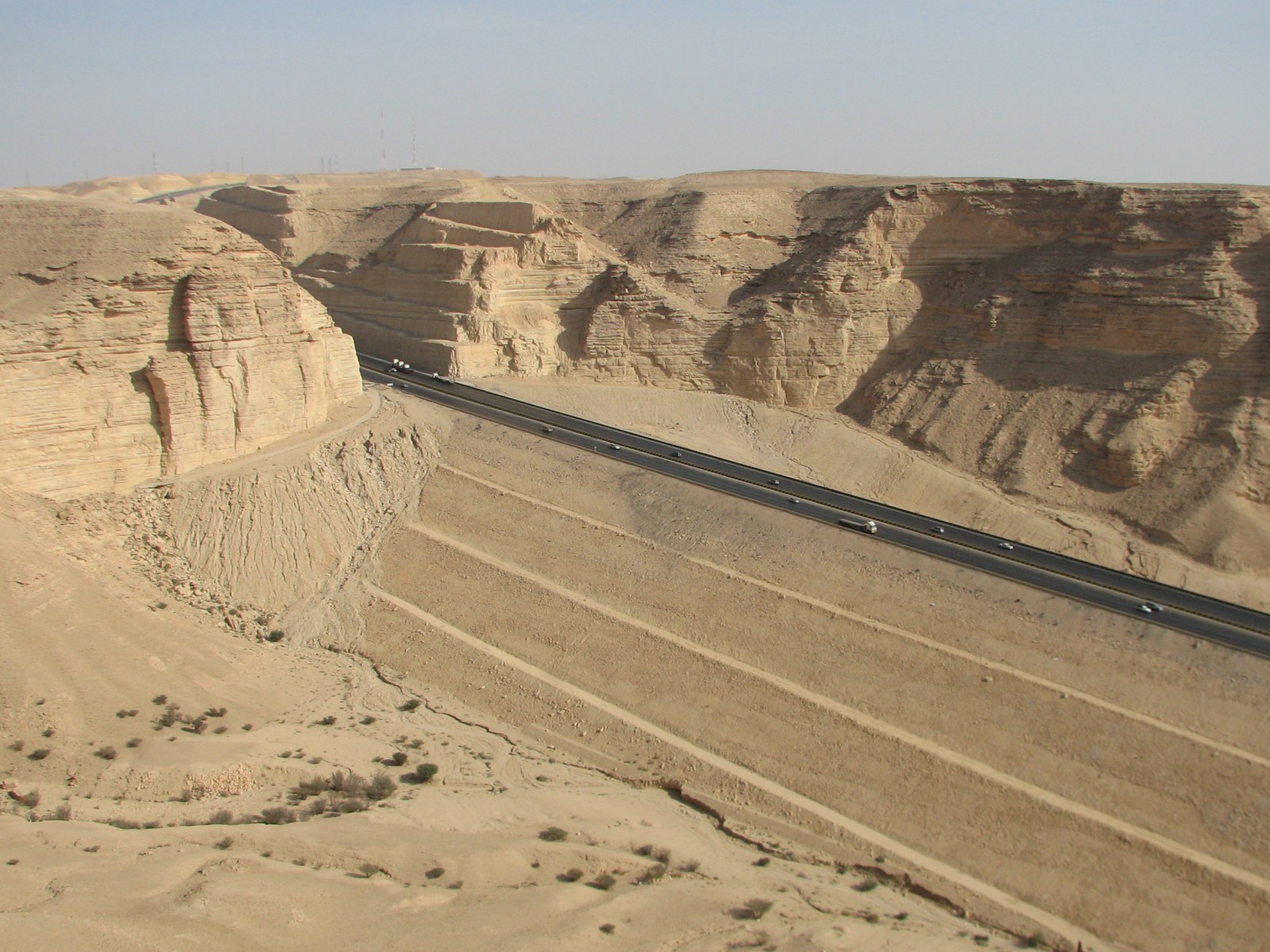
Highway 40 is Saudi Arabia’s most important road — a six-lane controlled-access expressway spanning 1,395 km from Jeddah on the Red Sea to Dammam on the Arabian Gulf. It passes through or near Mecca, Taif, Riyadh, and Al Khobar, serving more than 66% of the Kingdom’s population. The Riyadh-to-Dammam section (383 km) is the busiest stretch, with heavy truck traffic. The Riyadh-to-Jeddah leg passes through the dramatic Tuwaiq Escarpment and Hejaz Mountains.
Highway 65: The North-South Artery
Running 1,427 km from Howtat Bani Tamim in the south to Qurayyat near the Jordanian border, Highway 65 (the Riyadh–Qassim Expressway) is the main north-south route. It connects Riyadh to Buraydah, Hail, and eventually the northern border crossings.
Other Key Routes
Best Road Trips in Saudi Arabia
A road trip is one of the best ways to experience Saudi Arabia’s extraordinary scale and variety. The landscape changes dramatically as you cross the Kingdom — from red sand dunes to basalt lava fields, from mountain forests to coral coastline. For suggested multi-day itineraries, see our dedicated planning guide.
Riyadh to AlUla
This is the defining Saudi road trip — roughly 900 km from the capital through the Najd desert to the ancient Nabataean landscapes of AlUla. The route passes through the Tuwaiq Escarpment and the vast Hejaz region. Allow 9–10 hours of driving, or break it with an overnight stop in Buraydah or Hail. AlUla itself rewards at least two days for Hegra, Elephant Rock, and the old town.
Jeddah to Taif via Al Hada
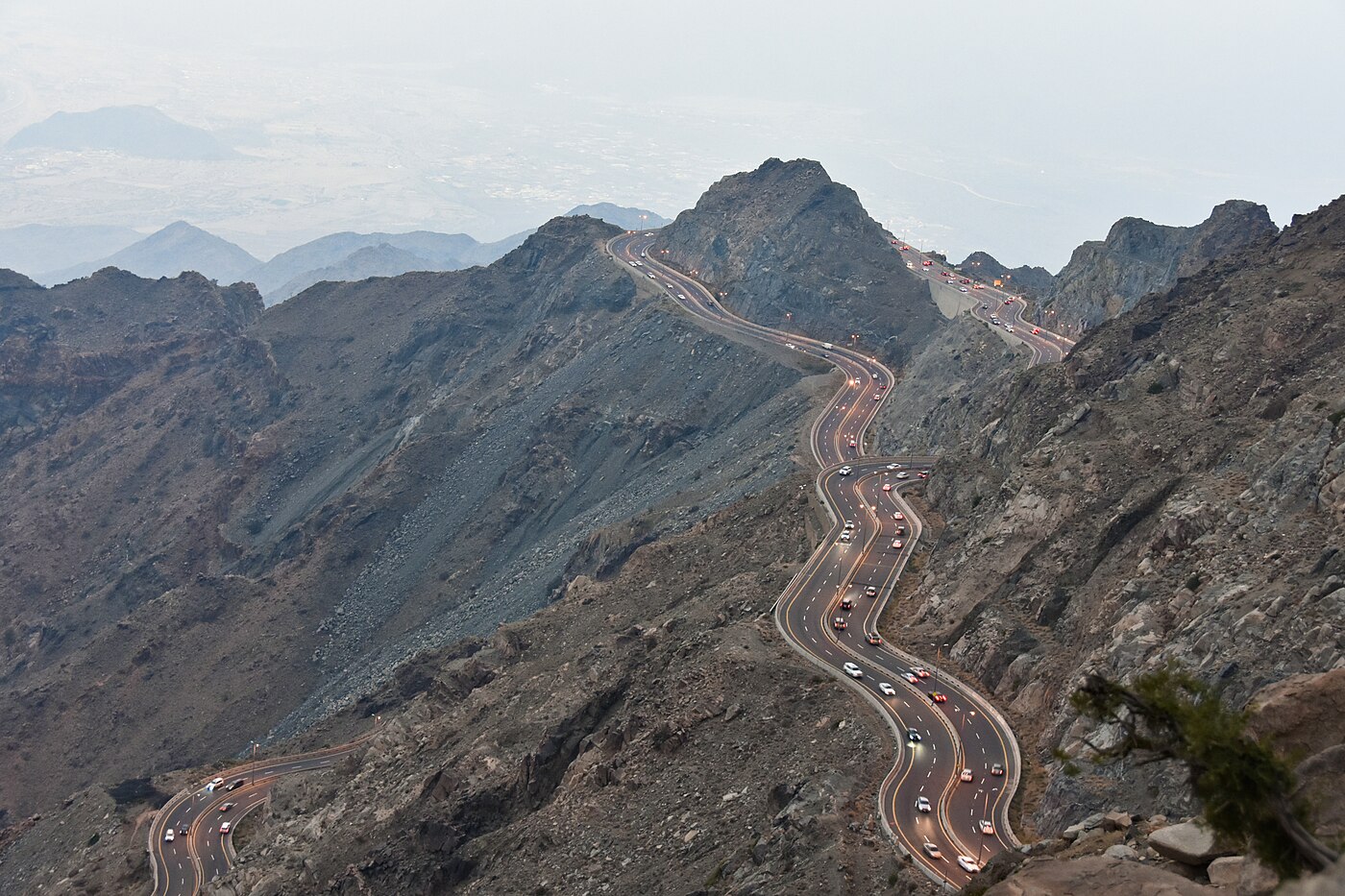
The Al Hada mountain road is one of the most spectacular drives in the Middle East. From the humid Red Sea coastline, you ascend through misty switchbacks and hairpin bends to Taif at 1,700 metres elevation. Baboons sit roadside, the temperature drops 15 degrees, and the views are breathtaking. The drive takes about 90 minutes but deserves a full half-day with stops. The road is well-maintained but demands concentration, especially on the descent.
Abha to Jizan: The Asir Mountain Drive
The road from Abha down to Jizan on the Red Sea coast drops over 2,000 metres in roughly 200 km. You pass through juniper forests, terraced villages, and cloud-wrapped mountain peaks before descending into tropical heat. This is the greenest part of Saudi Arabia and feels nothing like the desert most visitors expect.
Jeddah to Yanbu Coastal Drive
A 300-km drive north along the Red Sea coast, passing through Rabigh and several untouched beaches. The turquoise water and volcanic black-rock landscape make this one of the most photogenic routes in the Kingdom. Ideal as a two-day trip with a stop in Umluj (often called the Maldives of Saudi Arabia) or Yanbu.
Women Driving in Saudi Arabia
Since June 2018, women have been legally permitted to drive in Saudi Arabia. The reform was a watershed moment, and female licence holders had reached 2.1 million by 2025 — around 28% of all Saudi licence holders. For female tourists, there are no restrictions whatsoever. You can rent a car, drive on any road, and park anywhere, exactly as a male driver would. For broader advice on solo female travel, see our solo female travel in Saudi Arabia guide.
Road Safety and Hazards
Saudi Arabia’s roads are well-built, but the driving culture demands alertness. Understanding the specific hazards will keep you safe.
Driving Standards
Saudi drivers have a reputation for speed and assertiveness. Tailgating is common on highways, high-speed lane-switching happens frequently, and some drivers treat speed limits as suggestions rather than rules. Defensive driving is essential. Keep a generous following distance, check mirrors constantly, and stay alert for vehicles entering from side roads without stopping.
Camels and Wildlife
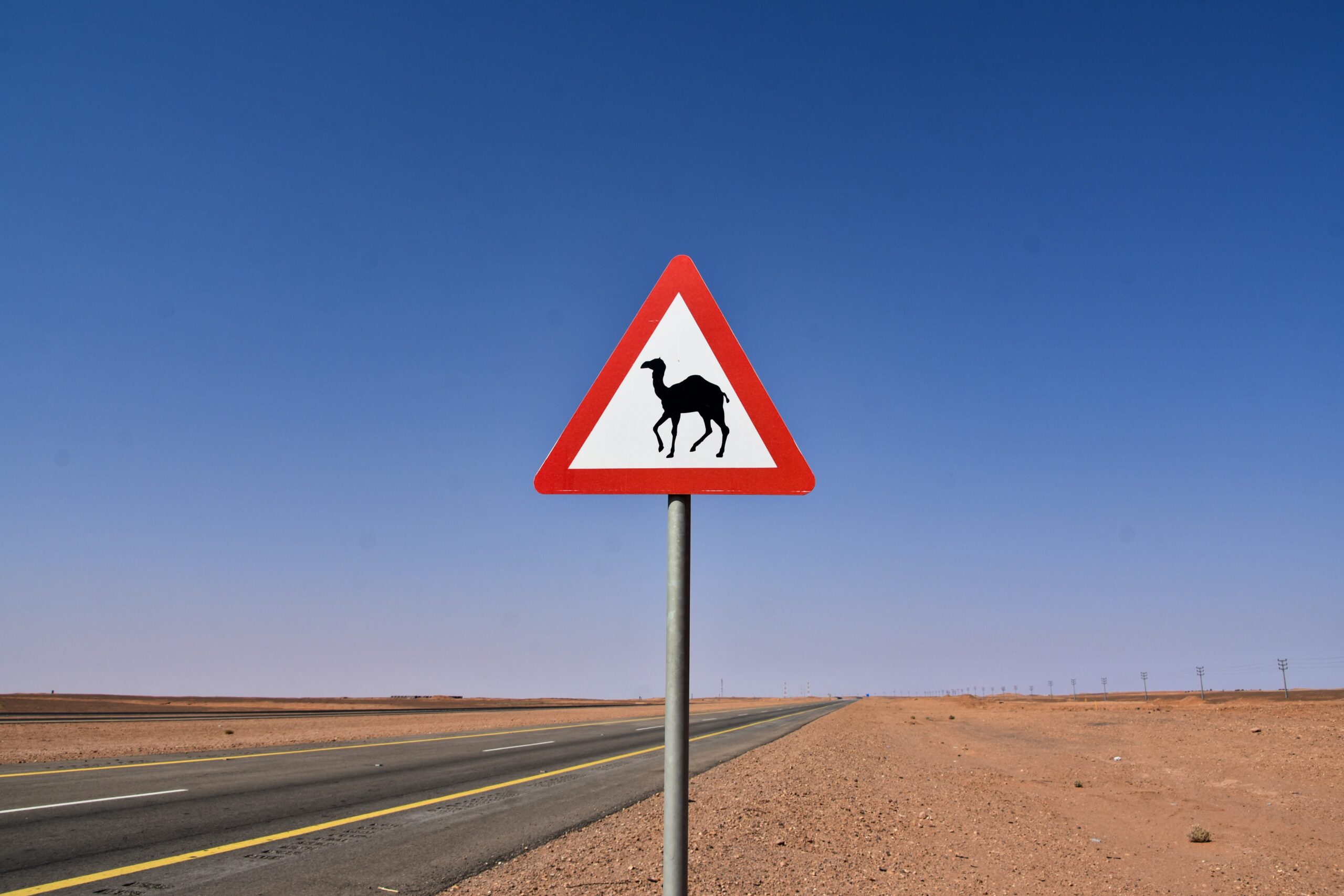
Camel-vehicle collisions are one of the leading causes of fatal road accidents in Saudi Arabia. A full-grown camel weighs 400–700 kg and stands at windshield height — the impact can be catastrophic. Camels wander freely near highways, especially in rural areas, and are almost invisible at night (their dark coats absorb headlights). If you see a triangular camel warning sign, slow down immediately and scan both sides of the road. Avoid driving on rural roads between dusk and dawn whenever possible.
Sandstorms
Sandstorms can reduce visibility to near zero within minutes, particularly from March to May. If caught in a sandstorm while driving, pull completely off the road, turn off your headlights (so other drivers do not follow your taillights off the road thinking you are still moving), engage your hazard lights, and wait it out. Never try to drive through a severe sandstorm.
Flash Floods
The Saudi desert can produce sudden, violent flash floods after rainfall, particularly in the western highlands and wadi valleys. Dry riverbeds (wadis) can fill in minutes. Never park or camp in a wadi bed, and do not attempt to cross a flooded road. The depth is impossible to judge, and the current is dangerously powerful.
Heat and Vehicle Preparation
Summer temperatures regularly exceed 45°C (113°F) in the central desert and can reach 50°C in the Eastern Province. Ensure your vehicle’s air conditioning works before setting out on any long drive. Carry at least 5 litres of water per person for intercity journeys, even in a rental car. Tyre blowouts become more common in extreme heat — check tyre pressure before long trips (slightly reduce from the recommended cold-pressure level, as heat will expand the air).
Off-Road and Desert Driving
Saudi Arabia offers some of the best off-road driving terrain on earth, from the rolling dunes of the Rub’ al Khali (Empty Quarter) to the volcanic lava fields of Harrat Rahat. However, desert driving requires specific preparation and equipment. For guided options, see our guides to 4×4 off-roading and dune bashing.
Essential Desert Driving Gear
Safety rule: Never drive into the desert alone. Always travel in a convoy of at least two vehicles. If one gets stuck, the other can tow it free. Inform someone of your planned route and expected return time.
Parking
Parking in Saudi cities is generally straightforward, with a few exceptions. Riyadh and Jeddah both have metered zones in commercial centres (typically SAR 2–5 per hour via the Mawqif app), but free street parking is widely available in residential areas. Shopping malls offer free underground or multi-storey parking. At popular tourist sites like the Edge of the World or Elephant Rock, designated parking areas are provided.
Illegal parking fines range from SAR 100 to SAR 300, and your vehicle may be towed if it blocks traffic or parks in a no-stopping zone — recovery costs SAR 200–500 on top of the fine.
Traffic Fines: What They Cost
Saudi Arabia has restructured its traffic fine categories. Here is a summary of the most common violations tourists encounter:
| Violation | Fine (SAR) | Fine (USD approx.) |
|---|---|---|
| Speeding (up to 25 km/h over) | 300–500 | 80–133 |
| Speeding (25+ km/h over) | 900 | 240 |
| Red light violation | 3,000–6,000 | 800–1,600 |
| Mobile phone use | 500–900 | 133–240 |
| No seatbelt (driver) | 150–300 | 40–80 |
| Child in front seat (under 10) | 300–500 | 80–133 |
| Illegal parking | 100–300 | 27–80 |
| Drifting (first offence) | 20,000 | 5,300 |
| Driving without valid licence | 500–900 | 133–240 |
Navigation and Mapping
Google Maps works well throughout Saudi Arabia and is the most widely used navigation tool. Waze is also popular and offers real-time traffic updates, speed camera alerts, and road closure warnings. Both apps display road names in English and Arabic.
For desert and off-road navigation, download offline maps before leaving the city. Mobile data coverage (4G/5G) is excellent in cities and along major highways but drops off on secondary desert roads. A local SIM card or eSIM with a data plan is highly recommended for navigation.
Toll Roads
Saudi Arabia currently has no toll roads for private vehicles on its public highway network. All expressways, including Highway 40 and Highway 65, are free to use. Some private developments and airport access roads may charge entry fees, but standard driving between cities costs nothing beyond fuel.
Driving at Night
Night driving on major highways between cities is reasonably safe, with overhead lighting on the busiest sections. However, rural and secondary roads are often completely unlit. The primary dangers at night are:
Our recommendation: Plan your driving itinerary so that all intercity travel happens during daylight. If you must drive at night, stick to the main expressways where lighting and traffic volume reduce the hazard significantly.
What to Do in an Accident
If you are involved in a traffic accident in Saudi Arabia:
For minor incidents with no injuries, Riyadh and Jeddah now offer the Najm app for reporting accidents digitally without waiting for police, though this primarily works for Saudi licence holders and residents.
Practical Tips for Visitors
Best Time for a Road Trip
The ideal window is October to March, when daytime temperatures in the desert drop to a comfortable 20–30°C. The best time to visit Saudi Arabia guide breaks this down month by month. Avoid June to August for any extended driving, particularly in the central desert and Eastern Province.
Rest Stops and Facilities
Saudi highways have well-spaced rest areas with fuel stations, convenience shops, prayer rooms, and clean washrooms. Major rest stops between Riyadh and Jeddah include full-service restaurants and coffee shops. Several international chains (Starbucks, McDonald’s, Burger King) now operate at highway rest stops.
Driving During Ramadan
During Ramadan, driving patterns change significantly. Roads are quieter during the day as many people fast and reduce activity, but traffic surges sharply in the hour before iftar (sunset meal) as everyone rushes home. After iftar, streets come alive and traffic can be heavy late into the night. Exercise extra caution in the pre-iftar rush. For fuller guidance, see our travelling during Ramadan guide.
Prayer Times
Saudi Arabia observes five daily prayers, and many shops and some petrol stations close briefly during prayer time (typically 15–30 minutes). Plan fuel stops accordingly, especially in smaller towns. In cities, most stations remain operational but service may pause.