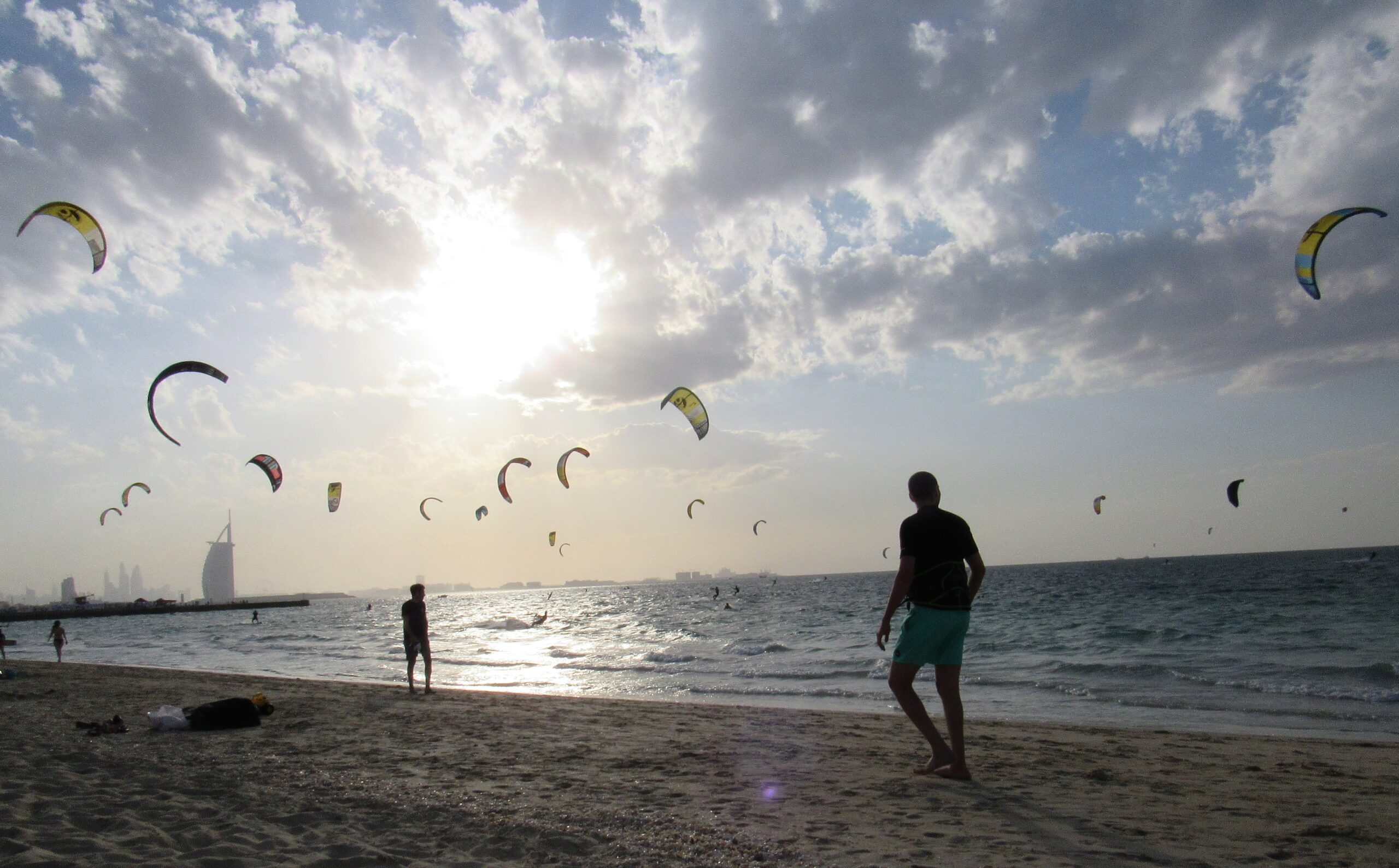

Best Spots: Yanbu, Umluj, Duba (north Red Sea)
Wind Season: October–April (NW Shamal winds)
Visa Required: Yes — tourist e-visa
Lesson Price From: SAR 450 (~USD 120) per hour
Water Temp: 22–28°C
Avoid: Summer — light, unpredictable winds
Saudi Arabia’s Red Sea coastline is one of the most underrated kite surfing destinations on earth. Stretching more than 1,800 kilometres from the Gulf of Aqaba in the north to the strait at Bab el-Mandeb in the south, it offers a near-unbroken band of warm, clear water charged by reliable thermally-driven winds for the better part of six months every year. This is your complete guide to kite surfing in Saudi Arabia — covering the four best spots, how wind works here, where to book lessons, what kit you need, and how to plan your trip. For the full regional picture, start at the Saudi Arabia Travel Guide 2026.
The sport sits at the intersection of several forces reshaping the Kingdom: Vision 2030’s push to develop adventure tourism, a rapidly growing community of Saudi and expatriate riders, and major investment in Red Sea infrastructure that is quietly making remote spots more accessible than ever before. If you have been eyeing the Red Sea for a kite trip, 2026 is the year to go.
Why the Red Sea Works for Kite Surfing
The Red Sea sits in a natural wind channel formed between the Arabian Peninsula to the east and the African continent to the west. This geography matters: prevailing north-westerly winds funnel down the channel from October through April, creating the steady, cross-shore conditions that kite surfers require. Riders here generally enjoy 15–25 knots of consistent breeze with a thermal boost in the afternoon as land temperatures rise above sea temperature — the same mechanism that makes Egypt’s Hurghada and Ras Sudr famous in the kite world applies with equal force along Saudi Arabia’s shore.
Water temperatures range from 22°C in the cooler winter months to 28°C by April, meaning a 2mm shorty wetsuit or even a rash vest is usually sufficient. The Red Sea’s salinity — roughly 4 per cent, higher than the world ocean average — adds buoyancy that beginners appreciate. Visibility underwater regularly exceeds 20 metres, so falling in is, as regulars put it, more of a feature than a bug.
What sets Saudi Arabia apart from Egyptian Red Sea spots is scale and solitude. Outside Jeddah, you will often find kilometre after kilometre of beach entirely to yourself. There are no boat traffic corridors to navigate, no crowded launch zones, and — in the north particularly — flat water stretching to the horizon in a shallow lagoon system that forgives novice mistakes.
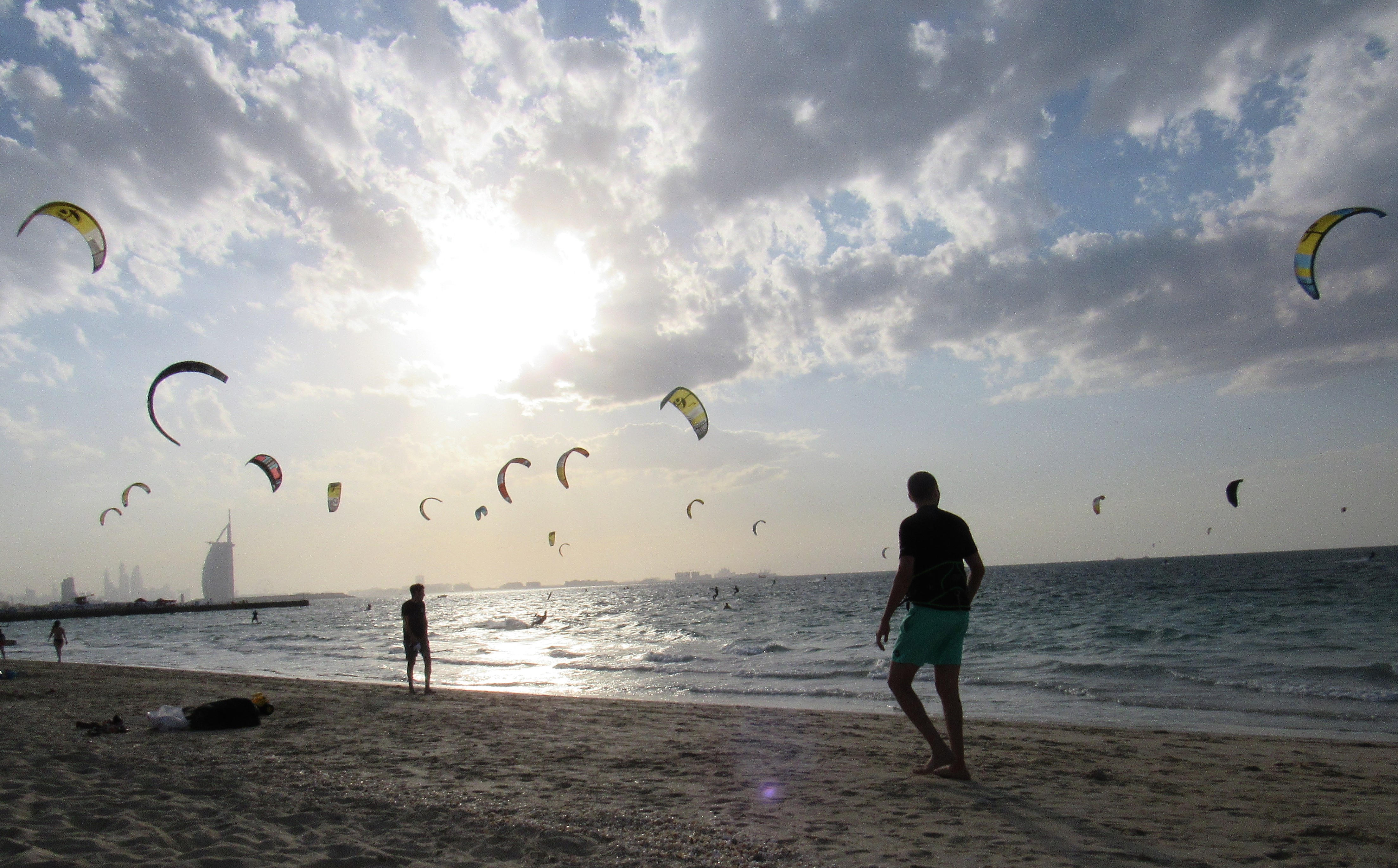
The Four Best Kite Surfing Spots in Saudi Arabia
Yanbu — The Reliable All-Rounder
Yanbu sits roughly 350 kilometres north of Jeddah and is the Red Sea’s most accessible serious kite spot for visitors flying into the region. The city’s industrial port on one side and resort waterfront on the other frame a stretch of coast where cross-shore north-westerly winds arrive with textbook consistency from October through March. Wind averages 16–22 knots during peak season, with afternoon thermals pushing the upper end regularly.
The kite zone sits north of Yanbu’s main corniche, where a shallow flat-water area of approximately two kilometres offers clean conditions for riders of all levels. The bottom is sandy with minimal coral hazard in the launch zone, and the wind direction delivers a side-to-side run with deep water available for advanced riders seeking waves further offshore. Local riders describe conditions as “honest” — no secret tricks, just solid, predictable wind that works.
Yanbu is also one of the better-served spots for travellers: the city has direct flights from Riyadh and Jeddah via flynas and Saudi Arabian Airlines, a range of hotels including international chains, and a growing watersports community. The Saudi Sailing Federation recognises Yanbu as a key development hub, which means infrastructure is improving. For more on the city itself, see our Yanbu City Guide.
Umluj — The Maldives Lagoon
Umluj is where Saudi kite surfing becomes genuinely extraordinary. Located approximately 150 kilometres north of Yanbu, this small coastal town presides over an archipelago of more than 100 islands set in a shallow turquoise lagoon that has earned the destination its “Maldives of Saudi Arabia” reputation. For kite surfers specifically, the lagoon system is a revelation: water depths ranging from ankle-deep to chest-high over white sand, zero boat traffic, and a wind corridor that delivers reliable 14–20 knot north-westerlies from October through April.
The flat water inside the lagoon is ideal for beginners and intermediate riders working on board control — if you crash, you stand up in knee-deep water and relaunch. Advanced riders can push beyond the outer reef breaks to find choppier conditions and, on stronger wind days, small waves. The visual backdrop — limestone islands rising from impossibly clear blue water — is unlike anything at Egypt’s more developed kite camps.
Access is improving. Umluj has a small domestic airport with connections via regional carriers, and the Red Sea Project’s expanding road network has shortened overland journey times from Yanbu to under two hours. Accommodation remains basic by Saudi Arabia’s standards — local guesthouses and a handful of small hotels — but glamping operations catering specifically to adventure tourists have opened near the lagoon. Our dedicated Umluj Guide covers logistics in detail.
Duba — The North Red Sea’s Hidden Gem
Duba sits in the Tabuk Region at the northern end of the Saudi Red Sea coast, approximately 1,000 kilometres north of Jeddah. This is frontier kite surfing territory: infrastructure is minimal, crowds are non-existent, and the wind here is arguably the most reliable in the entire country. The Gulf of Aqaba funnel effect — where the narrow northern section of the Red Sea accelerates north-westerlies between the Sinai Peninsula and the Hejaz mountains — creates a natural wind machine that delivers 18–28 knot conditions throughout the core season.
Duba’s coastline features long sandy beaches with a gradual shore break, making water entry straightforward. The water is shallower and clearer here than further south, and the mountains of Tabuk visible to the east create a dramatic desert-meets-sea backdrop. International kite travellers increasingly combine Duba with Jordan’s Gulf of Aqaba and Sinai crossings as part of a Red Sea kite safari itinerary.
The practical challenge at Duba is logistics: the nearest major airport is Tabuk, roughly two hours by road, with limited flights. Red Sea International Airport, which opened south of NEOM in 2024 and is being expanded under Vision 2030, offers a more accessible gateway and is only 90 minutes from Duba. No established kite schools operate at Duba yet — this is an expert self-sufficient destination — but equipment rental is available in Tabuk and the NEOM-adjacent resort developments are beginning to offer watersports packages that include transport.
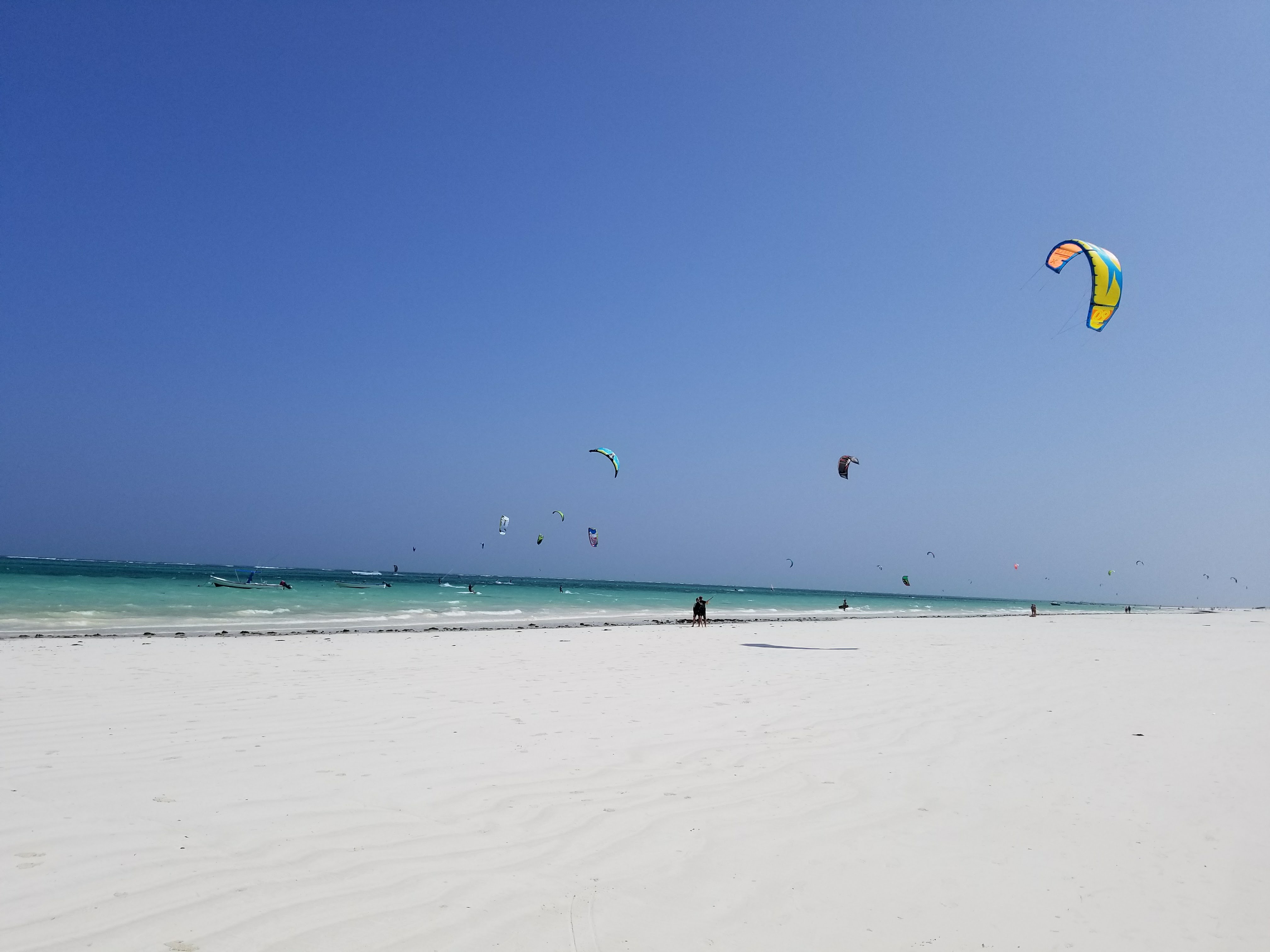
Jeddah — Urban Kite Surfing with Full Infrastructure
Jeddah is where Saudi kite surfing has its deepest roots. The Kingdom’s commercial capital has an active community of riders dating back well before kite tourism became a recognised concept here, and the city’s position on the Red Sea gives it reliable thermal winds almost year-round. The IKSURFMAG guide to Jeddah records average winds of 17–25 knots with sunshine on virtually every session day, the only genuine dead period being a short lull around December.
The two key spots are Shoaiba Lagoon (also spelled Shoiaba), 40 minutes south of the city centre, and Obhur Creek, 25 minutes north. Shoaiba is the beginner’s choice: a 1 kilometre-wide, 2.5 kilometre-long desert lagoon with no coral, no rocks, and a sandy bottom that allows confident self-rescue in shallow water. Wind arrives cross-to-onshore from the north-west, and the Super Kite Day school operates here. Obhur is for experienced riders — deep water, reef hazards at low tide, and a high-energy environment requiring water entry via jet ski or boat.
Jeddah also has Mastabah Beach, about 30 minutes south, which runs further wind days when spots closer in are under-powered. The city’s watersports infrastructure is the best in the country: multiple schools, equipment rental by the day, repair services, and a community group that posts real-time wind updates via WhatsApp and Instagram.
Wind Conditions Month by Month
Understanding the Red Sea’s wind calendar is essential for planning. The pattern across all Saudi west coast spots follows a similar logic, with the northern spots (Duba, Umluj) generally receiving stronger and more consistent wind than Jeddah.
October–November: The season opens as the summer heat breaks and north-westerlies re-establish. Wind averages 14–18 knots, water temperature sits around 27–28°C, and conditions are excellent for intermediate-level riding. Crowds are minimal.
December: A brief lull period, particularly around Jeddah. Duba and the northern spots remain windier as Shamal activity associated with Mediterranean cold fronts pushes south. Water temperature drops to 24–25°C.
January–March: Peak season. North-westerly Shamal winds dominate, delivering 18–25 knots regularly across all spots. Water temperature is 22–24°C — the coolest of the year, but still warm enough for a shorty wetsuit or even boardshorts for experienced riders. These are the months when Saudi Arabia punches hardest as a kite destination.
April: The final month of reliable wind, transitioning from winter Shamal to spring thermal patterns. Jeddah particularly benefits from strong afternoon thermals as land heats faster than sea. Excellent conditions across the board, with improving water temperature.
May–September: Summer season. Winds become lighter, more variable, and less reliable. Daytime temperatures exceed 40°C, humidity rises in coastal areas, and sand-laden Shamal events can shut sessions down entirely. Experienced riders can find workable days in the morning thermal window, but this is not the time for a dedicated kite trip.
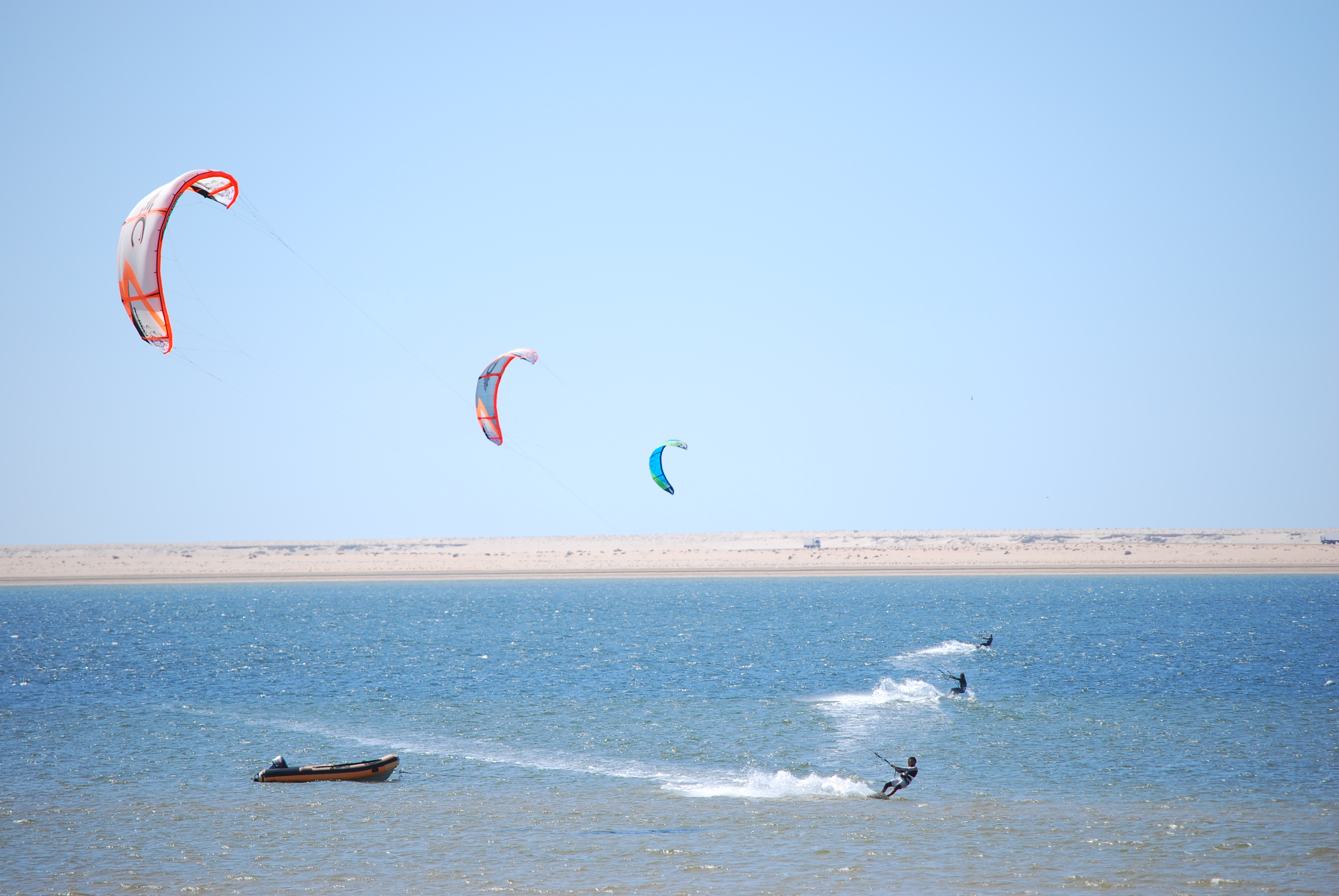
Schools, Lessons, and IKO Certification
The International Kiteboarding Organization (IKO) has a growing presence in Saudi Arabia, with several certified centres and instructor groups operating across the country. Lessons follow the IKO standard progression: kite control on the beach, body dragging in the water, board introduction, and finally independent riding — a structure designed for maximum safety in beginner-heavy environments.
Super Kite Day — Jeddah (Shoaiba Beach)
Established in 2012 and one of the country’s longest-running kite schools, Super Kite Day operates out of Shoaiba Beach’s sheltered lagoon south of Jeddah. The school offers beginner, intermediate, and advanced courses, along with kite foil instruction (requiring IKO Level 2 certification). A mandatory one-hour Beach Safety Classroom session precedes all water time. Transport from Jeddah city is available at SAR 250 per trip. Contact: [email protected] / WhatsApp 050 767 7603.
Water Sports Arabia — Jeddah, Yanbu, Dammam
Water Sports Arabia employs VDWS and IKO-certified instructors and operates across multiple Saudi locations. Lessons start at SAR 450 per hour for private tuition (approximately USD 120); their KAEC (King Abdullah Economic City) location at Yam Beach is priced at SAR 535 per session. Equipment provided includes Core, Ozone, Eleveight, Crazy Fly, and Ocean Rodeo gear. The school also runs downwind trips and overnight kite safaris with glamping and chef-prepared meals. Website: watersportsarabia.com.
Kite Saudi — Community Instructors
Kite Saudi is a network of IKO-certified instructors living in Saudi Arabia, with a primary base at Shaiba Beach (Jeddah) and Zabnah Beach (Dhahran, Eastern Province). The community focus means pricing tends to be more accessible than commercial operators, and the group actively works with the Saudi Sailing Federation — the sport’s official governing body — to develop safe riding zones. Instagram: @kitesaudi / [email protected].
For those arriving with existing skills, equipment rental runs from approximately SAR 200–350 per half-day depending on location and kit size. Full gear packages (bar, kite, board, harness) are available from all three operators. Board-only rental for experienced riders who travel with their own kite is around SAR 100–150 per session.
What Kit to Bring
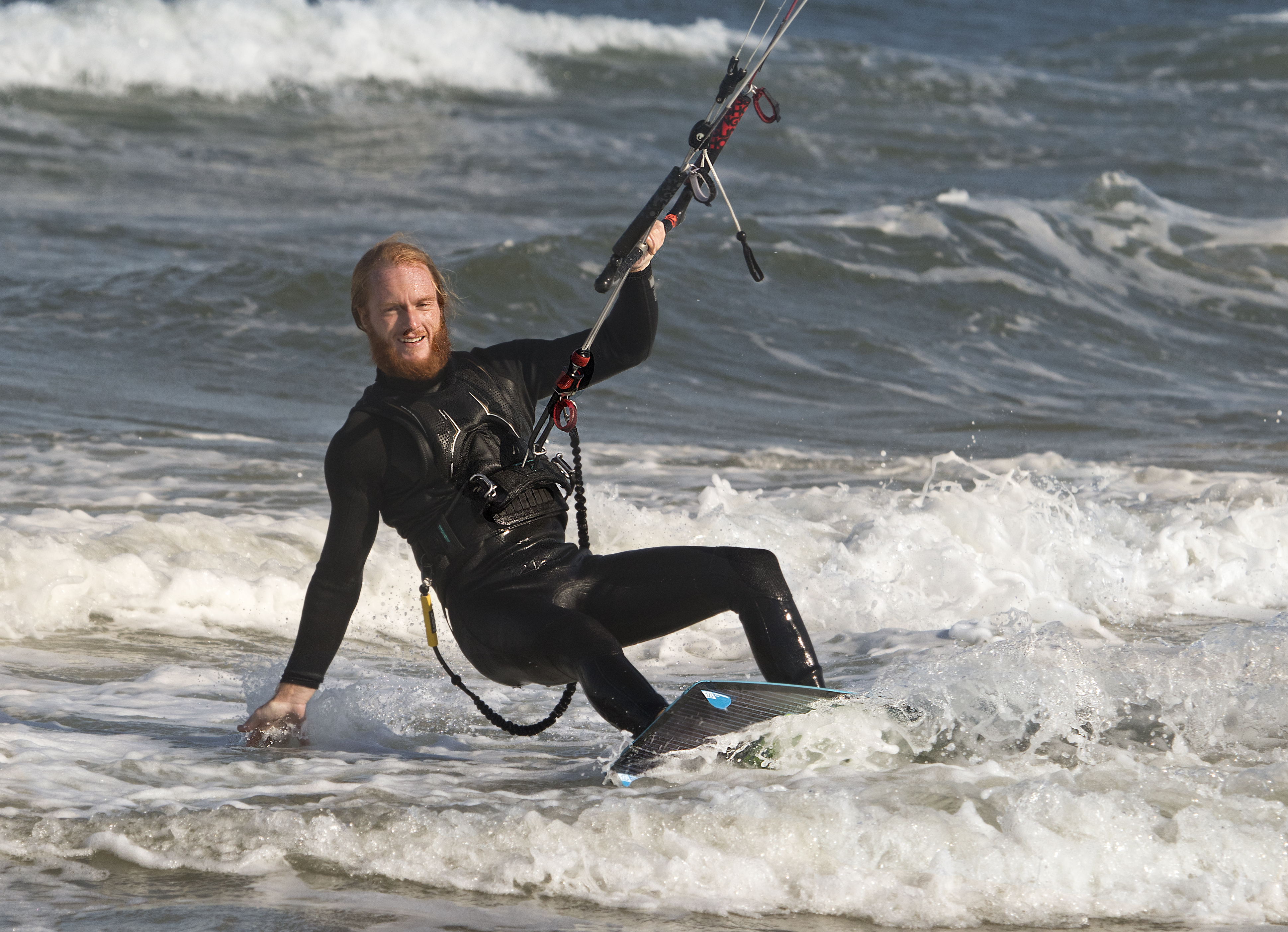
Kite size selection on the Red Sea is governed more by the 14–22 knot core range than by extremes. Most intermediate riders will find a 12m all-round kite covers 80 per cent of days in season, with a 9m or 10m for the strong Shamal days in January and February. A 15m or larger for the shoulder months of October and April is worth carrying if your quiver allows.
Board choice depends on your spot. For Umluj’s ultra-flat lagoon, a twin-tip in the 137–142cm range is ideal for freestyle and cruising. At Duba and Yanbu where wave potential exists, a directional surfboard or small wave shape opens up the option of strapless riding and carving in the shore break. Kite foil is increasingly popular at all major spots — Shoaiba’s flat water in particular is a foiling paradise when winds are moderate.
On sun protection: the Red Sea sun is intense year-round. A full UV suit or 50+ rash vest is strongly recommended regardless of air temperature. The combination of reflected light off white sand shallows and direct overhead sun creates burning conditions faster than most European riders expect. Lip balm with high SPF, polarised sunglasses with floats, and daily sunscreen application are non-negotiable for multi-day trips.
Most major international brands — Cabrinha, North, Duotone, Ozone, Core — are represented in Jeddah through specialist shops and school rental fleets. Spare lines, bridles, and pump adaptors are available but minor components can be harder to source outside the city. Carry a basic repair kit including bladder patches, a spare pump, and a spare chicken loop for remote spots like Duba.
Visa, Safety, and Practical Tips
Most nationalities can enter Saudi Arabia on a tourist e-visa, obtained online through the Saudi Visa Portal. The process is straightforward and approval typically comes within 24 hours for eligible countries. Our Saudi Arabia Visa Guide 2026 covers the complete application process, eligible nationalities, and costs. For kite trips, there is no specific equipment importation issue — kite gear travels as sports equipment and is not subject to any special declaration beyond standard customs procedures.
Kite surfing is regulated by the Saudi Sailing Federation (SSF). Riders should only session at designated or recognised kite zones rather than improvised locations, particularly near ports, industrial areas, or military installations (relevant near Yanbu’s petrochemical zone). The SSF has published a list of approved sites; checking with local operators before sessioning a new spot is strongly advised.
Alcohol is prohibited in Saudi Arabia — this is not negotiable and applies equally to all visitors. However, the rest of the travel experience is more open than many first-time visitors expect: mixed-gender activities including watersports are entirely normal, dress codes are relaxed at beaches and resorts, and the hospitality of locals towards visiting kiters is consistently reported as excellent. Car rental is inexpensive (SAR 70–100/day for a basic vehicle), petrol costs a fraction of European prices, and 4G coverage extends surprisingly far down even remote coastlines.
Medical facilities in Jeddah are excellent and English-speaking. At more remote locations like Duba or the outer Umluj islands, the nearest hospital-level care requires travel time. Comprehensive travel insurance including water sports cover and emergency evacuation is essential for any trip beyond the major cities. Standard kite insurance covering third-party liability is expected by all IKO schools before instruction begins.
Combining Kite Surfing with Saudi Arabia’s Other Attractions
Saudi Arabia’s Red Sea coast offers far more than wind. The same clear, warm water that powers kite sessions hosts some of the world’s least-disturbed coral reef ecosystems — there are dive and snorkelling sites accessible directly from Umluj and Yanbu that would rank among the top experiences anywhere in the Indian Ocean basin. The Farasan Islands, Yanbu’s marine sanctuary, and the offshore reefs at Umluj are all within reach of a kite-focused itinerary.
Beyond the water, the Hejaz Mountains visible from Yanbu and the ancient Nabataean ruins accessible from Tabuk (the gateway city for Duba) add a cultural dimension to the trip that distinguishes Saudi Arabia from pure kite destinations. AlUla, the Kingdom’s extraordinary UNESCO World Heritage site with its rose-red sandstone landscapes, is a four-hour drive from Duba and makes a logical extension to any north Red Sea kite trip.
For riders interested in other Red Sea watersports during lighter wind windows, see our guides to surfing in Saudi Arabia and Red Sea watersports for the full picture of what the coast has to offer.
Explore More
- Saudi Arabia Travel Guide 2026 — complete hub
- Surfing in Saudi Arabia — Red Sea wave guide
- Yanbu City Guide — beaches, hotels, and things to do
- Umluj Guide — the Maldives of Saudi Arabia
- Snorkelling in Saudi Arabia — Red Sea reef guide
- Red Sea Watersports — the complete guide
- Saudi Arabia Visa Guide 2026 — how to apply