Best Sites: Abha / Al Soudah (Asir highlands), Taif / Jabal Hada
Best Season: October–April (Al Soudah: April–October for long thermals)
Visa Required: Yes — tourist e-visa
Tandem Flight From: SAR 300–500 (~USD 80–135)
Elevation: Al Soudah launches from ~2,900m; Jabal Hada from ~900m
Avoid: Summer monsoon season in Asir (July–August for beginners)
Saudi Arabia has emerged as one of the Arabian Peninsula’s most compelling destinations for aerial adventure. High in the Asir highlands above Abha — at elevations that rival the Alps — paragliders launch from ridge-tops draped in cloud and descend over valleys that drop more than a kilometre below. For first-timers and seasoned pilots alike, this is the Saudi Arabia travel experience that almost nobody expects, and almost nobody forgets.
The sport had a complicated recent history in the Kingdom: a multi-year suspension under stricter air-sports regulations was finally lifted in October 2025, when Prince Abdulaziz bin Turki Al-Faisal, the Minister of Sports, signed off on the resumption of organised paragliding activities. The Saudi Paragliding Federation — headquartered in Abha and a certified member of the Fédération Aéronautique Internationale (FAI) — spent that period building a new regulatory framework with the General Authority of Civil Aviation (GACA), upgrading safety standards and expanding instructor-certification programmes. The result is a sport that has returned stronger, more professionally run, and more accessible to international visitors than it was before.
Whether you want to do a 15-minute tandem flight and feel the Asir wind on your face, or commit to a full P2 certification course, this guide covers everything you need to know: the best launch sites, the operators worth booking, the seasonal windows, and how to do it legally and safely as a foreign visitor. Don’t leave before checking the visa requirements — you’ll need a tourist e-visa before you fly in any sense of the word.
Why the Asir Highlands Produce World-Class Paragliding Conditions
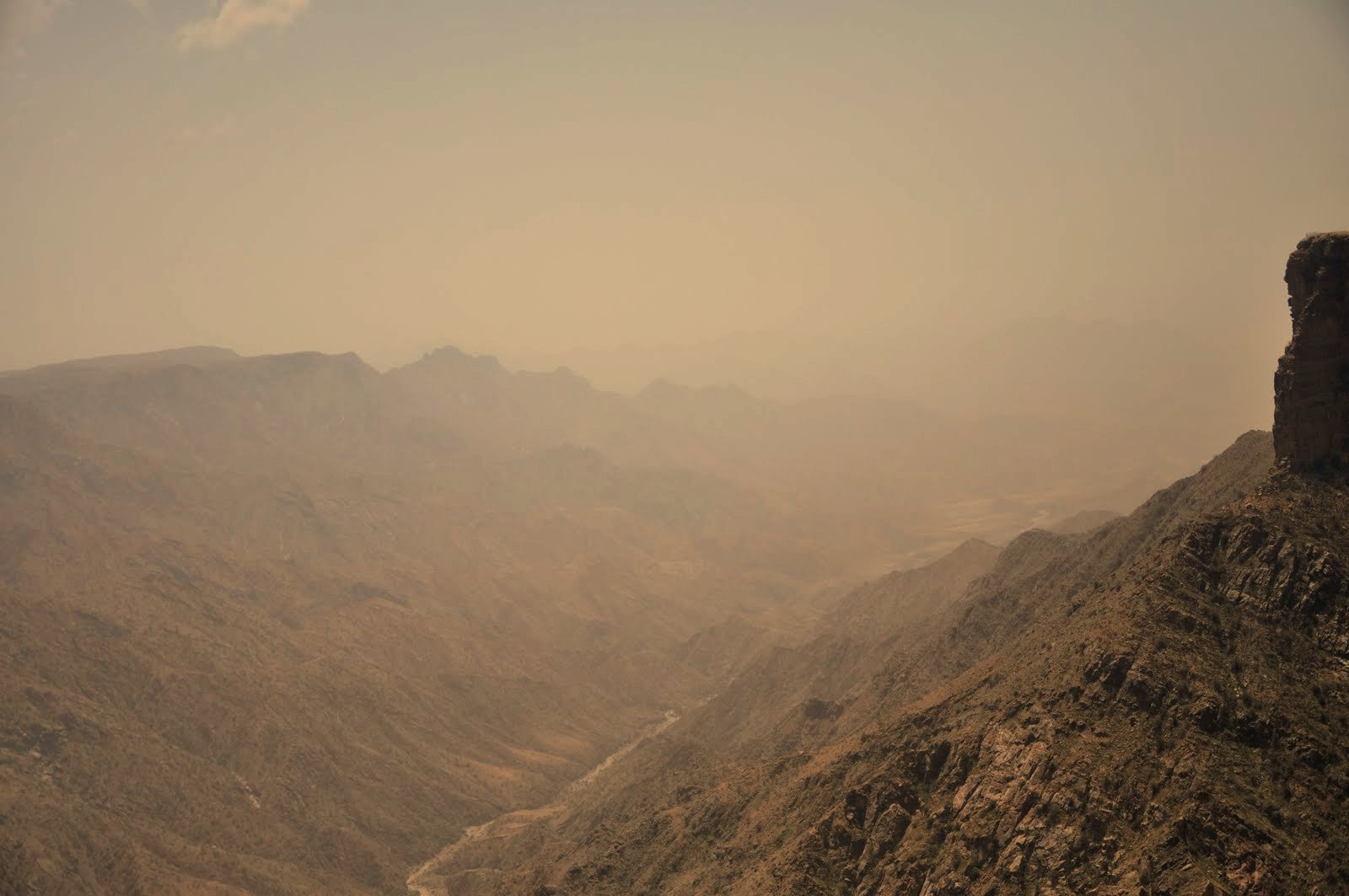
The Sarawat mountain range, which runs like a spine down the western edge of the Arabian Peninsula, reaches its highest and most dramatic point in the Asir region south of Abha. The landscape here is nothing like the Arabia of popular imagination: terraced hillsides, mist-shrouded peaks, juniper forests, and escarpments that fall almost vertically to the Tihama coastal plain 2,000 metres below. It is geography purpose-built for paragliding.
The thermals that develop here follow a predictable daily pattern. Morning air is cool and stable; by midday the sun heats the dark volcanic rock faces and triggers rising columns of warm air that experienced pilots can ride for extended cross-country flights. Ridge-lift along the escarpment edge means that even in lighter conditions a competent pilot can maintain altitude and work the ridge for an hour or more. Wind speeds of 10 km/h or above at the take-off area generally signal good launch conditions.
The Asir’s position at the edge of the Arabian monsoon system introduces one important caveat. Between July and August, the region receives notably higher rainfall and more unstable, gusty afternoon air than the rest of the year. This window — which makes Abha a popular Saudi summer escape for the heat — is not ideal for beginner paragliding. Experienced pilots know how to read the weather here, but first-timers and tandem passengers are better served by the October-to-April season when conditions stabilise. Operators offering tandem flights adjust their schedules accordingly, typically flying in the afternoon slot from around 2 pm to 7 pm when thermals are active but manageable.
The altitude itself is worth noting. Saudi Arabia’s best paragliding sites sit higher than most people realise. Al Soudah, the primary launch at 2,900 metres above sea level with a vertical drop of 1,230 metres, puts you above many European take-off points. The combination of altitude, consistent ridge-lift, and long glide distances to the valley floor makes it genuinely rewarding for pilots of all abilities — and genuinely spectacular for anyone in a tandem harness for the first time.
The Best Paragliding Launch Sites in Saudi Arabia
Al Soudah, Abha — The Premier Site
Al Soudah is the name given to the highest section of the Asir escarpment, approximately 23 kilometres from Abha city. At around 2,900 metres with a take-off area in excellent condition, it is the most established and most-visited paragliding location in the Kingdom. The height difference between launch and the landing zone below reaches 1,230 metres, making it one of the longest descents in the region. The Abha Paraglider Zone at Al Soudah operates with trained supervisors on site and attracts a growing mix of Saudi nationals, Gulf visitors, and international tourists. Tandem flights here are bookable on the day; training courses require advance notice.
The site sits inside the Soudah Peaks development zone, a large eco-tourism and mountain resort project that the Saudi government has been building out as part of Vision 2030’s push to develop adventure tourism in the highlands. The combination of purpose-built visitor infrastructure and genuine flying terrain makes Al Soudah the obvious starting point for any paragliding trip to Saudi Arabia. If you plan to explore the wider Asir region, Abha as a base gives you direct access to the site as well as everything else the highlands offer.
Alsamma — Altitude with a Gentler Gradient
At 2,194 metres elevation with a height difference of 524 metres, Alsamma offers a less severe but still impressive flying environment. The site is listed by operators as medium difficulty and is well-suited to students progressing through their early solo flight training. The take-off area is reported to be in good condition, with strong and reliable lift generated by the surrounding cliffs and ridgelines. Views from altitude here stretch across rugged terrain that rewards careful ridge reading.
Sharamh — High and Remote
Sharamh, at 2,716 metres, is among the highest launch points in Saudi Arabia. The site is less commonly featured on commercial tandem packages and is more the preserve of licenced cross-country pilots who want altitude and a serious challenge. Access routes are more demanding and the landing areas require greater precision. Experienced pilots who have already flown Al Soudah and want to push further should seek current site information from the Saudi Paragliding Federation before planning a visit.
Jabal Hada, Taif — The Winter Season Site
Taif sits at around 1,800 metres in the Hejaz mountains north of Abha, and its paragliding is centred on Jabal Hada at approximately 900 metres above sea level. The site is lower and more forgiving than the Asir highland sites, which makes it the natural complement: while Al Soudah operates best from April through October, Jabal Hada is the recommended site for November through March. The lower altitude means shorter flights but also easier conditions for beginners. Flying Mammut, the international operator active in Saudi Arabia, lists Jabal Hada as one of its two Saudi bases precisely because it provides year-round coverage when combined with Al Soudah. If your trip falls in the winter months and you are based in or passing through Taif, Jabal Hada is the most accessible flying site in the country.
Al Baha — Multiple Flying Points
Al Baha province, between Taif and Abha along the escarpment, contains several flying points at varying altitudes and difficulty levels. The province’s mountainous terrain — part of the same Sarawat ridge system — produces reliable thermals and offers pilots an alternative to the better-known sites. Local operators and the Saudi Paragliding Federation can direct visitors to currently active launch points in the area.
Tandem Flights: What to Expect
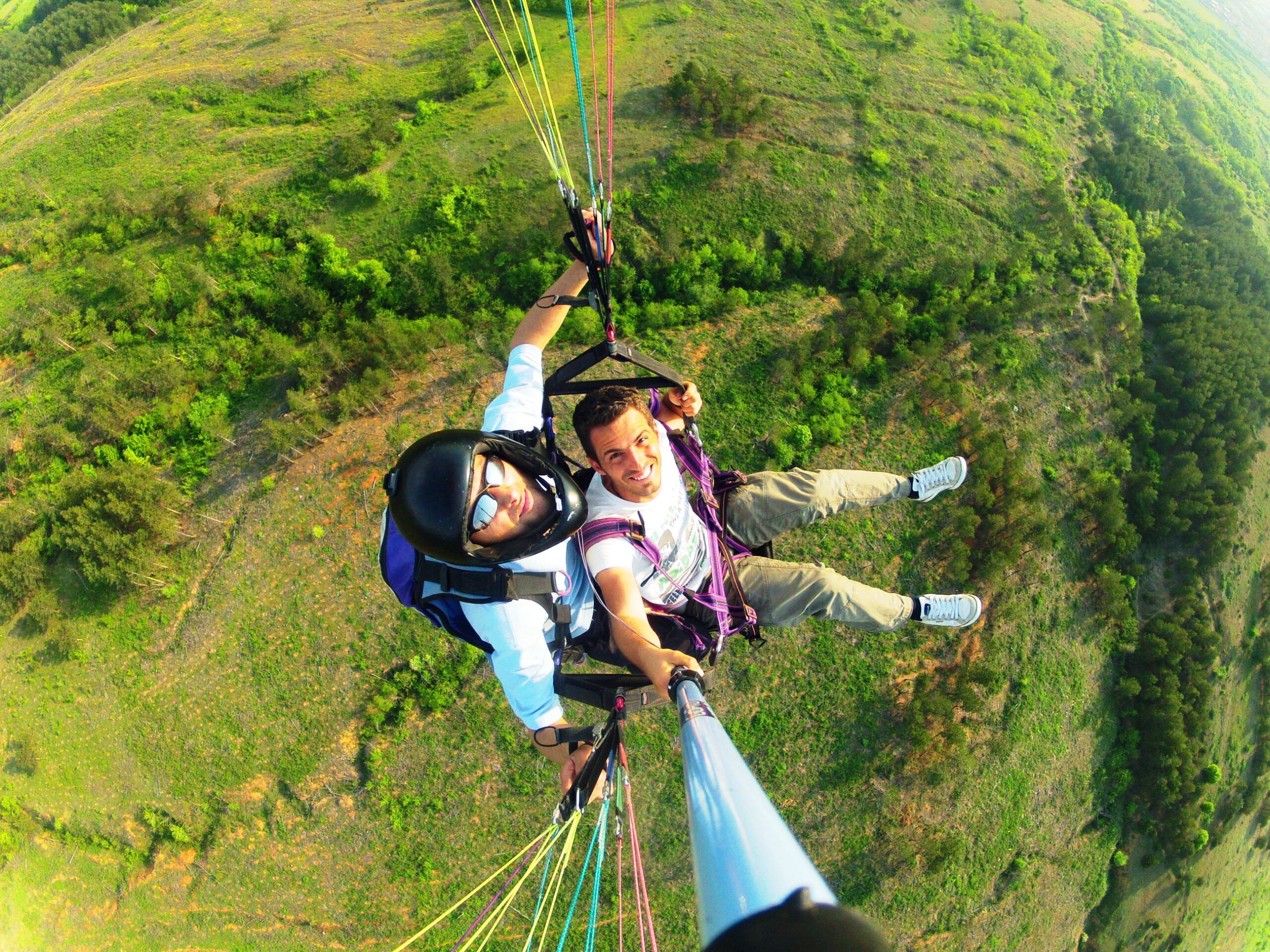
A tandem paragliding flight is the fastest route from complete beginner to airborne. You are harnessed in front of a certified pilot, who handles every aspect of the launch, flight, and landing. Your job is to walk forward during the launch run and then sit back and enjoy the experience. No training, no preparation — just the view.
In Saudi Arabia, tandem flights are priced between SAR 300 and SAR 500 (approximately USD 80–135) depending on the operator, site, and any photo or video package included. Flying Mammut, the most visible international operator with Saudi Arabia-specific operations, lists the standard tandem experience at their Sawda site as approximately 15 minutes of airborne time within a 45-minute total experience that includes ground preparation. Weight limits apply across all operators: typically a minimum of 25 kg and a maximum of 105 kg. Participants should wear sport shoes and comfortable clothing; operators usually provide the harness and all safety equipment.
Flights run in the afternoon, typically from 2 pm to 7 pm, when solar heating has generated enough thermal activity for reliable lift. Pilots monitor wind and weather conditions continuously and will postpone or cancel if conditions are not suitable — this is a licensed, regulated activity and safety is not negotiated. Passengers should arrive prepared for a possible weather hold and treat any delay as a sign the operation is being run correctly.
For visitors who want a longer or more varied experience, some operators offer combined adventure packages alongside hot-air balloon flights, trekking in the highlands, or technical canyoning descents in the Asir escarpment.
Schools and Training Courses
The resumption of structured paragliding in 2025 came with an expanded training infrastructure. The Saudi Paragliding Federation, led by President Hussameddin bin Saleh Al-Madani and headquartered in Abha, now runs national qualification courses for both beginner and intermediate pilots. The Federation is the official certifying body for the sport and trains instructors to FAI-recognised standards. International pilots wishing to fly solo in Saudi Arabia are expected to hold a valid licence from their home country’s FAI-affiliated federation.
Flying Mammut, the Switzerland-based operator with two decades of active flying experience and FAI licensing, operates at both Al Soudah and Jabal Hada and employs a “flexible team of well-trained pilots and instructors.” Their Saudi Arabia operations focus primarily on tandem experiences, but their instructor network can facilitate structured introductory training for those who want to begin their own flying journey.
For serious students aiming at a full P2 solo pilot certification, the recommended route is to contact the Saudi Paragliding Federation directly through their Abha headquarters or to enrol in a structured course that combines ground handling, theory, and progressive solo flight training. The standard beginner course covers glider assembly, kiting and ground handling, meteorology basics, air law, emergency procedures, and supervised solo flights on gentle training hills before progressing to the main sites. Expect a minimum of five to seven days for a foundational course.
International visitors should note that the course schedule and availability are tied to weather windows and instructor availability. Booking well in advance — at least four to six weeks for training courses — is strongly recommended, particularly for the October to April peak season.
Regulations and Safety Requirements
Paragliding in Saudi Arabia operates under a dual regulatory framework. The General Authority of Civil Aviation (GACA) has overall jurisdiction over airspace and aviation safety. The Saudi Paragliding Federation, as the FAI-affiliated national body, sets the sport-specific standards for pilot certification, equipment inspection, and operator licensing. Both authorities must be satisfied for a legal paragliding operation to function.
The practical requirements for visitors are:
- Tandem passengers: No licence or prior experience required. You fly with a certified and licensed tandem pilot. Insurance is included by reputable operators. Check that any operator you book with is licensed.
- Solo pilots: Must hold a valid paragliding licence issued by an FAI-member national federation. Bring your original certificate and logbook.
- Equipment: All gliders must meet current safety standards. Operators inspect their own equipment; visiting pilots should expect their equipment to be reviewed before flying at organised sites.
- Airspace: Flying is restricted to designated paragliding zones. Do not attempt to launch from unofficial or unregistered sites — GACA enforcement of airspace regulations is serious.
- Insurance: Third-party liability insurance is a standard requirement. Reputable tandem operators include this in the price. Solo visiting pilots should confirm their home country policy covers flying in Saudi Arabia before departure.
The safety culture at Saudi Arabia’s established paragliding sites has matured considerably since the sport’s relaunch. Operators at Al Soudah, in particular, are accustomed to operating under scrutiny and take weather monitoring, equipment checks, and weight-limit enforcement seriously. The return of the sport under ministerial oversight means operators have strong incentives to maintain standards.
Planning Your Paragliding Visit
Getting There
Abha Regional Airport receives direct flights from Riyadh, Jeddah, and several other Saudi cities. The drive from Abha city to Al Soudah takes approximately 30 minutes on good mountain roads. The Asir region has seen significant investment in visitor infrastructure as part of Vision 2030, and accommodation at various price points is available in Abha and nearer the Soudah Peaks development.
For Taif and Jabal Hada, Taif Airport connects to Riyadh and Jeddah, and the drive to the Jabal Hada area is straightforward. Taif also warrants a day or two of exploration in its own right — see the Taif city guide for the full picture.
What to Pack
The Asir highlands can be significantly cooler than the lowland Saudi climate visitors may expect. At 2,900 metres even in summer, temperatures are mild; in winter, mornings at the launch site can be genuinely cold. Pack a warm mid-layer and a windproof outer shell regardless of the season. Sport shoes with ankle support are essential — operators will turn you away in sandals. Sunscreen at altitude is non-negotiable.
Combining with Other Adventure Activities
The Asir highlands reward multi-activity visits. The same terrain that produces paragliding thermals also offers some of the best hiking trails in Saudi Arabia, with routes through juniper woodland, along escarpment edges, and into hidden valleys. Technical canyoning is also well-developed in the Asir region, with operators running descents of the dramatic gorges that cut through the escarpment face. A three-to-four-day itinerary combining a tandem paragliding session with a canyon descent and one of the highland ridge hikes gives a thorough introduction to what makes this corner of Saudi Arabia so compelling.