
The Saudi Arabia tourist visa is one of the most straightforward travel visas in the Middle East, but its fee structure can still catch visitors off guard. The total cost depends on whether you apply online or collect the visa on arrival at a Saudi airport. This guide, part of our comprehensive Saudi Arabia Visa Guide 2026, breaks down every component of the tourist visa fee so you know exactly what you are paying for before you begin the application process. Whether you are planning a first trip to Riyadh, a beach holiday on the Red Sea in Jeddah, or a pilgrimage via the Umrah route, understanding these costs upfront will help you budget accurately.
Online eVisa Fee: SAR 535 (~USD 142) — all-inclusive
Visa on Arrival Fee: SAR 480 (~USD 128) — all-inclusive
Insurance: Mandatory medical insurance included in the visa fee (SAR 180 component)
Validity: 1 year, multiple entry, up to 90 days per visit
Processing Time: 5–30 minutes (online or on arrival)
Apply Via: Official eVisa portal (visa.visitsaudi.com) or on arrival at any Saudi airport
Overstay Penalty: SAR 100 per day; escalating fines for repeat violations up to SAR 50,000
The Tourist Visa Fee — Full Breakdown
Saudi Arabia charges a fixed government fee for its tourist visa. The amount differs slightly depending on whether you apply online through the official eVisa portal or obtain the visa on arrival at a Saudi airport. Both options produce the same visa — a one-year, multiple-entry permit allowing stays of up to 90 days per visit.
Online eVisa: SAR 535 (approximately USD 142)
When you apply through the official Visit Saudi portal at visa.visitsaudi.com, the total fee is SAR 535. This single payment covers everything: the government visa fee, mandatory medical insurance, and the online platform processing charge. You do not need to pay anything extra at the airport when you arrive.
The fee is charged in Saudi Riyals, though your bank will convert it at the prevailing exchange rate. At the fixed peg of USD 1 = SAR 3.75, the cost works out to approximately USD 142. Credit and debit cards (Visa, Mastercard) are accepted on the portal.
Visa on Arrival: SAR 480 (approximately USD 128)
If you prefer to skip the online application, citizens of all 66 eVisa-eligible countries can obtain their tourist visa on arrival at any Saudi international airport. The fee at the airport is SAR 480, which is SAR 55 cheaper than the online option because it bypasses the platform processing charge. This fee also includes mandatory medical insurance and the government visa fee.
Payment is made by card at the self-service visa kiosks. Cash is not accepted.
Fee Components Explained
| Component | Amount (SAR) | Amount (USD approx.) | Notes |
|---|---|---|---|
| Government visa fee | 300 | 80 | Paid to the Ministry of Foreign Affairs |
| Mandatory medical insurance | 180 | 48 | Inclusive of VAT; assigned automatically |
| Online platform processing (eVisa only) | 55 | 14 | Only applies to online applications |
| Total — Online eVisa | 535 | ~142 | |
| Total — Visa on Arrival | 480 | ~128 |
These are the official government fees. Beware of third-party websites that charge additional “service fees” or “processing fees” on top — sometimes adding USD 50–100 or more to the real cost. The only official portal is visa.visitsaudi.com. For a full comparison of every visa type available for Saudi Arabia, see our complete visa guide.
What Is Included in the Visa Fee
Unlike many countries where the visa fee covers only the entry permit and everything else must be arranged separately, the Saudi tourist visa fee bundles several components into one payment:
- Entry permit: A one-year, multiple-entry tourist visa allowing unlimited entries and exits, with a maximum stay of 90 days per visit (and a combined maximum of 90 days within the one-year validity).
- Mandatory medical insurance: Health coverage of up to SAR 100,000 (approximately USD 27,000) from a Saudi-regulated insurer, activated automatically upon arrival.
- Biometric registration: Fingerprints and a photograph are captured as part of the process and stored in the national system.
You do not need to purchase separate travel insurance to enter Saudi Arabia — the visa-linked policy satisfies the government requirement. However, the included coverage has significant limitations, which we explain in the next section.
Mandatory Travel Insurance — What It Covers and What It Does Not
The SAR 180 insurance component of your visa fee buys a basic medical policy from one of Saudi Arabia’s government-regulated insurers. The provider is assigned automatically during the visa application — typically Tawuniya or MedGulf — and you cannot choose your own.
What the visa-linked insurance covers
- Emergency medical treatment up to SAR 100,000 (approx. USD 27,000)
- Emergency hospital admission
- Diagnostic services and prescribed medications related to the emergency
- COVID-19-related treatment and hospitalisation (still included as of 2026)
What it does NOT cover
- Trip cancellation or interruption
- Baggage loss or delay
- Adventure sports or high-risk activities
- Medical evacuation beyond basic ambulance transport
- Dental treatment (non-emergency)
- Pre-existing conditions
- Expenses exceeding the SAR 100,000 cap
- Repatriation of remains
For most short leisure trips, the included coverage is adequate for emergencies. However, if you are planning adventure activities in AlUla or the Asir highlands, or if you want comprehensive trip protection, purchasing additional travel insurance from an international provider before departure is strongly recommended. Your existing travel credit card insurance may also provide supplementary coverage.
How to Apply for the Saudi Tourist eVisa Online
The online application process is fast — most applicants receive approval within 5 to 30 minutes. Here is the step-by-step process:
- Visit the official portal: Go to visa.visitsaudi.com. This is the only official Saudi eVisa website.
- Create an account: Register with an active email address and mobile phone number. You will receive a verification code.
- Enter your details: Fill in your personal information, passport details, and travel dates exactly as they appear on your passport.
- Upload your photo: A digital passport-style photograph is required. The system will guide you on specifications.
- Pay the fee: The portal charges SAR 535 by credit or debit card. The insurance provider is assigned automatically at this stage.
- Receive your eVisa: The approved visa is sent to your email as a PDF. It is also linked electronically to your passport number — you do not need to print it, though carrying a copy is recommended.
Your passport must have at least six months of validity remaining from your planned entry date. The eVisa is valid for one year from the date of issue, with multiple entries permitted and a maximum stay of 90 days per visit.
Visa on Arrival — The Airport Process
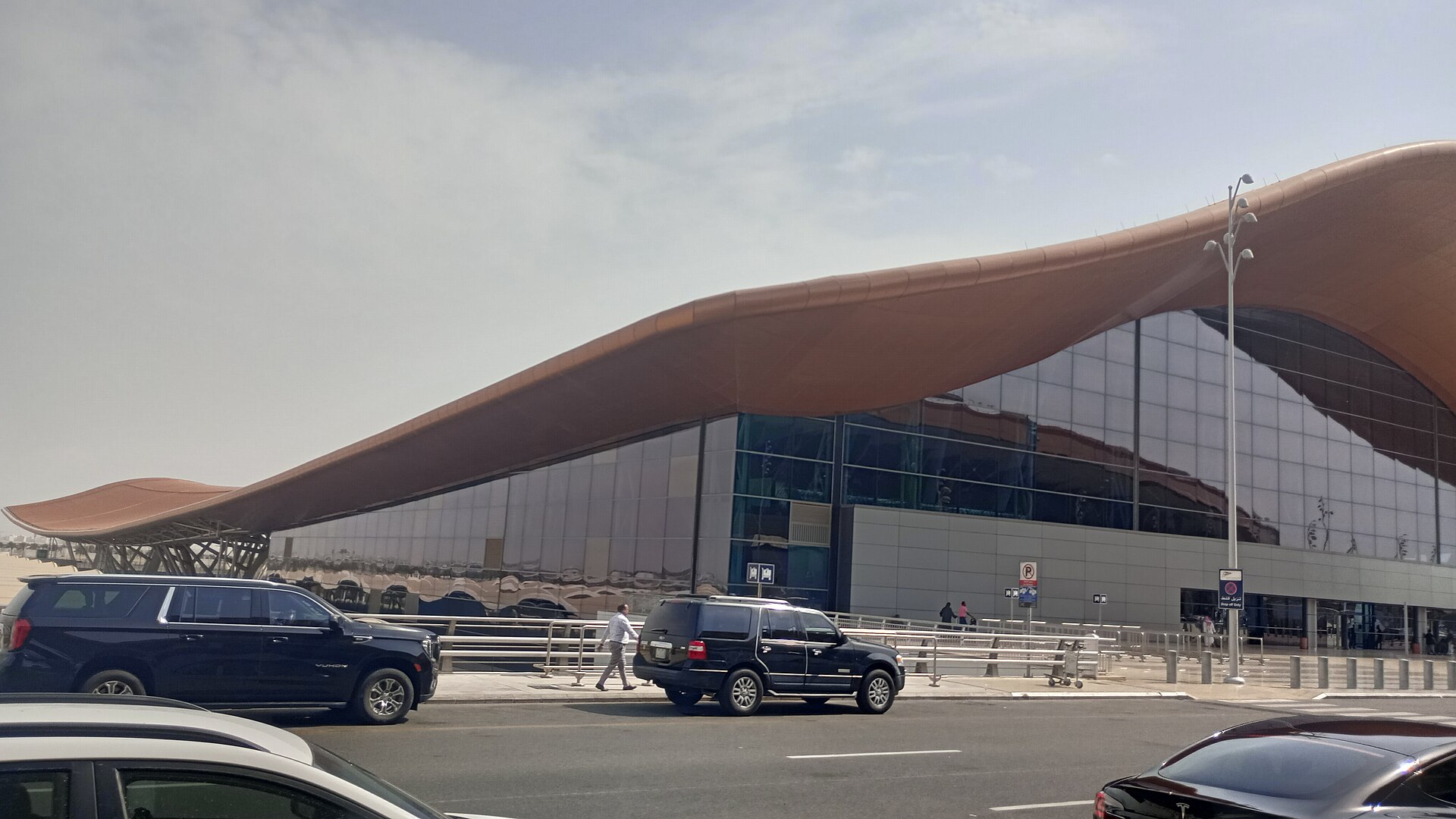
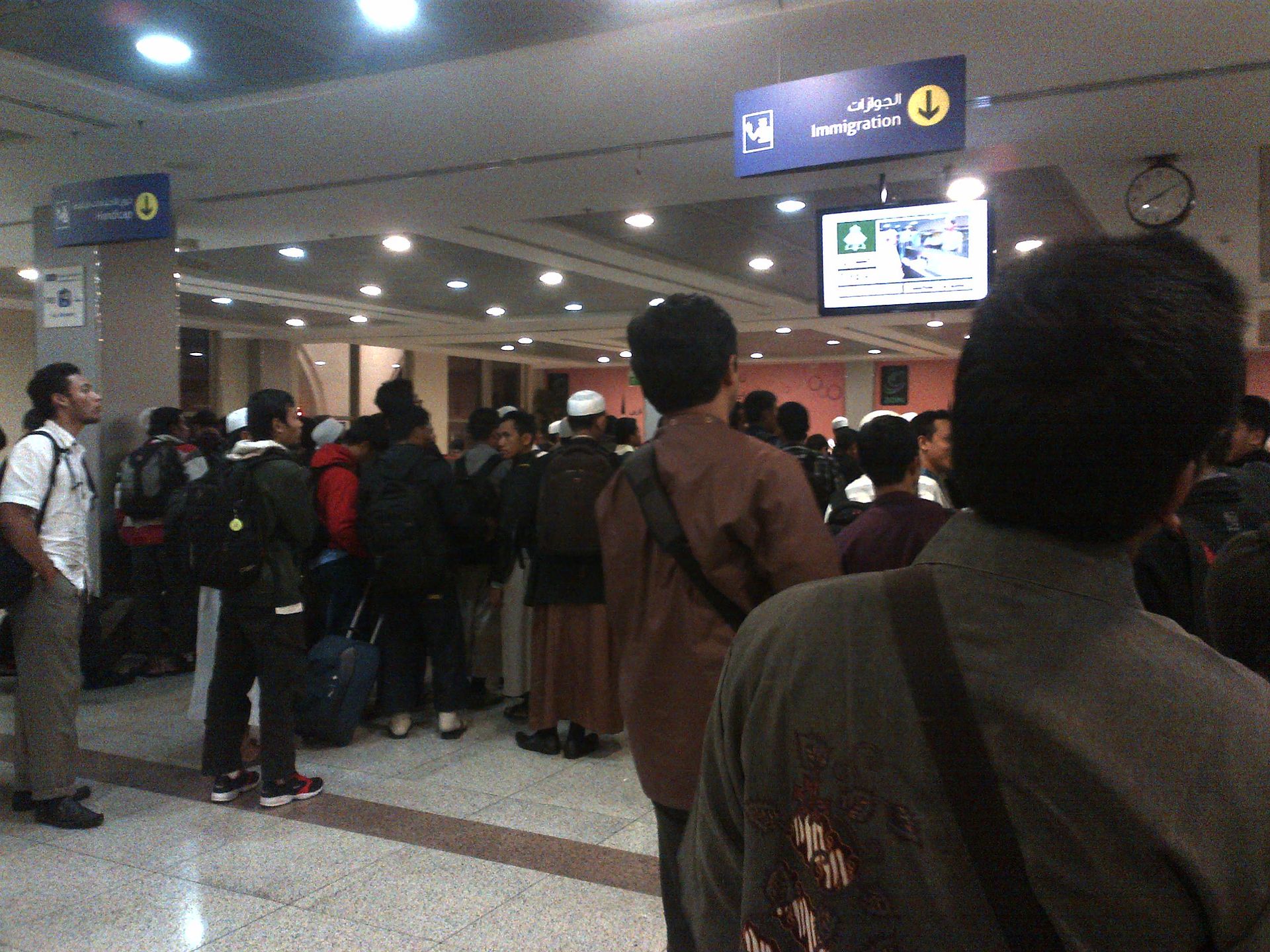
If you hold a passport from one of the 66 eligible countries, you can skip the online application entirely and collect your tourist visa at any Saudi international airport. The main entry points are King Khalid International Airport in Riyadh, King Abdulaziz International Airport in Jeddah, King Fahd International Airport in Dammam, and Prince Mohammad bin Abdulaziz International Airport in Madinah.
The process takes approximately 5 to 30 minutes:
- Proceed to the eVisa kiosks in the arrivals hall (clearly signposted).
- Scan your passport bio page on the kiosk reader.
- Enter your hotel details — you will be asked to type the name of your accommodation.
- Provide biometrics — fingerprints and a photograph are captured.
- Pay SAR 480 by card (Visa or Mastercard). Cash is not accepted at the kiosks.
- Collect your receipt with a barcode and present it, along with your passport, to the immigration officer for your entry stamp.
The visa on arrival produces the same one-year, multiple-entry visa as the online eVisa. The only practical difference is the SAR 55 you save by not using the online platform.
Who Is Eligible — The 66 eVisa Countries
Citizens of the following countries and territories can apply for the Saudi tourist eVisa online or on arrival. The programme launched with 49 countries in September 2019 and has expanded several times since, with the most recent adjustments in 2025.
Eligible nationalities include citizens of the United States, Canada, United Kingdom, all 27 EU member states, all Schengen area countries, Australia, New Zealand, Japan, South Korea, China, Singapore, Malaysia, Brunei, South Africa, Albania, Azerbaijan, Georgia, Kyrgyzstan, Maldives, Iceland, Norway, Switzerland, Liechtenstein, Monaco, Andorra, San Marino, and Vatican City, among others.
Additional eligibility via valid US, UK, or Schengen visas
Even if your country is not on the 66-nation list, you may still be eligible for a Saudi tourist visa if you hold a valid and previously used US, UK, or Schengen visa. This provision significantly broadens access — citizens of countries like India, Pakistan, Nigeria, and the Philippines can use this route provided they have an active visa from one of those three jurisdictions. The visa must have been used at least once for entry to the issuing country or area.
GCC citizens — visa-free
Nationals of Bahrain, Kuwait, Oman, Qatar, and the United Arab Emirates do not need any visa to enter Saudi Arabia. GCC citizens can enter freely and stay for extended periods under the Gulf cooperation framework.
Validity, Duration, and Extension
The Saudi tourist visa is valid for one year from the date of issue, with multiple entries permitted. Each visit can last up to 90 days, and the total combined time spent in the Kingdom during the visa’s validity cannot exceed 90 days.
If you need to stay longer, a visa extension can be requested through the official channels at a cost of SAR 100. Extensions are not guaranteed and are granted at the discretion of immigration authorities. For trips involving both tourism and religious pilgrimage, consult our Hajj 2026 Guide and Umrah guide for first-timers for separate visa requirements.
Overstay Penalties — What Happens If You Stay Too Long
Saudi Arabia takes visa overstays seriously, and the penalties are steep. If you exceed your permitted 90-day stay or remain after your visa expires, the following consequences apply:
| Violation | Fine | Additional consequences |
|---|---|---|
| Daily overstay | SAR 100 per day (~USD 27) | Accrues automatically |
| First-time major overstay | Up to SAR 15,000 (~USD 4,000) | Possible deportation |
| Second violation | Up to SAR 25,000 (~USD 6,667) | Deportation + temporary re-entry ban |
| Third violation | Up to SAR 50,000 (~USD 13,333) | Imprisonment up to 6 months + permanent ban |
The Saudi Ministry of Interior tracks visa expiration electronically through the Absher platform, making it essentially impossible to overstay without detection. Fines accrue automatically, and you will be required to pay the full amount before you are permitted to leave the country.
Grace period: In mid-2025, Saudi Arabia introduced a 30-day grace period allowing visitors with recently expired visit visas to depart without penalties. While this measure may be extended, it is discretionary and should not be relied upon. Always plan to leave well before your visa expires.
Tips for Saving Money on the Visa Process
The visa fee itself is fixed by the Saudi government and non-negotiable. However, there are several ways to avoid overpaying:
- Choose visa on arrival to save SAR 55: If you are comfortable completing the process at the airport, the on-arrival option costs SAR 480 versus SAR 535 online. The visa produced is identical.
- Only use the official portal: Third-party visa agencies routinely charge USD 50–300 or more in “service fees” on top of the government fee. The official site is visa.visitsaudi.com — bookmark it and ignore sponsored search results that lead to commercial intermediaries.
- Do not buy separate basic insurance: The visa fee already includes mandatory medical coverage up to SAR 100,000. You only need additional insurance if you want comprehensive trip protection, adventure coverage, or higher medical limits.
- Maximise your multi-entry visa: The visa is valid for a full year with multiple entries. If you plan to visit Saudi Arabia more than once in 12 months — for example, combining a leisure trip with an Umrah pilgrimage or a return visit to explore AlUla — you pay the visa fee only once.
- Avoid overstay fines: At SAR 100 per day, even a brief overstay adds up quickly. Set a calendar reminder for your 90-day limit and departure date.
- Pay in local currency: If your card offers the option, choosing to pay in SAR rather than your home currency avoids the dynamic currency conversion markup that card terminals often apply.
Children and Family Applications
Each traveller, regardless of age, requires their own visa. Children included on a parent’s passport still need an individual eVisa application. The fee is the same — SAR 535 online or SAR 480 on arrival — per person, including children. There is no discounted rate for minors.
When applying as a family, you can submit multiple applications through the same online account on the Visit Saudi portal. Each applicant will need a valid passport and a digital photograph.
Transit Visa — A Cheaper Alternative for Short Stops
If you are only passing through Saudi Arabia with a layover of more than 12 hours, or if you want to explore the country during a stopover of up to 96 hours, a transit visa may be available. Transit visas are typically free or significantly cheaper than the full tourist visa. However, if your connection does not require clearing immigration (airside transit), no visa is needed at all.
For most visitors planning to actually experience Saudi Arabia — whether exploring the historic districts of Jeddah’s Al-Balad, the modern dining scene in Riyadh, or the ancient Nabataean tombs at Hegra in AlUla — the full tourist visa remains the best value.
Frequently Asked Questions
Is the Saudi tourist visa fee refundable?
No. Once the visa fee is paid and the application submitted, the fee is non-refundable regardless of whether the visa is approved, denied, or unused.
Do I pay VAT on top of the visa fee?
The SAR 180 medical insurance component is inclusive of applicable taxes. No additional VAT is charged on top of the stated visa fee totals (SAR 535 online or SAR 480 on arrival).
Can I pay in US dollars or euros?
The fee is charged in Saudi Riyals. Your card issuer will convert at the prevailing exchange rate. The USD amounts quoted in this guide (USD 142 online, USD 128 on arrival) are estimates at the fixed SAR/USD peg of 3.75.
What if my visa application is rejected?
Rejections are uncommon for citizens of the 66 eligible countries provided passport validity and documentation requirements are met. If rejected, the fee is not refunded. Common reasons for rejection include a passport with less than six months of validity, incomplete information, or a travel ban.
Is the visa fee the same for all nationalities?
Yes. The Saudi tourist eVisa fee is uniform across all 66 eligible nationalities. There are no nationality-based surcharges or discounts on the official portal.
How do I check if my visa is still valid?
You can verify your visa status through the Visit Saudi portal or the Enjaz platform. Your remaining days and entry count are also stamped or recorded electronically at each entry and exit point.
Planning the Rest of Your Trip
Once your visa is sorted, the real planning begins. Saudi Arabia has transformed into one of the Middle East’s most exciting travel destinations, with new attractions, world-class dining, and ancient heritage sites opening to international visitors at a rapid pace. Our Saudi Arabia Travel Guide 2026 covers everything you need to know about getting around, what to wear, where to stay, and what to expect on the ground.
Explore More Saudi Arabia Travel Guides
- Saudi Arabia Visa Guide 2026 — Every entry requirement explained, from e-visa to business visas
- Saudi Arabia Travel Guide 2026 — The complete guide to visiting the Kingdom
- Riyadh Travel Guide — The capital’s best neighbourhoods, restaurants, and things to do
- Jeddah Travel Guide — The Red Sea gateway: Old Town, F1, food, beaches
- AlUla Travel Guide — Hegra, Elephant Rock and the desert of wonders
- Hajj 2026 Guide — Dates, registration, costs and what to expect