
Saudi Arabia is one of the Middle East’s most underrated wildlife destinations. Across six distinct biogeographic zones — from the coral reefs of the Red Sea to the towering dunes of the Empty Quarter — the Kingdom supports over 80 mammal species, 562 recorded bird species, and some of the world’s most pristine marine ecosystems. Whether you are planning a broader Saudi Arabia travel itinerary or making a dedicated wildlife trip, this guide covers every species, reserve, and season you need to know. Under Vision 2030 and the Saudi Green Initiative, the country has designated over 16% of its territory as protected areas, with a target of 30% by 2030 — making now the best time to visit before these wild places become widely known.
Best Time to Visit: October–March for desert mammals and birds; March–May for whale sharks and turtle nesting
Getting There: Fly to Riyadh, Jeddah, or Abha; domestic flights to Tabuk, AlUla, and Jizan for regional reserves
Visa Required: Yes — tourist e-visa available online
Budget: $80–200/day depending on region and activities (diving and safaris at the upper end)
Must-See: Arabian oryx at Uruq Bani Ma’arid, whale sharks off Al Lith, flamingos at Farasan Islands
Avoid: Feeding habituated baboons at roadside stops — it is ecologically harmful and increasingly penalised
The Big Five: Saudi Arabia’s Most Iconic Species
Arabian Oryx
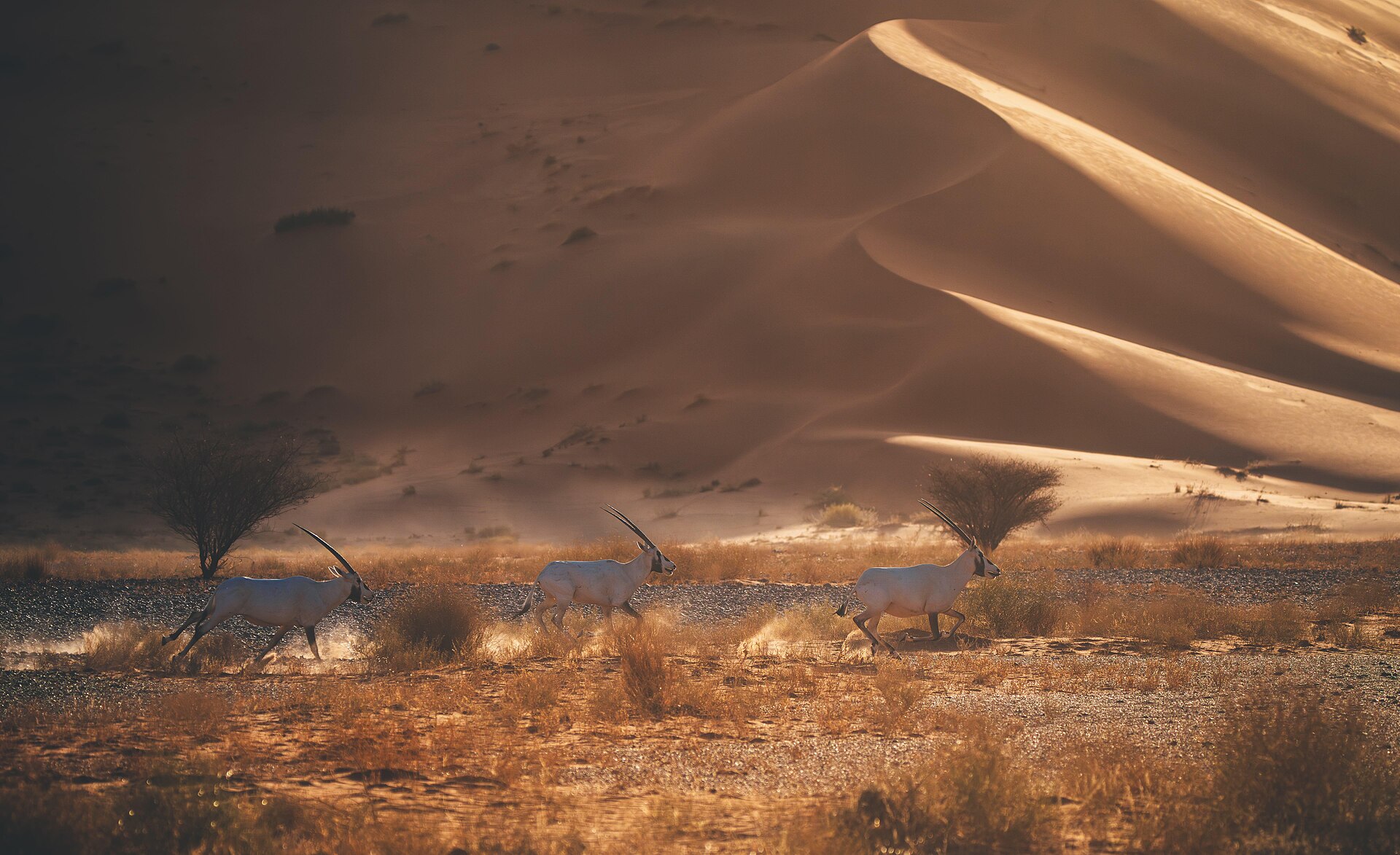
The national animal of Saudi Arabia and a global conservation triumph. Declared extinct in the wild in 1972, the Arabian oryx was reintroduced to Saudi reserves in the 1990s and in 2011 became the first species ever to revert from “Extinct in the Wild” to “Vulnerable” on the IUCN Red List. Today, self-sustaining herds roam freely at Uruq Bani Ma’arid, Saudi Arabia’s first natural UNESCO World Heritage Site (designated 2023), a 12,658 km² unfenced reserve on the western edge of the Rub’ al Khali. The reserve also achieved IUCN Green List status in 2025.
Additional oryx populations live at Mahazat as-Sayd (a 2,200 km² fenced reserve in central Saudi Arabia), Sharaan Nature Reserve near AlUla, and the Imam Saud bin Abdulaziz Royal Reserve in the Makkah region. For visitors, Sharaan offers the most accessible oryx-viewing experience through guided 4×4 safari tours.
Arabian Leopard
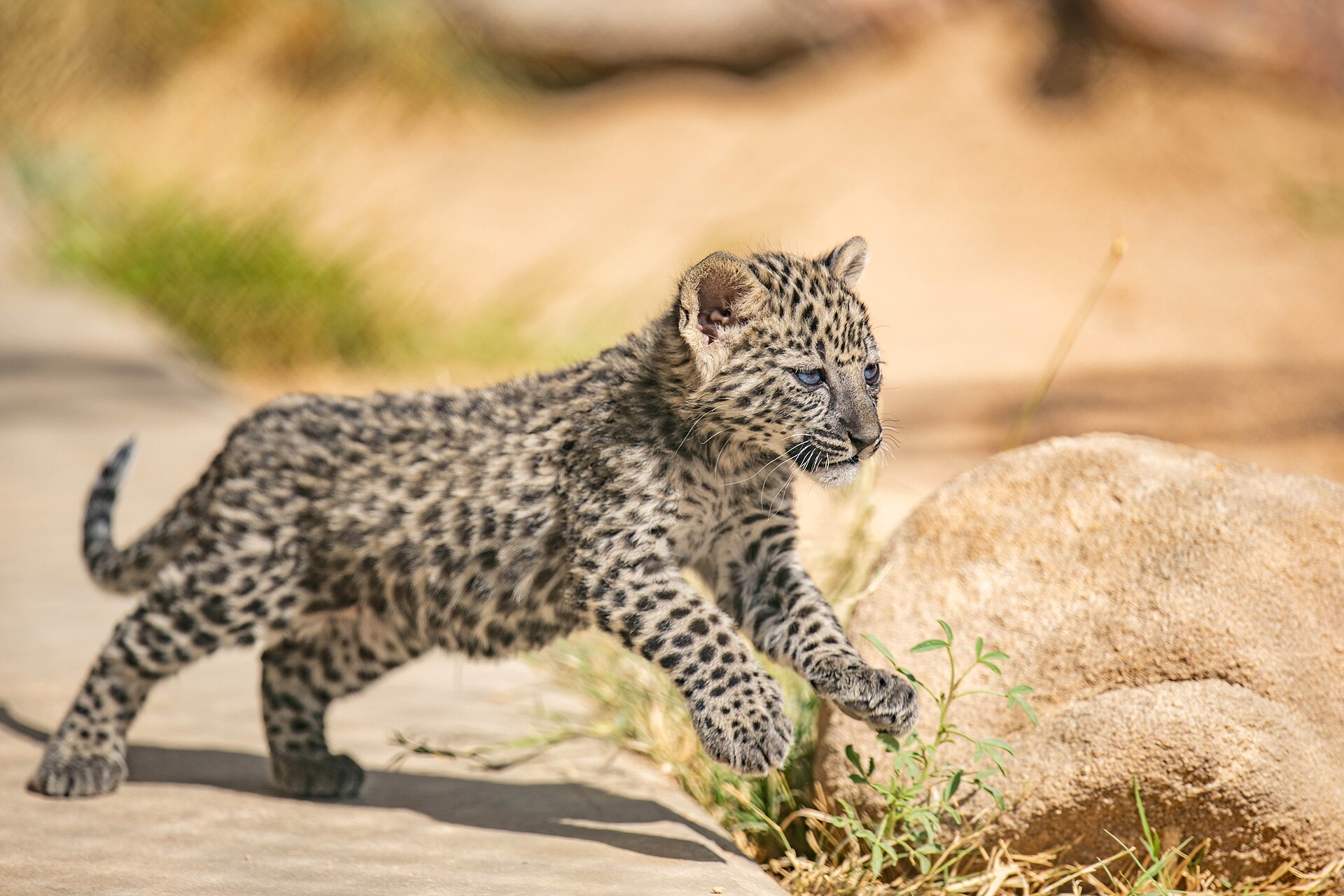
The critically endangered Arabian leopard is Saudi Arabia’s most elusive large predator. With an estimated 120 individuals remaining globally and none recorded in the Saudi wild for over a decade, the species is the subject of an intensive breeding programme at the AlUla Arabian Leopard Conservation and Breeding Centre. In 2025, the programme celebrated six cub births in a single year and received accreditation from the European Association of Zoos and Aquaria (EAZA) — a first for any Saudi wildlife institution. A partnership with the Smithsonian’s National Zoo supports international conservation efforts.
A rewilding centre is under construction in Sharaan Nature Reserve, targeting 65,000 hectares of restored habitat before eventual reintroduction. Historically, leopards also inhabited the Asir and Raydah highlands in the southwest and Harrat Al-Harrah in the north. While wild sightings are not currently possible, visitors to AlUla may access guided viewing of the breeding programme.
Nubian Ibex
The Nubian ibex, with its powerful build and sweeping curved horns, is one of the most accessible large mammals to see in the Saudi wild. The Ibex Protected Area — 1,842 km² of rugged plateau, canyons, and wadis 180 km south of Riyadh near Hotat Bani Tamim — holds the Kingdom’s largest population. The reserve, which achieved IUCN Green List status, is also home to Arabian mountain gazelle, rock hyrax, Arabian wolf, Blanford’s fox, and eagles. Ibex are also found on the rocky escarpments of the Asir Mountains and the Sharaan Nature Reserve in AlUla.
Hamadryas Baboon
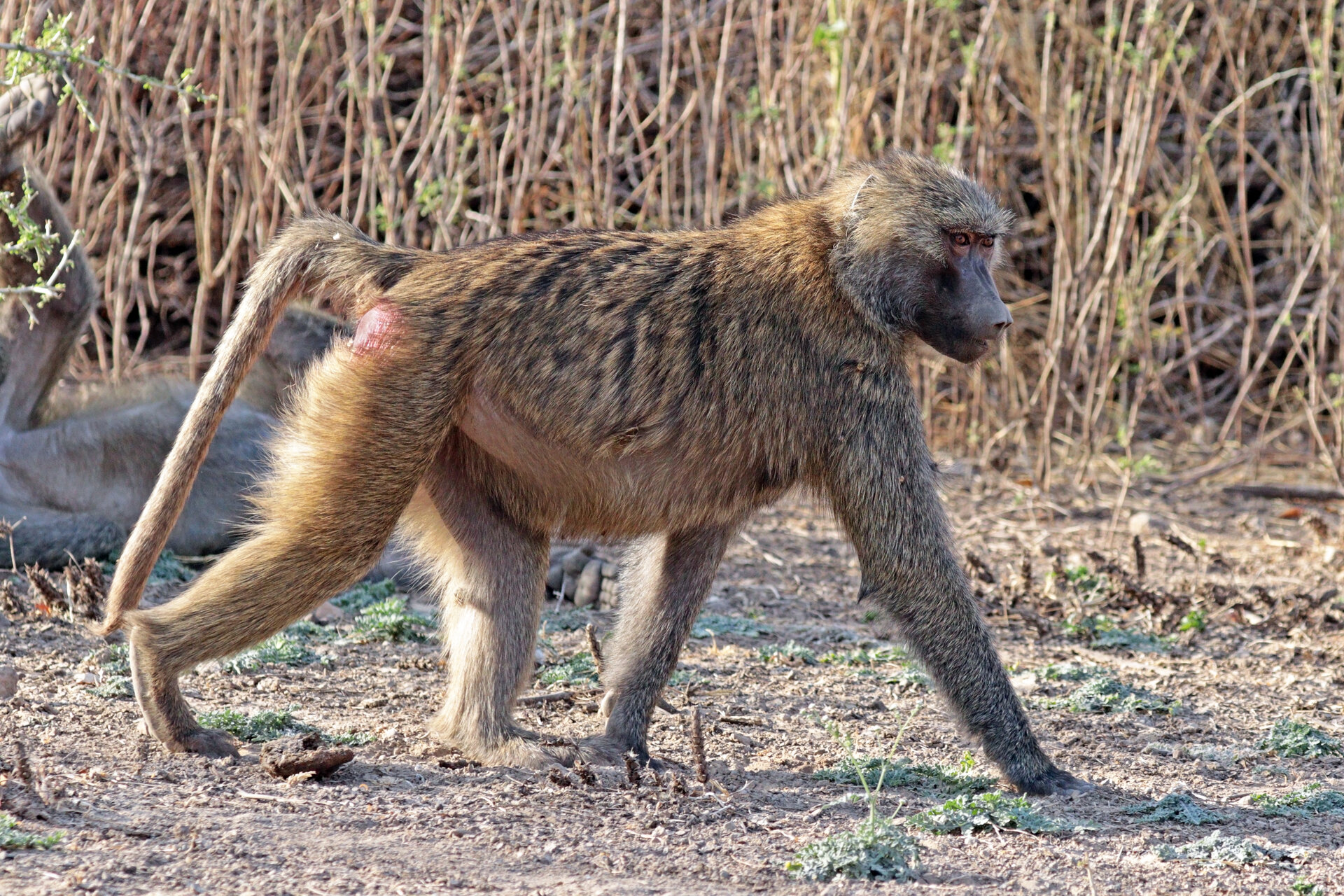
Saudi Arabia’s most easily observed large mammal. An estimated 350,000 hamadryas baboons range through the Sarawat Mountains, extending roughly 800 km from the Yemeni border northward. The best viewing sites are around Abha and the Raydah Escarpment, where large groups are seen routinely along the highland roads. Males are twice the size of females and sport a distinctive silver-grey mane. Raydah Natural Reserve, a cloud forest near Abha, offers excellent baboon habitat alongside rare birdwatching opportunities.
Wildlife tip: Baboons at roadside viewpoints have become habituated to feeding by tourists. Do not feed them — it disrupts natural behaviour and is increasingly penalised by authorities. Observe from a distance and use a telephoto lens.
Whale Shark
Saudi Arabia offers one of the world’s premier whale shark aggregation events. Every spring, more than 100 juvenile whale sharks gather at Shib Habil reef, a shallow platform south of Jeddah near Al Lith, drawn by seasonal plankton blooms. The peak season runs from March to May, with a secondary aggregation at the Farasan Banks from November to May. Multiple dive operators offer whale shark snorkelling and diving tours from Jeddah. This is one of the few places in the world where you can reliably swim alongside the planet’s largest fish — and one of the least crowded.
Desert and Mountain Mammals
Beyond the Big Five, Saudi Arabia’s varied terrain shelters a surprising diversity of mammals that reward patient observers.
Gazelles
Two distinct species inhabit Saudi Arabia. The sand gazelle favours open sandy and gravel plains and has been successfully reintroduced at Mahazat as-Sayd and Uruq Bani Ma’arid. The Arabian mountain gazelle inhabits the western highlands; the Farasan Islands hold what is reported as the largest single-site population. Both species are subjects of active reintroduction programmes under the National Center for Wildlife (NCW).
Arabian Wolf
The smallest wolf subspecies in the world, the Arabian wolf is found in the Najd and Tabuk regions and has been documented at multiple reserves including Sharaan, Raydah, and Harrat Al-Harrah. Sightings are rare and typically crepuscular — dawn and dusk drives in protected areas offer the best chance.
Other Notable Species
- Caracal: A mid-sized wild cat with distinctive tufted ears, present in the Ibex Reserve, Raydah, and Jabal Shada. Highly elusive; tracks are more commonly encountered than animals.
- Sand cat: One of the world’s most desert-adapted cats, documented at Uruq Bani Ma’arid. Primarily nocturnal.
- Honey badger (ratel): Documented in the Sija and Umm ar-Rimth Reserve and Majami’ al-Hadb Reserve. Fearless, tough, and rarely seen.
- Rock hyrax: Small, stout mammals that resemble rodents but are actually related to elephants. Common in the Asir highlands, where groups sun on boulders — a reliable morning sighting around Abha.
- Striped hyena: Active at night across the Nafud, Harrat Al-Harrah, and Raydah reserves.
- Arabian tahr: A small wild ungulate confined to rocky cliff habitats in the Asir/Hejaz highlands. Listed as Vulnerable by IUCN.
Marine Wildlife: The Red Sea and Beyond
Saudi Arabia’s 2,600 km Red Sea coastline and 560 km Arabian Gulf shore support some of the most biodiverse marine ecosystems on Earth. The Red Sea diving and snorkelling opportunities here rival anything in the Indian Ocean — with a fraction of the crowds.
Coral Reefs
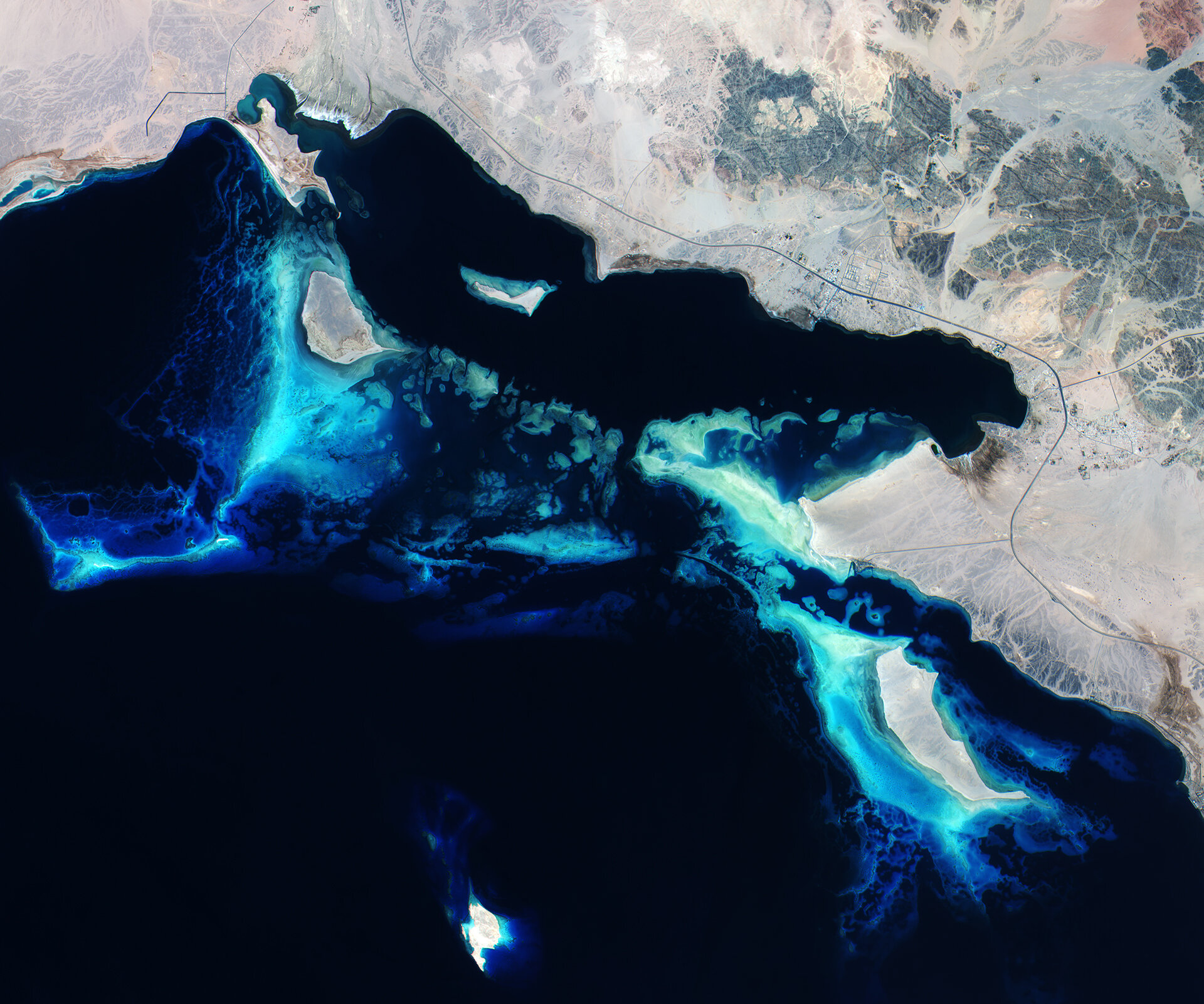
The Saudi Red Sea holds some of the world’s least-disturbed coral reef systems, with visibility commonly exceeding 30–40 metres and reaching 60 metres at offshore sites. Key reef destinations include the Yanbu “Seven Sisters” Coral Gardens, Umluj Archipelago (over 100 islands with pristine shallow reefs), and the Farasan Banks — widely rated among the top 10 dive destinations globally for encounters with manta rays, hammerhead sharks, grey reef sharks, and large pelagics.
Dugongs
An estimated 2,000 dugongs inhabit Saudi Red Sea waters, concentrated around Al Wajh Bank (northwest), the Al Lith area (central), and Jizan (southern coast). A separate population uses the Arabian Gulf, particularly the Gulf of Salwah near the Qatar border during the cooler months (November–February). The best chance of an encounter is snorkelling over seagrass beds near Umluj, where wild dugongs have been reported drifting past untouched coral gardens.
Sea Turtles
Ras Baridi is the largest green turtle nesting beach in the entire Red Sea, with annual nesting counts rising from 14–110 individuals in the 1980s–90s to 178–330 in recent years — a strong recovery signal. Hawksbill turtles nest at the Farasan Islands, Ras Al-Shaaban, and across the central Saudi Red Sea coast. Nesting season runs March–April at Farasan and through summer at Ras Baridi. Both species are routinely encountered by divers at Farasan Banks and Yanbu reefs.
Dolphins and Other Marine Life
Spinner dolphins, bottlenose dolphins, and Indian Ocean humpback dolphins are present throughout Saudi waters. Dolphin watching is available from Jeddah (boat tours), Umluj, and Farasan Islands. Manta rays frequent the Farasan Banks and offshore reefs around Al Lith. Hammerhead sharks are present at deeper seamounts — a draw for experienced divers.
Protected Areas and Nature Reserves
Saudi Arabia maintains approximately 23 nature reserves, divided between 8 Royal Reserves (overseen by the Council of Royal Reserves), 10 NCW-managed reserves, and 5 reserves under the Royal Commission for AlUla. Visitor access to NCW reserves requires permits through the Fatri platform (eservices.ncw.gov.sa).
| Reserve | Region | Size | Key Species | Access |
|---|---|---|---|---|
| Uruq Bani Ma’arid | Empty Quarter | 12,658 km² | Arabian oryx, sand gazelle, sand cat | NCW permit (Fatri) |
| Sharaan Nature Reserve | AlUla | 1,500 km² | Oryx, ibex, gazelle, ostrich, wolves | Guided tours via experiencealula.com |
| Ibex Protected Area | South of Riyadh | 1,842 km² | Nubian ibex, mountain gazelle, wolves | NCW permit (Fatri) |
| Farasan Islands | Jizan / Red Sea | 5,772 km² | Gazelle, turtles, flamingos, seabirds | Free ferry from Jizan Port |
| Raydah Natural Reserve | Asir / Abha | 10 km² (core) | Baboons, rock hyrax, Asir Magpie | NCW permit (Fatri) |
| Mahazat as-Sayd | Central Saudi | 2,200 km² | Oryx, sand gazelle, red-necked ostrich | Restricted — contact NCW |
| Jubail Marine Sanctuary | Eastern Province | 2,410 km² | Dugongs, dolphins, mangroves, flamingos | Limited — contact NCW |
| Harrat Al-Harrah | Northern Saudi | Large volcanic reserve | 22 mammal species incl. wolves, hyenas | NCW permit (Fatri) |
| Prince Mohammed bin Salman Royal Reserve | Northwest / Red Sea | 24,500 km² | 23 species targeted for reintroduction | Under development — check pmbsrr.gov.sa |
Practical tip: Sharaan Nature Reserve in AlUla and the Farasan Islands are the two most visitor-friendly wildlife destinations in Saudi Arabia. Sharaan offers bookable 4×4 safari tours (from SAR 450/person through operators like Husaak Adventures), while Farasan requires only a ferry ticket and your passport.
Birdwatching in Saudi Arabia
With 562 recorded bird species — including nearly two dozen endemics or near-endemics — and a position at the intersection of three major flyways, Saudi Arabia is a globally significant birding destination that remains almost unknown to international birdwatchers.
Asir Highlands: The Endemic Hotspot
The Asir Mountains around Abha are Saudi Arabia’s premier birdwatching destination. The cloud forests and highland steppe hold 8–9 species found nowhere else on Earth (or only in adjacent Yemen), including the Asir Magpie — the star target for visiting birders — Philby’s Partridge, Arabian Woodpecker, and Arabian Sunbird. The village of Tanoumah and nearby Quraish Valley offer easy access to prime habitat. The Raydah Escarpment combines cloud forest birding with hamadryas baboon sightings — a unique dual-species experience.
Farasan Islands: Seabirds and Migrants
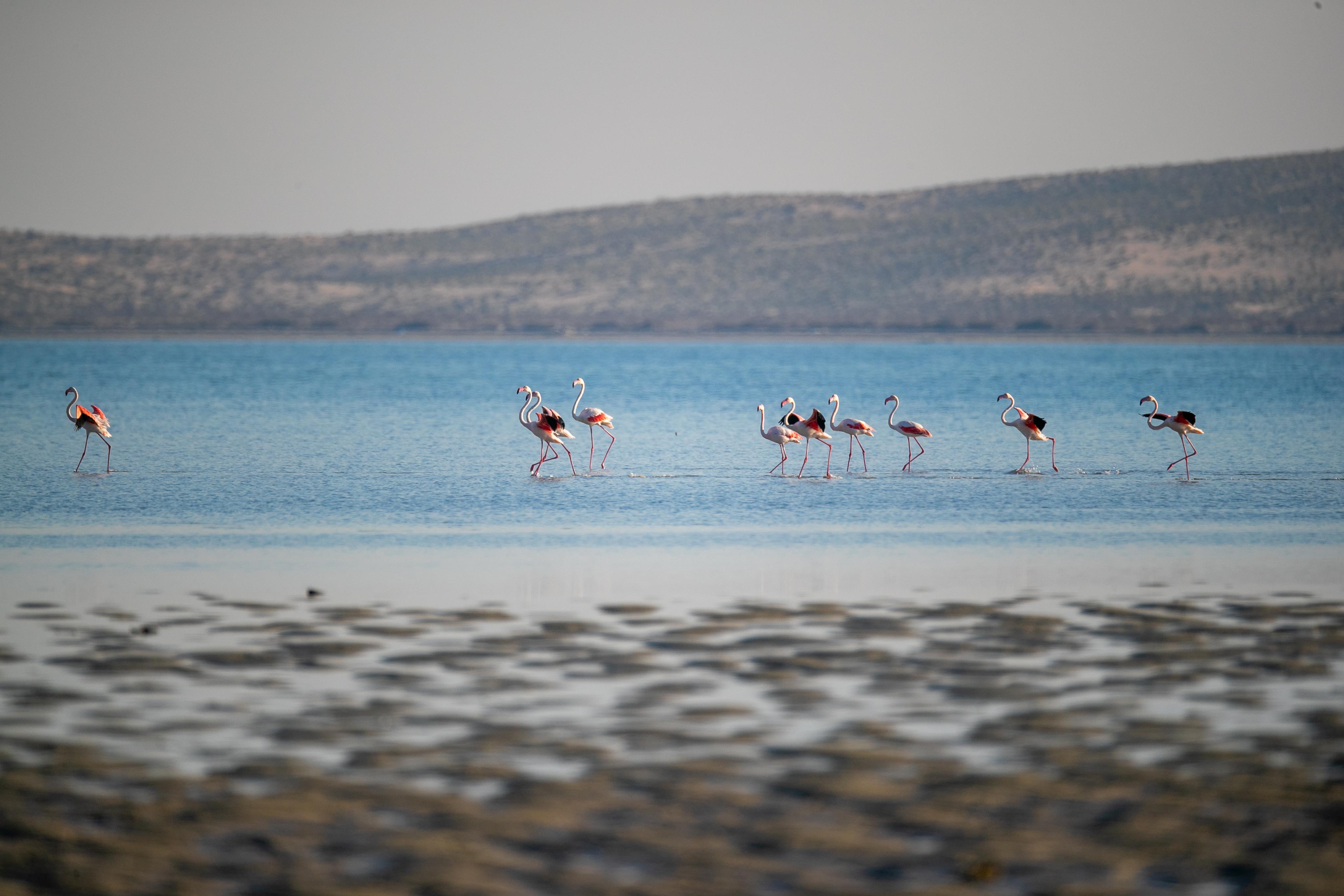
The Farasan archipelago in the southern Red Sea is a critical seabird hub. Reliable species include the White-eyed Gull (a Red Sea endemic), Crab Plover, breeding Osprey, and both Greater and Lesser Flamingos at coastal flats. European and Asian migrants pass through during spring and autumn. The best birding season is November–March, overlapping with turtle nesting in March–April.
Jubail and the Gulf Coast
The Sabkhat al-Fasl coastal sabkha near Jubail attracts winter flamingo flocks in extraordinary numbers — one of the best flamingo spectacles in the Middle East. Additional species at Jubail and the Eastern Province coast include Socotra cormorant, herons, terns, and waders. The Jubail Marine Wildlife Sanctuary protects mangroves that shelter Indian Ocean humpback dolphins alongside the birdlife.
Red Sea Coast: Migration Corridors
The KAUST Nature Conservation Area near Thuwal features bird hides and managed freshwater habitats that serve as important autumn and spring migration stopovers. Umluj and Al Wajh on the northern Hejaz coast attract waders, cranes, kingfishers, and terns around offshore islands and coastal lagoons.
Birdwatching Season Guide
| Season | Best For | Top Sites |
|---|---|---|
| October–November | Autumn migration passage | KAUST, Umluj, Farasan |
| November–March | Winter visitors, flamingo flocks, endemics | Asir/Tanoumah, Jubail, Farasan |
| March–May | Spring passage, seabirds, turtle overlap | Farasan, Red Sea coast, Umluj |
| June–September | Resident species only (quietest season) | Asir highlands (cooler temperatures) |
Best Time to Visit for Each Wildlife Type
| Target Species | Best Season | Where to Go |
|---|---|---|
| Arabian oryx | October–March | Uruq Bani Ma’arid, Sharaan Reserve |
| Whale sharks | March–May | Shib Habil reef (Al Lith, south of Jeddah) |
| Sea turtle nesting | March–April | Ras Baridi, Farasan Islands |
| Endemic birds | November–March | Asir Highlands (Tanoumah, Raydah) |
| Flamingos | November–March | Jubail / Sabkhat al-Fasl, Farasan |
| Hamadryas baboons | Year-round | Abha / Raydah Escarpment |
| Nubian ibex | October–April | Ibex Reserve (south of Riyadh) |
| Red Sea reef diving | October–May | Yanbu, Jeddah, Farasan Banks, Umluj |
| Dugongs | October–May (Red Sea) / Nov–Feb (Gulf) | Umluj, Al Wajh Bank, Gulf of Salwah |
Practical Information for Wildlife Visitors
Permits and Reserve Access
- Fatri Platform (eservices.ncw.gov.sa): The official National Center for Wildlife portal for obtaining visit permits to NCW-managed reserves. Required for Uruq Bani Ma’arid, the Ibex Reserve, Raydah, and Harrat Al-Harrah.
- AlUla reserves: Book commercial tours through experiencealula.com — no separate government permit required. Operators handle access.
- Farasan Islands: No special wildlife permit needed. Board the free government ferry from Jizan Port with your passport (90-minute crossing). Departs approximately 7:30 AM and 3:30 PM daily. Arrive early; book one day in advance at the port.
- Royal Reserves: Tourism infrastructure is being developed under the Council of Royal Reserves. Check pmbsrr.gov.sa for the Prince Mohammed bin Salman Reserve.
Tour Operators
- Husaak Adventures: Sharaan Reserve Safari in AlUla (4–5 hour guided tours, from SAR 450/person)
- ROAM Saudi: AlUla wildlife and nature experiences (experiencesbyroam.com)
- Saudi Birding (saudibirding.com): Specialist birdwatching and wildlife tours across the Kingdom
- Birdquest Tours (birdquest-tours.com): International birding operator with comprehensive Saudi Arabia programmes
- 17sixty (17sixty.com): Whale shark and shark diving experiences from Jeddah
Wildlife Photography Tips
- Desert mammals (sand cat, desert fox, honey badger): Spotlight night drives in protected areas offer the best opportunities. Most are active at dawn and dusk.
- Ibex and baboons: Best in early morning on rocky escarpments. A 400mm+ telephoto lens is recommended for ibex on cliff faces.
- Birds (Asir endemics): Dawn is critical. The Asir Magpie and Arabian Woodpecker are most active in early morning in cloud-forest remnants.
- Whale sharks: Wide-angle underwater lens (14–24mm equivalent). Approach by snorkelling, not engine.
- Flamingo flocks: 500mm+ telephoto. Jubail sabkha sites at low tide in morning light produce the best images.
Getting There and Visa
Most wildlife destinations are accessible via domestic flights from Riyadh or Jeddah. Fly to Abha for the Asir highlands (baboons, endemic birds, ibex); to AlUla for Sharaan Reserve safaris; to Jizan for the Farasan Islands ferry; and use Jeddah as a base for whale shark trips to Al Lith. You will need a Saudi tourist e-visa, which can be obtained online in minutes for citizens of 49 eligible countries. Car hire is essential for reaching most reserves — Saudi Arabia’s wildlife is spread across vast distances.
Conservation: The Saudi Green Initiative
Launched in 2021 by Crown Prince Mohammed bin Salman, the Saudi Green Initiative is the policy framework driving the Kingdom’s conservation transformation. Key targets include protecting 30% of Saudi territory by 2030 (up from 16%), rehabilitating 40 million hectares of degraded land, planting 100 million mangrove trees along the Red Sea and Gulf coasts (6 million already in place), and reintroducing 23 historically occurring species — including Arabian oryx, Arabian leopard, and cheetah — to the Prince Mohammed bin Salman Royal Reserve alone.
The National Center for Wildlife (NCW) oversees all non-royal reserves and runs breeding and reintroduction programmes. Saudi Arabia has moved from minimal wildlife tourism infrastructure before 2019 to a functioning ecotourism sector that is growing rapidly. Partnerships with the IUCN, Smithsonian, Panthera, and EAZA underpin the scientific credibility of these efforts. For visitors, this means that hiking trails, ranger-led safaris, and marine wildlife tours are expanding every season — but these are still uncrowded, authentic experiences rather than mass tourism.
Explore More Saudi Arabia Travel Guides
- Saudi Arabia Travel Guide 2026 — The complete guide to visiting the Kingdom
- Saudi Arabia Diving and Snorkelling Guide — Red Sea reefs, whale sharks, and marine megafauna
- Saudi Arabia Hiking Guide — Mountain trails, desert treks, and highland escarpments
- AlUla Travel Guide 2026 — Sharaan Reserve, Hegra, and the desert northwest
- Abha and Asir Travel Guide — Cloud forests, baboons, and endemic birdwatching
- Saudi Arabia Visa Guide — Every visa type explained