
RIYADH — President Donald Trump threatened Iran with “lethal prosecution and destruction” on Truth Social late Wednesday while his vice president was en route to Islamabad for the highest-level direct US-Iran engagement since 1979, and the country caught in the middle of that contradiction — absorbing missile strikes, haemorrhaging interceptor stockpiles, and excluded from the negotiating table — is Saudi Arabia.
The kingdom must now make four irreversible decisions in the next 48 hours without knowing whether Washington is heading toward a deal or a detonation. Every signal from the White House on April 9 made that determination harder, not easier.
Table of Contents
The Dual-Track Signal
Trump’s Truth Social post arrived shortly before midnight on Wednesday, less than 36 hours after he announced a two-week ceasefire with Iran. “All U.S. Ships, Aircraft, and Military Personnel, with additional Ammunition, Weaponry, and anything else that is appropriate and necessary for the lethal prosecution and destruction of an already substantially degraded Enemy, will remain in place,” Trump wrote, before adding that if Iran fails to comply, “the ‘Shootin’ Starts,’ bigger, and better, and stronger than anyone has ever seen before.”
On the same day, the White House confirmed that Vice President JD Vance would lead the American delegation at Saturday’s talks in Islamabad — the first direct, in-person US-Iran bilateral contact since the Islamic Revolution. Vance would be joined by Steve Witkoff and Jared Kushner, and his Iranian counterpart would be Parliament Speaker Mohammad Bagher Ghalibaf, the former IRGC Aerospace Force commander whom Tehran had specifically demanded after refusing to continue with Witkoff and Kushner alone.
The threat and the diplomacy were not sequential — they were simultaneous. That distinction matters for every government in the region trying to read American intent, but it matters most for Riyadh, which must commit to decisions in the next two days that cannot be reversed once made.
Can the White House Agree With Itself?
The signalling incoherence was not limited to the gap between threat and diplomacy. Within the same news cycle on April 9, two contradictory characterisations of Iran’s 10-point peace proposal emerged from the same building. White House Press Secretary Karoline Leavitt told reporters the document had been “literally thrown in the garbage by President Trump and his negotiating team.” Trump himself had called it “a workable basis on which to negotiate” fewer than 24 hours earlier. Vance, for his part, offered a third interpretation: that the first 10-point plan “was probably written by ChatGPT” and had been replaced by “a second 10-point proposal that was much more reasonable.”
The Middle East briefing 3,000+ readers start their day with.
One email. Every weekday morning. Free.
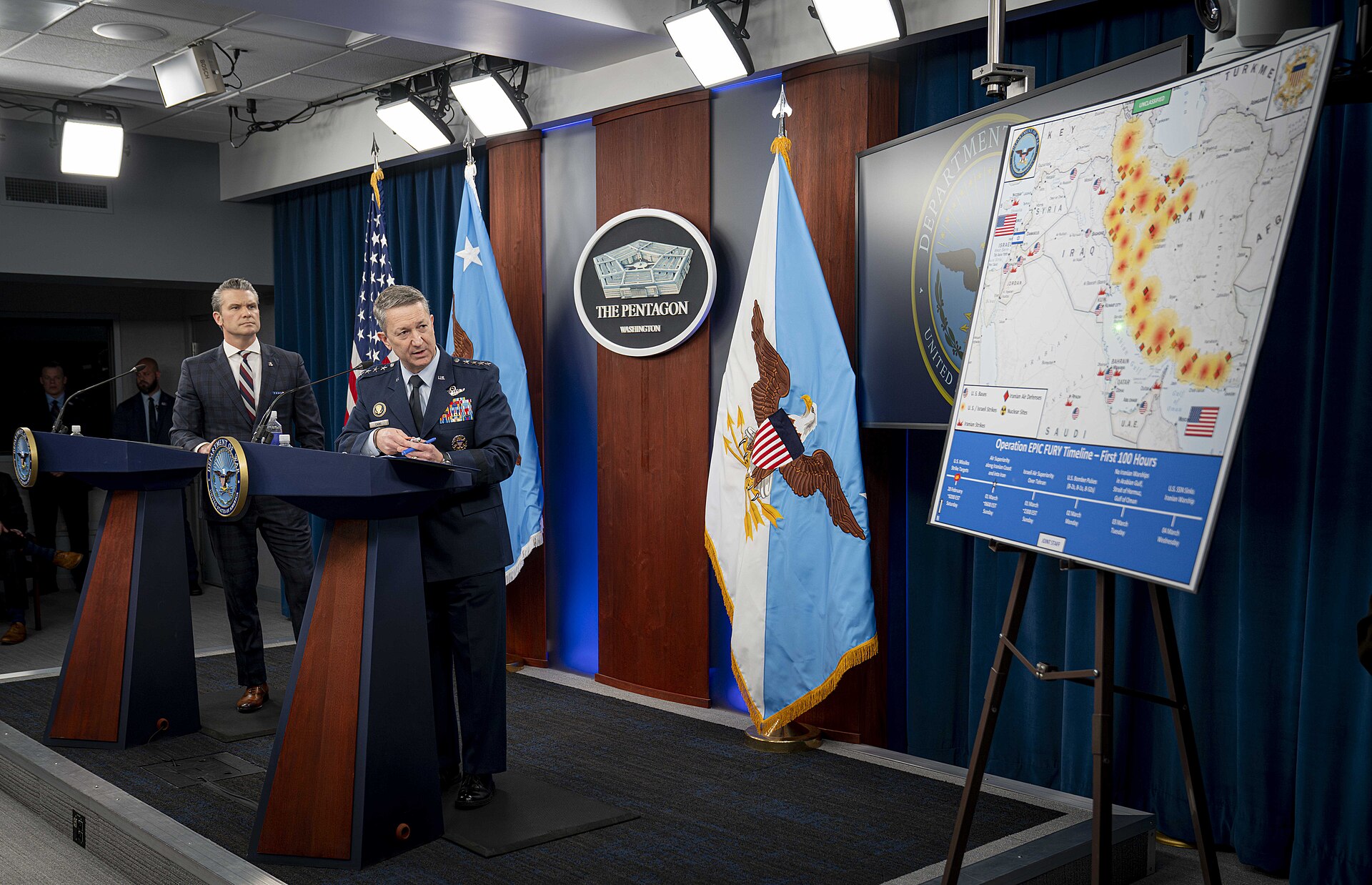
Leavitt then escalated further. Trump’s threat, she said, was “not a bluff” and had “led to the Iranian regime to cave to their knees and ask for a ceasefire.” Defence Secretary Pete Hegseth, briefing from the Pentagon while Vance prepared for Islamabad, said Iran would “either give it to us voluntarily” — referring to its highly enriched uranium — or “if we have to do something else ourselves… we reserve that opportunity.” These are the words of an administration describing decisive military dominance, spoken on the eve of diplomatic talks it chose to hold.
Michael Froman, President of the Council on Foreign Relations, offered the most deflating translation: “This is an agreement to begin to talk… this is really just the beginning of a conversation about these fundamental issues where the U.S. and Iran are in really quite different positions.” Froman was describing a White House that cannot yet tell its own allies whether the next phase is negotiation or escalation.
For Saudi decision-makers, the problem is not that Washington is sending mixed signals — mixed signals are standard in wartime diplomacy. The problem is that the mixed signals concern the single variable on which every pending Saudi decision depends: whether the next two weeks produce a framework or a firestorm.
Saudi Arabia’s Four Decisions in 48 Hours
The kingdom faces four concurrent, time-sensitive choices, each of which requires a clear reading of American direction that Trump’s dual-track makes impossible. None of them can wait for Islamabad to produce an answer.
June OSP pricing. Aramco’s May Official Selling Price was set at +$19.50 per barrel above the Oman/Dubai benchmark when Brent stood at roughly $109. By April 9, Brent had rebounded to $96-101 after crashing to $91-95 the previous day — still $8-13 below where the May OSP was calibrated. The June OSP repricing window opens around May 5, and internal modelling for that decision begins now. If Hormuz reopens under a Vance-Ghalibaf framework, Brent could slide further, and Aramco would need to cut the June differential by $10 or more — the largest single correction in the company’s history. If Hormuz stays shut and war resumes, Brent could recover sharply, and the current May OSP would look prescient rather than punitive. Aramco has never retroactively reduced a published OSP. The decision is binary, and it hinges entirely on whether Islamabad produces a deal.
Hajj security architecture. April 18 is nine days away. On that date, the first charter flights carrying 119,000 Pakistani pilgrims arrive, and the Umrah permit cordon seals. The two-week ceasefire nominally expires on April 22 — the same day Indonesia’s first 221,000-strong cohort departs. Saudi Arabia’s PAC-3 MSE stockpile stands at approximately 400 rounds, or 14% of its pre-war inventory of roughly 2,800. Poland refused to transfer Patriot batteries on March 31. The $9 billion, 730-round DSCA sale notified in January does not produce rounds within the current operational window. If the ceasefire collapses, Saudi Arabia must protect millions of pilgrims arriving across a 33-day gap between ceasefire expiration and peak Hajj on May 25-26 with a missile defence inventory that would last roughly two days at the April 7 intercept rate.
PAC-3 emergency resupply. Every request Riyadh makes to Washington for accelerated Patriot deliveries requires Saudi officials to assess whether the security architecture — in which the kingdom absorbed strikes while the US provided intelligence and resupply — still holds. If Vance returns from Islamabad with a framework, the resupply question becomes a standard defence-cooperation matter. If talks collapse and Trump’s “shootin’ starts” threat materialises, the kingdom would need to calculate whether hosting US forces makes it safer or whether it paints Saudi infrastructure as co-belligerent targets, as the IRGC has repeatedly argued. The pipeline strike on April 8 — delivered after the ceasefire — is a data point that answers that question in a way Riyadh would prefer not to acknowledge publicly.
Whether to publicly back the Islamabad framework. Saudi Arabia had a co-guarantor seat at the March 29-30 four-nation Islamabad consultations alongside Turkey, Egypt, and Pakistan. That seat disappeared for April 10 without explanation from Washington or Islamabad. The kingdom has been demoted from co-guarantor to observer in 11 days. Publicly endorsing a framework it had no hand in drafting would signal subordination. Publicly opposing it would risk alienating both Washington and Tehran simultaneously. Staying silent — as the April 9 FM call suggests Riyadh prefers — works only if the ambiguity holds, and Trump’s dual-track makes ambiguity a depreciating asset.
Hormuz Remains Frozen — and That Changes Everything
The ceasefire was supposed to produce the “COMPLETE, IMMEDIATE, and SAFE OPENING” of the Strait of Hormuz. It has not. As of April 9, maritime intelligence firm Windward reported that “the strait has not reopened — it is in a supervised pause.” S&P Global Market Intelligence tracked just four transits on Wednesday, against a pre-war norm of 60-135 per day. More than 400 oil-laden tankers, 34 LPG carriers, and 19 LNG vessels remained anchored in the Persian Gulf. The International Maritime Organization estimated some 2,000 ships — including six cruise liners — stranded and unable to pass.
Iran’s IRGC released alternative maritime charts on April 9, redirecting vessels through a 5-nautical-mile channel between Qeshm and Larak islands — inside Iranian territorial waters — while requiring cryptocurrency toll payments and weapons inspections. Vandana Hari, founder of Vanda Insights, told Reuters: “The chances of a meaningful reopening any time soon look dim.”
The non-reopening rewrites Saudi Arabia’s entire post-ceasefire calculus. The East-West Pipeline — the kingdom’s only crude export bypass — was itself struck by an IRGC drone at a pumping station at approximately 1 p.m. local time on April 8, hours after the ceasefire took nominal effect. The pipeline had reached a record 7 million barrels per day eleven days earlier, but Yanbu’s wartime loading capacity is capped at 3-4 million bpd, and the pumping-station damage adds an upstream constraint to a system already bottlenecked at the terminus. Saudi Arabia’s export recovery now depends on a strait that remains closed and a pipeline that has been degraded — the two legs of the kingdom’s energy stool, both damaged in the 24 hours bracketing the ceasefire announcement.
Brent’s rebound on April 9 reflected precisely this reality: traders realised the ceasefire had not produced the supply relief that the April 8 crash had priced in. Goldman Sachs warned that if Hormuz closure continues for another month, Brent could average $120 in Q3 and $115 in Q4 2026. For Saudi Arabia, whose PIF-inclusive fiscal break-even Bloomberg has estimated at $94 per barrel, the current price range is survivable — but only barely, and only if exports can actually reach buyers.
Does Iran Benefit From Saudi Paralysis?
Tehran enters April 10 in a structurally different position. Iran’s lead negotiator Ghalibaf declared three ceasefire violations before arriving in Islamabad — continued Israeli strikes on Lebanon, a drone incursion over Fars province, and Trump’s insistence that Iran cannot enrich uranium — and called new negotiations “unreasonable.” He stopped short of withdrawing. Those three violations were structurally foreseeable when the ceasefire was signed, meaning Iran entered the talks already holding the argument for withdrawal.
Iran’s ambassador to Pakistan briefly posted that a delegation would arrive “tonight in Islamabad for serious talks,” then deleted the post. An embassy official told AFP it was removed “because of some issues.” The choreography — pre-banked exit ramp, deleted-then-undeleted confirmation, three violations catalogued before talks open — gives Tehran maximum optionality. It can negotiate in good faith, walk out citing pre-established grievances, or simply run the clock on a ceasefire whose expiry date coincides with Indonesia’s first Hajj departure and therefore transfers the pressure of collapse onto Saudi Arabia, not Iran.
“The deep historical distrust we hold toward the United States stems from its repeated violations of all forms of commitments — a pattern that has regrettably been repeated once again.”
Mohammad Bagher Ghalibaf, Iranian Parliament Speaker, April 8, 2026
Vance, speaking to reporters in Hungary before departing for Pakistan, offered a dismissive counter: “If Ghalibaf only has three points of disagreement, there must be quite a lot of agreement. Ceasefires are always messy.” But Ghalibaf’s three complaints are not minor procedural quibbles — they are the three issues (Lebanon, enrichment, and airspace sovereignty) that constitute the entire gap between the US and Iranian positions. Calling them “three points of disagreement” is like calling the Atlantic Ocean a small body of water between two points of agreement.
Iran’s state-linked Tasnim news agency, meanwhile, framed the ceasefire as outright Iranian victory, listing “10 signs of the great defeat of the enemy,” including: “The enemy claimed Iran must accept limitations on its missile capabilities either diplomatically or by force. There is no trace of this in the 10-point plan that Trump was forced to accept.” Tasnim cited a “senior security source” saying Tehran was “assessing the possibility of exiting the deal should the Israeli regime persist in its breaches.” The IRGC’s information warfare machine is running a victory narrative while its diplomats prepare to negotiate — a mirror image of Trump’s own dual-track, and equally corrosive to Saudi planning.
Trita Parsi, a prominent Iran analyst, argued that the dynamic has already shifted: “Trump’s failed use of force has blunted the credibility of American military threats. Washington can still rattle its sabre. But after a failed war, such threats ring hollow.” Whether that assessment proves correct matters less than the fact that it is the operating assumption in Tehran — and that Saudi Arabia must make decisions based on which reading of American intent is correct without being able to verify either.
The Phone Call That Said Nothing
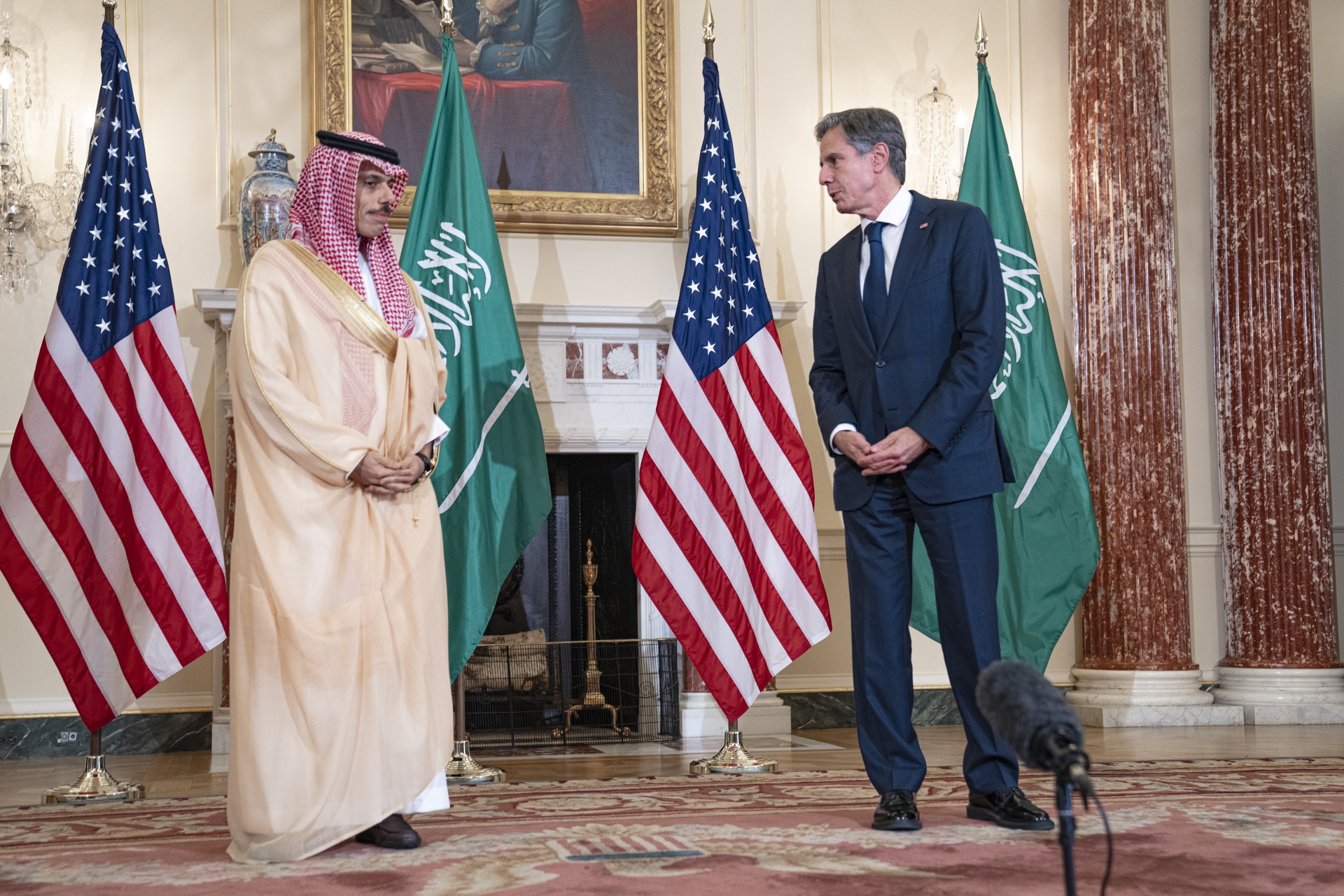
Against this backdrop, Saudi Foreign Minister Prince Faisal bin Farhan held his first publicly announced phone call with Iranian Foreign Minister Abbas Araghchi since the war began. The Saudi readout was a masterwork of diplomatic emptiness: the two “reviewed the latest developments and discussed ways to reduce tensions to restore security and stability in the region.” No mention of Trump’s threat. No mention of Vance. No mention of Islamabad. No mention of the pipeline strike that had hit Saudi infrastructure under Araghchi’s government’s ceasefire.
The call’s significance lies in what it omitted. Prince Faisal had warned last month that Iran’s attacks on Saudi Arabia and its neighbours had “destroyed any trust with Tehran,” adding: “Iran is no longer a strategic partner — it has never been.” Making a conciliatory phone call to the foreign minister of the country that struck your only export pipeline on the day of a ceasefire suggests Riyadh is hedging against a world in which Islamabad produces a deal that excludes Saudi interests, and the kingdom needs a direct channel to Tehran to protect itself from the consequences of American diplomacy.
The Washington Post reported on February 28 that Saudi Arabia helped trigger this war — that “a push from Saudis and Israel helped move Trump to attack Iran.” The kingdom now finds itself absorbing the physical costs of a war it encouraged, excluded from the negotiating table where that war’s resolution is being discussed, unable to read whether its primary security guarantor intends to negotiate or escalate, and quietly calling the government that is bombing its infrastructure to ask about “stability.” That is the operational definition of strategic paralysis.
Background
The war between the United States, Israel, and Iran began on February 28, 2026, with coordinated strikes that killed Supreme Leader Ali Khamenei and targeted Iran’s military and nuclear infrastructure. Iran retaliated with sustained missile and drone campaigns against Gulf states, closed the Strait of Hormuz to most traffic, and launched attacks on energy infrastructure across the region. More than 2,000 people have been killed in Iran over six weeks of conflict, according to estimates that have not been independently verified, while Gulf states have absorbed thousands of projectiles — the UAE alone reporting 2,819, with 13 dead and 221 injured.
Pakistan brokered the two-week ceasefire announced on April 8, with Egypt and Pakistan serving as guarantors. The ceasefire’s central deliverable — Hormuz reopening — has not materialised, and post-ceasefire attacks continued across the Gulf on April 8-9, with Qatar intercepting 7 ballistic missiles, the UAE intercepting 17 ballistic missiles and 35 drones, and Kuwait and Saudi Arabia also reporting intercepts. The reversibility of Iran’s halt order remains the central structural question heading into Islamabad.
Iran’s 10-point peace proposal included demands for Iranian oversight of the Strait of Hormuz, US military withdrawal from the Middle East, and continued enrichment rights. The Islamabad talks on April 10 represent the first direct US-Iran bilateral since the 1979 Islamic Revolution. A discrepancy between the Persian and English versions of the plan — the enrichment clause appears in the Persian text but is absent from the English version — has not been explained by either side.
Frequently Asked Questions
What exactly did Trump’s Truth Social post say, and when was it posted?
The post appeared shortly before midnight on Wednesday, April 8-9, and stated that all US military assets would remain deployed “for the lethal prosecution and destruction of an already substantially degraded Enemy” until a “REAL AGREEMENT” is fully complied with. He warned that non-compliance would mean “the ‘Shootin’ Starts,’ bigger, and better, and stronger than anyone has ever seen before.” He also added, in a separate post, that the US military was “loading up and resting” and “looking forward to the next conquest.” The posts were made on the same day VP Vance’s trip to Islamabad was publicly confirmed.
Who is attending the April 10 Islamabad talks, and why is Saudi Arabia absent?
The US delegation is led by VP Vance, accompanied by Special Envoy Steve Witkoff and Jared Kushner. Iran’s delegation is led by Parliament Speaker Ghalibaf, with Foreign Minister Araghchi also expected. Pakistan is the host and guarantor. According to Pakistani media reports, a 30-member US security advance team arrived in Islamabad ahead of the talks and the Serena Hotel was requisitioned for the delegations; Pakistan declared April 9-10 a two-day public holiday. Saudi FM Prince Faisal had co-guarantor status at the March 29-30 four-nation consultations but was not invited to the April 10 bilateral. No public explanation has been given by Washington, Islamabad, or Riyadh.
How many ships are still stranded in or near the Strait of Hormuz?
The IMO estimated approximately 2,000 ships are stranded in the Persian Gulf, unable to pass through the strait. MarineTraffic data showed over 400 oil-laden tankers, 34 LPG carriers, and 19 LNG vessels anchored. S&P Global tracked only four transits on April 9 — roughly 3-7% of pre-war daily traffic. Jennifer Parker of the University of Western Australia Defence and Security Institute warned: “You don’t switch global shipping flows back on in 24 hours. Tanker owners, insurers and crews need to believe the risk has actually reduced — not just paused.”
What is the discrepancy between the Persian and English versions of Iran’s 10-point plan?
Foreign Policy reported that the enrichment clause — affirming Iran’s right to uranium enrichment — appears in the Persian-language version of the 10-point plan distributed through Iranian state media but is absent from the English-language version shared with international outlets. Neither Tehran nor Washington has explained the discrepancy. This matters because enrichment is the single issue Trump has called a “red line,” and the textual ambiguity means Washington and Tehran may be negotiating from literally different documents.
What happens if the ceasefire expires on April 22 without a deal?
April 22 is both the ceasefire expiration date and the day Indonesia’s first Hajj cohort of 221,000 pilgrims departs for Saudi Arabia. Peak Hajj falls on May 25-26, creating a 33-day security gap. There is no extension mechanism built into the ceasefire framework, according to the Soufan Center. If fighting resumes, Saudi Arabia would need to defend Hajj pilgrims, energy infrastructure, and population centres simultaneously with a PAC-3 inventory that has been depleted by 86%. The Soufan Center’s April 9 IntelBrief described the ceasefire as “already tenuous” and “on the verge of collapse.”