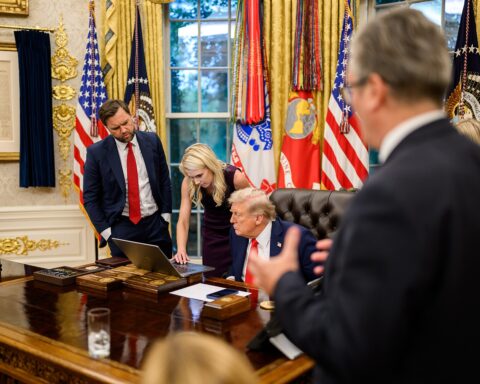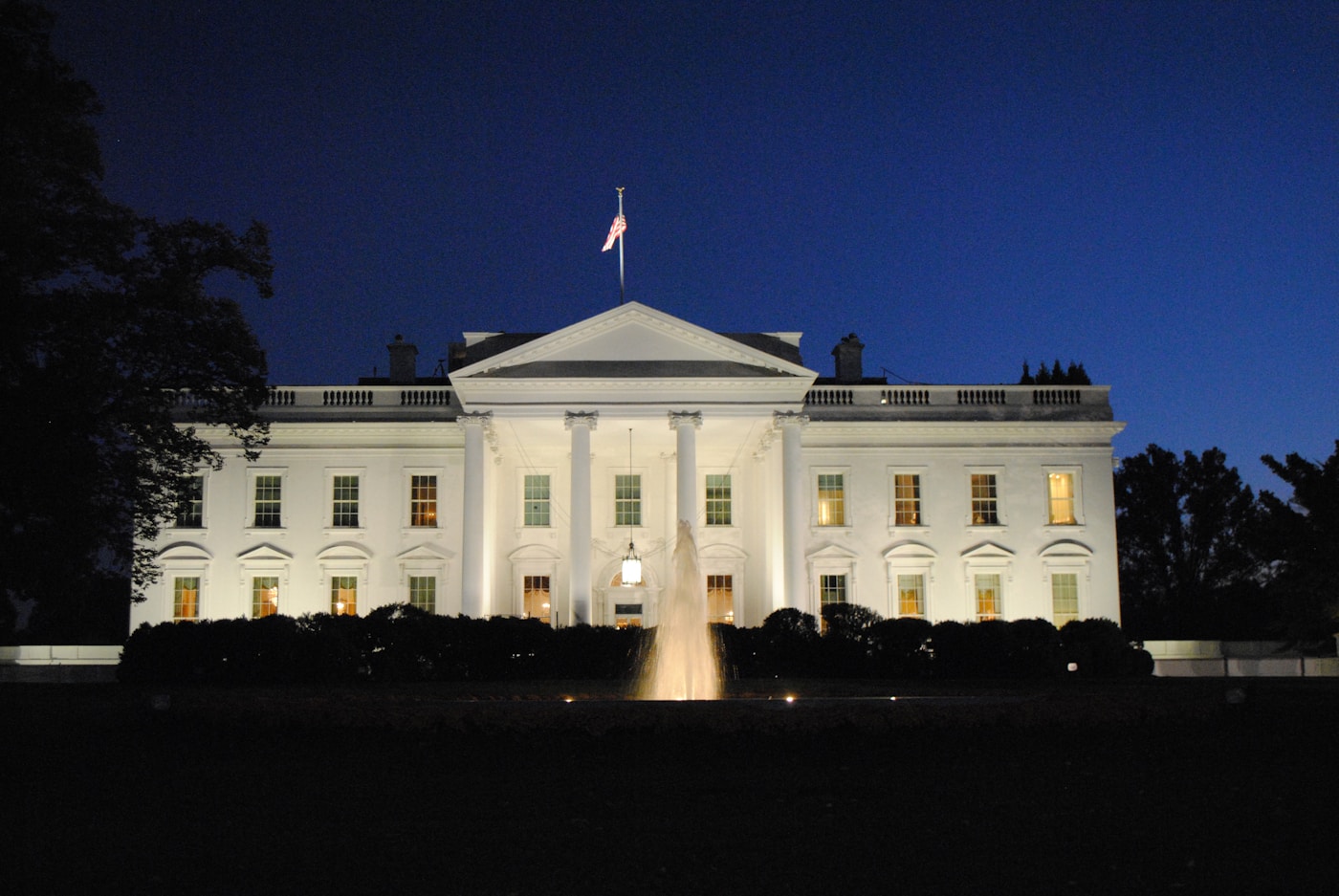

RIYADH / WASHINGTON — On Sunday, standing before reporters in the White House, President Donald Trump offered a number that should have sent a chill through every boardroom in Riyadh, every trading floor in London, and every ministry office along the Gulf coast. Asked how long the United States intended to sustain its air campaign against Iran, Trump replied that the military had projected “four to five weeks” of combat operations — and added, with characteristic insouciance, that the US “has capability to go far longer than that,” according to CBS News and Al Jazeera.
For the Pentagon, five weeks may be a planning parameter. For Saudi Arabia, it is an economic catastrophe measured in billions of dollars per week, an existential stress test for Vision 2030, and a political crucible for Crown Prince Mohammed bin Salman — the man who, the Washington Post reported, privately lobbied Trump to launch the very strikes now devastating the regional economy he spent a decade trying to build.
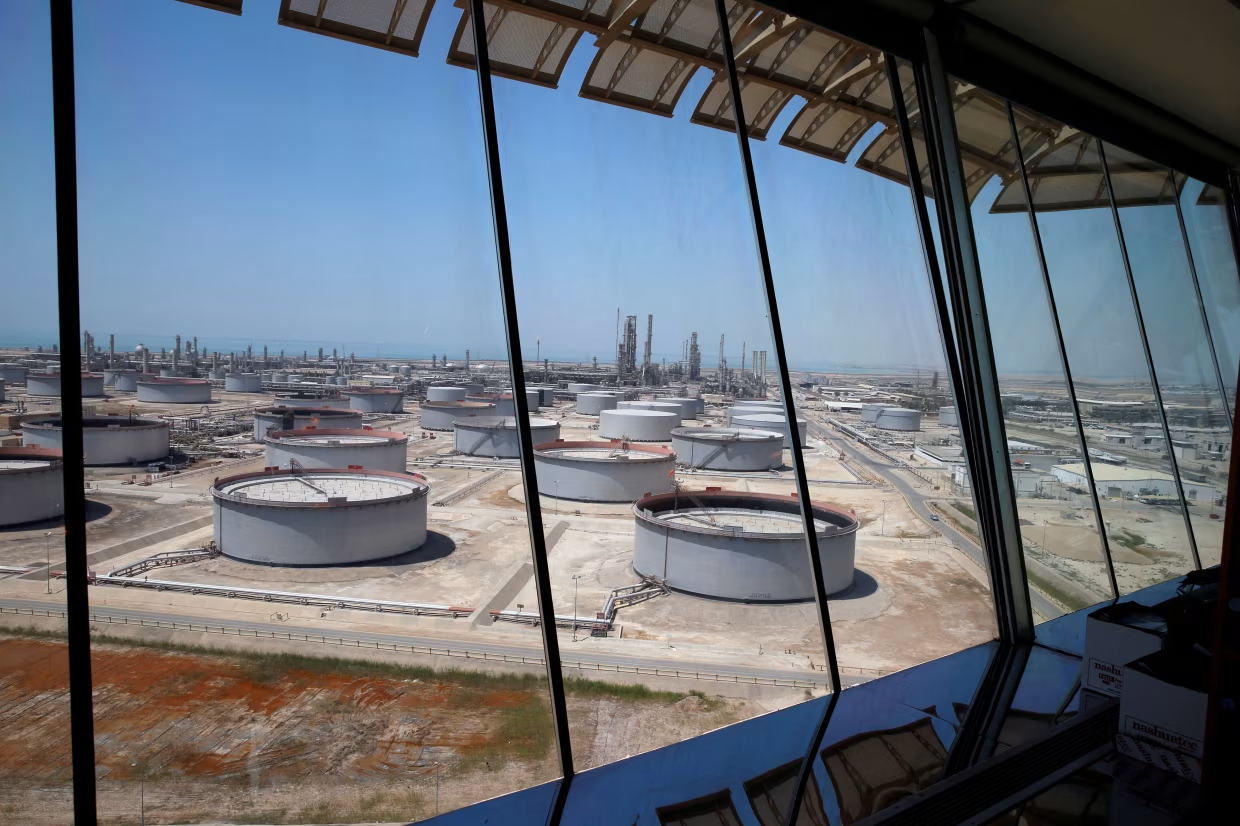
The arithmetic is brutal and immediate. Saudi Arabia’s 550,000-barrel-per-day Ras Tanura refinery — the kingdom’s largest — has been offline since Iranian drones struck the facility on 2 March, as Bloomberg and Al Jazeera confirmed. The Strait of Hormuz, through which roughly 20 per cent of the world’s oil supply transits daily, has seen traffic collapse by 81 per cent since the conflict began, according to maritime intelligence firm Windward. At least five tankers have been damaged, two crew members killed, and approximately 150 vessels are stranded at anchor across the Gulf, Reuters and Bloomberg reported. Brent crude has surged past $84 a barrel, up more than 14 per cent in days, with analysts at Bernstein warning prices could reach $120 to $150 in a prolonged scenario.
Five weeks of this is not a war Saudi Arabia can simply endure. It is a structural shock to the foundations of the modern Saudi state.
What Five Weeks of War Costs the Kingdom
The Saudi economy runs on oil. Despite a decade of diversification rhetoric, petroleum revenue still accounts for roughly 60 per cent of government income. The kingdom’s 2026 budget, announced in December, projected revenues of 1.147 trillion riyals against expenditures of 1.313 trillion riyals — already a planned deficit of 165 billion riyals ($44 billion), according to the Ministry of Finance. That budget assumed a functioning Strait of Hormuz, an intact refining sector, and a region at peace.
None of those assumptions hold today.
The shutdown of Ras Tanura alone removes nearly 16 per cent of Saudi refining capacity from the market. But the refinery disruption is dwarfed by the export blockade. Saudi Arabia typically ships between 6 and 7 million barrels per day through the Gulf. With Hormuz effectively closed — Iran’s Revolutionary Guard Corps has publicly declared the strait shut and threatened to attack any vessel attempting passage — the kingdom’s only alternative is the East-West Pipeline to Yanbu on the Red Sea coast.
That pipeline has a theoretical capacity of 7 million barrels per day, but analysts at Kpler and the US Energy Information Administration note that actual available bypass capacity is closer to 2.6 million barrels per day when accounting for terminal constraints at Yanbu and existing committed flows. The gap between what Saudi Arabia needs to export and what it physically can export without the strait is roughly 3 to 4 million barrels per day — a revenue haemorrhage of between $250 million and $340 million daily at current prices. Our comprehensive breakdown of Aramco’s East-West Pipeline activation and Red Sea reroute details the full capacity picture and what it means for the kingdom’s revenue outlook.
Over five weeks, those losses accumulate to staggering sums.
| War Duration | Estimated Lost Export Revenue (USD) | Ras Tanura Refining Loss (USD) | Estimated Insurance & Logistics Surcharges (USD) | Cumulative Economic Impact (USD) |
|---|---|---|---|---|
| 1 week | $1.75 – $2.4 billion | $320 million | $200 – $400 million | $2.3 – $3.1 billion |
| 2 weeks | $3.5 – $4.8 billion | $640 million | $500 million – $1 billion | $4.6 – $6.4 billion |
| 4 weeks | $7 – $9.5 billion | $1.3 billion | $1.2 – $2.5 billion | $9.5 – $13.3 billion |
| 5 weeks (Trump projection) | $8.75 – $11.9 billion | $1.6 billion | $1.5 – $3.2 billion | $11.9 – $16.7 billion |
| 8 weeks (extended scenario) | $14 – $19 billion | $2.6 billion | $2.8 – $5.5 billion | $19.4 – $27.1 billion |
Estimates based on 3–4 million barrels per day of lost Gulf exports at $80–$85 per barrel, Ras Tanura refining margin losses, and reported war risk insurance surcharges. Actual figures will depend on the pace of Hormuz reopening, pipeline diversion capacity, and oil price volatility.
At the five-week mark — Trump’s baseline — Saudi Arabia faces a potential revenue shortfall of $12 to $17 billion. That figure does not include the secondary effects: depressed Aramco dividends, reduced tax receipts from a slowing domestic economy, or the cost of military mobilisation and civil defence. It also does not account for the possibility that oil prices, while high, may not benefit Saudi Arabia if the kingdom cannot actually deliver barrels to market.
The Hormuz Maths: Pipelines Cannot Replace a Strait
Saudi officials have long maintained that the East-West Pipeline provides strategic insurance against a Hormuz closure. That claim is now being tested under fire, and the results are sobering.
The pipeline, built in the 1980s during the Iran-Iraq war for precisely this scenario, connects the Abqaiq processing facility in the Eastern Province to the Yanbu terminal on the Red Sea. Its nameplate capacity of 7 million barrels per day sounds reassuring on paper. In practice, the system has not operated anywhere near that level in years. Portions of the pipeline were converted to carry natural gas liquids. Terminal infrastructure at Yanbu was designed for modest throughput, not emergency surge capacity. The US Energy Information Administration has estimated that combined Saudi and UAE bypass capacity is approximately 2.6 million barrels per day — meaningful, but insufficient to offset the 6 to 7 million barrels per day that normally transit the Gulf.
Even if Aramco maximises pipeline throughput to Yanbu, the kingdom can only deliver a fraction of its normal exports. Buyers in Asia — accounting for roughly 70 per cent of Saudi crude shipments — face radically longer delivery times via the Red Sea, assuming that waterway remains navigable. The Cape of Good Hope alternative adds weeks and hundreds of thousands of dollars per voyage.
The insurance market has compounded the crisis. Major protection and indemnity clubs, including the London P&I Club, cancelled war risk coverage for the Persian Gulf effective 5 March, as Bloomberg and the Insurance Journal reported. War risk premiums have surged from 0.2 per cent to 1 per cent of vessel value — meaning a $100 million tanker now costs roughly $1 million to insure for a single Gulf voyage, up from $200,000 a week ago. Hapag-Lloyd has introduced a war risk surcharge of $1,500 per twenty-foot container unit for Gulf destinations.
Vision 2030 Under Fire: The Investment Freeze
The economic damage extends far beyond the oil sector. Vision 2030 — Crown Prince Mohammed bin Salman’s signature programme to transform Saudi Arabia into a diversified, post-petroleum economy — depends on sustained foreign direct investment, a stable security environment, and the perception that the kingdom is a reliable, modern destination for global capital.
All three pillars are crumbling simultaneously.
Foreign direct investment into Saudi Arabia totalled $31.7 billion in 2024, according to government figures — a respectable sum, but barely a third of the $100 billion annual target the kingdom set for 2030. That shortfall existed before Iranian missiles began striking Saudi airports and the US Embassy in Riyadh. It is difficult to overstate how damaging the current conflict is to the FDI pipeline.
Consider the calculus facing a multinational corporation weighing a major Saudi investment today. The US Embassy in Riyadh has been struck by drones, suffering what Saudi authorities described as a “limited fire.” The US has closed its embassies in both Saudi Arabia and Kuwait and ordered nonessential personnel to evacuate six Gulf nations, as CNBC and the Washington Times reported. The civilian crisis facing Saudi Arabia’s 13.4 million foreign workers — trapped with no bomb shelters, no evacuation plan, and increasingly limited flights — adds a human dimension that corporate risk models struggle to quantify. Airports across the Gulf have been hit — Dubai International, Abu Dhabi, and Saudi facilities among them. Iran launched 541 drones at the UAE alone, according to the UAE Ministry of Defence, with 35 penetrating air defences and 21 striking civilian targets, including debris damage to the Burj Al Arab, as Newsweek and Euronews reported.
No corporate board will approve a billion-dollar Saudi commitment while drones are falling on Gulf cities. The due diligence committees will pause. The site visits will be cancelled. The memoranda of understanding will be shelved. And every week that the conflict continues, the queue of deferred decisions grows longer.
The mega-projects are particularly vulnerable. NEOM, the $500 billion futuristic city, requires continuous international contractor engagement and supply chain access. The Red Sea tourism developments depend on the perception of Saudi Arabia as a safe destination. None of these conditions exist during an active regional war.

Aramco: The Crown Jewel Under Pressure
Saudi Aramco’s share price showed what Arab News described as “resilience” in the conflict’s opening days, rising 1.63 per cent to 26.22 riyals on 2 March as investors bet that higher oil prices would offset disruption. That optimism may prove short-lived.
Aramco faces a paradox. Oil prices are rising sharply — ordinarily a boon for a petroleum company — but the company cannot deliver its product to market. Higher prices on barrels that remain trapped behind a closed strait do not generate revenue. They generate frustration and, over time, they generate customer diversification away from Gulf suppliers.
Asian refiners, already nervous about Gulf supply reliability after the Houthi Red Sea campaign of 2024, are now confronting their worst-case scenario. South Korea, Japan, and India — three of Aramco’s most important customers — will accelerate contingency planning to source crude from the Americas, West Africa, and the North Sea. Those relationships, once established, are difficult to reverse. Every week the strait remains closed is a week in which Saudi Arabia permanently loses market share.
Aramco’s dividend commitment compounds the problem. The company has pledged a base dividend of $81.6 billion annually to the Saudi government, its majority shareholder. That commitment was made when barrels were flowing freely. If export volumes drop by 40 to 50 per cent for five weeks, Aramco will need to draw on reserves or debt to maintain the payout — or face the politically unthinkable prospect of cutting the dividend that funds the Saudi state.
The Reserve Drawdown: How Long Can Saudi Arabia Sustain This?
Saudi Arabia entered the conflict with foreign exchange reserves of approximately $438.5 billion, according to data from November 2025. That is a substantial buffer — but it is not inexhaustible, and it is already under pressure from structural deficits.
The kingdom posted its largest quarterly budget deficit in five years in the final quarter of 2025, Bloomberg reported, driven by lower oil revenues. The IMF has calculated Saudi Arabia’s fiscal breakeven oil price at $86.6 per barrel for 2026 — meaning the government needs oil above that level simply to balance its books, before accounting for any extraordinary war-related costs.
Brent crude is now above $84, approaching breakeven territory. But this is deeply misleading comfort. The breakeven calculation assumes normal export volumes. If Saudi Arabia can only ship 60 per cent of its usual barrels, the effective breakeven price — the price needed to generate the same revenue at reduced volumes — rises to well above $140 per barrel. No analyst is projecting sustained prices at that level.
The result is a fiscal squeeze from both sides: expenditure rising (military costs, civil defence, subsidies to cushion domestic consumers) while revenue falls (lower export volumes, disrupted refining, frozen investment income). At a drawdown rate of $5 to $8 billion per week — accounting for lost revenue, increased spending, and capital flight — the reserves provide roughly 12 to 18 months of coverage. That sounds comfortable for a five-week war. It becomes deeply uncomfortable if Trump’s caveat — that the campaign “could go far longer” — proves prophetic.
The MBS Dilemma: A War He Wanted, at a Price He Did Not Expect
The Washington Post reported that Crown Prince Mohammed bin Salman made multiple private phone calls to Trump over the preceding month, urging military action against Iran — even as he publicly advocated for a diplomatic solution. That reporting, if accurate, places MBS in an extraordinarily delicate position.
He lobbied for the strikes. He got them. And within 48 hours, Iranian drones struck his country’s largest refinery, the US Embassy in his capital was hit, his airports came under attack, and the maritime artery that sustains his economy was choked shut.
The strategic logic was clear. A weakened Iran — stripped of its nuclear programme, its proxy networks degraded, its supreme leader dead — would leave Saudi Arabia as the undisputed hegemon of the Gulf. As the Atlantic Council noted, the Gulf that emerges from this war “will be very different,” and Saudi Arabia stands to benefit most from a diminished Iran.
But that long-term strategic gain must be paid for with short-term economic pain, and the bill is arriving faster than Riyadh anticipated. The domestic political equation is fraught. Saudi citizens are accustomed to subsidised fuel, abundant public services, and physical security. The social contract that underpins MBS’s authority — modernisation and prosperity in exchange for political quiescence — does not survive indefinite missile alerts, refinery fires, and economic disruption.
Five weeks is a long time to ask a population to absorb daily security threats and economic uncertainty. King Salman, now 90 years old, has been largely absent from public view. The burden of public confidence falls entirely on the Crown Prince. Whether he can sustain that confidence for the duration of Trump’s projected timeline — let alone beyond it — is the central political question in the kingdom today.
Six American Deaths and a Fraying Alliance
The human cost of the conflict is also straining the US-Saudi relationship in unexpected ways. Six US service members have been killed since operations began — all in a single Iranian drone strike on a makeshift tactical operations centre at the Shuaiba port in Kuwait, according to CBS News and NPR. The Pentagon confirmed that 18 troops have been seriously wounded across the theatre. CNN reported that the operations centre lacked adequate fortifications, prompting internal military criticism of force protection decisions.
American casualties on Gulf soil raise uncomfortable questions for both capitals. In Washington, the deaths have intensified congressional demands for a War Powers Resolution vote — a bipartisan Senate measure led by Tim Kaine and Rand Paul would require explicit authorisation for continued hostilities, as PBS and NPR reported. In Riyadh, American deaths and a shuttered US Embassy raise questions about whether the kingdom can protect its most important strategic partner.
The broader Gulf picture is equally troubling. Iran has struck every GCC state: the UAE (airports, hotels, military facilities), Qatar (halting LNG exports), Oman (the Duqm port), Bahrain, and Kuwait. This is a region-wide conflagration that has exposed the vulnerability of Gulf air defences and the limits of the American security umbrella.
What If It Goes Longer?
Trump’s four-to-five-week projection came with a caveat that deserves far more attention than it has received. The president said the US had the “capability to go far longer.” On Axios, he described the campaign as moving “substantially ahead of schedule.” But military operations rarely conform to political timetables.
Iran’s supreme leader is dead, killed in the initial US-Israeli strikes on 28 February. But the regime has not collapsed. The IRGC continues to function. Retaliatory strikes are ongoing and expanding. The proxy network — Hezbollah, the Houthis, Iraqi militias — remains active on multiple fronts. The question of who replaces Khamenei and under what conditions introduces profound uncertainty.
If the conflict extends to eight weeks, the cumulative economic impact on Saudi Arabia could approach $20 to $27 billion in direct losses. At three months, the kingdom faces a genuine fiscal crisis: cutting Vision 2030 spending, drawing down sovereign wealth fund assets, or seeking external financing at precisely the moment when Gulf credit risk is being repriced upward.
Bernstein analysts have projected that Brent crude could reach $120 to $150 per barrel in an extended scenario. At those prices, global demand destruction accelerates and recession risks mount in oil-importing economies. But high prices alone do not solve Saudi Arabia’s problem if the kingdom cannot physically export its crude.
The hundred-dollar barrel is a pyrrhic victory if it sits in storage tanks on the Gulf coast.
The Gulf After the War
The Atlantic Council’s assessment that the post-war Gulf will be “very different” understates the scale of what is unfolding. The security architecture that has governed the region since 1991 — American military bases providing a deterrent umbrella for Gulf oil exporters — has been visibly punctured. Iran struck US bases in six countries. It hit the US Embassy in Riyadh. It shut the Strait of Hormuz. The deterrent failed.
For Saudi Arabia, the implications run deep. Its critical infrastructure is more vulnerable to asymmetric attack than its defence spending suggested. Its economic model remains dangerously dependent on a single maritime chokepoint. Its most important diplomatic achievement of the past decade — the 2023 rapprochement with Iran, brokered by China — is in ruins. And the foreign investment it needs to escape petroleum dependence is being repelled by the very conflict it helped engineer.
Trump says four to five weeks. The markets are pricing in uncertainty measured in months. And in Riyadh, every additional day of war erodes not just the national balance sheet, but the credibility of the promise that a modern, diversified, globally connected Saudi Arabia is a safe place to build the future.
The war MBS wanted may ultimately deliver the strategic outcome he sought. But the question the kingdom cannot yet answer is whether it can afford the price of winning.
Frequently Asked Questions
How much oil revenue is Saudi Arabia losing each day the Strait of Hormuz remains closed?
With the strait effectively shut, Saudi Arabia is losing an estimated $250 million to $340 million in daily export revenue. The East-West Pipeline to Yanbu can offset some of this shortfall, but available bypass capacity is limited to roughly 2.6 million barrels per day — far short of what normally transits the Gulf. Over Trump’s projected five-week timeline, these losses could accumulate to between $9 billion and $12 billion in lost crude export revenue alone, before accounting for refining losses and insurance surcharges.
Can Saudi Arabia’s foreign reserves sustain a prolonged conflict?
Saudi Arabia holds approximately $438.5 billion in foreign exchange reserves. While substantial, the kingdom was already running its largest quarterly budget deficit in five years before the conflict began. The IMF calculates the fiscal breakeven oil price at $86.6 per barrel for 2026, but this assumes normal export volumes. At reduced capacity, the effective breakeven rises dramatically. Lost revenue, increased military spending, and frozen investment could force reserve drawdowns of $5 to $8 billion per week — sustainable for months but painful for a government already in deficit.
What happens to Vision 2030 investments during the war?
Foreign direct investment decisions are being paused across the board. With embassies closed, airports struck, and insurers cancelling Gulf war risk coverage, no corporate board will approve significant new Saudi commitments until the security situation stabilises. Saudi Arabia was already short of its $100 billion annual FDI target — actual inflows reached only $31.7 billion in 2024. Mega-projects such as NEOM and the Red Sea tourism developments require foreign contractor engagement and supply chain access that currently do not exist. Every week of conflict adds months to project timelines.
Why did MBS lobby for strikes that would damage Saudi Arabia’s own economy?
The Washington Post reported that Crown Prince Mohammed bin Salman privately urged Trump to attack Iran despite publicly advocating diplomacy. The strategic calculation was that a weakened Iran — stripped of its nuclear programme, its proxy networks degraded, and its supreme leader eliminated — would establish Saudi Arabia as the undisputed dominant power in the Gulf for a generation. The Atlantic Council assessed that Saudi Arabia stands to benefit most from a diminished Iran in the long term. However, the short-term costs appear to have exceeded what Riyadh anticipated. The speed and breadth of Iranian retaliation — striking every GCC state within 48 hours — and the effective closure of the Strait of Hormuz have imposed immediate economic pain that complicates the long-term strategic calculation.
The economic consequences extend beyond oil markets into the entire fabric of Saudi Arabia’s economic transformation. Our comprehensive analysis of Vision 2030 under wartime conditions finds that 11 of 14 major pillars face material disruption, with combined financial exposure exceeding $840 billion in committed investment — including NEOM, the World Cup 2034 infrastructure programme, and the Kingdom’s tourism ambitions.
What would an extended war beyond five weeks mean for global oil markets?
Bernstein analysts have raised their 2026 Brent forecast to $80 per barrel from $65, warning that prolonged conflict could push prices to $120 to $150. At those levels, the global economy faces accelerated demand destruction, heightened recession risks, and potential rationing in countries dependent on Gulf supplies. South Korea, Japan, and India would intensify efforts to source crude from the Americas, West Africa, and the North Sea. Those supply relationships, once established, would permanently reduce Gulf market share. The longer the strait remains closed, the greater the structural shift in global energy trade.