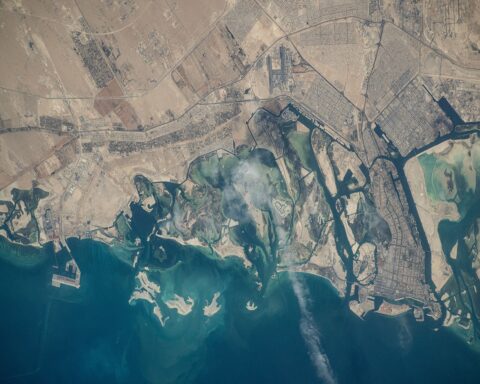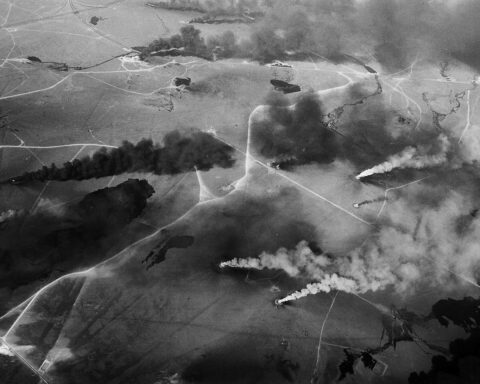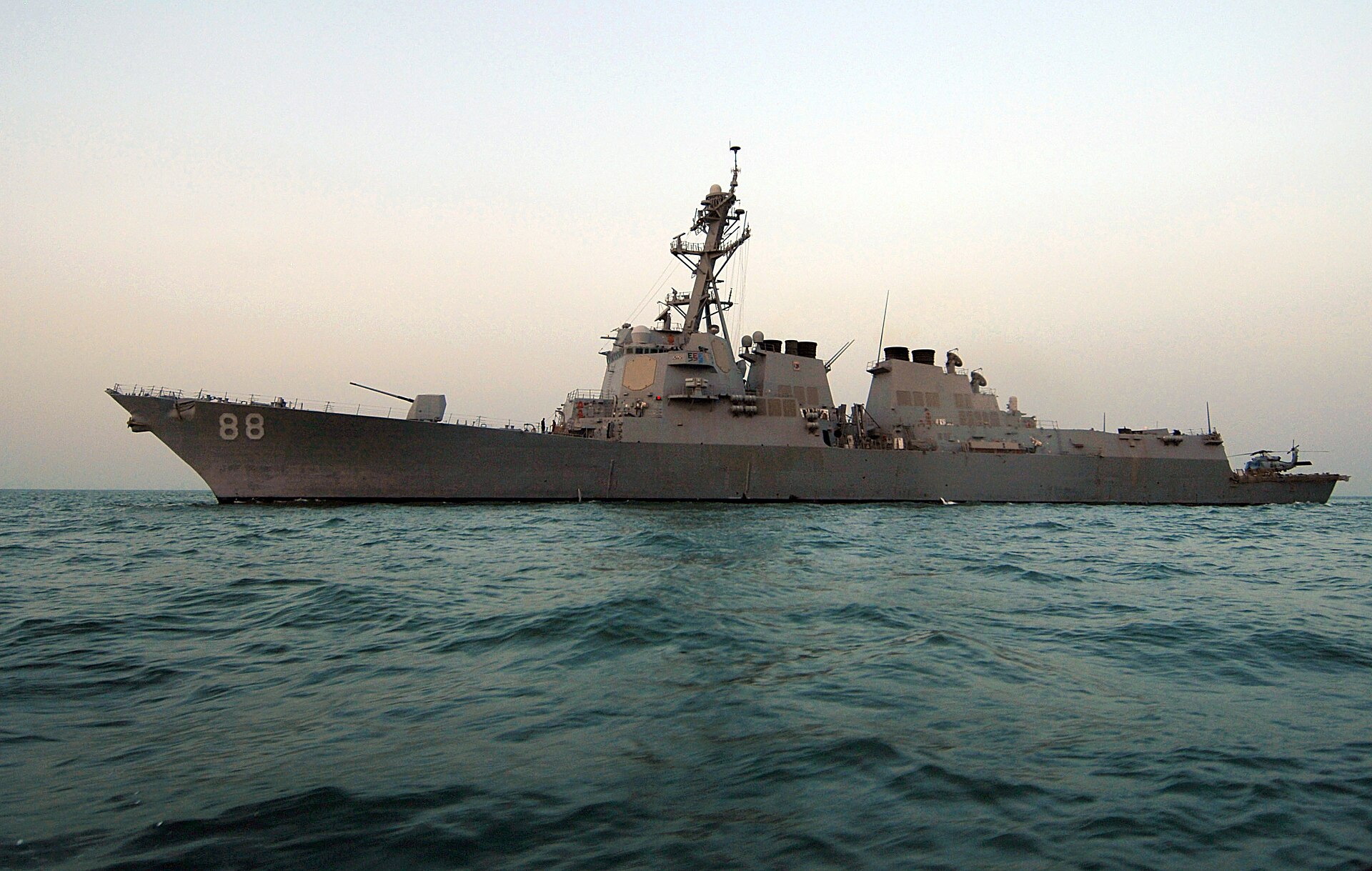

WASHINGTON — President Donald Trump spent the weekend working the phones to assemble a multinational naval coalition to reopen the Strait of Hormuz and is actively weighing a ground seizure of Iran’s Kharg Island oil hub, according to four sources familiar with the planning cited by Axios on Sunday. The escalation, which would mark the first deployment of American ground forces inside Iranian territory since the war began on February 28, came as Trump simultaneously pressured China and NATO allies with consequences for refusing to join what the White House is calling a “Hormuz Coalition.” No country has publicly committed to the effort, but a senior administration official said Trump expects several nations to announce their participation later this week.
The twin moves represent the most significant escalation of American military planning since the opening strikes of Operation Epic Fury seventeen days ago. A seizure of Kharg Island — a 25-square-kilometre landmass fifteen miles off Iran’s southern coast that handles roughly 90 percent of Tehran’s crude oil exports — would require boots on the ground and would transform what has been an air and naval campaign into something far more dangerous. The announcement that 2,500 Marines aboard an amphibious assault ship are already en route to the region, confirmed by three U.S. officials to NBC News, has intensified speculation that the administration is preparing for exactly that scenario.
Table of Contents
- What Is the Hormuz Coalition Trump Wants to Build?
- Why Is Kharg Island Now at the Centre of the War?
- How Many Troops Would a Kharg Seizure Require?
- What Would Iran Do if Washington Seizes Kharg?
- Saudi Arabia Between Alliance and Exposure
- Oil Markets Price In the Escalation
- Trump Pressures China and NATO With Ultimatums
- Frequently Asked Questions
What Is the Hormuz Coalition Trump Wants to Build?
The Hormuz Coalition is the White House’s proposed multinational naval force designed to escort commercial shipping through the Strait of Hormuz and, if necessary, enforce freedom of navigation against Iranian resistance. Trump and senior administration officials spent Saturday and Sunday in what a senior official described as “a busy weekend of diplomacy between the U.S. and European, Gulf, and Asian allies,” according to Axios, which first reported the coalition effort on March 16.
Trump spoke with British Prime Minister Keir Starmer on Sunday about contributing Royal Navy assets to the force, one of several calls the president made from Mar-a-Lago. The outreach extended to Gulf states, European allies, and Asian nations with significant energy import dependencies on the strait — through which approximately 21 million barrels of oil pass daily, according to the U.S. Energy Information Administration, representing roughly 20 percent of global consumption.
The coalition concept builds on Trump’s earlier demands for allied warships. On March 14, the president publicly called on six nations to deploy naval forces to the strait, but that appeal produced no public commitments. The rebranding as a formal “Hormuz Coalition” — with the implied structure of a permanent multinational task force rather than a one-off request — represents an attempt to give reluctant allies a framework for participation.
Turkey, NATO’s second-largest military and the alliance member closest to Iran, has been conspicuously absent from the coalition discussions — preferring bilateral negotiations with Iran over multilateral confrontation, even as three Iranian missiles have been intercepted over its own territory.
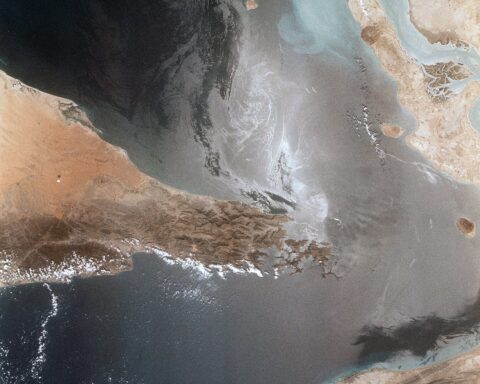
The challenge is immense. Since Iran’s Islamic Revolutionary Guard Corps Navy declared the strait closed to ships from the United States, Israel, and their allies on March 5, commercial traffic has dropped by approximately 80 percent. More than 150 cargo vessels and oil tankers remain anchored outside the strait, according to maritime tracking data compiled by Lloyd’s List. Iran’s Foreign Minister Abbas Araghchi told Al Jazeera on March 16 that “the Strait of Hormuz is open — it is only closed to our enemies, to those who are attacking us and their allies. Others are free to pass.” Treasury Secretary Scott Bessent confirmed on the same day that Washington is allowing Iranian oil tankers to transit the strait, a pragmatic concession aimed at preventing a complete collapse of global supply.

Why Is Kharg Island Now at the Centre of the War?
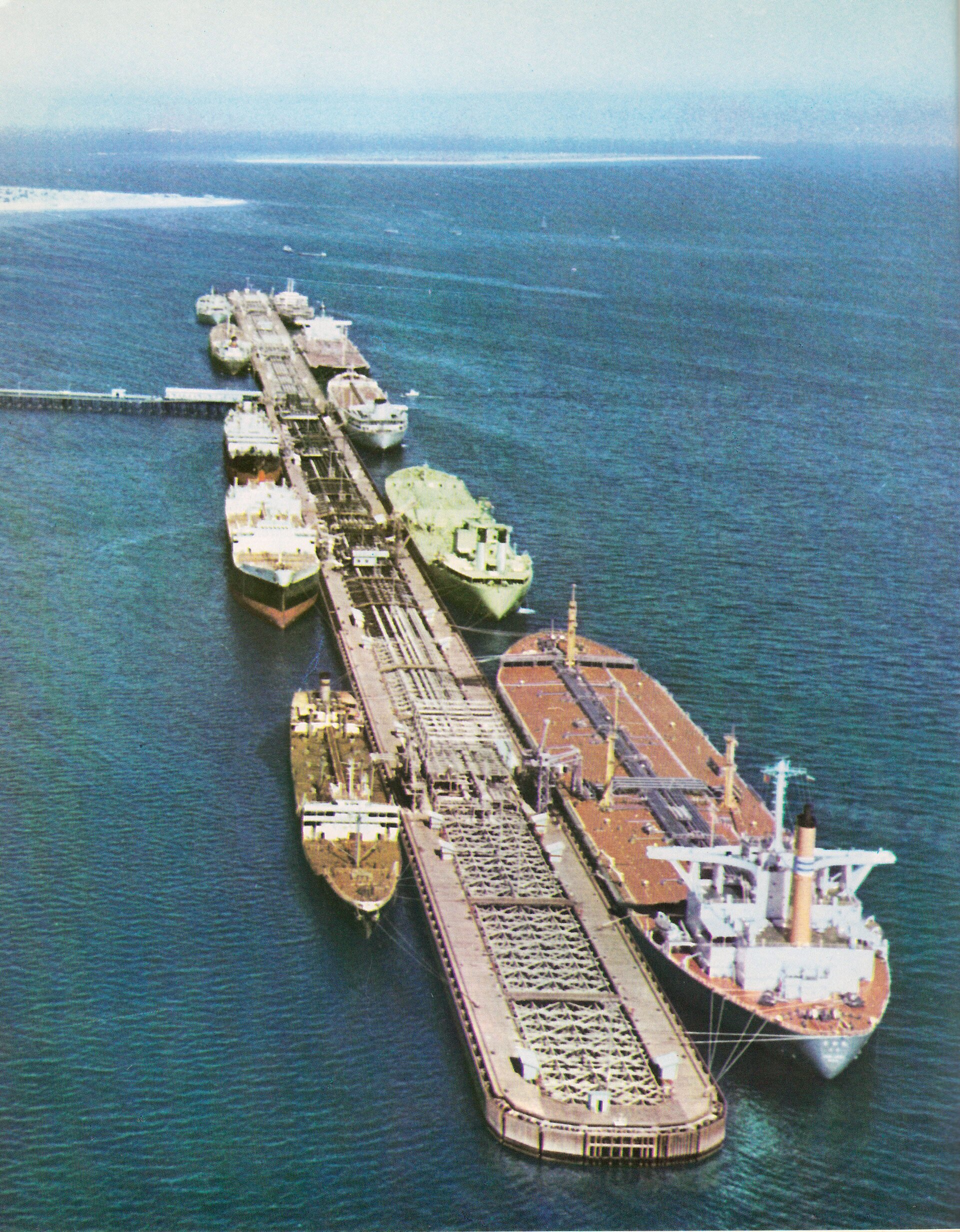
Kharg Island has emerged as the single most consequential piece of territory in the Iran war because it functions as Tehran’s economic lifeline. The island’s oil terminal handles roughly 90 percent of Iran’s crude exports and has a loading capacity of approximately 7 million barrels per day, according to the U.S. Energy Information Administration. Seizing or destroying it would cut off the primary revenue stream funding Iran’s war effort — estimated by Reuters at approximately $1.5 million barrels per day in pre-war exports.
Trump ordered strikes against military installations on Kharg on March 13, the first American attack on the island. U.S. Central Command said Saturday that the raids destroyed more than 90 military targets, including the island’s runway, naval base, air defence batteries, and mine storage facilities. The oil infrastructure — storage tanks, loading berths, and pipelines — was deliberately left intact.
The pattern of targets struck was not lost on military analysts. “The March 13 strikes destroyed the runway, naval base, air defenses, and mine storage — exactly the targets you neutralize before an amphibious or airborne assault,” according to analysis published by Newsmax on March 16. UN Ambassador Mike Waltz reinforced the message on CNN, saying Trump “deliberately hit the military infrastructure only, for now” and would “maintain that optionality if he wants to take down their energy infrastructure.”
The initial strikes on Kharg left oil infrastructure intact, but the calculus appears to be shifting. Trump told the Financial Times on March 15 that he might strike Iran’s oil facilities on the island again “just for fun,” a remark that sent Brent crude briefly above $107 before settling at $105.70, according to Bloomberg data.
How Many Troops Would a Kharg Seizure Require?
A ground seizure of Kharg Island would represent the most significant American amphibious operation since the 2003 invasion of Iraq. The island sits approximately 25 kilometres off Iran’s southern coast in the northern Persian Gulf, connected to the mainland by undersea oil pipelines but accessible only by sea or air.
Two U.S. officials told NBC News last week that Trump has privately expressed a “serious interest” in deploying American troops inside Iranian territory. On Friday, three additional officials confirmed that approximately 5,000 Marines and sailors would be deployed to the wider region to support ongoing operations. An amphibious assault ship carrying 2,500 Marines is already en route, multiple outlets reported.
Military planners would need to contend with several challenges. The island’s air defences were degraded in the March 13 strikes, but Iran maintains coastal anti-ship missile batteries on the mainland less than 30 kilometres away. The IRGC Navy operates dozens of fast attack craft and has deployed naval mines throughout the northern Gulf, according to U.S. Fifth Fleet assessments. A seizure would also require establishing a defensible perimeter on an island that sits within range of Iranian artillery and rocket forces on the coast.
| Parameter | Detail |
|---|---|
| Location | 15 miles (25 km) off Iran’s southern coast |
| Area | 25 square kilometres |
| Oil export capacity | ~7 million barrels per day |
| Share of Iran’s crude exports | ~90% |
| Pre-war export volume | ~1.5 million bpd |
| Storage tanks | 55 crude oil storage tanks (all intact as of March 14) |
| Military targets destroyed (March 13) | 90+ (runway, naval base, air defences, mine storage) |
| Distance from nearest US carrier group | ~200 nautical miles |
The logistics of holding the island once taken would present an even greater challenge. Unlike a one-off strike, a seizure would require sustained supply lines across waters that Iran has mined and where IRGC fast boats operate. The operation would also cross a significant political threshold — the first American ground presence inside Iranian sovereign territory.
What Would Iran Do if Washington Seizes Kharg?
Iran has signalled clearly that any escalation beyond the current air campaign would trigger retaliation against Gulf oil infrastructure. NBC News reported on March 14 that Tehran threatened to strike energy facilities across the region if its own oil export capabilities were targeted. Analysts at CNBC noted that “any hit on Kharg risked wider attacks on regional energy assets — Iran could escalate by attacking more energy infrastructure in the region, for instance Abqaiq in Saudi Arabia.”
Abqaiq, the world’s largest oil processing facility operated by Saudi Aramco in the Eastern Province, processes approximately 7 million barrels per day — nearly half of Saudi Arabia’s total output. A successful strike on Abqaiq in September 2019 briefly halved the Kingdom’s production, demonstrating the facility’s vulnerability despite subsequent upgrades to Saudi Arabia’s air defence network.
Iran’s Parliament Speaker, Hossein Amir-Abdollahian, pushed back against Trump’s claim that Iranian manufacturing capacity had been “decimated,” telling state television on March 16 that “we have sufficient missile and drone reserves, and because this technology is domestic, we also have the capability to produce them at a much higher rate and at a much lower cost than the enemy’s interceptor missiles.” The assertion, while difficult to verify independently, aligns with assessments from the International Institute for Strategic Studies that Iran retains significant numbers of Shahed-series drones and short-range ballistic missiles in dispersed storage facilities.
The IRGC has already demonstrated its willingness to strike civilian and economic targets across the Gulf. Since February 28, Iranian drones and missiles have hit targets in Saudi Arabia, the UAE, Bahrain, Kuwait, Qatar, Oman, and Jordan, according to a tally maintained by Al Jazeera. A drone strike shut down Dubai International Airport on March 16 after igniting a fuel tank, and one person was killed by a missile in Abu Dhabi the same day.
Saudi Arabia Between Alliance and Exposure
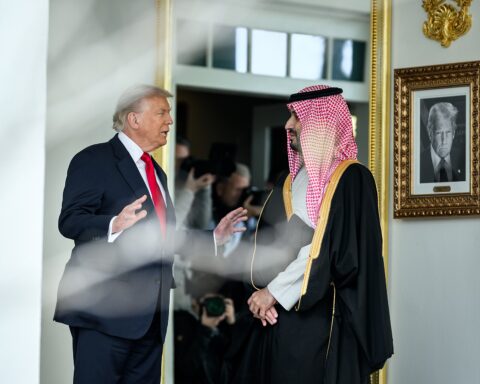
The Hormuz Coalition push and Kharg Island escalation place Saudi Arabia in a position of acute strategic tension. The Kingdom abandoned its initial posture of neutrality in the days following Iranian strikes on its territory, with the Saudi Ministry of Foreign Affairs declaring Iran an “existential threat” and reserving the right to respond with military force. Crown Prince Mohammed bin Salman has been speaking regularly with Trump, urging harsh action against Iran, according to the New York Times.
Yet the very escalation Riyadh has encouraged now threatens to increase its exposure. If a Kharg seizure triggers Iranian retaliation against Gulf oil infrastructure, Saudi Arabia’s eastern seaboard — home to Aramco’s Abqaiq processing complex, the Ras Tanura terminal, and the Ghawar oil field — sits within range of Iranian missiles launched from the mainland.
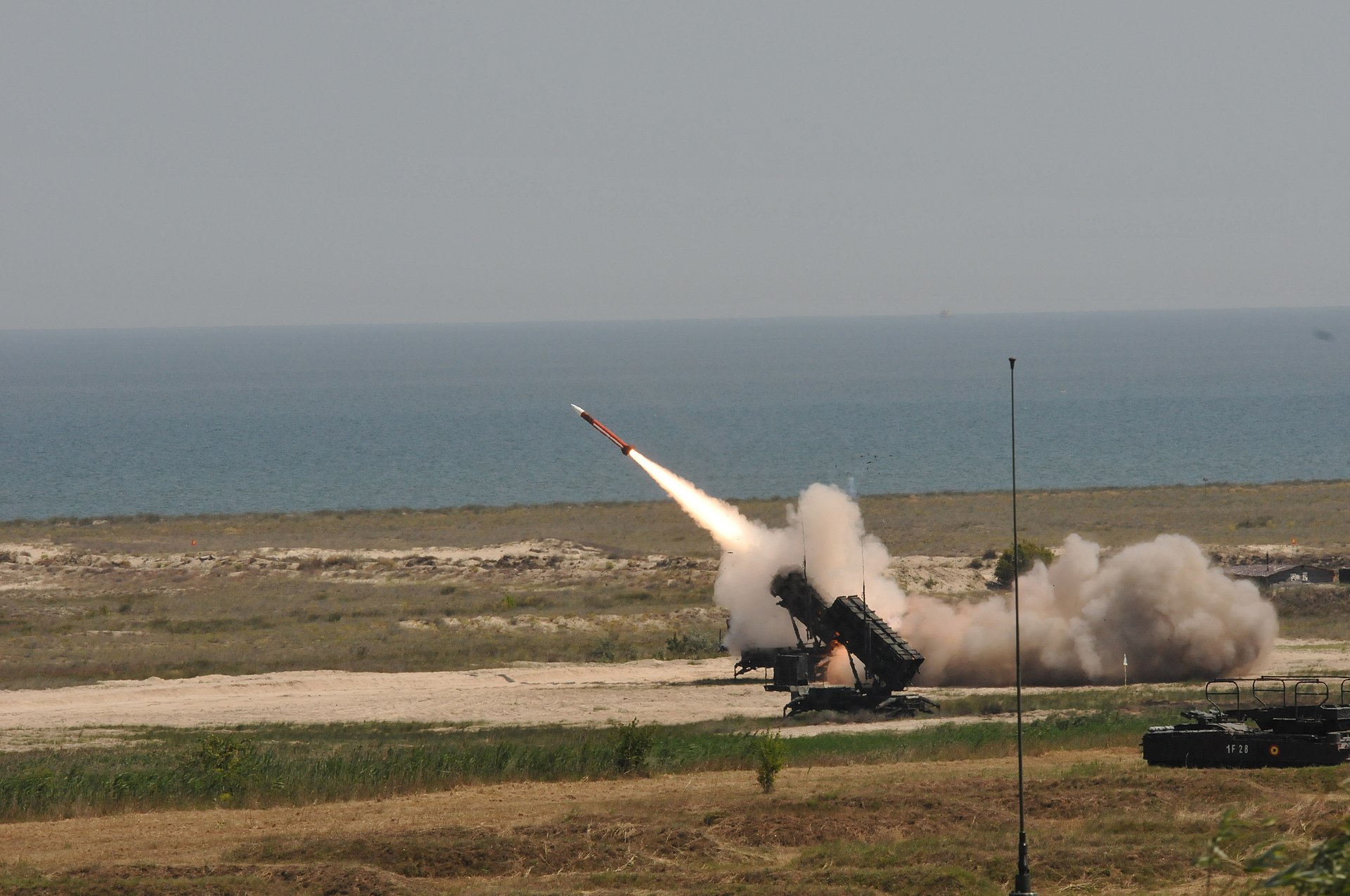
Saudi Arabia has already intercepted more than 200 drones and missiles since the war began, according to the Saudi Ministry of Defence. The Kingdom’s Patriot and THAAD batteries have performed well, but the financial and materiel cost has been enormous. Each Patriot interceptor costs between $3 million and $6 million, while the Iranian drones they shoot down cost as little as $20,000, creating what analysts have described as an unsustainable cost asymmetry.
The Kingdom’s hedging strategy is visible in its pivot toward Yanbu on the Red Sea, where it has redirected oil exports to bypass the Hormuz chokepoint entirely. But Yanbu’s pipeline capacity is limited, and the Houthi threat in the Red Sea — which intensified after Ansar Allah declared its support for Tehran’s war effort — complicates that alternative route.
Oil Markets Price In the Escalation
Crude oil markets have reacted sharply to signals of further escalation around Kharg Island. Brent crude closed at $105.70 on Friday, up 2.5 percent on the day and more than 40 percent above the pre-war price of approximately $65, according to Bloomberg data. Trump’s remark about striking Kharg “just for fun” briefly pushed the benchmark above $107 before a sell-off driven by his simultaneous pressure on allies to provide tanker escorts.
The European Union called an emergency energy meeting on March 16 after oil breached $106, with EU Energy Commissioner Kadri Simson warning that “the current price trajectory threatens the economic recovery of every member state.” Goldman Sachs analyst Farouk Soussa projected that Qatar and Kuwait could each see gross domestic product contract by 14 percent this year if the Hormuz blockade continues through April, Bloomberg reported on March 15.
| Indicator | Pre-War (Feb 27) | Current (March 16) | Change |
|---|---|---|---|
| Brent crude ($/barrel) | $65 | $105.70 | +62.6% |
| Hormuz daily transit volume | 21 million bpd | ~4 million bpd | -80% |
| Ships anchored outside strait | 0 | 150+ | — |
| War risk insurance premium | 0.05% hull value | Withdrawn | N/A |
| Supertanker day rate | ~$45,000 | Record highs | — |
| Gulf oil export reduction | — | ~60% | — |
The paradox of the current situation is that Iran continues to export oil through the very strait it has declared closed. CNN reported on March 16 that Iranian tankers are shipping crude — primarily to China — in volumes close to pre-war levels, earning revenue to sustain the war effort. Meanwhile, Saudi Arabia, the UAE, Kuwait, and Iraq have been largely unable to ship their own output through the strait, creating a situation where Iran effectively dictates who benefits from global oil trade.
Trump Pressures China and NATO With Ultimatums
Trump has framed the Hormuz Coalition as a test of alliance loyalty — and is wielding consequences against those who resist. He told the Financial Times on March 15 that he is pressing Chinese President Xi Jinping to commit to the coalition before a planned summit at the end of March, and may delay the trip to Beijing if Xi does not engage. “If there’s no response or if it’s a negative response, I think it will be very bad for the future of NATO,” Trump told the paper, extending the pressure to European allies.
The linkage between Hormuz and the Xi summit marks a significant expansion of the war’s diplomatic footprint. Trump signalled the summit delay and NATO warning earlier on March 16, but the Axios report revealed the breadth of the administration’s outreach over the weekend — touching Gulf states, European capitals, and Asian energy importers simultaneously.
Japan’s Foreign Minister Yoko Kamikawa said on March 16 that the bar for sending Japanese warships to the Gulf remained high, reflecting the legal and political constraints facing many of the nations Trump is courting. Japan imports approximately 90 percent of its crude oil from the Middle East, the vast majority through the Strait of Hormuz, according to Japan’s Agency for Natural Resources and Energy. The country’s reluctance to commit military assets despite its extreme dependence illustrates the gap between Trump’s ambitions and the coalition’s likely composition.
China presents the most complex case. Beijing has maintained backchannel communication with both Tehran and Riyadh throughout the conflict, and Chinese-flagged vessels have continued to transit the Strait of Hormuz with Iranian permission. Committing to a coalition designed to confront Iran would jeopardise that access and undermine Beijing’s carefully cultivated position as a neutral broker — a role it has played since mediating the 2023 Saudi-Iran rapprochement.
For Saudi Arabia, the coalition question is straightforward in one sense and agonising in another. The Kingdom desperately needs Hormuz reopened — its oil revenues depend on it, and every day the strait remains functionally closed costs Riyadh billions. But joining a U.S.-led coalition that could trigger further Iranian retaliation against Saudi territory requires a calculation about whether the benefit of restored shipping lanes outweighs the risk of becoming an even larger target.
Pakistan, which signed the Strategic Mutual Defense Agreement with Saudi Arabia in September 2025 and has already deployed air defences and troops to the Kingdom, could be drawn further into the conflict by a Hormuz Coalition that includes Riyadh. Prime Minister Shehbaz Sharif met Crown Prince Mohammed bin Salman in Jeddah on March 12, where both leaders discussed regional developments and committed to working toward peace, according to Al Arabiya. The meeting underscored the expanding web of military commitments that any further escalation around Kharg would activate.
Frequently Asked Questions
What is the Hormuz Coalition?
The Hormuz Coalition is a proposed multinational naval force that President Trump is assembling to escort commercial shipping through the Strait of Hormuz and enforce freedom of navigation against Iran’s blockade. Trump spent the weekend of March 15-16 calling European, Gulf, and Asian leaders to secure commitments, but no country has publicly joined the effort as of March 16, according to Axios.
Why would the US want to seize Kharg Island?
Kharg Island handles approximately 90 percent of Iran’s crude oil exports, with a loading capacity of roughly 7 million barrels per day. Seizing it would cut off Tehran’s primary revenue stream funding the war effort. The March 13 airstrikes destroyed the island’s military infrastructure — runway, naval base, and air defences — which analysts note are “exactly the targets you neutralize before an amphibious assault,” according to Newsmax.
How would a Kharg seizure affect Saudi Arabia?
A Kharg seizure could trigger Iranian retaliation against Gulf oil infrastructure, including Saudi Arabia’s Abqaiq processing complex, which handles approximately 7 million barrels per day. While a seizure would eventually reopen global oil markets and benefit Saudi export revenues, the short-term risk of escalated Iranian attacks on Saudi territory would increase significantly, according to CNBC analysts.
What is Iran’s current position on the Strait of Hormuz?
Iran’s Foreign Minister Abbas Araghchi has stated that “the Strait of Hormuz is open — it is only closed to our enemies, to those who are attacking us and their allies.” Iranian and Chinese-flagged vessels continue to transit the strait, while Western-aligned shipping has been blocked since the IRGC Navy declared restrictions on March 5, according to Al Jazeera reporting.
How has the war affected oil prices?
Brent crude has risen from approximately $65 per barrel before the war began on February 28 to $105.70 as of March 16, an increase of more than 60 percent. Goldman Sachs projects that Qatar and Kuwait could each see GDP contract by 14 percent this year if the Hormuz blockade continues through April, according to Bloomberg. The EU called an emergency energy meeting on March 16 after oil surpassed $106.
The coalition that Washington envisioned to escort tankers through the strait never materialized. On March 17, Europe and Japan formally refused to contribute warships to a Hormuz mission, leaving the US Navy as the sole naval guarantor of transit security.