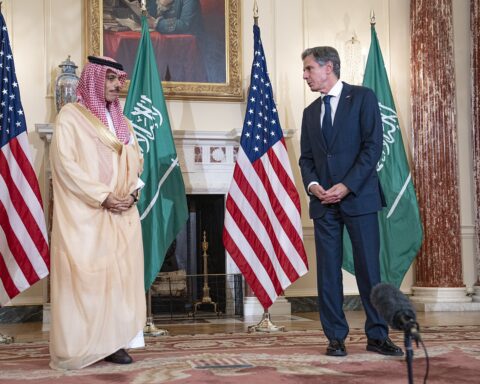
MIAMI — Donald Trump stood on a stage built with Saudi money, looked out at a room full of sovereign wealth fund managers and global investors assembled by Saudi Arabia, and told them their crown prince was kissing his ass. The remark, delivered at the PIF-backed FII PRIORITY summit on March 27, was not a diplomatic accident. It was a public assertion of hierarchy — the president of the United States declaring, on a Saudi-branded platform, that the Kingdom’s de facto ruler is a subordinate who must perform deference to retain American protection. Forty-eight hours earlier, Trump had called Mohammed bin Salman “a warrior.” The swing from flattery to emasculation reveals something the $600 billion investment framework and the defense sales and the PIF’s AI partnerships were all designed to obscure: Washington does not view Riyadh as an ally. It views Riyadh as a client.
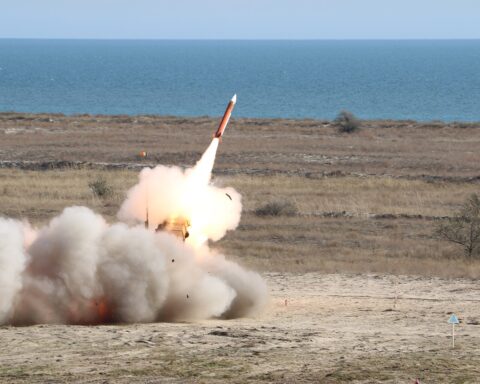
The incident exposes a triple bind that now defines Saudi strategic reality. MBS cannot defy Trump because American THAAD and Patriot batteries are the shield keeping Iranian ballistic missiles from reaching Riyadh. He cannot comply with Trump’s simultaneous demand for Israeli normalization because the Arab street, the Organisation of Islamic Cooperation, and wartime politics make that move lethal. And he cannot ignore the insult because his entire brand — domestically and internationally — is built on sovereign strength. There is no move on this board that does not cost him something irreplaceable.
Contents
- What Did Trump Actually Say About MBS at the FII Summit?
- From Warrior to Vassal in Forty-Eight Hours
- The Saudi-Built Stage Trump Used as a Lectern
- Why Can’t MBS Respond to Trump’s Public Humiliation?
- The Abraham Accords Demand Nobody Can Meet
- The Denial That Made Everything Worse
- What Does Saudi Arabia’s Military Dependency Actually Look Like?
- No US President Has Ever Said This About a Gulf Ally Under Fire
- How Does Saudi Arabia Recover From This?
- Frequently Asked Questions
What Did Trump Actually Say About MBS at the FII Summit?
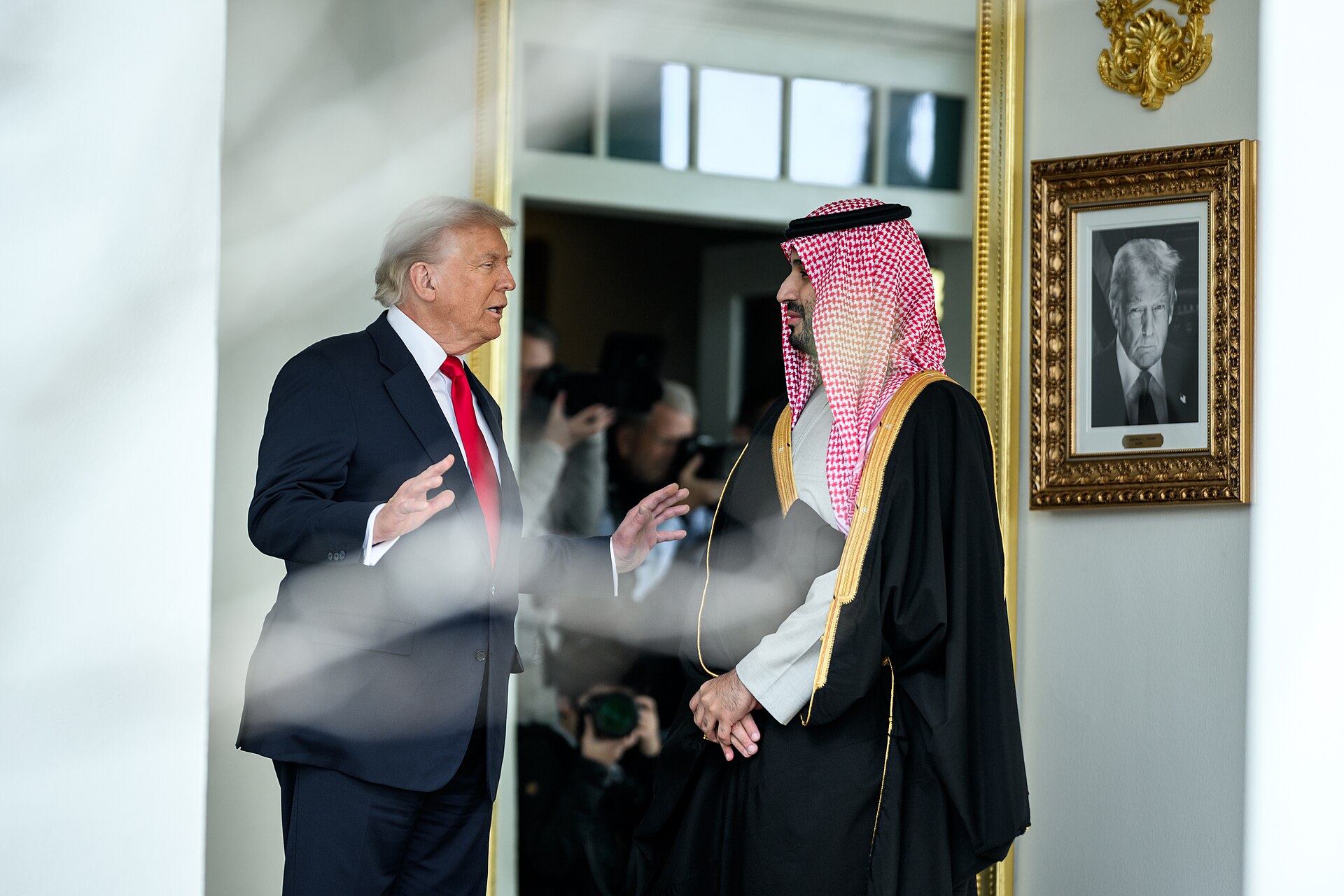
Trump’s exact words, delivered during his keynote address at the FII PRIORITY summit at the Faena Hotel in Miami Beach on March 27, were unambiguous: “He didn’t think he would be kissing my ass. He really didn’t. And now he has to be nice to me. You tell him he’d better be nice to me. He’s got to be.” The “he” was Mohammed bin Salman, Crown Prince and de facto ruler of Saudi Arabia — the same country whose sovereign wealth fund organized and bankrolled the event Trump was addressing.
Trump expanded on the theme. He recounted that MBS had previously told him America was “a dead country” headed “downhill,” and that the crown prince “thought he’d be just another American president that was a loser.” The rhetorical structure was deliberate: establish the Saudi leader’s past contempt, then demonstrate his current submission. It was a dominance display performed for an audience of global investors, defense contractors, and sovereign wealth fund managers who had gathered specifically because Saudi Arabia wanted to project the image of an equal partner in the American-led order.
The remarks were broadcast live on C-SPAN and reported immediately by Bloomberg, Business Today, The Hill, and Anadolu Agency. There was no walk-back, no clarification from the White House, no suggestion that Trump misspoke. By the time the summit’s evening session began, every delegate in the Faena ballroom had seen the clip.
From Warrior to Vassal in Forty-Eight Hours
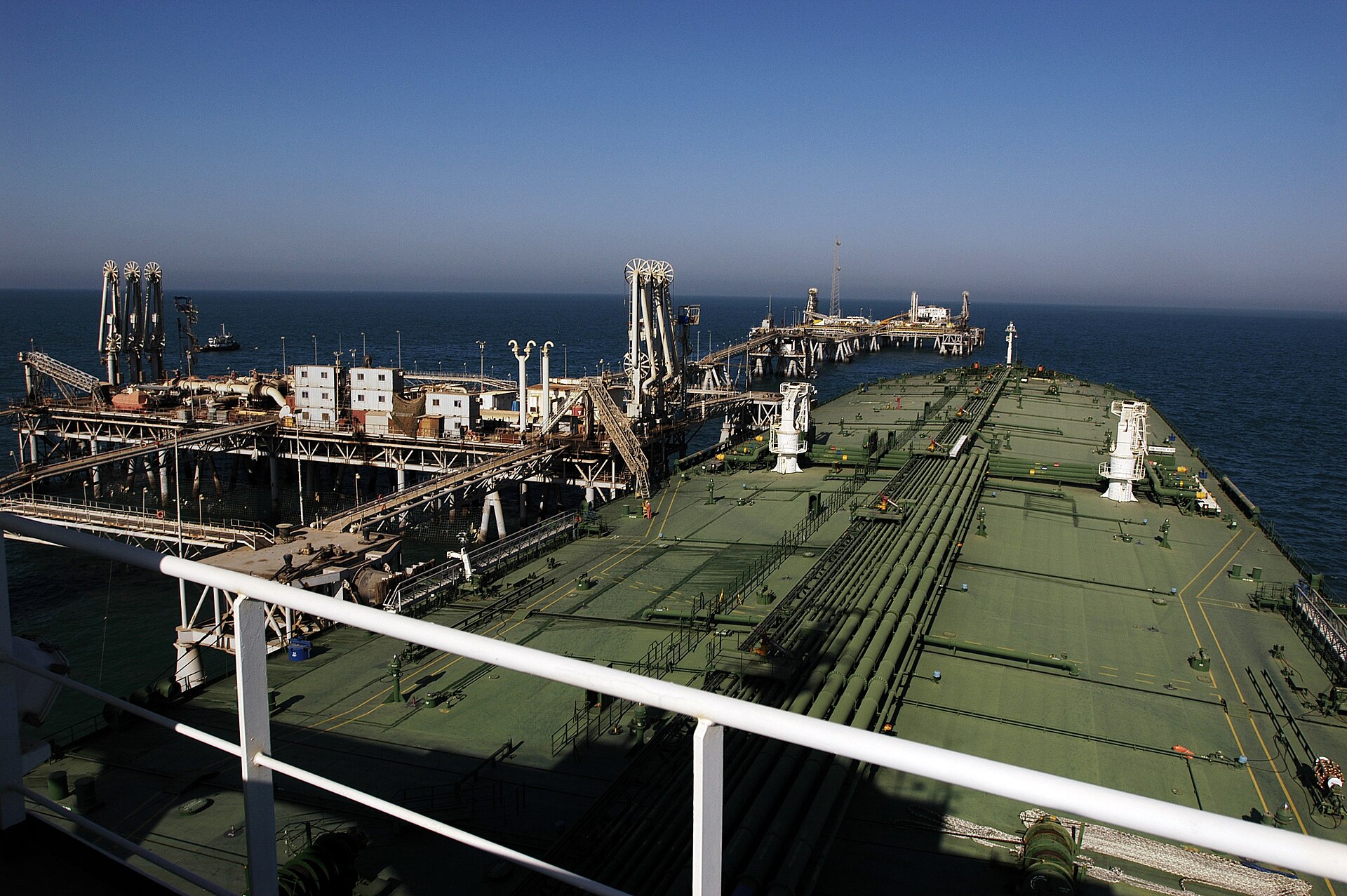
The timeline makes the insult architectural rather than impulsive. On March 24, reporters at a White House press conference asked Trump whether MBS had been “encouraging you to do certain things related to Iran.” Trump’s answer was warm: “He’s a warrior. Yeah, he does. He’s a warrior. He’s fighting with us, by the way.” That same week, the New York Times reported that MBS had privately urged Trump to continue the American-Israeli military campaign against Iran, pushing back against any suggestion of winding down the offensive and arguing that Iran’s government poses a permanent threat to the Gulf that can only be ended through regime change. MBS reportedly advocated for ground operations, including seizing Kharg Island, the hub of Iran’s oil export infrastructure.
Three days separated “warrior” from “kissing my ass.” The shift was not a mood swing. It was a reclassification. When Trump called MBS a warrior on Tuesday, he was acknowledging Saudi Arabia’s private utility — the kingdom was validating his war. When he humiliated MBS on Friday, he was establishing the public price of that utility. Saudi Arabia could be useful. It could not be equal.
The rhetorical pattern has a precedent in Trump’s treatment of other dependents. He has deployed the same framework against European NATO allies, against Volodymyr Zelensky, against congressional Republicans who need his endorsement. The formula is consistent: acknowledge the subordinate’s service, then demonstrate that the service was compelled, not voluntary. The fact that Trump applied this framework to the ruler of the world’s largest oil exporter, at the ruler’s own investment conference, during a war in which Saudi Arabia is absorbing Iranian missile strikes, marks a new floor in the relationship.
The Saudi-Built Stage Trump Used as a Lectern
FII PRIORITY Miami is not a neutral venue. It is a projection of Saudi soft power — the overseas edition of what began in 2017 as the “Davos in the Desert” conference, conceived to position the Kingdom as a global investment destination equal in sophistication and ambition to Davos, Aspen, or the Milken Conference. The event is organized by the FII Institute and backed by the Public Investment Fund, Saudi Arabia’s $930 billion sovereign wealth fund governed by MBS himself. Yasir Al-Rumayyan, PIF governor and the de facto economic architect of Vision 2030, opened the three-day summit with remarks emphasizing that “the Saudi macroeconomic and fiscal position remains strong, stable and resilient.”
The summit’s programming reflected Saudi Arabia’s ambitions beyond oil. PIF-backed Humain announced a strategic partnership with Turing to build the world’s first enterprise AI Agent Marketplace on Humain ONE — a move designed to signal the Kingdom’s arrival in frontier technology. Over 1,500 delegates attended, including sovereign wealth fund managers, defense industry executives, and tech entrepreneurs, according to FII Institute. The theme was “Capital in Motion.” The implicit message was sovereignty in motion.
Trump used this Saudi-constructed platform to do the opposite of what FII was designed to achieve. The summit exists to project the Kingdom as a peer — a capital allocator, a technology partner, a strategic equal. Trump’s remarks reasserted the older reality: Saudi Arabia is a security dependent whose ruler must maintain personal deference to the American president to keep the defense relationship functioning. He did not merely undercut FII’s messaging. He converted the Saudi stage into an American one.
Why Can’t MBS Respond to Trump’s Public Humiliation?
MBS faces a structural trap with no clean exit. The constraints are military, diplomatic, and personal, and they reinforce each other in ways that eliminate every conventional response.
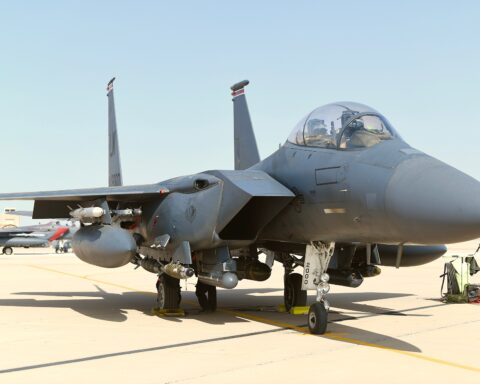
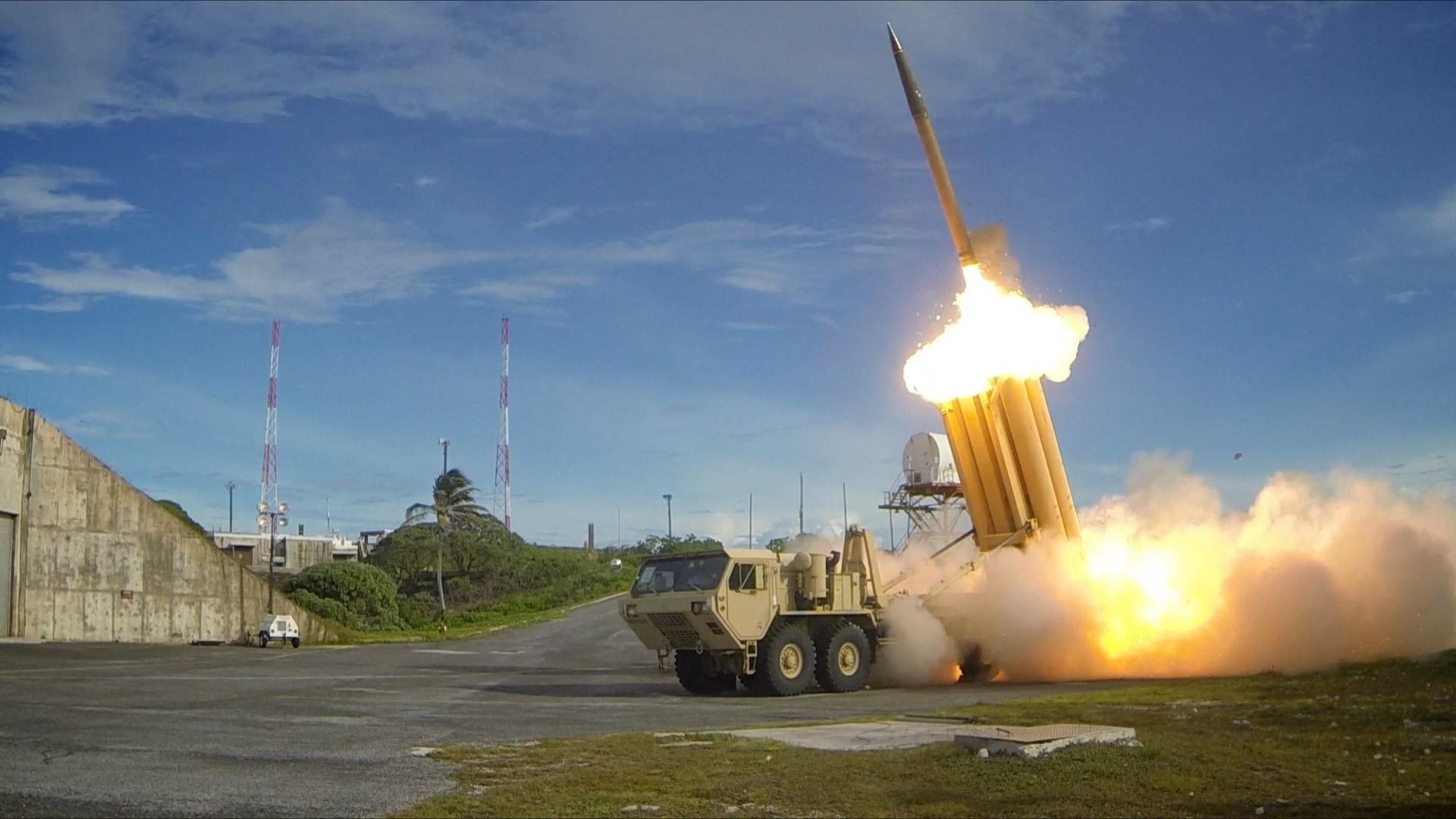
The military constraint is absolute. Saudi Arabia is four weeks into a war it did not start, absorbing Iranian ballistic missile and drone strikes on military bases, oil infrastructure, and civilian areas. The Kingdom’s consumption of PAC-3 MSE interceptors already exceeds Lockheed Martin’s annual production capacity, and replenishment timelines stretch years into the future. Without American THAAD and Patriot batteries defending Saudi airspace, and without the US troops stationed across Gulf bases, Riyadh’s air defense architecture collapses within weeks.
The diplomatic constraint is equally binding. Any public rebuke of Trump risks a transactional president who has already shown willingness to condition defense commitments on personal loyalty. MBS watched what happened to Zelensky when the Ukrainian president pushed back — Trump froze military aid and demanded public contrition. The Saudi calculation is clear: silence costs dignity; confrontation costs security.
The personal constraint is the cruelest. MBS’s domestic brand, built over a decade of consolidating power, rests on sovereign strength. He is the prince who detained rivals at the Ritz-Carlton, who launched an air war in Yemen, who told the world Saudi Arabia would no longer ask permission. Trump’s words — “he has to be nice to me” — are a direct negation of that brand. Every Saudi citizen with a smartphone has now seen the clip. The crown prince cannot acknowledge the insult without amplifying it, and he cannot pretend it did not happen without confirming the subordination Trump described.
The Abraham Accords Demand Nobody Can Meet
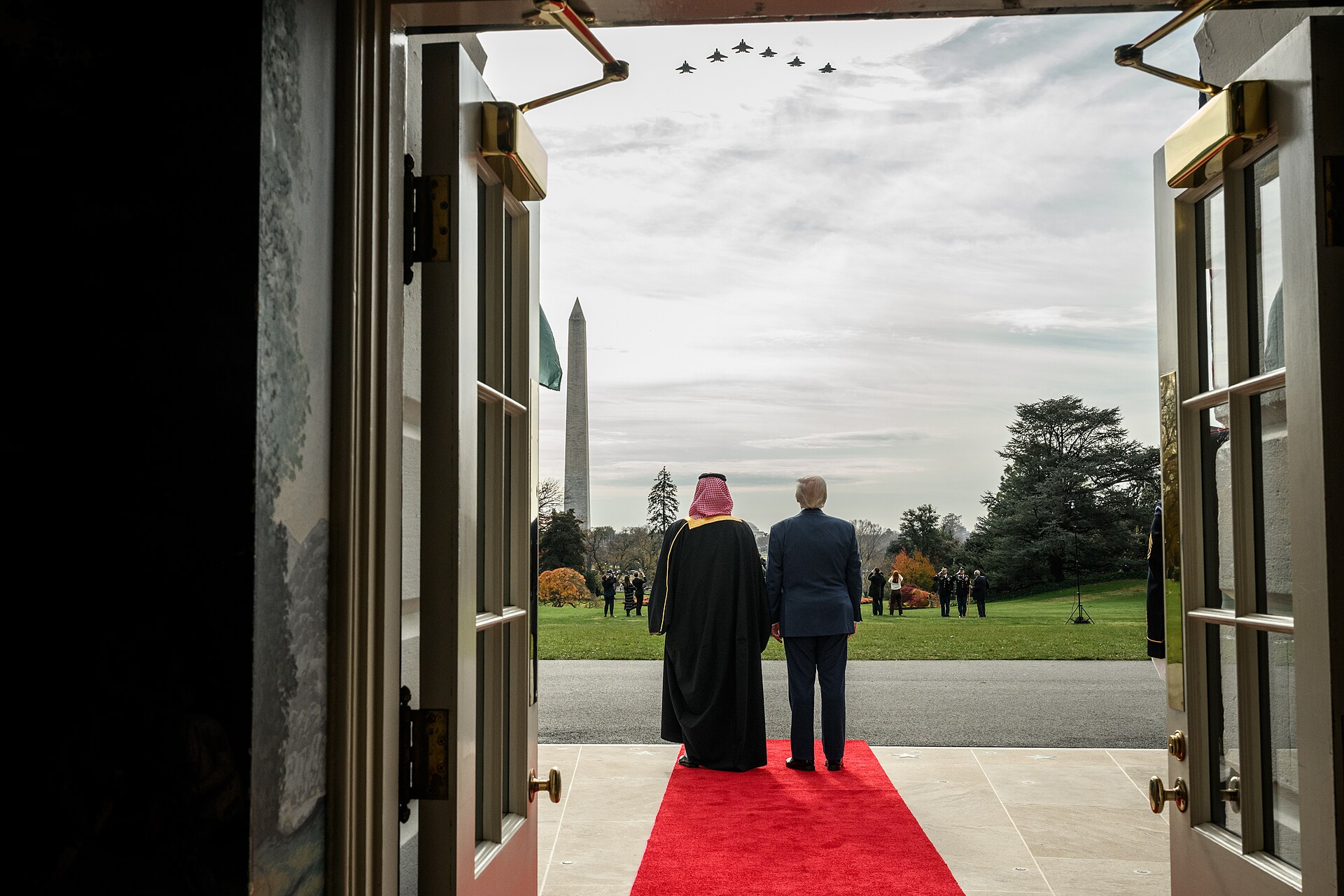
Trump did not limit himself to insults. At the same summit, he turned directly to Yasir Al-Rumayyan and issued a public demand: “I hope you’re going to be getting into the Abraham Accords finally. It’s time now.” He recounted past conversations with MBS in which the crown prince had reportedly deferred — “Mohammed would say, ‘Oh yes, as soon as we do this, as soon as we do that'” — framing Saudi hesitation as excuse-making rather than strategic calculation.
The demand arrived at the worst possible moment. Two days earlier, on March 25, Israel struck the Arak heavy-water reactor and the Ardakan uranium conversion facility — the most aggressive Israeli strikes on Iranian nuclear infrastructure since Operation Epic Fury began. The Arab street’s perception of the war is overwhelmingly that Israel is the aggressor prosecuting a campaign of regional destruction with American support. For MBS to normalize relations with Israel under these conditions would not merely be unpopular. It would be an act of political self-destruction across the Muslim world.
Saudi Arabia has consistently conditioned normalization on concrete steps toward Palestinian statehood — a position that predates the Iran war and reflects both domestic sentiment and the Kingdom’s role as custodian of Islam’s two holiest mosques. The Organisation of Islamic Cooperation, which Saudi Arabia effectively leads, has made Palestinian self-determination a baseline requirement for any member state’s normalization with Israel. None of these conditions have been met. Trump’s public demand ignores all of them.
The normalization pressure compounds the humiliation. Trump is not merely asking MBS to do something difficult. He is asking him to do something impossible, in public, while simultaneously telling the room that the crown prince must comply because he has no choice. The combination converts a policy disagreement into a demonstration of vassalage.
The Denial That Made Everything Worse
Days before the FII summit, Saudi Arabia’s Foreign Ministry issued a formal denial of reports that MBS had urged Trump to continue the war against Iran. A senior official told the New York Times that “the Kingdom of Saudi Arabia has always supported a peaceful resolution to this conflict, even before it began.” The denial was categorical, leaving no room for interpretation.
The denial creates a logical trap with no escape. If MBS did not push for war continuation, then Trump fabricated Saudi support to provide political cover for an unpopular military campaign — meaning the American president publicly lied about his closest Gulf ally’s position. If MBS did push for war continuation and is now denying it, then the crown prince made a private commitment he cannot acknowledge publicly — meaning he is already operating as the kind of subordinate Trump described, saying one thing in private and another in public to manage domestic opinion.
Either version is corrosive. The first suggests Washington will freely misrepresent Saudi positions when convenient. The second suggests the Saudi-American relationship operates on a patron-client basis in which the client’s public positions are performative. Trump’s “kissing my ass” comment, delivered within this context, reads as a president who knows the private reality and does not care whether the public denial survives.
The timing of the denial also matters. Saudi officials issued it to manage domestic and OIC audiences — to maintain the fiction that the Kingdom is a neutral party seeking peace, not a co-belligerent. Trump’s remarks at FII demolished that fiction in front of an international audience, suggesting either that Saudi neutrality is a performance or that the American president is willing to undercut his own ally’s diplomatic positioning for a laugh line.
What Does Saudi Arabia’s Military Dependency Actually Look Like?
The numbers make the power asymmetry concrete. Four weeks into the Iran war, Saudi Arabia’s defense architecture is visibly American-operated, American-supplied, and American-maintained.
| Metric | Figure | Source |
|---|---|---|
| US troops currently deployed in Gulf region | ~35,000 | Pentagon / CENTCOM |
| Additional troops being prepared for deployment | 10,000 | Pentagon, March 2026 |
| US service members killed in Operation Epic Fury | 13 | CENTCOM / Military.com |
| US service members wounded | 290+ | DefenseScoop, March 24 |
| PAC-3 MSE interceptors consumed by Saudi Arabia (est.) | 300-450 | Military Watch Magazine |
| PAC-3 MSE annual production capacity | ~650/year | Lockheed Martin |
| Saudi PAC-3 FMS contract value | $9 billion | DSCA, January 2026 |
| PAC-3 interceptors ordered under FMS | 730 | DSCA |
The interceptor math alone tells the story. Saudi forces have consumed roughly half to two-thirds of Lockheed Martin’s annual production output in sixteen days. Replenishment at the current production rate of 650 units per year means the Kingdom cannot replace what it has already fired until well into 2027. A seven-year framework agreement signed in January 2026 targets 2,000 PAC-3 MSE units per year, but that capacity will not materialize until the end of 2030, according to Lockheed Martin’s production roadmap. Between now and then, Saudi Arabia depends on American willingness to prioritize its orders over those of other customers — including Israel, which faces its own interceptor shortage.
The dependency extends beyond interceptors. American troops operate THAAD batteries, maintain Patriot radar systems, and provide the intelligence infrastructure that enables Saudi Arabia to detect and track incoming Iranian ballistic missiles. Ten Americans were wounded when Iran struck Prince Sultan Air Base — a facility that hosts US air defense and AWACS surveillance aircraft critical to the Kingdom’s early warning architecture. American blood is being shed on Saudi soil to maintain Saudi air defense. That fact gives Trump power that no amount of PIF capital can offset.
This is the material reality behind “he has to be nice to me.” MBS does not have to be nice because of trade deficits, investment commitments, or diplomatic protocol. He has to be nice because American soldiers are standing between Iranian missiles and Saudi cities, and the president who commands those soldiers just told the world he expects gratitude in exchange.
No US President Has Ever Said This About a Gulf Ally Under Fire
The American-Saudi relationship has survived crises that should have destroyed it. The 1973 oil embargo, when King Faisal weaponized petroleum against the United States. The September 11 attacks, when fifteen of the nineteen hijackers held Saudi passports. The Khashoggi murder in 2018, when MBS was implicated in the killing of a Washington Post columnist inside a Saudi consulate. Each crisis produced recalibration, never rupture. No American president — not Nixon during the embargo, not Bush after September 11, not Biden after Khashoggi — publicly described the Saudi ruler in the language Trump used at FII Miami.
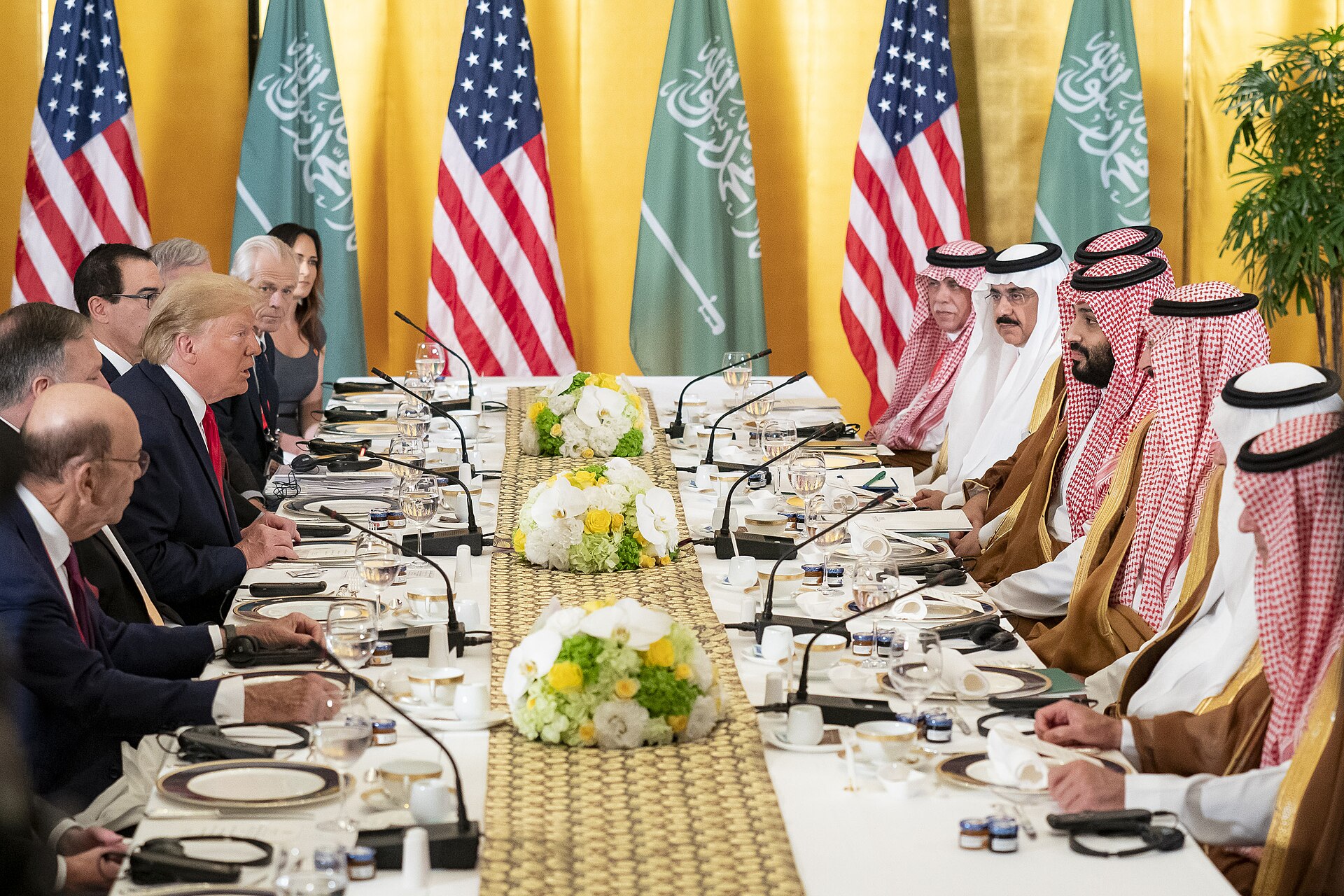
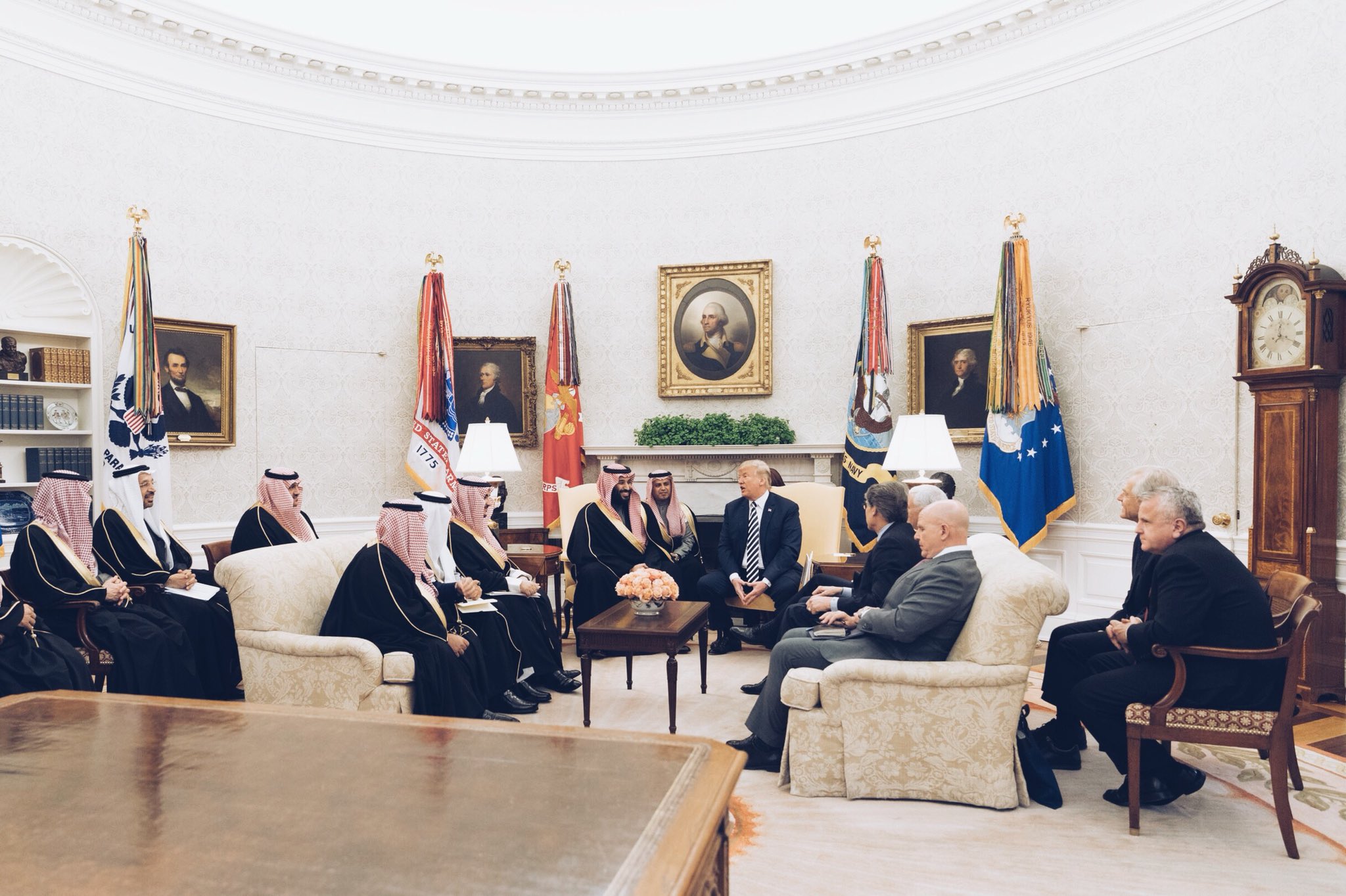
The Trump-MBS arc itself contains the contrast. In May 2017, Trump chose Riyadh for his first foreign trip, standing beside MBS and King Salman in the infamous glowing-orb photo that launched the Saudi-American realignment. The 2017 summit was a mutual performance of equality — two powers choosing each other. In 2018, after the Khashoggi killing triggered global condemnation, Trump stood by MBS when much of Washington demanded rupture, telling reporters “it’s a very important ally, and if we go by a certain standard, we won’t be able to have allies with almost any country.” That defense cost Trump political capital. He spent it willingly.
The 2026 version of the relationship has abandoned the pretense. Trump is not defending MBS from external criticism. He is generating the criticism himself — and doing it on Saudi soil, using Saudi money, at a Saudi event. The transition from “important ally” to “kissing my ass” is not a rhetorical accident. It reflects a structural reclassification of the most transactional alliance in modern history. The war has made Saudi Arabia’s dependency visible, and Trump has decided that visibility serves his interests.
“This is the choice the GCC will face after this war. If it moves toward deeper dependence on the US to balance Iran, they will become spineless vassals.”
Trita Parsi, Executive Vice President, Quincy Institute for Responsible Statecraft
Parsi’s assessment, posted in direct response to Trump’s FII remarks, captures the structural dilemma. The war has collapsed the middle ground between alignment and autonomy that Gulf states spent decades cultivating. MBS needs the American military umbrella more than at any point since 1990, when Iraq’s invasion of Kuwait made the Kingdom’s survival contingent on US intervention. But the price of that umbrella — public subordination, policy compliance, personal deference — is now being extracted in full view of the world.
How Does Saudi Arabia Recover From This?
The short-term response will almost certainly be silence. Saudi media has not amplified Trump’s remarks, and the Kingdom’s diplomatic apparatus has not issued a response. This is consistent with MBS’s handling of previous Trump provocations — absorb, wait, redirect. The calculation is that public confrontation carries more risk than public humiliation, and that Trump’s attention span will move to other targets.
The medium-term calculus is more consequential. Three trajectories are plausible.
The first is accelerated defense diversification. Saudi Arabia was already pursuing non-American defense partnerships before the war — signing a defense deal with Ukraine focused on drone technology and air defense, exploring Chinese ballistic missile procurement, and investing in domestic production through SAMI and GAMI. Trump’s public subordination of MBS strengthens the internal case for reducing single-supplier dependency. Every future Saudi defense procurement decision will be made in the shadow of “he has to be nice to me” — a reminder that American weapons come with American conditions, and those conditions now include personal submission.
The second trajectory is post-war diplomatic recalibration toward multipolarity. If and when the Iran conflict reaches a settlement — Trump extended the negotiations deadline to April 6 and envoy Steve Witkoff has shared a 15-point action list with Tehran through Pakistani intermediaries — Saudi Arabia will face a reconstruction environment that demands engagement with China, Russia, India, and the EU. The FII Miami humiliation provides political cover for that pivot. MBS can argue, credibly, that the American partnership proved unreliable not because of any Saudi failing but because Washington’s definition of partnership requires vassalage.
The third trajectory is the most counterintuitive: MBS uses the insult domestically to reinforce his narrative of sovereign ambition. The crown prince has built his political identity around the claim that Saudi Arabia will no longer be managed by foreign powers. Trump’s remarks, reframed by Saudi domestic media as American arrogance, could strengthen rather than weaken that narrative. The argument writes itself: this is why we need Vision 2030, why we need defense industrialization, why we need technological sovereignty. The insult becomes evidence for the case MBS has been making since 2016.
None of these trajectories resolve the immediate problem. As long as the Iran war continues, Saudi Arabia’s security depends on American hardware, American operators, and American political will. The interceptor gap alone guarantees at least two years of dependency at current production rates. MBS can plan for strategic autonomy. He cannot execute it while Iranian missiles are in the air.
The FII PRIORITY summit will be remembered for what it revealed, not for what it announced. Humain’s AI partnership with Turing, PIF’s five-year strategy refresh, the $600 billion investment framework — all of it was designed to project a relationship of equals. Trump’s six sentences demolished that projection. He told the room, the cameras, and the world that the most powerful Arab leader of his generation must perform deference to maintain American protection. And the silence from Riyadh — the absence of any denial, any correction, any pushback — confirmed that Trump was right.
The question for Saudi Arabia is not whether this moment was humiliating. The question is whether the Kingdom can build a strategic architecture that prevents the next American president — or this one, on a different day — from doing it again. That project will take a decade. The war, and the dependency it has exposed, will not wait.
Frequently Asked Questions
Did Saudi Arabia officially respond to Trump’s “kissing my ass” remarks?
As of March 28, 2026, neither the Saudi Royal Court nor the Ministry of Foreign Affairs has issued a public statement addressing Trump’s comments at FII PRIORITY Miami. Saudi state media, including Al Arabiya and Saudi Gazette, covered the FII summit without referencing Trump’s remarks about MBS. This silence mirrors the Kingdom’s standard protocol for managing provocations from essential security partners — no amplification, no confrontation, no official record of the slight.
Has any US president previously insulted a Gulf leader during wartime?
No sitting American president has publicly used demeaning language about a Gulf Cooperation Council head of state while that leader’s country was under active military attack. During the 1990-91 Gulf War, George H.W. Bush referred to King Fahd in consistently respectful terms despite private frustrations over Saudi military performance. Richard Nixon maintained diplomatic decorum toward King Faisal even during the 1973 oil embargo. Trump’s FII remarks represent an unprecedented breach of the diplomatic conventions that have governed US-Gulf relations since the 1945 meeting between Franklin Roosevelt and King Abdulaziz Ibn Saud aboard the USS Quincy.
Could Saudi Arabia realistically replace American air defense systems?
Not within the current conflict timeline. Transitioning away from Patriot and THAAD would require adopting alternative systems — such as the Russian S-400, the French SAMP/T, or domestically developed platforms — that would take five to ten years to integrate, train crews for, and achieve operational certification on. South Korea’s experience integrating THAAD required eighteen months of calibration in peacetime. Saudi Arabia would need to accomplish a far more complex transition while absorbing daily missile and drone attacks, making any near-term substitution operationally impossible.
What is the current status of Iran-US negotiations?
Trump extended the negotiations deadline to April 6, 2026, pausing planned strikes on Iran’s power grid and desalination infrastructure. Special envoy Steve Witkoff has transmitted a 15-point action list to Tehran through Pakistani intermediaries. Iran’s Tasnim news agency reported that Tehran sent its formal response to the US proposal through those same intermediaries on March 27. Witkoff has claimed that “ships are passing” through the Strait of Hormuz, though independent shipping data suggests traffic remains at roughly eight percent of pre-war levels. Saudi Arabia remains excluded from the negotiating table despite being the Gulf state most directly affected by the war’s outcome.
What investments did PIF announce at FII PRIORITY Miami?
The Public Investment Fund used the summit to unveil Humain’s strategic partnership with Turing to build the world’s first enterprise AI Agent Marketplace on Humain ONE, positioning Saudi Arabia in the frontier AI infrastructure race. PIF Governor Yasir Al-Rumayyan also previewed a forthcoming five-year strategy that includes a 15 percent reduction in direct spending alongside increased allocation to technology and AI ventures. These announcements were designed to reinforce Saudi Arabia’s narrative of economic transformation and technological sovereignty, though they were overshadowed by Trump’s remarks about MBS.