
RIYADH — The Iran war’s most dangerous moment arrived not with a missile launch but with a social media post. President Donald Trump’s 48-hour ultimatum threatening to “obliterate” Iran’s power grid unless Tehran reopens the Strait of Hormuz has created something the modern Middle East has never seen: a conventional version of Mutually Assured Destruction, where each side holds the other’s critical civilian infrastructure hostage and neither can strike without triggering catastrophic retaliation. Iran’s parliament speaker, Mohammad Bagher Ghalibaf, responded within hours by promising to “irreversibly destroy” energy infrastructure and oil facilities across the entire Gulf if a single Iranian power plant is hit. Three weeks of escalation have produced a standoff that Cold War strategists would recognize immediately — and that may prove even more unstable than the nuclear variety it resembles.
The arithmetic is stark. Iran’s electrical grid serves 85 million people across a country where summer temperatures routinely exceed 50 degrees Celsius. The Gulf’s oil and gas infrastructure handles roughly 20 percent of global petroleum supply and 25 percent of global liquefied natural gas exports. Destroying either would constitute a humanitarian and economic catastrophe with no modern precedent. The question confronting policymakers in Washington, Tehran, and Riyadh is no longer who can win the war, but whether anyone can survive the peace.
Table of Contents
- What Is Trump’s 48-Hour Hormuz Ultimatum?
- How Did the Iran War Create a Mutual Destruction Standoff?
- The Infrastructure MAD Matrix
- What Happens if Trump Destroys Iran’s Power Grid?
- What Happens if Iran Destroys Gulf Oil Infrastructure?
- Why Can Neither Side Back Down?
- Saudi Arabia Is the Hostage Both Sides Claim to Protect
- The Cold War Playbook Applied to Oil and Electricity
- Why Conventional MAD Is More Dangerous Than Nuclear MAD
- How Does a Mutual Destruction Standoff End?
- Frequently Asked Questions
What Is Trump’s 48-Hour Hormuz Ultimatum?
At 23:44 GMT on March 21, 2026, President Trump posted on Truth Social: “If Iran doesn’t FULLY OPEN, WITHOUT THREAT, the Strait of Hormuz, within 48 HOURS from this exact point in time, the United States of America will hit and obliterate their various POWER PLANTS, STARTING WITH THE BIGGEST ONE FIRST.” The statement established a deadline of approximately 23:44 GMT on March 23 — less than 48 hours from the time of writing.
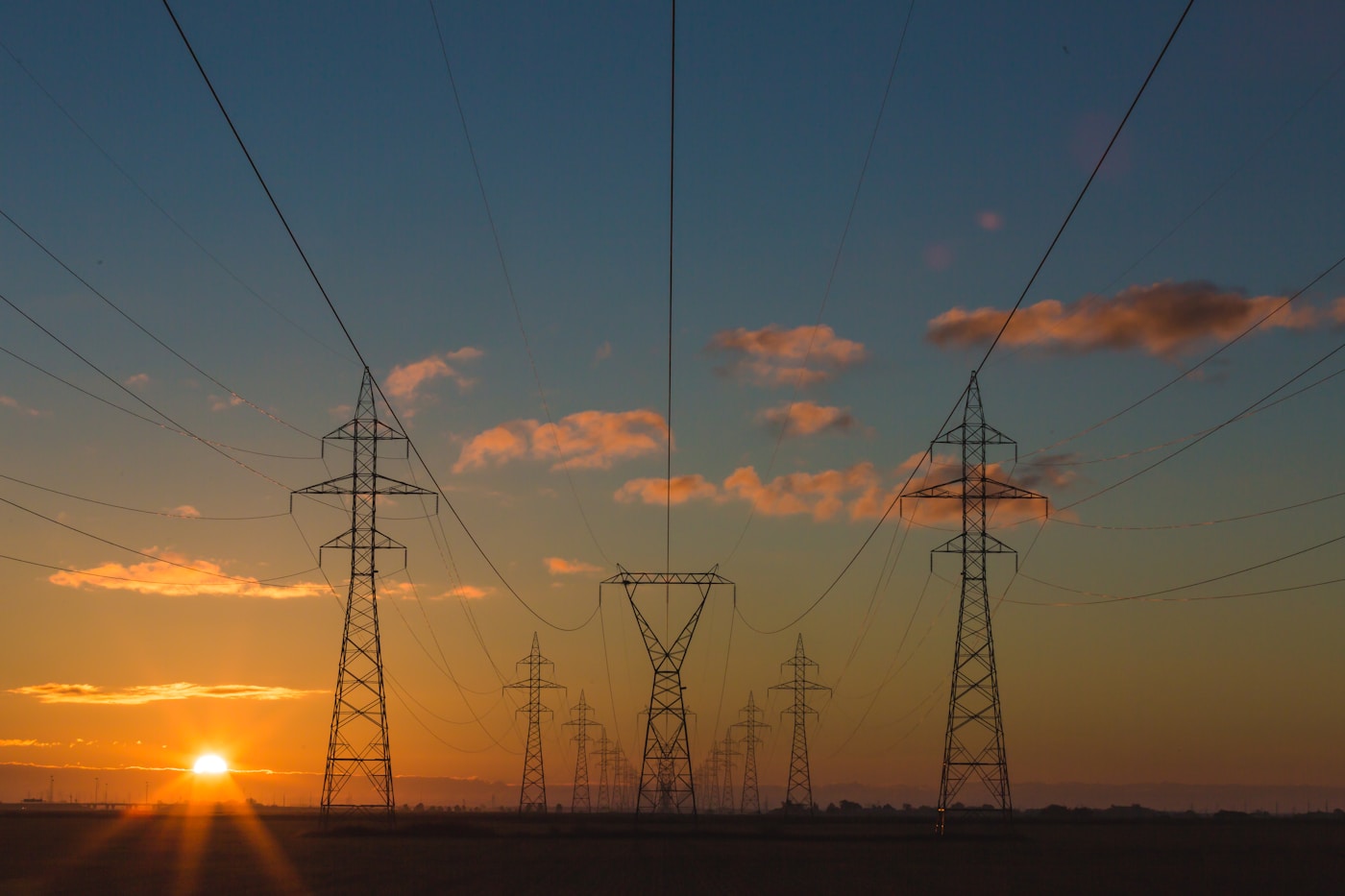
The threat is not abstract. Iran operates more than 400 power plants with a combined capacity exceeding 90,000 megawatts, according to Iran’s Ministry of Energy. The largest — the Damavand combined-cycle plant northeast of Tehran — generates 2,868 megawatts alone, enough electricity for roughly 3 million households. The Kerman plant in southeastern Iran produces 1,910 megawatts, while the Ramin steam plant in oil-rich Khuzestan province generates 1,890 megawatts. Iran’s sole nuclear power station at Bushehr, on the southern coast facing the Persian Gulf, contributes approximately 1,000 megawatts.
Trump did not specify which plant he would target first, but the phrase “starting with the biggest one first” points toward Damavand — a facility whose destruction would immediately darken large swaths of greater Tehran, a metropolitan area of 16 million people. The US Air Force has the capability to destroy any above-ground power plant in Iran within hours. The question is not whether America can execute the threat. The question is what happens next.
How Did the Iran War Create a Mutual Destruction Standoff?
The path from targeted military strikes to infrastructure hostage-taking followed a pattern that deterrence theorists have long predicted but rarely witnessed in practice. The US-Israeli campaign that began on February 28 initially targeted Iran’s nuclear facilities, missile production sites, and air defense networks — the standard playbook for degrading an adversary’s military capability without provoking catastrophic escalation.
The Middle East briefing 3,000+ readers start their day with.
One email. Every weekday morning. Free.
Iran’s response broke every assumption. Rather than absorbing the strikes and seeking negotiation, as Western planners expected, Tehran deployed its cheapest weapons against the most valuable targets it could reach: Gulf energy infrastructure. The calculus was straightforward. A single Iranian drone costing $20,000 could threaten a facility worth $20 billion. The Center for Strategic and International Studies described Iran’s approach as a strategy of “don’t calibrate — escalate,” a deliberate rejection of proportional retaliation in favor of maximizing economic pain across the widest possible geography.
The escalation proceeded in identifiable phases. In the first week, Iran targeted military facilities and Saudi air bases hosting American forces. In the second week, after Israel struck the South Pars gas field — the world’s largest natural gas reserve shared between Iran and Qatar — Tehran expanded its target list to include civilian energy infrastructure across Saudi Arabia, the UAE, Qatar, Bahrain, and Kuwait. By the third week, Iran had threatened desalination plants, airports, and financial districts.
Each escalation triggered a counter-escalation. When Iran hit the Ras Laffan LNG facility in Qatar, Trump threatened to destroy the South Pars gas field entirely. When Iran struck oil infrastructure in the UAE, Israel intensified strikes on Iranian refineries and petrochemical plants. The result is a spiral where each side’s deterrent threat makes the other’s deterrent threat more credible — and more dangerous.
The Infrastructure MAD Matrix
The standoff between Trump’s power grid threat and Iran’s oil infrastructure threat resembles nuclear Mutually Assured Destruction in structure but differs in critical ways that make it more, not less, likely to be tested. A systematic comparison reveals why Cold War deterrence theory applies imperfectly to the Gulf crisis.
| Dimension | Nuclear MAD (Cold War) | Conventional Infrastructure MAD (Gulf 2026) | Stability Implication |
|---|---|---|---|
| Threshold for use | Existential threat only | Already partially executed (strikes on refineries, power substations) | Far less stable |
| Civilian impact of first strike | Millions dead instantly | Millions without power, water, or fuel — deaths accumulate over weeks | Slower, enabling rationalization |
| Reversibility | Zero (nuclear fallout permanent) | Partial (infrastructure can be rebuilt over months to years) | Encourages “limited” strikes |
| Second-strike capability | Guaranteed (submarine-based missiles) | Uncertain (depends on surviving drone/missile inventory) | Creates use-it-or-lose-it pressure |
| Escalation ladder rungs | Few (conventional → tactical nuclear → strategic nuclear) | Many (substations → regional grids → national grid → desalination → refineries → LNG terminals) | More opportunities for miscalculation |
| Third-party hostages | None (bilateral US-USSR) | Multiple (Saudi Arabia, UAE, Qatar, Bahrain, Kuwait, global oil consumers) | Deeply destabilizing |
| Communication channels | Hotline, arms control treaties, back channels | No direct communication between US and Iran; Oman back channel collapsed | Catastrophically unstable |
| Domestic political pressure | Leaders feared annihilation | Leaders face political pressure to act tough; economic pain is visible but slow | Increases likelihood of testing the threat |
The matrix reveals a troubling reality: conventional infrastructure MAD is structurally less stable than its nuclear predecessor on every dimension. Nuclear MAD survived for decades because both sides understood that any use meant total annihilation — a clarity that concentrated minds in Moscow and Washington. Infrastructure MAD lacks this clarity. A US strike on Iran’s Damavand power plant would cause blackouts affecting millions, but it would not instantly kill millions. That distinction — the difference between a catastrophe and an apocalypse — makes conventional MAD paradoxically more likely to be tested.
The absence of direct communication channels between Washington and Tehran compounds the instability. During the Cold War, the Moscow-Washington hotline existed precisely to prevent miscalculation during crises. The Oman back channel that nearly produced a diplomatic breakthrough on February 27 — just one day before the war began — has since collapsed, according to Reuters. Twelve separate mediators have attempted to broker a ceasefire, and none have succeeded.
What Happens if Trump Destroys Iran’s Power Grid?
The immediate consequence of strikes on Iran’s major power plants would be a cascading grid failure affecting the majority of Iran’s 85 million inhabitants. Iran’s electrical grid, like most national grids, operates as an interconnected network where the loss of major generation nodes triggers overloads and protective shutdowns across the system. The International Energy Agency estimates that Iran generates approximately 370 terawatt-hours of electricity annually. Destroying the four largest plants would eliminate roughly 8,700 megawatts of capacity — approximately 10 percent of total installed capacity but a far larger share of actual generation during peak demand periods.
The humanitarian consequences would unfold in predictable stages, according to RAND Corporation analysis. Within 24 hours, hospitals lacking backup generators would lose the ability to operate life-support equipment. Water pumping stations would fail, cutting supply to cities that depend entirely on electrically pumped groundwater. Sewage treatment would cease. Food refrigeration chains would collapse across a country that imports approximately 30 percent of its calories, according to the UN Food and Agriculture Organization.
Summer temperatures in Khuzestan province — where the Ramin power plant is located — regularly exceed 50 degrees Celsius. A grid collapse during summer months would produce heat-related fatalities numbering in the thousands within days, according to the World Health Organization’s assessments of comparable infrastructure collapses in Iraq following the 2003 invasion.
Striking Bushehr nuclear power station would add a dimension that even the most hawkish US planners have reason to avoid. The Chernobyl and Fukushima disasters demonstrated that attacking an operating nuclear reactor risks radioactive contamination affecting millions of people across multiple countries. Prevailing winds in the Persian Gulf blow from the northwest, meaning fallout from Bushehr could drift toward the UAE, Bahrain, Qatar, and Saudi Arabia’s Eastern Province — the location of the world’s largest oil reserves.
Iran has stated unequivocally what follows a power grid attack. “If they target our energy infrastructure, we will show zero restraint,” Iran’s military spokesperson said on March 19, according to Al Jazeera. Ghalibaf was more specific, naming five Gulf facilities that would be targeted: Saudi Arabia’s SAMREF refinery and Jubail petrochemical complex, the UAE’s Al Hosn gas field, and Qatar’s Ras Laffan refinery and Mesaieed petrochemical complex.
The targeting logic is deliberate. Each of the five named facilities sits within range of Iran’s surviving ballistic missile arsenal and drone fleet. The Jubail complex lies approximately 250 kilometres from Iran’s coastline across the Persian Gulf — well within range of the Fateh-110 missiles that Iran has fired at Saudi targets throughout the war. The IRGC has demonstrated the ability to strike these facilities; intercepting 100 percent of incoming projectiles is a mathematical impossibility that even the most advanced air defense systems, including the Patriot PAC-3 and THAAD batteries deployed across the Gulf, cannot guarantee. The cost asymmetry compounds the problem: each Patriot interceptor costs approximately $4 million, while each Iranian drone costs roughly $20,000. Iran can launch 200 drones for the price of a single interceptor.
What Happens if Iran Destroys Gulf Oil Infrastructure?
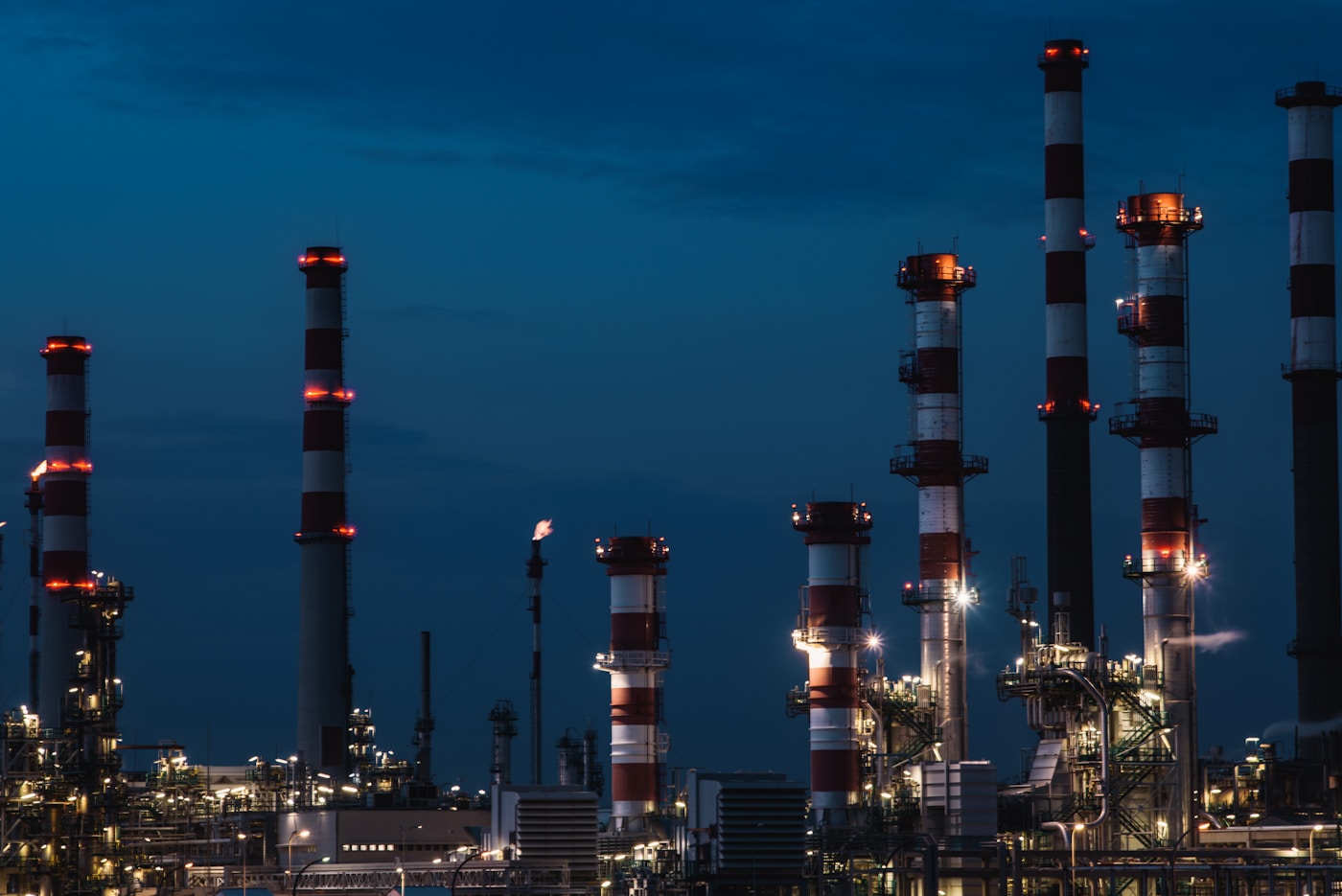
Iran’s threat to destroy Gulf energy infrastructure is not hypothetical — it is already partially underway. Iranian drones and missiles have struck the Ras Laffan LNG facility in Qatar, reducing its capacity by 17 percent for an estimated five years according to QatarEnergy’s own assessment, as reported by Al Jazeera. The Yanbu refinery on Saudi Arabia’s Red Sea coast was hit on March 20, extending the war’s reach beyond the Persian Gulf for the first time. Bahrain’s defense forces have intercepted and destroyed 385 Iranian projectiles since February 28, according to Bahrain’s Ministry of Defense — but interception rates are never 100 percent.
A full-scale Iranian assault on the five named facilities would remove approximately 4.2 million barrels per day of refining capacity and an estimated 15 percent of global LNG processing from the market simultaneously. Brent crude, already trading above $110 per barrel, would almost certainly breach $150 and potentially $200, according to Goldman Sachs projections published on March 17. The Dallas Federal Reserve’s analysis of the Hormuz closure estimated that a complete and prolonged disruption to Gulf energy exports could subtract 2-3 percentage points from global GDP within six months. The disruption already qualifies as the fourth great oil shock in modern history, surpassing the 1973 Arab embargo in volume of supply removed from global markets.
The cascading effects extend far beyond fuel prices. Gulf petrochemical plants produce feedstocks for plastics, fertilizers, and pharmaceuticals consumed worldwide. Saudi Arabia’s Jubail industrial complex alone accounts for roughly 7 percent of global petrochemical output, according to the Royal Commission for Jubail and Yanbu. Destroying it would create shortages in agricultural inputs — particularly urea-based fertilizers — within two growing seasons, threatening food production in South and Southeast Asia where Gulf-produced fertilizers are essential to crop yields.
For Saudi Arabia specifically, the destruction of SAMREF — the Saudi Aramco Mobil Refinery at Yanbu — would eliminate the Kingdom’s primary Red Sea refining capacity at precisely the moment when the Hormuz blockade has made Red Sea export routes the country’s only viable path to global markets. Even that route faces constraints, with the Trump administration’s $20 billion maritime insurance program failing to restore commercial shipping confidence. Aramco has already begun cutting production because onshore storage facilities are approaching capacity limits, Bloomberg reported on March 9. Losing refining capacity on top of export route constraints would effectively strand Saudi crude underground — producing it would have no purpose if it could neither be refined domestically nor shipped abroad.
Why Can Neither Side Back Down?
The mutual destruction standoff persists because retreating carries political costs that neither Washington nor Tehran can absorb. Trump staked American credibility on the 48-hour deadline. If March 23 passes with the Strait of Hormuz still closed and no US strikes on Iranian power plants, the ultimatum joins a list of unfulfilled threats that adversaries from Pyongyang to Moscow will study for decades. The signal sent would be that the United States will not follow through on explicit, public, time-bound threats — a message that undermines deterrence globally. Paradoxically, Iran’s own blockade carries an expiry date set by its dependence on the same strait for food and fuel imports.
Iran faces a symmetric trap. Supreme Leader Ayatollah Ali Khamenei — or his son Mojtaba, who has assumed increasing authority amid conflicting reports about his father’s status — cannot reopen Hormuz without appearing to capitulate to American coercion. Iran’s foreign minister, Abbas Araghchi, stated on March 16 that “we never asked for a ceasefire, and we have never asked even for negotiation,” according to NPR. Reopening Hormuz under a 48-hour American ultimatum would contradict this position so fundamentally that it could destabilize the regime itself. The contradictions deepened on March 22-23, when five Iranian officials issued five contradictory statements on whether the strait was open, closed, or selectively passable.
The domestic politics on both sides reinforce intransigence. In Washington, a faction within the Pentagon and National Security Council advocates for escalation as the path to a decisive outcome. In Tehran, the IRGC views the infrastructure standoff as validation of its long-standing doctrine that Iran can impose unacceptable costs on any attacker, regardless of conventional military imbalance. Both factions benefit from continued escalation and lose influence if their side backs down.
This dynamic — where domestic political incentives align with escalation rather than de-escalation — is what deterrence theorists call the “commitment trap.” Once a threat is issued publicly, the political cost of not following through exceeds the military cost of executing it. Trump’s 48-hour deadline transformed a strategic option into a political obligation.
Saudi Arabia Is the Hostage Both Sides Claim to Protect
Riyadh occupies the most precarious position in the standoff. Saudi Arabia’s oil infrastructure appears on Iran’s explicit target list. Its air bases host the American forces whose actions trigger Iranian retaliation. Crown Prince Mohammed bin Salman has reportedly urged Trump to “keep hitting the Iranians hard,” according to the New York Times, while simultaneously attempting to maintain channels with Tehran to prevent Saudi-specific escalation. The strategy — backing the war while avoiding its worst consequences — has reached its structural limit.
Saudi Arabia’s neutrality died in the war’s third week. The Kingdom expelled several Iranian Embassy staff, including the military attaché, and declared them persona non grata. Saudi Arabia opened King Fahd Air Base to US forces. Pakistan deployed air defense systems and troops to the Kingdom. Turkey, Egypt, and Pakistan signed a security pact in Riyadh that conspicuously excluded the United States — a move that signals Riyadh is hedging even as it deepens its commitment to the American-led campaign.
The strategic paradox for MBS is acute. If Trump strikes Iran’s power grid, Iran retaliates against Saudi oil infrastructure — facilities that took decades and hundreds of billions of dollars to build. If Trump does not strike, the Strait of Hormuz remains closed and Saudi Arabia’s oil exports continue to dwindle, threatening the fiscal foundation of Vision 2030 and the entire economic transformation program. Neither outcome serves Saudi interests. Both outcomes are now more likely than a negotiated resolution.
The security pact signed in Riyadh between Turkey, Saudi Arabia, Egypt, and Pakistan — notably without American participation — suggests that Gulf states are beginning to prepare for a post-American security architecture, even while depending on American firepower to prosecute the current war. This is not contradiction; it is contingency planning by governments that can see the Infrastructure MAD standoff heading toward a conclusion that serves nobody’s interests.
Saudi Aramco’s predicament illustrates the bind. The company ramped production to 10.882 million barrels per day in February — an 8 percent increase from January — in anticipation of disruption, according to OPEC data reported by Bloomberg. But with Hormuz handling 95 percent less traffic than normal and the Yanbu pipeline at capacity, Saudi Arabia began cutting production in early March because onshore storage was filling up. Aramco made the unprecedented move of offering spot tenders for immediate delivery — something the company virtually never does under its long-term contract system. These are the actions of a company and a country running out of options.
The Cold War Playbook Applied to Oil and Electricity
The Infrastructure MAD dynamic unfolding in the Gulf echoes two historical precedents, both of which offer uncomfortable lessons for the present crisis.
The first is the Cold War itself. From 1945 to 1991, the United States and the Soviet Union maintained an equilibrium of nuclear deterrence that strategist Herman Kahn called “the delicate balance of terror.” The system worked — barely — because both sides maintained second-strike capability (the ability to absorb a first strike and still retaliate devastatingly), because communication channels existed to prevent miscalculation, and because the consequences of failure were so absolute that rational actors would never test the system. None of these conditions fully apply to the Gulf standoff.
Iran’s second-strike capability is uncertain. Three weeks of US-Israeli bombardment have degraded Iran’s missile and drone inventory by an estimated 90 percent, according to US Central Command briefings cited by multiple outlets. But 10 percent of Iran’s pre-war arsenal still represents hundreds of projectiles — more than enough to destroy the five Gulf facilities Ghalibaf named. The uncertainty itself is destabilizing. If Iran believes its retaliatory capability is eroding daily, it faces a “use it or lose it” dilemma that Cold War theorists recognized as the single most dangerous configuration in deterrence logic.
The Foreign Affairs analysis of Iranian deterrence failure offers a broader lesson. Iran’s proxy network — Hezbollah, Hamas, Houthis, Iraqi militias — was designed to create a web of conventional deterrence that made attacking Iran prohibitively costly. The network’s destruction in 2025 and early 2026 removed the lower rungs of Iran’s deterrence ladder, forcing Tehran to jump directly to infrastructure threats as its primary retaliatory tool. The result is a deterrence architecture with no graduated options — only the choice between accepting punishment and unleashing catastrophic retaliation. Strategists call this “all-or-nothing deterrence,” and it is historically the most dangerous configuration because it eliminates the space for limited, face-saving compromises.
The second precedent is the 1980-1988 Tanker War, the last time Gulf oil infrastructure was systematically targeted during a regional conflict. Iran and Iraq attacked more than 500 commercial vessels in the Persian Gulf during those eight years. The United States intervened with naval escorts under Operation Earnest Will, and the conflict eventually wound down after the USS Vincennes accidentally shot down Iran Air Flight 655, killing 290 civilians — a tragedy that convinced Tehran the costs of continued Gulf escalation outweighed the benefits.
The Tanker War precedent suggests that infrastructure standoffs end not through negotiation but through catastrophic miscalculation that shocks one or both parties into de-escalation. The 2026 equivalent of the Vincennes incident could be a strike on Bushehr that produces radioactive contamination, or a successful Iranian attack on a desalination plant that leaves millions without drinking water. Neither outcome represents a “solution” — both represent the kind of humanitarian disaster that breaks political will.
Why Conventional MAD Is More Dangerous Than Nuclear MAD
The prevailing assumption in Western strategic thinking holds that conventional deterrence is inherently safer than nuclear deterrence because the consequences are less severe. The Gulf crisis inverts this logic. Conventional infrastructure MAD may prove more dangerous precisely because it is more likely to be tested.
Nuclear MAD survived because its consequences were binary: civilization continues or it does not. There was no “limited nuclear exchange” that rational leaders believed they could survive politically and strategically. The concept of “escalation dominance” — the ability to escalate faster than your opponent — was meaningless when the top of the escalation ladder was total annihilation.
Conventional infrastructure MAD offers an entirely different calculus. A US strike on Iran’s Damavand power plant would cause immense suffering but would not end Iranian civilization. An Iranian strike on Saudi Arabia’s Jubail complex would devastate the global economy but would not render Saudi Arabia uninhabitable. These are catastrophes, not extinctions — and that distinction matters enormously for decision-making.
Leaders who believe they can survive a “limited infrastructure exchange” are far more likely to initiate one than leaders who believe they will trigger nuclear Armageddon. Trump’s ultimatum language — “starting with the biggest one first” — implicitly acknowledges a sequenced, graduated approach to infrastructure destruction. This is precisely the kind of thinking that deterrence theorists consider most dangerous: the belief that escalation can be controlled, that you can climb one rung of the ladder without being pulled to the top.
The Washington Institute for Near East Policy’s analysis of deterrence dynamics with Iran identified this as the central risk: “The stability-instability paradox means that the very existence of mutual vulnerability to infrastructure attacks makes lower-level provocations more, not less, likely — because both sides believe the other will be deterred from full-scale retaliation.” Applied to the current crisis, this means Trump may believe he can destroy one or two Iranian power plants without triggering all-out retaliation against Gulf oil infrastructure. Iran may believe the same in reverse. Both cannot be right.
| Rung | US/Israel Target in Iran | Iran Target in the Gulf | Global Economic Impact |
|---|---|---|---|
| 1 | Military facilities, air defenses | US military bases in Gulf states | Minimal direct economic impact |
| 2 | Missile production sites, arms depots | Gulf military infrastructure | Oil prices rise 10-15% |
| 3 | Oil refineries and petrochemical plants | Gulf oil refineries and ports | Oil prices rise 30-50% |
| 4 | Electrical substations and regional grids | Gulf desalination plants | Humanitarian crisis, oil 50-80% higher |
| 5 | Major power plants (Damavand, Kerman, Ramin) | Major Gulf energy complexes (Jubail, Ras Laffan, Al Hosn) | Global recession, oil above $200 |
| 6 | Bushehr nuclear power station | Gulf nuclear/desalination combined facilities | Radioactive contamination, regional catastrophe |
The war has already reached rung 3 on both sides. Trump’s ultimatum threatens to jump directly to rung 5. The gap between rungs 5 and 6 — between destroying a conventional power plant and striking a nuclear facility — is disturbingly narrow when both sides are operating under time pressure, imperfect intelligence, and domestic political incentives to escalate.
How Does a Mutual Destruction Standoff End?
History offers four models for how infrastructure MAD standoffs resolve, none of them reassuring. The most likely outcome depends on which model the current crisis most closely resembles.
The first model is the Cold War resolution: one side’s economic system collapses, ending the standoff through exhaustion rather than agreement. Iran’s economy, already battered by decades of sanctions, is absorbing devastating military strikes while maintaining a costly asymmetric campaign across the Gulf. The question is whether Iran’s economy — or its political system — cracks before American political will erodes. Iran’s GDP was approximately $400 billion before the war; the cost of three weeks of conflict, combined with the loss of oil export revenue from Hormuz-dependent shipments, may have already exceeded $50 billion.
The second model is the Tanker War resolution: a catastrophic incident shocks both parties into de-escalation. The 2026 equivalent might be a successful Iranian strike on a Gulf desalination plant that leaves millions without drinking water, or a US strike on Bushehr that produces radioactive contamination. The problem with this model is that it requires a humanitarian disaster to occur before political leaders find the will to stop.
The third model is imposed resolution: a third party with sufficient leverage forces both sides to stand down. During the Cold War, no such third party existed. In the Gulf crisis, the closest candidates are China — which depends on Gulf oil and has diplomatic relationships with both sides — and Russia, which has spoken with Trump about ending the war but has no leverage over Iran’s military decisions. Neither has demonstrated the ability or willingness to force a resolution.
The fourth model is the most dangerous: the standoff simply continues indefinitely, with both sides making incremental infrastructure attacks while avoiding the threshold that triggers full-scale mutual destruction. This is the “permanent low-grade infrastructure war” scenario, where neither side’s deterrent threat is fully tested but neither side feels secure enough to negotiate. Oil prices remain elevated, Gulf reconstruction costs mount, and the regional economy slowly hollows out under the weight of perpetual conflict.
Each model carries distinct risks for the Gulf states caught between the combatants. Saudi Arabia, the UAE, and Qatar have no direct say in whether the United States strikes Iran’s power grid or whether Iran retaliates against their infrastructure. Their sovereignty over the outcome is effectively zero — a condition that the Al Jazeera Centre for Studies described as “strategic subordination masked as alliance.” The Gulf states are not neutral bystanders in the Infrastructure MAD equation; they are the collateral that both sides have agreed to sacrifice if deterrence fails.
The likeliest outcome combines elements of multiple models. Regional security arrangements may contain the geographic scope of infrastructure attacks while failing to end them. Economic exhaustion may force Iran to quietly reduce the tempo of its strikes without formally reopening Hormuz. Trump may allow the 48-hour deadline to pass with a “Phase 1” strike on a secondary target — a substation rather than a major plant — that allows him to claim he followed through while avoiding the full escalatory consequences. This muddling-through scenario satisfies no one but kills fewer people than the alternatives.
The stability-instability paradox means that the very existence of mutual vulnerability to infrastructure attacks makes lower-level provocations more, not less, likely — because both sides believe the other will be deterred from full-scale retaliation.
Washington Institute for Near East Policy, March 2026
The 48-hour deadline represents the moment when theoretical deterrence meets operational reality. If it passes without consequence, the credibility of American threats degrades globally. If Trump follows through, the world discovers whether Iran’s retaliatory capability has been sufficiently degraded to prevent catastrophic counter-strikes — or whether three weeks of bombardment merely wounded the adversary without disarming it. For Saudi Arabia and its Gulf neighbours, the answer to that question arrives not as an intelligence briefing but as incoming projectiles.
On March 23, Trump shifted course, ordering a five-day pause on all energy infrastructure strikes amid claims of productive talks with Tehran. The five-day diplomatic window injected the first note of de-escalation into a conflict that had appeared locked on a path toward mutual destruction of civilian energy systems.
Frequently Asked Questions
What is Trump’s 48-hour ultimatum to Iran about the Strait of Hormuz?
On March 21, 2026, President Trump threatened to “obliterate” Iran’s power plants, “starting with the biggest one first,” if Tehran does not fully reopen the Strait of Hormuz within 48 hours. The deadline falls around 23:44 GMT on March 23. Iran responded by threatening to destroy all Gulf energy infrastructure linked to the US and Israel if any Iranian power plant is struck.
What is the Infrastructure MAD Matrix and how does it apply to the Iran war?
The Infrastructure MAD Matrix is an analytical framework comparing the current Gulf standoff to Cold War nuclear Mutually Assured Destruction. Both involve adversaries holding each other’s critical civilian infrastructure hostage. The key difference is that conventional infrastructure destruction, while catastrophic, is not immediately apocalyptic — making it more likely to be tested than nuclear deterrence, which survived precisely because its consequences were too absolute to risk.
Which Iranian power plants could the US target?
Iran’s largest power plants include the Damavand combined-cycle plant near Tehran generating 2,868 megawatts, the Kerman plant producing 1,910 megawatts, the Ramin steam plant in Khuzestan generating 1,890 megawatts, and the Bushehr nuclear power station producing approximately 1,000 megawatts. Striking Bushehr carries additional risks of radioactive contamination affecting Gulf states downwind.
What Gulf oil facilities has Iran specifically threatened to destroy?
Iran’s parliament speaker Mohammad Bagher Ghalibaf named five specific targets: Saudi Arabia’s SAMREF refinery and Jubail petrochemical complex, the UAE’s Al Hosn gas field, and Qatar’s Ras Laffan refinery and Mesaieed petrochemical complex. These facilities collectively handle millions of barrels of daily oil processing and a significant share of global LNG production.
Why is the Iran-Gulf infrastructure standoff considered more dangerous than Cold War nuclear deterrence?
Cold War nuclear MAD worked because its consequences were binary — civilization survives or it does not. The Gulf infrastructure standoff involves catastrophes that leaders may believe they can survive, making them more willing to test deterrent threats. The absence of direct communication channels between Washington and Tehran, combined with domestic political pressure on both sides to escalate, creates a structural instability that nuclear deterrence never faced at this intensity.
How does Saudi Arabia fit into the mutual destruction standoff?
Saudi Arabia occupies the most precarious position in the standoff. Its oil infrastructure appears on Iran’s explicit target list while its air bases host the American forces whose strikes trigger Iranian retaliation. Crown Prince Mohammed bin Salman has urged aggressive action against Iran while attempting to prevent Saudi-specific escalation — a balancing act that became impossible when the Kingdom expelled Iranian diplomats and opened military bases to US forces in the war’s third week.
That balancing act extends beyond the battlefield. If Trump’s leverage over Iran’s power grid produces a diplomatic opening, the resulting peace deal could present Saudi Arabia with risks greater than the standoff it replaced.
What would happen to global oil prices if Iran attacks all five named Gulf facilities?
Goldman Sachs projected on March 17 that a full-scale Iranian assault on Gulf energy infrastructure could push Brent crude above $150 per barrel and potentially to $200. The Dallas Federal Reserve estimated that a prolonged disruption to Gulf energy exports could subtract 2-3 percentage points from global GDP within six months, effectively triggering a worldwide recession affecting every major economy.