RIYADH — For 35 days, Mohammed bin Salman lobbied Donald Trump to destroy Iran’s military capacity, urged him to send ground troops for regime change, and wagered Saudi Arabia’s entire security posture on the belief that Washington would finish what it started. On the evening of April 7, Trump posted on Truth Social that Iran’s own 10-point peace proposal was “a workable basis on which to negotiate,” and that “almost all of the various points of past contention have been agreed to” — a framework whose ten demands, taken together, would dismantle every pillar of the Saudi defense architecture built over three decades.
The proposal is not a compromise document. It is Iran’s maximum position, presented as a fait accompli after 36 days of war, and the American president called it workable. Every one of the ten points — from US military withdrawal across the Gulf to international codification of Iran’s Hormuz toll system to uncapped uranium enrichment — targets a specific Saudi vulnerability with surgical precision. MBS did not merely fail to get regime change; he watched Trump publicly validate the adversary’s wish list while Iran’s Supreme National Security Council declared it had “forced criminal America to accept” its terms and the IRGC, in an unretracted statement, announced that “all restrictions have now been lifted” on strikes against Gulf energy infrastructure.
Table of Contents
- What Did Trump Actually Endorse on April 7?
- The 35-Day Lobbying Campaign That Collapsed in a Single Post
- How Does Each of Iran’s Ten Points Threaten Saudi Arabia?
- What Would US Military Withdrawal Mean for Saudi Defense?
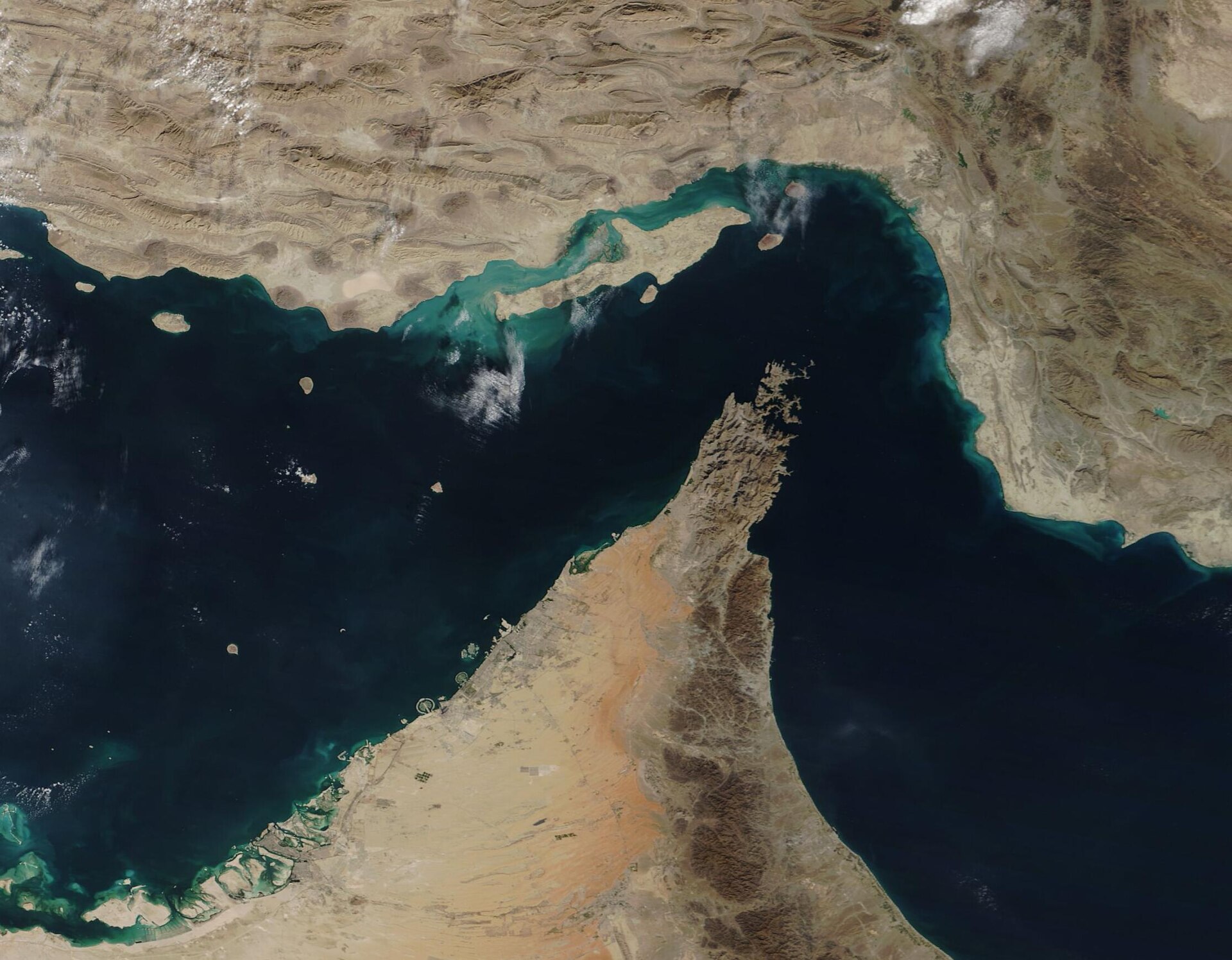
- Why Does Hormuz Codification Matter More Than a Blockade?
- Does Iran’s Enrichment Demand Trigger a Saudi Nuclear Response?
- The Ceasefire That Comes With a Trigger Warning
- Can the GCC Hold a Unified Position Against Its Own Patron?
- The 2003 Precedent Saudi Arabia Cannot Afford to Repeat
- What Does MBS Have Left?
- Frequently Asked Questions
What Did Trump Actually Endorse on April 7?
At approximately 6:30 PM Eastern on April 7, Trump posted a statement on Truth Social declaring that “we received a 10 point proposal from Iran, and believe it is a workable basis on which to negotiate,” adding that it was “an Honor to have this Longterm problem close to resolution.” The statement came hours after he had described the same proposal as “not good enough” — a reversal that administration officials, who had privately characterized the Iranian framework as “maximalist,” struggled to explain, according to ABC News reporting.
The ten points, compiled from Geo.tv, Tribune India, Gulf News, and Foreign Policy reporting, constitute Iran’s post-war demand set in full: end the war against the entire Axis of Resistance, including Hezbollah, Hamas, the Houthis, and Iraqi militias; withdraw US military forces from all regional bases; codify Iranian dominance over the Strait of Hormuz under an agreed protocol; pay full war reparations to Iran; lift all primary and secondary US sanctions against Iran and third-country buyers; remove all IAEA Board of Governors and UN Security Council resolutions; release all frozen Iranian assets globally; and accept Iran’s uranium enrichment program without dismantlement or cap. The final demand — Point 10 — would ratify the entire framework through a binding UN resolution co-signed by Russia and China, designed to prevent any future American administration from unilateral revocation.
This is not a negotiating position in the conventional sense — it is a demand for American and Gulf capitulation dressed in the language of diplomacy, and the president of the United States called it workable. Foreign Policy noted skeptically that the plan “does not address key issues, including eliminating the country’s nuclear program.” Al Jazeera observed that full details of the ten clauses “have not been published” by either side, suggesting the text Trump endorsed may differ from what Iran has presented domestically — a gap that itself creates room for both sides to claim victory while leaving Saudi Arabia exposed to whichever version eventually prevails.
The 35-Day Lobbying Campaign That Collapsed in a Single Post
The arc of MBS’s wartime diplomacy is now visible in its entirety, and it ends badly. The Washington Post reported on February 28, citing four sources, that the crown prince had privately urged Trump to deploy US ground troops into Iran and pursue regime change — framing the war as a “historic opportunity” to eliminate Iran as a regional military threat permanently. The New York Times subsequently confirmed MBS’s private lobbying for regime change, reporting that his appeals extended to direct conversations about the composition and objectives of a ground force. On April 7, Trump himself acknowledged the dynamic: “He does, he is a warrior. He is fighting with us, by the way,” he told the Times of Israel, a characterization that simultaneously validated MBS’s hawkishness and rendered it irrelevant, because the warrior’s patron had already decided to negotiate.
The Middle East briefing 3,000+ readers start their day with.
One email. Every weekday morning. Free.
The GCC states had publicly committed to the maximalist position. Saudi Arabia, the UAE, Bahrain, and Kuwait issued a coordinated demand that “attacks on Iran must not stop until its military threat to the region and to the Strait of Hormuz has been removed,” as reported by CBS News. UAE Ambassador Yousef al-Otaiba rejected any ceasefire as “not enough,” insisting the strait “cannot be held hostage by any country.” These were not offhand remarks — they were calibrated public statements from four sovereign governments that had absorbed missile strikes, lost infrastructure, and burned through 86 percent of their air defense stockpiles on the explicit understanding that Washington would see the campaign through to Iran’s military degradation.
What Trump endorsed on April 7 is not merely different from what MBS asked for — it is the precise opposite. Where MBS wanted regime change, Iran’s Point 1 demands protection for every proxy militia in the Axis of Resistance. Where the GCC wanted Hormuz cleared, Point 3 codifies Iranian dominance over the strait. Where Saudi Arabia needed continued American military presence as the backbone of its depleted defense, Point 2 demands full US withdrawal from the region. The distance between what the crown prince sought and what the American president publicly validated is not a policy disagreement; it is a structural rupture in the relationship that has underwritten Saudi security since the 1991 Gulf War.
Mohammed Baharoon, Director General of the B’huth Research Center in Dubai, captured the Gulf anxiety with precision: “The issue is the cessation of the war without a real outcome. He might stop the war, but that doesn’t mean Iran will.” That distinction — between ending American hostilities and ending Iranian ones — is the gap through which every Saudi vulnerability now flows.
How Does Each of Iran’s Ten Points Threaten Saudi Arabia?
The ten points do not threaten Saudi Arabia incidentally or as collateral damage from a US-Iran bilateral deal. They target the Saudi security architecture with a specificity that suggests the framework was designed, at least in part, as a settlement of Iran’s grievances against the Gulf states that hosted the American campaign — and the table below maps each demand against the concrete Saudi exposure it creates.
| Iran’s Demand | Saudi Vulnerability |
|---|---|
| Point 1: End war against Axis of Resistance (Hezbollah, Hamas, Houthis, Iraqi militias protected) | Houthis resume unobstructed Red Sea operations; Bab el-Mandeb becomes second chokepoint; Saudi western ports re-exposed to missile and drone strikes |
| Point 2: Full US military withdrawal from regional bases | Prince Sultan Air Base exits; PAC-3 logistics chain severed; CENTCOM forward headquarters at Al Udeid dismantled; ~38,700 US troops across five Gulf states removed |
| Point 3: Iranian Hormuz dominance codified under international protocol | Saudi remaining ~3.33M bpd Hormuz-dependent exports subject to $2M/vessel toll; Yanbu bypass already maxed at 7M bpd with no additional headroom |
| Point 4: War reparations from US | Sets precedent for Iranian claims against GCC states that hosted US forces, provided basing, or enabled strikes |
| Point 5: Lift all primary US sanctions | Iran oil revenue surges beyond wartime $139M/day; Saudi market-share displacement in Asia accelerates |
| Point 6: Lift secondary sanctions | Third-country buyers (India, China) no longer penalized for Iranian crude; Saudi OSP pricing power erodes |
| Point 7: Remove IAEA and UNSC resolutions | Iran nuclear program de-monitored; Saudi enrichment parity demand triggered; regional proliferation ladder activated |
| Point 8: Release frozen assets ($120B+ globally) | IRGC procurement restarts at scale; Saudi PAC-3 rebuild (620 rounds/year at Camden, SC) cannot match recapitalized Iranian arsenal |
| Point 9: Uranium enrichment accepted, no cap | MBS has publicly stated if Iran gets a nuclear weapon, Saudi Arabia will too — this is the trigger condition |
| Point 10: UN binding ratification, Russia/China co-signature | Saudi Arabia cannot appeal to Security Council for future Iranian violations; framework becomes structurally unrevocable |
The cumulative effect is not the weakening of one Saudi defense layer but the simultaneous removal of all of them — the American military umbrella, the sanctions regime that constrained Iranian procurement, the international monitoring architecture on Iran’s nuclear program, the chokepoint freedom that Saudi oil exports depend on, and the Security Council as a venue for future redress. No single point is survivable for Riyadh in isolation. Taken together, they describe a post-war Middle East in which Iran is richer, better armed, nuclear-capable, and operating behind a UN-ratified legal shield — while Saudi Arabia’s primary ally has physically withdrawn from the region.
What Would US Military Withdrawal Mean for Saudi Defense?
Point 2 — US military withdrawal from all regional bases and deployment points — is the demand that converts every other point from a diplomatic problem into a security emergency. The current American footprint across the Gulf, as reported by Al Jazeera and Modern Diplomacy, totals approximately 38,700 troops: roughly 10,000 at Al Udeid in Qatar, 9,000 at Naval Support Activity Bahrain (headquarters of the Fifth Fleet), 13,500 across several installations in Kuwait including Camp Arifjan, 3,500 at Al Dhafra in the UAE, and the already-reduced contingent of approximately 2,700 at Prince Sultan Air Base in Saudi Arabia, partially relocated mid-March according to Times of Islamabad and Al Jazeera reporting.
Saudi Arabia occupies a uniquely exposed position within this architecture because, unlike its neighbors, it has no formal mutual defense treaty with the United States. Bahrain hosts the Fifth Fleet under a defense cooperation agreement. Qatar hosts CENTCOM’s forward headquarters at Al Udeid under a bilateral defense pact. Kuwait’s relationship is anchored in the 1991 liberation and subsequent basing agreements. Saudi Arabia’s security relationship with Washington rests on arms sales, training agreements, and the assumption — never codified in treaty form — that American forces in the region would respond to an attack on the kingdom. Point 2 removes the forces; the absence of a treaty means there is no legal obligation requiring them to return.
“Hosting should not mean absorbing strikes for wars the host did not authorize.” — Muhanad Seloom, Doha Institute for Graduate Studies, Foreign Policy, March 24, 2026
The PAC-3 MSE batteries that have intercepted 894 Iranian drones and missiles since March 3 depend on American-maintained logistics, American-supplied rounds, and American-trained operators working alongside Saudi crews. The Lockheed Martin production line at Camden, South Carolina, builds approximately 620 interceptor rounds per year — a rate designed for peacetime replenishment, not wartime consumption. Saudi Arabia has burned through roughly 2,400 of its estimated pre-war stockpile of 2,800 PAC-3 MSE rounds in five weeks, leaving approximately 400 remaining. Iran, by CSIS and Soufan Center assessments, retains roughly 50 percent of its pre-war missile inventory. If US forces withdraw under Point 2 and Iranian assets are released under Point 8, the kingdom faces a replenished adversary with a depleted shield and no patron on the ground to operate it.
Why Does Hormuz Codification Matter More Than a Blockade?
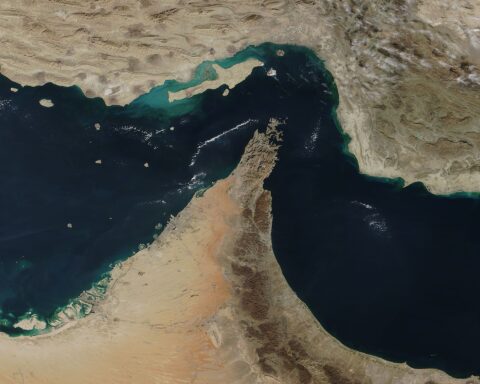
Point 3 is the most economically consequential demand in the framework, and it is written with a sophistication that reflects 36 days of operational experience in managing the strait as a revenue-generating franchise rather than a closed waterway. Iran’s Parliament passed legislation on March 31 formalizing a transit fee system — $2 million per vessel, payable through Kunlun Bank or USDT on the Tron blockchain — that has been operating in practice since early in the war, with China brokering initial passage agreements for Qatari LNG carriers and individual tankers crossing under bilateral permits negotiated through Oman. Point 3 would take this ad hoc system and embed it in international law, with “guarantees” of Iranian dominance “according to agreed protocol.”
The distinction between a blockade and a franchise matters enormously for Saudi Arabia. A blockade can be broken — it is an act of war that invites naval response. A codified transit regime, ratified at the UN under Point 10 with Russian and Chinese co-signatures, becomes permanent international law. Saudi Arabia currently routes approximately 3.33 million barrels per day through the strait, with the remainder already diverted to the East-West Pipeline terminus at Yanbu, which is operating at its maximum capacity of 7 million barrels per day with no additional headroom. Every barrel that must transit Hormuz would be subject to an Iranian toll — and the toll, as Bloomberg and Argus Media have reported, is a floor, not a ceiling, with Iran retaining the authority to adjust rates, deny passage, or impose conditions on individual vessels or flag states.
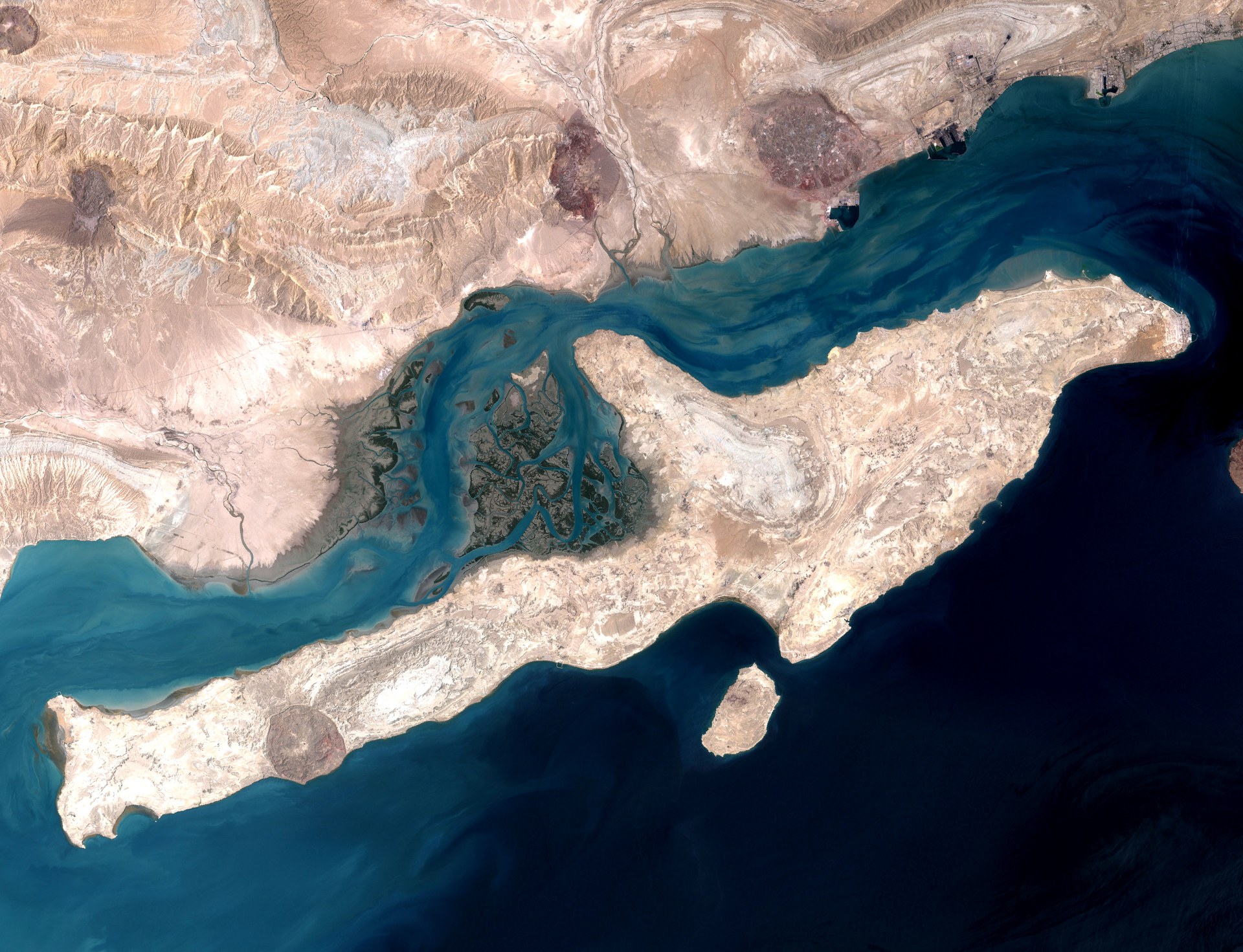
The current throughput of 15 to 20 ships per day, compared to the pre-war average of 138, already represents an 85 to 89 percent reduction in traffic. Codification would not restore pre-war volumes; it would institutionalize the reduced flow at whatever rate Iran finds strategically and financially optimal. For Saudi Arabia, this means permanent vulnerability on the eastern export route, permanent dependence on a maxed-out western bypass, and permanent revenue exposure to an adversary that has demonstrated — over 36 days of war — that it views the strait not as international waters but as Iranian sovereign infrastructure.
Does Iran’s Enrichment Demand Trigger a Saudi Nuclear Response?
Point 9 asks the United States to accept Iran’s uranium enrichment program without dismantlement or cap — a demand that, combined with Point 7’s removal of all IAEA Board of Governors and UN Security Council resolutions, would eliminate both the physical constraints and the international monitoring architecture that currently provide the world’s only visibility into Iran’s nuclear progress. The 2015 JCPOA, whatever its limitations, capped enrichment at 3.67 percent and imposed inspections. Iran has been enriching to 60 percent since 2021, and Points 7 and 9 together would retroactively legitimize that enrichment while removing any obligation to allow inspectors to verify whether the program has crossed the weapons-grade threshold of 90 percent.
MBS has stated publicly — in interviews that were calculated to be heard in Tehran and Washington simultaneously — that “if Iran gets a nuclear weapon, Saudi Arabia will get one too.” This is not diplomatic posturing; it is a position consistent with Saudi Arabia’s refusal to sign the IAEA Additional Protocol, its reported discussions with Pakistan on nuclear cooperation, and the kingdom’s investment in domestic enrichment capability under Vision 2030’s nuclear energy program. Point 9 does not give Iran a nuclear weapon on Day One of implementation, but it removes every barrier between Iran’s current enrichment capacity and a weapon, while Point 7 removes the inspectors who would detect the final sprint. For Riyadh, the combination does not create a nuclear crisis — it creates a nuclear timeline, and the kingdom’s options for response narrow with each month that passes without its own enrichment infrastructure or a security guarantee from a nuclear patron who, under Point 2, would no longer have forces in the region.
Abdulaziz Sager of the Gulf Research Center articulated the Saudi establishment’s position in the Christian Science Monitor on April 1: “Dialogue on its own is not enough if it is not backed by credible deterrence.” Points 2, 7, and 9 together eliminate every form of credible deterrence that Saudi Arabia currently relies on — American military presence, international sanctions, and nuclear monitoring — while leaving the kingdom to build its own deterrent from scratch against a neighbor that has a 20-year head start in enrichment technology.
The Ceasefire That Comes With a Trigger Warning
The most revealing feature of April 7 was not what Trump said or what Iran’s proposal demanded, but the fact that two contradictory Iranian positions — ceasefire and escalation — were simultaneously in force and neither was retracted. The Supreme National Security Council issued its statement declaring that “Iran has achieved a great victory and has forced criminal America to accept its own 10-point proposal,” framing the framework not as a negotiation but as an imposed settlement, with PressTV running the headline: “Iran Declares ‘Historic Victory’ Over US, Says Enemy Forced to Accept Its Proposal.” In the same statement, the SNSC added a caveat that Foreign Policy and WANA reported in full: “This does not signify the termination of the war. Our hands remain upon the trigger.”
Separately, and also unretracted as of April 8, the IRGC’s April 7 statement — issued before Trump’s “workable basis” post — declared that “regional U.S. allies also need to know that, until today, Tehran has shown considerable restraint… but all these restrictions have now been lifted,” threatening strikes that “could disrupt oil and gas supplies for years.” This is the dual-authority problem that has defined Iran’s war conduct since the IRGC effectively assumed sole operational command — the civilian government and the SNSC can negotiate a ceasefire, but the IRGC retains independent strike authority and has publicly declared that authority unlimited.
“This does not signify the termination of the war. Our hands remain upon the trigger.” — Iran Supreme National Security Council, April 7, 2026, via WANA
For Saudi Arabia, this contradiction is not an analytical curiosity — it is an operational threat. A ceasefire negotiated through the SNSC and endorsed by Trump does not bind the IRGC, which has its own command structure, its own intelligence apparatus (now further decentralized after the killing of second IRGC intelligence chief Khademi at dawn on April 6), and its own publicly stated position that restraint has been permanently lifted. The kingdom could find itself in a post-ceasefire environment in which Washington considers the war over, the SNSC claims victory, and the IRGC continues striking Gulf energy infrastructure under an authority it announced on April 7 and never withdrew. The 45-day ceasefire framework already suffered from this structural defect; Trump’s endorsement of the 10-point plan does not solve it but converts it from a hypothetical failure mode into the most likely trajectory.
Can the GCC Hold a Unified Position Against Its Own Patron?
The coordinated GCC statement demanding that attacks on Iran “must not stop” was issued when the four signatory states — Saudi Arabia, the UAE, Bahrain, and Kuwait — believed they were reinforcing an American position, not opposing one. Trump’s April 7 reversal transforms that statement from a demand directed at Iran into an implicit challenge to Washington, and the political dynamics within the GCC make it nearly impossible to sustain. Qatar and Oman, conspicuously absent from the hawkish communique, have maintained direct channels with Tehran throughout the war — Oman brokering the bilateral Hormuz transit permits that Point 3 would codify, Qatar seeing its LNG carriers transit the strait under Chinese intermediation. The GCC was never unanimous on Iran, and Trump has now given the doves a superpower patron for their position.
The UAE’s exposure is particularly acute. Al-Otaiba’s public rejection of a ceasefire as “not enough” was the strongest statement any Gulf ambassador made during the war, and it was made on American television — CBS News — in language clearly intended for a Washington audience. If the ceasefire proceeds on Iran’s terms, the UAE faces the choice between retracting al-Otaiba’s position (a diplomatic humiliation) and maintaining it in opposition to an American-endorsed framework (a rupture with Washington that Abu Dhabi, with $3 billion in announced Blackstone and xAI investments tied to US relationships, cannot afford). The smaller Gulf states face the same dilemma in miniature: Bahrain, which has absorbed strikes on NSA Bahrain since February 28 and closed its airspace for the duration, must decide whether to accept a framework that protects the forces that struck it, while Kuwait, hosting 13,500 American troops at Camp Arifjan, must contemplate Point 2’s withdrawal demand as a direct threat to its primary security guarantee.
The fracture runs deeper than any single statement or ambassador. Saudi Arabia built its wartime coalition on the premise that American military power would be used to degrade Iran permanently — that the cost of absorbing strikes, depleting air defenses, and publicly committing to a maximalist position would be repaid by an outcome that left Iran weaker. Trump’s endorsement of Iran’s framework inverts that premise entirely, and MBS now faces a coalition whose members sacrificed on the basis of a promise that the senior partner has unilaterally withdrawn.
The 2003 Precedent Saudi Arabia Cannot Afford to Repeat
Point 2’s demand for US military withdrawal from the Gulf has a direct historical precedent that Riyadh understands viscerally, because the kingdom lived through it once before and the consequences shaped two decades of Saudi security dependence. After the 1996 Khobar Towers bombing killed 19 American servicemembers, the US military began a phased relocation of its primary Gulf presence from Saudi Arabia to Al Udeid in Qatar, completed by 2003. The move was driven by a combination of force protection concerns and Saudi domestic political pressure — the presence of American troops near Muslim holy sites had become a recruitment tool for al-Qaeda — but the strategic effect was unambiguous: Saudi Arabia lost its primary deterrence layer and became dependent on bilateral arms purchases, principally the PAC-3 Patriot system, to replace the physical American presence that had guaranteed its security since Operation Desert Shield in 1990.
That dependency has now been tested to destruction. The PAC-3 batteries that were supposed to substitute for American boots on the ground have fired approximately 2,400 of their 2,800 pre-war rounds in five weeks — a consumption rate the American production line cannot replenish even under emergency wartime authorization. Poland refused a Patriot battery transfer on March 31. The $16.5 billion in emergency US arms sales approved during the war went to the UAE, Kuwait, and Jordan — not Saudi Arabia. The kingdom that traded American troops for American missiles in 2003 now has neither the troops nor, in meaningful quantities, the missiles, and Point 2 proposes to formalize that condition across the entire Gulf.
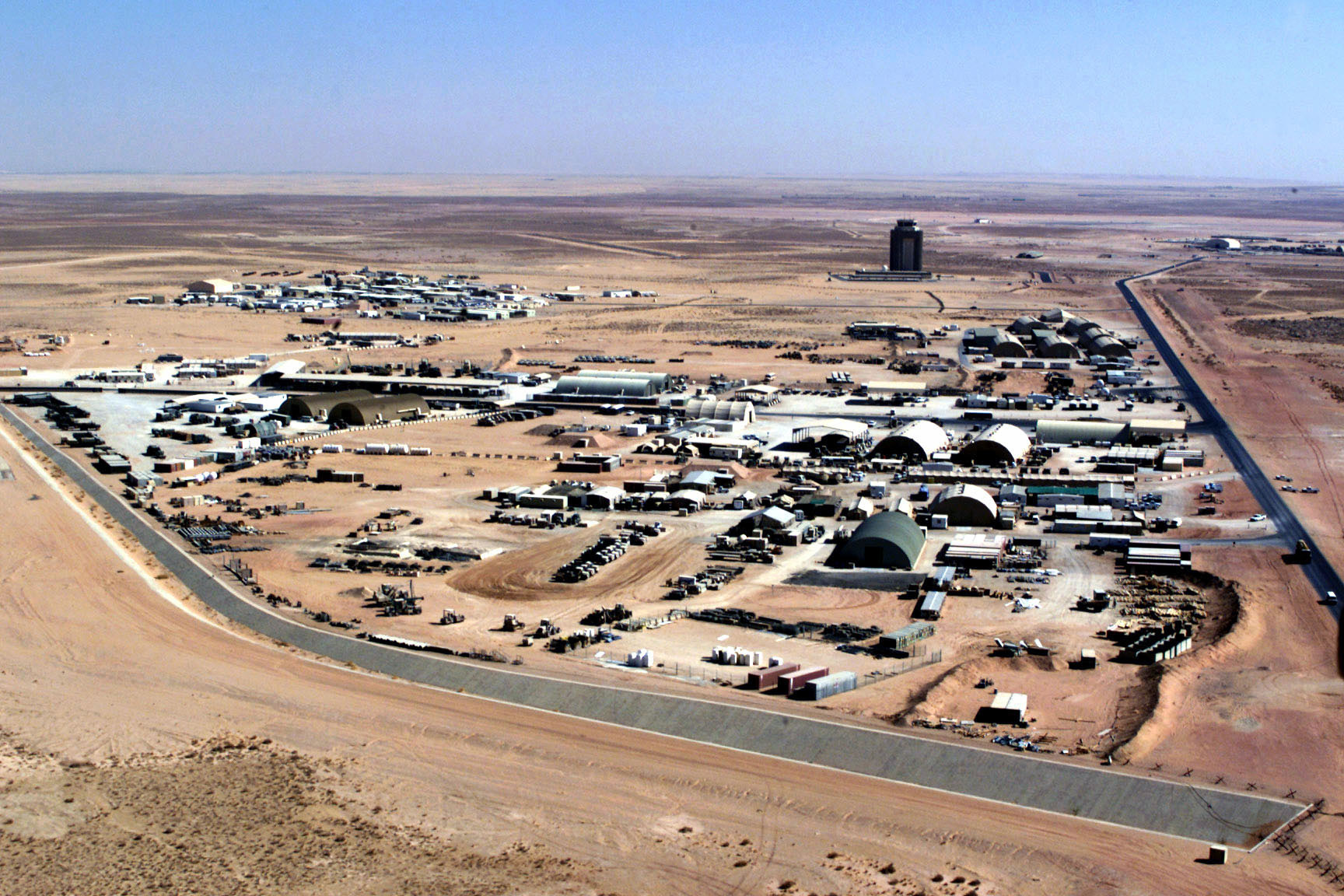
The difference between 2003 and 2026 is that the earlier withdrawal was a bilateral Saudi-American decision made under conditions of relative regional stability — Saddam’s Iraq had been defeated, Iran was under comprehensive sanctions, and the GCC’s collective security architecture was intact. Point 2’s withdrawal would occur after a 36-day war that has degraded Gulf air defenses, demonstrated Iran’s ability to strike energy infrastructure across five countries simultaneously, and left the IRGC in possession of approximately 50 percent of its pre-war missile inventory with a public declaration that all restraint has been permanently lifted. The 2003 withdrawal was a strategic adjustment; the 2026 withdrawal, if implemented, would be an abandonment.
What Does MBS Have Left?
The crown prince’s options after April 7 are constrained in every direction simultaneously, but they are not zero — and the instinct to portray Riyadh as helpless misreads both MBS’s track record and the structural cards the kingdom still holds. Saudi Arabia remains the world’s largest oil exporter, the Yanbu bypass is routing 7 million barrels per day outside Iranian reach, the kingdom has been named co-guarantor of the ceasefire framework, and Aramco’s record $19.50 per barrel OSP premium to Asian buyers demonstrates that the market is willing to pay for supply certainty in a way that generates enormous fiscal headroom even at reduced volumes. The kingdom is weakened, but it is not without weight — the question is whether MBS can convert economic weight into security outcomes without the American military umbrella he spent 35 days trying to preserve.
The first and most immediate move is financial. Saudi Arabia’s sovereign wealth, managed through PIF, gives MBS the ability to shape post-war outcomes through investment conditionality — linking Gulf reconstruction contracts, technology partnerships, and capital flows to security commitments from partners who are not the United States. The $23 billion in AI and data center partnerships announced under the PIF 2026-2030 strategy (NVIDIA, AMD, AWS, Qualcomm, Cisco) create dependencies that run both ways, and the kingdom’s role as host of Expo 2030 and FIFA 2034 gives it convening power that diplomatic isolation cannot erase. Whether these economic instruments can substitute for the 38,700 American troops that Point 2 would remove is the defining question of Saudi post-war strategy.
The second move is nuclear. MBS’s public statement on matching Iran’s nuclear capability was made before the war, under conditions where it served as a deterrent threat rather than an operational commitment. Points 7 and 9, if implemented, would transform that statement from deterrence into necessity — and the kingdom’s options for nuclear acquisition (indigenous enrichment, Pakistani cooperation, or a purchase arrangement with a willing nuclear state) all require timelines measured in years, during which Iran’s uncapped, unmonitored program would be advancing without constraint. The race starts from behind, and Point 2 removes the conventional military presence that would buy time for the kingdom to close the gap.
What remains, stripped of diplomatic language, is a crown prince who bet everything on American military commitment, watched that bet fail publicly on Truth Social, and must now build an independent security architecture from a position of depleted defenses, fractured coalition unity, and an adversary that has declared victory and refused to put down its weapons — all while the American president he lobbied for regime change calls the adversary’s terms “workable” and anticipates the “Honor” of resolution. The distance between MBS’s private requests to Trump in February and Trump’s public endorsement of Iran’s framework in April is 35 days, and in those 35 days, the Saudi assumption that American power would permanently solve the Iran problem collapsed under the weight of a president who decided the problem was already solved.
Frequently Asked Questions
Has Saudi Arabia officially responded to Trump’s endorsement of Iran’s 10-point proposal?
As of April 8, Riyadh has not issued a public statement responding to Trump’s “workable basis” characterization. This silence echoes the pattern from February when, after the Washington Post reported MBS’s regime-change lobbying, Saudi spokesperson Mohammed al-Nazer issued a denial without addressing the substance. Gulf diplomatic sources cited by Al-Monitor indicate that Riyadh is conducting an internal policy review before any public positioning, aware that opposing an American-endorsed framework risks a direct breach with Washington at the worst possible moment.
Could Iran’s 10-point plan actually be implemented in full?
Full implementation faces structural obstacles at every level. Point 10’s requirement for UN binding ratification with Russian and Chinese co-signatures would require a Security Council vote where the US holds veto power — meaning Washington would need to actively vote for a resolution constraining its own future freedom of action. Point 2’s base withdrawal would require renegotiation of bilateral defense agreements with Qatar, Bahrain, Kuwait, and the UAE, each of which has its own domestic politics around American presence. Congressional authorization for sanctions removal under Points 5 and 6 would face bipartisan opposition. The framework’s maximalism may be its own obstacle to implementation — but even partial adoption of select points would reshape the regional balance.
What role did China play in shaping Iran’s proposal?
Point 10’s specific requirement for Russian and Chinese co-signatures on a binding UN resolution suggests Beijing was consulted on the framework’s architecture, if not its specific demands. China brokered the first Qatari LNG transit through Hormuz under the wartime fee system — a system Point 3 would codify — and Chinese state enterprises CNPC and Sinopec hold contracted offtake agreements for 8 million tonnes per annum of Qatari LNG plus 5 percent equity in Qatar’s North Field East expansion, giving Beijing structural economic motivation to support a Hormuz regime it helped design. The yuan payment rail through Kunlun Bank, already operational for transit fees, would become the default settlement mechanism under a codified system.
How does the 10-point plan relate to the earlier 45-day ceasefire framework?
The two frameworks are structurally incompatible. The 45-day phased ceasefire reported by Axios and The National on April 6 envisioned Hormuz and Iran’s nuclear enrichment as Phase 2 issues to be negotiated after an initial 45-day cessation of hostilities. Iran’s 10-point plan collapses that phasing — demanding resolution of Hormuz (Point 3) and enrichment (Point 9) as preconditions within a single comprehensive framework. Trump’s endorsement of the 10 points effectively supersedes the 45-day approach, which mediators from Pakistan, Egypt, and Turkey had been developing through separate channels with what Axios described as “slim” chances of success.
What happens to the $16.5 billion in emergency US arms sales to Gulf states if Point 2 is implemented?
The emergency arms packages approved during the war — directed primarily to the UAE, Kuwait, and Jordan rather than Saudi Arabia — include advanced munitions, air defense components, and precision-guided weapons that require ongoing American maintenance, training, and software support. A full US withdrawal under Point 2 would sever the logistics and contractor support chains that make these weapons systems operational, effectively converting billions of dollars in military hardware into depreciating assets without the technical infrastructure to maintain, reload, or upgrade them. This is the same dynamic that degraded Saudi Arabia’s F-15 fleet maintenance after the 2003 withdrawal, requiring years to rebuild indigenous support capability.