
WASHINGTON — President Donald Trump on Monday proposed that the United States and Iran could jointly control the Strait of Hormuz, the narrow waterway through which 20 percent of the world’s oil supply normally flows, marking a dramatic retreat from his 48-hour ultimatum to Tehran to reopen the passage or face the destruction of its power grid. The proposal, made to reporters at the White House, drew immediate mockery from senior Iranian officials and raised alarm across Gulf capitals that have spent three weeks absorbing hundreds of Iranian missiles and drones while waiting for Washington to restore the maritime artery on which their economies depend.
“Maybe me? Maybe me. Me and the ayatollah, whoever the ayatollah is,” Trump told reporters when asked who would control the strait under such an arrangement, according to the Washington Examiner. The remark came hours after Trump announced a five-day pause on planned strikes against Iranian power plants and energy infrastructure, citing what he described as “very good and productive conversations” with Tehran — conversations that Iran’s Foreign Ministry categorically denied had taken place.
Table of Contents
- What Did Trump Propose for the Strait of Hormuz?
- How Did Iran Respond to the Joint Control Offer?
- The Retreat in Three Steps
- Why Does the Strait of Hormuz Matter to Saudi Arabia?
- What Would Joint Control Actually Mean?
- Saudi Arabia’s Pipeline Alternative and Its Limits
- International Law and the Freedom of Navigation
- Gulf States Left to Calculate Their Own Response
- Frequently Asked Questions
What Did Trump Propose for the Strait of Hormuz?
Trump suggested that the Strait of Hormuz could be placed under joint American-Iranian management as part of a broader deal to end the war that began on 28 February when the United States and Israel launched coordinated strikes on Iran’s military infrastructure, nuclear sites, and leadership, according to NPR. The president framed the proposal as part of a potential resolution that would include no more wars, no more nuclear weapons, and the reopening of global shipping through the 34-kilometre-wide passage between Iran and Oman.
The proposal came alongside Trump’s announcement that he was postponing strikes on Iran’s power plants for five days to allow diplomatic talks to continue. “They want to make a deal, and we are very willing to make it,” Trump told reporters, according to CNN. He claimed that Iran had initiated contact and that the Strait of Hormuz could be “open very soon” if negotiations proceed successfully.
Iran’s Foreign Ministry responded within hours, stating through spokesperson Esmaeil Baqaei that “there is no dialogue between Tehran and Washington,” according to Al Jazeera. However, the ministry separately confirmed receiving American requests for negotiations through intermediary nations — an acknowledgment that indirect channels exist even as direct talks are denied.
How Did Iran Respond to the Joint Control Offer?
Iran treated Trump’s proposal as evidence of American weakness rather than a serious diplomatic opening. Saeed Jalili, one of Iran’s most powerful political figures and a former nuclear negotiator, posted a withering response on the social media platform X, according to NPR.
“First, they said: ‘The Strait of Hormuz must be opened.’ Then, they said: ‘I will insure and escort the ships.’ Now, they say: ‘I am willing to manage it jointly with Iran,'” Jalili wrote. “This is the very definition of a retreat: Iran’s power has brought the United States to the table of realities.”
Jalili appended the hashtag “#TACOTrump,” an acronym for “Trump Always Chickens Out,” according to the Jerusalem Post. The response was widely circulated on Iranian state media and social platforms, where the proposal was presented as a capitulation by an adversary that had, less than four weeks earlier, assassinated Iran’s supreme leader.
Iran’s Defence Council simultaneously issued a threat that Tehran would “disconnect all Gulf routes by planting sea mines” if Trump proceeded with attacks on the country’s power grid, according to Time magazine. Mohammad Bagher Ghalibaf, the speaker of Iran’s parliament, escalated the rhetoric further by posting that “alongside military bases, those financial entities that finance the US military budget are legitimate targets,” according to CNBC — a threat that extended Iran’s target list from military infrastructure to the global financial system.
The Retreat in Three Steps
Jalili’s characterisation of a three-stage American retreat captures a documented shift in Washington’s stated objectives for the Strait of Hormuz over the past three weeks. What began as a categorical demand has evolved through escalating concessions into what now resembles a power-sharing offer — one that Tehran has no incentive to accept while its naval forces maintain effective control of the waterway.
The trajectory is significant because it suggests that Washington has exhausted its non-kinetic options for reopening the strait. A-10 Warthogs and Apache helicopters have been hunting IRGC Navy boats across the strait for weeks, but the mine threat and the sheer volume of Iranian fast-attack craft have prevented any sustained commercial transit. The US Fifth Fleet, headquartered in Bahrain, has conducted more than 200 escort sorties since the blockade began, according to CENTCOM, without restoring the flow of a single laden supertanker.
| Date | Position | Mechanism | Outcome |
|---|---|---|---|
| Early March | Demand: reopen Hormuz immediately | Military ultimatum | Iran escalated attacks on Gulf states |
| Mid-March | Offer: US to insure and escort ships | $20 billion insurance plan, Operation Maritime Shield | Not a single commercial tanker moved |
| 22 March | Ultimatum: open Hormuz in 48 hours or lose power grid | Threat to destroy power plants | Deadline expired without action |
| 23 March | Proposal: joint US-Iran control of Hormuz | Diplomatic negotiation | Iran mocked the offer as retreat |
The insurance plan that Trump unveiled in mid-March, which offered to underwrite war-risk coverage for commercial vessels transiting the strait, failed to move a single tanker, according to Bloomberg. Major Protection and Indemnity clubs — including Gard, Skuld, NorthStandard, the London P&I Club, and the American Club — had already cancelled war-risk coverage for the Persian Gulf effective 5 March, according to Al Jazeera. Without P&I coverage, no commercial vessel can legally operate, regardless of government insurance backstops.
The 48-hour ultimatum that followed on 22 March represented an escalation in rhetoric but was abandoned before the deadline expired. Trump said he had received word of “productive” discussions and chose to postpone military action for five days. Iran denied all talks while simultaneously threatening to mine the entire Persian Gulf if its power grid was attacked.
Why Does the Strait of Hormuz Matter to Saudi Arabia?
The Strait of Hormuz is the single most important chokepoint for Saudi Arabia’s economy. Before the war, approximately 20 million barrels of crude oil and oil products transited the strait daily, representing roughly 25 percent of global seaborne oil trade, according to the US Energy Information Administration. Saudi Arabia was the largest single exporter through the passage, with the majority of Aramco’s crude shipments loading at terminals on the Kingdom’s eastern coast and passing through the strait en route to customers in Asia, Europe, and North America.
The closure of the strait on 4 March by the Islamic Revolutionary Guard Corps — which issued demands that all vessels seek permission before transiting — has cut off Saudi Arabia’s primary export route. The Kingdom imports approximately 80 percent of its food through Gulf shipping lanes, according to CNN, and the disruption has driven consumer prices across GCC states up by 40 to 120 percent since mid-March.
Any arrangement that formalises Iranian authority over the strait — even shared authority — would represent a fundamental threat to Saudi sovereignty over its own export infrastructure. Riyadh has spent decades investing in air defence systems, military modernisation, and diplomatic relationships precisely to ensure that no single adversary could hold its economy hostage through control of Hormuz.
What Would Joint Control Actually Mean?
Trump did not provide operational details for his joint control proposal. The concept raises immediate practical and legal questions that neither the White House nor the State Department addressed on Monday.
Under the current framework of international law, the Strait of Hormuz is classified as an international strait under Part III of the United Nations Convention on the Law of the Sea (UNCLOS), Articles 37 to 44, according to the Lawfare Institute. This designation grants all vessels and aircraft — military and civilian — a right of “transit passage” that “shall not be impeded” and “shall not be suspended” by bordering states.
Joint US-Iranian control would require either a bilateral treaty or a new multilateral framework that supersedes existing transit passage rights. It would also require Iran’s cooperation — cooperation that Tehran has shown no interest in providing. Iran has not ratified UNCLOS and maintains that warships, submarines, and nuclear-powered vessels must obtain permission before entering its territorial waters, according to the American Society of International Law.
For Saudi Arabia, the United Arab Emirates, Kuwait, Qatar, Bahrain, and Iraq — all of which depend on Hormuz for trade — any joint control arrangement negotiated without their participation would effectively grant Iran veto power over their economic survival. The Gulf Cooperation Council states have not been included in any of the reported diplomatic exchanges between Washington and Tehran.
Saudi Arabia’s Pipeline Alternative and Its Limits
Saudi Arabia has activated its East-West crude oil pipeline, known as the Petroline, which runs from the Abqaiq oil processing centre near the Persian Gulf to the port of Yanbu on the Red Sea. The pipeline has a nameplate capacity of 5 million barrels per day, with the ability to expand temporarily to 7 million barrels per day by converting natural gas liquids lines, according to CNBC.
Loadings at Yanbu averaged 2.2 million barrels per day in the first nine days of March, up from 1.1 million in February, according to shipping data cited by MercoPress. The International Energy Agency estimated that the Saudi system was using about 2 million barrels per day in early 2026, leaving between 3 million and 5 million barrels per day of spare bypass capacity depending on operating conditions.
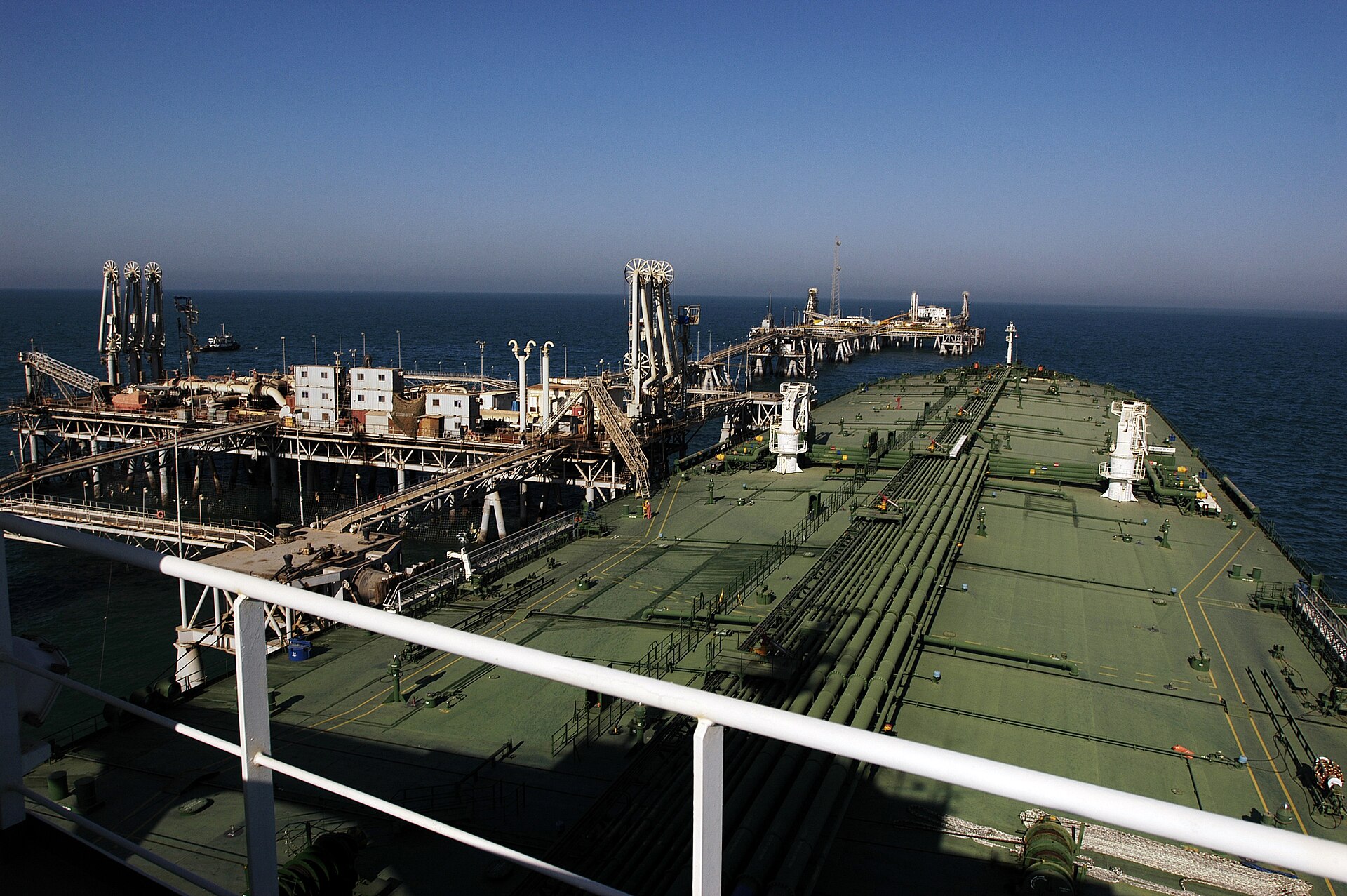
The combined Saudi and UAE pipeline bypass capacity — including the Abu Dhabi Crude Oil Pipeline (ADCOP) running to Fujairah with a capacity of approximately 1.8 million barrels per day — amounts to between 3.5 million and 5.5 million barrels per day, according to the EIA. That figure falls far short of the 20 million barrels per day that normally transit Hormuz.
| Pipeline | Route | Capacity (mb/d) | Current Use (mb/d) |
|---|---|---|---|
| Saudi East-West (Petroline) | Abqaiq to Yanbu (Red Sea) | 5.0 – 7.0 | ~2.2 |
| UAE ADCOP | Habshan to Fujairah (Gulf of Oman) | 1.5 – 1.8 | ~1.5 |
| Total bypass available | 3.5 – 5.5 | ~3.7 | |
| Normal Hormuz flow | ~20.0 | Blocked |
The arithmetic is stark: even at maximum pipeline throughput, the bypass routes can replace less than a third of Hormuz’s normal daily flow. Iran’s blockade has effectively removed more than 14 million barrels per day from global supply, a shortfall that no combination of pipelines, strategic reserves, or alternative producers can fully offset.
The Yanbu pipeline was also attacked on 20 March when Iranian drones struck the Red Sea port, demonstrating that even the bypass route is not immune to Iranian targeting. Engineering News-Record reported that the bypass infrastructure “was sized for a short disruption. This is not that.”
International Law and the Freedom of Navigation
Trump’s joint control proposal sits uneasily with established international maritime law. The Strait of Hormuz qualifies as a strait “used for international navigation” under UNCLOS Article 37, which establishes the regime of transit passage — a right superior to innocent passage that cannot be suspended by bordering states, according to the American Society of International Law.
The logic behind this legal framework is that when much of global trade depends on a narrow corridor, bordering states cannot use that corridor as leverage, according to the Lawfare Institute. A bilateral US-Iranian agreement to jointly manage the strait would effectively privatise an international waterway, replacing multilateral rights with the discretion of two parties — one of which is currently at war with the other.
Iran has signed but not ratified UNCLOS, and Tehran has consistently maintained that its consent is required for certain categories of vessel transit, according to Just Security. Whether transit passage rules have achieved the status of customary international law — binding on all states regardless of treaty ratification — remains a contested legal question, though the prevailing scholarly view holds that they have.
Oman, which shares the southern shore of the strait, submitted declarations upon ratifying UNCLOS in 1989 confirming that only innocent passage is permitted through its territorial sea, according to the UN Law of the Sea. Any joint control arrangement would need to address Oman’s legal position alongside Iran’s.
Gulf States Left to Calculate Their Own Response
Trump’s joint control proposal landed in Gulf capitals already grappling with the erosion of decades-old security assumptions. The proposal arrives at a moment when Gulf states are already reassessing the reliability of American security guarantees. Saudi Arabia’s Foreign Minister Prince Faisal bin Farhan warned on 19 March that the Kingdom’s patience with Iranian attacks “is not unlimited” and that Saudi Arabia reserves the right to take military action, according to Al Jazeera. The calculus in Riyadh has shifted from whether to respond to how and when.
For three weeks, Saudi Arabia has absorbed more than 400 drones and dozens of ballistic missiles while maintaining disciplined restraint, according to NBC News. The Kingdom opened King Fahd Air Base in Taif to American forces conducting strikes against Iran, according to ParsToday, but has refrained from direct offensive action against Iranian territory.
Trump’s proposal to share control of Hormuz with the very country that has been firing missiles at Riyadh raises fundamental questions about the value of that restraint. Egyptian President Abdel Fattah el-Sisi visited every Gulf capital between 19 and 22 March in what diplomats described as shuttle diplomacy aimed at preventing Saudi Arabia and the UAE from entering the war directly, according to Egyptian Streets.
The German chancellor praised Trump’s decision to pause strikes, according to NBC News. Pakistan’s prime minister spoke with Iran’s president and agreed on the need for “de-escalation, dialogue, and diplomacy,” according to the same source. But neither statement addressed the central concern for Gulf states: that the war’s resolution might leave Iran with greater authority over the waterway than it had before the conflict began.
Netanyahu told Israeli media that Trump had “updated” him on a “new opportunity for an Iran deal that protects our interests,” according to the Times of Israel. Gulf state interests were not mentioned.
The war’s cost continues to mount on all sides. The Pentagon has requested $200 billion for operations against Iran, according to reporting from 19 March. Oil prices have surged past $114 per barrel before retreating on Trump’s talk of negotiations. Brent crude’s seven-month high of $73 per barrel in London last week, reported by Bloomberg before the latest spike, now appears modest compared to the intra-day peaks exceeding $119 that followed Iran’s strikes on Gulf energy facilities.
For Crown Prince Mohammed bin Salman, the proposal represents a test of the Kingdom’s three-week strategy of restraint. Saudi Arabia has permitted American forces to operate from its soil, absorbed missile attacks on its capital, and refrained from direct retaliation — all on the assumption that Washington would ultimately compel Iran to reopen the strait. If the endgame is instead a power-sharing arrangement that legitimises Iranian maritime authority, the strategic logic of that restraint collapses.
Three Gulf sovereign wealth funds are reviewing how they deploy trillions of dollars in investments “in anticipation of offsetting the losses triggered by the war, including possible investment pledge reversals, divestments and a re-evaluation of global sponsorship deals,” according to US News and World Report. The economic pressure to resolve the Hormuz crisis grows by the day — but resolution on Iran’s terms would set a precedent that the Gulf states may find more dangerous than the blockade itself.
Frequently Asked Questions
What is joint control of the Strait of Hormuz?
President Trump proposed on 23 March 2026 that the United States and Iran could jointly manage the Strait of Hormuz as part of a broader deal to end the war. No operational details were provided. The concept would require overriding existing international law that guarantees transit passage as a right that cannot be impeded or suspended by bordering states.
Why did Iran mock Trump’s Hormuz proposal?
Senior Iranian official Saeed Jalili characterised the proposal as a three-stage American retreat — from demanding Hormuz be opened, to offering to escort ships, to proposing shared management. Jalili used the hashtag “#TACOTrump,” an acronym for “Trump Always Chickens Out,” and said Iran’s power had “brought the United States to the table of realities.”
How much oil flows through the Strait of Hormuz?
Before the 2026 war, approximately 20 million barrels per day of crude oil and oil products transited the strait, representing about 25 percent of global seaborne oil trade, according to the US Energy Information Administration. The strait also handled 20 percent of the world’s liquefied natural gas shipments. The IRGC’s blockade since 4 March has reduced commercial traffic to near zero.
Can Saudi Arabia export oil without the Strait of Hormuz?
Saudi Arabia operates the East-West pipeline from the Persian Gulf to the Red Sea port of Yanbu, with a capacity of 5 to 7 million barrels per day. Combined with the UAE’s ADCOP pipeline to Fujairah, total bypass capacity reaches approximately 3.5 to 5.5 million barrels per day — far less than the 20 million barrels that normally transit Hormuz. The bypass routes can replace less than a third of normal flow.
Is joint control of an international strait legal?
The Strait of Hormuz is classified as an international strait under the UN Convention on the Law of the Sea, which establishes transit passage as a right that “shall not be impeded” and “shall not be suspended.” A bilateral US-Iranian management agreement would need to navigate or override this framework. Most legal scholars consider transit passage rights to be customary international law binding on all states, including non-signatories.