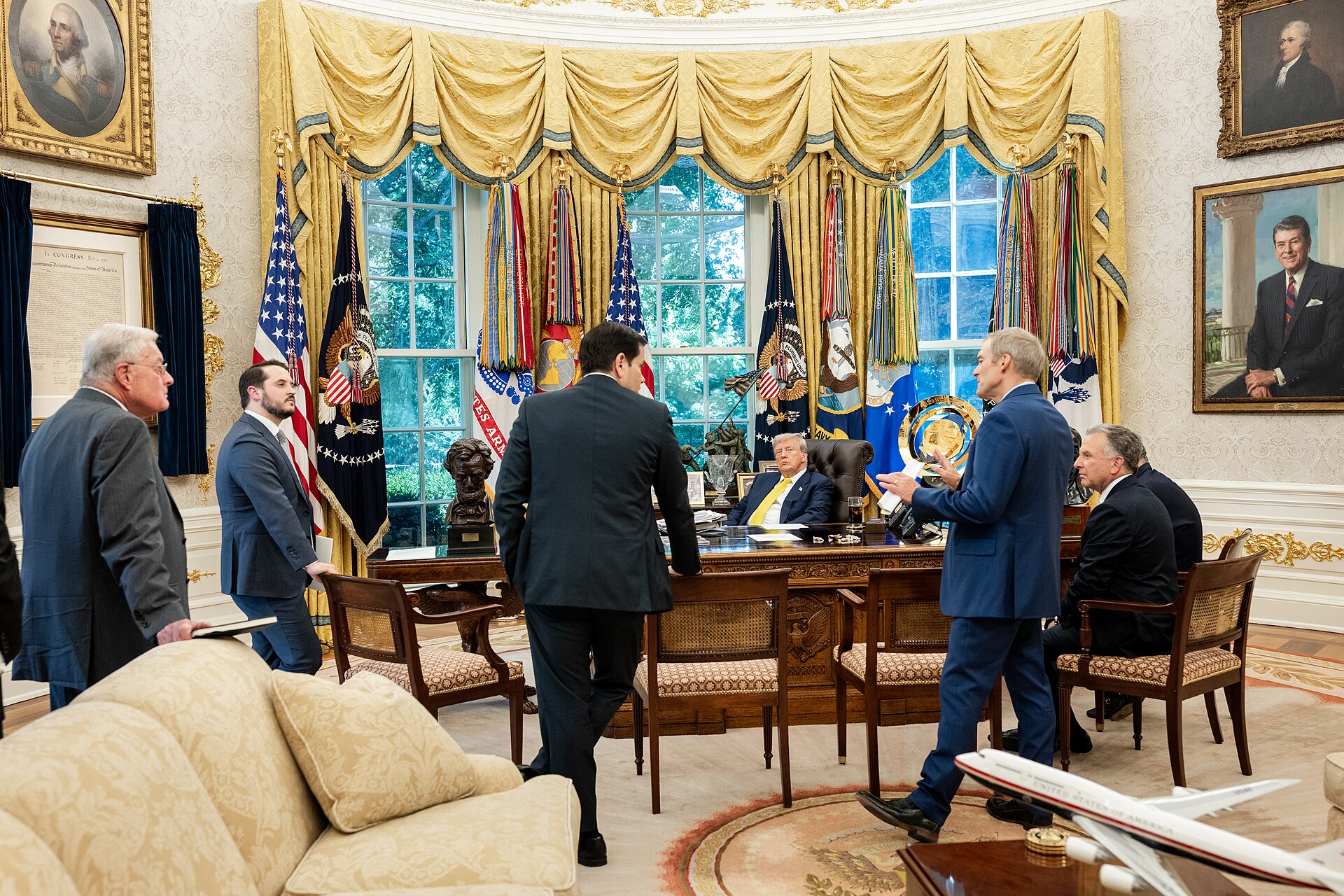

WASHINGTON — It took 155 aircraft — four bombers, 64 fighters, 48 aerial refueling tankers, 13 rescue planes, and 26 intelligence and electronic-warfare platforms — to retrieve a single weapons systems officer from an Iranian mountain range on April 3. On Easter Sunday, standing in the White House briefing room at 1PM EDT, Donald Trump used that number not as a measure of the mission’s difficulty but as a trailer for what comes next: “The entire country can be taken out in one night, and that night might be tomorrow night.” The statement arrived less than 24 hours before a confirmed deadline of April 7, 8PM EDT, with the 45-day ceasefire framework already rejected by Tehran, two carrier strike groups positioned in theater, and the Iranian base infrastructure that made the rescue possible — Prince Sultan Air Base in Saudi Arabia — already bearing scars from Iranian missile strikes that wounded 29 US servicemembers and destroyed a $500 million E-3G Sentry, one of only 16 in the entire Air Force inventory. Trump is not merely threatening Iran. He is telling four audiences — Tehran, Riyadh, Beijing, and the American public — four different things at once, and the math behind his claim deserves the scrutiny he did not invite.
Table of Contents
- The Rescue as Proof of Concept: 155 Aircraft and the Logic of Extrapolation
- What Does the 155-Aircraft Figure Actually Reveal About a Nationwide Strike?
- The Air Defense Contradiction: “100% Annihilated” Meets a Downed F-15E
- Why Is Trump Threatening Iran from the Same Saudi Base Iran Already Hit?
- Can the US Really “Take Out” Iran in One Night?
- China as Hormuz Arbiter and the Audience Trump Won’t Name
- Tehran’s Counter-Narrative: Eagle Claw, Maximalism, and the Missing Khamenei
- What Happens After 8PM EDT on April 7?
- Frequently Asked Questions
The Rescue as Proof of Concept: 155 Aircraft and the Logic of Extrapolation
The press conference was structured around celebration, not coercion — at least on the surface. Trump opened by describing the WSO recovery as “one of the largest, most complex, most harrowing combat searches, I guess you would call it a search and rescue mission, ever attempted by the military,” and texted NBC News calling it an “Easter Miracle.” The Easter Sunday timing was not accidental; religious framing primed a domestic audience already conditioned by five weeks of war coverage to receive the “one night” threat as righteous rather than reckless. The rescue was the moral licensing, and Trump used it with precision.
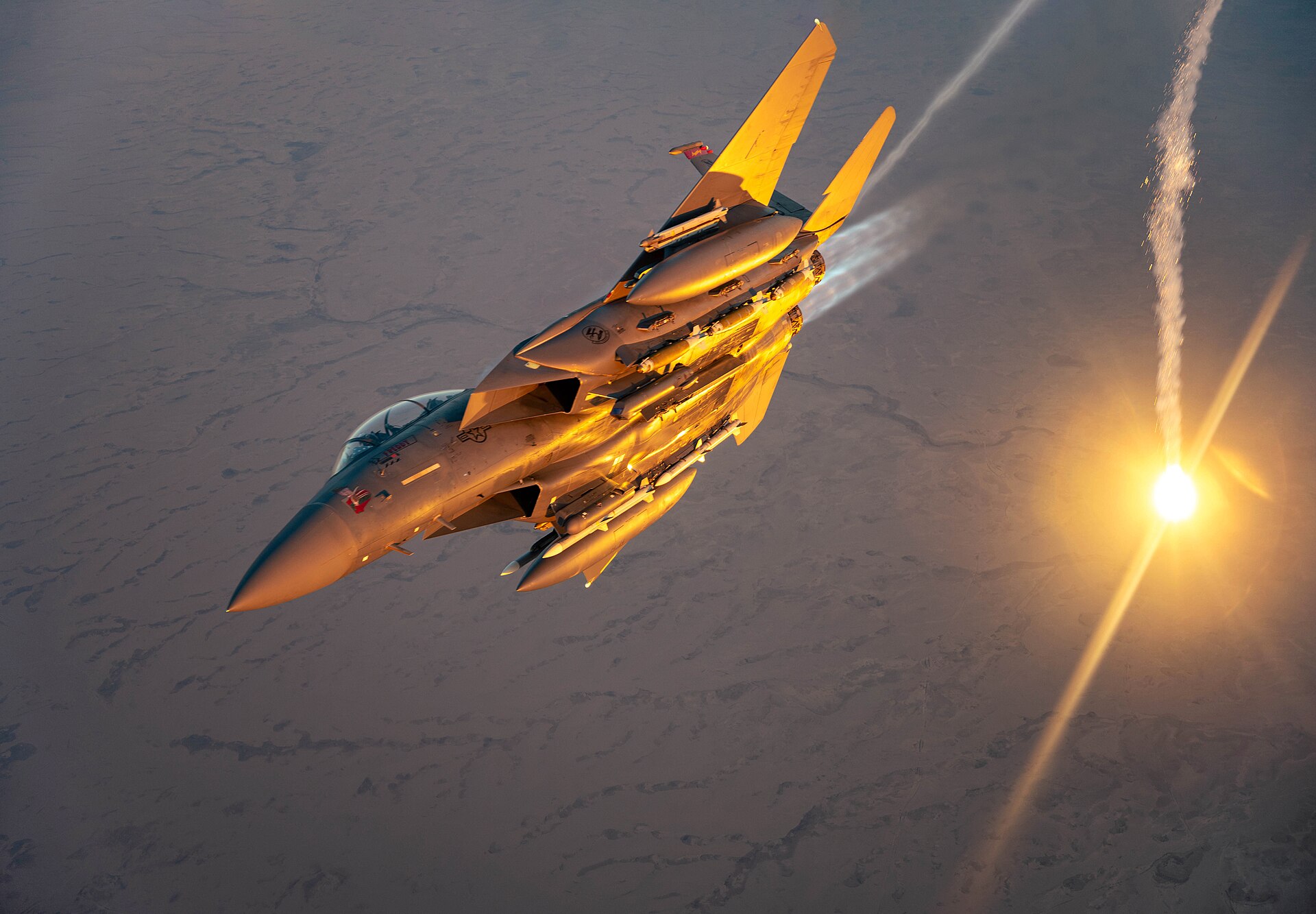
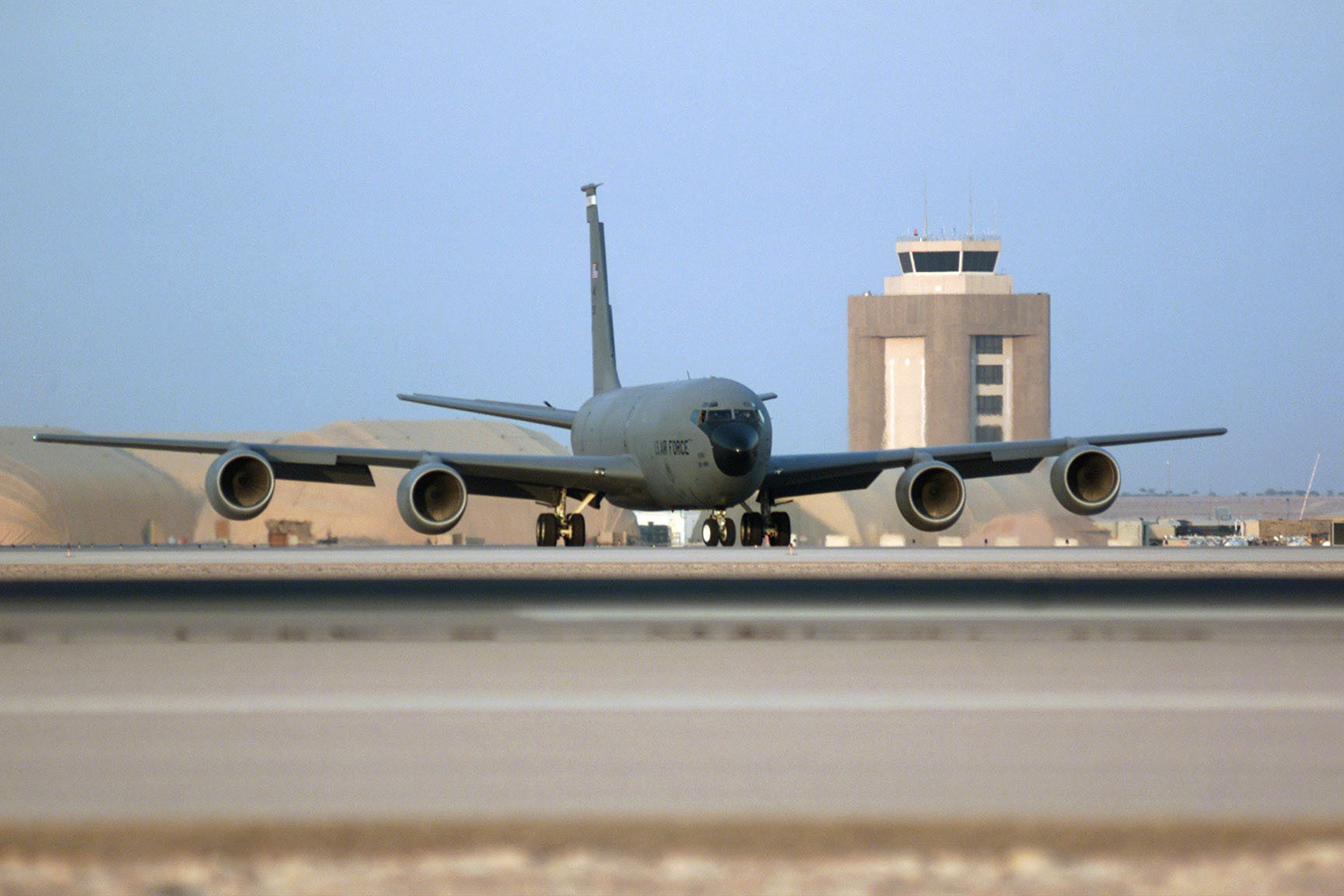
The breakdown of the 155-aircraft package tells its own story. Four bombers provided suppression and strike capability. Sixty-four fighters established and maintained air superiority across the rescue corridor. Forty-eight aerial refueling tankers kept the entire package airborne over hostile territory long enough to locate and extract one man. Thirteen dedicated rescue aircraft performed the actual recovery, while 26 intelligence, surveillance, and electronic-warfare platforms jammed Iranian radar and communications to create a survivable corridor through the very air defenses Trump has repeatedly claimed do not exist.
The rhetorical move is simple: if the United States can mobilize 155 aircraft for one human being, imagine what it mobilizes for a country. Trump wants the audience to make that extrapolation instinctively, without pausing to examine whether the math supports it. But the 155 figure, examined forensically, reveals as much about American strain as American strength — because almost a third of those aircraft were tankers, and the tanker fleet is the single most stressed asset class in the entire CENTCOM theater.
What Does the 155-Aircraft Figure Actually Reveal About a Nationwide Strike?
The 155-aircraft package consumed 48 tankers — nearly two-thirds of all refueling aircraft CENTCOM has in theater. For a simultaneous nationwide strike against Iran’s dispersed infrastructure, the tanker arithmetic outstrips available assets. The rescue exposed capacity limits, not excess strength.
The answer is uncomfortable for both sides. Operation Epic Fury, the broader air campaign against Iran, has so far employed approximately 300 fighters and at least 20 bombers, with roughly 75 refueling aircraft tracked by open-source monitors in the CENTCOM area of responsibility — representing approximately 33% of the mission-capable KC-135 and KC-46 fleet. That one-third figure is the constraint that shapes everything. The WSO rescue consumed 48 tankers — nearly two-thirds of the theater tanker fleet — for a single mission in a single mountain range. A simultaneous nationwide infrastructure strike across a country four times the geographic area of Iraq, with dispersed hardened targets, underground nuclear facilities, and mountain geography that stretches from the Zagros to the Alborz, would demand a tanker surge that may already exceed what CENTCOM can field.
This is compounded by what happened at Prince Sultan Air Base. Iranian missile strikes on PSAB — the same Saudi installation from which the tanker fleet supporting the 155-aircraft rescue operated — destroyed at least one KC-135 on the ground and damaged five more, according to Defence Security Asia and the Jerusalem Post. The E-3G Sentry destroyed in the same strikes removed the airborne early warning backbone of the entire theater air picture. The base that made the rescue possible is itself a demonstrated vulnerability, and every tanker parked on its ramp is a tanker Iran has already proven it can reach.
| Aircraft Type | Rescue Mission | Epic Fury Total | Rescue as % of Theater Assets |
|---|---|---|---|
| Bombers | 4 | 20+ | ~20% |
| Fighters | 64 | 300+ | ~21% |
| Refueling Tankers | 48 | ~75 | ~64% |
| Rescue Aircraft | 13 | — | — |
| Intel/Jamming | 26 | — | — |
| Total | 155 | — | — |
The tanker ratio is the figure that matters. If 48 tankers were required to sustain 64 fighters and four bombers over a localized rescue corridor, a nationwide “one night” strike hitting power plants, bridges, Kharg Island, and dispersed military targets simultaneously would require concurrent tanker support for potentially the entire 300-plus fighter fleet and all 20-plus bombers — a demand that arithmetically outstrips the roughly 75 tankers in theater, many of which are already damaged or operating from bases within Iranian missile range. The 155-aircraft figure, properly decoded, is not a proof of excess capacity; it is a map of where the seams are.
The Air Defense Contradiction: “100% Annihilated” Meets a Downed F-15E
Trump has been asserting that Iranian air defenses are “100% annihilated” — no radar, no anti-aircraft equipment, nothing. Then, on April 3, an F-15E Strike Eagle was shot down over Iranian territory, the first US combat aircraft lost in this conflict, and the crew’s weapons systems officer became the very man whose rescue Trump was celebrating three days later. CNN’s coverage was direct: “Downed jets puncture Trump’s and Hegseth’s claims of air invulnerability.”
The Washington Post, in an opinion piece dated March 27, had already warned that “Trump’s bluster and bluffing is shredding U.S. credibility.” The contradiction is structural, not rhetorical. If Iranian air defenses were genuinely annihilated, the F-15E would not have been shot down, 155 aircraft would not have been necessary for the rescue, and 26 electronic-warfare platforms would not have been required to jam systems that allegedly no longer exist. The 155-aircraft package is itself evidence that the air defense threat was real enough to demand a force package of wartime scale, and the rescue’s success does not retroactively validate the claim that the threat was zero — it validates the opposite.
The strategic paradox embedded in this credibility gap is that both effects — erosion of Western credibility and genuine uncertainty about Trump’s willingness to escalate — operate simultaneously. The same pattern of overclaiming that makes Western analysts and allied governments doubt the accuracy of Trump’s statements also makes Iranian decision-makers uncertain about whether the man making them will follow through, because a president who exaggerates capability is also a president whose red lines cannot be precisely mapped. That uncertainty, as CSIS noted in its assessment that “the effects of these strikes fall short of achieving the more ambitious U.S. goals,” is the functional residue of deterrence even when the specific claims are false.
Why Is Trump Threatening Iran from the Same Saudi Base Iran Already Hit?
Because the tanker fleet enabling any deep-strike operation is based at Prince Sultan Air Base in Saudi Arabia — a facility Iran has already struck, destroying one KC-135 and damaging five more. Saudi Arabia is not a passive host; it is now an active launch platform, and every escalation Trump announces is one Iran answers on Saudi soil.
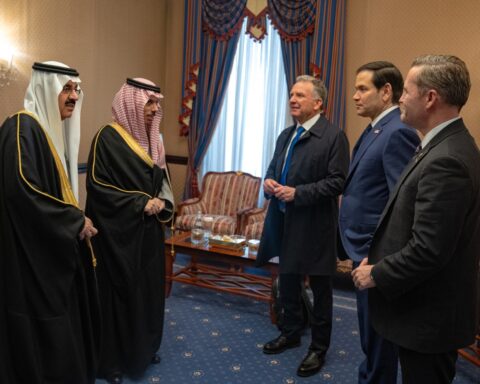
The basing architecture of the “one night” threat runs directly through Saudi Arabia, and that dependency is the part Trump did not mention. The USS Abraham Lincoln (CSG-3) and USS Gerald R. Ford (CSG-12) provide carrier-based strike capacity, and F-15Es are flying from Muwaffaq Salti Air Base in Jordan, but the tanker fleet — the single most critical enabler of sustained deep-strike operations — was surged to Al Udeid Air Base in Qatar and Prince Sultan Air Base in Saudi Arabia. Saudi Arabia has gone beyond passive hosting; it opened King Fahd Air Base in Taif, western Saudi Arabia, to US forces, making the Kingdom an active launch platform for offensive strikes rather than a defensive host sheltering behind American protection.
This is where the exposure becomes existential for Riyadh. Prince Sultan Air Base has already absorbed Iranian missile strikes — the E-3G Sentry destruction, the KC-135 losses, the 29 wounded servicemembers. Every “one night” escalation that Trump telegraphs from the White House briefing room is an escalation that Iran answers on Saudi soil, using Saudi airspace, against Saudi-hosted infrastructure. King Fahd Causeway, the sole land connection between Saudi Arabia and Bahrain (where the US Fifth Fleet is headquartered), sits on the IRGC’s published eight-bridge counter-target list, released by semi-official Fars News after the US-Israeli strike on the B1 bridge in Karaj on April 2 that killed eight civilians and wounded more than 95.
Col. Ebrahim Zolfaqari of Iran’s Khatam al-Anbiya Central Headquarters made the retaliatory framework explicit: if the US strikes Iranian energy infrastructure, the IRGC will target desalination plants, power grids, and IT systems of American allies across the Gulf. The threat is not abstract. Iran has already demonstrated the capacity to hit PSAB. The question for Riyadh is whether the “one night” doctrine that Trump is selling as decisive victory is actually a doctrine that produces the one night of Iranian retaliation that Saudi infrastructure — running a 5.3% fiscal deficit with $156 billion in external borrowing, according to Chatham House — cannot absorb.
Can the US Really “Take Out” Iran in One Night?
Almost certainly not in the sense Trump implies. Desert Storm required 43 days and 100,000-plus sorties against a compact target set. Iran’s territory is four times Iraq’s area, with hardened underground facilities and dispersed infrastructure. A single rescue mission in one sector consumed 48 tankers; a nationwide simultaneous strike would need far more.
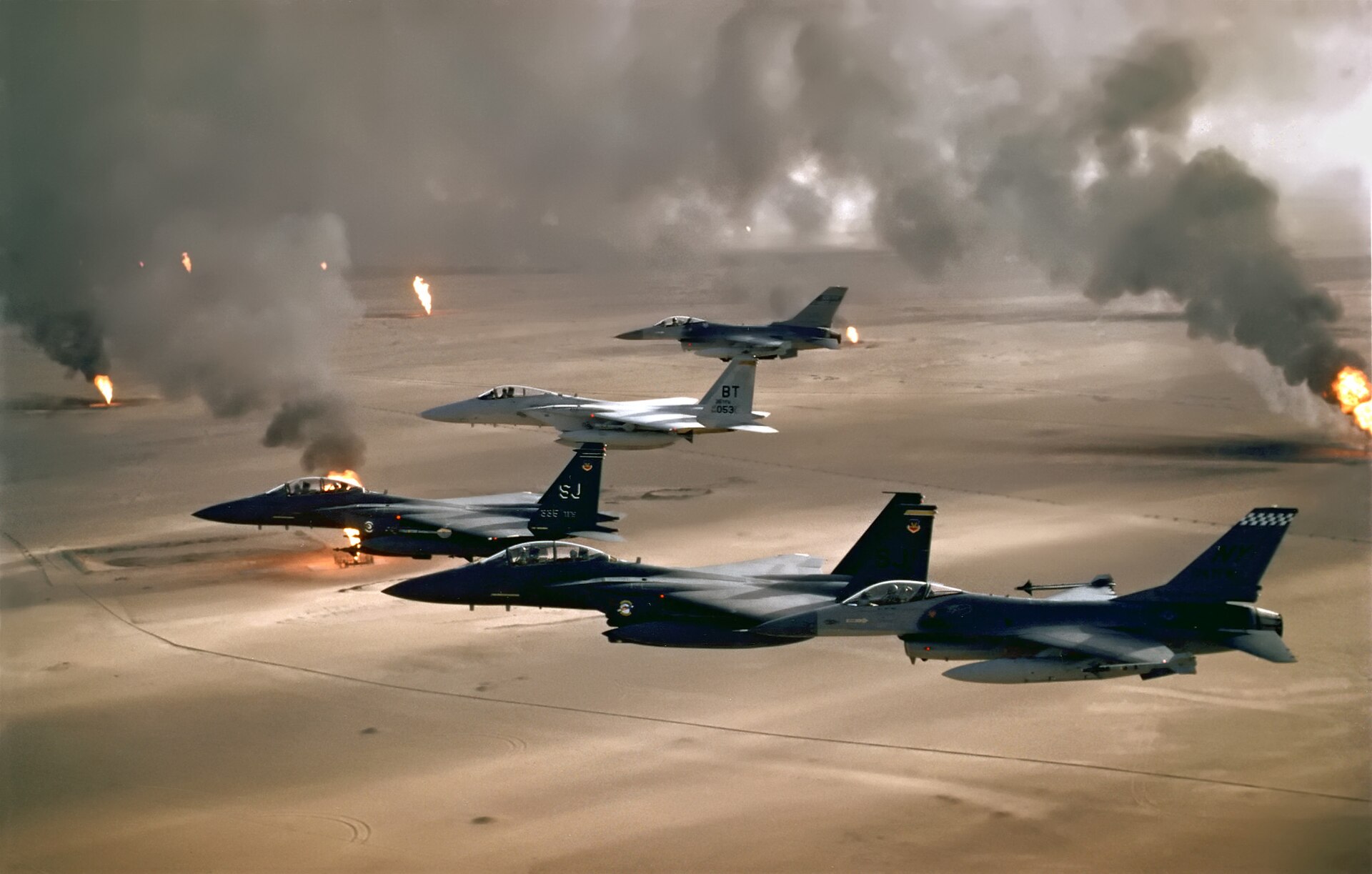
The historical precedent Trump is implicitly invoking is Desert Storm, specifically the opening night of January 17, 1991, when coalition forces flew more than 2,500 sorties. The US Navy alone launched 228 combat sorties from six carriers. F-117 Nighthawk stealth aircraft, comprising roughly 2% of the attack fleet, struck more than 30% of first-night targets. The total campaign ran 100,000-plus sorties over 43 days, delivering 88,500 tons of ordnance. It was, by any measure, the most concentrated application of airpower in modern warfare — and it took 43 days, not one night, to degrade Iraqi military capacity to the point of ground-force collapse.
The comparison flatters Trump’s rhetoric less than he intends. Desert Storm’s target set was concentrated: Iraqi forces in Kuwait and southern Iraq, a compact geographic kill-box with limited strategic depth. Iran’s territory is approximately four times the area of Iraq, with infrastructure deliberately dispersed across mountain ranges, underground nuclear facilities hardened against exactly the kind of strikes Trump is describing, and a population center geography that stretches from Tabriz to Bandar Abbas across 1,600 kilometers. The 155-aircraft rescue operated in one sector of this terrain and required 48 tankers to sustain itself; a simultaneous multi-axis strike on power plants, bridges, Kharg Island (which handles approximately 90% of Iranian crude exports), and military command nodes would demand concurrent operations across the entire country.
CSIS’s assessment of the campaign so far is measured but pointed: “The United States and Israel are doing well in traditional military terms…but the effects of these strikes fall short of achieving the more ambitious U.S. goals.” The gap between tactical air superiority and strategic compellence is the gap between what “one night” means to a domestic television audience and what it means to a campaign planner counting tankers.
Trump told the Wall Street Journal on April 5: “If they don’t do something by Tuesday evening, they won’t have any power plants and they won’t have any bridges standing.” On Truth Social the same day, Easter Sunday, he posted: “Tuesday will be Power Plant Day, and Bridge Day, all wrapped up in one, in Iran. Open the F*ing Strait, you crazy bastards, or you’ll be living in Hell — JUST WATCH!” The escalation ladder is being climbed in public, one social media post at a time, and the target list is being published by the president himself.
| Parameter | Desert Storm (Jan 17, 1991) | Iran Theater (April 2026) |
|---|---|---|
| Day 1 Sorties | 2,500+ | Unknown — Epic Fury total: 300+ fighters, 20+ bombers |
| Carrier Strike Groups | 6 carriers | 2 (Lincoln, Ford) |
| Target Area | Kuwait + southern Iraq (compact) | Iran — 4x Iraq’s area, dispersed/hardened |
| Campaign Duration | 43 days, 100,000+ sorties | Day 35+, ongoing |
| Tanker Dependency | Moderate (short distances) | Extreme (~33% of fleet committed, ~64% used for single rescue) |
China as Hormuz Arbiter and the Audience Trump Won’t Name
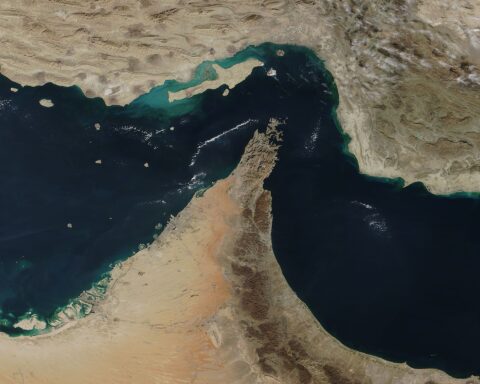
The “one night” statement arrived on the same day that Qatari LNG carrier Al Daayen was confirmed transiting the Strait of Hormuz at 8.8 knots, heading toward China — a passage brokered not by the US Fifth Fleet but by Beijing, through channels involving CNPC and Sinopec (which hold contracted offtake of 8 million tonnes per annum plus 5% equity in Qatar’s North Field East). China is functioning as the de facto operating system of Hormuz, selectively intermediating which vessels pass and under what terms, while the IRGC collects an estimated $2 million per transit in what amounts to a wartime toll system. The CSIS framing that “no one is getting through” Hormuz is now empirically obsolete — vessels are getting through, but only with Chinese permission.
Trump’s threat, read in this context, is directed at Beijing as much as Tehran. The “one night” doctrine — particularly the Kharg Island component, which Trump floated to the Financial Times on March 29 (“Maybe we take Kharg Island, maybe we don’t. We have a lot of options”) — would eliminate the asset that sustains China’s intermediation role. If Iranian crude exports cease because Kharg is destroyed, the IRGC’s toll system loses its economic foundation, and China’s role as Hormuz broker becomes irrelevant. Energy analyst Sara Vakhshouri noted that striking Kharg “aligns squarely with Washington’s ‘energy dominance’ doctrine,” but the energy dominance in question is dominance over China’s ability to route around American sanctions and American naval power simultaneously.
The price of that dominance, however, is already visible. Brent surged past $120 per barrel after the Hormuz closure, and Wall Street analysts have cited $200 per barrel as a potential ceiling if the strait remains contested. Saudi Arabia, theoretically the beneficiary of higher oil prices, is instead watching its own export infrastructure come under fire — Ras Tanura has already been hit, and the Yanbu bypass on the Red Sea coast, while providing 70% of pre-war export capacity, cannot replace full Hormuz access for Asian buyers who depend on Gulf-facing terminals. Desert Storm, the closest historical analogy, required 43 days and a compact target set to achieve degradation — and that campaign did not involve a contested strait carrying a third of seaborne oil trade.
Tehran’s Counter-Narrative: Eagle Claw, Maximalism, and the Missing Khamenei
Iran’s response to the press conference was immediate and structurally revealing. IRGC Maj. Gen. Ali Abdollahi Aliabadi stated: “The simple meaning of this message is that the gates of hell will open for you.” Iranian presidential spokesman Seyyed Mehdi Tabatabai called Trump’s statement “sheer desperation and anger” and added a condition that functions as a ceasefire poison pill: “The Strait of Hormuz will open when all the damage caused by the imposed war is compensated through a new legal regime, using a portion of the revenue from transit fees.” That formulation — compensation through transit fees under a new legal regime — is not a negotiating position; it is a demand for permanent Iranian sovereignty over Hormuz as a precondition for reopening it, which no American administration can accept.
Mojtaba Ferdousi Pour, Iran’s diplomatic mission head in Cairo, told the Associated Press on April 6: “We won’t merely accept a ceasefire. We only accept an end of the war with guarantees that we won’t be attacked again.” The Iranian armed forces warned that retaliatory operations would be “far more severe and expansive” if the US attacks civilian infrastructure. The IRGC announced Operation “Crushing Revenge.” Each statement ratchets the rhetorical commitment higher, which is the domestic logic of the counter-narrative: Iran’s leadership is locking its own public into maximalism before any ceasefire framework can be sold internally.
The Eagle Claw invocation is the sharpest instrument in this counter-narrative. Iran’s state media explicitly referenced Operation Eagle Claw — the catastrophic 1980 hostage rescue attempt in which eight helicopters launched toward Desert One, only five arrived operational, the mission was aborted, and a helicopter collision killed eight US servicemembers — to delegitimize Trump’s “Easter Miracle” framing. The rhetorical inversion is precise: Trump says the WSO rescue proves American capability has no ceiling; Iran says compare it to the last time you tried this in our territory and remember that Eagle Claw led to the creation of SOCOM precisely because it exposed how badly such operations can fail.
Western officials told NBC News that “there is no indication that the authoritarian government has lost its grip on power or that successors to assassinated leaders have made a break with the Islamic Republic’s ideology,” even as the second IRGC intelligence chief, Majid Khademi, was killed on April 6 — a decapitation that degrades centralized command without producing the political fracture the strikes are designed to create. The killing of Khademi, following the earlier loss of the first IRGC intelligence chief in this conflict, raises the question of whether decentralization is a vulnerability or, for an organization built on distributed cellular authority, a feature.
The most conspicuous absence in the Iranian decision-making apparatus is Khamenei himself, now missing from public view for 29 consecutive days as of April 6. CSIS assessed that “Iran, by turning its few areas of advantage into painful pressure points for the US, has done more than survive, with some analysts believing it has seized the strategic initiative.” Whether that initiative is held by a coherent command structure or by an IRGC operating with increasing autonomy in the absence of supreme leader guidance is the question that shapes whether Trump’s deadline produces a negotiating response or an operational one.
We won’t merely accept a ceasefire. We only accept an end of the war with guarantees that we won’t be attacked again.
— Mojtaba Ferdousi Pour, head of Iran’s diplomatic mission in Cairo, to the Associated Press, April 6, 2026
What Happens After 8PM EDT on April 7?
Iran has rejected the 45-day ceasefire framework and demands a permanent end to hostilities with security guarantees — a position incompatible with the framework’s structure. The mediators (Pakistan, Egypt, Turkey) have no enforcement mechanism. Trump has publicly identified the target list. The most likely outcome after the deadline is further US strikes, with Iranian retaliation directed at Gulf infrastructure.
The confirmed deadline is April 7, 8PM EDT — a 23-hour shift from the originally reported April 6 timeline, placing the expiry approximately 31 hours after Trump’s “one night” statement. The 45-day ceasefire framework, reported by Axios and The National from four sources, has been rejected by Iran; IRNA stated Tehran “wants a permanent end to the war,” not a pause. The framework’s Phase 1 ceasefire was structurally unworkable because Iran’s five conditions include recognition of Hormuz sovereignty — a demand classified as a Phase 2 matter in the framework itself, making Phase 1 acceptance impossible without conceding the central Iranian demand in advance. The mediators — Pakistan, Egypt, and Turkey — have no enforcement mechanism, and the Witkoff-Araghchi direct text channel, while functional, cannot override the IRGC’s institutional resistance to any deal that trades away Hormuz control.
Trump’s public escalation sequence is documented across three platforms in 48 hours: the Wall Street Journal interview on April 5, the Truth Social post on Easter Sunday, and the April 6 press conference. Each iteration has been more specific and more compressed in its timeline — power plants and bridges, then “one night,” then the explicit acknowledgment that the night in question might be the next one. The question is not whether Trump has the will to order strikes — the public record suggests he does — but whether the theater logistics, particularly the tanker fleet and the vulnerability of forward-operating bases to Iranian retaliation, can sustain the kind of simultaneous nationwide operation that “one night” implies.
Saudi Arabia’s position in the next 31 hours is the variable that receives the least attention and carries the most consequence. The Kingdom has opened King Fahd Air Base at Taif for offensive operations, absorbed Iranian strikes on Prince Sultan Air Base, and watched Poland refuse to send Patriot batteries to bolster its defenses. Its already strained fiscal position makes it simultaneously dependent on the high oil prices the war produces and vulnerable to the infrastructure destruction the war invites.
The IRGC’s published counter-target list includes King Fahd Causeway, the sole link to Bahrain and the Fifth Fleet. If “one night” arrives, it arrives for Saudi Arabia too — and unlike Iran, Saudi Arabia has not spent four decades hardening its infrastructure against exactly this scenario.
Frequently Asked Questions
What aircraft were used in the WSO rescue mission that Trump referenced?
The 155-aircraft package included four bombers, 64 fighters, 48 tankers, 13 rescue aircraft, and 26 electronic-warfare platforms. CBS News and The Aviationist reported the rescue lasted approximately 36 hours from initial ejection to extraction, with the WSO evading Iranian search parties in mountainous terrain before recovery forces reached him.
What is Operation Eagle Claw and why does Iran keep referencing it?
Eagle Claw was the failed 1980 hostage rescue in which eight helicopters launched, five arrived operational, the mission was aborted, and a collision killed eight servicemembers. PressTV and Iranian state media invoke it to argue that American rescue operations in Iranian territory are historically unreliable, framing the WSO recovery as a lucky exception rather than a capability baseline.
How much of the US tanker fleet is committed to operations against Iran?
About 33% of mission-capable KC-135s and KC-46s are deployed to CENTCOM, with roughly 75 tracked in the area of responsibility. Air & Space Forces Magazine reported that this commitment level has forced deferred maintenance rotations for tankers in other combatant commands, including EUCOM and INDOPACOM, creating readiness concerns beyond the Iran theater.
What is Kharg Island and why has Trump mentioned it specifically?
Kharg Island handles approximately 90% of Iranian crude exports, making it the single most consequential energy chokepoint under Iranian control. CFR and NPR report that Iran has reinforced anti-ship missile batteries on Kharg since the war began, and any US seizure or strike would require sustained naval presence in waters within range of Iranian coastal defense systems on the mainland.
What has Iran specifically threatened in retaliation for strikes on its infrastructure?
Col. Zolfaqari of Khatam al-Anbiya Central Headquarters named desalination plants, power grids, and IT systems across the Gulf as retaliation targets. Iran demonstrated infrastructure-strike reach in September 2019, when drones and cruise missiles hit Aramco’s Abqaiq and Khurais facilities and temporarily knocked out 5.7 million barrels per day — roughly 5% of global supply — before Saudi engineers restored output within weeks. A sustained campaign against hardened desalination systems would carry longer recovery timelines.