WASHINGTON — President Donald Trump and Russian President Vladimir Putin spoke by telephone for approximately one hour on Monday, March 10, in their first direct conversation since December 2025, with Putin proposing a “quick political and diplomatic settlement” to the Iran war that has engulfed the Persian Gulf for eleven days. The call, which the White House requested, came as Iran continued to fire missiles and drones at Saudi Arabia and other Gulf states, Brent crude hovered above $120 per barrel, and the Pentagon publicly warned Moscow against aiding Tehran’s war effort. While both leaders described the exchange as “constructive,” Iran’s Revolutionary Guards responded within hours, declaring that “it is we who will determine the end of the war.”
The conversation marks the most significant diplomatic intervention since US and Israeli forces launched strikes on Iran on February 28, killing Supreme Leader Ali Khamenei and triggering a retaliatory campaign that has struck civilian and military targets across at least seven Gulf nations. For Saudi Arabia, which has absorbed dozens of Iranian missile and drone strikes since the war began, any ceasefire pathway runs directly through the question now consuming Riyadh: whether Moscow has the leverage to restrain Tehran, or whether Putin is simply positioning Russia to profit from the chaos.
Table of Contents
- What Did Trump and Putin Discuss About the Iran War?
- Why Did Washington Initiate the Call?
- Russia’s Intelligence Sharing With Iran Looms Over the Call
- How Did Iran Respond to Ceasefire Proposals?
- Oil Markets React as Trump Signals Sanctions Relief
- What Does the Call Mean for Saudi Arabia?
- The Diplomatic Landscape After Day Eleven
- Frequently Asked Questions
What Did Trump and Putin Discuss About the Iran War?
The one-hour call covered the Iran conflict and the Ukraine war, according to Kremlin foreign policy adviser Yuri Ushakov, who described the conversation as “frank and constructive” with “practical significance.” Putin proposed what the Kremlin characterised as a rapid political and diplomatic resolution to the US-Israeli military campaign, drawing on his recent conversations with Gulf leaders and Iranian President Masoud Pezeshkian.
Trump told reporters afterward that the call was “very good” and that Putin “wants to be helpful” with the Iran situation. The president assessed that Iran’s military capabilities had been severely degraded after eleven days of sustained US and Israeli bombardment. “They’ve got no navy, no communications, they’ve got no air force,” Trump said, adding that the US was “achieving major strides towards completing our military objective.”
Trump characterised the conflict as a “short-term excursion” and said he expected it to end “very soon,” though he clarified it would not conclude within the week. He linked the two issues directly, telling Putin: “You could be more helpful by getting the Ukraine-Russia war over with,” according to reporters present at the White House.
Ushakov told Russian state media that Putin provided Trump with “a description of the current situation on the line of contact where Russian troops are progressing with a lot of success” in Ukraine, and “positively evaluated” Trump’s mediation efforts on the Ukraine file. The pairing of the two subjects — Iran and Ukraine — in a single conversation underscored Washington’s attempt to leverage the Gulf crisis as a pressure point in the stalled Ukraine negotiations.
The call was the first publicly acknowledged direct contact between the two leaders since December 2025. Their last in-person meeting took place at an Alaska summit in August 2025, where bilateral and trilateral talks on Ukraine ceasefire prospects produced no breakthroughs. The Iran war, which erupted six months later, has now created an entirely new dimension to the US-Russia relationship.
Why Did Washington Initiate the Call?
The White House requested the conversation to address what Ushakov described as “extremely important questions linked to the current international situation.” The timing was significant: it came on Day 11 of the Iran war, the same day the US launched what NPR described as its “most intense day of strikes inside Iran,” and as oil markets remained in turmoil with Brent crude having breached $120 per barrel.
Three factors appear to have driven the outreach. The first was mounting evidence that Russia had been sharing intelligence with Iran about US military assets in the Middle East, a revelation first reported by The Washington Post on March 6. US officials said Russia had provided Tehran with satellite imagery showing the locations of American warships and aircraft, marking the first known instance of Moscow directly assisting Iran’s war effort. The phone call gave Trump an opportunity to confront Putin directly on the allegations.
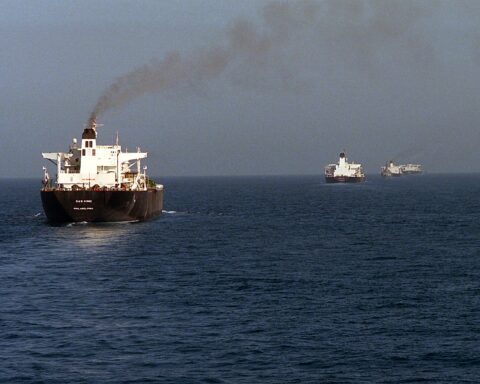
The second factor was the oil price crisis. With the Strait of Hormuz effectively closed to commercial tanker traffic and the International Energy Agency releasing a record 400 million barrels from strategic reserves, Washington needed to signal that diplomatic channels were active and that a resolution was at least being discussed. Markets responded: Brent crude and WTI briefly fell below $90 per barrel in the hours following the call before recovering.
The third was the emerging ceasefire infrastructure. Iranian Deputy Foreign Minister Kazem Gharibabadi confirmed on March 9 that France, China, and Russia had all contacted Tehran to discuss ceasefire conditions. By calling Putin, Trump was inserting himself into a mediation effort that risked proceeding without American input — a prospect that would have weakened Washington’s position in any eventual settlement.
Russia’s Intelligence Sharing With Iran Looms Over the Call
The phone call took place against the backdrop of explosive allegations about Russian intelligence support for Iran. The Washington Post reported on March 6 that Russia had been providing Tehran with information about US military assets, including the locations and movements of American warships and aircraft in the Middle East. Much of the intelligence was shared through imagery from Moscow’s sophisticated constellation of overhead satellites, according to US officials briefed on the matter.
CNN corroborated the reporting, citing sources who said the intelligence represented Moscow’s first known involvement in the current war. PBS and the Associated Press confirmed that Russia had given Iran “information that can help Tehran hit U.S. military targets.” The revelation raised the stakes of the Trump-Putin conversation dramatically, as any Russian-provided targeting data could have contributed to the Iranian strikes that killed seven Americans at Prince Sultan Air Base and struck the US Embassy in Riyadh.
During the call, Putin denied sharing intelligence with Iran about US military positions, according to US special envoy Steve Witkoff. The Kremlin maintained its standard position of declining to confirm or deny specific intelligence cooperation while spokesman Dmitry Peskov acknowledged “ongoing dialogue” with Iranian leadership.
Defense Secretary Pete Hegseth delivered a pointed message following the call, warning Russia to stay out of the Middle East confrontation. Yet Hegseth simultaneously downplayed the threat, telling CBS “60 Minutes” that the US was “not concerned” and that “the American people can rest assured their commander in chief is well aware of who’s talking to who.” White House Press Secretary Karoline Leavitt went further, stating that Russian intelligence sharing was “clearly not making any difference with respect to the military operations in Iran because we are completely decimating them.”
The contradiction — warning Russia while insisting its help was irrelevant — reflected the administration’s delicate balancing act. Escalating against Moscow risked opening a second front at a moment when US forces were stretched across the Gulf, while ignoring the intelligence sharing risked emboldening further Russian involvement. The full scope of Russia’s dual role as Saudi Arabia’s OPEC+ partner and Iran’s intelligence provider presents a contradiction that neither Washington nor Riyadh has resolved.
How Did Iran Respond to Ceasefire Proposals?
Tehran’s response to the diplomatic overtures was emphatic rejection. Iran’s Revolutionary Guards issued a statement within hours of the Trump-Putin call declaring: “It is we who will determine the end of the war.” Foreign Minister Abbas Araghchi stated that Iran was “well prepared to continue attacking them with our missiles as long as needed.” Security Chief Ali Larijani warned Trump to “take care of yourself not to be eliminated.”

Iran’s Deputy Foreign Minister Kazem Gharibabadi laid out Tehran’s conditions for any ceasefire in a series of statements between March 9 and 11. The main condition, he said, was “the complete abandonment of new attacks on Iran.” Tehran demanded security guarantees that strikes would not resume, explicitly rejecting any temporary pause. “A ceasefire without long-term security doesn’t make sense,” Gharibabadi said, adding that Iran’s position was “first security guarantees, then a ceasefire.”
The full list of Iranian demands included: a complete cessation of US and Israeli military operations, guarantees against future aggression, compensation payments for war damage, and an agreement permitting Iran to implement a full nuclear fuel cycle at its nuclear energy facilities. Iranian Foreign Minister Araghchi further stated that negotiations between Tehran and Washington were “unlikely to be considered during the tenure of the Islamic Republic’s new Supreme Leader,” Mojtaba Khamenei, who was named to succeed his father on March 8.
The conditions amounted to a non-starter from Washington’s perspective. The demand for nuclear fuel cycle rights directly contradicted the stated US objective of destroying Iran’s nuclear programme, while the insistence on guarantees against future strikes was incompatible with the Trump administration’s position that Iran must be permanently defanged. As a result, the diplomatic window that Putin claimed to be opening appeared, at least for now, firmly shut.
A full breakdown of Tehran’s evolving negotiating position reveals just how far apart the two sides remain. Iran’s formal demand for reparations and security guarantees as ceasefire preconditions represents a hardening of the stance Gharibabadi outlined, transforming what began as general principles into a detailed set of non-negotiable requirements.
Oil Markets React as Trump Signals Sanctions Relief
The Trump-Putin call produced one concrete policy shift: Trump announced he would waive certain oil sanctions to bring down prices. “We have sanctions on some countries. We’re going to take those sanctions off till this straightens out,” he told reporters, without specifying which country or sanctions regime would be affected. The statement came as the Iran war had driven Brent crude above $120 per barrel and disrupted roughly 20 percent of global oil transit through the Strait of Hormuz.
Markets reacted swiftly. Brent crude and WTI briefly fell below $90 per barrel in the hours after the call, before recovering as traders assessed that the war showed no signs of ending. The IEA’s record release of 400 million barrels from strategic reserves, announced earlier on March 11, provided additional downward pressure, though analysts at Goldman Sachs and JP Morgan warned that strategic reserves could only cushion prices temporarily without a supply-side resolution.
The sanctions discussion added a new dimension to the oil picture. Russia, which remains under extensive Western sanctions over the Ukraine war, stood to benefit enormously from any easing. Moscow’s oil revenues have been constrained by a $60 per barrel price cap imposed by the G7 in December 2022, and the lifting of that cap — even temporarily — would deliver billions in additional revenue to the Kremlin. Critics immediately seized on the implication: Putin was being rewarded for offering mediation on a crisis that his intelligence sharing may have helped prolong.
For Saudi Arabia, Trump’s sanctions signal carried mixed implications. Aramco has been rerouting exports through the Red Sea via the East-West Pipeline to Yanbu since the Hormuz closure, operating at reduced capacity. Any easing of Russian oil sanctions would introduce additional supply into an already volatile market, potentially depressing prices at a time when Riyadh was absorbing the costs of war damage, emergency military procurement, and disrupted export infrastructure.
OPEC’s monthly report, also released on March 11, revealed that Saudi Arabia had pumped 10.882 million barrels per day in February, a sharp increase from 10.1 million bpd in January, according to Bloomberg. The surge was part of a contingency plan to pre-position supply ahead of any conflict-related disruption — evidence that Riyadh had anticipated the war’s impact on global energy markets.
What Does the Call Mean for Saudi Arabia?
The Trump-Putin conversation placed Saudi Arabia at the intersection of three competing diplomatic currents. Crown Prince Mohammed bin Salman has pursued his own backchannel to Tehran since the war began, with Bloomberg reporting on March 6 that Saudi officials had “intensified direct engagement with Iran to defuse the war.” Saudi Foreign Minister Prince Faisal bin Farhan separately spoke with Russian Foreign Minister Sergey Lavrov on March 10, the same day as the Trump-Putin call, with both sides emphasising the need to prevent further deterioration.
Yet Saudi Arabia’s position is fundamentally different from either Washington’s or Moscow’s. The Kingdom is simultaneously a US military ally hosting American forces at Prince Sultan Air Base, a victim of Iranian missile strikes that have killed civilians and damaged infrastructure, and an OPEC partner with Russia that has cooperated on oil production policy for years. No other state in the conflict occupies all three roles.

Riyadh’s immediate concern is the continuing Iranian barrage. Saudi Arabia’s Defense Ministry reported on March 11 that it had intercepted and destroyed nine drones heading toward the Shaybah oil field in the Empty Quarter, along with multiple ballistic missiles and cruise missiles targeting the Eastern Province. Two foreign nationals — one Indian and one Bangladeshi — were killed on March 8 when a missile struck a residential building in Al-Kharj, south of Riyadh, underscoring the escalating civilian toll.
The Kingdom has publicly rejected Iran’s characterisation of its strikes as justified retaliation. Saudi Arabia said on March 9 that Iranian attacks were “based on flimsy pretexts that have no basis in reality,” pointing out that Riyadh did not participate in the initial US-Israeli operation against Iran. The statement reflected a core Saudi grievance: the Kingdom is bearing the brunt of a war it did not start and whose escalation it tried to prevent through years of diplomatic engagement with Tehran, including the Chinese-brokered rapprochement of 2023.
Putin’s offer to mediate presents Riyadh with a complex calculation. Russia has maintained close ties with Iran throughout the war, and the intelligence-sharing allegations suggest Moscow may be actively aiding the strikes against Saudi infrastructure. At the same time, Russia remains one of the few external actors with a direct line to Tehran’s new supreme leader, making it a potentially indispensable intermediary in any ceasefire framework.
The Diplomatic Landscape After Day Eleven
The Trump-Putin call joins an expanding roster of diplomatic initiatives that have so far failed to slow the fighting. China, France, and Russia have all contacted Tehran about ceasefire conditions, according to Iranian officials. Arab foreign ministers invoked collective defence provisions after Iran struck eight states. The Gulf Cooperation Council pushed the UN Security Council to condemn the attacks. Oman has maintained a separate backchannel to Tehran, drawing on its traditional role as a neutral mediator.
The challenge is structural. The US and Israel want Iran’s nuclear and missile programmes destroyed — objectives that require continued military operations. Iran demands the attacks stop immediately and will not negotiate under fire. Saudi Arabia and the Gulf states want the missile strikes to end but lack the leverage to compel either side. Russia offers mediation but faces credibility questions over its intelligence sharing with Tehran. China has sent a peace envoy to Riyadh but has limited influence over the military campaign.
The path to a ceasefire would require at minimum: a US willingness to halt strikes before all military objectives are achieved, an Iranian willingness to negotiate with a government that killed its supreme leader, and a mediator trusted by both sides. None of these conditions exists as of March 11. Senator Lindsey Graham has threatened to block the US-Saudi defence pact if Riyadh refuses to take military action against Iran, adding another layer of complexity to an already fraught diplomatic picture.
| Initiative | Parties | Status | Key Obstacle |
|---|---|---|---|
| Trump-Putin phone call | US, Russia | One call completed; no follow-up scheduled | Russia intelligence sharing with Iran |
| Iran ceasefire conditions | Iran, multiple contacts | Conditions laid out; rejected by Washington | Nuclear programme and guarantee demands |
| Saudi backchannel | Saudi Arabia, Iran | Active since March 1 | Iran continues strikes on Saudi territory |
| China peace envoy | China, Saudi Arabia | Envoy dispatched to Riyadh | Limited influence over US military operations |
| Oman mediation | Oman, Iran, multiple | Backchannel active | Iran rejects temporary ceasefires |
| GCC-UN initiative | GCC, UN Security Council | Condemnation sought | Russian and Chinese veto threats |
Trump’s description of the Iran campaign as a “short-term excursion” suggested the administration viewed the military phase as near its conclusion. But the gap between military victory and political resolution remained vast. Iran’s new supreme leader Mojtaba Khamenei, installed in a wartime succession on March 8, has shown no inclination toward the negotiation table. The IRGC’s defiant rhetoric — and continued missile launches — indicated that Tehran intended to fight on regardless of the diplomatic activity swirling around it.
For the moment, the Trump-Putin call has produced words but no mechanism to stop the killing. Eleven days into a war that has struck Saudi cities, closed the world’s most important shipping lane, and sent oil prices to levels not seen since the 1973 embargo, the diplomatic track remains several steps behind the military one.
Yet the Saudi perspective on these great-power negotiations remains largely invisible. While Washington and Moscow discuss timelines, MBS is running a separate endgame calculus that prioritises the permanent degradation of Iranian military capability over the speed of any ceasefire — a divergence that could complicate both American and Russian diplomatic efforts.
Frequently Asked Questions
When did Trump and Putin speak about the Iran war?
President Trump and President Putin held a one-hour telephone conversation on Monday, March 10, 2026. The call was requested by the White House and was the first direct contact between the two leaders since December 2025. Putin proposed a “quick political and diplomatic settlement” to the conflict, while Trump described the conversation as “very good.”
What did Putin propose during the phone call?
Putin called for a rapid political and diplomatic resolution to the US-Israeli military campaign against Iran, citing his recent conversations with Gulf leaders and Iranian President Masoud Pezeshkian. The Kremlin characterised the proposals as drawing on Moscow’s unique position as an interlocutor with both sides, though specific details of Putin’s proposals were not publicly disclosed.
Did Russia share intelligence with Iran about US military targets?
The Washington Post, CNN, and AP reported that Russia provided Iran with satellite imagery showing the locations and movements of American warships and aircraft in the Middle East. During the phone call, Putin denied the allegations. Defense Secretary Pete Hegseth warned Russia to stay out of the conflict but also said the US was “not concerned” about the intelligence sharing.
What are Iran’s conditions for a ceasefire?
Iranian Deputy Foreign Minister Kazem Gharibabadi stated that Iran demands a complete cessation of US and Israeli attacks, long-term security guarantees against future aggression, compensation for war damage, and the right to implement a full nuclear fuel cycle. Tehran rejected any temporary pause, insisting that “a ceasefire without long-term security doesn’t make sense.”
How does the Trump-Putin call affect Saudi Arabia?
Saudi Arabia is positioned at the intersection of multiple diplomatic currents — it maintains its own backchannel to Tehran, hosts US military forces targeted by Iranian strikes, and cooperates with Russia on oil production through OPEC+. Any ceasefire would directly benefit the Kingdom, which has absorbed dozens of Iranian missile strikes since February 28, but the intelligence-sharing allegations complicate Saudi trust in Russian mediation.