
WASHINGTON — The United States admitted on Wednesday that its Navy cannot yet escort oil tankers through the Strait of Hormuz, ten days after President Donald Trump promised to protect Gulf shipping and two days after a deleted social media post from his own energy secretary falsely claimed the mission had already begun. Energy Secretary Chris Wright told CNBC on March 12 that escorts are weeks away, even as Iran attacked six commercial vessels in a single day and an Indian crew member was killed aboard a U.S.-owned tanker in Iraqi waters.
The admission exposed a widening gap between Washington’s rhetoric and its operational capacity in the Persian Gulf. Approximately 500 oil tankers remain stranded across the Gulf, shipping traffic through Hormuz has collapsed by more than 90 percent since the war began on February 28, and the U.S. Navy’s last dedicated minesweepers in the region were decommissioned from Bahrain just months before the conflict started. For Saudi Arabia, the world’s largest oil exporter, the stalled escort program means continued reliance on the East-West pipeline to Yanbu as its primary export route, a workaround that cannot fully replace the 5.5 million barrels per day that once transited the strait.
Table of Contents
- Wright’s ‘Not Ready’ Admission
- What Happened With the Deleted Post That Crashed Oil Markets?
- Six Ships Hit in a Single Day
- How Many Tankers Are Trapped in the Persian Gulf?
- Why Did the 1987 Tanker Escort Work When This One Has Not?
- The Navy Has Three Carriers and Zero Minesweepers in the Gulf
- What Does the Escort Failure Mean for Saudi Oil Exports?
- Frequently Asked Questions
Wright’s ‘Not Ready’ Admission
Energy Secretary Chris Wright delivered what amounted to a public confession on CNBC on March 12, acknowledging that the U.S. military lacks the capacity to begin protecting commercial shipping in the Persian Gulf despite the president’s promise nine days earlier.
“It’ll happen relatively soon but it can’t happen now. We’re simply not ready,” Wright said. “All of our military assets right now are focused on destroying Iran’s offensive capabilities and the manufacturing industry that supplies their offensive capabilities.”
Wright offered an approximate timeline, stating the Navy might begin escort operations “by the end of this month,” meaning late March at the earliest. He described the broader war effort as lasting “weeks, not months,” framing the escort delay as a temporary consequence of the campaign against Iran’s military infrastructure rather than a fundamental capability gap. Meanwhile, Iran has begun granting selective passage to ships from nations it considers neutral, undermining the rationale for a forcible military reopening.
Hours later, Treasury Secretary Scott Bessent reinforced the message during a Sky News interview at the White House. “My belief, that as soon as it is militarily possible, the U.S. Navy and perhaps with an international coalition, will be escorting vessels through,” Bessent told correspondent Wilfred Frost. The qualifier “militarily possible” represented a notable retreat from Trump’s March 3 formulation of “as soon as possible,” according to Reuters.
The Bessent interview was interrupted when an aide approached mid-conversation and told the treasury secretary that the president needed him in the Situation Room. Bessent removed his microphone and departed. He returned nearly two hours later. Multiple outlets, including HuffPost and The Mirror, described him as returning with a “shaken voice.” When Frost asked what had been discussed, Bessent declined to elaborate.
The combined effect of Wright’s admission and Bessent’s careful language was an acknowledgment that the maritime protection operation Trump had telegraphed on March 3 remained aspirational rather than operational. At the time of writing, no U.S. Navy vessel had escorted a commercial ship through the Strait of Hormuz since the war began.
What Happened With the Deleted Post That Crashed Oil Markets?
Wright’s March 12 admission came two days after a separate incident that had already damaged the administration’s credibility on the escort question. At approximately 1:02 PM Eastern Time on March 10, Wright’s official X account published a post claiming that “the U.S. Navy successfully escorted an oil tanker through the Strait of Hormuz to ensure oil remains flowing to global markets.”
The post was deleted within approximately 20 minutes. But the damage was immediate and severe. WTI crude futures, which had been trading at roughly $118 per barrel, collapsed as algorithmic trading systems and human traders reacted to what appeared to be a major de-escalation signal. Prices fell as low as $77 per barrel at one point, a plunge of roughly 35 percent from the session high, according to CNBC. Fortune described the episode as costing “$84 million in ten minutes.”
White House Press Secretary Karoline Leavitt issued an on-the-record denial. “I can confirm that the U.S. Navy has not escorted a tanker or a vessel at this time,” she said. She added that tanker escorts remained “an option the president has said he will absolutely utilise if and when necessary.”
An Energy Department spokesperson attributed the post to “an incorrectly captioned video” prepared by department staff. Wright himself took responsibility two days later during a Fox News interview on March 12, saying, “That is a miscommunication in our department. I take full ownership of that as the person in charge of the department.” He said he would personally review the department’s social media posts going forward.
Democratic lawmakers accused Wright of manipulating oil markets, according to Common Dreams. The timing of the false claim, which briefly crashed oil prices by more than 17 percent before the White House correction was issued, raised questions about whether anyone with advance knowledge of the post or its deletion could have profited from the extraordinary volatility. Oil prices did not recover to pre-post levels for the remainder of the trading session.
Six Ships Hit in a Single Day
While Washington debated the readiness of its escort fleet, Iran expanded the geographic scope and intensity of its maritime campaign. On March 11, six commercial vessels were attacked in a single day across the Persian Gulf and Strait of Hormuz, marking the most concentrated assault on shipping since the war began, according to the United Kingdom Maritime Trade Operations monitoring service.
The most consequential attack struck the Safesea Vishnu, a Marshall Islands-flagged crude oil tanker owned by New Jersey-based Safesea Group LLC. Iran’s Islamic Revolutionary Guard Corps Navy said it targeted the vessel after it “disobeyed and ignored warnings,” language that implied the IRGC was asserting authority over vessel movements far beyond Iran’s own territorial waters. The attack occurred approximately five nautical miles south of Basra, in Iraqi territorial waters, roughly 500 miles from the Strait of Hormuz itself.
One Indian crew member was killed in the blast. The remaining 15 Indian nationals aboard were evacuated. The Indian Embassy in Baghdad confirmed their rescue and provided consular assistance, according to The Week. Videos verified by ABC News showed flames engulfing the vessel after the strike by what Iranian state broadcaster IRIB described as an “underwater drone.”
The same night, the Maltese-flagged tanker Zefyros, owned by Greek shipping group George and Vassilis Michael and operated by UK-based Cygnus Tankers Limited, was struck by explosive-laden boats in Iraqi waters near Basra. All 22 crew members were evacuated safely to Oman, according to Greek City Times. Iraq’s State Organization for Marketing of Oil confirmed both vessels were in Iraqi territorial waters when attacked.
Four additional vessels sustained damage on the same day, according to Al Jazeera: the Thai-flagged bulk carrier Mayuree Naree was hit by “two projectiles of unknown origin” in the Strait of Hormuz area, leaving three crew members missing; the Japan-flagged container ship ONE Majesty suffered minor hull damage approximately 25 nautical miles northwest of Ras Al-Khaimah; a container ship was set alight by a projectile strike north of Jebel Ali; and the Marshall Islands-flagged bulk carrier Star Gwyneth took hull damage while anchored northwest of Dubai.
The total number of maritime incidents since February 28 reached approximately 17 attack reports logged by the United Kingdom Maritime Trade Operations service as of March 12. At least six people have been killed across all attacks, according to the International Maritime Organization.
How Many Tankers Are Trapped in the Persian Gulf?
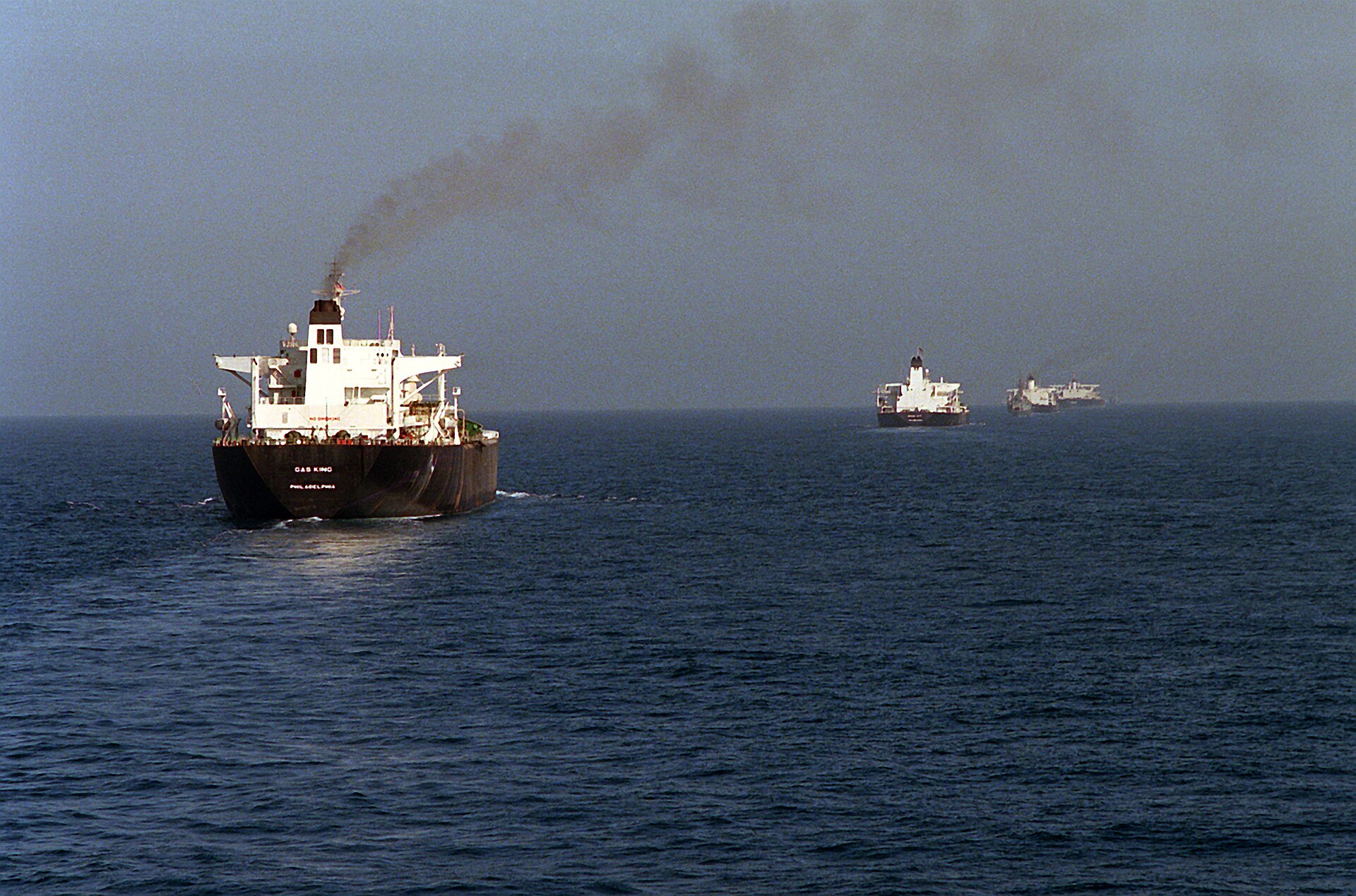
Approximately 500 oil tankers remained in the Persian Gulf as of March 13, unable to transit the Strait of Hormuz due to the combined threat of Iranian mines, explosive drone boats, anti-ship missiles, and aerial drones, according to vessel-tracking data from MarineTraffic.com cited by CBS News. Hundreds of additional commercial vessels were stranded on the other side of the strait, in the Gulf of Oman and the Arabian Sea, unable to enter.
Traffic through the Strait of Hormuz has dropped by more than 90 percent since the war began, with only “shadow fleet” tankers, the uninsured vessels typically associated with sanctions evasion, continuing to transit, according to analysis published by The Conversation. The strait had been carrying approximately 21 million barrels of oil per day before the conflict, representing roughly 20 percent of the world’s daily oil supply and 34 percent of global seaborne crude trade, according to the U.S. Energy Information Administration.
Ship owners have refused to send vessels through the strait without either military escorts or insurance coverage that accounts for war-risk premiums. The collapse of maritime insurance in the Gulf has been as crippling as the physical threats. War-risk premiums for Gulf transits have become effectively prohibitive, and several major insurers have withdrawn coverage for the region entirely.
The Trump administration has attempted to address the insurance gap. On March 3, Trump ordered the U.S. International Development Finance Corporation to provide political risk insurance for Gulf shipping. The DFC announced a $20 billion maritime reinsurance plan on March 6, and on March 11, global insurer Chubb was named as the lead underwriter, according to Claims Journal. The program covers losses “on a rolling basis” for vessels transiting the Gulf, but it has not yet prompted ship owners to resume transits without the promised military escorts.
Fortune described the Strait of Hormuz as an Iranian “kill box” on March 13, a military term for a geographic area where overlapping fields of fire make transit extremely dangerous. The specific threats include anti-ship missiles fired from coastal tunnel networks with minimal warning time, Shahed aerial drone swarms, explosive-laden surface and underwater drone boats, and potential naval mines from Iran’s extensive stockpile.
Why Did the 1987 Tanker Escort Work When This One Has Not?
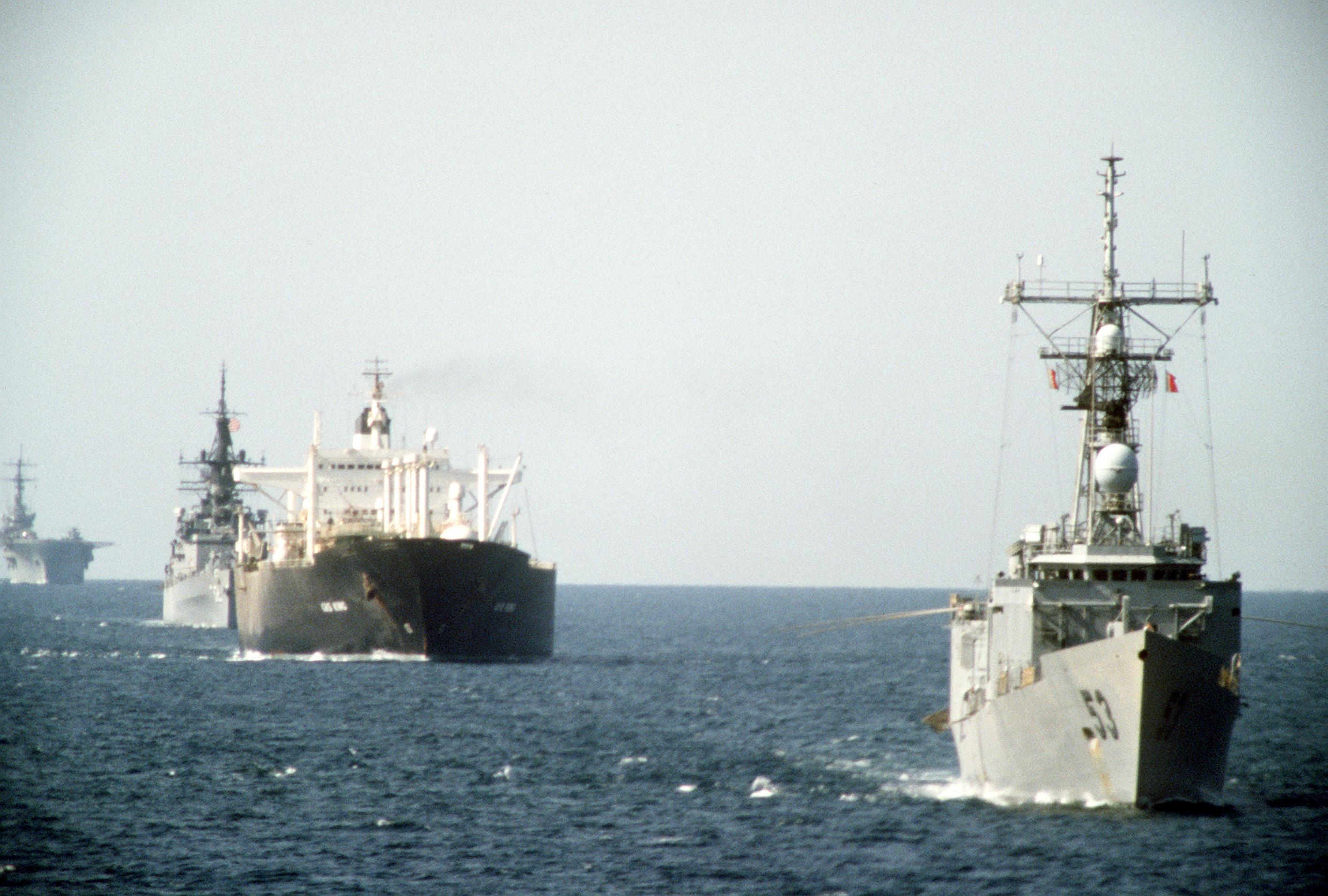
The current crisis invites comparison to the last time the U.S. Navy escorted oil tankers through the Persian Gulf. Operation Earnest Will, launched in July 1987 during the Iran-Iraq War, ran for 14 months and completed 127 escort missions protecting 259 vessels, according to the Naval History and Heritage Command. It was the largest naval convoy operation since World War II.
The 1987 operation took roughly six to seven months from Kuwait’s formal request for protection to the first convoy sailing on July 24, 1987. Eleven Kuwaiti tankers were reflagged under the U.S. ensign, a legal prerequisite for American naval protection. At peak strength, more than 30 warships supported the operation along a 500-mile route through the Gulf.
The comparison exposes the scale of the 2026 challenge. In 1987, the Navy protected 11 reflagged tankers traveling a known route against a threat environment limited to Iranian mines and small attack boats. Today, approximately 500 vessels of multiple flags sit stranded in the Gulf, facing a far more diverse threat spectrum that includes explosive drone boats, aerial drone swarms, anti-ship missiles launched from hardened tunnel networks, underwater drones, and potential mines.
| Factor | 1987 | 2026 |
|---|---|---|
| Iranian threat | Mines and small boats | Drone boats, aerial drones, anti-ship missiles, underwater drones, mines |
| Ships needing protection | 11 reflagged tankers | ~500 stranded vessels of multiple flags |
| U.S. Navy fleet size | Roughly double the current fleet | Approximately half the 1987 fleet |
| Setup time | ~6-7 months from request to first convoy | 10+ days since promise, still “not ready” |
| Mine countermeasures | Available in theater | Zero dedicated minesweepers in the Gulf |
| Geographic scope of threat | Persian Gulf transit lanes | Entire Gulf, including Iraqi territorial waters |
Even Earnest Will’s debut was not without incident. On its very first convoy on July 24, 1987, the reflagged Kuwaiti tanker MV Bridgeton struck an Iranian mine approximately 20 miles west of Farsi Island. The tanker, being far larger than its escort warships, ended up leading the convoy to safety because the Navy vessels’ hulls were more vulnerable to mines than the tanker’s hull. The episode demonstrated that escort operations in the Gulf carry inherent risk regardless of planning, according to the U.S. Naval Institute.
The Navy Has Three Carriers and Zero Minesweepers in the Gulf
The U.S. military’s force posture in the Middle East reflects a war optimized for destroying Iranian targets from the air, not for protecting commercial shipping at sea. Three carrier strike groups are either deployed or deploying to the region: the USS Abraham Lincoln operating in the Arabian Sea, the USS Gerald R. Ford in the Red Sea after transiting the Suez Canal, and the USS George H.W. Bush preparing to deploy as a third carrier, according to Army Recognition. Together, these strike groups carry more than 200 fixed-wing aircraft and dozens of cruise missile-capable surface combatants.
What the force lacks is mine countermeasures capability. The U.S. Navy’s last four dedicated minesweepers in the Persian Gulf, the Avenger-class ships USS Devastator, USS Dextrous, USS Gladiator, and USS Sentry, were decommissioned from their base in Bahrain in 2025 and shipped to the United States for scrapping in January 2026, according to Navy Times. Only four Avenger-class ships remain in the entire fleet, all forward-deployed to Sasebo, Japan, thousands of miles from the Gulf.
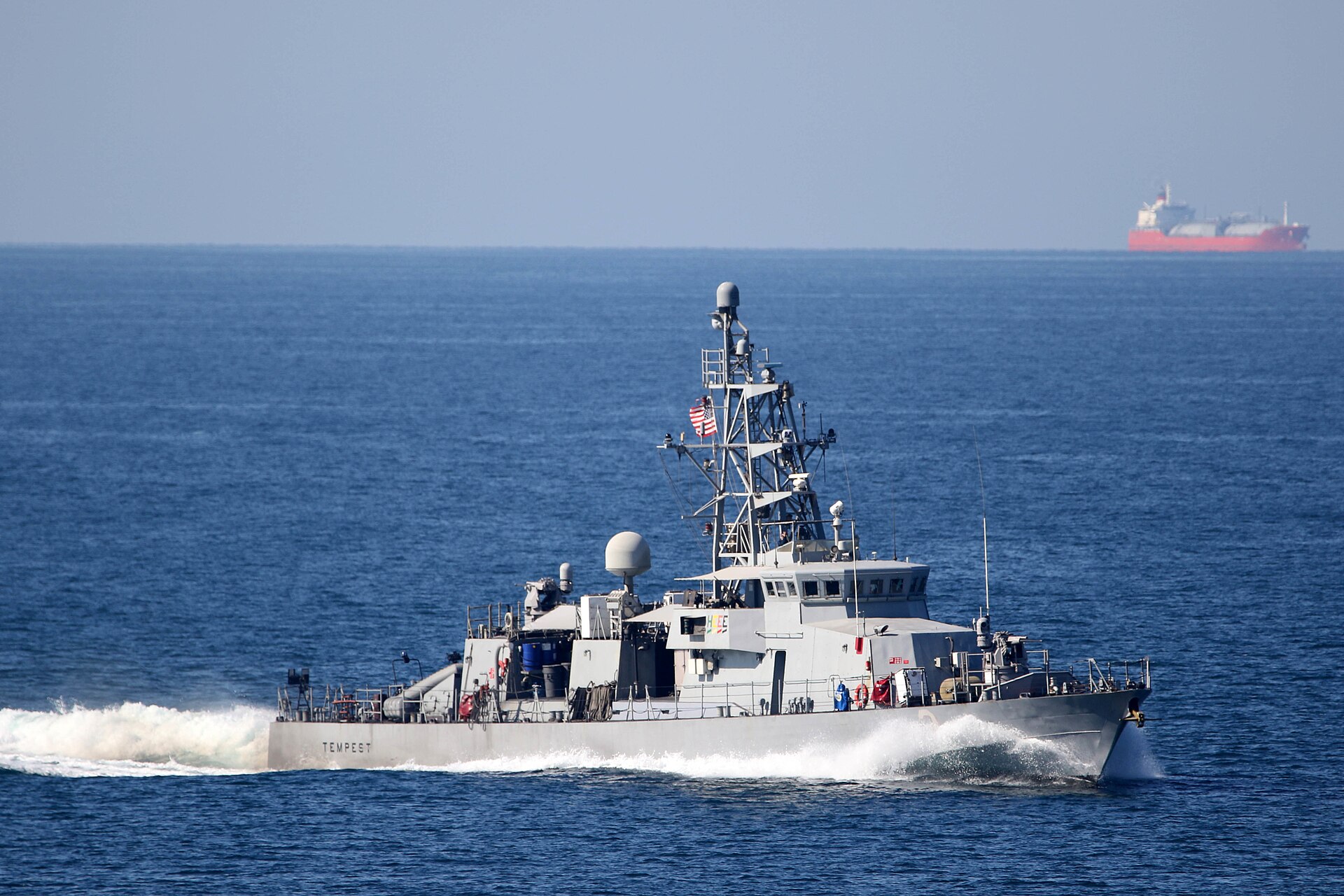
Their replacements, Independence-class littoral combat ships fitted with mine countermeasures mission packages, were stationed with the U.S. 5th Fleet as of September 2025. These vessels are not purpose-built minesweepers, and their mine-hunting capabilities have been questioned by defense analysts, according to The War Zone.
The mine threat is not hypothetical. Iran maintains one of the world’s largest stockpiles of naval mines, and the IRGC has already deployed them in and around the Strait of Hormuz during the current conflict. U.S. forces destroyed more than 20 Iranian Navy ships and sank Iran’s converted 40,000-ton drone carrier, the IRIS Shahid Bagheri, in the opening days of the war, according to Stars and Stripes. But Iran’s asymmetric naval capabilities, including thousands of small vessels, coastal missile batteries concealed in tunnel networks, and a fleet of explosive drone boats, remain largely intact.
The force structure mismatch helps explain Wright’s “not ready” admission. The Navy has ample firepower to strike Iranian targets but lacks the specialized assets, convoy coordination capacity, and force protection posture required to shepherd hundreds of commercial vessels through contested waters.
What Does the Escort Failure Mean for Saudi Oil Exports?
Saudi Arabia has absorbed the escort program’s failure with characteristic pragmatism, accelerating the rerouting of oil exports through its East-West pipeline to the Red Sea port of Yanbu rather than waiting for the U.S. Navy to reopen the strait. Aramco CEO Amin Nasser said on March 10 that the 7-million-barrel-per-day pipeline was approaching full capacity, according to S&P Global.
The pipeline, which runs from the Abqaiq processing center near the Gulf coast to Yanbu on the western coast, had been carrying approximately 2 million barrels per day before the war. Within 11 days, Aramco tripled throughput by converting natural gas liquids pipelines to carry crude oil, a maneuver last performed in 2019 after the Houthi-Iranian drone attack on Abqaiq.
Even at maximum pipeline capacity, the workaround falls short. Saudi Arabia was exporting approximately 5.5 million barrels per day through the Strait of Hormuz before the war, on top of the 2 million barrels already flowing through the pipeline, for total exports of roughly 7.5 million barrels per day, according to CNBC. The pipeline’s maximum capacity of 7 million barrels per day cannot fully compensate, and Yanbu’s port infrastructure, including loading berths, storage tanks, and maritime logistics, may not be physically capable of handling that volume simultaneously.
The Red Sea route also adds significant transit time for Asian buyers who consume the bulk of Saudi crude. A tanker sailing from Yanbu to China must traverse the entire Red Sea, pass through the Bab el-Mandeb Strait, round the Horn of Africa, and cross the Indian Ocean, a journey that takes weeks longer than the direct Gulf-to-Asia route through Hormuz. The Bab el-Mandeb itself has been subject to Houthi attacks in recent years, adding another layer of risk.
The impact on Asian energy security has been acute. India, which imported roughly 40 percent of its crude from the Gulf before the war, has seen its supply lines severely disrupted. The death of an Indian crew member on the Safesea Vishnu created a diplomatic incident with New Delhi, complicating its efforts to maintain neutrality in the conflict.
For Riyadh, the stalled escort program underscores a calculation that Crown Prince Mohammed bin Salman has made throughout the crisis: Saudi Arabia cannot depend on external security guarantees for its most critical economic infrastructure. The Kingdom has spent more than $80 billion on its own air defense network, which has intercepted hundreds of Iranian drones and missiles since the war began. The maritime domain, however, remains Washington’s responsibility under the terms of the broader U.S.-Saudi security relationship, a responsibility that, as of March 13, remains unfulfilled.
Frequently Asked Questions
When did Trump promise tanker escorts through the Strait of Hormuz?
President Trump posted on Truth Social on March 3, 2026, that “the United States Navy will begin escorting tankers through the Strait of Hormuz, as soon as possible.” Ten days later, Energy Secretary Chris Wright admitted to CNBC that the Navy was “simply not ready” and said escorts might begin by the end of March. No commercial vessel has received a U.S. Navy escort since the war began.
What happened with the Energy Secretary’s deleted social media post?
On March 10, Energy Secretary Chris Wright’s official X account posted that the U.S. Navy had “successfully escorted an oil tanker through the Strait of Hormuz.” The post was deleted within approximately 20 minutes. White House Press Secretary Karoline Leavitt confirmed no escort had taken place. Oil prices crashed by up to 35 percent intraday before recovering, an episode Fortune valued at $84 million in market impact.
How many ships have been attacked in the Persian Gulf during the Iran war?
As of March 12, approximately 17 maritime attack incidents had been logged by the United Kingdom Maritime Trade Operations monitoring service since the war began on February 28. At least six people have been killed across all attacks, according to the International Maritime Organization. The deadliest single day was March 11, when six vessels were struck in the Persian Gulf and Strait of Hormuz.
How many oil tankers are stranded in the Persian Gulf?
Approximately 500 oil tankers remained in the Persian Gulf as of March 13, according to vessel-tracking data from MarineTraffic.com. Hundreds of additional ships are stranded outside the strait in the Gulf of Oman. The IMO reported that 3,000 vessels and 20,000 seafarers remain trapped across the Middle East, the largest maritime disruption in decades. Traffic through the Strait of Hormuz has fallen by more than 90 percent since the conflict began, with only uninsured “shadow fleet” tankers continuing to transit.
How does Saudi Arabia export oil without the Strait of Hormuz?
Saudi Arabia has rerouted exports through its East-West pipeline, which carries crude from the Abqaiq processing center near the Gulf coast to the Red Sea port of Yanbu. The pipeline can handle up to 7 million barrels per day at full capacity. Aramco has nearly tripled throughput since the war began, but the pipeline cannot fully replace the 5.5 million barrels per day that previously transited the Strait of Hormuz, and the longer Red Sea shipping route adds weeks to delivery times for Asian buyers.
On March 14, Trump escalated his approach by publicly demanding that China, France, Japan, South Korea, and the United Kingdom send warships to help reopen the strait, acknowledging that American naval forces alone cannot secure commercial shipping while conducting combat operations against Iran.