
WASHINGTON — President Donald Trump threatened on Wednesday to “massively blow up the entirety” of Iran’s South Pars gas field — the largest natural gas reserve on Earth — if Tehran launches another attack on Qatar’s energy infrastructure, marking a dramatic escalation in the rhetoric of the three-week-old Iran war and raising the prospect of catastrophic damage to the world’s most critical gas resource. The threat came hours after Iranian missiles struck Qatar’s Ras Laffan industrial complex, causing what Doha described as “extensive damage” to facilities that process roughly 20 percent of global liquefied natural gas exports.
Trump’s ultimatum draws a direct line between the protection of Gulf energy infrastructure and the potential annihilation of a gas field containing an estimated 1,800 trillion cubic feet of natural gas and 50 billion barrels of condensates — reserves shared between Iran and Qatar beneath the waters of the Persian Gulf. The statement, posted on Truth Social, represents the first time any American president has explicitly threatened the wholesale destruction of a major energy asset as a deterrent.
Table of Contents
- What Did Trump Threaten to Do to South Pars?
- What Triggered the South Pars Escalation?
- Iran’s Missile Strike on Qatar’s Ras Laffan
- Why Is South Pars the Most Dangerous Target on Earth?
- How Did Gulf States Respond?
- What Would Destroying South Pars Mean for Global Energy?
- Trump’s Contradictory Claims About the Israeli Strike
- The Energy War Within the Wider Conflict
- Frequently Asked Questions
What Did Trump Threaten to Do to South Pars?
Trump threatened to destroy the entirety of Iran’s South Pars gas field if Iran attacks Qatar’s LNG infrastructure again, in what he described as an act of “strength and power that Iran has never seen or witnessed before.” The statement, issued late on March 18 Washington time, linked the survival of the world’s largest gas field directly to Iran’s military restraint toward its Gulf neighbours.
The full text of Trump’s statement read: “The United States of America, with or without the help or consent of Israel, will massively blow up the entirety of the South Pars Gas Field at an amount of strength and power that Iran has never seen or witnessed before.” He added a conditional caveat: “I do not want to authorise this level of violence and destruction because of the long term implications that it will have on the future of Iran, but if Qatar’s LNG is again attacked, I will not hesitate to do so.”
Simultaneously, Trump declared that Israel would not launch further strikes on South Pars, posting: “NO MORE ATTACKS WILL BE MADE BY ISRAEL pertaining to this extremely important and valuable South Pars Field unless Iran unwisely decides to attack a very innocent Qatar.” The statement effectively positioned the United States as the sole guarantor of both Qatar’s energy security and Iran’s remaining gas infrastructure — claiming authority over Israeli military decisions in the process.
The threat carries exceptional weight given the scale of what is at stake. South Pars accounts for roughly 70 to 75 percent of Iran’s total gas production, according to the International Energy Agency, and supplies the fuel that heats Iranian homes, powers Iranian industry, and generates Iranian electricity. Destroying it would not merely degrade Iran’s war-fighting capacity — it would cripple the country’s civilian energy supply for years, possibly decades.
The Middle East briefing 3,000+ readers start their day with.
One email. Every weekday morning. Free.
What Triggered the South Pars Escalation?
The chain of events that led to Trump’s ultimatum began on Wednesday, March 18, when Israeli warplanes struck gas processing facilities at South Pars in what Tehran described as a “dangerous escalation” of the war. The Jerusalem Post and Axios reported that Israeli jets bombed a natural gas processing facility on the Iranian side of the field — the first time Israel has targeted Iran’s gas infrastructure since the conflict began on March 1.
The Israeli strike marked a significant expansion of the target set. Previous Israeli and American operations had focused on military installations, nuclear facilities, and government buildings. Hitting South Pars crossed into the territory of economic infrastructure — a category of target that carries consequences extending far beyond the battlefield. According to U.S. and Israeli officials cited by Axios, the strike was coordinated with and approved by the White House, despite Trump’s subsequent claims to the contrary.
Iran’s response was swift and indiscriminate. Within hours, Iran’s state television broadcast a threat warning that the Islamic Republic would attack oil and gas infrastructure in Qatar, Saudi Arabia, and the United Arab Emirates. The broadcast specifically named Qatar’s Mesaieed Petrochemical Complex, Mesaieed Holding Company, and Ras Laffan Refinery; Saudi Arabia’s Samref Refinery and Jubail Petrochemical Complex; and the UAE’s Al Hosn gas field. Iran’s Middle East Eye report indicated that Tehran also ordered Gulf states to evacuate their energy workers from the named facilities.
The Iranian military then followed through on its threat against Qatar. Missiles struck the Ras Laffan Industrial City — the processing hub for virtually all of Qatar’s LNG exports — sparking fires and causing what QatarEnergy later called “extensive damage.” The broader Iranian retaliation also targeted Saudi Arabia’s Jubail industrial complex and launched four ballistic missiles toward Riyadh, all of which were intercepted by Saudi air defences, according to the Saudi Defence Ministry.
Iran’s Missile Strike on Qatar’s Ras Laffan
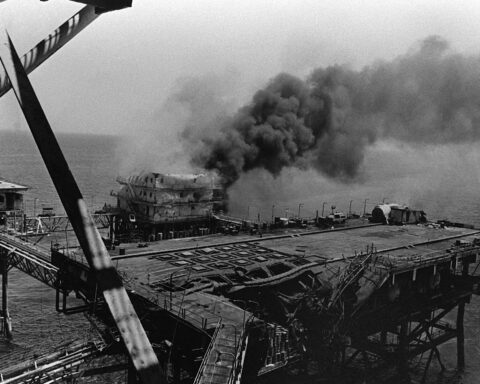
Iran’s missile strike on Ras Laffan Industrial City late on March 18 caused significant damage to the facility that serves as the nerve centre of Qatar’s $100 billion-a-year LNG export industry. Qatar’s Ministry of Foreign Affairs confirmed that missiles hit the facility, sparking fires that took hours to bring under control. QatarEnergy stated that all personnel had been accounted for and no casualties were reported, but described the physical damage as “extensive.”
Ras Laffan processes gas drawn from the North Dome field — Qatar’s side of the same geological structure that contains Iran’s South Pars. The facility is responsible for virtually all of Qatar’s LNG liquefaction capacity, which in 2025 amounted to roughly 81 million metric tons, according to QatarEnergy shipping data. That volume represents approximately 20 percent of all LNG traded globally, making the facility one of the most consequential single points of failure in the world energy system.
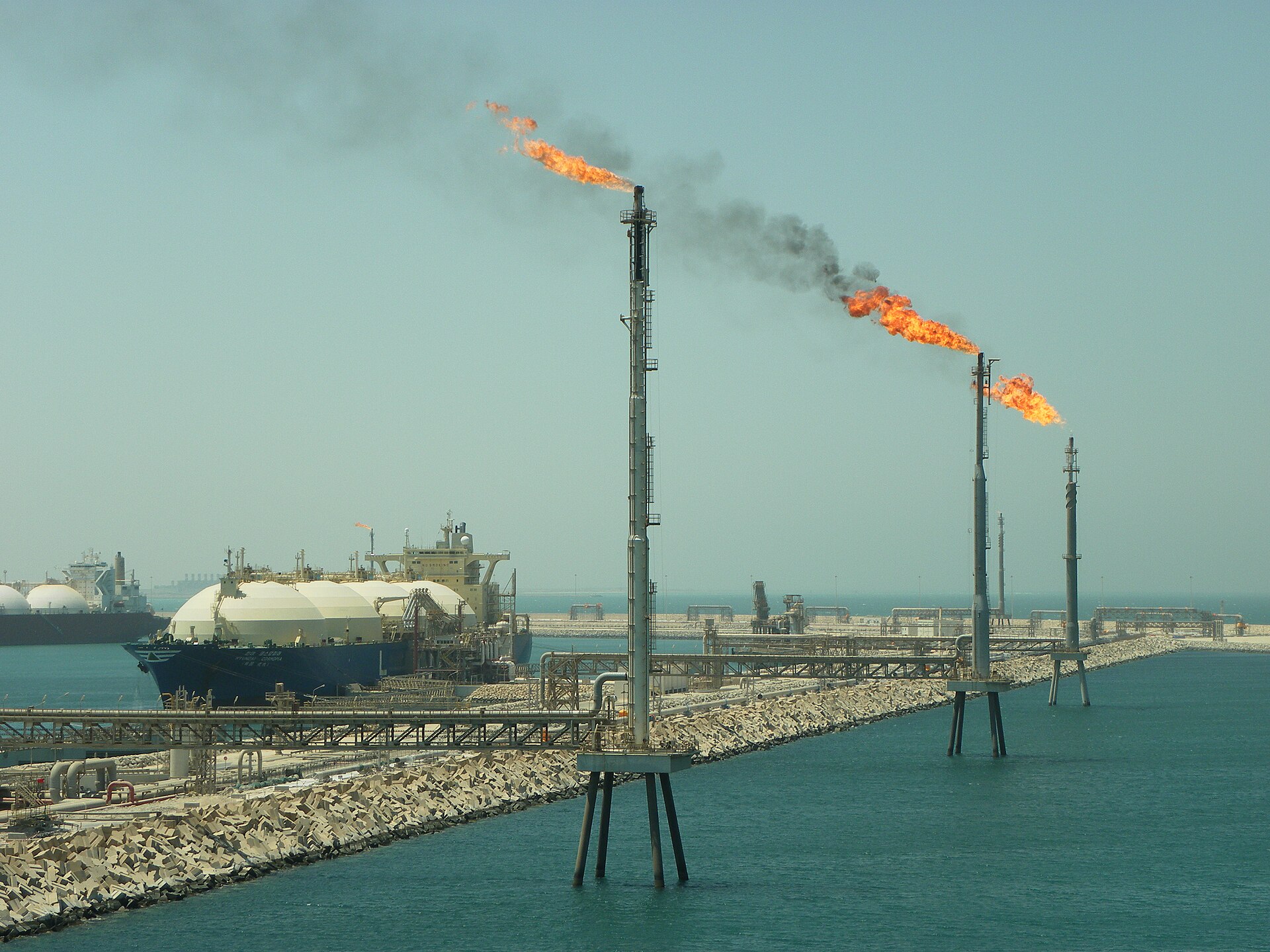
The attack on Ras Laffan was not the first Iranian strike on Qatari territory. Iranian drones struck facilities at Ras Laffan and Mesaieed in early March, prompting QatarEnergy to halt LNG production entirely on March 2 — a shutdown that Al Jazeera reported has “broken the global gas market.” European natural gas futures surged 28 percent in the week following the initial halt, according to CNBC, and have remained elevated since.
Qatar’s response to the latest strike was immediate and severe. The Foreign Ministry declared Iranian military and security attachés persona non grata, demanding they leave the country within 24 hours. Qatar’s expulsion of the Iranian attachés represented the most aggressive diplomatic step any Gulf state has taken against Tehran since the war began, breaking years of careful Qatari engagement with the Islamic Republic.
The timing of the Iranian strike — hitting a gas facility that draws from the same reservoir as Iran’s South Pars — carried a bitter irony. By damaging Ras Laffan, Iran struck infrastructure connected to the very geological formation it was punishing the world for attacking. Energy analysts at Columbia University’s Center on Global Energy Policy noted that any disruption to production on the Qatari side could actually accelerate gas migration toward the Iranian side of the reservoir, as Qatar’s lagging pressurisation efforts would lose further ground.
Why Is South Pars the Most Dangerous Target on Earth?
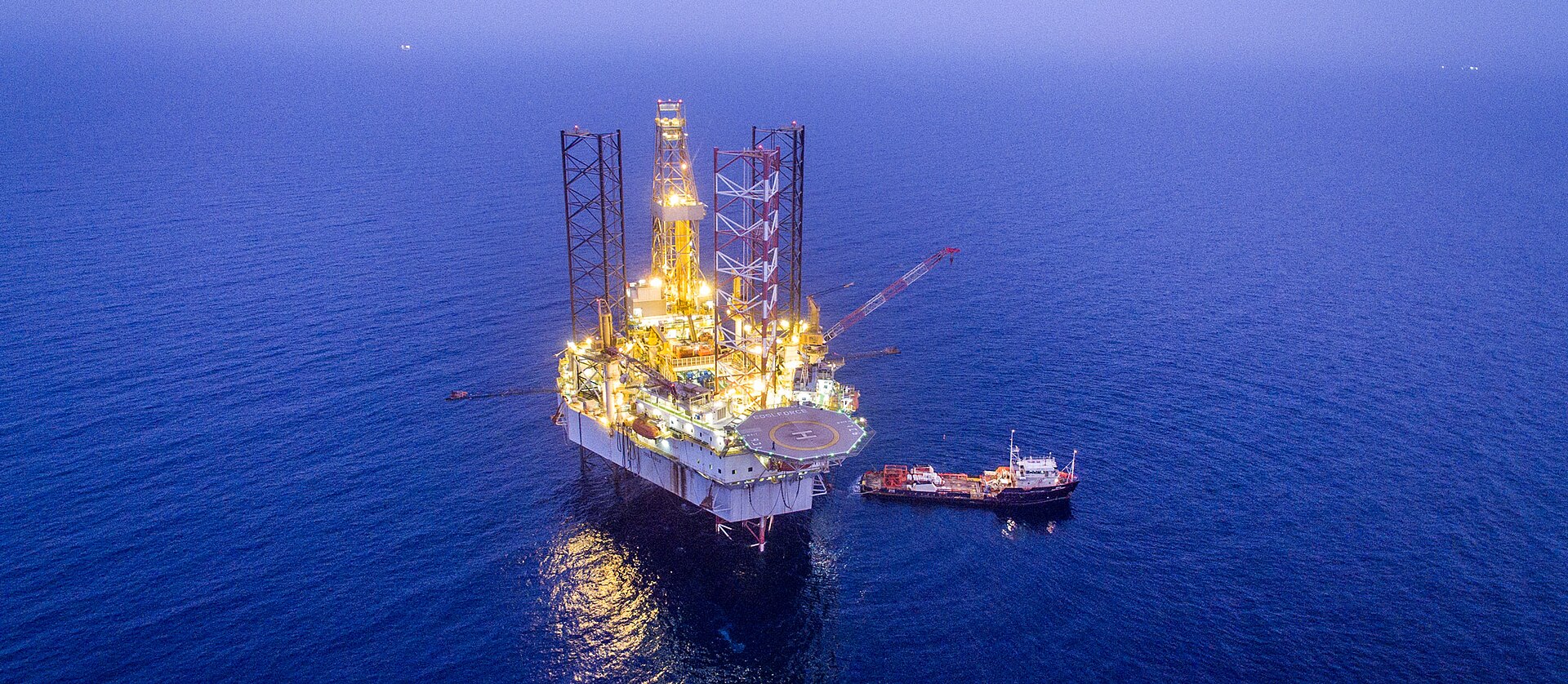
South Pars — known on the Qatari side as the North Dome — is the largest natural gas field ever discovered, containing an estimated 1,800 trillion cubic feet of in-situ gas and 50 billion barrels of natural gas condensates, according to the International Energy Agency. The field straddles the maritime border between Iran and Qatar in the Persian Gulf, covering approximately 9,700 square kilometres — an area larger than the island of Cyprus.
The field’s reserves are not evenly distributed. Qatar controls the larger portion — roughly 6,000 square kilometres containing an estimated 900 trillion cubic feet of recoverable gas, which accounts for approximately 99 percent of Qatar’s total proven reserves and 14 percent of global proven gas reserves. Iran’s 3,700-square-kilometre section holds roughly 360 trillion cubic feet of recoverable gas, representing 36 percent of Iran’s total proven reserves and 5.6 percent of the world total.
| Metric | Iran (South Pars) | Qatar (North Dome) | Total Field |
|---|---|---|---|
| Area (sq km) | 3,700 | 6,000 | 9,700 |
| Recoverable gas (TCF) | 360 | 900 | 1,800 (in-situ) |
| Share of national reserves | 36% | ~99% | — |
| Share of global reserves | 5.6% | 14% | ~20% |
| Daily production | ~2.5 BCF | ~18.5 BCF | ~21 BCF |
| Condensates (billion barrels) | — | 50 | |
Iran currently produces approximately 700 million cubic metres of gas per day from South Pars — equivalent to roughly 2.5 billion cubic feet — according to Iran’s Pars Oil and Gas Company. That output supplies 70 to 75 percent of Iran’s total domestic gas needs. The gas heats approximately 30 million Iranian homes during winter months, fuels power generation plants across the country, and feeds petrochemical facilities that represent a significant share of Iran’s non-oil export economy.
The destruction Trump threatened would, in effect, eliminate the majority of Iran’s energy supply. Unlike oil infrastructure, which can be repaired or replaced with relative speed, subsea gas field infrastructure operates at depths and pressures that make reconstruction a project measured in years and tens of billions of dollars. Offshore platforms, subsea pipelines, processing trains, and wellhead equipment would all require replacement — assuming the reservoir geology itself remained intact, which is not guaranteed in the event of a sustained bombing campaign.
How Did Gulf States Respond?
Saudi Arabia’s Foreign Minister Prince Faisal bin Farhan delivered the most forceful statement, telling reporters in Riyadh that “the little trust that remained in Iran has been completely shattered” and warning that Saudi Arabia reserves the right to military action against Iran “if deemed necessary.” He added that “the patience that is being exhibited is not unlimited” and urged Tehran to “recalculate quickly and stop attacking their neighbours.”
Prince Faisal’s language marked a notable escalation from Riyadh’s previous posture. Since the war began on March 1, Saudi Arabia had consistently emphasised its preference for diplomatic resolution while absorbing repeated Iranian strikes. The foreign minister accused Iran of “premeditated hostile actions” against its neighbours and stated plainly that if Iran does not halt its attacks immediately, “there will be almost nothing that can re-establish trust” between the two countries.
The Saudi Defence Ministry reported intercepting four ballistic missiles targeting Riyadh and two more aimed at the Eastern Province on March 18 alone. Shrapnel from the Riyadh interceptions fell in residential areas, though no injuries were reported. The ministry also confirmed that seven drones were downed over the Eastern Province, and another was intercepted in the Empty Quarter heading toward the Shaybah oil field.
Qatar’s decision to expel Iranian military attachés was accompanied by the strongest language Doha has used since the crisis began. The Qatari Foreign Ministry summoned the Iranian ambassador and demanded “an immediate and unconditional cessation of all hostile actions” against Qatari territory. Qatar had previously maintained a neutral stance in the Iran war, leveraging its relationship with Tehran to attempt mediation. That posture collapsed with the Ras Laffan missile strike.
The UAE, which has absorbed more than 1,500 of the roughly 3,000 projectiles Iran has launched at GCC countries since March 1 according to ACLED conflict data, did not issue an immediate public response to Trump’s South Pars threat. Abu Dhabi has been the most frequent target of Iranian strikes, including the drone strike that set Abu Dhabi’s Shah gas field ablaze on March 17.
What Would Destroying South Pars Mean for Global Energy?
The destruction of South Pars would trigger what energy analysts describe as the most severe supply shock in the history of the global gas market. The field accounts for approximately 20 percent of global proven gas reserves and supplies the feedstock for roughly a fifth of all internationally traded LNG. Even before Trump’s threat, the war had already pushed Brent crude to $108.93 per barrel — up nearly 8 percent in a single trading session on March 18, according to Trading Economics — and more than 40 percent above pre-war levels.
The immediate impact would fall hardest on countries dependent on Qatari LNG. Although South Pars sits on the Iranian side of the border, the Qatari North Dome draws from the same geological reservoir. Any military campaign against the Iranian side risks secondary damage to reservoir pressure dynamics, pipeline infrastructure, and subsea geological stability on both sides of the border. Qatar’s planned expansion to 142 million tons per annum by 2030 — a $29 billion investment programme involving partnerships with Shell, TotalEnergies, and ExxonMobil — would face indefinite delay.
India faces the most acute vulnerability. Qatar supplies between 42 and 52 percent of India’s total LNG imports, according to the U.S. Energy Information Administration. Japan, South Korea, and China are also major recipients. Europe, which receives approximately 7 percent of its LNG from Qatar, would face a tighter global spot market as Asian buyers compete for alternative supply.
| Country/Region | Qatar LNG Share of Imports | Primary Vulnerability |
|---|---|---|
| India | 42-52% | Power generation, fertiliser production |
| South Korea | ~25% | Industrial gas supply, heating |
| Japan | ~12% | Post-nuclear power generation |
| China | ~10% | Winter heating in northern provinces |
| Europe (aggregate) | ~7% | Spot market tightness, winter supply |
The broader economic damage of a South Pars destruction would be difficult to quantify. Goldman Sachs has already warned that the Gulf faces its worst recession in a generation from the war’s existing disruptions. Removing 20 percent of global gas reserves from the market — even temporarily — would send natural gas prices to levels never previously recorded, with cascading effects on electricity generation, industrial production, fertiliser manufacturing, and food prices worldwide.
For Iran, the loss of South Pars would be existential in a way that military defeats are not. The field supplies the gas that heats 30 million homes, powers the national electricity grid, and feeds the petrochemical industry that accounts for a significant share of Iran’s non-oil GDP. Reconstruction would require access to deepwater drilling technology that Iran cannot produce domestically and that international sanctions would prevent it from acquiring.
Trump’s Contradictory Claims About the Israeli Strike
Trump’s statement on South Pars contained claims that U.S. and Israeli officials subsequently contradicted. The president asserted that “The United States knew nothing about this particular attack” on South Pars and that “the country of Qatar was in no way, shape, or form, involved with it, nor did it have any idea that it was going to happen.”
Axios reported that U.S. and Israeli officials told the news outlet that Trump’s remarks were inaccurate. While Qatar indeed had no prior knowledge of the strike, the officials said the White House was briefed on and approved the Israeli operation before it was carried out. The Jerusalem Post separately reported that the strike was coordinated between Israeli and American military planners.
The discrepancy matters because it goes to the core question of American culpability for the escalation. If the United States approved the Israeli strike on South Pars — which then triggered Iran’s retaliatory attack on Ras Laffan — then Washington bears significant responsibility for the sequence of events that has now placed the world’s largest gas field at the centre of an explicit destruction threat.
Trump’s framing appeared designed to achieve multiple objectives simultaneously: reassuring Qatar that it was not complicit in the Israeli strike, positioning the United States as Qatar’s protector against Iranian retaliation, asserting authority over Israeli military decisions, and establishing a deterrent red line around Gulf energy infrastructure. Whether Tehran views the threat as credible or as further evidence of American-Israeli coordination remains unclear. Iranian state media had not responded to Trump’s statement as of Thursday morning.
The Energy War Within the Wider Conflict
Trump’s South Pars threat represents the culmination of a three-week escalation in which energy infrastructure has moved from collateral damage to primary target. The Iran war began on March 1 with the surprise U.S.-Israeli strike that killed Supreme Leader Ali Khamenei and multiple senior Iranian officials. Iran’s retaliatory campaign initially focused on military targets — U.S. bases in the Gulf, Israeli installations, and Saudi and Emirati air defence positions.
The shift toward energy targets began in the second week, as Iran’s conventional military assets were degraded by American and Israeli strikes. Drones and missiles began hitting oil facilities, gas fields, and energy processing plants across the Gulf. Saudi Arabia’s eastern oil infrastructure was struck repeatedly. The Strait of Hormuz was effectively closed by Iranian mines and naval activity, cutting off the transit route for roughly 20 percent of global oil supply.
Israel’s strike on South Pars on March 18 crossed a new threshold. Previous American and Israeli attacks on Iran had targeted military installations, nuclear facilities, and government buildings. Hitting Iran’s gas infrastructure — the foundation of its civilian economy — invited retaliation in kind. Iran’s immediate response against Ras Laffan demonstrated that energy infrastructure is now a legitimate target for both sides, a development with implications that extend far beyond the current conflict.
Saudi Arabia’s position in this energy war is particularly complex. The kingdom has absorbed more than 400 Iranian projectiles since March 1, according to Saudi Defence Ministry figures, yet has refrained from direct military action against Iran. Crown Prince Mohammed bin Salman has instead pursued a strategy of defensive absorption combined with diplomatic pressure — a posture that Prince Faisal bin Farhan’s March 18 statement suggested may be nearing its limit.
The kingdom’s own energy infrastructure remains vulnerable. Iran’s broadcast threat specifically named the Samref Refinery and Jubail Petrochemical Complex — two of Saudi Arabia’s most important industrial facilities. Saudi Arabia’s Red Sea pipeline bypass through Yanbu has restored roughly half of normal oil export volumes, according to Bloomberg, but the eastern industrial heartland where Jubail sits remains within easy range of Iranian missiles and drones.
Oil markets reflected the escalation. Brent crude settled at $108.93 per barrel on March 18, according to Trading Economics, with intraday gains of nearly 8 percent driven by the South Pars and Ras Laffan attacks. WTI crude reached $96.42. Analysts at Goldman Sachs, JPMorgan, and Citigroup have all revised their oil price forecasts upward in the past week, with Goldman warning that sustained disruption to Gulf gas supply could push Brent above $130 before mid-year.
Frequently Asked Questions
What exactly did Trump threaten to do to South Pars?
Trump threatened to “massively blow up the entirety of the South Pars Gas Field” if Iran attacks Qatar’s LNG infrastructure again. He described the potential action as involving “strength and power that Iran has never seen or witnessed before” and stated he would act “with or without the help or consent of Israel.”
Why is South Pars so important to Iran?
South Pars accounts for 70 to 75 percent of Iran’s total natural gas production, according to the International Energy Agency. It supplies heating for approximately 30 million homes, fuels power generation across the country, and feeds the petrochemical industry that represents a major share of Iran’s non-oil exports. Destroying it would cripple Iran’s civilian energy supply.
How does the South Pars field relate to Qatar?
South Pars and Qatar’s North Dome are the same geological formation straddling the maritime border between Iran and Qatar. The field contains an estimated 1,800 trillion cubic feet of natural gas. Qatar’s side holds roughly 900 trillion cubic feet — nearly 99 percent of Qatar’s total reserves — and supplies the feedstock for about 20 percent of global LNG trade.
Did the United States know about Israel’s strike on South Pars?
Trump claimed the United States “knew nothing about this particular attack.” However, U.S. and Israeli officials told Axios that this was inaccurate and that the White House was briefed on and approved the operation. The Jerusalem Post also reported the strike was coordinated between Israeli and American military planners.
What was Iran’s response to the Israeli strike?
Iran retaliated by launching missiles at Qatar’s Ras Laffan LNG facility — causing extensive damage — and at Saudi Arabia’s eastern industrial zone. Tehran also broadcast threats against specific energy facilities in Qatar, Saudi Arabia, and the UAE, and demanded Gulf states evacuate workers from named installations.