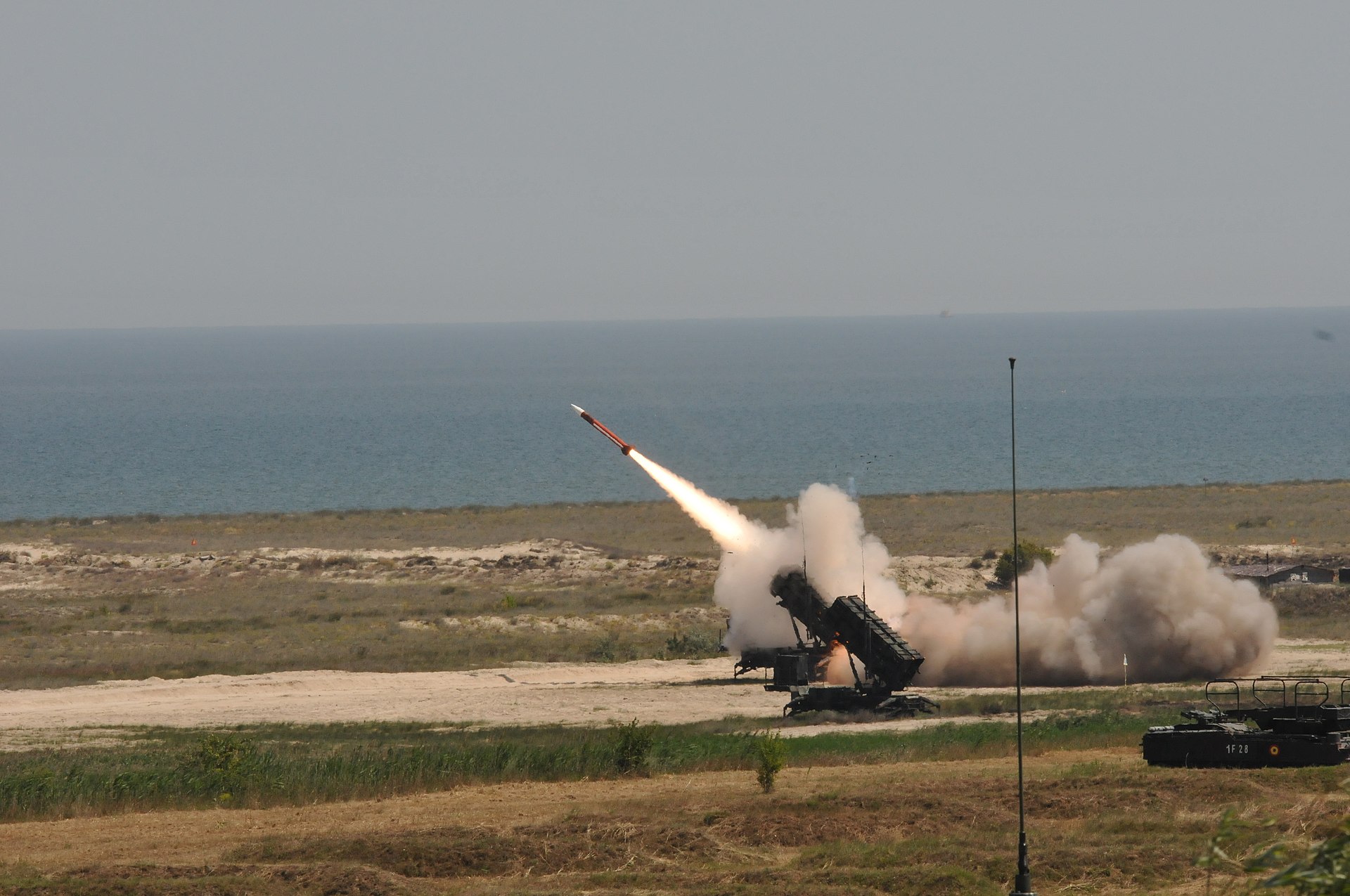

A Patriot missile defense system launches an interceptor missile during a live-fire exercise. NATO deployed Patriot batteries to southeastern Turkey to defend against Iranian ballistic missiles targeting Incirlik and Kurecik. Photo: US Army / Public Domain

Turkey Took Three Iranian Missiles and Still Won’t Pick a Side

Three Iranian missiles intercepted over Turkey in 18 days. Why Erdogan refuses NATO Article 5 and what it means for Saudi Arabia and the Gulf war.

ANKARA — Turkey has absorbed three Iranian ballistic missiles in eighteen days of war, watched NATO shoot them down over its own airspace, and still refuses to declare which side it is on. Ankara’s position is neither neutral nor passive — it is a calculated performance of non-alignment designed to extract maximum leverage from every party to the conflict while minimising the risk of becoming a target in a war that is already at its doorstep.

The contradiction sits at the heart of the most consequential geopolitical balancing act in the Middle East. Turkey hosts the most advanced early-warning radar on Iran’s border, the largest US airbase in the eastern Mediterranean, and approximately fifty American nuclear warheads at Incirlik. It shares a 534-kilometre land border with Iran. It imports 13 per cent of its natural gas from Tehran. And it has signed $8.8 billion in defence deals with Saudi Arabia — the country Iran is actively bombing. No other NATO member carries this many conflicting obligations simultaneously, and no other state stands to lose as much from picking the wrong side.

The calculation that underpins President Recep Tayyip Erdogan’s refusal to commit is not cowardice. It is a recognition that the war is producing a once-in-a-generation opportunity for Turkey to reshape its relationships with Washington, Riyadh, and Tehran at the same time. Whether Ankara can sustain this position depends on variables that are moving faster than Turkish diplomacy can track.

What Happened When Iranian Missiles Entered Turkish Airspace?

Three Iranian ballistic missiles have been intercepted over or near Turkish territory since the war began on 28 February, each incident escalating the implicit threat to Ankara without producing the decisive response that Washington has privately urged.

The first missile was destroyed on 4 March by NATO air and missile defence assets stationed in the eastern Mediterranean, according to the Turkish Defence Ministry. Residents of Adana, the city adjacent to Incirlik Air Base, were woken at 3:25 a.m. local time by air raid sirens — the first time those sirens had sounded for a live threat in the base’s seven decades of operation. Iran denied targeting Turkey, describing the incident as a “possible false flag attack” and insisting that its retaliatory strikes were aimed exclusively at American and Israeli military assets.

Five days later, on 9 March, NATO intercepted a second Iranian ballistic missile in Turkish airspace, according to France24 and confirmed by Ankara. The trajectory suggested the missile was aimed at Incirlik or possibly the Kurecik radar installation in Malatya Province, 600 kilometres to the east. Erdogan responded by saying Tehran was taking “wrong and provocative” steps and that Turkey had “issued the necessary warnings,” but stopped short of characterising the incidents as attacks on Turkish sovereignty.

The third interception came on 13 March. Bloomberg reported that NATO air and missile defence assets neutralised another ballistic munition launched from Iran that entered Turkish airspace. By this point, the Foundation for Defense of Democracies and the Atlantic Council had both published analyses arguing that the incidents constituted a pattern rather than a series of accidents, and that at least one missile appeared to have been aimed at Incirlik or the Kurecik early-warning radar.

Iranian Missile Incidents Over Turkey — March 2026
Date Interceptor Probable Target Turkey’s Response Iran’s Claim
4 March NATO BMD assets Incirlik Air Base “Monitoring closely” Denied targeting Turkey
9 March NATO BMD assets Incirlik or Kurecik “Wrong and provocative steps” Denied targeting Turkey
13 March NATO BMD assets Kurecik radar station “All necessary warnings issued” No public comment

The escalation pattern is unmistakable. Each incident produced a slightly firmer Turkish statement but no material policy shift. Three missiles were shot down over NATO sovereign territory, and the alliance member hosting the targets has not convened a single Article 4 consultation, let alone an Article 5 invocation.

Why Won’t Turkey Invoke NATO’s Article 5?

NATO’s collective defence clause — Article 5 of the North Atlantic Treaty — states that an armed attack against one member shall be considered an attack against all. Three ballistic missiles intercepted over Turkish airspace would appear to meet the threshold. Erdogan’s refusal to invoke it is the single most important decision any NATO member has made during the Iran war, and understanding the reasoning requires looking at what Turkey stands to lose from each possible course of action.

Invoking Article 5 would formally drag NATO into the conflict. It would transform the war from a US-Israeli operation with Gulf state casualties into a full alliance engagement, potentially requiring European military contributions and triggering Iranian attacks on NATO infrastructure across the region. Turkey would become a primary belligerent rather than an incidental target. Its 534-kilometre border with Iran would become a front line. The estimated one million Iranian refugees that Ankara’s contingency planners have prepared for could become a certainty rather than a worst case.

Ankara also calculates that an Article 5 invocation would destroy what remains of its diplomatic relationship with Tehran. Turkey is one of the few countries that maintains active communication channels with both sides of the conflict. Foreign Minister Hakan Fidan has spoken with Iranian counterpart Abbas Araghchi multiple times since the war began, according to Middle East Eye, while simultaneously coordinating with Washington and Riyadh. An Article 5 call would eliminate Turkey’s value as a potential mediator — a role Erdogan prizes above almost any other in his foreign policy repertoire.

The economic dimension reinforces the calculation. Iran supplies approximately 13 per cent of Turkey’s natural gas imports, according to Turkish energy ministry data. Turkey already imports two-thirds of its energy from abroad. Losing Iranian gas during a war that has pushed global energy prices above $100 per barrel would impose severe inflationary pressure on an economy that has spent years fighting inflation above 50 per cent.

“The primary objective is to keep our country away from this fire.”Recep Tayyip Erdogan, March 2026

The Israeli National Security Studies think tank described the situation bluntly: this is “the war Turkey did not want.” But not wanting a war and not being in a war are different things, and the distinction is narrowing with each passing missile.

A Turkish Air Force F-16 Fighting Falcon fighter jet parked on the tarmac at night with Turkish military markings visible on the tail
A Turkish Air Force F-16 at a military airfield. Turkey’s air force is NATO’s second largest, but Ankara has kept its fighter fleet grounded during the Iran war despite three missile incidents over its territory. Photo: US Air Force / Public Domain

The Two Bases That Make Turkish Neutrality a Fiction

Turkey’s claim of non-involvement in the Iran war collapses upon examination of two military installations that sit on Turkish soil but serve American and NATO strategic functions that are inseparable from the conflict.

Incirlik Air Base, located near Adana in southern Turkey, is jointly operated by the Turkish Air Force and the United States Air Force. It houses an estimated fifty B61 nuclear gravity bombs — the largest forward-deployed nuclear arsenal outside the continental United States and Russia. The base served as a staging point for American operations during the Gulf War, the Iraq War, and the campaign against the Islamic State. During the current conflict, American combat aircraft have conducted operations from Incirlik, making the base a legitimate military target under the laws of armed conflict — which is precisely why Iranian missiles appear to have been aimed at it.

The Kurecik Radar Station, operated from Malatya Province in southeastern Turkey, is strategically more significant. It houses the AN/TPY-2, a high-resolution X-band radar system manufactured by Raytheon that is widely considered the most capable ballistic missile tracking radar in existence. Installed in 2012 under NATO’s European Phased Adaptive Approach, the radar tracks Iranian missile launches in “forward-based mode,” feeding real-time data into US and NATO command networks that cue interceptors including Aegis, THAAD, and Patriot systems across the region.

The radar at Kurecik is one of the closest early-warning systems to Iran. Every Iranian ballistic missile that has been tracked and intercepted during this war — whether over Turkey, Saudi Arabia, the UAE, or Israel — has likely been detected first by the AN/TPY-2 at Kurecik. Middle East Eye reported that analysts believe at least one of the three Iranian missiles intercepted over Turkey was aimed at neutralising this radar, which would degrade the entire western missile defence architecture in the region.

Turkey officially insists that data from Kurecik is shared only with NATO member states and not with Israel. But the data flows first into US Central Command networks, creating what critics describe as a de facto pathway for indirect sharing with non-NATO partners. Iran is aware of this architecture, and its targeting of Kurecik suggests it views the distinction between direct and indirect sharing as meaningless in operational terms.

Following the third missile incident, NATO deployed additional Patriot air defence batteries to Malatya Province to defend Kurecik — an acknowledgment that the radar is a high-value target that Iran may attempt to strike again. The deployment was not requested by Turkey through a formal Article 4 or Article 5 process, but through quiet bilateral channels with Washington, according to Bloomberg.

The paradox is stark. Turkey claims it is not a party to the conflict. But its territory hosts the radar that tracks every Iranian missile, the airbase from which American combat aircraft operate, and the nuclear arsenal that represents the ultimate escalation option. Turkish neutrality is a diplomatic posture, not a military reality.

How Does Turkey’s Iran Calculus Affect Saudi Arabia?

For Riyadh, Turkey’s balancing act represents both an opportunity and a risk. Saudi Arabia has abandoned its own pretence of neutrality and now defines Iran as an existential threat. Crown Prince Mohammed bin Salman has spoken regularly with President Trump, encouraging the continuation of military operations against Tehran, according to the New York Times. A Saudi source denied a separate NYT report suggesting the Kingdom was encouraging a prolonged war, but Riyadh’s shift from detente to confrontation is unmistakable.

Turkey’s position matters to Saudi Arabia for three interconnected reasons. First, Ankara’s diplomatic channel to Tehran is one of the last functioning communication lines between the warring parties. If a ceasefire or de-escalation becomes possible, Turkey is one of the few states capable of conveying terms to Iran. Saudi Arabia needs this channel even as it bombs Iranian-allied positions and intercepts Iranian drones over Riyadh.

Second, Turkey is a major and growing defence partner. Over ten days in February 2026, Ankara and Riyadh signed $8.8 billion in defence-industrial agreements at the World Defense Show, covering a fifth-generation fighter programme, a utility helicopter, and unmanned naval platforms. The Bayraktar Akinci combat drone deal — worth approximately $3 billion and signed in 2023 — is already in production, with over 70 per cent of Saudi-bound Akincis expected to be locally manufactured by the end of 2026. Turkey’s defence industry is becoming embedded in Saudi Arabia’s wartime military infrastructure.

Third, Turkey’s geographic position makes it a natural alternative energy corridor if the Strait of Hormuz remains blocked. Turkish pipelines already carry Azerbaijani gas to Europe via the Trans-Anatolian Pipeline (TANAP), and the Baku-Tbilisi-Ceyhan crude oil pipeline terminates at Turkey’s Mediterranean coast. If Gulf oil cannot transit Hormuz, Turkey’s existing pipeline infrastructure and its position as a bridge between Central Asian energy producers and European consumers becomes exponentially more valuable.

Turkey-Saudi Arabia Defence Cooperation — Key Deals (2023-2026)
Deal Value Year Signed Status Strategic Significance
Bayraktar Akinci UCAV $3 billion 2023 In production Largest Turkish defence export ever; 70% Saudi local production
5th-generation fighter programme Undisclosed (est. $2-3B) 2026 Agreement signed Joint development; reduces Saudi dependence on US F-35 programme
Utility helicopter Undisclosed 2026 Agreement signed Replaces ageing Saudi rotary fleet
Unmanned naval platforms Undisclosed 2026 Agreement signed Maritime security for Red Sea and Persian Gulf

The Ankara Alignment Matrix

Turkey’s position in the Iran war can be mapped across four dimensions: military involvement, diplomatic positioning, economic exposure, and strategic ambition. Each dimension pulls Ankara in a different direction, creating a matrix of competing pressures that explains why the country’s policy appears contradictory from the outside but is internally consistent when viewed through the lens of opportunistic hedging.

Ankara Alignment Matrix — Turkey’s Position Across Four Dimensions
Dimension Pull Toward US/Saudi Side Pull Toward Iranian Side Pull Toward Neutrality Current Position
Military NATO member; hosts Incirlik, Kurecik; 2nd largest NATO army None (no military cooperation with Iran) Avoids becoming a belligerent; no Article 5 Passive NATO host; no combat operations
Diplomatic Condemns Iranian attacks on Gulf states; coordinates with Riyadh Condemns US-Israeli strikes as “sovereignty violation”; maintains Tehran channel Positions as potential mediator Dual condemnation; active mediation efforts
Economic $8.8B in Saudi defence deals; arms export growth 13% of gas imports from Iran; border trade Oil price surge hurts Turkish inflation Deepening Saudi ties; protecting Iranian supply
Strategic Wants Saudi investment; seeks regional influence Fears Iranian state collapse (refugees, Kurdish spillover) Hedging creates leverage with all sides Maximising optionality

The matrix reveals a pattern that Chatham House described as “opportunistic hedging” — a strategy that gives Ankara an advantage with countries seeking to remain on the sidelines amid mounting competition among Western, Russian, and Chinese blocs. Turkey is not balancing because it cannot choose. It is refusing to choose because balancing is currently more profitable than commitment.

The approach has historical precedent. During the Iraq War, Turkey refused to allow the US Fourth Infantry Division to use Turkish territory for the northern invasion route, extracting concessions from Washington while maintaining relations with Baghdad. During the Syrian civil war, Turkey simultaneously fought the Islamic State, supported Syrian opposition groups, bought Russian S-400 missiles, and maintained NATO membership. The Iran war is a larger-scale version of the same playbook.

The risk is that events will force a choice before Turkey is ready to make one. Each of the three missile incidents narrowed the gap between Ankara’s declared neutrality and the reality of its military involvement. A fourth missile that causes casualties — or a successful strike on Incirlik or Kurecik — would likely collapse the matrix entirely.

A Bayraktar Akinci unmanned combat aerial vehicle on the runway
A Bayraktar Akinci combat drone, the centrepiece of a $3 billion Turkish defence deal with Saudi Arabia. Turkey’s arms exports to the Gulf have surged during the Iran war, even as Ankara maintains diplomatic ties with Tehran. Photo: Wikimedia Commons / CC BY 4.0

Is Turkey Joining the Saudi-Pakistan Defense Pact?

In January 2026, Bloomberg, MEMRI, and multiple regional outlets reported that Turkey was in advanced discussions to join the Strategic Mutual Defence Agreement (SMDA) — the bilateral security pact signed between Saudi Arabia and Pakistan in September 2025 at Al Yamamah Palace in Riyadh. The pact commits both parties to treating an act of aggression against one as an act against both, a collective security clause that mirrors NATO’s Article 5.

The prospect of an expanded SMDA — sometimes labelled an “Islamic NATO” by commentators — generated significant analytical attention. A Modern Diplomacy assessment described the potential Pakistan-Saudi-Turkey axis as “a draft for a new regional order.” Nikkei Asia reported that Turkey was seeking a “new defence platform” with Riyadh and Islamabad. The Quwa defence publication argued that a Turkish-Saudi “Central Bloc” could create an alternative channel for global defence buyers seeking to avoid dependence on either the American or Chinese defence ecosystems.

The reality proved more cautious. By February 2026, it was confirmed that Turkey would not be joining the SMDA, and the agreement would remain a bilateral pact between Saudi Arabia and Pakistan. Saudi Arabia’s wartime alliance architecture remains centred on the US security umbrella, the SMDA with Pakistan, and a web of bilateral defence agreements rather than a multilateral regional defence organisation.

The decision to remain outside the SMDA is consistent with Turkey’s broader hedging strategy. Joining would commit Ankara to defending Saudi Arabia against Iranian attack — precisely the obligation Turkey is trying to avoid. It would also create tensions with Iran that could not be managed through diplomatic channels. And it would potentially subordinate Turkish strategic autonomy to a Saudi-led framework at a moment when Ankara prizes independence above all else. Egypt faces the same calculus with even higher stakes — Cairo commands 438,500 troops and S-300VM air defence batteries that could bolster Saudi Arabia’s missile shield, yet Sisi has calculated that mediation yields more than military commitment.

The defence-industrial relationship continues to deepen independently of formal alliance structures. The $8.8 billion in deals signed at the World Defense Show cover capabilities that Saudi Arabia needs urgently — particularly unmanned aerial vehicles and missile defence components that Turkish industry can deliver faster than Western competitors. The commercial relationship does not require a mutual defence treaty, and both sides appear comfortable keeping the two tracks separate.

The Contrarian Case — Turkey Is Already in the War

The conventional narrative describes Turkey as a neutral bystander trying to avoid being dragged into the Iran conflict. The evidence suggests something different: Turkey is already a participant in the war, and has been since the first American aircraft took off from Incirlik and the first missile track appeared on the Kurecik radar screen.

Consider the operational realities. Every Iranian ballistic missile launched during this war has been tracked by the AN/TPY-2 radar at Kurecik within seconds of launch. That tracking data flows into US Central Command networks in real time, cueing Patriot, THAAD, and Aegis interceptors that protect American bases in Saudi Arabia, Bahrain, Kuwait, and Qatar. The American missile defence shield over the Gulf depends on a radar that sits on Turkish soil, operated under NATO command, and defended by NATO Patriot batteries deployed specifically for this conflict.

American combat aircraft have conducted operations from Incirlik throughout the war. The base’s proximity to Iranian airspace — roughly 800 kilometres from Iran’s western border — makes it a critical staging and refuelling node for the US air campaign. F-15s and F-16s operating from Incirlik can reach targets in western Iran without aerial refuelling, a capability that no other basing option in the region can replicate.

Turkey’s intelligence services are actively engaged as well. The Washington Times reported on 13 March that Turkish intelligence operatives were “running between Tehran and Washington” in an effort to manage the escalation, a role that implies access to sensitive information about both sides’ capabilities and intentions. This is not the behaviour of a neutral party. It is the behaviour of a state that is deeply embedded in the conflict’s information architecture even as it disclaims any military role.

The arms export dimension compounds the point. Turkey is selling Saudi Arabia the combat drones that the Kingdom may use against Iranian proxy forces. Turkish-made Bayraktar drones have become a signature weapon of twenty-first century warfare, and their deployment by Saudi Arabia would make Ankara a material contributor to the Saudi war effort regardless of any formal alliance status.

Iran understands this. The three missile incidents over Turkish airspace were not accidents — they were signals. Tehran is telling Ankara that the pretence of neutrality has limits, and that the infrastructure Turkey provides to the American war effort makes it a co-belligerent in all but name.

What Would a Turkish Ship in Hormuz Mean for the Saudi Oil Route?

On 13 March, Turkish Transport Minister Abdulkadir Uraloglu announced that Iran had permitted one Turkish-owned vessel — the Rozana — to transit the Strait of Hormuz. Fourteen additional Turkish-flagged ships remained trapped in the strait, awaiting clearance from the Islamic Revolutionary Guard Corps Navy, which has effectively controlled transit since closing the waterway to American-allied shipping on 5 March.

The permission granted to the Rozana carries symbolic and strategic weight beyond its immediate commercial significance. Iran has declared the strait open to “all except the US and its allies,” creating a two-tier maritime regime that divides the world’s most critical shipping chokepoint along geopolitical lines. Countries that Iran considers friendly or neutral — Turkey, India, China — have been granted selective access. Countries allied with the US face a de facto blockade.

For Saudi Arabia, Turkey’s ability to negotiate passage through Hormuz underscores a painful reality: Riyadh cannot move its own oil through the strait, but Ankara can. Saudi crude that needs to reach Asian markets — particularly Indian refineries that have already received at least one Saudi tanker carrying a million barrels — must navigate a chokepoint controlled by the country Saudi Arabia now defines as an existential threat.

The question of whether Turkey could serve as an intermediary for Saudi oil shipments has been raised by shipping analysts but remains politically radioactive. Routing Saudi crude through Turkish-flagged vessels would violate the spirit of Iran’s blockade while technically complying with its terms. It would also make Turkey a logistics partner in the Saudi oil trade during wartime, further eroding the neutrality claim that Ankara prizes.

Turkish Navy frigate TCG Goksu underway at sea
TCG Goksu (F 497), a Turkish Navy frigate. Turkey has 15 commercial vessels waiting near the Strait of Hormuz, and Ankara’s ability to negotiate their passage with Tehran highlights the diplomatic leverage that comes with maintaining relations with both sides of the conflict. Photo: US Navy / Public Domain

Trump’s demand that NATO and other nations contribute warships to reopen Hormuz has been met with limited enthusiasm. Turkey has not offered naval assets to the proposed maritime coalition, preferring bilateral negotiations with Iran over multilateral confrontation. NPR reported on 16 March that NATO allies have largely declined Trump’s request, leaving the US to contemplate a unilateral operation to clear the strait — an option that would escalate the conflict significantly.

Five Risks That Could Pull Ankara Into Open Conflict

Turkey’s balancing act faces five distinct threats, any one of which could collapse the hedging strategy and force Ankara into open belligerency.

The first risk is a missile that gets through. NATO has intercepted all three ballistic missiles that entered Turkish airspace, but no missile defence system offers a perfect interception rate. The Patriot system’s success rate in combat has historically ranged between 80 and 95 per cent, depending on the target type and engagement conditions. A single Iranian missile that strikes Turkish soil — particularly one that causes civilian casualties or damages Incirlik’s runway — would make the current posture of deliberate ambiguity politically untenable. Turkish public opinion, already hostile to both the US presence and Iranian aggression, would demand a response.

The second risk is a refugee crisis. Turkey drew up contingency plans for up to 90,000 Iranian refugees in the immediate aftermath of the war’s outbreak, according to Iran International. But Ankara’s own planners acknowledge that a prolonged conflict could push as many as one million Iranians toward the Turkish border. Turkey already hosts nearly four million Syrian refugees and approximately 74,000 Iranians with residence permits. The closure of the Iran-Turkey border’s day-trip passenger crossings on 2 March was a precautionary measure, but the 534-kilometre frontier cannot be sealed against a mass displacement event.

The third risk is energy supply disruption. Iran provides 13 per cent of Turkey’s natural gas, but the war has already disrupted supply patterns. Turkish energy analysts warn that a prolonged Hormuz closure combined with reduced Iranian gas deliveries could create a supply gap that cannot be filled by Azerbaijani or Russian alternatives at current prices. Turkey imports approximately two-thirds of its energy needs from abroad, and the war has pushed crude above $100 per barrel — a level that translates directly into higher inflation, slower growth, and political pressure on a government that has spent years fighting a cost-of-living crisis.

The fourth risk is the Kurdish spillover. The US Central Intelligence Agency has reportedly developed plans to arm Kurdish groups in Iran and Iraq to create pressure on Tehran from its minority populations. The Kurdistan Free Life Party (PJAK), an offshoot of the PKK that Turkey designates as a terrorist organisation, could potentially collaborate with American intelligence — a scenario that would set off alarm bells in Ankara. Turkey’s ongoing “terror-free Turkey” initiative to resolve the PKK conflict through negotiation rather than force could be derailed by an American decision to weaponise Kurdish groups along Turkey’s eastern border.

The fifth risk is an American ultimatum. Trump has already criticised NATO members for failing to contribute to the Hormuz coalition, warning that countries that refuse to assist would face “a very bad future.” Turkey, as NATO’s second-largest military and the alliance member closest to Iran, is the most conspicuous non-contributor. If Washington decides to escalate pressure on reluctant allies, Turkey’s $3.5 billion in pending arms purchases from the United States — already complicated by the S-400 controversy — could become hostage to Ankara’s war stance. The precedent exists: Washington expelled Turkey from the F-35 programme in 2019 over the Russian air defence purchase.

Five Escalation Triggers for Turkish Involvement
Risk Probability Impact If Triggered Turkey’s Countermeasure
Missile strikes Turkish soil Medium-High Forces Article 5 debate; public demand for response NATO Patriot deployment; quiet air defence buildup
Iranian refugee surge Medium Humanitarian crisis; political destabilisation 90,000-capacity camps planned; border crossings closed
Energy supply disruption High Inflation spike; economic slowdown Diversification to Azerbaijani and LNG sources
Kurdish militant revival Medium Derails peace process; creates eastern front Diplomatic warnings to Washington; border reinforcement
US ultimatum on NATO contribution Medium Arms embargo risk; F-16 upgrade suspension Quiet intelligence cooperation; humanitarian contributions

Turkey’s War Economy and the Inflation Trap

Turkey entered the Iran war with an economy already under severe strain, and the conflict has intensified every pressure point that Ankara’s economic policymakers have been trying to manage since the currency crisis of 2021.

Consumer price inflation, which had been gradually declining from its 2023 peak of 85 per cent under the tight monetary policy imposed by Central Bank Governor Hafize Gaye Erkan and her successor Fatih Karahan, surged again in the first two weeks of March. The primary driver is energy. Turkey imports approximately 99 per cent of its natural gas and 93 per cent of its crude oil, according to the Turkish Statistical Institute. The war has pushed Brent crude above $100 per barrel — a level that adds roughly 3-4 percentage points to Turkish headline inflation for every sustained month above that threshold, according to Goldman Sachs estimates for energy-dependent emerging markets.

The Iranian gas supply adds a layer of vulnerability. Turkey’s natural gas imports from Iran have averaged approximately 8-10 billion cubic metres annually over recent years, delivered via the Tabriz-Ankara pipeline that crosses the border at Gurbulak. The pipeline has continued to operate during the war — both sides have an interest in maintaining the flow — but supply interruptions have occurred as Iranian infrastructure comes under American and Israeli attack. The Rasanah International Institute for Iranian Studies noted that Turkey has been “quietly stockpiling LNG from Qatar and spot market cargoes” as a hedge against a complete Iranian supply cut.

The war has also disrupted Turkish exports to the Gulf and the broader Middle East. Turkey’s trade with Iran was worth approximately $5.4 billion in 2024, according to Turkish customs data. Trade with Saudi Arabia reached $7.8 billion in the same period, with Turkish defence exports representing a growing share of that total. The Hormuz blockade has complicated shipping routes for Turkish manufacturers seeking to reach Gulf markets, though Turkey’s Mediterranean ports offer an alternative corridor that bypasses the strait entirely.

The defence export boom provides an economic counterweight. Turkish defence and aerospace exports surged to approximately $5.5 billion in 2025, according to the Turkish Exporters Assembly, with the Gulf accounting for a significant and growing share. The Bayraktar Akinci deal alone represents multi-year revenue for Baykar Technologies, and the $8.8 billion in new agreements signed at the World Defense Show will generate orders for dozens of Turkish defence subcontractors. The war that is hurting Turkey’s consumers is enriching its defence industry — a dynamic that creates its own political constituency for Ankara’s hedging strategy.

Turkey’s Economic Exposure to the Iran War
Indicator Pre-War Level Current/Projected Impact
Brent crude oil ($/barrel) ~$73 $100+ Energy import bill up ~35%
Turkish inflation (annual CPI) ~35% Est. 40-45% Monetary policy under pressure
Iran gas imports (share of total gas) 13% Intermittent supply LNG spot purchases at premium
Turkey-Iran trade ($B) $5.4B Disrupted Border trade near-halt
Turkey-Saudi trade ($B) $7.8B Growing (defence-led) Defence exports offsetting trade disruption
Defence exports (total, $B) $5.5B Accelerating Gulf orders surging; major revenue driver

The net economic effect of the war on Turkey is ambiguous rather than uniformly negative. The energy price shock hurts consumers and manufacturers. The defence export boom helps government revenues and industrial employment. The hedging strategy — which keeps both the Iranian gas pipeline and the Saudi defence contracts flowing — is an economic necessity as much as it is a diplomatic preference. The war’s economic toll on the Gulf has been enormous, but Turkey’s diversified economy and geographic position give it resilience that the smaller Gulf states lack.

Why Is the Kurdish Question the War’s Most Dangerous Wildcard for Turkey?

The variable that could most rapidly transform Turkey’s position is not a missile or a diplomatic ultimatum — it is the Kurdish population that spans Iran, Iraq, Syria, and Turkey itself. An estimated 30 million Kurds live across these four countries, and the war has created conditions that could reignite Kurdish separatist ambitions in ways that directly threaten Ankara’s security.

The United States has a long and complicated history of arming Kurdish groups as proxies. During the campaign against the Islamic State, Washington provided weapons and training to the Syrian Democratic Forces (SDF), whose military backbone is the People’s Defence Units (YPG) — a group Turkey considers an extension of the PKK. That decision nearly ruptured the US-Turkish alliance and prompted Turkey’s military incursions into northern Syria in 2018 and 2019.

PBS reported that American officials have discussed arming Kurdish groups in Iran as part of a broader destabilisation strategy targeting the Islamic Republic’s ethnic minorities. The PJAK, which operates along the Iran-Iraq-Turkey border triangle, is the most likely candidate for such a partnership. Any American decision to arm PJAK would alarm Ankara for two reasons: it would provide weapons and training to a group with direct organisational links to the PKK, and it would create a new zone of armed Kurdish activity along Turkey’s most sensitive border.

The timing is particularly delicate. In May 2025, the PKK announced its intention to disarm and dissolve following a ceasefire call from its imprisoned leader Abdullah Ocalan. Turkey has invested significant political capital in a resolution process branded as “terror-free Turkey.” A regional war that reignites Kurdish militancy would destroy years of painstaking negotiation and return Turkey’s southeast to a conflict that has claimed over 40,000 lives since 1984.

For Saudi Arabia, the Kurdish dimension of Turkey’s Iran war calculus is relevant because it constrains Ankara’s willingness to commit militarily alongside the Gulf states. The war’s aftermath will produce a fragmented security environment in which Kurdish actors will seek to maximise their autonomy. Turkey cannot afford to be fighting on multiple fronts simultaneously, which is another reason why Erdogan prefers hedging to commitment.

Frequently Asked Questions

Has Turkey been attacked by Iran during the 2026 war?

Three Iranian ballistic missiles have been intercepted over Turkish airspace since the war began on 28 February 2026. NATO air and missile defence assets shot down the missiles on 4 March, 9 March, and 13 March. Iran has denied targeting Turkey, claiming its strikes are aimed exclusively at American and Israeli military assets. No Turkish casualties have resulted from the incidents, but NATO has deployed additional Patriot missile defence systems to southeastern Turkey in response.

Why hasn’t Turkey invoked NATO Article 5 against Iran?

Turkey has declined to invoke NATO’s collective defence clause despite three missile interceptions over its territory. Ankara calculates that invoking Article 5 would formally drag NATO into the war, transform Turkey into a primary belligerent, destroy its diplomatic channel to Tehran, risk Iranian gas supplies that constitute 13 per cent of Turkish imports, and potentially trigger a mass refugee crisis along Turkey’s 534-kilometre border with Iran.

What military bases does the US operate in Turkey?

The United States operates from two strategically critical installations in Turkey. Incirlik Air Base near Adana serves as a joint Turkish-US facility hosting American combat aircraft and an estimated fifty B61 nuclear gravity bombs. The Kurecik Radar Station in Malatya Province houses a NATO AN/TPY-2 ballistic missile tracking radar — one of the most advanced early-warning systems in the world and a key component of the missile defence network protecting Gulf states from Iranian attacks.

Is Turkey selling weapons to Saudi Arabia during the Iran war?

Turkey and Saudi Arabia signed $8.8 billion in defence-industrial agreements at the World Defense Show in February 2026, covering a fifth-generation fighter programme, utility helicopters, and unmanned naval platforms. A separate $3 billion Bayraktar Akinci combat drone deal signed in 2023 is already in production, with over 70 per cent of Saudi-bound drones expected to be locally manufactured. These deals make Turkey a significant contributor to Saudi Arabia’s wartime military supply chain.

Could Turkey mediate a ceasefire in the Iran war?

Turkey is one of the few states that maintains active diplomatic channels with both Washington and Tehran. Foreign Minister Hakan Fidan has spoken with Iranian counterpart Abbas Araghchi multiple times since the war began. However, Iran has consistently rejected ceasefire calls and refused to enter negotiations, according to Al Jazeera. Turkey’s mediation capacity depends on both sides being willing to talk, and that precondition has not yet been met as of mid-March 2026.

How many Iranian refugees could Turkey face from the war?

Turkey has drawn up contingency plans for up to 90,000 Iranian refugees and has the capacity for temporary camps along its eastern border. However, Ankara’s own estimates suggest a prolonged conflict could push as many as one million Iranians toward Turkey. The country already hosts nearly four million Syrian refugees and approximately 74,000 Iranians with residence permits, making any significant new influx politically sensitive.

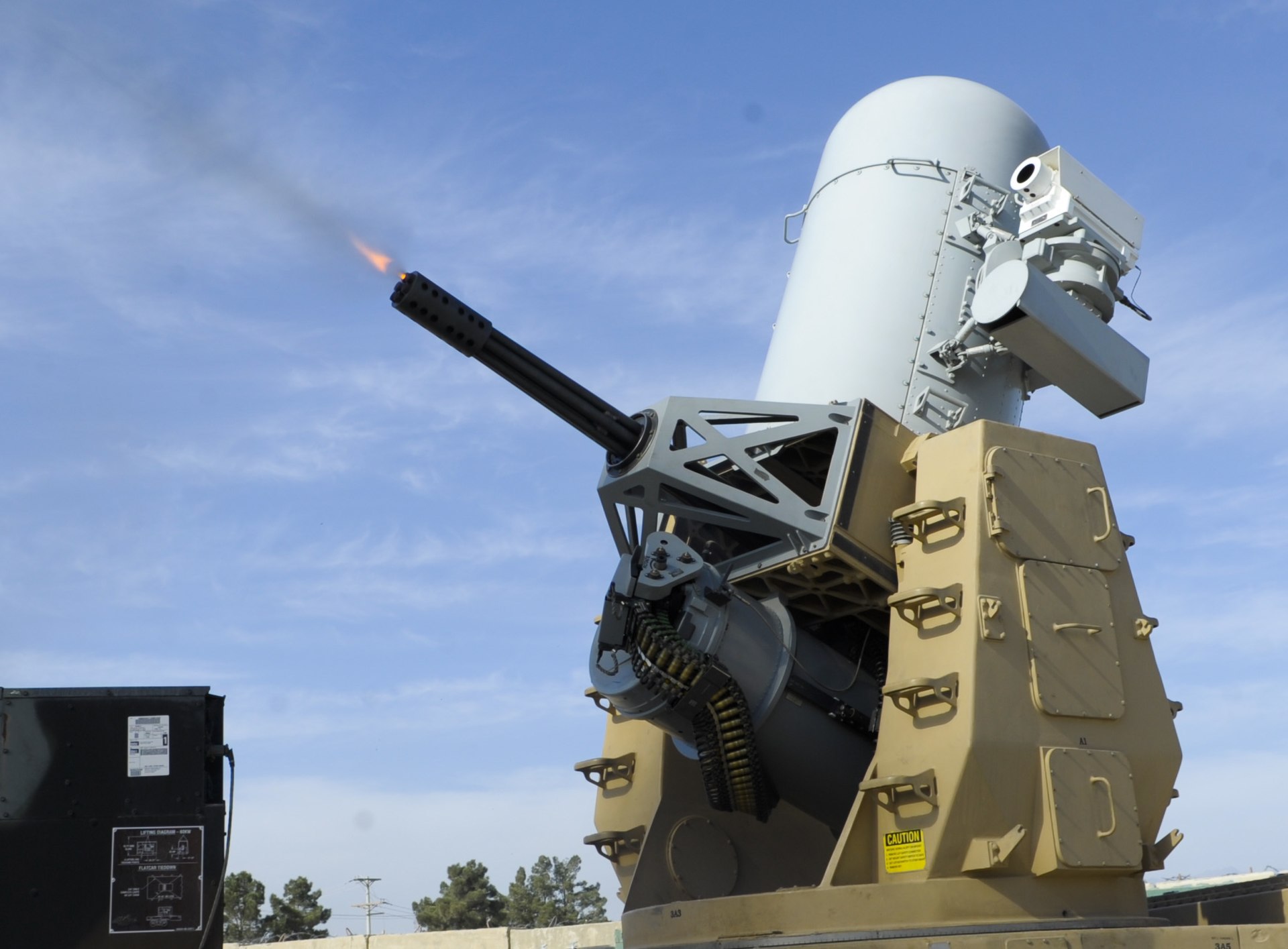
A Counter Rocket Artillery and Mortar (C-RAM) defense system fires during a test, the same type of weapon used to intercept drones targeting the US Embassy in Baghdad. Photo: US Army / Public Domain
Previous Story

Baghdad's Green Zone Comes Under Heaviest Fire Since Iran War Began

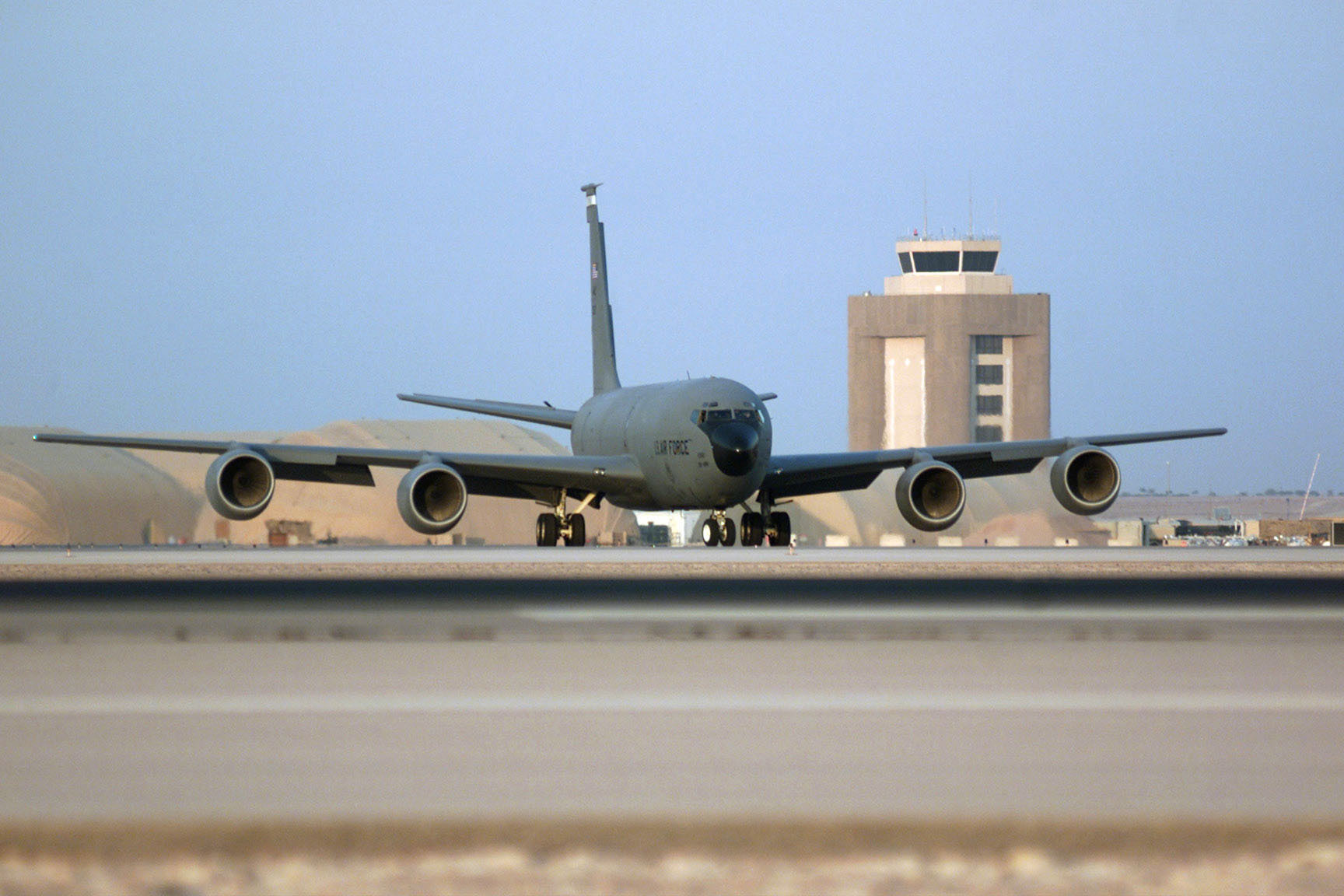
A U.S. Air Force KC-135R Stratotanker at Prince Sultan Air Base in Saudi Arabia, one of the American military installations threatened by the IRGC. Photo: U.S. Air Force / Public Domain
Next Story

Iran Threatens to Strike Every US-Linked Factory in the Gulf

Latest from Diplomacy & Geopolitics