Table of Contents
ISLAMABAD — The United States announced on April 10 that Israeli Ambassador Yechiel Leiter and Lebanese Ambassador Nada Hamadeh Moawad will meet at the State Department on April 14 or 15 to discuss the Lebanon-Israel front — opening a second diplomatic track eight days before the Iran ceasefire expires on April 22 with no extension mechanism identified.
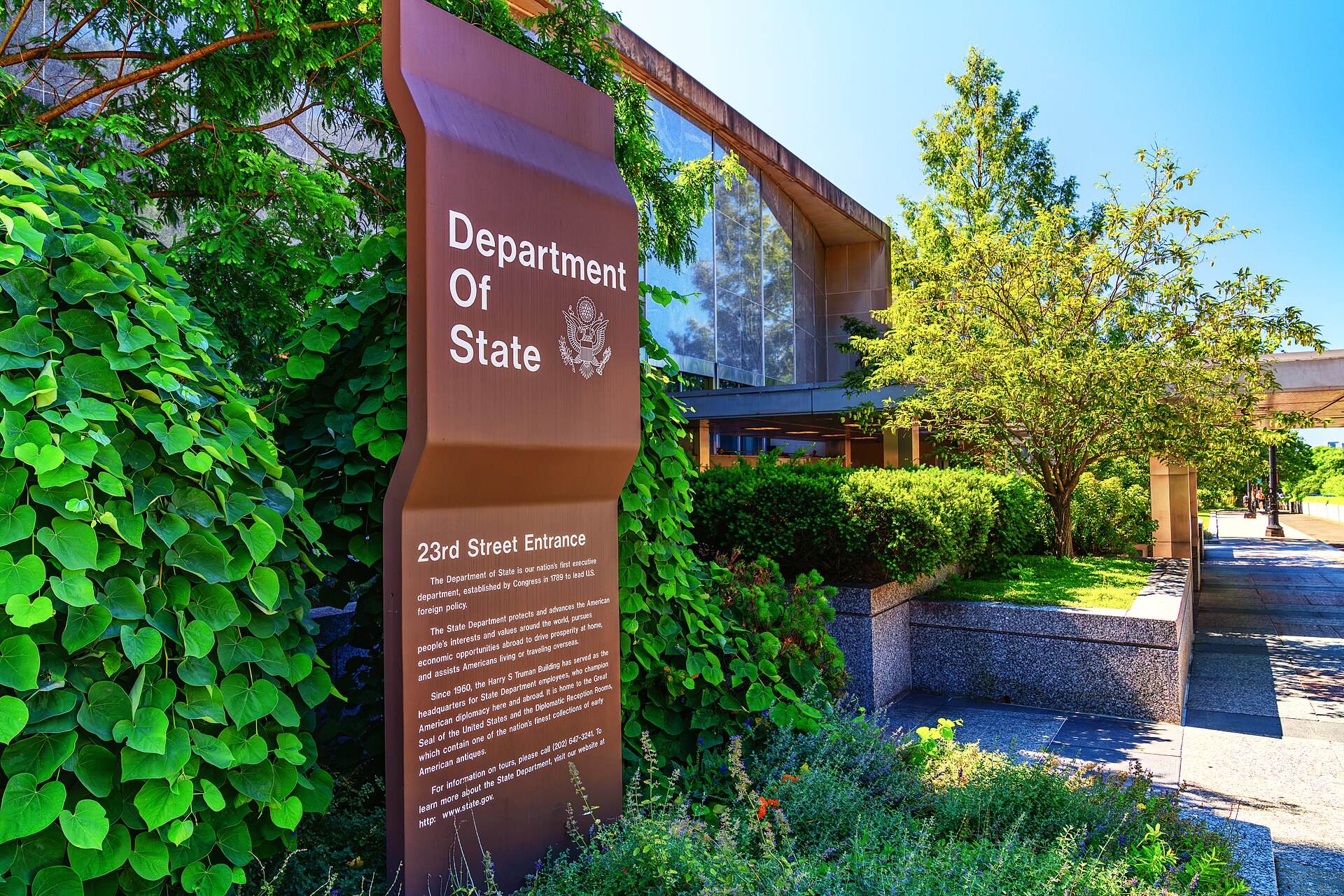
The talks, confirmed by President Aoun’s office in Beirut and the Israeli government, will be led on the US side by Ambassador to Lebanon Michel Issa. Ron Dermer, Israel’s Minister of Strategic Affairs, and Simon Karam, Lebanon’s chief negotiator, will not attend the first session. The meeting opens at ambassador level — preliminary, not substantive.
The problem is structural. Iran has made a Lebanon ceasefire a precondition to the commencement of nuclear and Hormuz negotiations — not a parallel workstream. The Washington track cannot produce an agreement in eight days when the two parties attending do not agree on whether a ceasefire is even the meeting’s purpose. And Saudi Arabia, absent from both tables since its co-guarantor seat lapsed after the March 29-30 ministerials, absorbs the consequences if the two clocks fail to synchronize.
Two Tracks, No Synchronization
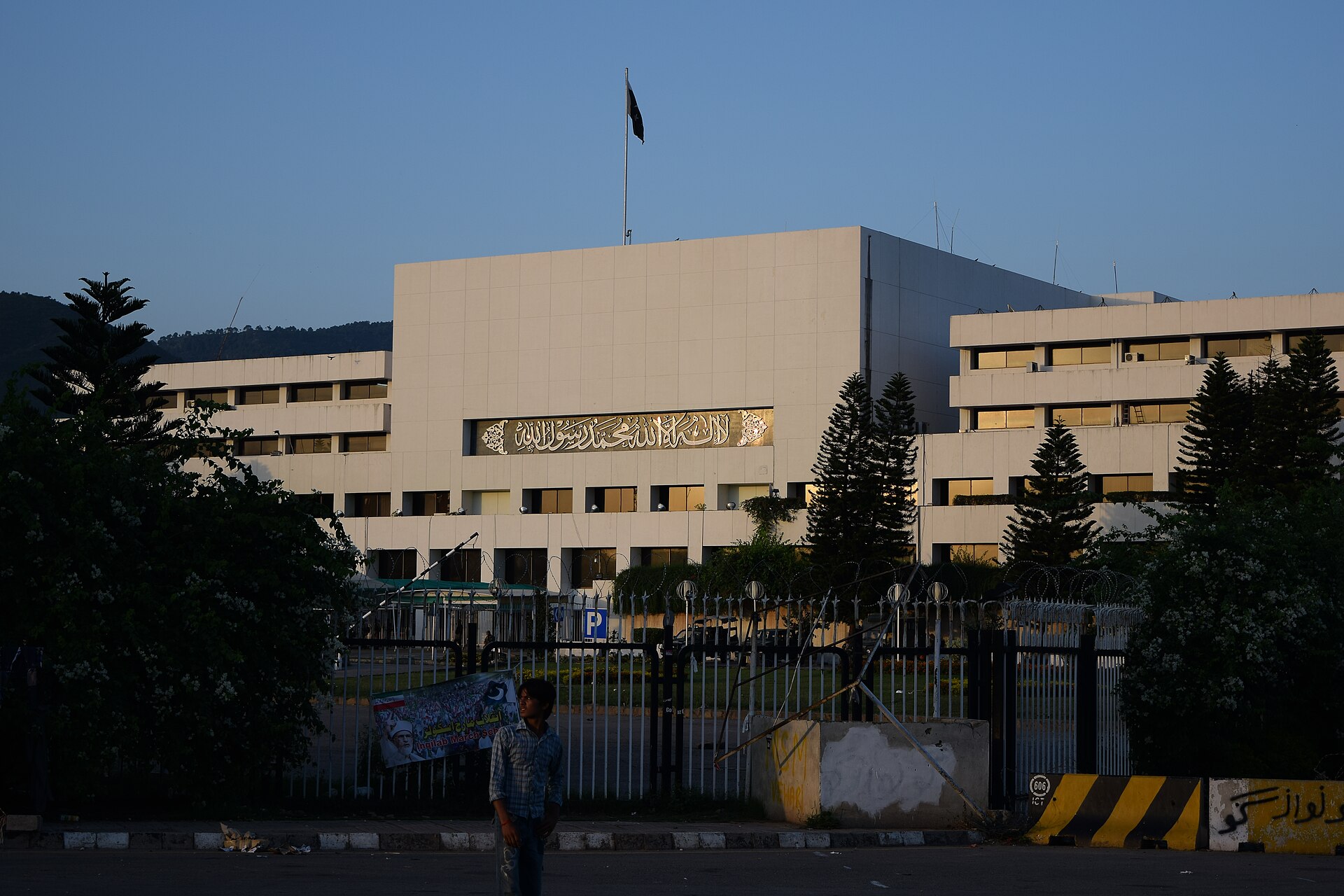
The architecture that emerged this week divides the war’s diplomatic resolution into two separate processes running in two different cities under two different logics. In Islamabad, Pakistan mediates between the United States and Iran on nuclear enrichment, Hormuz governance, and the broader ceasefire framework. In Washington, the State Department hosts Lebanon-Israel talks on what Israel calls a “peace agreement” and Lebanon calls a “ceasefire.”
The two tracks have no formal linkage. No shared timeline. No mechanism to ensure one waits for the other, or that concessions in Washington translate to progress in Islamabad. Rob Geist Pinfold, a lecturer at King’s College London, told Al Jazeera on April 10: “No one seems to agree about what everyone agreed about.”
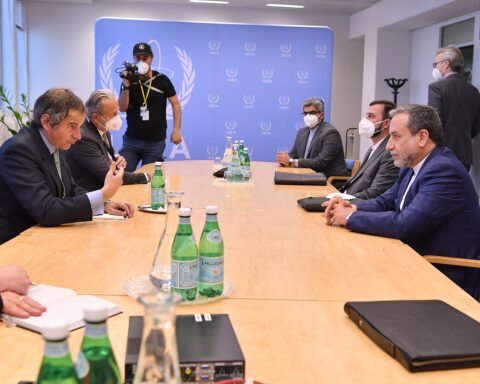
VP JD Vance and Iranian Parliament Speaker Mohammad Bagher Ghalibaf held their first face-to-face session on April 11 — the first direct US-Iran talks since 1979. But the Islamabad track opened under immediate strain. Iran cited three ceasefire violations before talks began: Israeli strikes in Lebanon that Iran said killed 203 people on April 9, an alleged drone incursion into Iranian airspace, and the US refusal to recognize enrichment rights. Two of the three violations are Lebanon-related.
The Middle East briefing 3,000+ readers start their day with.
One email. Every weekday morning. Free.
IRNA, Iran’s state news agency, reported on April 11 that talks started only “after the US side had generally accepted the two conditions” — a Lebanon ceasefire and release of approximately $7 billion in frozen Iranian assets. The White House immediately denied accepting either condition formally.
What Does Lebanon Mean to Iran?
Ghalibaf stated the Iranian position on April 10 in terms that left no interpretive margin: “Two of the measures mutually agreed upon between the parties have yet to be implemented: a ceasefire in Lebanon and the release of Iran’s blocked assets prior to the commencement of negotiations.” The sequencing is explicit. Lebanon first, then talks.
Iranian FM Abbas Araghchi reinforced the framing on X: “The Iran-U.S. Ceasefire terms are clear and explicit: the U.S. must choose — ceasefire or continued war via Israel. It cannot have both.”
“Without fully restraining America’s rabid dog in Lebanon, there will be no ceasefire or negotiations, and the missiles are ready to launch.”
Mahdi Mohammadi, adviser to Iran’s Supreme National Security Council
Tasnim, close to the IRGC, published two dispatches on April 9 that hardened the position further. The first quoted a “senior security source” saying Tehran was “assessing the possibility of exiting the deal should the Israeli regime persist in its breaches.” The second was blunter: “Negotiations will not begin until Washington fulfills its obligations to cease fire in Lebanon.”
Iran’s Deputy FM Majid Takht-Ravanchi added a third condition layer: “We do not seek a ceasefire that allows the aggressor to rearm and carry out aggression again, and we have clearly told our friends that this situation will not be repeated without guarantees.” Iran is not treating Lebanon as a confidence-building measure. It is treating Lebanon as a gate that must open before the Islamabad process can advance to substance.
The CSIS assessment published in April confirmed the structural ambiguity: “The ceasefire covers attacks on Iran, but Israel claims it does not cover its operations against Hezbollah in Lebanon — and Israel has continued attacks there.”
The Washington Meeting That Cannot Agree on Its Own Purpose
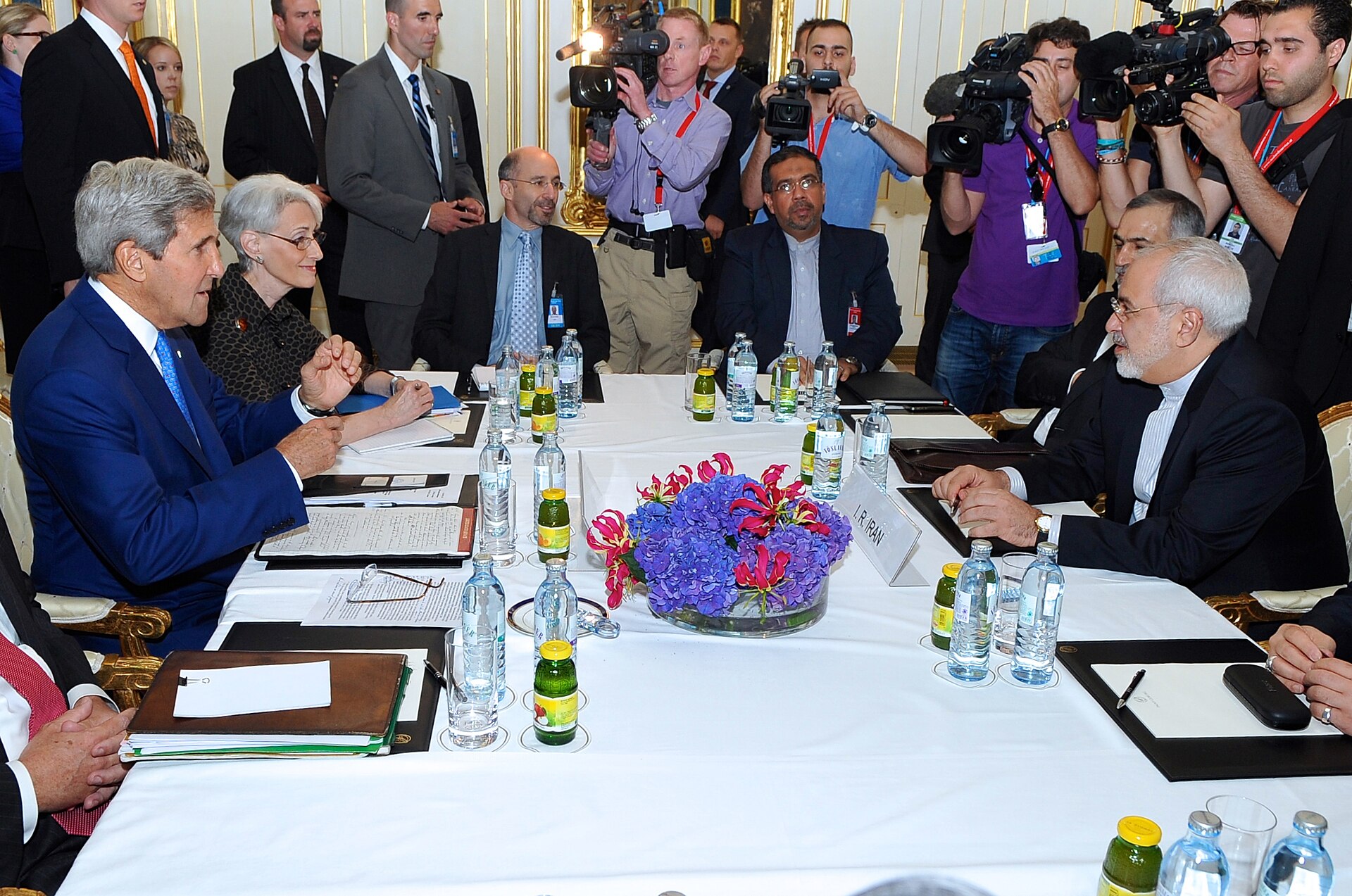
Israeli Ambassador Leiter stated Israel agreed “to promote a peace agreement with Lebanon, but it did not agree to discuss a ceasefire with the terrorist organization Hezbollah.” Lebanon’s stated purpose for attending the same meeting is the opposite: to discuss announcing a ceasefire. The two delegations will sit in the same room at the State Department with mutually exclusive mandates.
Vance acknowledged on April 8 that Israel’s concession at Islamabad was calibrated, not categorical: “The Israelis have offered to check themselves a little bit in Lebanon because they want to make sure that the U.S. negotiation is successful. That’s not because that is part of the ceasefire.” The word “a little bit” does diplomatic work here. It concedes restraint without conceding cessation.
Netanyahu has been direct: “The ceasefire does not include Lebanon.” Pakistan’s PM Shehbaz Sharif stated the opposite — that the ceasefire includes all fronts including Lebanon. Both claims were made publicly. Neither has been retracted.
| Party | Stated Purpose | Lebanon Ceasefire? | Hezbollah Status |
|---|---|---|---|
| Israel (Leiter) | “Peace agreement” | No | Terrorist org, excluded |
| Lebanon (Moawad) | “Ceasefire announcement” | Yes | Domestic party, included |
| Iran (Ghalibaf) | Precondition to Islamabad | Must precede talks | Resistance axis partner |
| US (Vance) | “Not part of the ceasefire” | Parallel, separate | Unstated |
| Pakistan (Sharif) | “All fronts” | Yes, included | Implied |
The talks open at ambassador level. Dermer and Karam — the principals with actual negotiating authority — are not attending the first session. Even under optimistic assumptions, the Washington track requires multiple rounds before reaching the level of specificity that Iran demands as a precondition to advancing in Islamabad.
Can Eight Days Close Two Tracks?
The arithmetic is straightforward. The first Washington session is scheduled for April 14 or 15. The ceasefire expires on April 22. That leaves seven to eight days for the Washington track to produce a result that Iran accepts as fulfilling its Lebanon precondition — so that the Islamabad track can then advance to the nuclear and Hormuz issues that constitute the actual final agreement.
No extension mechanism for the April 22 deadline has been identified. The Soufan Center’s analysis noted the absence of any renewal clause. CFR characterized the ceasefire as “less a resolution than a pause in a conflict whose underlying drivers remain not only intact but, in some cases, intensified.”
| Date | Event | Track |
|---|---|---|
| April 11 | Vance-Ghalibaf face-to-face (Islamabad) | Islamabad |
| April 14/15 | Leiter-Moawad first session (Washington) | Washington |
| April 18 | Hajj arrival corridor opens; Umrah cordon seals | — |
| April 22 | Ceasefire expires | Both |
The sequential dependency is the core problem. Iran does not treat Lebanon as a parallel workstream that can run alongside Islamabad. Ghalibaf’s language — “prior to the commencement of negotiations” — places Lebanon resolution as a prerequisite to the start of substantive talks, not as a simultaneous process whose results can be folded in later. Even if the Washington track produces something on April 16 or 17, the Islamabad track would then need to open substantive negotiations on enrichment, Hormuz governance, frozen assets, and IRGC force posture in five days or fewer.
Iran’s 10-point plan adds another layer. Point 7 demands IRGC “coordination” over Hormuz transit as a treaty requirement — a Phase 2 demand, meaning even if Lebanon is somehow resolved, Hormuz governance remains a structural blocker to any final text. The absence of an enforcement mechanism for what has already been agreed compounds the sequencing problem with a compliance problem.
Saudi Arabia’s Exposure Between Two Tables
Saudi Arabia held a co-guarantor seat at the March 29-30 Islamabad ministerials. FM Faisal bin Farhan was present. By April 10, when Vance met Ghalibaf bilaterally, the Saudi seat was empty. Riyadh has no announced role in the Washington Lebanon-Israel track either.
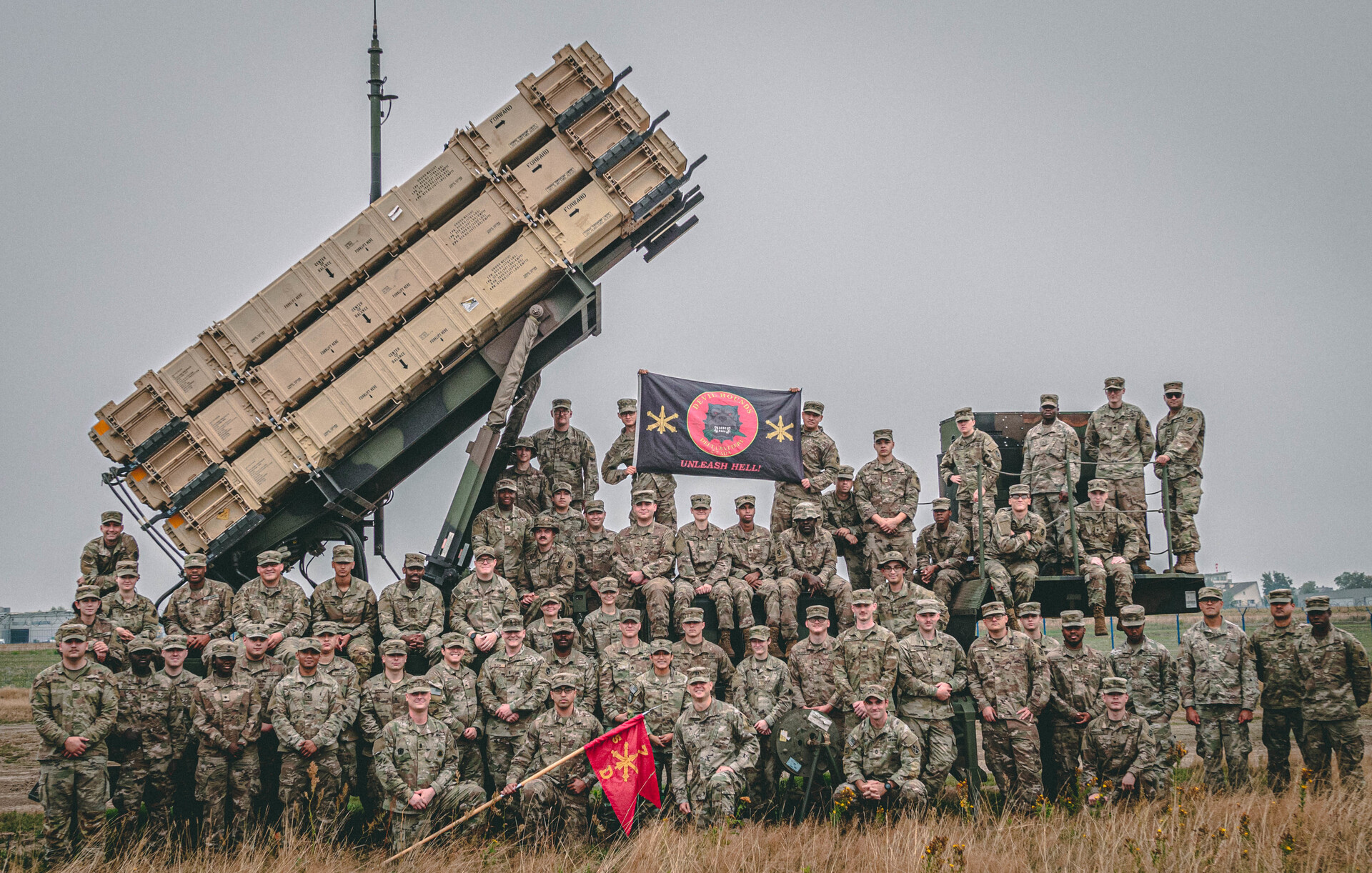
The kingdom’s exposure is material. Approximately 400 PAC-3 MSE interceptors remain in Saudi inventory — an 86 percent depletion from the pre-war stockpile of roughly 2,800 rounds. A $4.76 billion Lockheed Martin contract signed on April 10 begins production that is 18 to 24 months away. Camden, Arkansas produces 620 rounds per year. The gap between current inventory and replenishment is not a planning abstraction — it is the country’s defensive ceiling for the next year and a half.
Aramco’s May Official Selling Price was set at a +$19.50 per barrel premium to Asia when Brent traded near $109. Brent has since fallen to approximately $96-97, leaving Asian term buyers paying $12-13 per barrel above current spot prices on Saudi crude. Aramco has already restricted April liftings through Yanbu, the Red Sea terminal that handles exports bypassing the Hormuz chokepoint. Saudi fiscal break-even estimates — Bloomberg’s PIF-inclusive figure is $108-111 per barrel — sit above current spot prices.
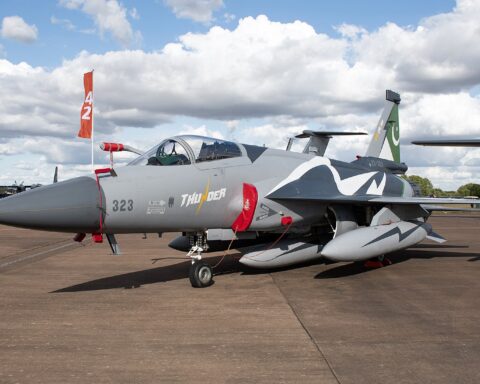
Pakistan’s deployment of fighter jets to Saudi Arabia addresses one dimension of the air defense gap but does not change the interceptor arithmetic. If the ceasefire collapses on April 22 without a successor framework, the kingdom faces renewed IRGC targeting with a fraction of its pre-war defensive capacity and no seat at the table where the war’s resolution is being negotiated.
The Starmer visit to Jeddah on April 8 briefly gave Saudi Arabia a diplomatic lever on Lebanon — the UK attributed the Lebanon-inclusion demand to itself, allowing Riyadh to avoid a public confrontation with Washington. But the Washington track now formalizes Lebanon as a US-managed bilateral from which Saudi Arabia is absent. The kingdom’s preferred outcome — a comprehensive ceasefire that includes Lebanon and stabilizes Hormuz — depends entirely on two processes it does not control.
Background
The two-track structure that emerged this week has precedents, none of them encouraging. The Minsk agreements of 2014-2015 divided the Ukraine conflict’s resolution into sequential dependencies — military provisions and political provisions — that each side used to avoid compliance while claiming to support the process. The accords remained largely unimplemented for eight years before collapsing entirely.
The Oslo Accords of 1993 deferred the hardest issues — Jerusalem, refugees, borders — to final status talks within five years. The sequential deferral of core issues, modeled as a confidence-building mechanism, instead allowed each side to avoid existential concessions while extracting tactical benefits from the interim framework. Iran’s 10-point plan replicates an analogous architecture in reverse: Phase 2 defers Hormuz governance and enrichment rights, meaning Iran has diminished incentive to finalize Phase 1 if Phase 2 contains the provisions it actually values.
The Netanyahu uranium ultimatum of April 10 — demanding Iran halt all enrichment as a ceasefire condition — added a further precondition to a process already overloaded with prerequisites. The April 11 Vance-Ghalibaf meeting in Islamabad proceeded without Vahidi, the IRGC commander who controls authorization for military compliance, in the room. Even if the diplomatic tracks converge, the military track runs through a command structure that has not been present at any negotiating table.
Frequently Asked Questions
Who specifically will attend the April 14/15 Washington talks?
Israeli Ambassador Yechiel Leiter and Lebanese Ambassador Nada Hamadeh Moawad, with US Ambassador to Lebanon Michel Issa facilitating. Ron Dermer, Israel’s Minister of Strategic Affairs and the head of its broader negotiating delegation, and Simon Karam, Lebanon’s chief negotiator, will not attend the first session. The opening round is ambassador-level only — a format typically reserved for agenda-setting, not substantive negotiation.
Has Iran ever dropped a precondition mid-negotiation?
Iran’s JCPOA negotiating history (2013-2015) involved sequential de-escalation of preconditions, but over a 20-month timeline with continuous back-channel engagement. The current framework allows eight days. During the JCPOA process, Iran initially demanded recognition of enrichment rights as a precondition; this was eventually reframed as an outcome embedded in the final text rather than a prerequisite to talks. Whether a similar reframing is possible for the Lebanon precondition in eight days — without the back-channel infrastructure that took months to build during JCPOA — is an open question.
What happens to the Islamabad track if Washington produces no result by April 22?
No extension mechanism for the ceasefire has been identified publicly. If the Washington track fails to satisfy Iran’s Lebanon precondition by April 22, Iran’s stated position — articulated by Ghalibaf, Araghchi, and Tasnim — is that substantive negotiations cannot commence. The Islamabad track would then face a ceasefire expiry without having advanced beyond preliminary discussions, returning the conflict to a pre-ceasefire posture with depleted air defenses across the Gulf and no diplomatic framework in place.
Why is Vahidi’s absence from talks a structural issue?
Ali Akbar Ahmadian Vahidi serves as Secretary of Iran’s Supreme National Security Council — the body that controls authorization for military compliance with any ceasefire agreement. Ghalibaf and Araghchi can negotiate terms; the SNSC under Vahidi must authorize the IRGC’s 31 regional corps to comply. An unnamed Iranian parliamentarian told NBC that “Vahidi is in charge.” His absence from the April 11 bilateral means any agreement reached in the room requires a separate, internal Iranian authorization process with no guaranteed timeline.
What is Iran’s $7 billion frozen assets claim?
Ghalibaf cited the release of approximately $7 billion in frozen Iranian assets as the second precondition alongside Lebanon. These funds are primarily held in restricted accounts in South Korea, Iraq, and Japan — remnants of oil payments frozen under US sanctions. A previous arrangement in September 2023 released $6 billion from South Korean accounts to Qatari escrow for humanitarian purchases, but was frozen again after the October 7 Hamas attack. The current demand appears to seek direct, unconditional release rather than the escrow mechanism used in 2023.