
RIYADH — Ukraine’s low-cost interceptor drones, battle-tested against more than a thousand Iranian-made Shahed kamikaze drones over Ukrainian skies, have emerged as the single most requested military technology in the Gulf as Saudi Arabia and its neighbours haemorrhage billions of dollars firing multi-million-dollar missiles at threats that cost less than a used car. President Volodymyr Zelenskyy’s March 7 phone call with Crown Prince Mohammed bin Salman — in which the Ukrainian leader explicitly offered counter-drone expertise in exchange for Patriot missiles Kyiv can no longer afford to wait for — has opened the most improbable defense partnership of the twenty-first century and exposed an uncomfortable truth the Western arms industry would prefer to keep quiet.
The arithmetic is devastating. A single PAC-3 interceptor missile fired from a Patriot battery costs approximately $4 million. The Iranian Shahed-136 it is designed to destroy costs between $20,000 and $35,000. Ukraine’s Sting interceptor drone, developed by the volunteer-turned-manufacturer Wild Hornets group, costs roughly $2,100. In the first three days of Iranian strikes on Gulf states, coalition forces expended more than 800 Patriot-class missiles — a bill exceeding $3.2 billion — to counter a threat that Tehran produced for a fraction of that sum. The Centre for Strategic and International Studies estimated the total cost of the first 100 hours of Operation Epic Fury at $3.7 billion, with air defense constituting the largest single expenditure category. Saudi Arabia’s $75 billion annual defense budget suddenly looks inadequate not because the Kingdom lacks firepower, but because it is using the wrong ammunition.
Table of Contents
- What Are Ukraine’s Shahed Killer Drones?
- Why Is Saudi Arabia’s Air Defense Struggling Against Iranian Drones?
- How Did Ukraine Build the World’s Best Counter-Drone Technology?
- The Interceptor Cost Matrix
- What Did Zelenskyy Offer MBS on March 7?
- The Weapons Export Ban That Could Block the Deal
- Can a $1,000 Drone Replace a $4 Million Missile?
- The Great Swap — Interceptors for Patriots
- Who Else Wants Ukraine’s Drone Killers?
- The Defense Industry’s Uncomfortable Truth
- How Would Ukrainian Drones Operate Over Saudi Airspace?
- What Happens If Saudi Arabia Gets Ukrainian Interceptors?
- Frequently Asked Questions
What Are Ukraine’s Shahed Killer Drones?
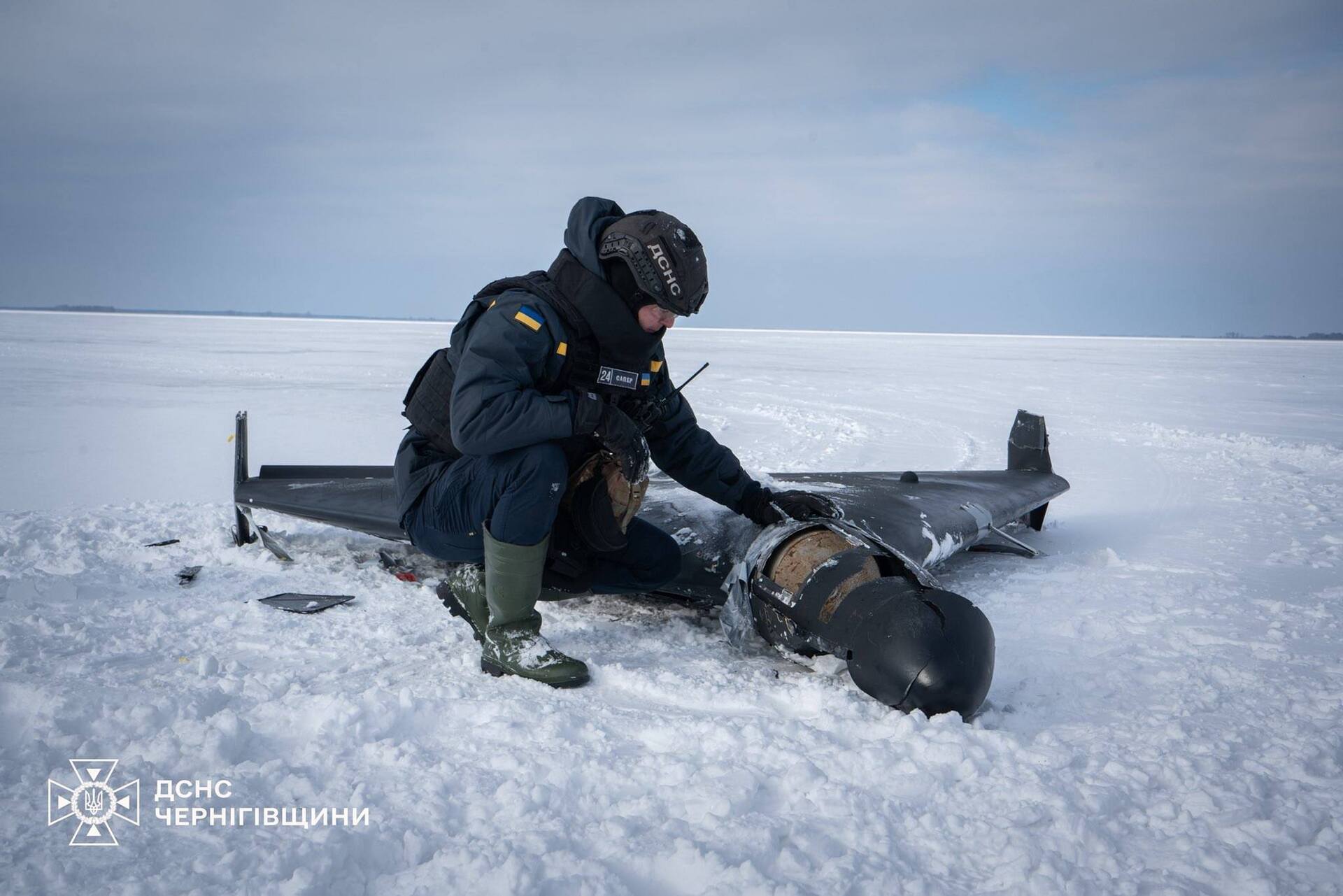
Ukraine’s Shahed killer drones are a class of low-cost interceptor unmanned aerial vehicles purpose-built to destroy Iranian-made Shahed-136 kamikaze drones in flight, using kinetic impact or proximity detonation at a fraction of the cost of conventional air defense missiles. The most prominent system, the Sting interceptor developed by the Ukrainian company Wild Hornets, costs approximately $2,100 per unit and has destroyed more than 1,000 enemy drones since entering operational service in 2025.
The Sting emerged from one of the most remarkable stories of wartime innovation in modern military history. Wild Hornets began as a volunteer group of engineers, hobbyists, and software developers who came together after Russia’s full-scale invasion of Ukraine in February 2022. By 2024, they had transformed into a licensed defence manufacturer. Their flagship product — a 3D-printed, bullet-shaped quadcopter fitted with Kurbas thermal imaging cameras from Ukrainian optics firm Odd Systems — can reach speeds of 343 kilometres per hour, cruise at altitudes of up to 3,000 metres, and engage targets at ranges of 25 kilometres.
The Sting is not the only Ukrainian interceptor in production. The Merops, a fixed-wing interceptor drone backed by technology investors including former Google CEO Eric Schmidt, offers a complementary capability for longer-range engagements. The Pentagon has since deployed 10,000 Merops interceptor drones to the Gulf, each costing roughly $15,000, validating the expendable-interceptor model at scale. Both systems share a common design philosophy: mass-producible, expendable, and specifically optimized for the slow, predictable flight profile of the Shahed-136 and its variants.
What makes these drones revolutionary is not any single technological breakthrough but the integration of commercial components, open-source software, and battlefield-tested tactics into a weapons system that costs less than a high-end laptop. The thermal imaging guidance allows the Sting to operate effectively at night — the preferred launch window for Shahed attacks — and in the electronic warfare environments where GPS-guided munitions often fail. In May 2025, Wild Hornets published thermal imaging footage from a Sting interceptor as it tracked and destroyed a Shahed in flight, marking what Defence News called “a breakthrough in frontline drone defense.”
Why Is Saudi Arabia’s Air Defense Struggling Against Iranian Drones?
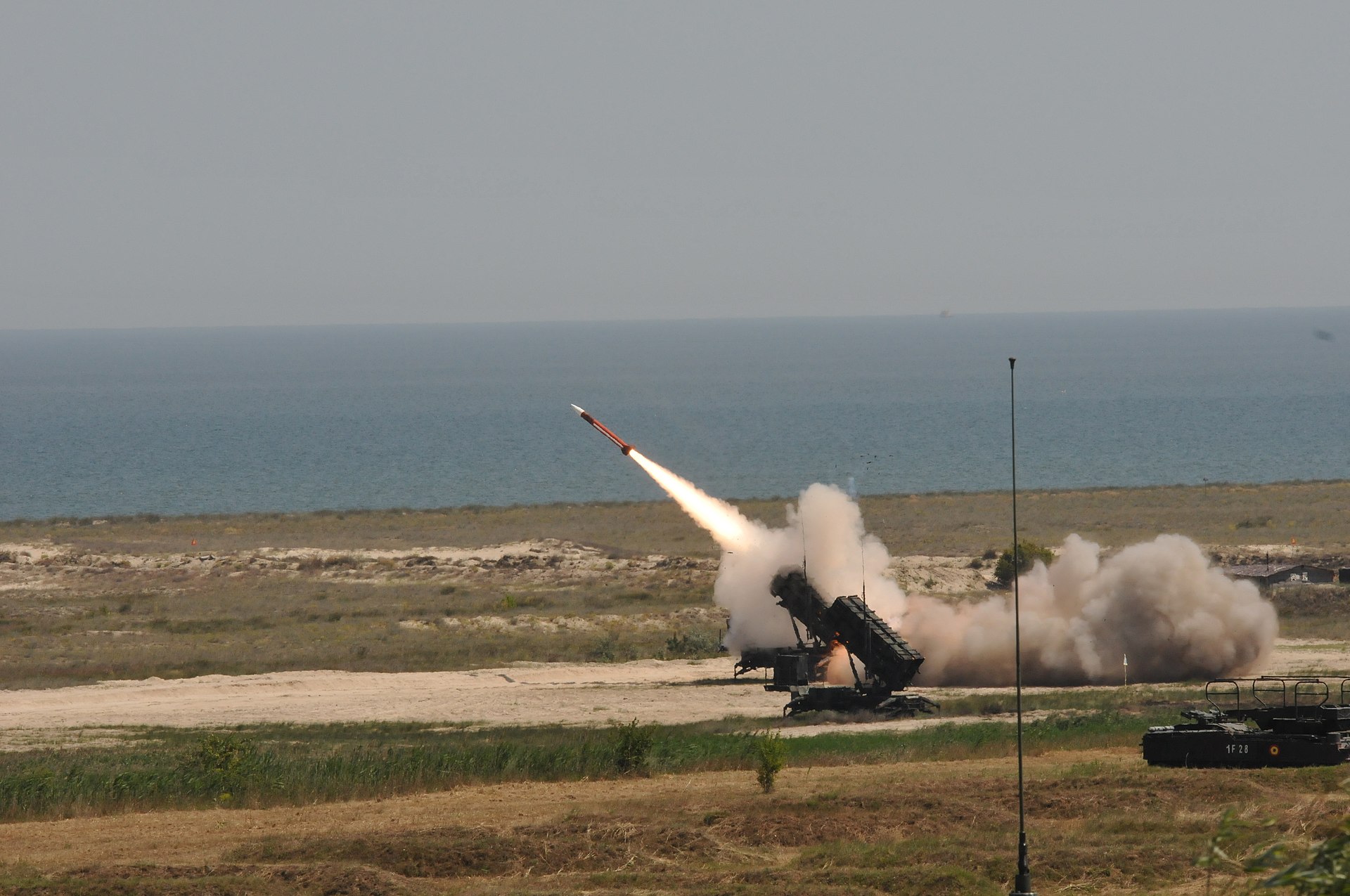
Saudi Arabia’s multi-layered air defense network — among the most expensive in the world — was designed to counter ballistic missiles and fighter aircraft, not swarms of low-cost drones flying at treetop height. The Kingdom’s arsenal includes American-made Patriot PAC-3 batteries and Terminal High Altitude Area Defense (THAAD) systems, French-built Crotale and Shahine short-range interceptors, and Chinese Silent Hunter laser systems, yet the Iranian drone campaign has exposed a structural vulnerability that no amount of conventional spending can resolve.
The core problem is geometric. Saudi Arabia’s critical infrastructure stretches across 2.15 million square kilometres of territory, from the Shaybah oil field in the Empty Quarter to the Ras Tanura refinery complex on the Persian Gulf coast to the Yanbu terminal on the Red Sea. Defending every high-value target against saturation drone attacks would require a density of air defense assets that even the Kingdom’s budget cannot sustain. The Patriot system, originally developed in the 1980s to counter Soviet ballistic missiles, was never designed for the drone threat. Its radar struggles to track small, slow-moving targets against ground clutter, and its PAC-3 interceptor — at $4 million per shot — creates an exchange ratio that favours the attacker by a factor of approximately 200 to one.
Iran has exploited this asymmetry with precision. According to Anadolu Agency’s analysis of the first week of strikes, the cost disparity in Gulf air defence “exposes long-term sustainability risks” that threaten to exhaust interceptor stockpiles faster than they can be replenished. Raytheon, the manufacturer of the Patriot system, produces approximately 500 PAC-3 missiles per year globally. At the rate Gulf states consumed interceptors in the first three days of the conflict — more than 800 missiles, according to Zelenskyy — the entire annual global production run would be exhausted in less than two days of sustained combat.
The THAAD system, while more capable against ballistic missiles, is even less suited to the drone threat. Each THAAD interceptor costs approximately $12 million and is designed for exo-atmospheric kills against incoming warheads, not low-altitude drone swarms. Saudi Arabia deployed THAAD batteries to protect its most critical assets, but using a $12 million missile to destroy a $20,000 drone is not a defense strategy — it is a path to financial exhaustion.
CNN’s investigation into the first week of the war revealed that Iranian strikes damaged radar installations at US military bases housing key missile interceptor systems in Jordan, Saudi Arabia, and the UAE, further degrading the conventional air defense architecture. The Shahed-136’s flight profile — low altitude, slow speed, minimal radar cross-section — was specifically engineered to exploit gaps in the layered defense systems that Gulf states spent decades and hundreds of billions of dollars constructing.
How Did Ukraine Build the World’s Best Counter-Drone Technology?
Ukraine’s counter-drone expertise was forged in the most sustained drone campaign in the history of warfare. Since September 2022, when Russia began launching Iranian-supplied Shahed-136 drones at Ukrainian cities and infrastructure, Kyiv’s defenders have confronted, tracked, analysed, and destroyed thousands of the exact weapon system now terrorising the Gulf. No other country on earth has this operational experience, and no laboratory or simulation can replicate it.
The evolution from improvised response to industrial-scale production took less than three years. In the autumn of 2022, Ukrainian forces initially relied on anti-aircraft guns, shoulder-fired missiles, and even small-arms fire to engage incoming Shaheds. The results were inconsistent and expensive. A Stinger missile costs between $38,000 and $120,000 depending on the variant; a burst from a ZU-23-2 anti-aircraft gun is cheaper but requires visual acquisition and clear weather conditions.
By mid-2023, Ukrainian engineers had begun developing purpose-built interceptor drones. The innovation came not from the traditional defense establishment but from the country’s civil society — technology entrepreneurs, drone racing enthusiasts, software engineers, and 3D printing specialists who adapted commercial drone components for military applications. Wild Hornets, the group that would develop the Sting, was founded by veterans of Ukraine’s volunteer drone units who recognized that the Shahed’s predictable flight path and minimal evasive capability made it an ideal target for a low-cost, autonomously guided interceptor.
The technical challenge was significant but not insurmountable. The Shahed-136 flies at approximately 185 kilometres per hour, navigates primarily by inertial guidance supplemented by satellite positioning, and carries a 40-kilogram explosive warhead. It has virtually no capacity to evade. The Sting was designed to exploit every one of these characteristics: faster speed (343 km/h versus 185 km/h), thermal imaging guidance that works regardless of GPS jamming, and a kinetic kill mechanism that requires only physical contact with the target.
By October 2025, Wild Hornets announced that Sting interceptors had destroyed more than 1,000 enemy drones. The achievement was remarkable not only for the kill count but for the cost efficiency. At $2,100 per Sting versus $20,000-$35,000 per Shahed, Ukraine had inverted the cost asymmetry that typically favours the attacker in drone warfare. For the first time in modern conflict, the defender’s weapon cost less than the attacker’s weapon.
The institutional knowledge Ukraine has accumulated extends far beyond any single weapons system. Ukrainian air defense operators have developed detailed tactical databases of Shahed flight profiles, launch patterns, and routing preferences. They have identified the drone’s infrared signature characteristics, its vulnerability to specific electronic warfare frequencies, and the optimal engagement geometries for different interceptor types. This knowledge — often described as “tribal knowledge” in defense circles because it exists primarily in the experience of operators rather than in manuals — is precisely what Gulf states now lack and cannot develop quickly enough to matter in the current conflict.
The scale of Ukraine’s experience is without historical parallel. Russia launched an estimated 6,000 to 8,000 Shahed-type drones at Ukraine between September 2022 and February 2026, according to the Ukrainian Air Force. Each attack provided data points on launch timing, approach vectors, altitude profiles, speed variations, and evasive patterns that the drones occasionally exhibit when encountering electronic warfare barriers. Ukraine’s Air Force Command maintains a classified database of these engagements that represents the most comprehensive operational intelligence on the Shahed platform anywhere in the world — more detailed than anything the manufacturer in Iran possesses, because Ukraine observes the weapon from the defender’s perspective under real combat conditions.
The Shahed-136 that Iran is now launching at Saudi targets is operationally identical to the variant Russia deploys against Ukraine. The drone’s Mado MD-550 engine — a reverse-engineered copy of a German commercial engine — produces the same thermal signature regardless of whether it is flying over Odesa or over Riyadh. Its guidance system, navigation waypoints, and terminal dive profile are consistent across all theatres. Any defensive technique that works against the Shahed in Ukraine will work against the Shahed in Saudi Arabia. This direct transferability is the foundation of Zelenskyy’s offer and the reason it has been received with such urgency across the Gulf.
The Interceptor Cost Matrix
The economics of air defense in the drone age represent a fundamental challenge to the way Gulf states and their Western allies have structured military spending for the past four decades. The disparity between the cost of attacking and defending has never been wider, and the traditional solution — buying more of the same expensive systems — only accelerates the attacker’s advantage.
Eight distinct air defense systems are currently available or in development for countering drone threats. Their cost-effectiveness varies by orders of magnitude, and the systems best suited to the Shahed threat are, almost without exception, the ones least likely to be found in a Gulf state’s arsenal.
| System | Origin | Cost Per Intercept | Cost Ratio vs Shahed ($25K) | Drone Effectiveness | Scalability |
|---|---|---|---|---|---|
| Sting Interceptor Drone | Ukraine | $2,100 | 0.08:1 | Purpose-built | Mass producible |
| Merops Fixed-Wing Interceptor | Ukraine | $3,000-$5,000 | 0.12-0.2:1 | Purpose-built | Mass producible |
| APKWS Guided Rocket | United States | $20,000-$30,000 | 0.8-1.2:1 | Adapted | Moderate |
| Coyote Block 3 Drone | United States | $80,000-$100,000 | 3.2-4:1 | Purpose-built | Limited |
| AIM-9X Sidewinder | United States | $430,000 | 17:1 | Adapted | Limited |
| Patriot PAC-3 | United States | $4,000,000 | 160:1 | Not designed for | Production-limited |
| THAAD Interceptor | United States | $12,000,000 | 480:1 | Not designed for | Highly limited |
| Silent Hunter Laser | China | ~$1 per shot | 0.00004:1 | Short-range only | Power-dependent |
The matrix reveals three categories of response. At the top are purpose-built counter-drone systems — the Ukrainian interceptors and the Chinese laser — that cost a fraction of their targets. In the middle sit adapted munitions like the APKWS guided rocket that approach cost parity. At the bottom are the legacy systems that Gulf states currently rely on, where every successful interception represents a net financial loss measured in millions of dollars.
Saudi Arabia is uniquely positioned in this matrix. The Kingdom operates systems from all three categories — Patriot and THAAD from the United States, Crotale and Shahine from France, and Silent Hunter lasers from China — but has no access to the purpose-built interceptor drones that deliver the most favourable economics. The Chinese Silent Hunter laser system, which Saudi Arabia is the only Gulf state to deploy, theoretically offers near-zero marginal cost per engagement but suffers from short effective range, weather sensitivity, and power supply limitations that make it unsuitable as a primary defense against massed drone attacks.
The gap in the middle of the matrix — between the $30,000 APKWS and the $2,100 Sting — is where the entire strategic conversation now sits. Filling that gap with Ukrainian interceptor technology would transform the economics of Gulf air defense overnight.
What Did Zelenskyy Offer MBS on March 7?
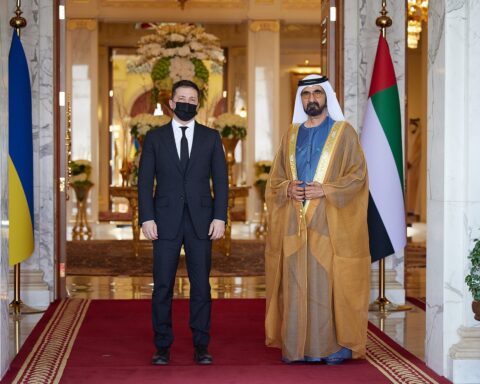
On March 7, 2026, Ukrainian President Volodymyr Zelenskyy called Saudi Crown Prince Mohammed bin Salman to discuss what Zelenskyy’s office described as “the security situation in the Middle East and the Gulf region — the existing challenges and countering threats from the Iranian regime.” The call, confirmed by Christopher Miller of the Financial Times and multiple wire services, marked the first direct defence cooperation discussion between Ukraine and Saudi Arabia in the history of either country.
Zelenskyy’s pitch was direct. “Ukrainians have been fighting against Shahed drones for years now, and everyone recognises that no other country in the world has this kind of experience,” he stated publicly after the call. “We are ready to help.” The offer encompassed three distinct elements: the deployment of Ukrainian counter-drone specialists to the Gulf, the transfer of operational knowledge and tactical doctrine, and — pending resolution of Ukraine’s wartime weapons export ban — the supply of interceptor drone hardware.
The timing was calculated with precision. By March 7, Iranian strikes had hit Saudi territory on multiple occasions, including the attack on a residential compound in Al-Kharj that killed two foreign nationals and wounded twelve. The US Embassy in Riyadh had been struck by drones on March 3, and Iranian attacks had expanded to civilian infrastructure across the Gulf. The conventional air defense systems were consuming interceptor missiles at an unsustainable rate. MBS needed solutions that his existing defence partnerships could not provide.
Al Jazeera reported that Zelenskyy also spoke with the leaders of Bahrain, Jordan, Kuwait, Qatar, and the UAE in the same 48-hour period, indicating a coordinated diplomatic offensive rather than an opportunistic phone call. Bloomberg reported separately that the Ukrainian president offered “help to stop Iranian drones in return for truce” — a reference to Zelenskyy’s broader strategic ambition of trading counter-drone assistance for diplomatic support on the Russia-Ukraine conflict.
The Hill reported that Ukraine had already begun sending military specialists to the Middle East to assist with counter-drone operations, though the exact number and deployment locations were not disclosed for operational security reasons. Defence Industry Europe confirmed that Zelenskyy announced “the deployment of Ukrainian military specialists to the Middle East,” suggesting that personnel transfers preceded and may have enabled the March 7 call with MBS.
Zelenskyy subsequently confirmed on March 8 that Ukraine would deploy its first counter-drone expert teams to Saudi Arabia and the Gulf the following week, marking the transition from diplomatic offer to operational deployment.
The Weapons Export Ban That Could Block the Deal
The single largest obstacle to Ukraine supplying interceptor drones to Saudi Arabia and the Gulf is not technology, cost, or logistics — it is Kyiv’s own wartime weapons export ban. When Russia launched its full-scale invasion in February 2022, Ukraine imposed a blanket prohibition on weapons exports to ensure that every piece of military hardware produced domestically went to the front lines. Four years later, that emergency measure has become the primary barrier to Ukraine’s most significant diplomatic and commercial opportunity since the war began.
The ban’s logic was unassailable in 2022. Ukraine faced an existential military threat and could not afford to divert any defence production capacity to foreign customers. But the calculus has shifted dramatically. The Globe and Mail reported on March 7 that Ukrainian interceptor drone manufacturers “say they are receiving interest from the United States and Gulf states” but cannot fulfil orders under current regulations. Fortune confirmed that “the U.S. and Gulf countries, including the UAE, Bahrain, Saudi Arabia, and Qatar, have repeatedly requested Ukrainian interceptor drones.”
The irony is acute. Ukraine’s most successful defense innovation — one that has proven more effective against Shaheds than systems costing a hundred times more — cannot be sold to the countries that need it most. Meanwhile, the countries requesting Ukrainian interceptors are the same ones that supply Ukraine with conventional weapons, financial aid, and diplomatic support. The export ban, designed to protect Ukraine, is now undermining its ability to build the strategic relationships it needs to survive.
Ukrainian officials have begun discussing a transition from a blanket export freeze to a state-regulated market, but implementation details remain unclear. The Washington Times reported that the shift would require legislative action, executive orders, and the establishment of an arms export licensing regime that Ukraine does not currently possess. Defence analysts estimate the regulatory framework could take six to twelve months to establish — an eternity in a conflict where interceptor stockpiles are being depleted by the day.
One workaround has already emerged. US News reported that Ukrainian interceptor drone makers are “looking at exports to the Gulf as Iran war flares,” suggesting that some manufacturers are exploring licensing agreements, joint ventures, or production-under-license arrangements that might circumvent the export ban without technically violating it. A factory in the UAE producing Ukrainian-designed interceptors using locally sourced components, for example, would not require a Ukrainian export license — only a technology transfer agreement.
Can a $1,000 Drone Replace a $4 Million Missile?
The question is not whether Ukrainian interceptor drones can replace Patriot missiles — they cannot, and no serious defence analyst argues otherwise. Patriot remains essential for intercepting ballistic missiles, cruise missiles, and advanced aerial threats that travel at speeds and altitudes far beyond any interceptor drone’s capability. The question is whether Ukrainian drones can handle the specific subset of the threat — slow, low-flying kamikaze drones — that Patriot was never designed to engage and that currently consumes the majority of Gulf interceptor expenditure.
The answer, based on Ukrainian combat data, is overwhelmingly yes. The Sting interceptor’s 343 km/h speed gives it a 158 km/h velocity advantage over the Shahed-136. Its thermal imaging guidance works independently of GPS, making it resistant to the electronic warfare tactics that Iran has used to degrade conventional air defense targeting. Its 25-kilometre engagement range allows it to intercept incoming drones well before they reach their targets, providing the same defensive perimeter as short-range missile systems at a fraction of the cost.
The operational concept is layered defence, not replacement. In a properly integrated system, Patriot and THAAD batteries would continue to handle ballistic missiles and high-speed cruise missiles. A middle tier of systems like the APKWS and Coyote Block 3 would address faster drone variants and small cruise missiles. Ukrainian-style interceptor drones would form the bottom tier — the first line of defence against Shahed swarms — absorbing the volume of attacks that currently overwhelms the expensive upper tiers. Reserving Patriot and THAAD interceptors for ballistic threats becomes even more urgent as Iran develops weapons specifically designed to defeat those systems; the Khoramshahr-4 multi-warhead missile forces defenders to expend multiple interceptors per incoming airframe, making every PAC-3 round wasted on a slow drone a compounding liability.
Foreign Policy’s analysis of the “drone attrition trap” — published on March 5, 2026 — identified this layered approach as the only sustainable long-term strategy for Gulf air defence. The current model, in which Patriot batteries fire at everything including slow drones, is “a war of economics that the defenders are losing even when they intercept successfully,” the analysis concluded.
The interceptor cost problem is one dimension of the three-front war MBS must now navigate — where unsustainable military expenditures compound diplomatic isolation and economic disruption to create a strategic trilemma with no easy resolution.
The fractures already visible in the US-Gulf alliance after just one week of conflict suggest that reliance on American-supplied interceptor missiles alone is not merely expensive but strategically dangerous. Patriot missile production capacity is finite, and the US military’s own requirements compete directly with Gulf state orders. A diversified interceptor supply chain that includes Ukrainian drones would reduce dependency on any single supplier and provide the volume needed to sustain operations through a prolonged campaign.
The Great Swap — Interceptors for Patriots
Zelenskyy’s offer to the Gulf is not charity. It is a transaction, and the currency is Patriot missiles. Ukraine has operated Patriot systems since 2023, when the United States and Germany donated batteries to defend Kyiv and other major cities. The systems have proven highly effective against Russian ballistic and cruise missiles but are in chronic short supply. Zelenskyy has publicly stated that Ukraine holds fewer Patriot missiles in reserve than the Gulf states fired in three days of the Iran war.
The proposed exchange is elegant in its logic. Gulf states have Patriot missiles they are using wastefully — firing $4 million interceptors at $25,000 drones. Ukraine has low-cost interceptors perfectly suited to the drone threat but lacks the Patriot missiles it needs for a different war. A swap — Ukrainian interceptor drones for Gulf-stockpiled Patriot missiles — would leave both parties better armed at lower cost.
“We’d like to quietly receive the Patriot missiles we have a deficit of, and give them a corresponding number of interceptors,” Zelenskyy stated, according to multiple wire service reports. The phrasing was deliberate. “Quietly” signalled that Kyiv understood the diplomatic sensitivity of a public arms transfer from Gulf states to a country at war with a Russian ally. “Corresponding number” implied a volume exchange rather than a one-for-one swap — Ukraine would supply dozens or hundreds of interceptor drones for each Patriot missile received.
The Trump administration has endorsed the concept in principle. Fortune reported on March 5 that President Trump stated he would “take any assistance from any country” to address the Iran drone threat, including asking “Zelenskyy and Ukraine for help.” PBS News confirmed that “U.S. and Mideast countries seek Kyiv’s drone expertise as Russia-Ukraine talks delayed,” positioning the counter-drone cooperation as a separate track from the broader Ukraine peace negotiations.
For Mohammed bin Salman, the proposition offers more than military utility. Saudi Arabia has carefully maintained neutrality in the Russia-Ukraine conflict, positioning itself as a potential peace broker between Moscow and Kyiv. Accepting Ukrainian counter-drone technology does not violate that neutrality — it addresses a direct threat to Saudi territorial integrity using the best available solution. The distinction between accepting Ukrainian expertise (defensive) and aligning with Ukraine against Russia (offensive) is precisely the kind of diplomatic nuance at which MBS has proven adept.
Who Else Wants Ukraine’s Drone Killers?
Saudi Arabia is not alone in seeking Ukrainian counter-drone technology, and the competition for access may ultimately determine how quickly the technology reaches the Gulf. At least seven countries or entities have expressed formal or informal interest in Ukrainian interceptor drones since the Iran war began, creating a queue that Kyiv must manage alongside its own wartime requirements.
| Country / Entity | Request Type | Source | Key Motivation |
|---|---|---|---|
| United States (Pentagon) | Equipment and expertise | The Defense News, PBS | Protect Gulf bases, supplement Patriot supply |
| Saudi Arabia | Expertise and hardware | Al Jazeera, Bloomberg | Protect oil infrastructure and cities |
| United Arab Emirates | Equipment | Fortune, Globe and Mail | Defend Abu Dhabi and military installations |
| Bahrain | Equipment and expertise | Fortune | Protect US Naval base and civilian infrastructure |
| Qatar | Equipment | Fortune | Defend Al Udeid Air Base and LNG facilities |
| Kuwait | Expertise | Al Jazeera | Protect oil fields and US military presence |
| Jordan | Expertise | Al Jazeera | Defend territory from Iranian overflight attacks |
The Pentagon’s interest is particularly significant. The Defense News reported that the US military is “exploring Ukrainian low-cost interceptor drones to counter Iranian Shahed UAVs” — not for Ukraine’s defense, but for deployment in the Middle East. The Kyiv Independent confirmed that Washington is “supplying Ukraine-tested anti-drone systems to Middle East partners,” citing a Wall Street Journal report indicating that some US-funded technology originally developed for Ukraine is already being redirected to the Gulf theatre.
Qatar’s vulnerability has intensified since Iranian drones targeted the country’s territory, which hosts the Al Udeid Air Base — the largest US military facility in the Middle East. Bahrain faces an even more acute threat, with Iran explicitly targeting the island nation’s desalination plants — infrastructure on which the entire population depends for drinking water.
The geographic diversity of demand suggests that Ukrainian counter-drone technology could become a standardised component of Gulf air defence architecture, much as the Patriot system became the standard medium-to-long-range air defence system across the Gulf Cooperation Council states in the 1990s and 2000s. If that happens, Ukraine would transition from a weapons importer dependent on Western goodwill to a weapons exporter with a guaranteed market — a transformation with profound implications for Kyiv’s post-war economy and strategic autonomy.
A detailed analysis of how this technology transfer is playing out across every GCC member state — including the specific systems each country is requesting and the strategic calculations driving the procurement race — reveals a regional air defense transformation far more sweeping than any single bilateral deal suggests.
The Defense Industry’s Uncomfortable Truth
The Western defense industry has a financial incentive to resist the adoption of low-cost counter-drone systems, and the Iran war has made that incentive visible to anyone willing to look. Raytheon, the manufacturer of the Patriot system, generated $22.2 billion in missiles and defence revenue in 2025. Lockheed Martin, the prime contractor for the THAAD system, reported $19.8 billion in the same category. Both companies’ share prices surged when the Iran war began — Lockheed by 11 percent in the first three trading days, Raytheon by 8.7 percent — because war increases demand for precisely the expensive interceptor missiles that Ukrainian drones threaten to displace.
The conventional narrative — promoted by defense contractors, endorsed by Pentagon acquisition officials, and amplified by industry-funded think tanks — holds that drone threats require sophisticated, expensive, multi-layered solutions that only established Western manufacturers can provide. The narrative is not wrong about the need for multi-layered defence, but it conveniently omits the fact that the bottom layer — the one that handles the highest volume of threats at the lowest cost — can be filled by $2,000 drones made by a company that did not exist four years ago.
Consider the arithmetic from Raytheon’s perspective. If Gulf states fire 800 PAC-3 missiles in three days at $4 million each, Raytheon’s revenue from replacement orders alone approaches $3.2 billion. If those same 800 engagements had been handled by Ukrainian interceptor drones at $2,100 each, the total cost would have been $1.68 million — less than the price of a single PAC-3 missile. Raytheon’s revenue from those 800 engagements would drop from $3.2 billion to zero.
This dynamic — what defence economists call “vendor lock-in through threat mismatch” — explains why the United States, despite recognising the value of Ukrainian counter-drone technology, has been slow to facilitate its transfer to allies. The Pentagon’s own budget depends on continued procurement of Patriot and THAAD interceptors. A pivot to low-cost alternatives, however militarily rational, threatens the industrial base that produces America’s most advanced air defence systems.
The counterargument — that cheap drones cannot replace expensive missiles for all threat types — is valid but beside the point. The question is not whether to abandon Patriot but whether to stop using Patriot against threats it was never designed to engage. The deployment of a third carrier strike group to the Gulf after Iranian strikes on Saudi oil fields underscores how reliant the current strategy remains on expensive, traditional military assets. The unwillingness to adopt the most cost-effective available counter-drone solution, when that solution was developed by a friendly nation under active combat conditions, suggests that institutional and commercial interests are competing with — and sometimes overriding — military logic.
Ukrainians have been fighting against Shahed drones for years now, and everyone recognises that no other country in the world has this kind of experience. We are ready to help.
President Volodymyr Zelenskyy, March 7, 2026
How Would Ukrainian Drones Operate Over Saudi Airspace?
Deploying Ukrainian interceptor drones across Saudi Arabia’s vast territory would require a fundamentally different operational concept from the centralised, radar-guided air defense architecture the Kingdom currently employs. The Patriot system operates from fixed sites with large radar arrays, command vehicles, and launch platforms that take hours to relocate. Each battery requires a crew of approximately 90 personnel and covers an area defined by its radar horizon — typically 70 to 160 kilometres depending on terrain and atmospheric conditions. Defending Saudi Arabia’s critical infrastructure with Patriot alone would require dozens of batteries, each costing approximately $1.1 billion for the complete system.
Interceptor drones operate on an entirely different model. The Ukrainian tactical doctrine, developed through three years of operational experience, relies on distributed launch points, networked thermal sensors, and small teams of two to four operators per station. A Sting interceptor launch team can deploy from the back of a pickup truck, operate from any flat surface with a clear line of sight, and relocate within minutes. The system requires no large radar installation — the thermal imaging camera on each drone serves as its own sensor — and can be networked with ground-based acoustic detection systems, mobile radar units, or satellite early-warning feeds to extend engagement range.
For Saudi Arabia, this distributed model maps naturally onto the Kingdom’s geography. Iran’s drone attack corridors follow predictable routes — across the Persian Gulf from launch sites in southwestern Iran, through Kuwaiti and Bahraini airspace, or along longer routes designed to approach from unexpected directions. Ukrainian operators in Ukraine identified that Shahed drones typically follow pre-programmed waypoints with minimal route variation, allowing defenders to position interceptor assets along the most probable flight paths rather than attempting to blanket the entire airspace.
A network of 50 to 100 interceptor drone stations, each equipped with 10 to 20 Sting units and linked to a central command node at the Saudi Royal Air Defense headquarters, could provide continuous coverage of the Kingdom’s most critical assets at a total deployment cost of approximately $15 million to $30 million — less than the price of a single Patriot battery. Each station could engage two to four incoming drones simultaneously, and spent interceptors could be replaced from local stocks within minutes. The system would complement, not replace, the existing Patriot and THAAD architecture — handling the volume of low-end threats while preserving expensive interceptors for the ballistic missiles and cruise missiles they were designed to engage.
Training Saudi operators to use Ukrainian interceptor systems would take weeks, not months. The Sting’s interface is deliberately simplified — Ukrainian trainers have taught front-line soldiers to operate the system in as little as three days, according to Wild Hornets. The more complex challenge would be integrating the interceptor drone network with Saudi Arabia’s existing command-and-control infrastructure, particularly the Link-16 tactical data network that connects Saudi air defense assets with US CENTCOM systems. Ukrainian developers have indicated willingness to adapt their systems for NATO-compatible data links, but the specific integration work has not yet been attempted.
The cyber dimension of the Iran conflict adds another layer of complexity. Any networked drone defense system introduces potential cyber attack surfaces that Iran’s capable cyber warfare units — which have already targeted Saudi infrastructure in the current conflict — might exploit. The Ukrainian counter-drone systems were designed for a contested electromagnetic environment and include communication encryption and autonomous fallback modes, but adapting these protections for the Gulf’s specific threat landscape would require dedicated cybersecurity assessment.
What Happens If Saudi Arabia Gets Ukrainian Interceptors?
The deployment of Ukrainian interceptor drones across Saudi Arabia’s defense network would fundamentally alter the economics and sustainability of the Kingdom’s air defense posture within weeks rather than months. Three specific outcomes are foreseeable, each with significant implications for the broader war and Saudi Arabia’s strategic position.
The first and most immediate impact would be interceptor cost reduction. Replacing PAC-3 missiles with Sting-class interceptors for the drone-specific threat would reduce the per-engagement cost from $4 million to approximately $2,100 — a 99.95 percent reduction. Applied to the 800-plus drone engagements of the first three days, the savings would exceed $3 billion, with the entire Ukrainian interceptor expenditure totalling less than $2 million. The financial pressure that Iran’s drone campaign imposes on Gulf defenders — identified by the CSIS as a primary strategic vulnerability — would effectively evaporate.
The second impact would be stockpile sustainability. Saudi Arabia currently holds an estimated 600-800 PAC-3 missiles, according to estimates from the International Institute for Strategic Studies. At the consumption rate observed in the first week of the Iran war, that stockpile would be exhausted within approximately three weeks. Ukrainian interceptor drones, by contrast, can be manufactured in the thousands per month using commercial components and 3D printing technology. Wild Hornets reportedly scaled production from prototype to hundreds of units per month within a single quarter in 2025. A licensed production facility in Saudi Arabia — leveraging the Kingdom’s existing advanced manufacturing capacity and abundant energy for 3D printing — could potentially produce interceptors at even higher volumes.
The third impact would be strategic. A Saudi Arabia equipped with Ukrainian counter-drone technology would be substantially less dependent on American interceptor resupply — reducing Washington’s leverage in a relationship already under strain. The Kingdom has long sought to diversify its defence supply chain away from exclusive reliance on the United States, as evidenced by purchases of Chinese missiles, Turkish drones, and South Korean naval vessels. Ukrainian interceptor drones would represent the most strategically significant diversification since the Chinese East Wind purchase in the 1980s, providing a capability the US has been unable or unwilling to supply at an acceptable cost.
The broader structural problem — that Saudi Arabia cannot maintain, operate, or resupply its existing American-made defences without US technical support — is examined in a comprehensive analysis of the American kill switch embedded in Saudi Arabia’s arsenal.
| Metric | Current (PAC-3 Only) | With Ukrainian Interceptors | Change |
|---|---|---|---|
| Cost per drone intercept | $4,000,000 | $2,100 | -99.95% |
| Daily intercept capacity (sustainable) | 30-50 | 200-500+ | +400-900% |
| Stockpile duration at current threat level | ~3 weeks | Indefinite (production > consumption) | Structural shift |
| Annual intercept cost (at 50 drones/day) | $73 billion | $38.3 million | -99.95% |
| Supply chain dependency | US sole source | Ukraine + domestic production | Diversified |
The risk factors are real but manageable. Ukrainian interceptor drones have not been tested against the full spectrum of Iranian drone variants, some of which are faster and more manoeuvrable than the Shahed-136. Integration with Saudi Arabia’s existing command-and-control systems would require software adaptation and operator training. The weapons export ban remains an active legal obstacle. And the geopolitical implications of a Saudi-Ukrainian defense partnership — particularly given MBS’s careful neutrality in the Russia-Ukraine conflict and Saudi Arabia’s active backchannel diplomacy with Iran — would need to be managed with diplomatic precision.
None of these obstacles is insurmountable. The military case for Ukrainian interceptor technology in the Gulf is overwhelming. The financial case is unanswerable. The only question is whether the political and commercial interests arrayed against it — including the Western defence industry’s preference for expensive solutions and Washington’s desire to maintain supply-chain leverage — will prevail over the logic of the battlefield.
Frequently Asked Questions
What is Ukraine’s Sting interceptor drone and how much does it cost?
The Sting is a low-cost interceptor drone developed by the Ukrainian company Wild Hornets specifically to destroy Iranian-made Shahed-136 kamikaze drones. It uses a 3D-printed airframe, four rotors, and thermal imaging cameras to track and kinetically destroy targets at speeds of up to 343 km/h. Each unit costs approximately $2,100, compared to $4 million for a Patriot PAC-3 interceptor missile commonly used by Gulf states.
Why did Zelenskyy call MBS about drone defense?
On March 7, 2026, Zelenskyy called MBS to offer Ukrainian counter-drone expertise and technology to help Saudi Arabia defend against Iranian Shahed drone attacks. Ukraine has three years of combat experience against the same drones and has developed interceptor technology specifically designed to destroy them. Zelenskyy proposed exchanging Ukrainian interceptor drones for Patriot missiles that Ukraine needs for its own defense against Russia.
Why can’t Saudi Arabia’s existing air defenses stop Iranian drones?
Saudi Arabia’s Patriot and THAAD systems were designed to counter ballistic missiles and aircraft, not low-cost drone swarms. The Shahed-136 flies low and slow with a minimal radar cross-section, making it difficult for radar-guided systems designed for faster targets. The cost asymmetry is also unsustainable — each Patriot intercept costs $4 million against a $25,000 drone, and Gulf states consumed over 800 interceptor missiles in the first three days alone.
What is blocking Ukraine from selling drone interceptors to Saudi Arabia?
Ukraine imposed a blanket weapons export ban when Russia invaded in 2022, directing all military production to the front lines. This ban prevents Ukrainian manufacturers from selling interceptor drones to Gulf states despite high demand. Ukrainian officials are discussing a transition to a regulated export market, but the legislative and regulatory framework could take six to twelve months to establish. That timeline appears to be accelerating — Kyiv’s weapons deal with Riyadh now includes interceptor drones, surface-to-air missiles, and electronic warfare packages that bypass the export ban through a direct government-to-government framework.
How many Shahed drones has Ukraine’s Sting interceptor destroyed?
By October 2025, Wild Hornets announced that Sting interceptor drones had destroyed more than 1,000 enemy unmanned aerial vehicles, primarily Shahed-136 and Shahed-131 variants launched by Russian forces against Ukrainian cities and infrastructure. The achievement demonstrated that low-cost interceptor drones could reliably neutralise the Shahed threat at a cost ratio that favoured the defender for the first time in modern drone warfare.
Could Saudi Arabia manufacture Ukrainian interceptor drones domestically?
In principle, yes. The Sting’s design relies on commercial components, 3D printing, and commercially available thermal imaging cameras rather than restricted military technology. A licensing agreement between Ukrainian manufacturers and Saudi industrial partners could enable domestic production, bypassing the export ban and leveraging Saudi Arabia’s advanced manufacturing capacity. No such agreement has been publicly announced as of March 2026, but defence analysts consider it a likely outcome if the diplomatic relationship develops.