
RIYADH — The United States has deployed 10,000 AI-powered interceptor drones to the Middle East to counter Iran’s sustained aerial campaign against Saudi Arabia and its Gulf neighbours, US Army Secretary Dan Driscoll confirmed in an interview with Bloomberg on March 13. The Merops drones, developed by former Google CEO Eric Schmidt’s Project Eagle and battle-tested against Russian Shahed strikes in Ukraine, arrived in the Gulf within five days of the war’s outbreak on February 28, marking the first large-scale use of autonomous drone-on-drone warfare in a major regional conflict.
The deployment addresses what Pentagon planners have called the war’s defining asymmetry: Iran has launched more than 2,000 one-way attack drones at Gulf targets in fifteen days, and Saudi Arabia’s $80 billion air defence network was never designed to shoot them all down affordably. Each Merops interceptor costs between $14,000 and $15,000. Each Iranian Shahed drone costs at least $20,000. For the first time in the conflict, the arithmetic of air defence favours the defender.
Table of Contents
- What Are the Merops Interceptor Drones?
- How 10,000 Drones Reached the Gulf in Five Days
- From Ukraine to the Arabian Peninsula
- Why Does the Cost Equation Matter for Saudi Arabia?
- The Iranian Drone Threat by the Numbers
- How Do Merops Drones Find and Destroy Their Targets?
- What This Means for Saudi Arabia’s Air Defence Architecture
- Limitations and Unanswered Questions
- Frequently Asked Questions
What Are the Merops Interceptor Drones?
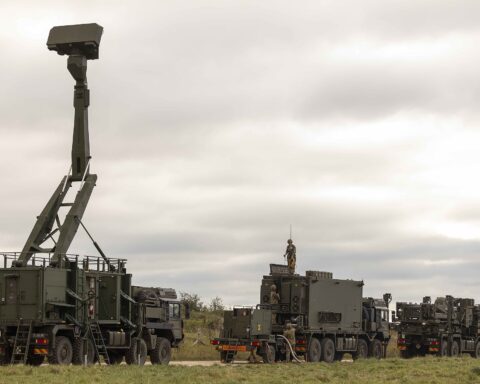
The Merops is a counter-unmanned aerial system developed by Project Eagle, a California-based defence technology venture founded by former Google CEO Eric Schmidt. The system uses a three-foot, fixed-wing, propeller-driven interceptor called “Surveyor” that launches from ground-based stations mounted on ordinary pickup trucks, flies at speeds exceeding 175 miles per hour, and either rams its target or detonates a small warhead on contact.
Each Merops unit costs $14,000 to $15,000 under current procurement conditions, according to Army Secretary Driscoll’s interview with Bloomberg. At higher production volumes, Driscoll said, the per-unit cost could fall to between $3,000 and $5,000. A complete Merops battery comprises a ground control station, multiple launchers, and the interceptor drones themselves, operated by a four-person crew consisting of a commander, a pilot, and two technicians.
The system was designed specifically to solve a problem that conventional missile defence cannot: engaging cheap, slow-flying drones without spending orders of magnitude more than the attacker. The Merops interceptor is equipped with artificial intelligence systems that allow it to identify and track targets autonomously when satellite and radio links are jammed or unavailable, using thermal imaging, radio-frequency detection, and radar sensors to home in on hostile drones.
“We’re actually on the better end of the cost curve there,” Driscoll told Bloomberg, noting that Iranian Shahed drones cost at least $20,000 per unit — making the Merops one of the few Western defence systems that is actually cheaper than what it intercepts.
How 10,000 Drones Reached the Gulf in Five Days
The US Army shipped 10,000 Merops interceptor drones to the Middle East within five days of the February 28 US-Israeli strikes on Iran that triggered the current conflict, according to Driscoll. The rapid deployment timeline suggests the Pentagon had pre-positioned significant quantities of the systems in forward logistics bases, likely at Al Udeid Air Base in Qatar and other US Central Command facilities across the region.
The speed of the deployment drew attention from defence analysts. The Merops system’s compact size — the interceptor drone measures approximately three feet in length — and its ability to launch from standard military vehicles made rapid distribution feasible across a theatre spanning more than 1,500 miles from Kuwait to Oman.
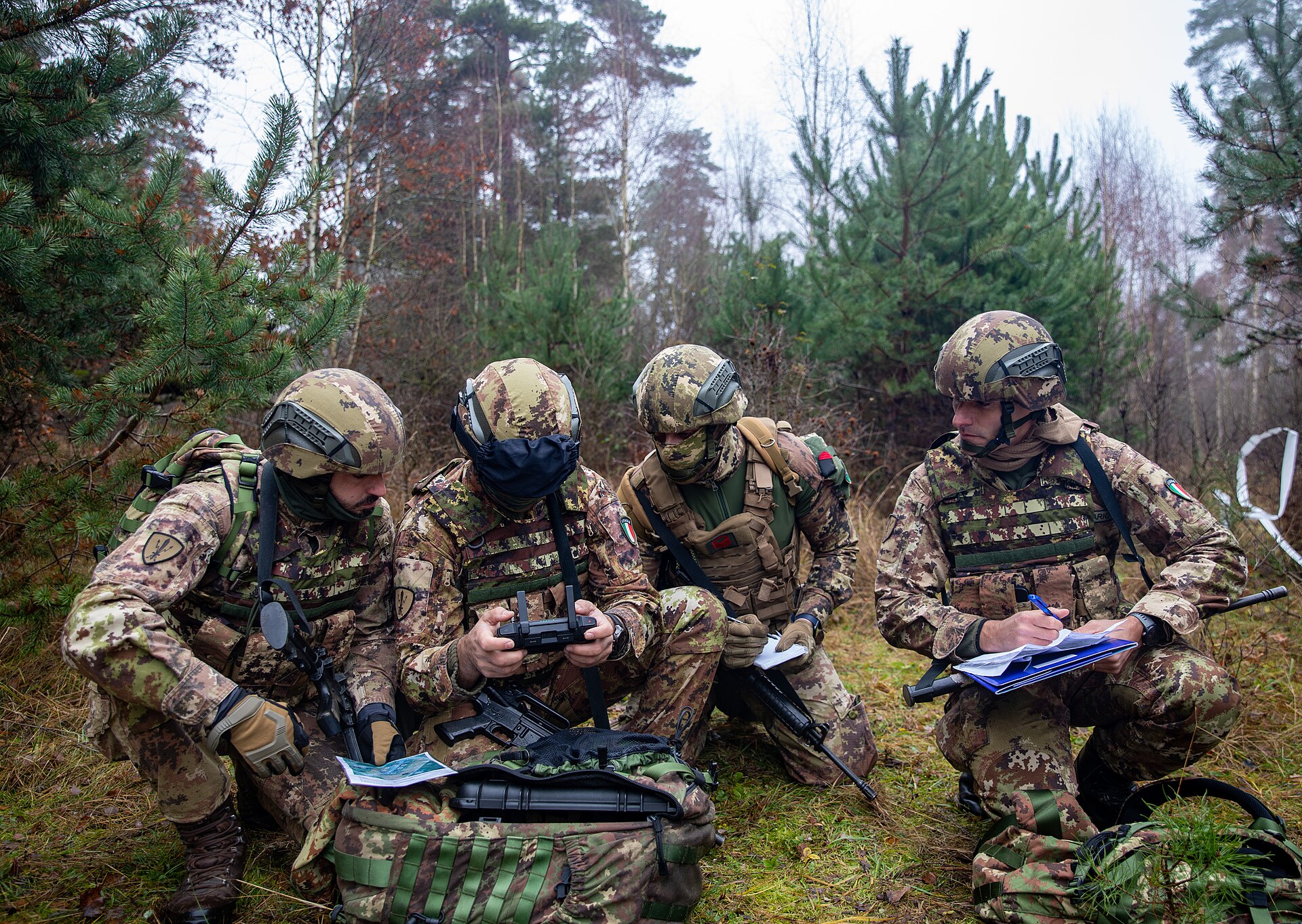
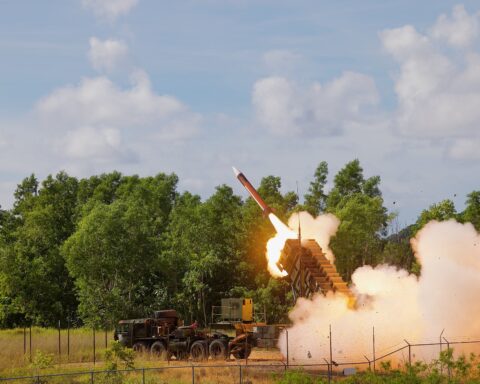
The Pentagon has not disclosed the precise distribution of the 10,000 units across the region, but US Central Command operates from facilities in Saudi Arabia, Qatar, Bahrain, Kuwait, the UAE, and Oman — all of which have faced Iranian drone or missile attacks since the war began. Prince Sultan Air Base in al-Kharj, south of Riyadh, hosts a significant US military presence including Patriot missile batteries and has been hit by Iranian munitions at least twice during the conflict, according to Saudi and US military statements.
The deployment represents the largest single shipment of counter-UAS systems in US military history, dwarfing the approximately 700 Coyote counter-drone interceptors the US Army deployed to Iraq and Syria between 2020 and 2024, according to Pentagon procurement records.
From Ukraine to the Arabian Peninsula
The Merops system was forged in the crucible of Russia’s drone war against Ukraine. Project Eagle, Eric Schmidt’s defence technology venture, recruited engineers from Google, Apple, and SpaceX to develop a low-cost interceptor capable of defeating the Shahed-136 one-way attack drones that Russia had been launching against Ukrainian infrastructure since late 2022.
Ukraine’s armed forces first deployed the Merops around June 2024. By November 2025, Ukrainian operators had used the system to destroy more than 1,900 incoming Russian drones, according to Defence Express, a Ukrainian defence publication that cited military sources. The system proved particularly effective during Russia’s winter drone campaigns against Ukraine’s energy grid, when waves of Shahed-type drones arrived in formations that overwhelmed traditional air defences.
The Ukrainian battlefield served as what defence analysts describe as a proving ground that no simulation could replicate. Merops operators engaged targets in conditions of heavy electronic warfare jamming, poor weather, and sustained multi-axis drone attacks — conditions that closely mirror the Iranian aerial campaign now unfolding across the Gulf.
“The Merops system that arrives in Riyadh in March 2026 is not the same system that arrived in Kyiv in June 2024,” a former Pentagon official told the Eurasian Times. “It has two years of continuous combat iteration behind it. That matters more than any specification sheet.”
The technology transfer from Ukraine to the Gulf illustrates a broader shift in US defence strategy. Ukraine became an involuntary laboratory for counter-drone warfare, and the lessons learned there — including the Merops, electronic warfare jammers, and AI-powered target recognition — are now being rapidly redeployed to protect Gulf states facing the same Iranian drone technology.
Why Does the Cost Equation Matter for Saudi Arabia?
The economics of air defence have defined the first two weeks of the Iran war more than any single battle. Iran has launched thousands of drones and hundreds of ballistic missiles at Gulf targets since February 28. The Kingdom’s Patriot and THAAD missile batteries have intercepted hundreds of these threats — but at ruinous cost.
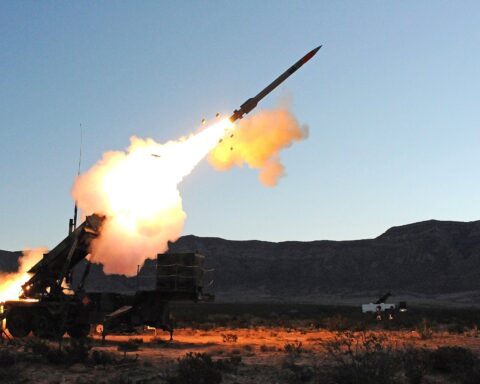
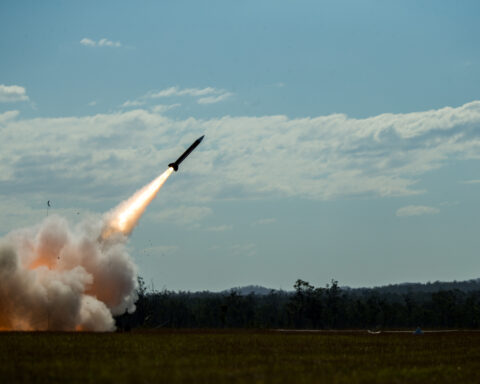
A single Patriot Advanced Capability-3 (PAC-3) missile costs approximately $4 million, according to Raytheon and the US Congressional Budget Office. A Terminal High Altitude Area Defense (THAAD) interceptor costs between $12 million and $15 million. An Iranian Shahed-136 costs roughly $20,000 to $50,000 to produce. The mathematics are stark: using a PAC-3 to destroy a Shahed creates a cost ratio of 200:1 in the attacker’s favour.
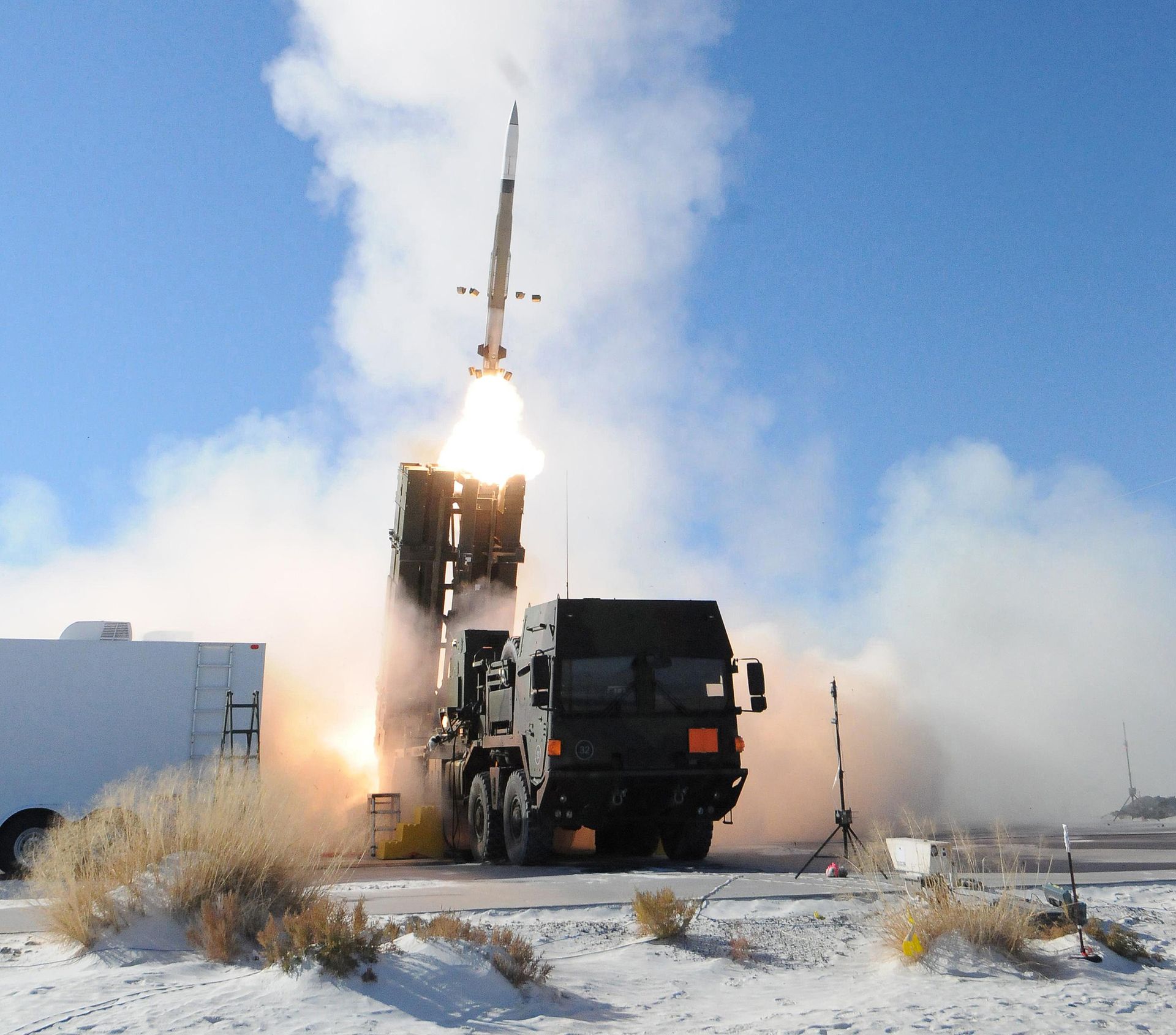
Saudi Arabia has deployed an estimated 80 Patriot batteries and multiple THAAD systems across the Kingdom, according to analysts at the International Institute for Strategic Studies (IISS). The PAC-3 missile inventory is classified but finite, and resupply from Raytheon’s production lines takes months. Every PAC-3 fired at a cheap drone is one fewer available to intercept a ballistic missile carrying a one-ton warhead — the threat that Patriot was actually designed to defeat.
| System | Interceptor | Cost Per Shot | Cost Ratio vs Shahed ($20K) |
|---|---|---|---|
| THAAD | THAAD Interceptor | $12-15 million | 600:1 to 750:1 |
| Patriot | PAC-3 MSE | $4 million | 200:1 |
| Patriot | PAC-2 GEM-T | $2-3 million | 100:1 to 150:1 |
| Iron Dome | Tamir | $50,000-100,000 | 2.5:1 to 5:1 |
| Merops | Surveyor | $14,000-15,000 | 0.7:1 (cost advantage) |
| Merops (at scale) | Surveyor | $3,000-5,000 | 0.15:1 to 0.25:1 (major advantage) |
The Merops interceptor inverts this equation. At $15,000 per drone, it costs less than the target it destroys. At volume production costs of $3,000 to $5,000, the defender holds a four-to-one or greater cost advantage over the attacker. This is the first time in modern air defence that a Western system has achieved favourable economics against a mass-produced threat.
“The drone cost problem has haunted every Gulf defence ministry since the September 2019 Abqaiq-Khurais attack,” said Bilal Khan, a defence analyst at the Royal United Services Institute (RUSI). “Merops doesn’t solve every problem, but it addresses the one that keeps generals awake at night.”
The Iranian Drone Threat by the Numbers
Iran’s aerial campaign against the Gulf has been the most sustained drone offensive in the history of modern warfare. Since February 28, Iranian forces have launched waves of one-way attack drones and ballistic missiles at targets across Saudi Arabia, the UAE, Qatar, Bahrain, Kuwait, and Oman. The cumulative scale is staggering.
The UAE Ministry of Defence disclosed on March 14 that its air defences had engaged 294 ballistic missiles, 15 cruise missiles, and 1,600 unmanned aerial vehicles launched from Iran since the conflict began — and the UAE is only one of six Gulf states under attack. Saudi Arabia’s Royal Saudi Air Defence Force has not released comparable aggregate figures, but individual intercept reports suggest the Kingdom has faced a similar or greater volume of threats given its larger territory and the concentration of US military assets on Saudi soil.
Saudi Arabia’s defence ministry confirmed the interception of 24 drones targeting the Eastern Province and the Shaybah oil field on March 12, according to Al Arabiya. The following day, the Kingdom shot down 31 drones targeting Riyadh’s Diplomatic Quarter. On March 14, an additional six drones were intercepted over the Kingdom, Saudi military officials said.
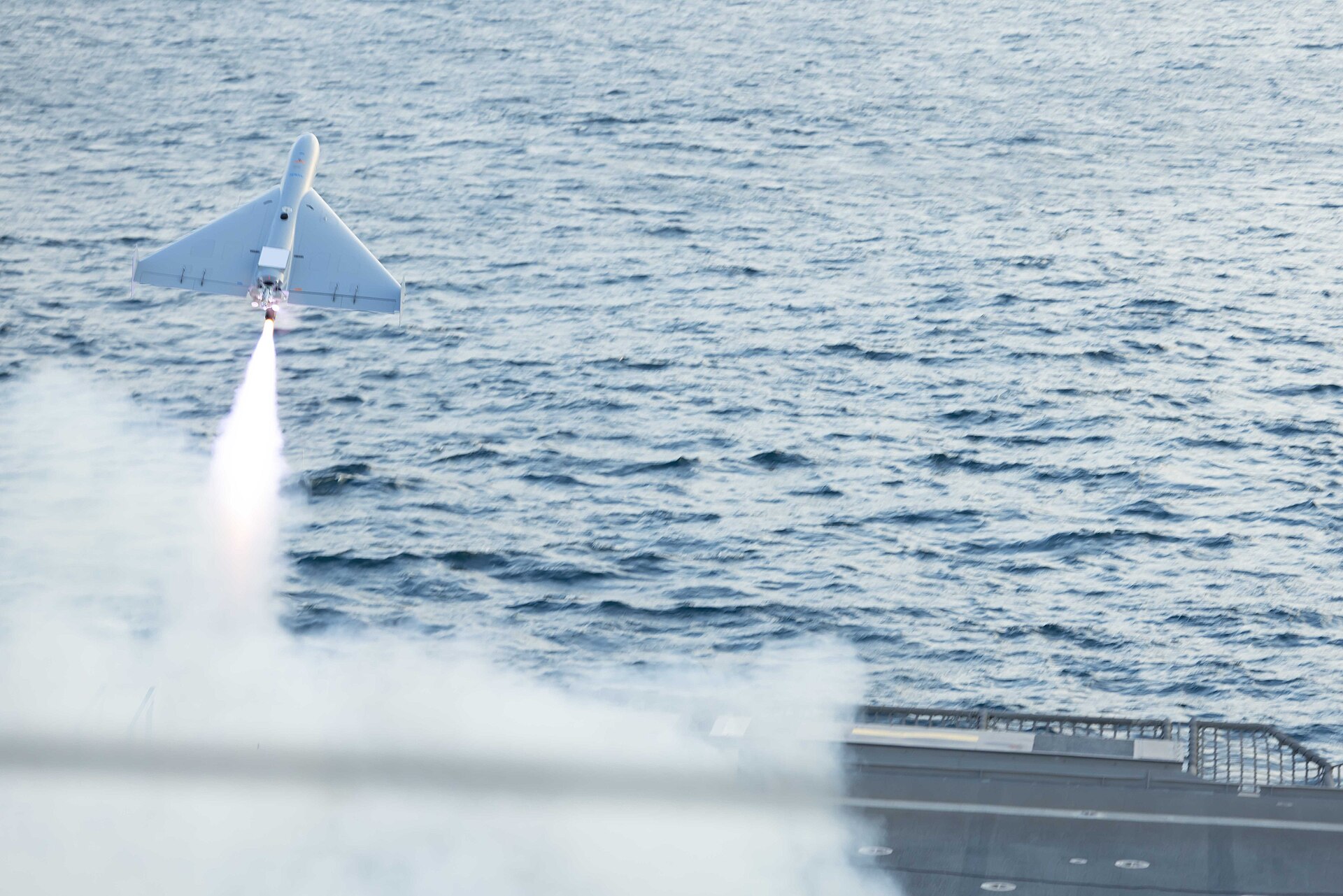
Iran’s drone arsenal relies on variants of the Shahed family. The Shahed-136, a delta-wing, jet-powered drone with a range of approximately 2,500 kilometres, carries a 40-kilogram warhead and costs an estimated $20,000 to $50,000 to produce, according to assessments by the IISS and the Center for Strategic and International Studies (CSIS). Iran has also deployed the larger Shahed-238, a turbojet-powered variant with a range exceeding 3,000 kilometres, and the Mohajer series for intelligence and surveillance.
The sheer volume of drones has tested Gulf air defences to their limits. At least 18 people across six Gulf states have been killed by Iranian strikes since February 28, according to the most recent figures from Al Jazeera, with six dead in the UAE, six in Kuwait, two in Oman, two in Saudi Arabia, and two in Bahrain.
How Do Merops Drones Find and Destroy Their Targets?
The Merops system operates on a fundamentally different principle from traditional missile-based air defence. Rather than launching an expensive guided missile with a high-explosive warhead, it sends a small, AI-equipped drone to physically intercept and destroy the incoming threat through either kinetic impact or a small warhead detonation.
A complete Merops battery consists of a ground control station, multiple tube-style launchers, and a supply of Surveyor interceptor drones. The launchers can be mounted on standard military pickup trucks, enabling rapid deployment and repositioning — a critical advantage against an adversary that targets fixed air defence sites. A crew of four operates each battery: a commander, a drone pilot, and two technicians.
When radar or other sensor systems detect an incoming hostile drone, the Merops operator launches one or more Surveyor interceptors. The three-foot fixed-wing drone accelerates to over 175 miles per hour using a propeller drive and steers toward the target using data from thermal imaging, radio-frequency detection, or radar sensors mounted on the interceptor itself.
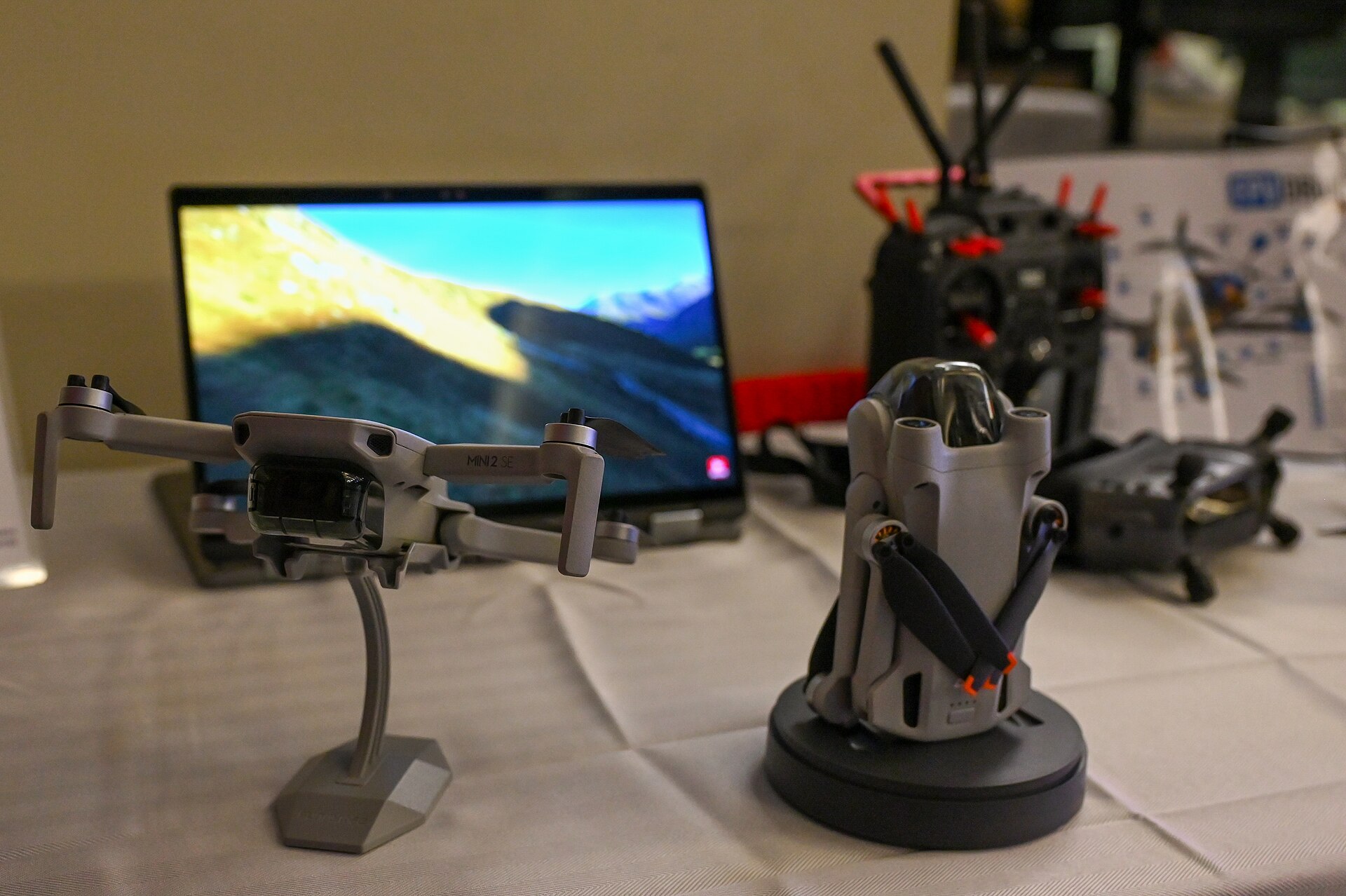
The AI component is what separates the Merops from earlier counter-drone systems. If satellite and radio communications are jammed — a common tactic in Iranian electronic warfare — the Surveyor can autonomously identify, track, and engage its target without human guidance. This capability was developed and refined during two years of combat in Ukraine, where Russian forces routinely jammed GPS and communications links.
The interceptor destroys its target either by direct collision at high speed or by detonating its small warhead in close proximity. Defence Express, the Ukrainian defence publication, reported that the system achieved a high kill rate against Shahed-type drones in Ukrainian service, though exact success percentages remain classified.
Training on the system takes approximately two weeks, according to accounts from Ukrainian operators — a fraction of the months-long training cycle required for Patriot or THAAD crews. This rapid training timeline allows allied forces in the Gulf to begin operating the system quickly, a significant advantage when the air defence war is measured in days and weeks rather than months.
What This Means for Saudi Arabia’s Air Defence Architecture
The Merops deployment does not replace Saudi Arabia’s existing air defence network — it supplements it by addressing a specific gap that traditional systems were never designed to fill. The Kingdom’s layered air defence architecture, built around Patriot PAC-3, THAAD, and the short-range Shahine system, excels at intercepting ballistic missiles and cruise missiles. It was not designed for the attritional grind of shooting down hundreds of cheap drones per day.
Saudi Arabia’s air defence expenditure exceeds $80 billion according to estimates by the Stockholm International Peace Research Institute (SIPRI), making it one of the most heavily defended airspaces on earth. The Merops deployment adds a new bottom layer to this architecture: a cheap, expendable drone tier that handles the low-end threat while preserving Patriot and THAAD missiles for the ballistic and cruise missile threats they were built to counter.
Defence analysts describe this as a “high-low mix” strategy. Retired US Air Force General David Deptula, dean of the Mitchell Institute for Aerospace Studies, told Breaking Defense that the approach mirrors Cold War-era thinking about fighter aircraft, where expensive, high-capability jets handled sophisticated threats while cheaper aircraft handled the volume.
“The lesson of this war is that you cannot defend a country the size of Saudi Arabia against thousands of cheap drones using million-dollar missiles,” Deptula said. “You need a cheap answer to a cheap threat, and Merops is the first serious attempt at providing one.”
The deployment also carries implications for Crown Prince Mohammed bin Salman’s defence industrialisation programme under Vision 2030. Saudi Arabian Military Industries (SAMI) signed $8.8 billion in contracts at the World Defense Show in Riyadh in February 2026, with a stated goal of localising 50 percent of military spending by the end of the decade. The Merops system’s relatively simple design — a propeller-driven drone with AI targeting — is the type of technology that Saudi Arabia’s growing defence industry could eventually produce domestically.
Ukraine’s Zelenskyy offered Saudi Arabia direct drone defence assistance on March 7, according to Al Jazeera, and Ukraine has sent drone defence teams to the Gulf. The combination of American Merops systems, Ukrainian operational expertise, and Saudi financial resources points toward a new model of collaborative air defence that could outlast the current conflict.
Limitations and Unanswered Questions
The Merops system is not a universal solution. The Surveyor interceptor’s top speed of 175 miles per hour limits its effectiveness against faster targets. Iran’s Shahed-238, a turbojet variant reportedly capable of speeds exceeding 350 miles per hour, may outrun the Merops interceptor. Iranian ballistic missiles, which travel at speeds measured in kilometres per second, remain entirely beyond the system’s capabilities.
The 10,000-unit deployment, while historically large, may not be sufficient for a conflict of this intensity. If Iran sustains its current rate of drone launches — estimated at more than 100 per day across the Gulf — the Merops inventory could be depleted within weeks even with high efficiency, as each interception consumes one drone. Army Secretary Driscoll did not address resupply timelines or production rates during his Bloomberg interview.
Environmental factors unique to the Gulf also present challenges. Desert sand, extreme temperatures exceeding 45 degrees Celsius in summer, and the corrosive salt air of coastal regions can degrade electronic sensors and propulsion systems. The Merops was developed and tested in Ukraine’s temperate climate; its performance in the Arabian Peninsula’s harsh conditions remains unproven over extended periods.
Electronic warfare poses another concern. Iran has invested heavily in GPS jamming and communications disruption capabilities, according to assessments by the Defense Intelligence Agency. While the Merops system includes autonomous AI targeting specifically designed to function under jamming, its effectiveness against Iran’s specific electronic warfare systems — as opposed to Russia’s — has not been publicly demonstrated.
Perhaps the most significant unanswered question is whether the Merops can operate effectively in the dense air defence environment over Saudi Arabia, where Patriot radar emissions, Saudi Air Force fighter patrols, and other counter-drone systems could create conflicts with the small interceptor’s sensors and flight path. Integrating a new autonomous system into an already complex multi-layered air defence network during active combat operations is an undertaking that military planners describe as extraordinarily challenging.
Frequently Asked Questions
What is the Merops interceptor drone?
The Merops is an AI-powered counter-drone system developed by Project Eagle, a venture founded by former Google CEO Eric Schmidt. It launches a three-foot, fixed-wing drone called Surveyor that flies at 175-plus miles per hour and destroys hostile drones through kinetic impact or a small warhead. Each unit costs between $14,000 and $15,000 at current production rates.
How many Merops drones were sent to the Gulf?
US Army Secretary Dan Driscoll confirmed that 10,000 Merops interceptor drones were shipped to the Middle East within five days of the February 28, 2026, outbreak of the Iran war. The deployment represents the largest single counter-UAS shipment in US military history, distributed across US Central Command facilities in Saudi Arabia, Qatar, Bahrain, Kuwait, the UAE, and Oman.
Were the Merops tested in combat before the Gulf deployment?
The Merops system was first deployed by Ukrainian forces in approximately June 2024 to counter Russian Shahed-type drones. By November 2025, Ukrainian operators had used the system to destroy more than 1,900 incoming Russian drones during two years of sustained combat, according to Defence Express. This Ukraine combat record informed the Pentagon’s decision to deploy the system to the Gulf.
How does the Merops compare to Patriot missile costs?
A Patriot PAC-3 interceptor costs approximately $4 million — creating a 200:1 cost disadvantage when used against a $20,000 Iranian Shahed drone. The Merops costs $14,000 to $15,000, making it actually cheaper than the Iranian drones it intercepts. At volume production, costs could fall to $3,000 to $5,000, giving defenders a four-to-one cost advantage.
Will Saudi Arabia produce its own interceptor drones?
Saudi Arabian Military Industries (SAMI) has not announced plans to produce the Merops specifically, but the system’s relatively simple design aligns with the Kingdom’s Vision 2030 goal of localising 50 percent of military spending. Saudi Arabia signed a $5 billion deal to build Chinese combat drones in Jeddah on March 11, 2026, and SAMI signed $8.8 billion in defence contracts at the World Defense Show in February, suggesting growing domestic capacity for drone manufacturing.