WASHINGTON — The United States designated the Sudanese Muslim Brotherhood as a Specially Designated Global Terrorist entity on March 9, 2026, and announced its intention to classify the group as a Foreign Terrorist Organization effective March 16, accusing it of fielding 20,000 fighters who have conducted mass executions of civilians with training and material support from Iran’s Islamic Revolutionary Guard Corps. The designation, which Secretary of State Marco Rubio discussed with Saudi Foreign Minister Prince Faisal bin Farhan Al Saud on March 11, aligns Washington’s counterterrorism policy in Sudan with Riyadh’s longstanding campaign against both the Muslim Brotherhood and Iranian influence across the Middle East and the Horn of Africa.
The move marks the fourth tranche of Muslim Brotherhood–related designations under the Trump administration, following the blacklisting of the Egyptian, Jordanian, and Lebanese branches in January 2026. For Saudi Arabia, it validates a strategic position the Kingdom has held for more than a decade — that the Brotherhood’s various branches function as destabilizing forces that exploit civil conflicts, and that Iran’s IRGC has weaponized Islamist networks well beyond the Persian Gulf. With Sudan’s civil war now approaching its second anniversary and more than 150,000 dead, the designation carries consequences that stretch from Khartoum’s shattered streets to Riyadh’s Red Sea security corridor.
Table of Contents
- What Does the Terrorist Designation Mean for the Sudanese Muslim Brotherhood?
- The State Department’s Case Against the Sudanese MB
- How Did Iran’s IRGC Become Involved in Sudan’s War?
- Why Does the Designation Matter to Saudi Arabia?
- Sudan’s Civil War at a Glance
- The UAE-Saudi Split Over Sudan
- What Does Sudan Mean for Red Sea Security?
- The Broader Campaign Against the Muslim Brotherhood
- Frequently Asked Questions
What Does the Terrorist Designation Mean for the Sudanese Muslim Brotherhood?
The designation freezes all property and interests belonging to the Sudanese Muslim Brotherhood that fall within US jurisdiction or the control of US persons. American citizens and companies are prohibited from conducting any financial transactions with the group, and foreign financial institutions that facilitate significant transactions on its behalf risk secondary sanctions that could cut them off from the US banking system.
The State Department’s announcement specified two legal mechanisms. The Sudanese MB was immediately designated as a Specially Designated Global Terrorist under Executive Order 13224, as amended. Separately, the department notified Congress of its intent to designate the group as a Foreign Terrorist Organization under the Immigration and Nationality Act, with that classification taking effect on March 16, 2026, after the required statutory waiting period.
The dual-track approach carries practical weight. The FTO designation makes it a federal crime for anyone in the United States to knowingly provide material support to the Sudanese MB — a provision that extends to fundraising networks, logistical pipelines, and individual financial transfers. Members of the group and their known associates are also barred from entering the United States, and any already present become deportable.
Sudan’s government, led by General Abdel Fattah al-Burhan and the Sudanese Armed Forces, welcomed the designation. The SAF had already accused the Brotherhood of hijacking Sudan’s military apparatus during the Omar al-Bashir era and of infiltrating its own ranks during the current civil war. The RSF, which has fought the SAF since April 2023, also endorsed the move, arguing that the designation “reflects growing awareness of the scale of suffering the Sudanese people have endured,” according to a spokesperson quoted by Radio Tamazuj on March 10.

The State Department’s Case Against the Sudanese MB
Secretary Rubio framed the designation in stark terms. “The Sudanese Muslim Brotherhood uses unrestrained violence against civilians to undermine efforts to resolve the conflict in Sudan and advance its violent Islamist ideology,” the State Department’s official statement read. The department’s detailed fact sheet, released alongside the designation, laid out a series of specific allegations that had accumulated over nearly two years of intelligence gathering and diplomatic reporting.
The core accusation centers on the al-Baraa Bin Malik Brigade, a military formation that the State Department described as the armed wing of the Sudanese MB. According to the designation documents, the brigade’s fighters have “conducted mass executions of civilians in areas they captured, and repeatedly and summarily executed civilians based on race, ethnicity, or perceived affiliation with opposition groups.” The Treasury Department had separately designated the al-Baraa Bin Malik Brigade in September 2025 under Executive Order 14098 for its role in Sudan’s war.
The State Department estimated that the Sudanese MB has contributed “upwards of 20,000 fighters” to Sudan’s civil war. That figure, if accurate, would make the Brotherhood one of the single largest armed factions in the conflict — larger than many of the regional militias that have fragmented Sudan’s battlefields and comparable in scale to the combined strength of several SAF-aligned auxiliary forces.
The designation documents also pointed to the Brotherhood’s financial infrastructure, alleging that the group has used its networks to channel funds and equipment from sympathizers in the Gulf, Turkey, and East Africa. The frozen assets provisions are designed to disrupt these channels, though enforcement will depend heavily on cooperation from transit countries and financial intermediaries.
How Did Iran’s IRGC Become Involved in Sudan’s War?
The most geopolitically significant element of the designation is the explicit link between the Sudanese Muslim Brotherhood and Iran’s Islamic Revolutionary Guard Corps. The State Department stated that “many” of the SMB’s 20,000 fighters have received “training and other support from Iran’s IRGC” — a claim that places Sudan’s civil war firmly within the broader arc of Iranian regional influence that Riyadh and Washington have sought to contain.
The IRGC-Sudan connection is not new. Iran and Sudan maintained close military ties during the al-Bashir era, with Tehran providing weapons, training, and intelligence support throughout the 1990s and 2000s. Sudan served as a transit point for Iranian arms shipments to Hamas in Gaza, and the relationship grew close enough that Israel bombed a suspected Iranian weapons factory in Khartoum’s Yarmouk district in October 2012.
The relationship fractured in January 2016, when al-Bashir severed diplomatic ties with Tehran after Saudi Arabia’s embassy in Iran was attacked by protesters. That rupture was widely seen as al-Bashir aligning with Riyadh and Abu Dhabi in exchange for financial support. Sudan subsequently contributed troops to the Saudi-led coalition fighting in Yemen.
The current civil war appears to have reopened channels between the IRGC and Islamist factions in Sudan. According to the Washington Times, which cited unnamed US intelligence officials on March 10, Iranian-made weapons and drones were found in the hands of Brotherhood-aligned forces as early as mid-2023, shortly after the war erupted. The Fox News report on the designation cited US officials who described the IRGC’s involvement as including “tactical training, weapons provision, and strategic advisory support” to the al-Baraa Bin Malik Brigade.
The timing carries particular resonance. The designation arrived while the United States and Iran are locked in open military conflict following the US-Israeli strikes that began on February 28, 2026. Designating an IRGC-linked organization as a terrorist group during an active war against Iran sends a signal — not just about Sudan, but about Washington’s willingness to pursue Iran’s proxy networks across every theater where they operate.
Why Does the Designation Matter to Saudi Arabia?
The US designation validates two pillars of Saudi foreign policy that Crown Prince Mohammed bin Salman has pursued since consolidating power: the campaign against the Muslim Brotherhood as a transnational threat, and the effort to roll back Iranian influence across the Middle East and the Horn of Africa.
Saudi Arabia designated the Muslim Brotherhood as a terrorist organization in March 2014, a full 12 years before the United States began following suit. That decision, taken alongside the UAE and Bahrain, reflected Riyadh’s assessment that the Brotherhood’s organizational model — in which religious networks double as political and military infrastructure — posed a direct threat to Gulf monarchies. The Arab Spring uprisings of 2011-2012, which brought Brotherhood-affiliated governments to power in Egypt and Tunisia, had alarmed Saudi leadership. MBS later deepened the crackdown, arresting prominent Saudi clerics with Brotherhood sympathies in 2017.

The Rubio-Faisal call on March 11, in which the two diplomats discussed both the Iran war and the Sudanese MB designation, underscored the alignment. For Prince Faisal bin Farhan, who has led Saudi Arabia’s diplomatic offensive against Iranian aggression at the United Nations Security Council, the Sudan file represents a second front — one where Iranian influence threatens Saudi interests not through missiles and drones, but through the quieter work of ideological infiltration and proxy warfare in a fragile state less than 200 miles across the Red Sea.
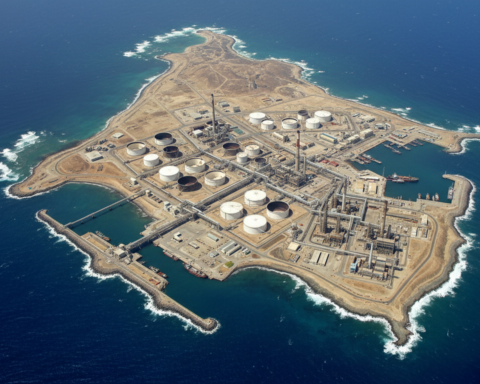
Saudi Arabia’s interest in Sudan extends beyond ideology. Riyadh provided financial and logistical backing that allowed the SAF to sustain operations from Port Sudan, secure Red Sea access, and reorganize its forces after the RSF’s early battlefield gains in 2023 and 2024, according to a January 2026 analysis published by Horn Review. The Kingdom views a stable, SAF-controlled Sudan as essential to protecting the western shore of the Red Sea — a waterway that carries an estimated 12 percent of global trade and connects to the port of Yanbu, where Aramco has rerouted crude oil exports during the Strait of Hormuz disruption.
Sudan’s Civil War at a Glance
The war that the Sudanese MB designation addresses has become one of the deadliest conflicts on the planet. Fighting erupted on April 15, 2023, when tensions between General al-Burhan’s Sudanese Armed Forces and General Mohamed Hamdan Dagalo’s Rapid Support Forces exploded into open combat across Khartoum and other major cities.
The scale of the humanitarian catastrophe is staggering. More than 150,000 people have been killed since the war began, according to estimates compiled by the Armed Conflict Location and Event Data Project (ACLED) and cited by the Council on Foreign Relations. More than 11 million Sudanese have been displaced — the worst displacement crisis in the world — with over 4 million fleeing to neighboring Chad, Ethiopia, South Sudan, and Egypt, according to the UN Refugee Agency. An estimated 30 million people require humanitarian assistance, accounting for roughly 10 percent of total global humanitarian needs, the International Rescue Committee reported in early 2026.
| Metric | Figure | Source |
|---|---|---|
| War start date | April 15, 2023 | UN |
| Estimated killed | 150,000+ | ACLED / CFR |
| Internally displaced | 11 million+ | UNHCR |
| Refugees abroad | 4 million+ | UNHCR |
| In need of humanitarian aid | 30 million | IRC |
| Famine declared | August 2024 (Darfur) | IPC Famine Review |
| SMB fighters (US estimate) | 20,000+ | State Department |
| RSF genocide declaration | January 7, 2025 | State Department |
The military situation shifted in 2025. The SAF, bolstered by Saudi financial support and reorganized after its early losses, recaptured key areas of Khartoum. In January 2025, SAF forces drove the RSF out of Omdurman, retook a vital oil refinery north of the capital, and regained near-total control of Bahri, Khartoum’s northern suburb. The State Department’s January 2025 declaration that RSF forces had committed genocide in Darfur further isolated the paramilitary group internationally.
The Brotherhood’s role has complicated the conflict’s political dynamics. While the SAF has benefited from MB-aligned fighters on the battlefield, the Brotherhood’s growing influence within the military apparatus has alarmed both Saudi Arabia and the United States. The State Department’s designation explicitly warned that the SMB is using the war to “reestablish influence within the institutions of government” — an echo of the 1989 coup that brought al-Bashir to power with Brotherhood backing.
The UAE-Saudi Split Over Sudan
The Sudan conflict has exposed one of the Gulf’s most sensitive fault lines: the divergence between Saudi Arabia and the United Arab Emirates over which side to back. While Riyadh supports the SAF, Abu Dhabi has been widely accused — despite consistent denials — of providing weapons, funding, and logistical support to the RSF.
The European Council on Foreign Relations published a detailed analysis in 2025 describing the dynamic as “the falcons and the secretary bird,” noting that the UAE’s support for the RSF appeared driven by multiple factors: hostility toward the Islamist networks embedded within the SAF, commercial interests in Sudan’s gold mining sector, and Abu Dhabi’s broader strategy of cultivating non-state military partners across the Horn of Africa and the Sahel.
Saudi Arabia has pushed back. In February 2026, according to Al Jazeera, Riyadh publicly denounced “foreign interference” in Sudan following a wave of RSF attacks. The statement was widely interpreted as a rebuke directed at Abu Dhabi — a rare moment of public friction between two nations that typically coordinate closely on regional security, including through the Gulf Cooperation Council.
The US designation of the Sudanese MB may inadvertently deepen this split. By targeting Brotherhood-aligned forces that fight alongside the SAF, Washington has pleased the UAE, which views the Brotherhood as an existential threat. But the simultaneous accusation of IRGC involvement vindicates Saudi Arabia’s position that the Brotherhood’s foreign backers — not just the organization itself — represent the deeper danger. The Responsible Statecraft analysis noted that Riyadh has “leaned in hard to get UAE out of Sudan,” viewing Abu Dhabi’s support for the RSF as undermining the stability Saudi Arabia needs on its Red Sea flank.
What Does Sudan Mean for Red Sea Security?
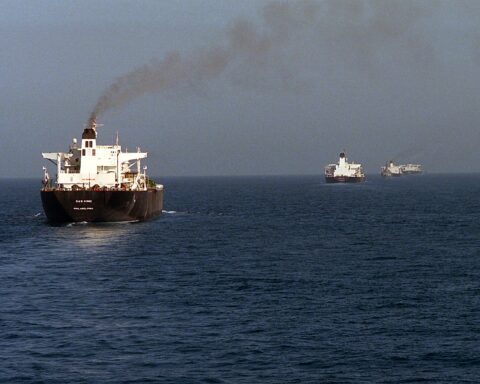
The security of the Red Sea corridor represents a vital strategic interest for Saudi Arabia — one that has grown more urgent as the Iran war forces Aramco to reroute crude exports from the Persian Gulf to the port of Yanbu on the Kingdom’s western coast. A failed or fractured Sudan directly threatens that corridor.
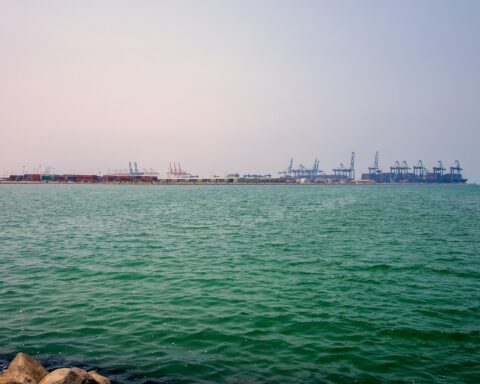
Sudan’s Red Sea coastline stretches approximately 750 kilometers, with Port Sudan and the historic port of Suakin serving as the country’s primary maritime gateways. An unstable Sudan risks becoming a transit point for Iranian weapons transfers to the Houthis in Yemen — a threat that analysts at the International Institute for National Security Studies (INSS) flagged in a December 2025 report on the “Red Sea Arena.”

The Carnegie Endowment for International Peace noted in a 2023 analysis — still widely cited — that a permanent Iranian presence at key points along Sudan’s coast “implies that international freedom of navigation might increasingly fall under Tehran’s influence.” With Houthi attacks on Red Sea shipping already having disrupted global supply chains throughout 2024 and into 2025, any additional Iranian foothold on the African side of the waterway would compound the threat to Saudi Arabia’s economic interests and Vision 2030 ambitions.
The proximity is not abstract. Less than 200 miles of open water separate Saudi Arabia’s western coast from Sudan. Riyadh has invested heavily in its Red Sea tourism and logistics infrastructure — including the NEOM megaproject and the Red Sea Global resort development — on the assumption that the western coast represents a safer, more diversified economic zone than the Persian Gulf. An Iranian-influenced Brotherhood presence in Sudan would undermine that calculus.
| Factor | Detail | Saudi Impact |
|---|---|---|
| Sudan coastline | ~750 km on Red Sea | Proximity to Saudi ports and NEOM |
| Port Sudan | Primary Sudanese maritime hub | Potential Iranian weapons transit point |
| Aramco Yanbu reroute | 2.5M bpd via Red Sea (March 2026) | Critical export route during Hormuz closure |
| Houthi threat | Disrupted shipping since late 2023 | Additional Sudanese route would compound risk |
| Distance to KSA | ~200 miles across Red Sea | Direct security exposure |
The Broader Campaign Against the Muslim Brotherhood
The Sudanese designation is the latest in a systematic campaign by the Trump administration to dismantle the Muslim Brotherhood’s international network through the US terrorism designation framework. The campaign began in November 2025, when President Trump signed an executive order directing the State Department and Treasury Department to initiate the process of blacklisting Brotherhood branches across multiple countries.
The first wave arrived on January 13, 2026, when the United States designated the Egyptian Muslim Brotherhood and Jordanian Muslim Brotherhood as Specially Designated Global Terrorists, and the Lebanese Muslim Brotherhood as both an SDGT and a Foreign Terrorist Organization. The Treasury Department cited the Egyptian and Jordanian branches’ alleged provision of material support to Hamas. The Lebanese branch’s FTO designation reflected its alleged operational activities, including facilitating weapons transfers.
Egypt, the UAE, and Saudi Arabia all publicly welcomed the January designations, according to The National. For Riyadh, the US action represented the culmination of a lobbying effort that stretched back to at least 2017, when MBS launched his domestic crackdown on Brotherhood sympathizers and pressed Washington to follow the Gulf states in blacklisting the organization.
The Sudanese designation differs from its predecessors in one important respect: the explicit IRGC link. The Egyptian, Jordanian, and Lebanese branches were designated primarily for their connections to Hamas and their alleged support for violence against Israeli interests. The Sudanese MB, by contrast, is accused of direct military cooperation with Iran’s security apparatus — a connection that places it in the same category as Hezbollah, the Houthis, and Iraq’s Popular Mobilization Forces as part of what Washington calls Iran’s “axis of resistance.”
The Sudanese Muslim Brotherhood uses unrestrained violence against civilians to undermine efforts to resolve the conflict in Sudan and advance its violent Islamist ideology.
US Secretary of State Marco Rubio, March 9, 2026
The designation’s practical impact will depend on enforcement. The Sudanese MB operates primarily within Sudan’s borders, where US financial sanctions have limited direct reach. The more consequential effect may be diplomatic: the designation provides cover for countries that supply the SAF — including Saudi Arabia — to argue that they are supporting a legitimate government against a US-designated terrorist organization, rather than simply picking sides in a civil war.
Frequently Asked Questions
What is the Sudanese Muslim Brotherhood?
The Sudanese Muslim Brotherhood is a branch of the transnational Muslim Brotherhood movement that has operated in Sudan since 1949. It wielded enormous political power through its political arm, the National Islamic Front, which helped engineer the 1989 military coup that installed Omar al-Bashir as president. The group is accused of contributing 20,000 fighters to Sudan’s current civil war alongside the Sudanese Armed Forces, with the al-Baraa Bin Malik Brigade serving as its primary military formation.
Why did the United States designate the Sudanese MB as a terrorist organization?
The State Department cited three primary reasons: the group’s mass executions of civilians in captured areas, its contribution of 20,000 fighters to the civil war, and its receipt of training and material support from Iran’s IRGC. The designation freezes US-held assets, prohibits financial transactions, and bars members from entering the country, with the FTO classification taking effect on March 16, 2026.
How does the designation affect Saudi Arabia?
The designation validates Saudi Arabia’s longstanding position that the Muslim Brotherhood is a terrorist threat and that Iran’s IRGC operates proxy networks across the region. It also provides diplomatic legitimacy to Saudi support for the Sudanese Armed Forces, framing Riyadh’s backing of the SAF as part of a US-aligned counterterrorism effort rather than foreign interference in a civil war. The IRGC connection strengthens Saudi arguments for containing Iranian influence across the Red Sea and the Horn of Africa.
What is Iran’s IRGC doing in Sudan?
According to the US State Department, the IRGC has provided training, weapons, and strategic advisory support to the Sudanese Muslim Brotherhood’s fighters, particularly the al-Baraa Bin Malik Brigade. Iranian-made weapons and drones were reportedly found in Brotherhood-aligned forces as early as mid-2023. The connection revives a pattern of IRGC engagement in Sudan that stretches back to the 1990s, when Iran and the al-Bashir government maintained close military ties before a 2016 diplomatic rupture over Saudi-Iranian tensions.
Does this designation affect Sudan’s peace prospects?
The designation could complicate peace negotiations by further entrenching the conflict’s ideological dimensions. Any future peace deal would likely require the Brotherhood’s participation — or at least its acquiescence — and the terrorist label makes diplomatic engagement more difficult. Sudan’s government has urged the US to also designate the RSF as a terrorist organization, a step Washington has so far declined to take despite declaring in January 2025 that RSF forces committed genocide in Darfur.