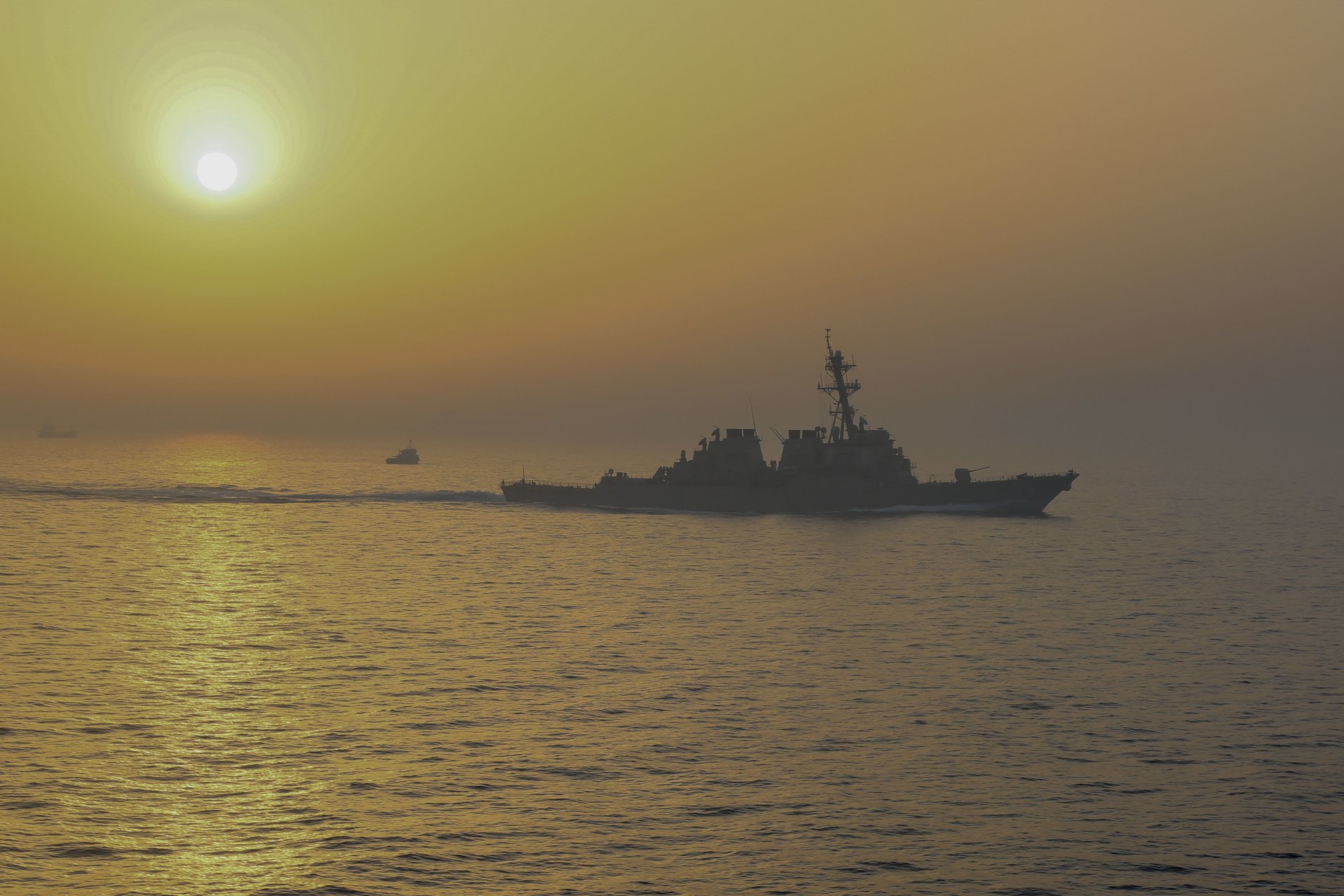
WASHINGTON — Two United States Navy guided-missile destroyers transited the Strait of Hormuz on April 11, 2026, crossing east-to-west into the Persian Gulf and returning to the Arabian Sea — the first American warship passage through the strait since Iran mined the waterway and the war began on February 28. The transit happened while Vice President JD Vance and Iranian Parliament Speaker Ali Larijani Ghalibaf were seated roughly 2,000 miles away in Islamabad, opening the first direct US-Iran talks since 1979, a coincidence of timing that neither side has described as accidental.
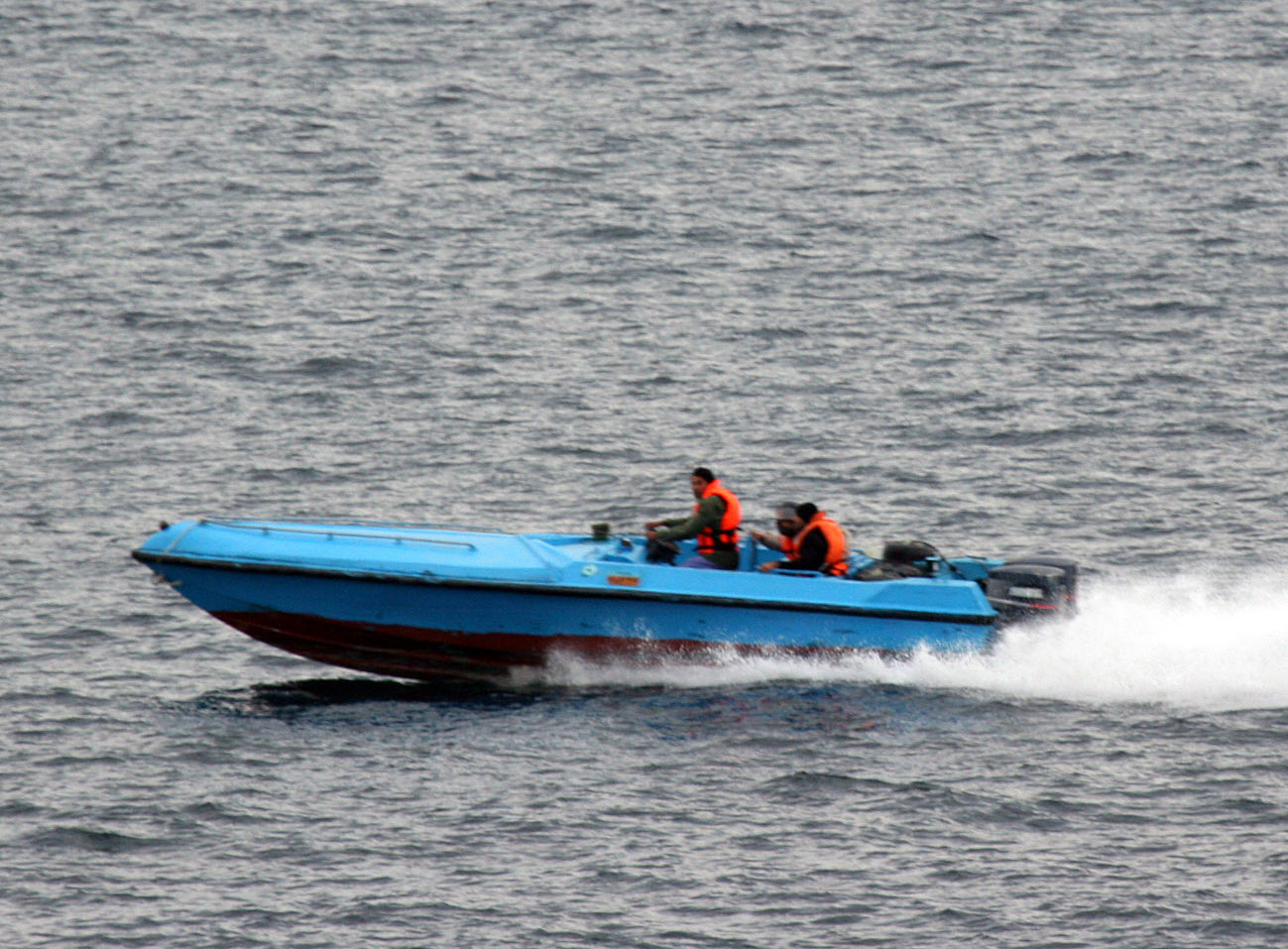
Iran’s state television reported that the Islamic Revolutionary Guard Corps Navy issued a 30-minute warning to one of the approaching destroyers, threatening attack if it crossed the strait, and that the vessel “turned back.” US officials flatly contradicted that account, telling the Wall Street Journal and Axios that both ships completed the full transit. President Trump, posting on Truth Social within hours, declared: “All 28 of their mine dropper boats are also lying at the bottom of the sea.” That figure does not match US Central Command’s own reporting from March, which put the number of Iranian minelayers sunk at 16 — and the IRGC Navy’s small-boat fleet, the actual mine-delivery platform, numbers in the thousands.
Contents
What the Transit Looked Like
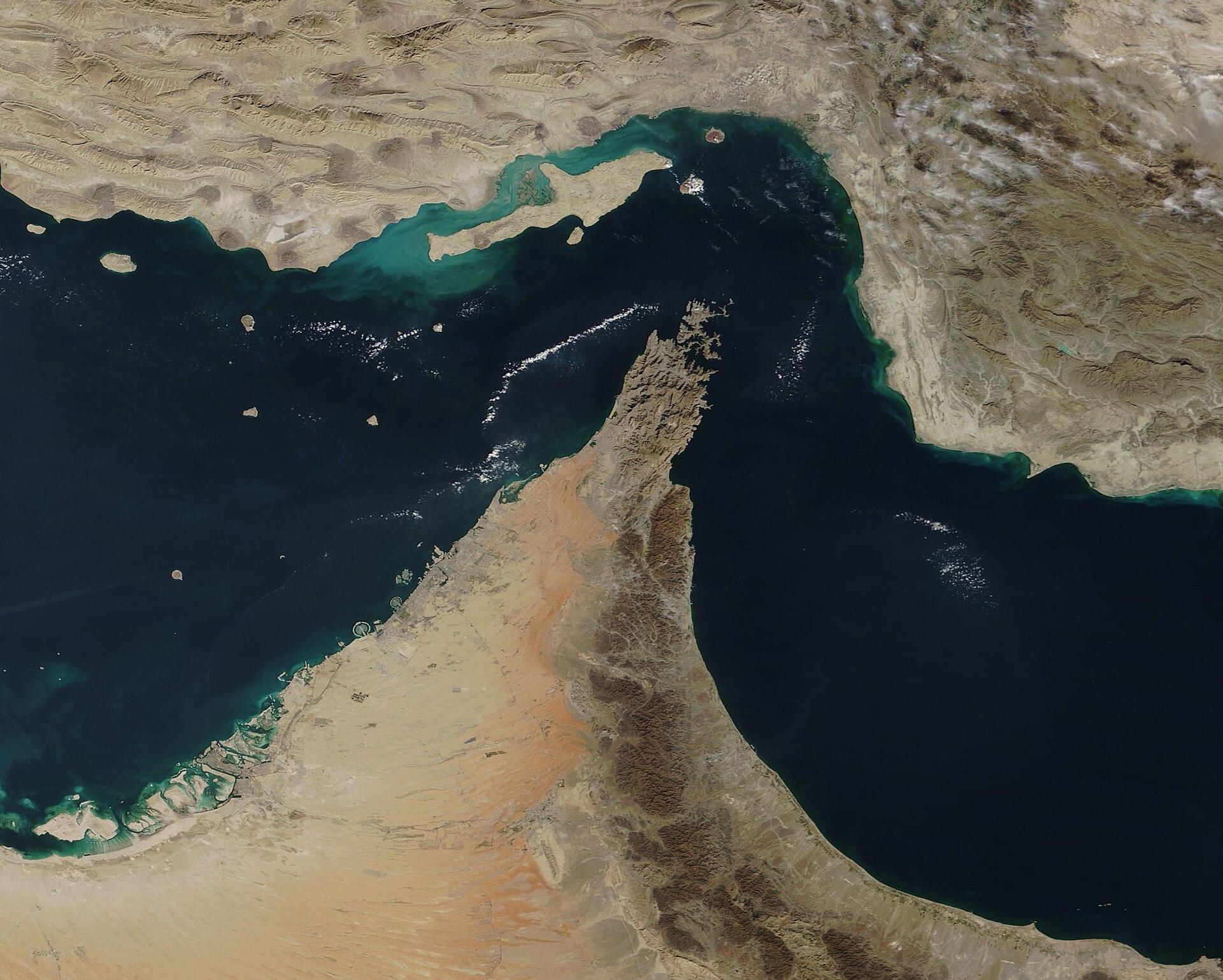
The two guided-missile destroyers entered the Strait of Hormuz from the east, crossed the traffic separation scheme into the Persian Gulf, and then reversed course back through the strait to the Arabian Sea, according to US officials cited by the Wall Street Journal and Axios on April 11. The stated mission was to “ensure freedom of navigation” and “increase confidence for commercial ships to cross,” language that explicitly frames the transit as a precursor to reopening the waterway for tanker traffic. No US Navy surface combatant had attempted the passage since Iran began mining operations in the early hours of the war, when IRGC forces published a chart declaring the standard shipping lanes a danger zone. That chart redirected commercial vessels into a narrow five-nautical-mile channel between Qeshm and Larak islands inside Iranian territorial waters.
The transit’s round-trip profile — in and back out — is significant. It was not a repositioning of assets into the Gulf; it was a demonstration that the strait could be crossed and that the Navy was willing to cross it. The destroyers did not remain inside the Gulf, did not escort commercial vessels, and did not conduct mine-clearing operations. What they did was establish that the US Navy considers the Hormuz passage navigable for warships, even as the mine threat remains unresolved for the deep-draft tankers that carry Saudi and Emirati crude.
Dueling Accounts: Did the Destroyer Turn Back?
The contradictions between the American and Iranian accounts are total, not partial. US officials told the Wall Street Journal and Axios that both destroyers completed the full transit without incident. Iran’s state broadcaster IRIB, citing a senior unnamed military official, reported that IRGC forces issued a warning to one of the approaching vessels — specifically, that it would be attacked within 30 minutes if it crossed — and that the ship reversed course. Iran’s Foreign Ministry, in a statement carried by state media, then praised what it called “coordination between the armed forces and the diplomatic apparatus,” describing the claimed IRGC warning as a legitimate ceasefire-enforcement action that “prevented a violation.”
Bloomberg adopted the most cautious framing among Western outlets: “US Navy Attempts to Cross Hormuz; Accounts Differ on What Ensued.” But the structural asymmetry in the two narratives matters more than the headline framing. If Iran’s account is accurate, an IRGC naval unit had a targeting solution on a US warship and issued a live fire threat while Ghalibaf was physically at the negotiating table in Islamabad — an act that would collapse the distinction between the diplomatic track and the military one. If the US account is accurate, Iran’s state media fabricated a confrontation to preserve the narrative that IRGC “coordination” over the strait remains operational, a claim that underpins Point 7 of Iran’s own 10-point negotiating plan: the requirement that all Hormuz passage be conducted in coordination with the armed forces of Iran.
The Middle East briefing 3,000+ readers start their day with.
One email. Every weekday morning. Free.
Either way, the episode illustrates the core fragility of the ceasefire architecture. The IRGC and the diplomatic apparatus are not operating from a unified command structure. Ghalibaf — himself a former IRGC Aerospace Force commander from 1997 to 2000 — knows the authorization architecture from the inside, and he knows that IRGC Navy Rear Admiral Shahram Hassannejad and ultimately SNSC Secretary Ali Akbar Ahmadian report through Supreme National Security Council Secretary Vahidi, who is not in the Islamabad room.
Where Does the “28 Boats” Figure Come From?
Trump’s Truth Social post on April 11 declared: “We’re now starting the process of clearing out the Strait of Hormuz as a favor to Countries all over the World, including China, Japan, South Korea, France, Germany, and many others… all 28 of their mine dropper boats are also lying at the bottom of the sea.” He added: “Iran’s Navy is gone, their Air Force is gone, their anti-aircraft apparatus is nonexistent.” The post framed the transit as the beginning of a mine-clearance campaign with the operational premise already secured — the minelaying fleet destroyed.
The “28” figure does not correspond to any publicly released US military count. CENTCOM reported on March 11 that US forces sank 16 Iranian minelayers in the first hours after reports of mining surfaced, according to CNBC. Admiral Brad Cooper, CENTCOM commander, described the IRGC Navy as on “an irreversible decline” by late March, with 92 percent of Iran’s large naval vessels destroyed or inoperable and all four Soleimani-class corvettes sunk, per Janes.com. But the Stimson Center, in a 2026 analysis, drew the distinction that matters: “The United States reportedly destroyed 16 of these boats in the first few hours after reports of mining surfaced, but the IRGCN still has hundreds — possibly even thousands — of such attack boats.” The Office of Naval Intelligence estimated approximately 1,000 IRGCN speedboats in 2007; by 2020, estimates cited by USNI News and the Foundation for Defense of Democracies ranged from 3,000 to 5,000.
The gap between “28” and the fleet’s actual size is not a rounding error. The IRGC Navy’s mine-delivery capability was never concentrated in a small number of dedicated minelayers; it is distributed across a swarm fleet of small, fast boats that can deploy mines from improvised davits, roll them off stern ramps, or simply push them over the side. Destroying 28 vessels — or 16, or even 100 — does not eliminate the minelaying threat from a force structure built around mass and dispersal.
The Mine Problem the Transit Cannot Solve
The destroyers’ transit demonstrated that US warships can cross the strait. It did not demonstrate that the approximately 200 square miles of the Hormuz traffic separation scheme have been cleared of the mines Iran laid beginning February 28. The New York Times reported on April 10-11, citing US officials, that Iran “mined the strait haphazardly and did not systematically track the placements of the mines, and in some cases deployed them in ways that they drifted away from their original positions.” US officials told the Times that Iran itself cannot remove the mines even for positions it does know — a detail that transforms the mine-clearing timeline from a bilateral negotiating chip into a unilateral US operational problem regardless of what happens in Islamabad.
The Navy’s mine countermeasures capability in the Gulf theater is thinner than at any point since the 1991 Kuwait campaign. The four Avenger-class mine countermeasures ships previously homeported in Bahrain — USS Devastator, Dextrous, Gladiator, and Sentry — were decommissioned in September 2025 and physically removed from Bahrain aboard the heavy-lift vessel M/V Seaway Hawk on January 9, 2026, exactly 50 days before the war began — a timeline first reported by USNI News. Their replacements are three Independence-class Littoral Combat Ships equipped with MCM mission packages. The Pentagon’s Director of Operational Test and Evaluation reported that the LCS-variant MCM package received no operational testing in fiscal year 2025 and that its effectiveness “cannot be determined,” according to NPR on April 1.
USNI Proceedings estimated in April 2026 that mine clearance of the Hormuz TSS would run “to late summer at the earliest.” The 1991 Kuwait mine-clearing campaign — conducted with purpose-built assets including the same Avenger-class ships now retired — took approximately 51 days to clear a comparable area, according to US Navy historical records cited by USNI Proceedings. The four remaining Avenger-class ships in US Navy service are forward-deployed to Japan, not the Persian Gulf. A guided-missile destroyer drawing 31 feet can transit a mined strait at speed with acceptable risk; a fully laden VLCC drawing 72 feet cannot. The distinction between what a warship can survive and what a supertanker can survive is the distinction between a symbolic transit and a reopened shipping lane.
Can the IRGC Fire While Ghalibaf Negotiates?
The transit inverts the authorization ceiling problem that has defined the ceasefire’s structural weakness since its announcement on April 7-8. Every prior analysis of the ceasefire — including the assessment of Saudi Arabia’s PAC-3 stockpile depletion and the IRGC’s decentralized command autonomy — established that the IRGC cannot stand down without an order from SNSC Secretary Vahidi, and that Supreme Leader Khamenei has not appeared publicly in over 39 days. The Times of London reported that his son and appointed successor Mojtaba Khamenei is “unconscious in Qom,” with zero video or audio appearances since his appointment around March 9. The question was always whether the IRGC would obey a ceasefire it had not authorized. Now the question is whether it will fire without authorization — with Ghalibaf physically at the table.
Iran’s state television account suggests the answer may already have arrived. If the 30-minute warning was real — if an IRGC Navy unit issued a live fire threat to a US warship during active diplomatic proceedings in Islamabad — then the IRGC’s tactical commanders are operating on their own authorization timeline, issuing threats that could collapse the negotiations their own government is conducting. Iran’s Foreign Ministry tried to paper over the contradiction by framing the warning as “coordination between the armed forces and the diplomatic apparatus,” but coordination implies prior agreement, and nothing in the public record suggests Ghalibaf’s delegation was consulted before an IRGC unit threatened to attack a US destroyer.
The IRGC’s mosaic command structure — reorganized into 31 semi-autonomous corps in September 2008 — was designed for exactly this kind of distributed authority. It allows tactical units to act without waiting for orders from Tehran, a feature that makes the force resilient to decapitation strikes but catastrophically unpredictable during ceasefire negotiations. Ghalibaf understands this command architecture as well as anyone at the table — he ran the IRGC Aerospace Force before entering politics. He knows that his presence in Islamabad does not bind the IRGC Navy commander in Bandar Abbas any more than Araghchi’s diplomatic language binds Vahidi’s operational directives.
What This Means for Commercial Shipping
The transit changes nothing for commercial vessels in the near term. Hormuz throughput as of April 9 stood at roughly 15 to 20 ships per 24 hours, down from 138 per day before the war, according to Windward maritime intelligence data cited in prior reporting on Hormuz throughput collapse. Approximately 800 vessels remain trapped inside the Gulf unable to exit, while a backlog of some 3,200 ships has accumulated, and more than 70 empty VLCCs are idling off Singapore waiting for a transit window that does not yet exist. The destroyers’ passage does not create that window. Mine risk for deep-draft commercial vessels remains unresolved, insurance markets have not adjusted war-risk premiums, and no escort protocol for commercial shipping has been announced.
Trump’s framing — “clearing out the Strait of Hormuz as a favor to Countries all over the World” — implies an imminent reopening. The operational timeline suggests otherwise. With purpose-built MCM ships absent from theater, untested LCS replacements of indeterminate effectiveness, and an estimated 200 square miles of mined waterway to clear, the gap between the political narrative and the mine-clearing reality is measured in months, not days. Hesham Alghannam of the Carnegie Middle East Center warned on April 9: “There is a quiet but palpable concern that President Trump, eager for a quick political victory, could tolerate some Iranian leverage over the strait in exchange for a fragile truce, prioritising optics over Gulf realities.”
The ceasefire expires approximately April 22 — 11 days from the transit. The Hajj arrival cordon seals on April 18, four days earlier. Indonesia’s 221,000 pilgrims begin departing April 22; Pakistan’s 119,000 arrive April 18, per official government figures from both countries’ Hajj ministries. Saudi Arabia needs Hormuz functional for both energy exports and the logistical infrastructure of the Hajj. Two destroyers crossing the strait is a signal, not a solution — and the mine chart the IRGC published remains the operating document for the waterway until someone clears it.
Background
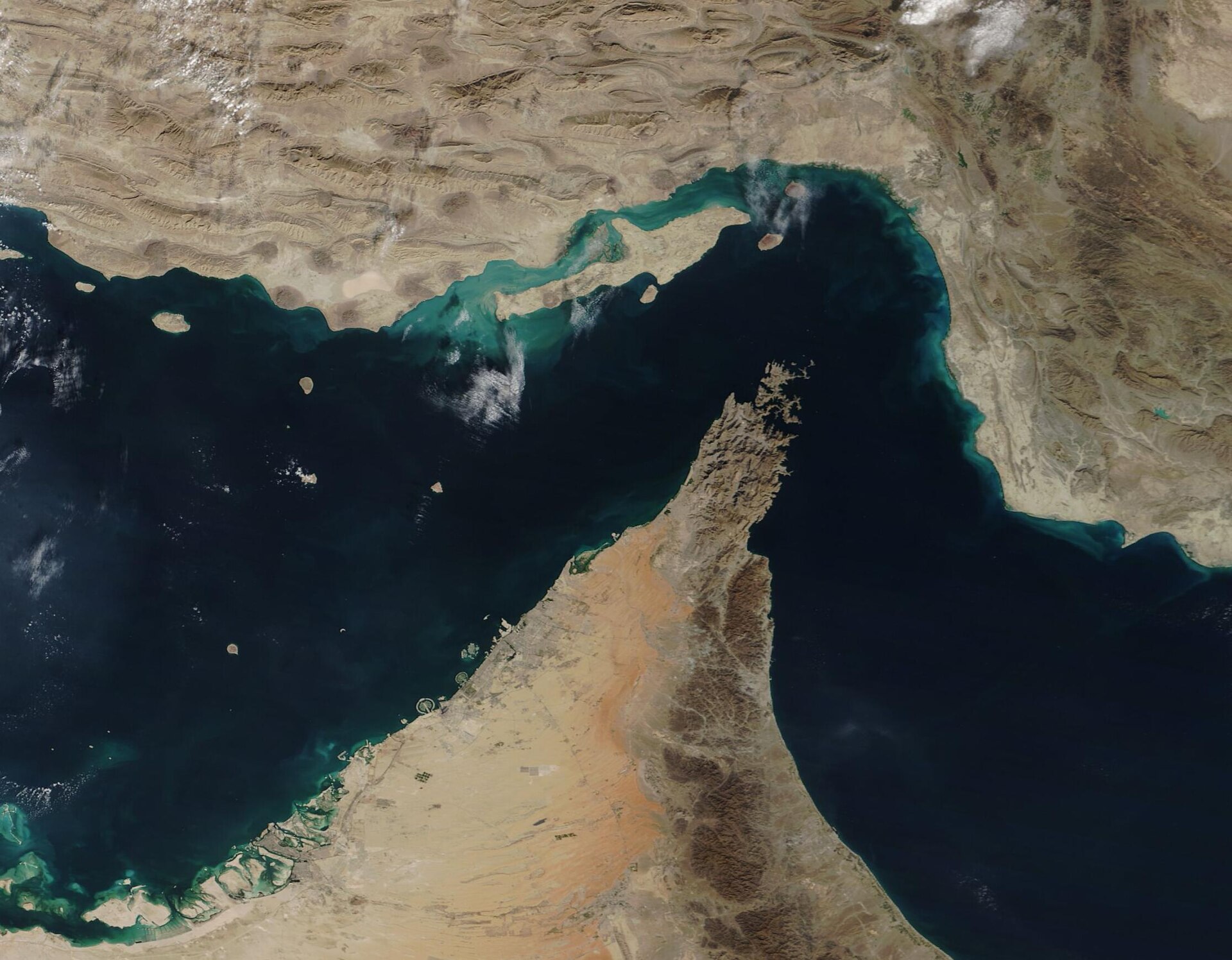
The Strait of Hormuz, approximately 21 nautical miles wide at its narrowest point, carries roughly 20 percent of the world’s traded oil under normal conditions. Iran mined the waterway in the opening hours of the war that began February 28, 2026, and the IRGC subsequently published a chart declaring the standard traffic separation scheme a danger zone, redirecting commercial vessels into a narrow corridor inside Iranian territorial waters between Qeshm and Larak islands. The mining campaign echoed Iran’s actions during the Tanker War of 1984-1988, which culminated in Operation Praying Mantis on April 18, 1988 — the largest US naval surface engagement since World War II, triggered by the mining of the frigate USS Samuel B. Roberts.
Under the UN Convention on the Law of the Sea, ships of all nations have a right of transit passage through straits used for international navigation, a right that cannot be suspended. Iran, the United States, and Israel are all non-ratifiers of UNCLOS, though the US treats the convention’s navigational provisions as binding customary international law. Iran’s 10-point negotiating plan, presented at the Islamabad talks, includes a demand that all Hormuz transit be conducted “in coordination with the armed forces of Iran” — a condition that, if codified, would effectively convert transit passage into a permission regime. A declassified 2009 CIA assessment, cited by the Stimson Center in 2026, noted that Iran “has adopted a strategy in which a few mines or the threat of mining would be used to deter shipping,” a doctrine that treats the mine threat as a persistent strategic asset rather than a discrete military operation.
Frequently Asked Questions
What class of destroyers made the transit?
US officials have not publicly identified the specific vessels or their class, though the Navy’s Gulf-deployed surface combatants are predominantly Arleigh Burke-class (DDG-51) guided-missile destroyers. These ships draw approximately 31 feet — roughly half the draft of a fully laden VLCC supertanker at 72 feet — which substantially reduces their mine-strike risk in the strait’s deeper channels. The transit profile (in and back out) also suggests the ships maintained higher speeds than a commercial vessel would, further reducing exposure time in the mined zone.
Has Iran actually mined the entire strait or only portions of it?
According to the New York Times report citing US officials, the mining was “haphazard” rather than systematic. Iran did not track all mine placements, and some mines drifted from their original positions. This creates a paradox: the mine threat may be less dense than a coordinated campaign would produce, but it is also less predictable and harder to clear because neither Iran nor the US has a complete picture of where the mines are. The IRGC’s published danger-zone chart covers the standard traffic separation scheme lanes but does not correspond to a verified mine map — it may overstate coverage to maximize deterrence while understating the drift problem that makes clearance intractable.
Could the US escort commercial tankers through the strait now?
Escorting tankers through a mined waterway requires mine countermeasures vessels leading the convoy, not destroyers flanking it. During the Tanker War, Operation Earnest Will (1987-1988) paired escorts with mine-sweeping assets. The Navy’s current MCM capability in the Gulf — three LCS vessels with unproven mission packages — is not assessed as operationally ready for convoy mine-sweeping. The four Japan-based Avenger-class MCM ships could theoretically redeploy, but transit time from Sasebo to Bahrain is approximately three weeks, and redeploying them would leave the Western Pacific without dedicated mine countermeasures capability during a period of elevated tension with China.
What happens if a commercial vessel strikes a mine before clearance is complete?
A mine strike on a laden VLCC in the Hormuz traffic separation scheme would likely close the strait to all commercial traffic immediately, regardless of clearance progress. Insurance markets would reclassify the waterway, war-risk premiums — already at record-high levels — would become effectively prohibitive, and flag states would likely order their registered vessels to avoid the strait entirely. The 1987 Bridgeton incident, in which a reflagged Kuwaiti tanker struck a mine on its first escorted convoy through the Gulf, shut down US convoy operations for weeks and forced a complete reassessment of mine-countermeasures posture. A comparable incident today, with 800 vessels already trapped and global crude markets already pricing a 6-million-barrel-per-day supply deficit according to Kpler, would trigger supply disruptions well beyond the Gulf region.
Is the April 22 ceasefire expiry date firm?
The ceasefire announced April 7-8 was described as lasting approximately two weeks, placing the nominal expiry around April 21-22. No extension mechanism has been publicly identified. The Soufan Center noted the absence of any renewal or rollover clause in the ceasefire framework. The Islamabad talks — which opened on April 11 with the Vance-Ghalibaf session — represent the only active diplomatic track for either extending the ceasefire or converting it into a more durable arrangement, but Iran’s 10-point plan includes preconditions (Hormuz sovereignty recognition, US base withdrawal from all regional bases, UNSC codification) that cannot be resolved in 11 days.