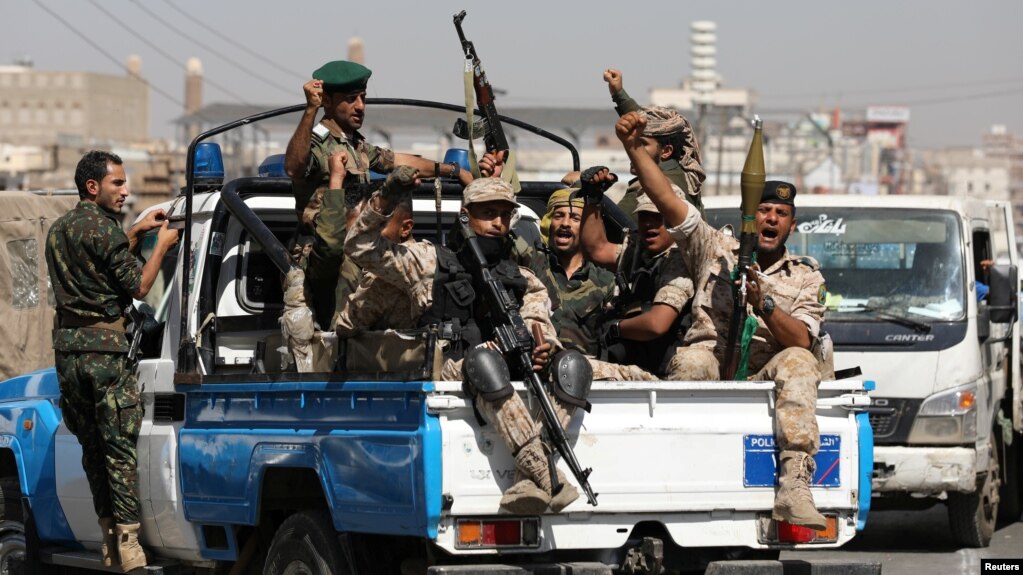

The United States continues to foster its relationship with Saudi Arabia, subtly sanctioning Riyadh’s efforts to rekindle a peace agreement with Yemen’s Houthi rebels. The militants, concentrated in Yemen, have marred Red Sea commercial shipping with attacks since November.
Despite agreeing in principle to a United Nations peace blueprint for Yemen in early December, advancement on this front stalled as a response to the Houthis’ amplified Red Sea attack campaign. They characterised their aggression as a display of solidarity towards Palestine.
Over the past week, Houthi leadership claims to have executed 112 attacks on vessels. Consequently, maritime trade via the Red Sea has taken a considerable hit, alongside escalated insurance fees. The United States, alongside the UK, has been striving to hamper the Houthis’ mobile missile sites, but the rebels made it clear just last week that their offensive would likely broaden. Traffic remains at a slow pace, merely making up 40-50% of last year’s equivalent duration figures.
Saudi Arabia, with the backing of Yemen’s UN special envoy, Hans Grundberg, is proactive in pushing the roadmap forward. This could potentially result in an influx of funds flowing to the Houthis, who are then expected to secure a permanent seat within the proposed national unity government.
During a Monday meeting, Grundberg urged the UN-recognised government, opposed to the Houthis and stationed in Aden, to progress with the peace discussions. He also made it clear to the Houthis that the future of the roadmap could be jeopardised if their attacks continue. He assured the UN security council that a peaceful solution was reachable, despite the ongoing conflict.
However, the Aden-based government raised concerns on Tuesday, insinuating that any roadmap would require modifications before they would find it acceptable. In a briefing, senior official of the Southern Transitional Council, a significant facet of the Aden-based government, Amr al-Bidh, articulated two prime conditions for the roadmap’s initiation; heightened transparency of the roadmap, and a UN-supervised ceasefire in Yemen in addition to ceasing Houthis’ attacks.
Said Bidh: “Terrorism should warrant no reward…There must be an externally guaranteed ceasefire, courtesy of a UN monitoring mission, and absolute transparency in the matter of funds directed towards the Houthis…Forward payments in large amounts for the empowerment of the Houthis should not be on the table.”
The UN’s roadmap substantially echoes previous confidential discussions between the Saudis and Houthis, covering bulk payments to the Houthis to account for unpaid public salaries, and providing extra resources towards the northern parts of Yemen. It has never been presented to the UN-backed government.
Now, the Houthis are indicating their readiness to sign the deal, either via the UN or through a bilateral arrangement with the Saudis. Given the perceived military stand-off between the US Navy and the Houthis, it seems that the Saudis, eager to disengage with Yemen, might be willing to leave their supported government in Aden as perceived losers.
The United States, in light of the Saudi’s growing impatience, appears more receptive to a Yemeni agreement. Saudi support is required for a resolution in Gaza, providing Washington with a diplomatic avenue to persuade Riyadh into an agreement of defense pact and normalisation of relations with Israel. This may ultimately dilute Iran’s regional influence. Washington is also proposing incentives to encourage the Houthis to cease attacks, which includes fast-tracking peace talks and easing Houthi trade restrictions.
British officials, however, advocate for a more hard-line stance against the Houthis, labelling a peace accord favourable to the Houthis as unacceptable.
Saudi Arabia has been on a steady defensive footing in Yemen ever since 2016. During that time, the Houthis, a once contained tribe in Yemen’s northern highlands, initiated a series of wars that resulted in their capturing of Yemen’s capital, Sana’a. This act pushed the Saudi-backed opposition southward to establish a base in Aden.
Acknowledging a temporary rise in popularity for the Houthis due to their Red Sea offences, Bidh opined that this bubble is on the verge of bursting as ordinary Yemenis start to feel the economic repercussions. He voiced his criticism at the West’s failure to execute a comprehensive plan to diminish Houthi influence. Designating them as a terrorist group simply isn’t sufficient, argued Bidh.
As it stands, roughly 17 million Yemenis are relying on humanitarian aid. Of the requested $2.7 billion for Yemen’s 2024 UN humanitarian response, just $792 million has been raised. In light of this, the UN’s humanitarian coordinator Martin Griffiths has warned of a resurgence in cholera.