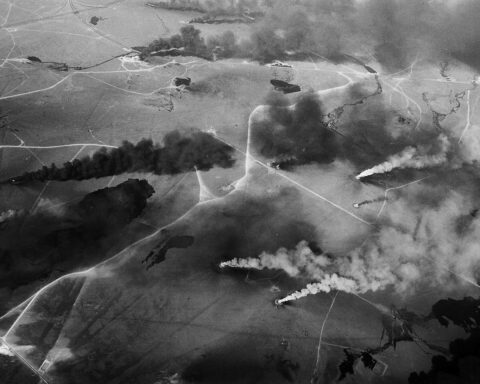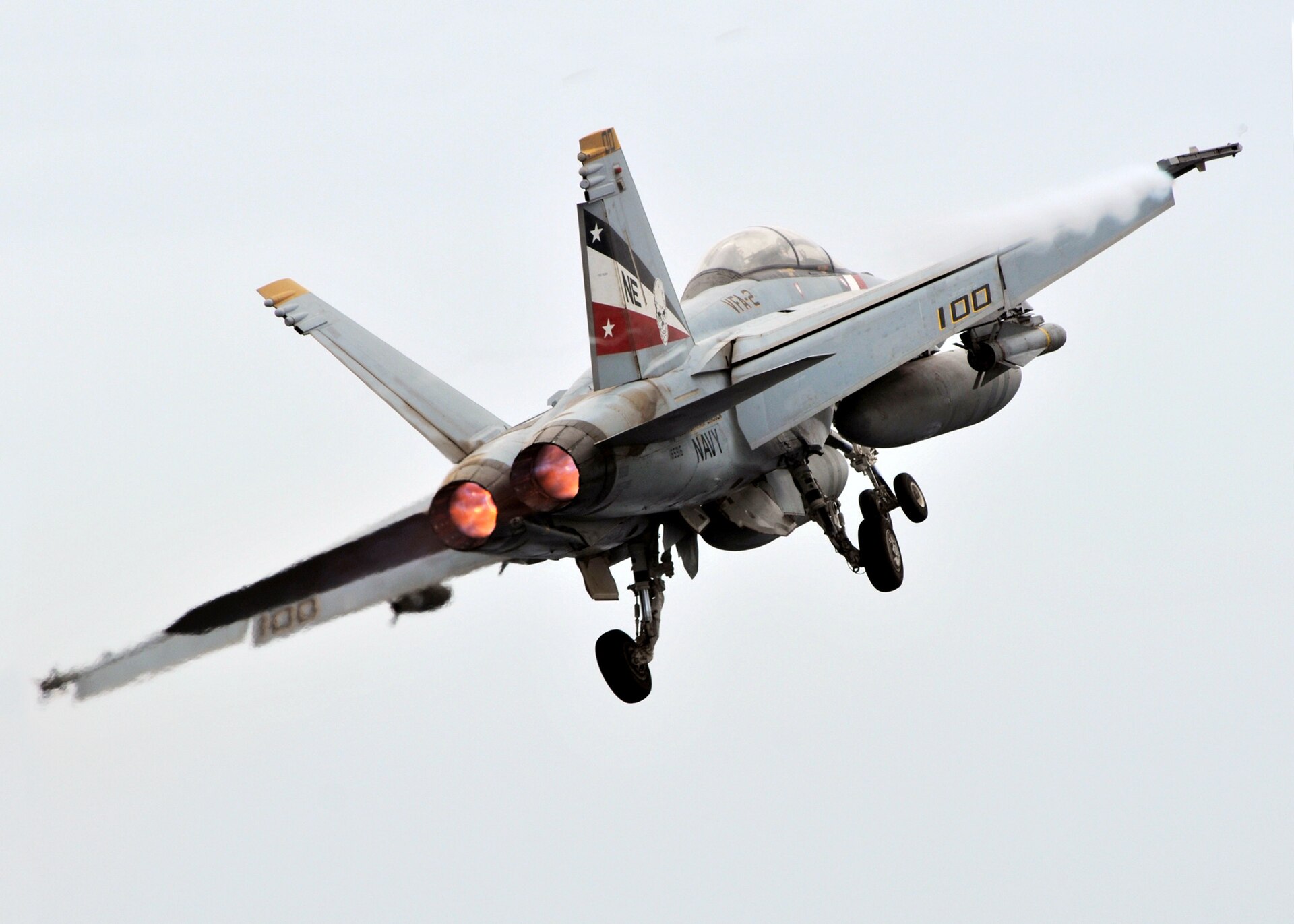

RIYADH — United States fighter jets struck military facilities near Iran’s Chabahar Free Trade Zone on Monday, according to Voice of America and multiple Indian news outlets, bringing the war to the doorstep of New Delhi’s most strategically important overseas investment and threatening to sever India’s only land corridor to Central Asia that bypasses Pakistan.
The strikes targeted IRGC installations in the Koh Laki mountain area behind the Chabahar port complex in Iran’s southeastern Sistan-Baluchestan Province, near the border with Pakistan. The sound of intense explosions was heard from the port itself, though the India-operated Shahid Beheshti terminal was not directly hit. No casualty figures from the Chabahar-area strikes have been released.
The attack on Day 17 of the US-Israeli military campaign against Iran carries implications that extend far beyond the immediate battlefield. India has invested $120 million directly in the Shahid Beheshti terminal through India Ports Global Limited and committed a further $250 million credit line for infrastructure development under a 10-year bilateral contract signed in May 2024. Those investments now sit within range of American ordnance being dropped on the same province.
For Saudi Arabia, the strikes sharpen a dilemma that has defined the kingdom’s wartime posture: how to maintain its deepening energy partnership with India — now the world’s fastest-growing major oil market — while the conflict it has refused to join threatens to destroy the infrastructure India relies on for regional trade.
Table of Contents
- What Did the US Strike Near Chabahar?
- Why Does Chabahar Matter to India?
- India’s $370 Million Investment Under Threat
- How Does the Chabahar Strike Affect Saudi Arabia?
- The India-Saudi Energy Pivot
- Nine Million Indian Workers Caught in the Crossfire
- International North-South Transport Corridor in Jeopardy
- Background: Chabahar’s Strategic History
- Frequently Asked Questions
What Did the US Strike Near Chabahar?
US fighter jets carried out airstrikes on military facilities close to Iran’s Chabahar Free Trade Zone on Monday, March 16, according to Voice of America. The targets were IRGC military installations in the Koh Laki area, a mountainous zone that sits directly behind the commercial port complex.
Residents in the Chabahar area reported hearing intense explosions, according to multiple reports from Indian and Middle Eastern news outlets. The strikes occurred as part of a broader wave of US and Israeli attacks on Iranian military infrastructure on Day 17 of the conflict, which also included strikes on Tehran, where Israel said it destroyed the aircraft of former Supreme Leader Ali Khamenei at Mehrabad Airport.
The Pentagon has not issued a specific statement on the Chabahar-area strikes. The full extent of the damage remains unclear, and no casualty figures have been published. Iran’s state media acknowledged the strikes but did not provide details on the impact to military or civilian infrastructure in the Chabahar area.
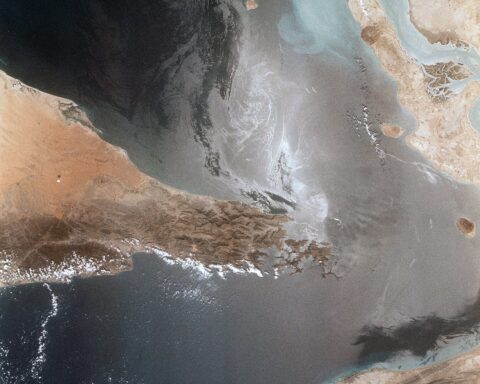
The Chabahar Free Trade Zone sits on the Gulf of Oman, roughly 72 kilometres from the Pakistani border. Unlike Iran’s Persian Gulf ports, which face the Strait of Hormuz, Chabahar opens directly onto the Arabian Sea, making it Iran’s only major port that does not require transit through the contested strait. That geographic advantage has made it a strategic asset for both Iran and India — and a potential target for any military campaign seeking to isolate Tehran from international trade.
Why Does Chabahar Matter to India?
Chabahar occupies a central position in India’s regional connectivity strategy. The port provides New Delhi with direct maritime access to Afghanistan and Central Asia while entirely bypassing Pakistan, a country with which India shares a hostile border and virtually no functioning trade relationship. Without Chabahar, Indian goods bound for Afghanistan must transit through Pakistan or take circuitous routes through Central Asian intermediaries.
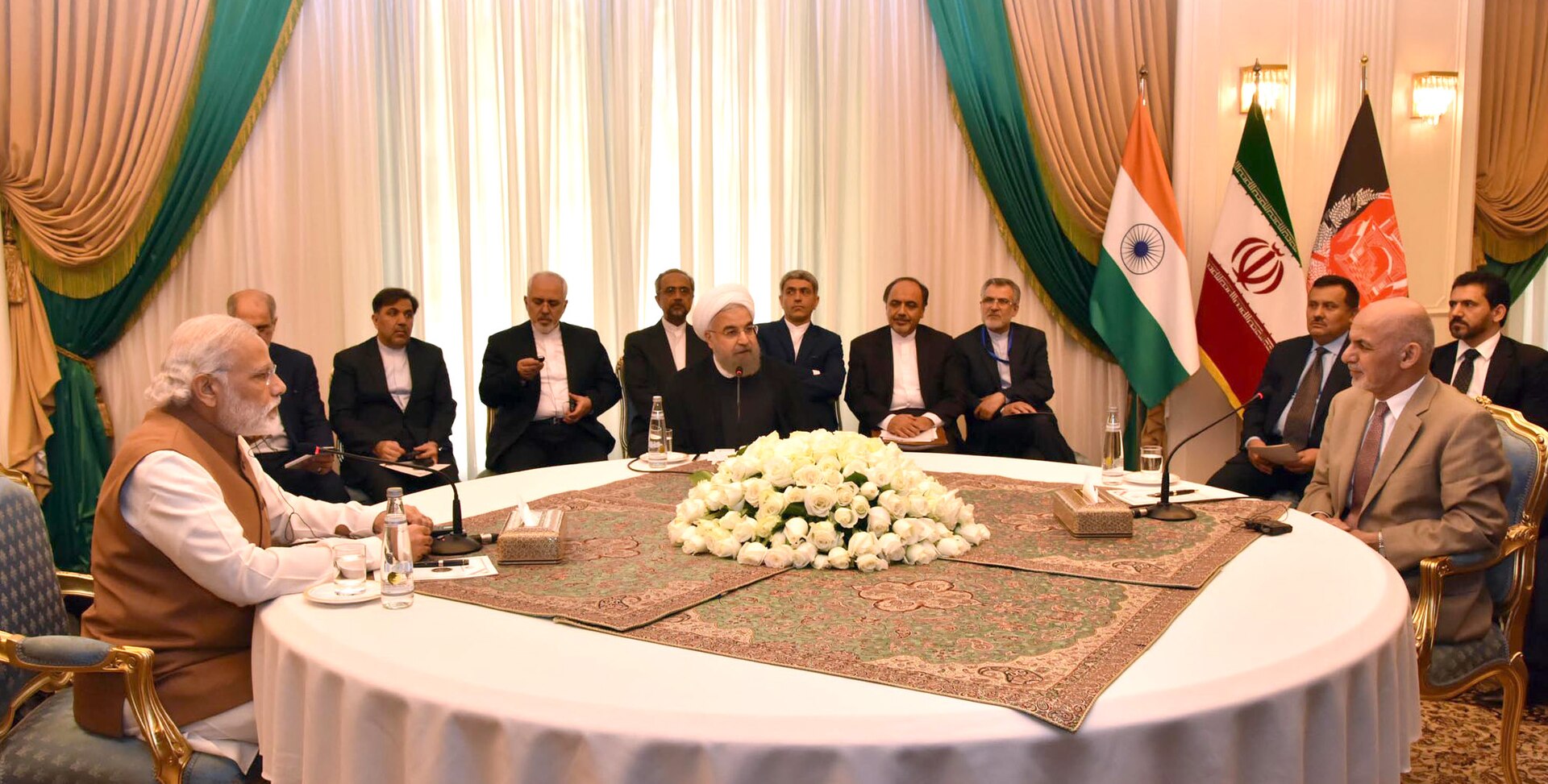
India’s strategic interest in Chabahar predates the current conflict by more than a decade. In 2003, India and Iran signed the original agreement for the development of the port. The project gained momentum in 2016, when Prime Minister Narendra Modi travelled to Tehran and signed a trilateral agreement with Iran and Afghanistan that committed India to developing the Shahid Beheshti terminal and connecting it to an inland rail network.
The port is also a key node in the International North-South Transport Corridor (INSTC), a 7,200-kilometre multimodal network linking Mumbai to Moscow through Iran, Azerbaijan, and Russia. The corridor is designed to slash transit times for goods moving between South Asia and Northern Europe from the current 40-60 days via the Suez Canal to approximately 25 days. Chabahar serves as the corridor’s southern anchor, the point where sea routes from India meet the overland leg through Iran.
Beyond commerce, Chabahar has functioned as a conduit for Indian humanitarian assistance to Afghanistan. When the Taliban seized power in Kabul in 2021, the port provided one of the few remaining channels for Indian wheat shipments to the Afghan population, according to India’s Ministry of External Affairs.
India’s $370 Million Investment Under Threat
India’s financial exposure in Chabahar is substantial. India Ports Global Limited (IPGL), the Indian government’s port management entity, completed the transfer of $120 million for the development and operation of the Shahid Beheshti terminal in August 2025, according to India’s Ministry of External Affairs. A further $250 million credit line was established under the 10-year bilateral contract signed on May 13, 2024, bringing the total committed investment to approximately $370 million.
The investment covers port equipment, cargo handling infrastructure, container yard development, and operational management. India’s External Affairs Ministry confirmed in early 2026 that the full $120 million direct investment had been disbursed, making it one of India’s largest single infrastructure commitments in the Middle East.
| Component | Amount (USD) | Status |
|---|---|---|
| Direct investment (Shahid Beheshti terminal) | $120 million | Fully disbursed (Aug 2025) |
| Credit line for infrastructure | $250 million | Available under 10-year contract |
| Earlier development commitments (2016) | $500 million | Partially utilised |
| Total commitment | $370-870 million | Ongoing |
The proximity of US strikes to the Chabahar Free Trade Zone raises immediate questions about the security of Indian personnel and equipment at the port. While the Shahid Beheshti terminal was not directly targeted, the strikes on IRGC installations in the same province demonstrate that the American military campaign has expanded to southeastern Iran — a region that until Monday had been largely untouched by the conflict.
Indian officials have not publicly commented on Monday’s strikes near Chabahar. New Delhi has maintained a carefully calibrated position throughout the Iran war, declining to condemn either side while working to protect its energy supplies and the safety of its diaspora across the Gulf.

How Does the Chabahar Strike Affect Saudi Arabia?
The immediate impact on Saudi Arabia is indirect but strategically significant. India is one of the kingdom’s most important oil customers, purchasing an estimated 1.0 to 1.1 million barrels per day of Saudi crude in early 2026 — the highest volume since 2019, according to market data tracked by Discovery Alert. Any disruption to India’s broader Middle East trade architecture, including the loss of Chabahar as a connectivity hub, pushes New Delhi deeper into dependence on Saudi and Emirati ports for its regional commerce.
Saudi Arabia’s own wartime energy pivot has already begun to reshape the India-Saudi trade relationship. With the Strait of Hormuz effectively closed to most commercial traffic since March 1, Saudi Aramco has rerouted crude exports through the Red Sea port of Yanbu via the East-West pipeline. Bloomberg reported on Monday that the kingdom is now offering long-term customers the option of receiving their April allocations via Yanbu, where at least 27 crude carriers were anchored on Monday — up from 11 on Friday.
For India, which imports over 85 percent of its crude oil, the simultaneous closure of Hormuz and the threat to Chabahar narrows the available supply routes to a critical few. The Hormuz blockade has already reduced strait transit from a pre-war average of 153 vessel movements per day to roughly 13. If Chabahar becomes operationally compromised by the widening conflict, India’s commercial access to the entire northern Arabian Sea corridor would be severely constrained.
The India-Saudi Energy Pivot
The Iran war has accelerated a structural shift in India’s energy sourcing that was already underway. Saudi oil imports by India surged to a six-year high in early 2026, coinciding with a decline in Russian crude shipments that had dominated India’s import portfolio since 2022. Russia, which accounted for 36 percent of India’s crude imports in 2024, has seen its share erode as logistics challenges and secondary sanctions risks mount.
OPEC projected India’s oil demand would rise 3.4 percent in 2025, double the pace of China, making the subcontinent the world’s most important growth market for crude producers. Saudi Aramco has responded by deepening its engagement with Indian refiners, and the kingdom’s decision to offer Yanbu-routed shipments for April delivery is partly aimed at securing India’s loyalty as the Gulf’s logistics infrastructure adapts to wartime conditions.
| Supplier | Volume (bpd) | Share | Status |
|---|---|---|---|
| Russia | 800,000-1,200,000 | ~20-25% | Declining (logistics, sanctions risk) |
| Iraq | ~900,000 | ~17% | Disrupted (Basra port damage) |
| Saudi Arabia | 1,000,000-1,100,000 | ~19% | Surging (6-year high) |
| UAE | ~450,000 | ~8% | Disrupted (Fujairah strikes) |
| Kuwait | ~350,000 | ~6% | Disrupted (airspace closure) |
| Others | ~1,100,000 | ~25% | Mixed |
The economic cost of the Iran war for India extends beyond oil prices. Iraq, India’s second-largest crude supplier, suspended all oil exports after Iranian drone strikes near Basra on March 12. UAE shipments have been disrupted by strikes on Fujairah. Kuwait closed its airspace. The cumulative effect has pushed India toward Saudi Arabia as the most reliable remaining Gulf supplier — a development that strengthens Riyadh’s hand in the bilateral relationship but also increases the risks if the conflict expands further.

Nine Million Indian Workers Caught in the Crossfire
Approximately 9.1 million Indian citizens work across the six Gulf Cooperation Council states — nearly double the 4.9 million Pakistanis who constitute the next-largest migrant workforce in the region, according to data compiled by Al Jazeera. These workers send roughly $50 billion in annual remittances back to India, accounting for 38 percent of the country’s total remittance inflows and directly supporting an estimated 40 to 50 million people, according to a former Indian ambassador to Saudi Arabia cited by the South China Morning Post.
The Iran war has placed this population in physical and economic danger. Drone strikes on Dubai, missile impacts in Abu Dhabi that killed a Palestinian resident on Monday, and sustained attacks on Bahrain and Kuwait have shattered what Al Jazeera described as “one of the region’s most durable illusions: that cities like Dubai, Abu Dhabi, Doha and Manama would remain apart from the conflicts flickering at the region’s edges.”
Indian workers are concentrated in oil services, construction, hospitality, and retail — sectors that are particularly vulnerable to the disruption caused by the conflict. Across the Gulf, migrant workers from South Asia bear a disproportionate share of civilian casualties, trapped by the kafala system with no evacuation route. CNBC reported that the war puts $50 billion in Indian remittances at risk, a figure that represents one of the largest single financial exposures any country faces from the Gulf conflict.
The US Embassy in Riyadh has directed all US government employees to shelter in place and recommended that American citizens depart the kingdom via commercial flights. India’s own evacuation planning remains in an early stage, though New Delhi activated its Vande Bharat repatriation infrastructure — last used during the Covid-19 pandemic — in the first week of March.
Saudi Arabia hosts the largest concentration of Indian workers in the Gulf, with an estimated 2.4 million Indian nationals employed across the kingdom’s construction, healthcare, technology, and energy sectors. Crown Prince Mohammed bin Salman and Prime Minister Modi have invested heavily in the bilateral relationship, meeting in Jeddah in April 2025 to deepen cooperation across defence, technology, and energy. The safety of Indian workers has become a recurring theme in diplomatic communications between Riyadh and New Delhi since Iranian drone and missile attacks began reaching Saudi population centres in early March.
International North-South Transport Corridor in Jeopardy
The strikes near Chabahar also threaten the International North-South Transport Corridor (INSTC), a multimodal transport network linking India to Russia, Central Asia, and Europe through Iran. The corridor was conceived in 2000 by India, Iran, and Russia, and has since expanded to include 13 member states and several observer nations.
Chabahar serves as the INSTC’s maritime gateway — the point where Indian cargo arrives by sea before transferring to road and rail connections running north through Iran to Azerbaijan, and onward to Russia and Northern Europe. The corridor was designed to reduce transit times from the current 40-60 days via the Suez Canal to approximately 25 days, at roughly 30 percent lower cost.
With US military operations now reaching southeastern Iran, the viability of the overland segments running through Iranian territory is in question. Rail and road infrastructure in Iran has sustained damage during 17 days of strikes, though the full extent of transport disruption remains difficult to verify.
The loss of the INSTC would leave India without a credible alternative to the Suez Canal route for trade with Russia and Central Asia. It would also eliminate one of the few connectivity projects that gave New Delhi strategic leverage independent of both Beijing’s Belt and Road Initiative and Washington’s Indo-Pacific framework — a point not lost on Indian strategic planners who view Chabahar as a rare example of autonomous Indian power projection in a region dominated by larger players.
Background: Chabahar’s Strategic History
Iran began developing Chabahar as a commercial port in the 1990s, seeking to create an alternative to its Hormuz-facing facilities at Bandar Abbas and Shahid Rajaee. The port’s location on the Gulf of Oman, outside the Strait of Hormuz, gave it natural insulation from the maritime chokepoint that has long been Iran’s primary strategic vulnerability.
India’s involvement accelerated after the 2003 bilateral agreement and reached a peak with the 2016 trilateral deal that included Afghanistan. The port was granted a unique exemption from US sanctions against Iran, reflecting Washington’s recognition that Chabahar served as a vital supply route for Afghanistan — a country where the US maintained tens of thousands of troops at the time.
The Trump administration’s 2018 withdrawal from the Iran nuclear deal complicated the project but did not kill it. The sanctions exemption for Chabahar was renewed repeatedly, most recently in 2024. The strategic logic — that Chabahar served American interests by providing an alternative to Pakistan’s Gwadar port, which was being developed by China — remained intact across multiple US administrations.
The irony of American warplanes now striking in the same province where Washington previously protected India’s investment from its own sanctions regime has not gone unnoticed in New Delhi. “The exemption was built on the premise that Chabahar served shared strategic interests,” a former Indian diplomat told The Diplomat in November 2025. “That premise has been overtaken by events.”
Monday’s strikes also carry implications for Pakistan and China. Pakistan’s Gwadar port, developed by the China Overseas Ports Holding Company as part of the China-Pakistan Economic Corridor, sits less than 100 kilometres west of Chabahar along the Makran coast. Any expansion of military operations in the region would bring the conflict to the doorstep of a Chinese strategic asset — a scenario Beijing is watching with growing alarm as its own energy supplies from the Gulf face unprecedented disruption.
Frequently Asked Questions
Was India’s Chabahar port directly struck by the US?
The India-operated Shahid Beheshti terminal at Chabahar was not directly targeted. US fighter jets struck IRGC military installations in the Koh Laki mountain area behind the Chabahar Free Trade Zone, according to Voice of America. However, explosions were heard from the port itself, and the proximity of the strikes raises questions about the security of Indian personnel and infrastructure at the facility.
How much has India invested in Chabahar?
India has invested $120 million directly in the Shahid Beheshti terminal through India Ports Global Limited, with the final tranche disbursed in August 2025. A further $250 million credit line was established under a 10-year contract signed in May 2024, bringing total commitments to approximately $370 million. Earlier agreements from 2016 envisioned up to $500 million in broader infrastructure development.
Why does the Chabahar strike matter to Saudi Arabia?
India is one of Saudi Arabia’s most important oil customers, importing an estimated 1.0 to 1.1 million barrels per day of Saudi crude in early 2026. The strike near Chabahar further disrupts India’s regional trade infrastructure, pushing New Delhi deeper into dependence on Saudi ports and strengthening Riyadh’s leverage as India’s most reliable Gulf energy supplier during the conflict.
What is the International North-South Transport Corridor?
The INSTC is a 7,200-kilometre multimodal transport network linking Mumbai to Moscow through Iran, Azerbaijan, and Russia. Chabahar serves as the corridor’s southern maritime gateway. The corridor is designed to reduce transit times from 40-60 days via the Suez Canal to approximately 25 days. US strikes in southeastern Iran threaten the corridor’s Iranian overland segments.
How many Indian workers are in the Gulf?
Approximately 9.1 million Indian citizens work across the six GCC states, sending roughly $50 billion in annual remittances home. These workers support an estimated 40 to 50 million people in India and are concentrated in oil services, construction, hospitality, and retail — sectors particularly vulnerable to the wartime disruption now affecting every major Gulf state.