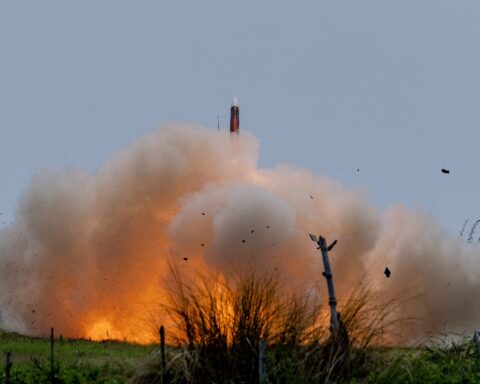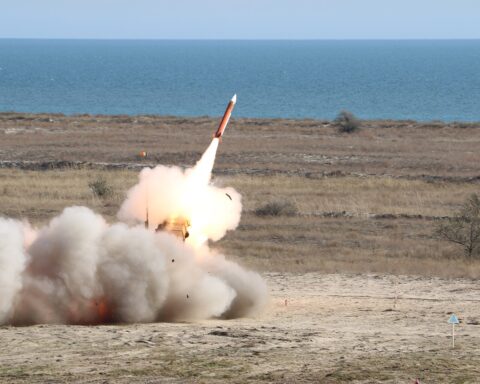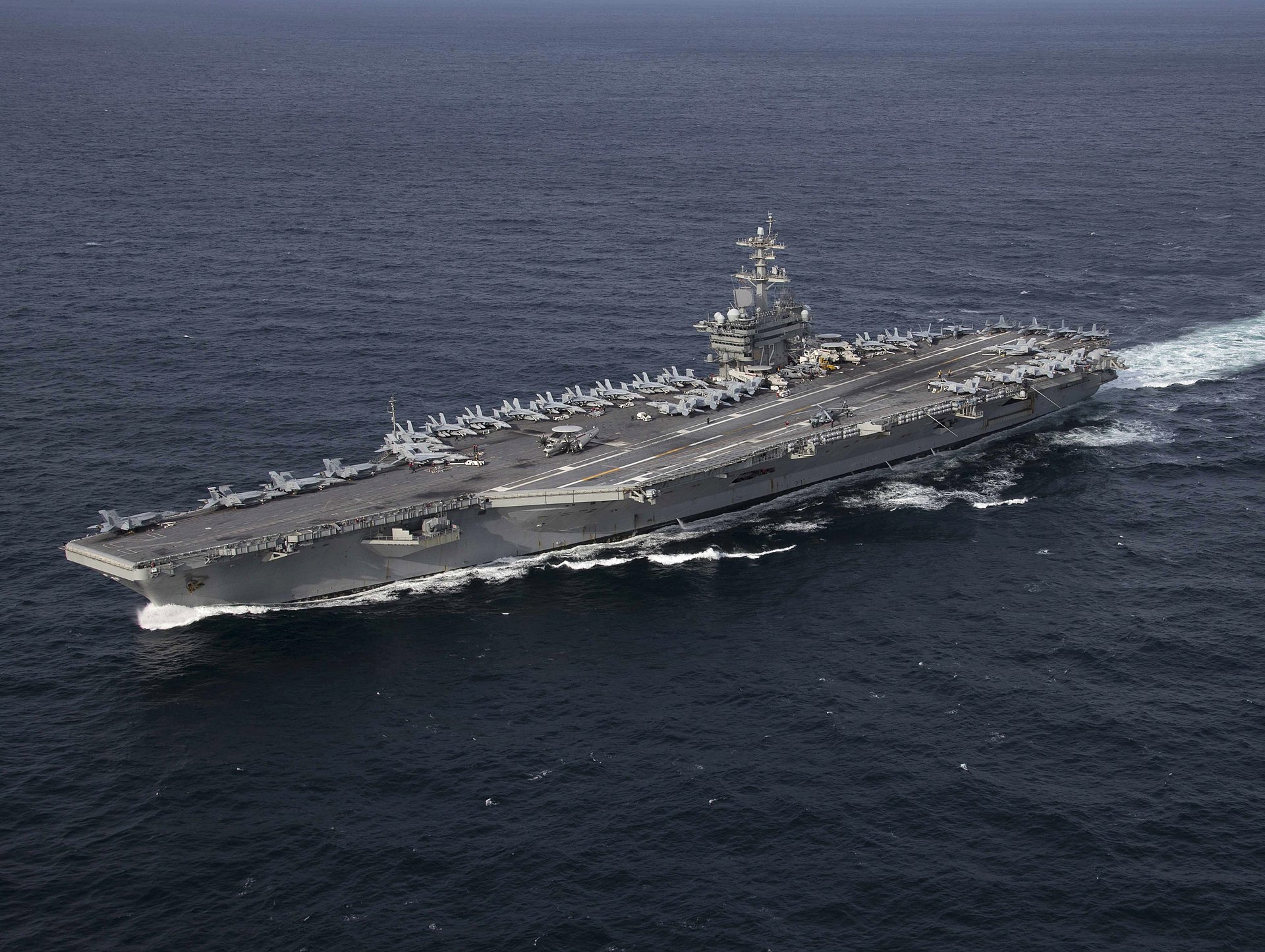

WASHINGTON — The Pentagon is preparing to deploy a third aircraft carrier strike group to the Middle East as the war between the United States and Iran enters its second week, according to U.S. defense officials and open-source intelligence reports. The USS George H.W. Bush (CVN-77) completed pre-deployment exercises off the coast of Virginia on Thursday and is expected to cross the Atlantic toward the eastern Mediterranean within days, joining the USS Abraham Lincoln and USS Gerald R. Ford already operating in the region.
The decision to send a third carrier represents the largest concentration of American naval firepower in the Middle East since the 2003 invasion of Iraq, and it arrives at a moment when Saudi Arabia faces daily Iranian missile and drone attacks on its oil infrastructure, military bases, and population centers. Admiral Brad Cooper, head of U.S. Central Command, confirmed this week that the Navy has destroyed more than 30 Iranian naval vessels since Operation Epic Fury began on February 28, including Iran’s converted drone carrier IRIS Shahid Bagheri.
Table of Contents
- Why Is the Pentagon Sending a Third Carrier to the Gulf?
- Where Are the Three US Carrier Strike Groups Positioned?
- CENTCOM Destroys Iran’s Drone Carrier as Naval War Intensifies
- Did Iran Strike the USS Abraham Lincoln?
- What Does the Carrier Deployment Mean for Saudi Arabia’s Defense?
- Tanker Escorts and Shipping Insurance
- Maintenance Concerns and Force Strain
- Frequently Asked Questions
Why Is the Pentagon Sending a Third Carrier to the Gulf?
The deployment of USS George H.W. Bush reflects a calculated escalation by the Department of Defense as Iranian attacks spread across the Gulf Cooperation Council states. The Bush completed its Composite Training Unit Exercise (COMPTUEX) on March 6, during which Carrier Air Wing 7 flew 1,586 sorties and achieved 693 daytime and 682 nighttime arrested landings, according to U.S. Naval Institute News. The carrier is now expected to undergo a brief replenishment at Naval Station Norfolk before sailing east.
“We are ready to deploy and prepared to provide air superiority, strike, electronic warfare, or presence as needed,” the Bush’s commanding officer told reporters after the exercise concluded. The statement came hours after Saudi Arabia’s Ministry of Defense announced it had intercepted and destroyed two ballistic missiles aimed at Prince Sultan Air Base in al-Kharj and six drones targeting the Shaybah oilfield in the Rub’ al Khali desert.
The third carrier is expected to relieve or reinforce the USS Gerald R. Ford, which has been operating continuously since mid-February and is approaching what Senator Mark Warner of Virginia described as an 11-month deployment. Pentagon officials told USNI News that the Bush would initially transit to the eastern Mediterranean, positioning it to support operations from the Red Sea or move into the Arabian Sea as the tactical situation requires.
Defense analysts at the Washington Institute for Near East Policy noted that three simultaneous carrier deployments to the region have occurred only twice in the past two decades, during the opening phases of the 2003 Iraq War and briefly in 2012 during heightened tensions with Iran over its nuclear program. The current deployment surpasses both in scope, combining carrier strike groups with a reported 150-plus combat aircraft, guided-missile cruisers, destroyers, and at least one submarine.
Where Are the Three US Carrier Strike Groups Positioned?
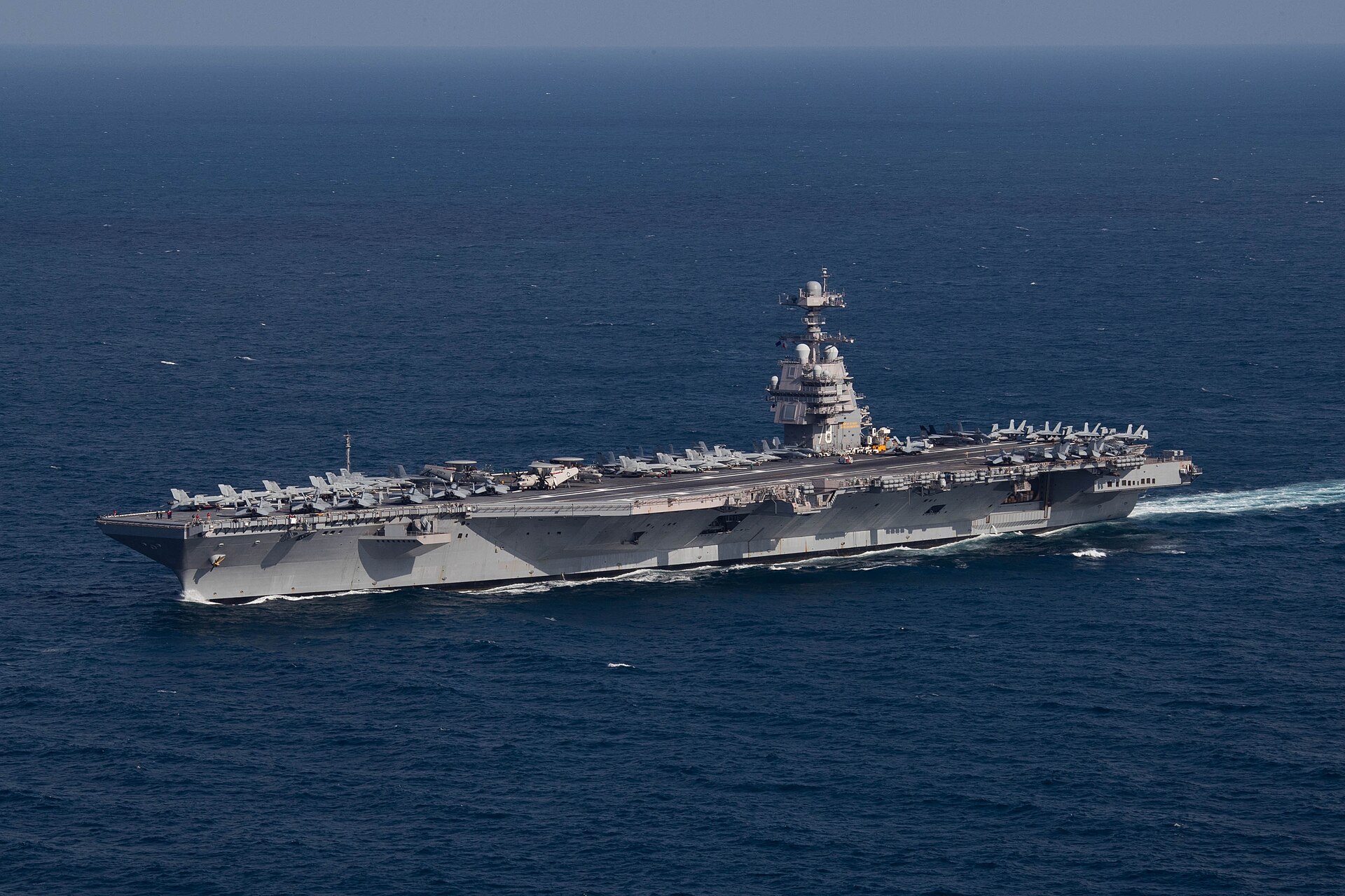
The three carrier strike groups form a crescent of American naval power stretching from the Mediterranean to the Arabian Sea, each positioned to address a distinct theater of the conflict with Iran.
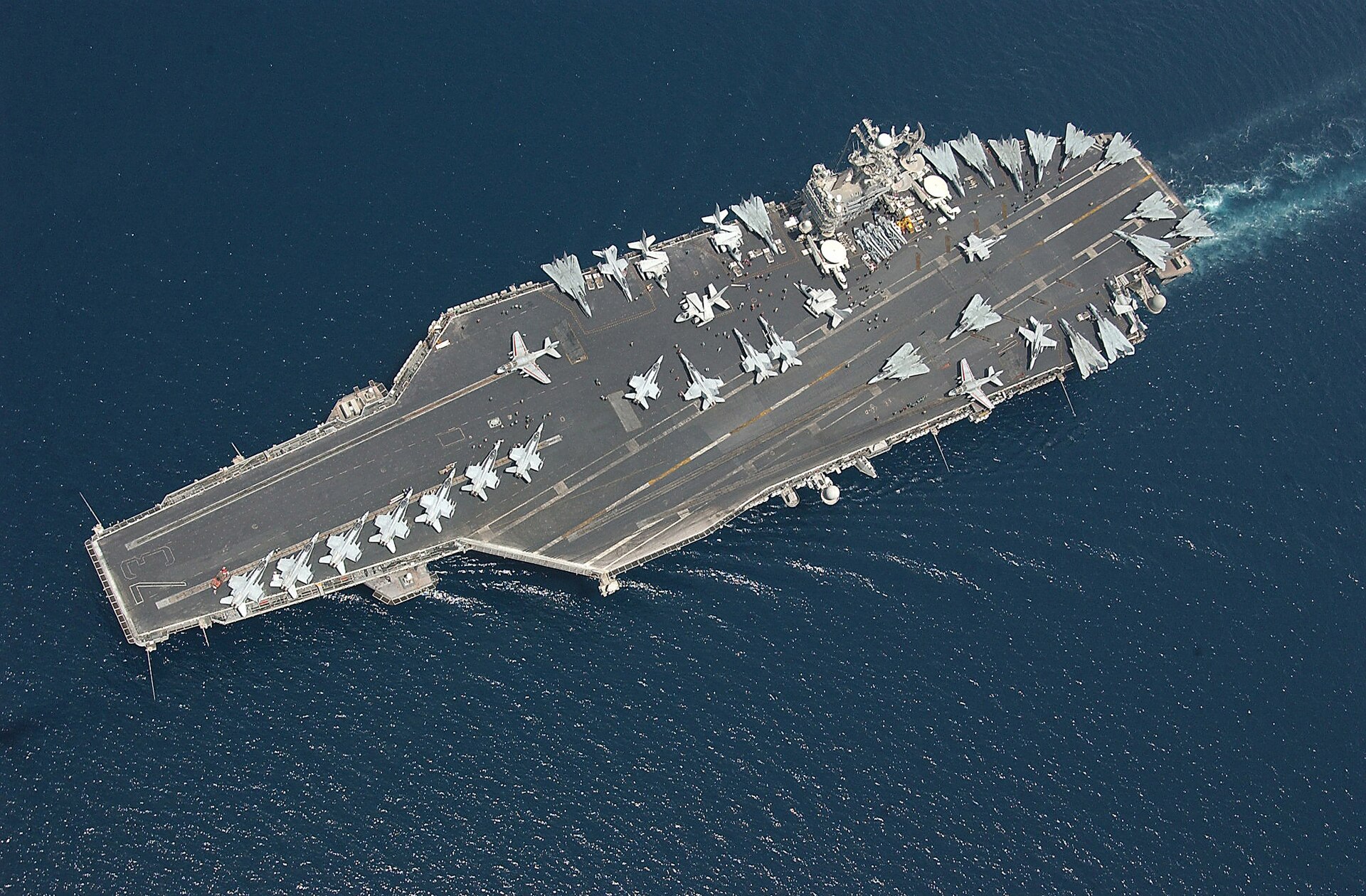
The USS Abraham Lincoln (CVN-72), a Nimitz-class carrier, has been the tip of the spear since hostilities began on February 28. Operating in the Arabian Sea with Carrier Air Wing 2 and accompanied by the destroyers USS Frank E. Peterson, USS Spruance, and USS Michael Murphy, the Lincoln has conducted sustained combat operations against Iranian military targets as part of Operation Epic Fury. Axios reported that Lincoln-based aircraft participated in the opening strikes on Tehran, Isfahan, Qom, Karaj, and Kermanshah that killed Supreme Leader Ali Khamenei.
The USS Gerald R. Ford (CVN-78) transited the Suez Canal on March 4, according to Pentagon photographs, and is now operating in the Red Sea. The Ford, commissioned in 2017 as the most expensive warship ever built at approximately $13 billion, carries roughly 75 aircraft and uses the Electromagnetic Aircraft Launch System (EMALS) rather than traditional steam catapults. Stars and Stripes reported the Ford has been launching around-the-clock flight operations since arriving in the theater, with its air wing providing both strike capability against Iranian targets and air defense coverage for Gulf states.
The USS George H.W. Bush (CVN-77), the last Nimitz-class carrier built, is the incoming third element. With Carrier Air Wing 7 embarked, the Bush adds an additional complement of F/A-18E/F Super Hornets, EA-18G Growler electronic warfare aircraft, E-2D Advanced Hawkeye surveillance planes, and MH-60 Seahawk helicopters. Defense News reported that the Bush is expected to cross the Atlantic and enter the Mediterranean within the week.
| Carrier | Class | Location | Air Wing | Key Escorts |
|---|---|---|---|---|
| USS Abraham Lincoln (CVN-72) | Nimitz | Arabian Sea | CVW-2 | USS Spruance, USS Frank E. Peterson, USS Michael Murphy |
| USS Gerald R. Ford (CVN-78) | Ford | Red Sea | CVW-8 | USS Bainbridge (transited Suez Canal Mar. 4) |
| USS George H.W. Bush (CVN-77) | Nimitz | En route (Norfolk) | CVW-7 | TBD — completing COMPTUEX exercises |
Combined, the three strike groups represent more than 200 fixed-wing aircraft, dozens of cruise missile-capable surface combatants, and a layered air defense network incorporating the Aegis Combat System, Standard Missile-6 (SM-6) interceptors, and the Naval Integrated Fire Control-Counter Air (NIFC-CA) architecture. Reuters reported that the concentration of firepower gives CENTCOM the ability to maintain continuous strike operations against Iran while simultaneously providing protective coverage for Saudi Arabia’s air defense shield and allied Gulf state airspace.
CENTCOM Destroys Iran’s Drone Carrier as Naval War Intensifies
One of the most significant naval engagements of the conflict occurred when U.S. forces struck and destroyed the IRIS Shahid Bagheri, Iran’s converted drone carrier, in the Persian Gulf. CENTCOM released video footage on March 5 showing two direct hits on the vessel — one amidships on the port side and another on the port quarter — with fires burning across the 40,000-ton ship.
“We hit an Iranian drone carrier ship roughly the size of a World War II aircraft carrier,” Admiral Cooper said in a briefing at CENTCOM headquarters. The Shahid Bagheri had been commissioned in February 2025 after conversion from the Perarin, a South Korean-built container ship, according to Naval News. The vessel served as Iran’s primary platform for launching long-range drone strikes against targets across the Gulf.
The destruction of the Shahid Bagheri was part of a broader campaign against the Iranian navy. Cooper confirmed that U.S. forces have now sunk or destroyed more than 30 Iranian naval vessels since February 28. The Navy Times reported that the campaign has effectively eliminated Iran’s surface fleet capability in the Persian Gulf, though Iran retains a significant inventory of land-based anti-ship missiles and fast attack craft in coastal positions along the Strait of Hormuz.
Iran’s naval losses stand in contrast to the expanding reach of its missile and drone arsenal, which continues to target Saudi cities, military installations, and energy infrastructure. Saudi Arabia’s Ministry of Defense reported on March 7 that it intercepted five missiles and five drones in a single day, including three ballistic missiles aimed at Prince Sultan Air Base, one cruise missile east of al-Kharj, one drone in the Eastern Province, and four drones in the eastern Riyadh region.
Did Iran Strike the USS Abraham Lincoln?
Iran’s Islamic Revolutionary Guard Corps claimed on March 5 that it had struck the USS Abraham Lincoln with four ballistic missiles and drones in the Sea of Oman. The claim, broadcast on Iranian state television, included footage that Tehran presented as evidence of the attack. Iranian media described it as a historic blow against American naval power.
U.S. Central Command categorically denied the claim. “The Lincoln was not hit. The missiles launched didn’t even come close. The Lincoln continues to launch aircraft,” CENTCOM said in a statement posted on its official social media channels on March 1, following earlier versions of the same claim. The Pentagon subsequently released photographs dated March 7 showing the Abraham Lincoln operating normally in the Arabian Sea, conducting flight operations with no visible damage, according to Naval Today.
PolitiFact investigated the Iranian claims and found that videos circulating on social media purporting to show a missile striking the Lincoln were fabricated or misidentified. Some clips showed controlled demolitions of decommissioned ships, while others depicted missile tests unrelated to current operations. Al Arabiya News quoted a U.S. official stating the Iranian missiles “were intercepted well before reaching the carrier” by the Lincoln’s Aegis-equipped escort destroyers.
The exchange of claims reflects a broader information war accompanying the kinetic conflict. Iran’s narrative of striking a U.S. carrier serves domestic propaganda purposes at a time when the IRGC has lost its supreme leader, much of its surface navy, and significant military infrastructure to American and Israeli strikes. The U.S. release of photographs showing undamaged carriers operating normally is designed to counter that narrative and reassure Gulf allies that American military assets remain fully operational.
What Does the Carrier Deployment Mean for Saudi Arabia’s Defense?
The three-carrier deployment directly reinforces Saudi Arabia’s defensive posture at a moment when the Kingdom faces sustained Iranian attacks on its territory. More than 5,000 U.S. military personnel are stationed at Prince Sultan Air Base in al-Kharj, the facility that has been the target of repeated Iranian ballistic missile attacks since the war began. The carrier groups provide layered air defense that extends Saudi Arabia’s defensive perimeter hundreds of miles into the surrounding seas.
Saudi Defense Minister Prince Khalid bin Salman urged Iran to “avoid miscalculation” in a statement on March 7, as the Ministry of Defense reported the latest round of intercepts over Saudi territory. The warning came after the Saudi military raised its readiness levels following multiple attacks, with a source close to the army telling Agence France-Presse that Riyadh was considering a military response if Iran continued targeting its oil infrastructure.
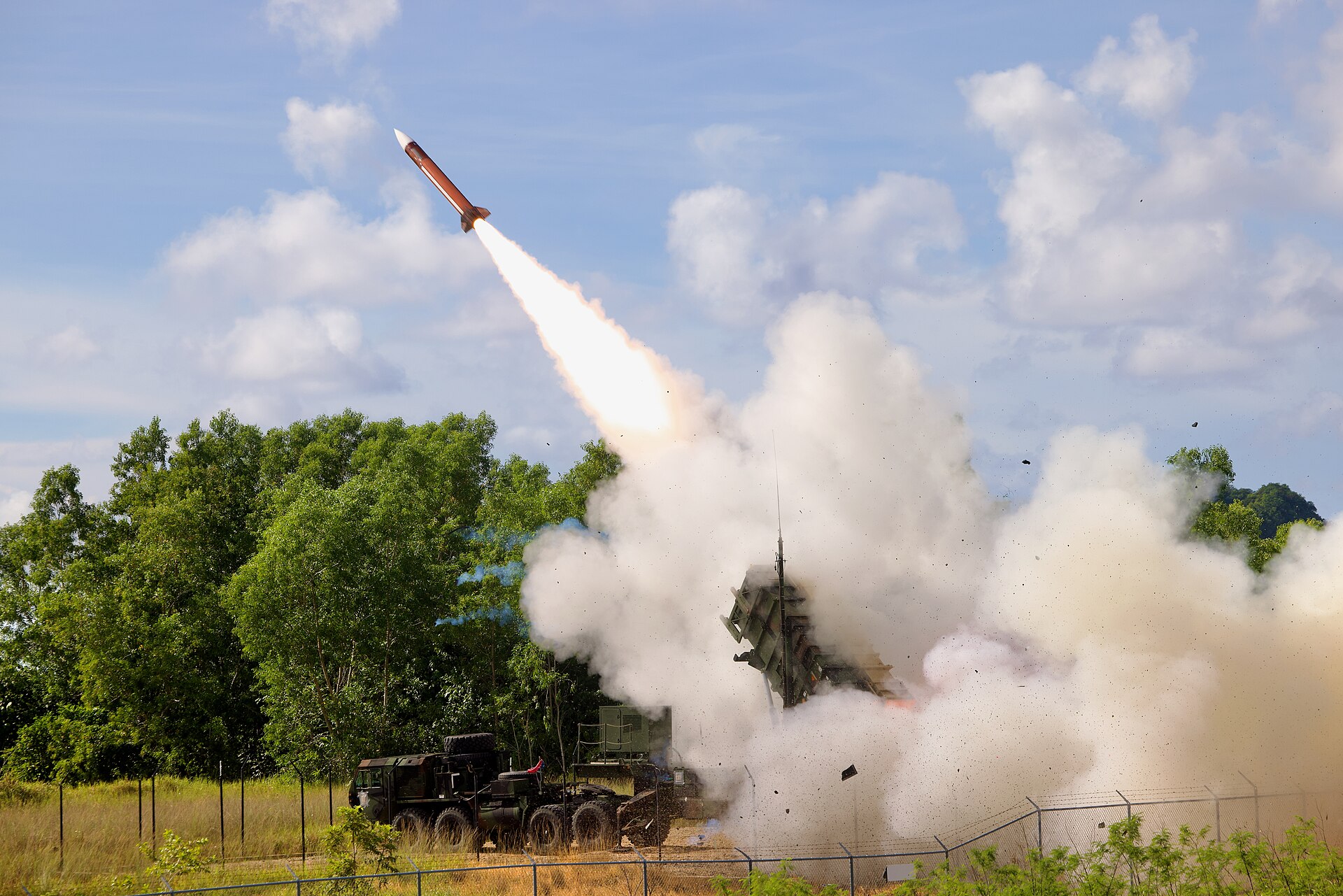
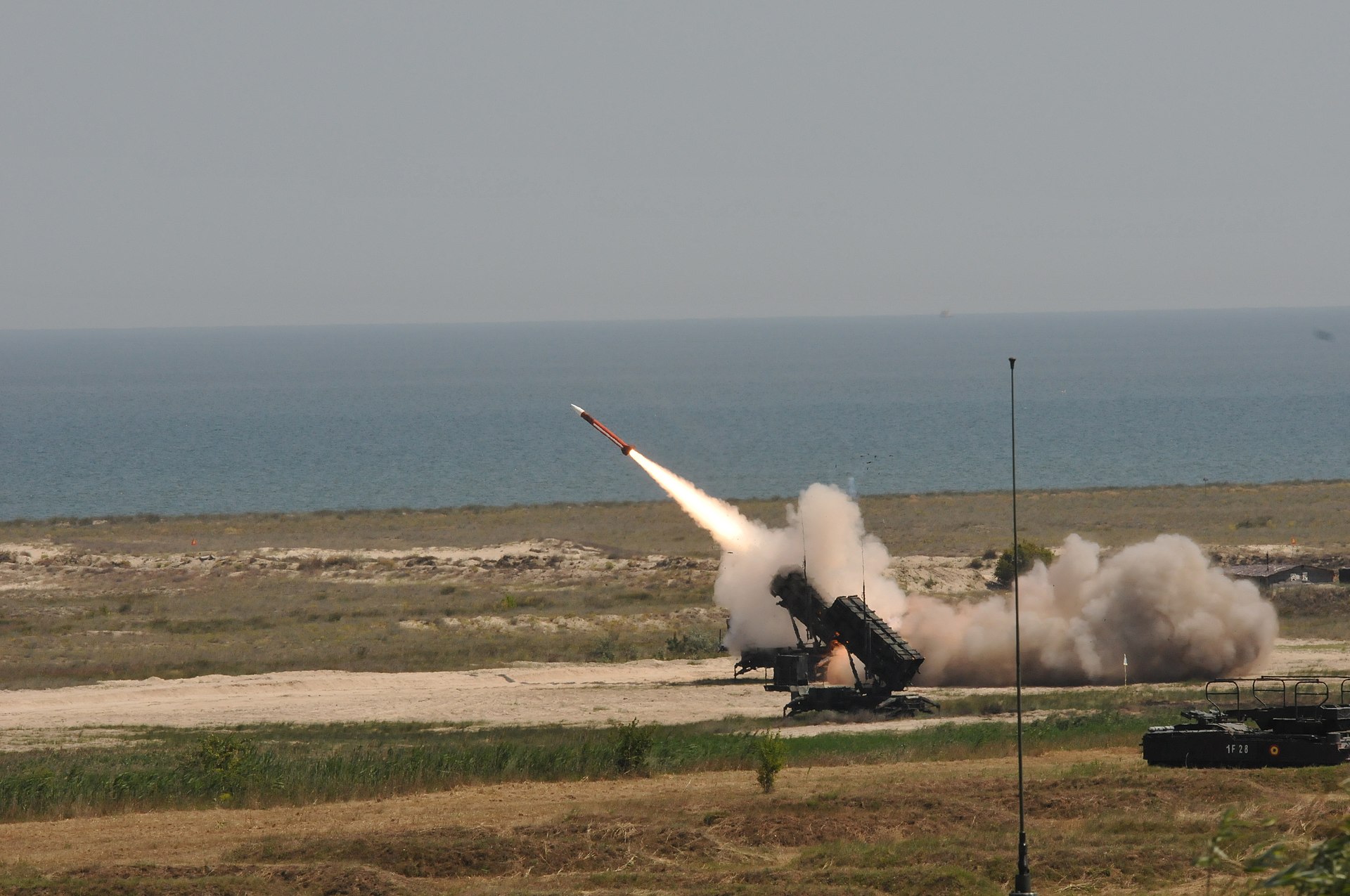
The carrier strike groups supplement Saudi Arabia’s own considerable military capabilities, which include Patriot PAC-3 and THAAD missile defense batteries, F-15SA strike aircraft, and a growing fleet of domestically produced unmanned systems showcased at the World Defense Show in February. Together, the combined U.S.-Saudi air defense network creates what military analysts describe as a multi-layered shield stretching from the Red Sea coast to the Empty Quarter.
The deployment also carries symbolic weight. Saudi Arabia’s alliance with the Trump administration has been built on a foundation of defense cooperation and arms sales, and the presence of three carrier strike groups represents the most tangible demonstration of American commitment to Saudi security since the 1991 Gulf War. Crown Prince Mohammed bin Salman has simultaneously pursued diplomatic backchannel talks with Tehran to contain the conflict, underscoring Riyadh’s dual-track approach of military deterrence combined with diplomatic outreach.
Tanker Escorts and Shipping Insurance
The naval buildup directly addresses the crisis in the Strait of Hormuz, where Iranian mines, missiles, and fast attack craft have effectively shut down commercial shipping through the world’s most important oil chokepoint. Tanker traffic through the strait dropped approximately 70 percent in the first days of the conflict, with more than 150 vessels anchoring outside the passage to avoid the risk of attack, according to Kpler maritime analytics data.
President Trump announced on March 3 that the United States would offer government-backed insurance for tankers transiting the Strait of Hormuz and provide military escorts for commercial vessels. CNBC reported that the announcement caused oil prices to ease briefly, with Brent crude falling from $85 to around $82 per barrel, though prices remain elevated above pre-war levels of roughly $70.
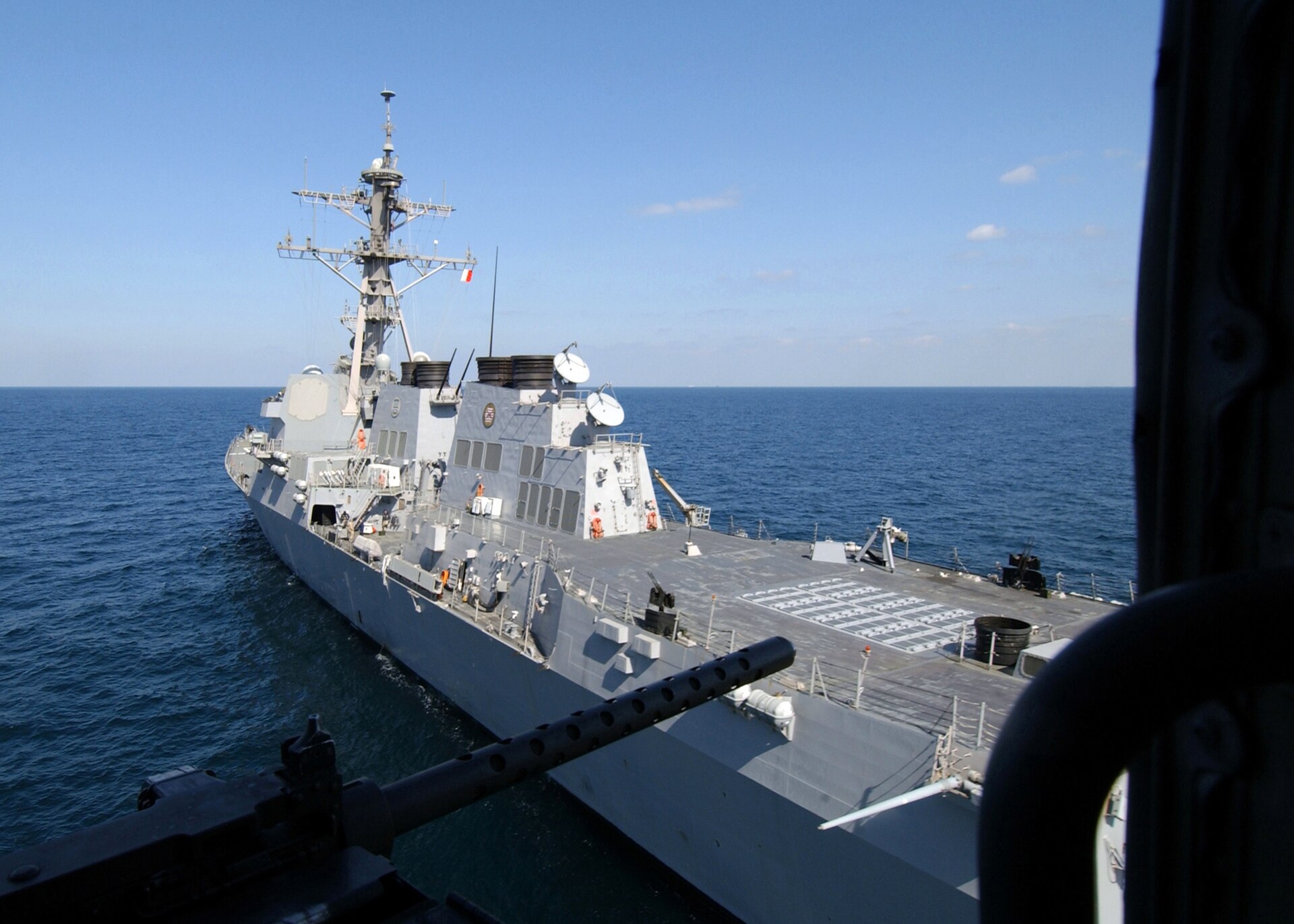
The escort mission adds another operational demand on the carrier strike groups and their accompanying surface combatants. Guided-missile destroyers equipped with Aegis radar systems serve dual roles: defending the carriers from Iranian attack while simultaneously providing protective umbrellas for commercial shipping. The closure of the Strait of Hormuz has already forced Saudi Arabia to reroute oil exports through the East-West Pipeline to terminals on the Red Sea coast, and the shutdown of Ras Tanura has further constrained export capacity.
OPEC+ pledged to increase output by 206,000 barrels per day to offset supply losses, but a significant portion of Gulf spare capacity remains trapped behind the Hormuz blockade. Saudi Arabia’s East-West Pipeline can move up to 7 million barrels per day to Red Sea terminals, providing a partial alternative, but the pipeline cannot replace the full volume of Gulf exports that normally transit the strait. The crisis has revived long-standing calls for alternative pipeline routes bypassing the Hormuz chokepoint entirely, including proposals to expand capacity through Oman and the UAE’s Fujairah terminal.
Analysts at Bloomberg warned that an extended Hormuz disruption could push oil prices toward $110 per barrel, a scenario that would have severe consequences for global economic growth. The tanker escort mission recalls the 1987-1988 Operation Earnest Will, when U.S. warships escorted reflagged Kuwaiti tankers through the Gulf during the Iran-Iraq War. The current operation is significantly larger in scale, reflecting both the expanded threat from Iranian weapons and the greater volume of global energy trade passing through the strait.
That threshold has since been breached: oil surged past $110 per barrel as Washington pulled embassy staff from the Kingdom, a dual signal that markets interpreted as confirmation the conflict would not be contained quickly.
| Indicator | Pre-War (Feb. 27) | Current (Mar. 7) | Change |
|---|---|---|---|
| Brent Crude ($/barrel) | ~$70 | ~$82 | +17% |
| WTI Crude ($/barrel) | ~$67 | ~$75 | +12% |
| Hormuz tanker traffic | ~100% | ~0% | -100% |
| Vessels anchored outside strait | 0 | 150+ | — |
| Iranian naval vessels destroyed | 0 | 30+ | — |
Maintenance Concerns and Force Strain
The unprecedented concentration of carrier power comes with operational risks that defense officials and lawmakers have begun to raise publicly. The USS Gerald R. Ford has been deployed since mid-February, and NPR reported that Senator Warner expressed concerns about the carrier’s extended time at sea, noting issues with the ship’s sewage system that have compounded crew fatigue during what could become an 11-month deployment.
“This extended deployment, beyond what was expected, combined with infrastructure issues aboard, creates real stress on our sailors,” Warner said, according to NPR. The Ford-class carrier was designed with a crew of approximately 4,500 and incorporates advanced electromagnetic systems that require specialized maintenance. Stars and Stripes reported that the Ford’s EMALS catapult system and Advanced Arresting Gear (AAG) have performed reliably during combat operations, a significant milestone for a weapons system that faced years of development challenges.
The deployment of the Bush as a potential relief or reinforcement vessel addresses some of these sustainability concerns. The U.S. Navy typically avoids keeping carriers deployed beyond seven months to maintain crew readiness and complete scheduled maintenance. The Iran war has disrupted these cycles, forcing the Navy to extend deployments and accelerate training timelines for replacement ships.
Three U.S. service members have been killed in action and five seriously wounded during Operation Epic Fury, according to CENTCOM. The casualties underscore that despite the overwhelming American technological advantage, the conflict carries real costs. Iran’s combination of ballistic missiles, cruise missiles, drones, and sea mines presents what military planners call an “anti-access/area-denial” challenge that even carrier strike groups cannot entirely eliminate.
Frequently Asked Questions
How many US aircraft carriers are deployed to the Middle East?
Three carrier strike groups are deployed or deploying to the region as of March 7, 2026. The USS Abraham Lincoln operates in the Arabian Sea, the USS Gerald R. Ford is in the Red Sea after transiting the Suez Canal, and the USS George H.W. Bush completed pre-deployment exercises on March 6 and is expected to cross the Atlantic within days.
Has Iran struck a US aircraft carrier?
No. Iran’s Revolutionary Guard Corps claimed on March 5 that it struck the USS Abraham Lincoln with ballistic missiles and drones. U.S. Central Command denied the claim, stating the missiles “didn’t come close,” and released photographs showing the carrier operating normally with no damage. PolitiFact found the viral videos supporting Iran’s claim to be fabricated or misidentified.
What happened to Iran’s drone carrier ship?
The IRIS Shahid Bagheri, Iran’s converted 40,000-ton drone carrier, was destroyed by U.S. strikes in the Persian Gulf. CENTCOM released video on March 5 showing two direct hits on the vessel. The ship had been commissioned in February 2025 after conversion from a South Korean-built container ship. Admiral Brad Cooper said it was “roughly the size of a World War II aircraft carrier.”
Is the Strait of Hormuz still closed to shipping?
Commercial shipping through the Strait of Hormuz has effectively ceased since the war began on February 28. Tanker traffic dropped approximately 70 percent initially and has since fallen to near zero, with more than 150 vessels anchoring outside the passage. President Trump announced government-backed insurance and military escorts for tankers on March 3, but full transit has not resumed.
How does the carrier deployment affect Saudi Arabia?
The three carrier strike groups provide layered air defense extending Saudi Arabia’s defensive perimeter into surrounding waters, supplementing Saudi Patriot and THAAD missile batteries. The ships also support tanker escorts through the Strait of Hormuz and offer strike capability against Iranian launch sites targeting Saudi oil infrastructure and military bases, including Prince Sultan Air Base where more than 5,000 U.S. personnel are stationed.