
RIYADH — Fourteen days of Iranian missiles and drones accomplished what decades of Saudi diplomatic manoeuvring could not: they shattered the United States’ near-total monopoly over the Kingdom’s defence procurement. Since February 28, when the first Iranian cruise missiles struck Saudi territory, Riyadh has signed, accelerated, or activated arms agreements with at least seven nations — the United States, China, South Korea, Turkey, Ukraine, the United Kingdom, and France — spending an estimated $20 billion in the first quarter of 2026 alone. That figure roughly equals Saudi Arabia’s entire 2024 defence budget, compressed into weeks rather than a fiscal year. The consequences for American influence over Saudi foreign policy, for the global arms trade, and for the Middle East’s military balance will persist long after the last drone is shot down over the Eastern Province.
Table of Contents
- How Did Saudi Arabia Spend $20 Billion on Weapons in Two Weeks?
- The $142 Billion Deal That Was Not Ready for War
- Why Did the AMRAAM Sale Take So Long?
- What Is Saudi Arabia Buying From China?
- The Korean Air Defence Revolution
- Can Turkey and Ukraine Replace What Washington Cannot Deliver?
- The Defence Supplier Independence Index
- The Contrarian Case for American Weakness
- What Does Saudi Arabia’s Defence Industry Actually Produce?
- The 1991 Precedent Nobody Wants to Discuss
- Where Does the Arms Race Go After the Ceasefire?
- Frequently Asked Questions
How Did Saudi Arabia Spend $20 Billion on Weapons in Two Weeks?
Total defence procurement activity in the first quarter of 2026 approaches $20 billion, according to tracking by the Stockholm International Peace Research Institute and confirmed through publicly announced contracts. Four of the six major procurement actions involve non-American suppliers — a ratio that would have been inconceivable as recently as 2023, when the United States accounted for roughly 73 percent of Saudi arms imports, according to SIPRI’s Arms Transfers Database. Defense Minister Khalid bin Salman’s procurement strategy has systematically targeted this dependency, building a multi-supplier architecture designed to function even if any single partner withdraws.
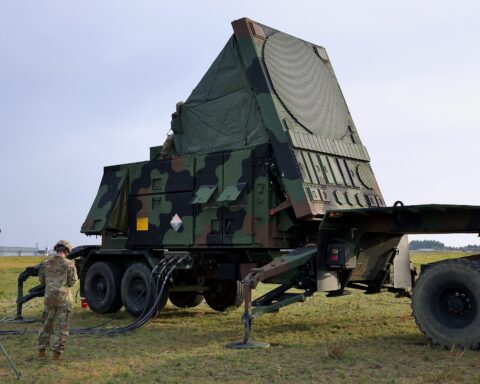
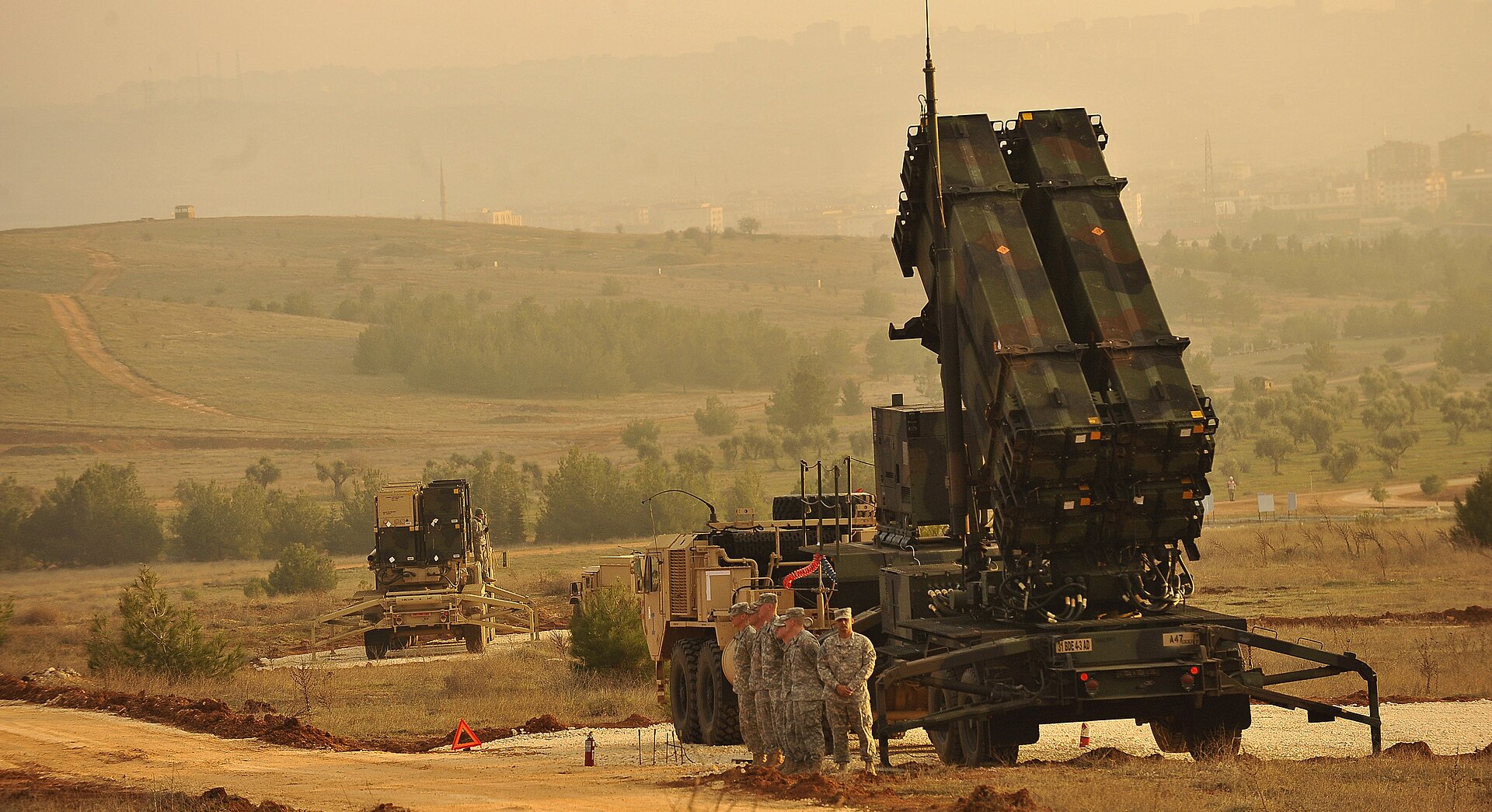
The spending falls into three tiers. The first is emergency wartime replenishment: air defence interceptors, ammunition, and spare parts consumed at rates no peacetime planning anticipated. Saudi Arabia’s Patriot and THAAD batteries have fired more interceptors in fourteen days than during the entire Yemen campaign from 2015 to 2025. The second tier comprises new acquisitions accelerated by combat — deals negotiated in peacetime but fast-tracked through bureaucratic approvals after February 28. The third tier, and the most strategically significant, consists of entirely new supplier relationships forged under fire.
The mathematics of modern air defence created the urgency. Each PAC-3 Patriot interceptor costs between $4 million and $9 million. A THAAD interceptor runs approximately $12 million. Iran’s Shahed-136 drones cost an estimated $20,000 to $50,000 each. As detailed in the interceptor cost asymmetry facing Western forces, this arithmetic is unsustainable. Saudi Arabia has intercepted more than 400 aerial threats since February 28, according to Saudi Defence Ministry statements compiled by Reuters. At average interceptor costs, the missiles fired in defence may have cost more than the weapons they destroyed.
The interceptor crisis deepened on March 14 when Israel informed Washington it was running critically low on ballistic missile interceptors, exposing the shared supply chain bottleneck at Lockheed Martin that constrains both Israeli and Saudi replenishment.
| Deal | Supplier Nation | Value | System | Status |
|---|---|---|---|---|
| AIM-120C-8 AMRAAM | United States | $3.5 billion | 1,000 air-to-air missiles | Approved, delivery accelerated |
| Wing Loong-3 Factory | China | $5 billion | 48 UCAVs/year, Jeddah assembly | Contract signed, construction begun |
| Cheongung-II (KM-SAM) | South Korea | $3.2 billion | 10 air defence batteries | Delivery accelerated from 2027 to 2026 |
| Bayraktar Akinci | Turkey | $2+ billion | 60 UCAVs, local production line | First deliveries arriving |
| Interceptor missiles | Ukraine | Undisclosed | Counter-drone/missile systems | Under negotiation, emergency basis |
| Military deployments | UK / France | N/A | Fighter jets, destroyer, helicopters | Deployed to region |
Each deal carries its own political implications. The United States has also moved to reassert its own technological edge, deploying 10,000 AI-powered Merops interceptor drones that cost a fraction of the Patriot missiles they supplement. Together, they represent the most significant restructuring of Gulf defence procurement since the 1991 Gulf War.
The $142 Billion Deal That Was Not Ready for War
On May 13, 2025, President Donald Trump stood beside Crown Prince Mohammed bin Salman in Riyadh and announced what the White House called “the largest defence cooperation agreement in U.S. history” — $142 billion in arms sales spanning air force modernisation, missile defence, maritime security, border protection, and communications upgrades. The deal was part of a broader $600 billion investment package, and it drew enthusiastic coverage from defence industry analysts and predictable criticism from arms control advocates.
Nine months later, when Iranian cruise missiles began striking Saudi cities, almost none of that $142 billion had translated into delivered hardware. The gap between announcement and delivery exposed a structural flaw in the American Foreign Military Sales system that Saudi planners had long suspected but never experienced under live fire.
The Stimson Center, a Washington think tank, noted in a 2025 analysis that the Trump administration’s previous Saudi arms deal in 2017 — announced at $110 billion — resulted in only $34.6 billion in formal notifications and approximately $30 billion in completed transactions over the following eight years. The pattern suggests that headline figures serve diplomatic purposes first and procurement purposes second. Defence analysts at the Center for Strategic and International Studies estimated that even under optimistic timelines, major platforms from the 2025 deal — next-generation fighters, naval vessels, advanced radar systems — would not begin delivery before 2028 at the earliest.
The war exposed what analysts have called America’s kill switch over Saudi military capability. American-made systems require American-supplied spare parts, American-trained technicians, and American software updates. When the conflict intensified, Saudi maintenance crews found themselves dependent on Raytheon contractors for Patriot system repairs and Lockheed Martin technicians for THAAD software patches — contractors operating under their own corporate risk assessments about remaining in a war zone.
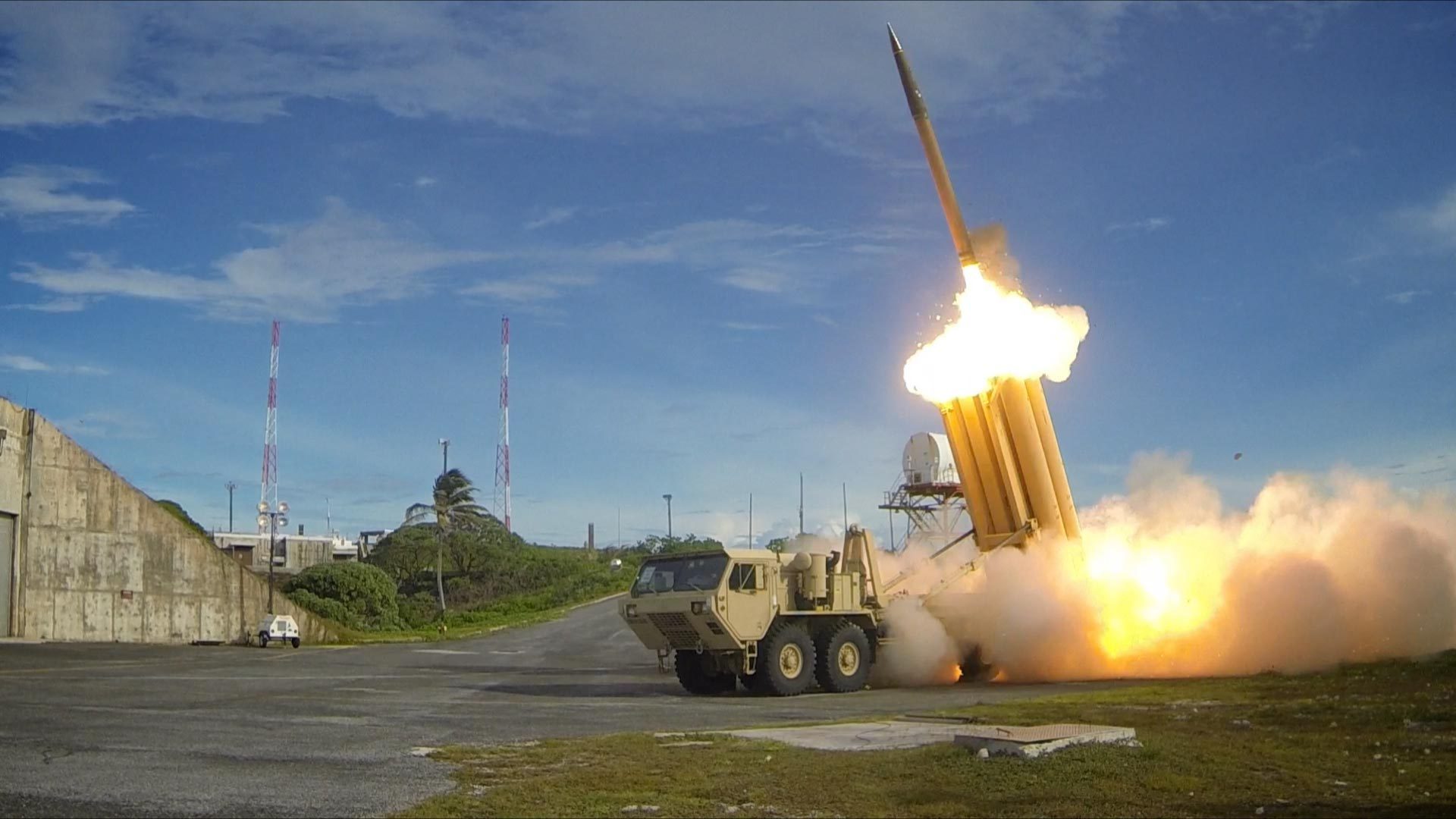
The frustration was not hypothetical. When the U.S. State Department ordered non-essential personnel out of Saudi Arabia on March 8, according to the U.S. Embassy in Riyadh, the evacuation extended to some defence contractor staff. Saudi commanders found themselves operating the most sophisticated air defence network in the Middle East with a shrinking pool of the only people trained to fix it.
Why Did the AMRAAM Sale Take So Long?
The $3.5 billion sale of 1,000 AIM-120C-8 Advanced Medium-Range Air-to-Air Missiles represents the most politically significant single weapons transfer of the conflict — not because of its dollar value, but because of its timeline. The U.S. State Department approved the sale in May 2025. The Defence Security Cooperation Agency notified Congress in the same month. Yet ten months later, with Iranian drones filling Saudi skies, deliveries had barely begun.
The AIM-120C-8 is the latest production variant of the AMRAAM family, manufactured by Raytheon (now RTX Corporation). It features a two-way data link for in-flight target updates, an upgraded active radar seeker with improved discrimination against jamming, enhanced kinematics for greater manoeuvring against agile targets, and robust electronic counter-countermeasures. Its estimated range exceeds 160 kilometres, making it the longest-legged variant in the AMRAAM line.
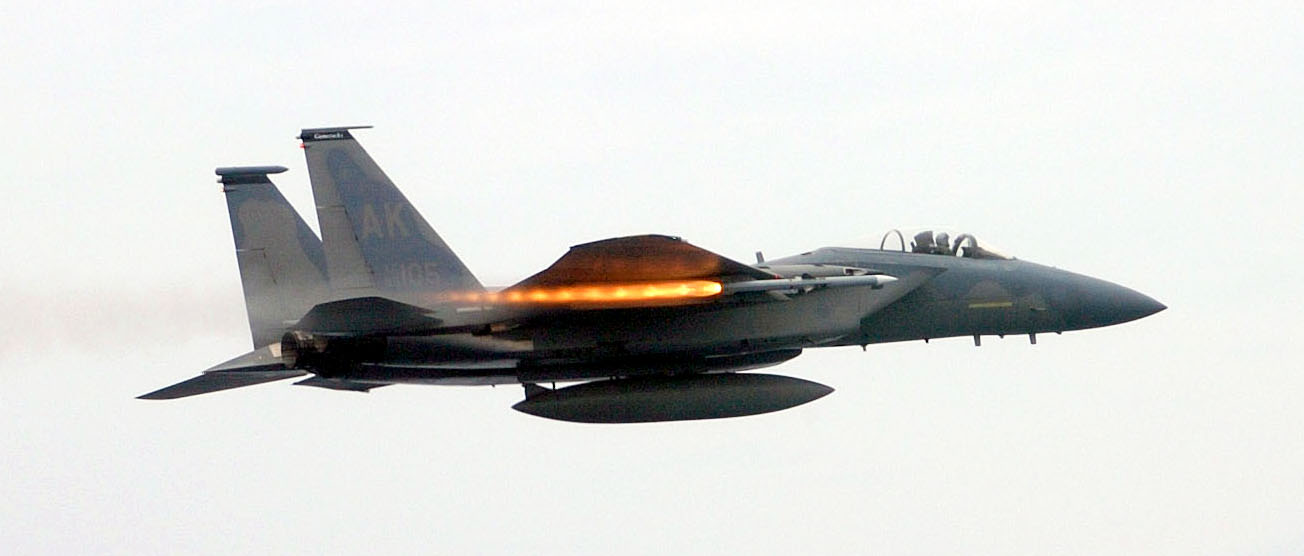
The Royal Saudi Air Force will integrate the missiles with its fleet of F-15SA Strike Eagles, legacy F-15S airframes, and Eurofighter Typhoons — the same Typhoon platform that RAF jets are now using to defend Gulf airspace against Iranian drones. The F-15SA, itself a product of a previous $29.4 billion Foreign Military Sale completed in 2019, carries up to twelve air-to-air missiles simultaneously — a loadout designed precisely for the kind of saturation drone attacks Iran has launched.
The delivery delay reflects several structural bottlenecks. Raytheon’s AMRAAM production line in Tucson, Arizona, was already running at capacity fulfilling contracts for the U.S. Air Force, U.S. Navy, and NATO allies. The war in Ukraine had consumed global missile inventories faster than manufacturers could replenish them. Congressional notification periods, technology release reviews, and end-use monitoring agreements added months to what Saudi officials viewed as an emergency requirement.
The contrast with Chinese procurement was not lost on Riyadh. When Saudi Arabia signed the Wing Loong-3 deal, Chinese negotiators imposed no congressional review, no human rights conditions, and no end-use restrictions beyond standard export controls. The political cost of buying American — in bureaucratic delay, in policy leverage surrendered — became quantifiable under wartime pressure.
What Is Saudi Arabia Buying From China?
The $5 billion agreement between China’s Aviation Industry Corporation of China (AVIC) and Saudi Arabia’s General Authority for Military Industries (GAMI) to build a Wing Loong-3 unmanned combat aerial vehicle assembly line in Jeddah represents the most ambitious Sino-Saudi defence project ever attempted. The factory will produce approximately 48 advanced long-range combat drones per year on Saudi soil — a capacity that would make Saudi Arabia one of the world’s largest drone operators within three years.
The relationship predates the war. Saudi Arabia first purchased Chinese CH-4 drones in 2014, adding to a growing fleet that eventually included at least 15 Wing Loong-II platforms beginning in 2016. Xinhua, China’s state news agency, described an earlier Saudi Wing Loong-II order as the country’s largest-ever arms export. Riyadh expressed interest in procuring up to 285 additional platforms, according to reporting by Defence Security Asia. But the Jeddah factory deal, signed in the opening days of the conflict, moved the relationship from procurement to co-production — a qualitative leap that Washington had spent years trying to prevent.
The Wing Loong-3 is a significant upgrade over its predecessors. It carries a payload exceeding one tonne, has an endurance of approximately 32 hours, and operates at a maximum altitude above 30,000 feet. Its satellite-linked data relay gives it an operational range measured in thousands of kilometres rather than hundreds. For Saudi Arabia, the platform addresses a specific gap: persistent surveillance and strike capability over the Kingdom’s vast borders and maritime approaches without risking aircrew.
China’s willingness to transfer manufacturing technology — not merely sell finished platforms — represents the sharpest divergence from American practice. Washington has historically resisted drone technology transfers to Gulf states, citing proliferation concerns under the Missile Technology Control Regime. The Obama administration blocked Saudi requests for armed MQ-9 Reapers. The Trump administration loosened export rules in 2020 but imposed end-use monitoring that Saudi officials found operationally restrictive. China imposed no such conditions.
| Factor | United States (MQ-9 Reaper) | China (Wing Loong-3) |
|---|---|---|
| Congressional review | Required (30-day hold) | Not applicable |
| Human rights conditions | Leahy Law restrictions apply | None |
| End-use monitoring | Mandatory, with inspections | Standard export terms only |
| Technology transfer | Restricted; no local production | Full assembly line in-country |
| Maintenance dependency | Contractor-supported logistics | Local maintenance capability built in |
| Delivery timeline | 2-5 years from approval | Factory operational within 18 months |
The geopolitical implications extend beyond hardware. Every Wing Loong-3 assembled in Jeddah deepens Saudi technical dependency on Chinese aerospace engineering, Chinese satellite communications, and Chinese weapons integration software. Saudi Arabia is not replacing American dependency with Chinese dependency — it is distributing dependency across multiple suppliers, each of whom holds a piece of the Kingdom’s military capability but none of whom holds all of it.
The Korean Air Defence Revolution
South Korea’s emergence as a major Saudi defence supplier may prove the most consequential shift in Gulf procurement this decade. The $3.2 billion deal for ten KM-SAM Block-2 (Cheongung-II) air defence batteries, signed in February 2024 but accelerated dramatically after the war began, gives Saudi Arabia its first non-American medium-range air defence system — and one that has already proven itself in combat.
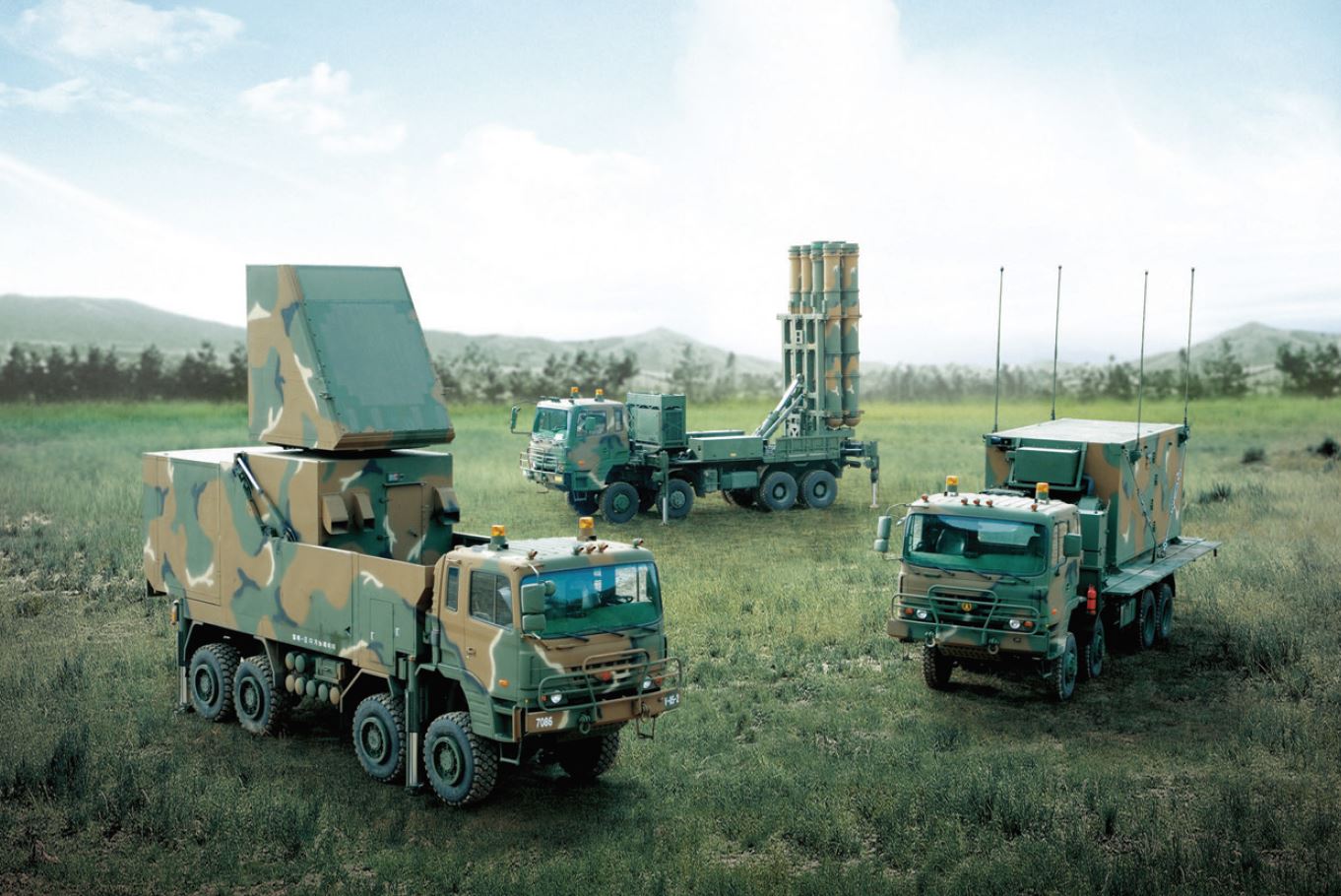
On March 3, 2026, the KM-SAM made its combat debut with UAE air defence forces, successfully intercepting several Iranian missiles — the system’s first confirmed engagement against a real ballistic threat, according to Army Recognition. The combat validation transformed the KM-SAM from a promising acquisition into a proven system, and accelerated Saudi delivery timelines from 2027 to late 2026.
The Cheongung-II (meaning “heaven’s bow”) is designed to intercept medium-altitude aerial targets at ranges up to 40 kilometres and altitudes up to 15 kilometres. It fills a gap in Saudi Arabia’s existing layered defence — between the short-range systems that engage drones and the high-altitude THAAD interceptors designed for ballistic missiles. The system’s ability to engage both aircraft and tactical ballistic missiles gives it a versatility that single-purpose systems lack.
LIG Nex1, the South Korean manufacturer, benefits from a competitive pricing model that undercuts American equivalents. The $3.2 billion for ten batteries compares favourably with the cost of equivalent Patriot PAC-3 MSE batteries, which analysts at Jane’s Defence estimate would cost 40 to 60 percent more for comparable capability. South Korea also offers offset agreements that include technology transfer and domestic maintenance capability — terms that align directly with Saudi Arabia’s localisation goals under Vision 2030.
Hanwha Systems, another South Korean defence firm, separately agreed to supply its Multi-Function Radar to Saudi Arabia, providing an additional detection layer that is interoperable with but not dependent on American-supplied radar systems. The significance is architectural: Saudi Arabia is building an air defence network whose components come from multiple nations, ensuring that no single supplier’s political decision can ground the entire system.
Can Turkey and Ukraine Replace What Washington Cannot Deliver?
The Bayraktar Akinci deal represents Turkey’s largest-ever defence export and Saudi Arabia’s most politically complex non-American acquisition. Baykar, the Turkish drone manufacturer whose TB2 drone became famous during the 2020 Nagorno-Karabakh war and the conflict in Ukraine, signed an export agreement for 60 Akinci unmanned combat aerial vehicles, with deliveries spanning 2025 to 2026. The deal, worth an estimated $2 billion or more, includes a provision that proved more consequential than the drones themselves: a local production line.
Baykar’s Chief Technology Officer Selcuk Bayraktar confirmed in August 2025 that production lines for the Akinci were being established inside Saudi Arabia, with Saudi Arabian Military Industries (SAMI) as the domestic manufacturing partner. By 2026, Baykar projected that more than 70 percent of locally assembled Akinci components would be manufactured in-Kingdom — a localisation rate that no American defence contractor has matched for a comparable platform.
The Akinci is a heavier, more capable platform than the TB2 that made Baykar’s reputation. It carries a payload of 1,350 kilograms, can fly for up to 24 hours at altitudes above 40,000 feet, and is designed to carry stand-off munitions including cruise missiles. For Saudi Arabia, it offers an offensive capability that complements the defensive Wing Loong surveillance role — a capability that Washington has been reluctant to provide through armed drone exports.
Ukraine’s entry into the Saudi procurement pipeline is the war’s most unexpected development. As reported by the Kyiv Independent, a Saudi Arabian arms company signed a deal to purchase Ukrainian-made interceptor missiles, with separate negotiations under way for what sources described as a “huge deal” covering counter-drone and counter-missile systems. President Zelenskyy offered drone defence teams to Saudi Arabia and Gulf states — teams whose expertise in defeating Iranian-designed Shahed drones was forged through two years of defending Ukrainian cities against the same weapons now targeting Riyadh.
The irony is acute. Ukraine, which depends on American military aid for its own survival, is selling weapons to Saudi Arabia that America itself will not provide quickly enough. The transaction underscores a reality that Saudi planners grasped before Washington did: in a war against Iranian drones, the most relevant expertise belongs to the country that has been fighting them longest.
The Defence Supplier Independence Index
A structured assessment of Saudi Arabia’s seven active defence suppliers reveals a deliberate diversification strategy — not a panicked wartime scramble but the acceleration of plans that predated the conflict. Each supplier occupies a distinct niche in a matrix defined by six factors: technology tier, political conditionality, delivery speed, technology transfer willingness, maintenance autonomy, and combat-proven status.
| Supplier | Technology Tier | Political Strings | Delivery Speed | Tech Transfer | Maintenance Autonomy | Combat Proven (2026) | Independence Score |
|---|---|---|---|---|---|---|---|
| United States | Highest | Very High | Slow (2-5 years) | Restricted | Very Low | Yes | 4.2 / 10 |
| China | High | Very Low | Medium (12-18 months) | Full (factory) | High | Untested | 7.8 / 10 |
| South Korea | High | Low | Medium (accelerated) | Good (offsets) | Medium-High | Yes (UAE) | 7.5 / 10 |
| Turkey | Medium-High | Low | Fast (in-country line) | Full (70% local) | High | Yes (multiple) | 8.1 / 10 |
| Ukraine | Medium | Very Low | Very Fast | Good | Medium | Yes (Iran drones) | 6.9 / 10 |
| United Kingdom | High | Medium | Medium | Moderate | Medium | Yes | 5.8 / 10 |
| France | High | Medium | Medium | Moderate | Medium | Yes | 5.6 / 10 |
The scoring methodology weighs six factors equally on a scale of one to ten, with higher scores indicating greater Saudi operational independence from the supplier. Political conditionality measures the likelihood that a supplier will impose restrictions, delay deliveries, or attach policy demands to arms transfers. Delivery speed reflects how quickly systems can reach operational status. Technology transfer captures whether the supplier enables domestic production. Maintenance autonomy scores the Kingdom’s ability to sustain systems without foreign technicians. Combat-proven status reflects whether the system has been tested under fire in the current conflict.
The index reveals a counterintuitive reality. The United States, Saudi Arabia’s most capable supplier, scores lowest on independence — because capability without autonomy creates dependency, not security. Turkey, with lower-tier technology, scores highest because its model of in-country production, rapid delivery, and minimal political strings maximises Saudi self-sufficiency.
The pattern mirrors a broader trend in global arms markets. India’s military procurement has shifted toward France and Israel partly because of American conditionality. Indonesia chose French Rafale fighters over American F-15s in 2022, citing fewer strings attached. Saudi Arabia’s diversification is not exceptional — it is the norm for any major military power that values strategic autonomy.
The Contrarian Case for American Weakness
The prevailing narrative in Washington frames the Iran war as proof that Saudi Arabia needs American military protection more than ever. Without American Patriot and THAAD batteries, the argument goes, Riyadh would be defenceless. Without American intelligence and satellite support, Saudi commanders would be blind. Without American diplomatic backing, Saudi Arabia would face Iran alone.
Every element of this narrative contains truth. And every element misses the larger point.
The war has not strengthened American leverage over Saudi Arabia — it has weakened it, structurally and perhaps permanently. The evidence is in the procurement data. Before February 28, the United States could credibly threaten to delay or block arms sales as a tool of diplomatic pressure. The Obama administration suspended precision-guided munition sales over Yemen civilian casualties. Congressional holds on Saudi arms transfers became routine instruments of foreign policy debate. The implicit threat was always: cooperate with American priorities or lose access to the weapons you need.
That threat assumed Saudi Arabia had no alternative. The Iran war proved it does — multiple alternatives, each competing for Saudi contracts and willing to undercut American terms. When Washington delays an AMRAAM shipment, Riyadh now has Chinese, Korean, and Turkish alternatives at lower cost and with fewer conditions. The kill switch, as defence analysts term it, only works if the customer has no way to rewire the circuit.
“The United States remains Saudi Arabia’s most important defence partner. But the gap between ‘most important’ and ‘only option’ is the space in which Saudi strategic autonomy now lives.”European Council on Foreign Relations, Gulf Security Paper, March 2026
Saudi Arabia’s refusal to join offensive operations against Iran — despite American pressure — illustrates the shift. In 1991, Riyadh had no choice but to defer to Washington’s war plan because American weapons were the only ones on the ground. In 2026, the Kingdom can afford to pursue its own strategic calculus — diplomatic restraint, backchannel engagement with Tehran, refusal to open Saudi airbases for strike operations — precisely because its military capability is no longer exclusively American.
The $142 billion deal remains important. American platforms are still the most capable systems in the Saudi inventory. But the deal’s function has changed. It is no longer a lifeline that Riyadh cannot live without. It is one of seven supplier relationships competing for Saudi procurement dollars — and unlike the others, it comes with the heaviest political price tag.
The most tangible expression of that political price is physical: the American military bases scattered across the Kingdom that were designed to protect Saudi Arabia have instead made it a target. Iranian missiles struck Prince Sultan Air Base not because it housed Saudi offensive assets but because it housed American ones — a basing paradox that has quietly reinforced Riyadh’s determination to diversify away from a security model that imports risk alongside protection.
What Does Saudi Arabia’s Defence Industry Actually Produce?
The General Authority for Military Industries (GAMI), Saudi Arabia’s defence sector regulator, reported that military spending localisation rose from 4 percent in 2018 to 19.35 percent by the end of 2024 — a nearly fivefold increase in six years. The number of licensed defence manufacturing facilities grew from five in 2019 to 296 by the third quarter of 2024, according to GAMI’s official progress report. The 2030 target remains 50 percent localisation, and the Iran war has both validated the goal and exposed how far Saudi Arabia still needs to travel.
Saudi Arabian Military Industries (SAMI), a Public Investment Fund portfolio company, serves as the national champion entity. Its subsidiaries span aerospace, land systems, weapons and missiles, and defence electronics. At the World Defense Show 2026 in Riyadh — which drew 1,486 exhibitors from 89 countries and 137,000 visitors, the largest edition yet — SAMI showcased more than 60 nationally produced products.
The products ranged from armoured vehicles assembled at the King Fahd Military Complex to surveillance drones produced under licence from Chinese and Turkish partners. More significantly, SAMI announced joint ventures that embed foreign expertise into Saudi production lines: the Baykar Akinci assembly facility, the Wing Loong-3 factory in Jeddah, and maintenance, repair, and overhaul centres for Korean KM-SAM systems.
The localisation model is deliberate. Technology transfer agreements attached to major procurement contracts require international suppliers to establish manufacturing facilities, train Saudi technicians, and develop domestic supply chains as a condition of winning contracts. The principle, articulated by Defence Minister Prince Khalid bin Salman, is that every dollar spent abroad should build capability at home.
| Year | Localisation Rate | Licensed Facilities | Key Milestone |
|---|---|---|---|
| 2018 | 4% | 5 | GAMI established |
| 2019 | 8% | 25 | SAMI restructured under PIF |
| 2020 | 10% | 68 | First WDS held in Riyadh |
| 2022 | 14% | 142 | Korean KM-SAM deal signed |
| 2024 | 19.35% | 296 | WDS 2026, Turkish Akinci JV |
| 2026 (est.) | 25-28% | 350+ | Wartime acceleration |
| 2030 (target) | 50% | 500+ | Full Vision 2030 defence goal |
The war has accelerated timelines but also revealed constraints. Localisation percentages measure spending, not capability. A maintenance depot that services imported platforms counts toward the 50 percent target, but it does not reduce dependency on the foreign supplier who designed the platform. True defence sovereignty — the ability to sustain combat operations without any foreign assistance — remains beyond Saudi Arabia’s reach for at least a decade, according to assessments by the International Institute for Strategic Studies.
The 1991 Precedent Nobody Wants to Discuss
The last time a war forced Saudi Arabia into a massive arms buying spree was 1991. After Iraq invaded Kuwait, Riyadh spent an estimated $60 billion on defence in a single year, according to SIPRI data — approximately four times its pre-war annual military budget. The spending bought American Patriot batteries (the first deployment of the system in combat), British Tornado fighter-bombers, French AMX-30 tanks, and a patchwork of emergency procurement from any nation willing to sell.
The post-1991 arms spending created the modern Saudi military establishment. It also locked Riyadh into a three-decade dependency on American logistics, training, and maintenance that the current diversification strategy explicitly aims to undo. The lesson that Saudi planners drew from the Gulf War was not that American protection was essential — though it was — but that purchasing exclusively from one supplier transformed a commercial relationship into a political dependency. Between 1991 and 2020, American firms accounted for more than 70 percent of all Saudi arms imports by value, according to SIPRI. The figure peaked at 79 percent in the period from 2016 to 2020, making Saudi Arabia the world’s most American-dependent major arms buyer.
The dependency carried political costs that accumulated over decades. Congressional holds on precision-guided munitions during the Yemen war. Obama-era suspensions of cluster bomb transfers. The Khashoggi crisis in 2018, which triggered a bipartisan Congressional effort to block all Saudi arms sales. Each episode reinforced the same lesson: American weapons came with American oversight, and American oversight could be weaponised against Saudi interests at moments of domestic political convenience in Washington.
The 2026 pattern differs from 1991 in one critical respect. In 1991, Saudi Arabia bought finished systems from multiple countries but received minimal technology transfer. The Patriot batteries that defended Riyadh and Dhahran were operated by American crews. The Tornado squadrons depended on British technicians. The emergency procurement filled immediate gaps without building long-term capability.
In 2026, every major non-American deal includes a technology transfer component: factories, joint ventures, training programmes, and maintenance infrastructure built on Saudi soil. Saudi Arabia is not just buying weapons — it is buying the ability to make weapons. The difference between importing a finished drone and assembling one domestically may seem marginal in wartime, but it is the difference between dependency and sovereignty over a twenty-year horizon.
There is a cautionary element to the 1991 comparison. Post-Gulf War Saudi military spending collapsed after 1993, as oil revenues fell and the immediate threat receded. Many of the emergency procurement programmes were cancelled or scaled back. Defence analysts at the Brookings Institution have noted that Gulf states consistently overcommit during crises and under-deliver during peace. The question for 2026 is whether the current diversification will prove more durable than its predecessor — or whether political memory will prove as short as fiscal cycles.
Where Does the Arms Race Go After the Ceasefire?
The restructuring of Saudi defence procurement will outlast the conflict that accelerated it. The arms race that follows the missiles will be shaped by three forces: the Iranian threat perception that survives any ceasefire, the supplier diversification that the war made irreversible, and the domestic defence industry that the war turbocharged.
Iran’s conventional military has been degraded but not destroyed. The technical audit of Iran’s defence establishment published by this site identified significant inventory attrition but also residual missile production capacity that could reconstitute within 18 to 24 months. For Saudi Arabia, this means the air defence spending triggered by the war will not end with it. The Kingdom will need to maintain, replenish, and expand its missile shield for the foreseeable future — and it will do so through multiple suppliers rather than one.
The supplier countries face their own competitive pressures. South Korea, buoyed by the KM-SAM’s combat debut, is aggressively marketing air defence systems across the Gulf. The UAE has already ordered additional Cheongung-II batteries. Turkey is positioning the Akinci as the premium export drone of the 2020s, with Saudi local production as the reference case. China’s Wing Loong-3 factory in Jeddah, if successful, could become a template for similar facilities across the Gulf Cooperation Council.
For the United States, the strategic calculation has shifted. Washington can no longer assume that Saudi procurement dollars will flow to American contractors by default. The $142 billion deal remains the largest defence agreement in history, but its implementation now competes with faster, cheaper, less conditional alternatives. American defence contractors — Lockheed Martin, Raytheon, Boeing, Northrop Grumman — must compete not only on capability but on delivery speed, technology transfer, and political terms. The era of “buy American or go without” is over.
The Kingdom’s 2025 defence budget of approximately SAR 272 billion (around $72.5 billion, according to Saudi Ministry of Finance data) already allocated roughly 21 percent of total government spending to military purposes. Wartime supplemental spending will push that figure higher. Saudi Arabia is on track to become the world’s third-largest military spender in 2026, behind only the United States and China, surpassing Russia for the first time.
“Saudi Arabia is not building a military to fight a war. It is building a military to ensure it never has to fight one alone again.”International Institute for Strategic Studies, Gulf Military Balance 2026
The diversification also reshapes the competitive dynamics among suppliers themselves. South Korean defence exports to the Middle East grew 340 percent between 2019 and 2024, according to the Korea Defence Industry Association. Turkish drone exports, negligible before 2019, now exceed $3 billion annually. Chinese military drone exports, which SIPRI tracks as the fastest-growing segment of Beijing’s arms trade, have found their most lucrative market in the Gulf. American contractors are not losing market share to a single rival — they are losing it to an ecosystem of competitors who collectively offer what no single nation can match.
The implications extend beyond Saudi Arabia. Every Gulf state is watching Riyadh’s diversification model. If Saudi Arabia can reduce American dependency while maintaining interoperability with American systems, the template applies to the UAE, Kuwait, Bahrain, Qatar, and Oman. The fourteen days of Iranian missiles did not just test Gulf air defences — they tested a procurement paradigm. The paradigm failed. The replacement is already being built, one multi-billion-dollar contract at a time.
Frequently Asked Questions
How much has Saudi Arabia spent on arms since the Iran war began?
Total defence procurement activity in the first quarter of 2026 approaches $20 billion, encompassing new contracts, accelerated deliveries, and emergency replenishment orders. This figure includes the $3.5 billion AIM-120C-8 AMRAAM sale from the United States, the $5 billion Wing Loong-3 drone factory deal with China, the $3.2 billion KM-SAM deal with South Korea, and the estimated $2 billion Bayraktar Akinci deal with Turkey, among other acquisitions.
Why is Saudi Arabia buying weapons from China?
China offers armed drone technology that the United States has historically refused to export to Gulf states, citing Missile Technology Control Regime restrictions. Chinese suppliers also provide full technology transfer, including domestic manufacturing facilities, with minimal political conditionality. The $5 billion Wing Loong-3 deal includes an assembly line in Jeddah that will produce 48 combat drones per year on Saudi soil.
Has the South Korean KM-SAM been used in combat?
Yes. The Cheongung-II (KM-SAM Block-2) made its combat debut on March 3, 2026, when UAE air defence forces used the system to successfully intercept several Iranian missiles. This marked the system’s first confirmed engagement against a real ballistic threat and validated Saudi Arabia’s decision to purchase ten batteries for $3.2 billion.
What is the $142 billion Trump-Saudi arms deal?
Announced on May 13, 2025, during President Trump’s visit to Riyadh, the deal covers five categories: air force modernisation, missile defence, maritime security, border protection, and communications upgrades. However, defence analysts caution that headline figures often far exceed actual deliveries. The previous 2017 deal, announced at $110 billion, resulted in approximately $30 billion in completed transactions over eight years.
Is Saudi Arabia reducing its dependence on American weapons?
Saudi Arabia is diversifying rather than replacing its American defence relationship. The United States remains the Kingdom’s most capable supplier for advanced platforms like the F-15SA, THAAD, and Patriot systems. However, Riyadh is actively building alternative supplier relationships with China, South Korea, Turkey, Ukraine, the UK, and France — ensuring that no single nation holds a monopoly over Saudi military capability.
What percentage of Saudi defence spending is localised?
Defence spending localisation rose from 4 percent in 2018 to 19.35 percent in 2024, according to GAMI. The Vision 2030 target is 50 percent by the end of the decade. The Iran war has accelerated localisation through joint venture agreements that embed foreign manufacturing on Saudi soil, with projections suggesting 25 to 28 percent by end of 2026.