RIYADH — Saudi Arabia entered the third week of the Iran war believing it could remain above the conflict. It absorbed drone strikes, accepted American military reinforcements, and kept a quiet diplomatic line open to Tehran through Omani intermediaries. By Friday, March 22, every one of those positions had collapsed. Iranian drones killed two people on Saudi soil, Israel announced an escalation that will draw more Iranian fire toward the Gulf, Trump simultaneously deployed more Marines and floated withdrawal, and Riyadh severed its last backchannel to the Iranian government. The strategic middle ground that Crown Prince Mohammed bin Salman spent three years constructing — normalized ties with Tehran, balanced relations with Washington, distance from the Israeli war machine — no longer exists. Week three did not merely test Saudi neutrality. It destroyed it.
In This Article
- What Happened in Week Three That Changed the War?
- Why Did Riyadh Cut Its Last Line to Tehran?
- The Israeli Variable Saudi Arabia Cannot Control
- Can Saudi Arabia Afford to Keep Intercepting Drones?
- The Trump Contradiction — Deploying More While Promising Less
- Is Saudi Arabia’s Oil Windfall Financing Its Own Destruction?
- The Strategic Calculus Matrix
- The Alliances Forming Around Saudi Arabia
- Why Restraint Has Become the Most Dangerous Option
- What Does MBS Do Next?
- Frequently Asked Questions
What Happened in Week Three That Changed the War?
The week that began on March 15 and ended on March 22 produced five simultaneous crises that, taken individually, Saudi Arabia could have absorbed. Taken together, they ended the fiction that Riyadh could stand apart from the war raging on its borders.
The sequence matters. On March 17, Iran launched approximately 100 Shahed-series drones at Saudi targets in a single day — the largest single-day aerial attack on the Kingdom in the war, according to reporting from Reuters. The barrage overwhelmed air defense coverage along the eastern seaboard. One drone penetrated the intercept envelope and struck a residential building in Al-Kharj, south of Riyadh, killing an Indian national and a Bangladeshi national. They were the first fatalities on Saudi soil from Iranian fire since the war began on February 28.
Two dead foreign workers in a suburb might seem marginal against a war that has killed 1,444 people in Iran alone — 204 of them children, according to Iranian government figures cited by Al Jazeera. But the Al-Kharj strike shattered the premise of Saudi defense strategy: that the Kingdom’s American-supplied missile shield could absorb any volume of Iranian fire without consequence. It could not.
By March 21, three more events converged. Israeli Defense Minister Israel Katz announced that Israel would “significantly increase the intensity” of strikes on Iran, according to CNN, a promise that guaranteed more Iranian retaliation against Gulf states hosting coalition forces. The same day, 22 nations issued a joint statement condemning Iran’s closure of the Strait of Hormuz, a document that effectively placed Saudi Arabia in the coalition camp regardless of Riyadh’s formal position. And Saudi Arabia, through channels that remain undisclosed, severed its last diplomatic backchannel to Tehran. Hours later, both Israel and Iran struck each other’s nuclear facilities in what became the most dangerous twelve hours of the war.
The Middle East briefing 3,000+ readers start their day with.
One email. Every weekday morning. Free.
The fifth event was the most disorienting. On March 20, President Trump told reporters he was considering “winding down” US military operations, even as the Pentagon confirmed the deployment of 2,500 additional Marines to the Gulf region. Saudi planners confronted a patron who was escalating and retreating at the same time.
Why Did Riyadh Cut Its Last Line to Tehran?
Saudi Arabia severed its remaining diplomatic backchannel to Iran around March 21 because the channel had become a liability rather than an asset. The Omani-mediated communications produced no reduction in Iranian strikes, no progress toward a ceasefire, and no signal that Tehran was willing to distinguish between states actively bombing Iran and states merely hosting coalition forces.
The decision represents the final unwinding of the March 2023 normalization agreement brokered by China, which restored Saudi-Iranian diplomatic relations after a seven-year rupture. That agreement, signed in Beijing and celebrated as a triumph of Chinese diplomacy by the Financial Times, was supposed to inaugurate a new era of Gulf stability. It lasted less than three years.
Saudi Foreign Minister Prince Faisal bin Farhan had already signaled the shift publicly. In a statement reported by Bloomberg, he warned that Saudi Arabia “reserves the right to take military actions” — language that diplomats in Riyadh interpreted as laying the legal and rhetorical groundwork for a transition from passive defense to active engagement.
The backchannel collapse also reflects a calculation about mediator credibility. As a previous analysis of the twelve mediators attempting to broker a ceasefire documented, the proliferation of peace channels has produced diplomatic congestion rather than progress. Oman, Qatar, Iraq, China, India, Turkey, and others have all offered mediation. None have produced results. By cutting its own line to Tehran, Riyadh effectively declared that bilateral communication was futile and that any resolution would come through multilateral pressure or military outcomes.
There is also a domestic dimension. Maintaining communication with a government actively firing missiles at Saudi cities had become politically untenable. The Al-Kharj strike, while militarily insignificant, was symbolically devastating. Saudi social media erupted with images of the destroyed residential building. The victims were migrant workers — a constituency without political voice inside the Kingdom — but the principle was clear: Iranian weapons were reaching Saudi soil, and the government was still talking to Tehran.
Crown Prince Mohammed bin Salman built his domestic legitimacy partly on the promise of security. Vision 2030, the economic transformation program, requires foreign investment, tourism, and a perception of stability. None of those survive regular drone strikes on population centers. The backchannel had to close because its existence undermined the narrative of strength that MBS requires.
The Israeli Variable Saudi Arabia Cannot Control
Israel’s war against Iran operates on a logic entirely separate from Saudi interests, but it generates consequences that land directly on Saudi Arabia. This asymmetry — Israel decides, Saudi Arabia absorbs — has become the most dangerous structural feature of the conflict for Riyadh.
Defense Minister Katz’s March 21 promise to “significantly increase the intensity” of strikes against Iran, reported by CNN, was directed at an Israeli domestic audience and at Tehran. It was not coordinated with Riyadh. But its effects will be felt in Riyadh more acutely than in Tel Aviv, because Iran’s retaliatory calculus consistently targets the Gulf states that host the forces enabling Israeli operations.
The interceptor dynamics compound the problem. On March 21-22, Iranian ballistic missiles struck Dimona and Arad in southern Israel, penetrating the Iron Dome and Arrow defense systems, according to reports from Reuters. The failures in Israeli air defense have direct implications for Saudi Arabia because the two countries share supply chains for critical interceptor components. The PAC-3 MSE interceptors that form the backbone of Saudi Arabia’s terminal defense are manufactured by Lockheed Martin on production lines that also supply Israel’s David’s Sling system. As a previous analysis of Israel’s interceptor shortage and its implications for Saudi Arabia’s missile shield detailed, every interceptor diverted to Israel is one fewer available for the Kingdom.
Israel’s escalation also forecloses Saudi diplomatic options. Before week three, it remained theoretically possible for Riyadh to position itself as a neutral party capable of mediating between Iran and the US-Israeli coalition. That positioning required distance from Israeli military operations. Katz’s escalation announcement, combined with the 22-nation joint statement that Saudi Arabia signed, eliminated the distance. Tehran now views the entire Gulf Cooperation Council as a hostile bloc, regardless of whether individual members have fired a single shot at Iran.
The deeper problem is structural. Saudi Arabia and Israel have no formal alliance, no mutual defense treaty, and no mechanism for coordinating military strategy. The Abraham Accords normalization process, which was moving toward Saudi-Israeli diplomatic recognition before the war, was predicated on stability. War has inverted the dynamic. Instead of normalization enabling security cooperation, insecurity has created a de facto military alignment without any of the formal commitments — like consultation or restraint mechanisms — that a treaty would provide.
Israel will continue to escalate because its strategic logic demands it. Prime Minister Netanyahu has framed the Iran campaign as existential, a characterization that leaves no room for moderation. Saudi Arabia cannot influence this calculus. It can only absorb its consequences.
Can Saudi Arabia Afford to Keep Intercepting Drones?
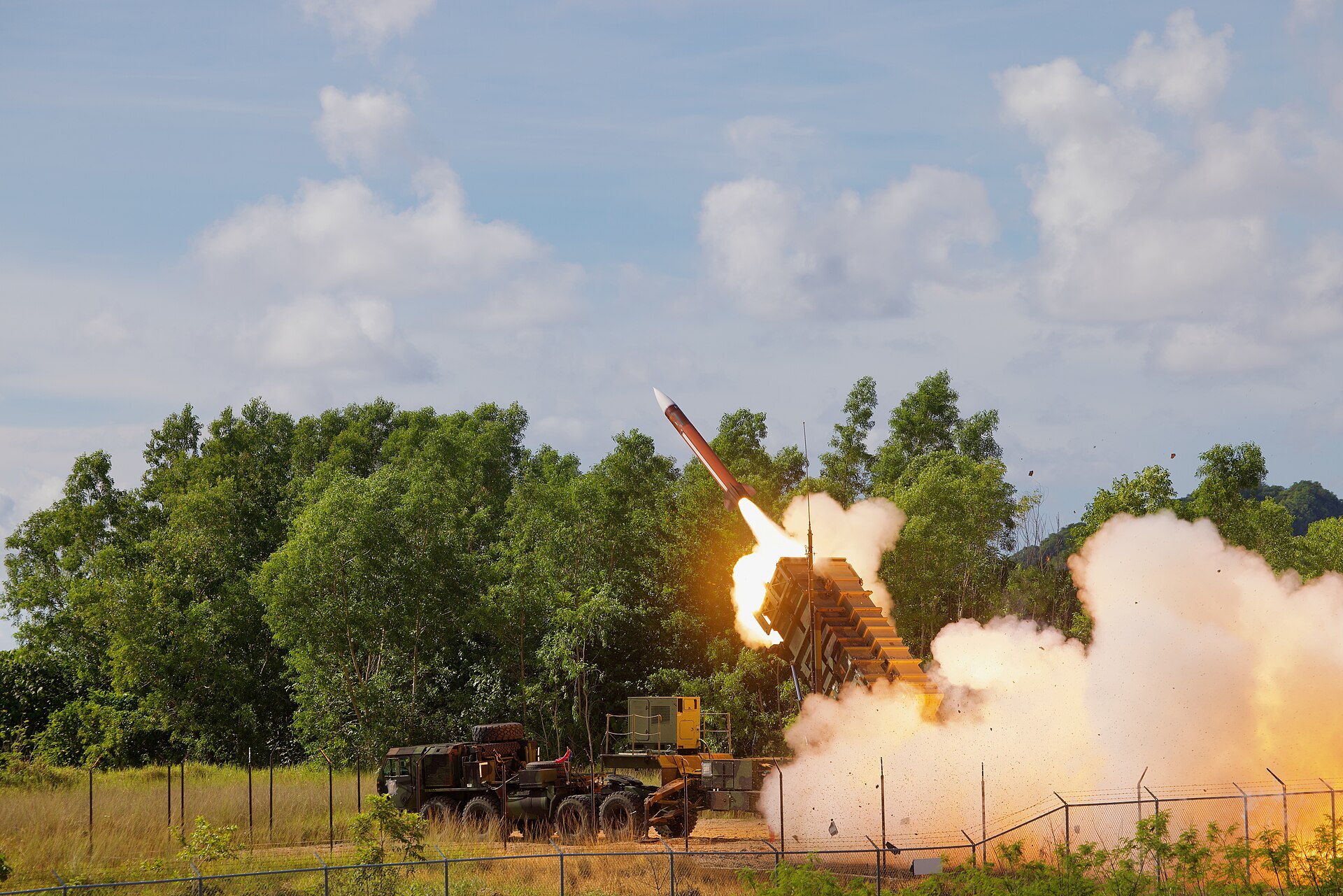
The arithmetic of drone defense is devastating, and it gets worse with every barrage. Iran’s Shahed-136 kamikaze drone costs between $30,000 and $50,000 to produce, according to estimates published by the International Institute for Strategic Studies (IISS). The interceptor missiles used to shoot them down cost between $3 million and $4 million each. A PAC-3 MSE round — the most advanced interceptor in the Saudi inventory — costs approximately $12 million per unit, based on the pricing of Saudi Arabia’s $9 billion order for 730 missiles reported by CNBC.
When Iran launched approximately 100 drones at Saudi Arabia on March 17, it expended roughly $3 million to $5 million worth of weapons. Intercepting even half of them cost Saudi Arabia and its coalition partners between $150 million and $200 million. Iran can sustain this exchange rate indefinitely. Saudi Arabia cannot.
The Kingdom’s defense budget stands at approximately $75 billion for 2026, according to IISS Military Balance data — the largest in the Middle East and among the highest per capita in the world. But that budget was designed for a different threat environment: border security against Houthi insurgents, naval patrols in the Red Sea, and modernization of a conventional military. It was not designed for a sustained air defense campaign against a near-peer adversary firing hundreds of drones and missiles per week.
Interceptor stockpiles are finite and replenishment is slow. Lockheed Martin’s PAC-3 MSE production line operates at a fixed capacity that cannot be scaled rapidly, a constraint that the Atlantic Council documented in a February 2026 assessment of US industrial base readiness. Saudi Arabia has ordered 730 PAC-3 MSE missiles, but deliveries stretch over years, not weeks. At current consumption rates, the Kingdom is burning through interceptors faster than they can be manufactured.
The cost asymmetry extends beyond missiles. Every Patriot battery deployed against drones is a battery unavailable for ballistic missile defense. Every radar tracking a $30,000 drone is a radar not tracking a $500,000 ballistic missile. Iran has exploited this by mixing cheap drones with more expensive and dangerous ballistic missiles in its salvos, forcing Saudi defenders to commit premium resources against low-value targets or risk catastrophic intercept failures.
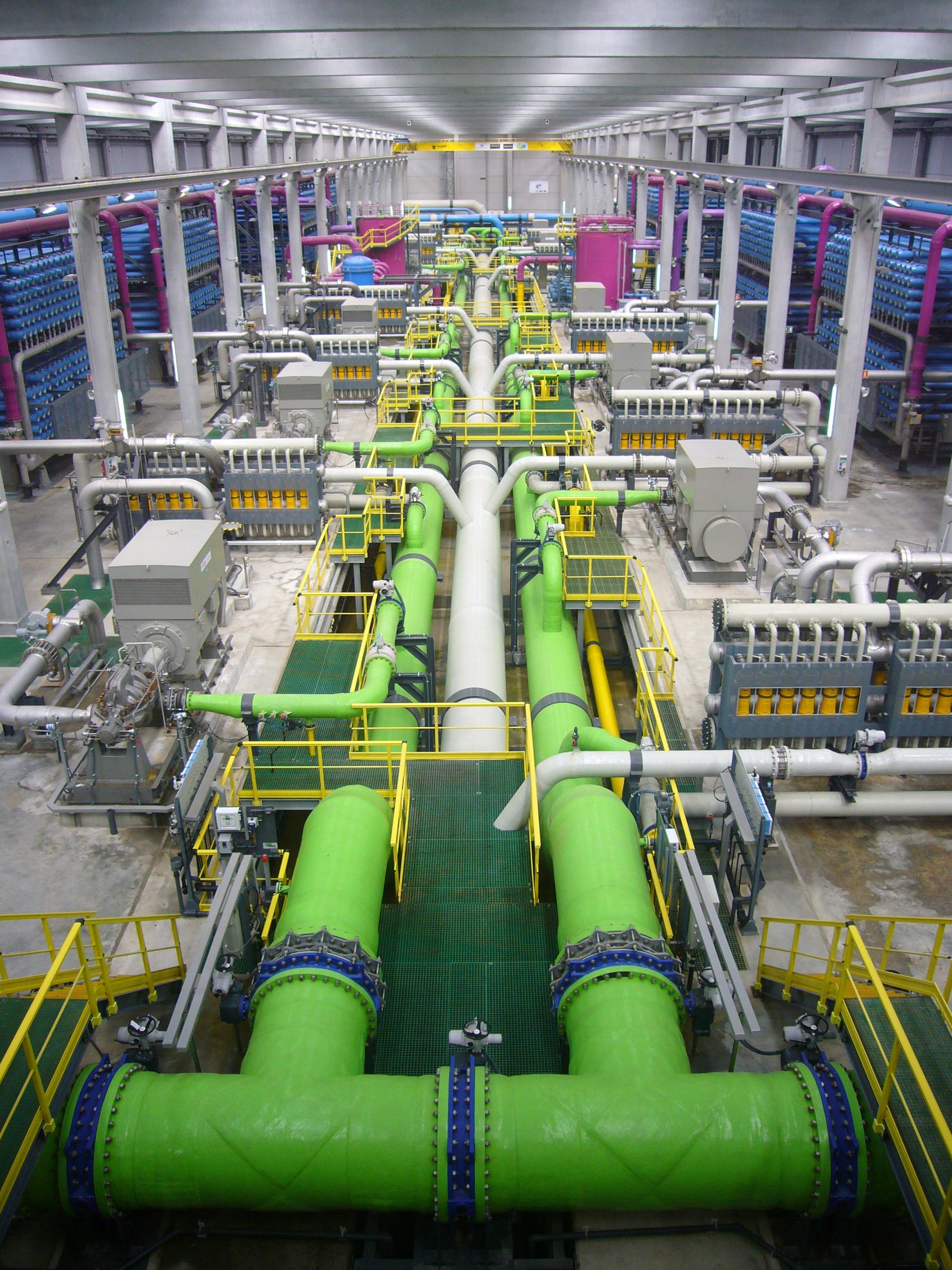
The vulnerability is not abstract. Saudi Arabia’s eastern province — home to the Ras Tanura oil terminal, the Jubail desalination complex, and the Abqaiq oil processing facility — concentrates the Kingdom’s most critical infrastructure within a 200-kilometer stretch of coastline directly facing Iran across the Persian Gulf. The flight time for an Iranian ballistic missile from launch sites in Khuzestan province to Jubail is approximately four minutes. Even with perfect intercept rates, the mathematical certainty of a leak-through strike grows with every salvo.
The question is not whether Saudi Arabia can afford to intercept drones. It can, in the narrow fiscal sense. The question is whether it can afford to intercept drones as its primary strategy while Iran retains the initiative to set the tempo, volume, and targeting of attacks. The answer, after week three, is clearly no.
The Trump Contradiction — Deploying More While Promising Less
On March 20, President Trump told reporters aboard Air Force One that he was considering “winding down” US military operations in the region, according to reporting by Reuters. The same week, the Pentagon confirmed the deployment of 2,500 additional Marines to bases in the Gulf, including positions in Saudi Arabia, Bahrain, and Qatar. The contradiction was not accidental. It reflects a deliberate strategy of maintaining military optionality while creating domestic political space for eventual withdrawal — a strategy that leaves Saudi Arabia planning against two incompatible futures simultaneously.
The analysis of Trump’s simultaneous war exit signals and troop deployments revealed a pattern consistent with the administration’s approach to other conflicts: maximize pressure while minimizing commitment, keep allies uncertain enough to increase their own contributions, and preserve the president’s ability to claim credit for either escalation or de-escalation depending on outcomes.
For Saudi Arabia, the ambiguity is paralyzing. If the United States is genuinely winding down, Riyadh must rapidly accelerate its own military capabilities, deepen its partnership with Pakistan (which has already deployed troops and air defense systems to the Kingdom), and potentially seek security guarantees from China or other powers. If the United States is staying but using withdrawal rhetoric to extract concessions, Saudi Arabia must determine what Washington wants and provide it before the rhetoric becomes reality.
The deployment of 2,500 Marines suggests commitment. Marines are not deployed to evacuate. They are deployed to fight. Their presence at King Fahd Air Base and other Gulf installations, as confirmed by Saudi Arabia’s decision to open King Fahd Air Base to US forces, creates facts on the ground that constrain withdrawal. But Trump has withdrawn forces from contested positions before — the 2019 Syria pullback demonstrated his willingness to abandon allies without consultation — and Saudi planners cannot treat Marine deployments as permanent guarantees.
The Saudi defense establishment has responded by hedging. Riyadh has deepened cooperation with Pakistan’s military, accepted British basing arrangements that provide an alternative to exclusive US dependence, and maintained its $110 billion defense relationship with Washington while exploring procurement options from South Korea and Turkey. The hedging strategy is rational but expensive, and it produces a defense posture that is broad rather than deep — many partnerships, none with the level of integration that effective coalition warfare requires.
Trump’s contradiction also damages deterrence. Iran monitors American political signals as closely as it monitors satellite imagery. When the US president publicly floats withdrawal, Tehran’s cost-benefit calculation for continued aggression shifts in favor of aggression. Every drone salvo that fails to produce an American withdrawal validates the Iranian strategy. And every validated salvo lands on Saudi Arabia.
Within 24 hours of floating withdrawal, Trump reversed course with an ultimatum that made the ambiguity even more acute. His 48-hour threat to obliterate Iranian power plants if the Strait of Hormuz remained closed raised the stakes from mixed signals to a concrete deadline with potentially catastrophic consequences for Gulf energy infrastructure.
The pattern of simultaneous military escalation and diplomatic signalling was not confined to Washington. An examination of the Coercion-Negotiation Matrix driving Iran’s war strategy shows that Tehran employed the same paradox — launching ballistic missiles at Riyadh on the same day it pursued peace channels — turning the contradiction between warfare and diplomacy into a deliberate instrument of leverage.
Is Saudi Arabia’s Oil Windfall Financing Its Own Destruction?
The war has been a bonanza for Saudi oil revenue. Brent crude has surged above $110 per barrel, up 47 percent since hostilities began on February 28, according to Bloomberg commodity data. Saudi Arabia’s fiscal breakeven oil price — the per-barrel price needed to balance the government budget — sits between $78 and $85 per barrel, according to the International Monetary Fund’s most recent assessment. At current prices, the Kingdom is running a substantial surplus.
The windfall is real but paradoxical. Higher oil prices are the direct result of the conflict that threatens Saudi infrastructure. Iran’s closure of the Strait of Hormuz — condemned in the 22-nation joint statement on March 21 — has removed approximately 15 to 20 percent of global seaborne oil trade from the market, according to estimates from the Energy Information Administration. The resulting price spike benefits Saudi Arabia only to the extent that Saudi oil continues to flow. If Iranian missiles disable the Abqaiq processing facility — which handles roughly 7 million barrels per day — the price spike becomes a supply crisis in which Saudi Arabia cannot participate.
The 2019 Abqaiq attack demonstrated this vulnerability. Houthi drones and cruise missiles, widely attributed to Iranian planning and technology by a United Nations investigation, temporarily halved Saudi oil output. Repairs took weeks. The current threat environment is orders of magnitude more severe. Iran is launching directly, not through proxies, and the weapons are more numerous and more sophisticated than what the Houthis deployed in 2019.
Revenue from elevated oil prices is flowing into the defense budget, but the spending pattern is reactive rather than strategic. Saudi Arabia is purchasing more interceptors, deploying more Patriot batteries, and expanding point defense around critical infrastructure. These expenditures protect assets whose value depends on continued production. If production is interrupted even briefly, the entire calculation inverts: Saudi Arabia would be spending premium defense dollars to protect idle infrastructure while the oil price it cannot capture climbs further.
The deeper irony is that Saudi Arabia’s oil windfall finances the coalition that is fighting the war that produces the windfall. American military operations in the Gulf are partly funded by Gulf state contributions. Higher oil prices increase Gulf state revenue, which increases defense spending, which sustains the coalition, which sustains the war, which sustains the oil prices. The circular logic reveals that Saudi Arabia is not merely a bystander benefiting from the conflict. It is a structural participant whose economic interests are now inseparable from the war’s continuation — even as its security interests demand the war’s end.
Saudi Arabia’s strategic patience was never a strategy. It was an absence of strategy — a hope that events would resolve themselves before Riyadh had to choose. Week three eliminated that hope.
Senior Gulf diplomatic source speaking to the Financial Times, March 21, 2026
The Strategic Calculus Matrix
Saudi Arabia’s options can be mapped along two axes. The first is military posture, ranging from passive defense — intercepting incoming fire without retaliating — to active belligerency, meaning direct strikes on Iranian military targets. The second is diplomatic alignment, ranging from independent mediator — maintaining equidistance between all parties — to full coalition member, meaning formal integration with the US-Israeli military campaign.
These axes produce four quadrants, each representing a distinct strategic posture. The Kingdom must choose among them, and week three’s events have dramatically narrowed the viable options.
| Independent Mediator | Full Coalition Member | |
|---|---|---|
| Passive Defense | Quadrant A: Armed Neutrality | Quadrant B: Coalition Partner |
| Active Belligerency | Quadrant C: Independent Belligerent | Quadrant D: Co-Belligerent |
Quadrant A — Armed Neutrality — is the position Saudi Arabia occupied before week three. It meant absorbing Iranian attacks, relying on American-supplied air defense, maintaining diplomatic channels to Tehran, and refusing to fire a single shot at Iran. The advantages were significant: moral high ground, preserved mediation potential, and avoidance of direct war with a neighbor of 88 million people. The disadvantage was that it ceded initiative entirely to Iran. Armed Neutrality required Iran to recognize and respect the distinction between hosting coalition forces and being a belligerent. Week three proved that Tehran makes no such distinction. The Al-Kharj strike, the 100-drone barrage, and the collapse of the diplomatic channel all demonstrate that Armed Neutrality has failed to protect Saudi Arabia from the costs of war while denying it any influence over the war’s conduct.
Quadrant B — Coalition Partner — means formally joining the US-Israeli military campaign while maintaining a defensive military posture. Saudi Arabia would provide basing, logistics, intelligence, and political legitimacy while coalition forces conducted offensive operations. The advantages include guaranteed American protection, access to real-time intelligence, and integration into the coalition’s missile defense architecture. The costs are enormous: permanent rupture with Iran, potential Houthi escalation from Yemen, alienation from China (which brokered the 2023 normalization deal), and subordination of Saudi strategic autonomy to American and Israeli decision-making. Coalition Partnership also requires accepting Israeli escalation decisions — decisions Riyadh cannot influence but whose consequences it must absorb.
Quadrant C — Independent Belligerent — is the most dramatic option and the least discussed. It would mean Saudi Arabia conducting its own strikes on Iranian military targets — drone launch sites, missile batteries, Revolutionary Guard facilities — without formal coordination with the US-Israeli coalition. The theoretical advantage is that independent military action would restore deterrence without yoking Saudi strategy to Israeli or American objectives. The practical obstacles are severe. Saudi Arabia’s military has never conducted sustained offensive operations against a near-peer adversary. Its air force, while well-equipped, has limited combat experience outside the Yemen campaign, which produced mixed results. And independent belligerency risks provoking a level of Iranian retaliation that passive defense cannot absorb and coalition support might not cover.
Quadrant D — Co-Belligerent — combines active military engagement with full coalition membership. This is the outcome that Iran already assumes is operative and that the 22-nation joint statement moves toward. Co-belligerency would mean Saudi forces conducting offensive operations alongside American and potentially Israeli forces, with full intelligence sharing, coordinated targeting, and mutual defense commitments. It is the most militarily effective option and the most politically costly. It would transform the war from an Israeli-American campaign against Iran into a regional conflict with Arab states directly engaged, a development that would reshape Middle Eastern geopolitics for a generation.
The co-belligerency scenario has gained urgency as Pentagon officials prepare for potential ground troops in Iran, with Saudi bases identified as the primary staging platform for any ground operation.
| Option | Military Risk | Diplomatic Cost | Economic Impact | Viability After Week Three |
|---|---|---|---|---|
| A: Armed Neutrality | High (passive target) | Low | Positive (oil windfall) | Collapsed |
| B: Coalition Partner | Medium (shared defense) | High (Iran, China) | Mixed | Most likely path |
| C: Independent Belligerent | Very High | Variable | Negative | Impractical |
| D: Co-Belligerent | Highest | Extreme | Severe disruption | Contingency only |
The matrix reveals that the only quadrant Saudi Arabia has formally occupied — Armed Neutrality — is the one that week three destroyed. The most likely trajectory is toward Quadrant B, Coalition Partner, which preserves defensive posture while deepening integration with American forces. But the trajectory is not a choice. It is a drift, and drifts can accelerate beyond control.
The Alliances Forming Around Saudi Arabia
The coalition defending Saudi Arabia was not designed. It assembled itself, driven by overlapping interests rather than shared strategy. Understanding its composition reveals both its strength and its fragility.
The United States provides the core military architecture: Patriot batteries, THAAD systems, naval forces in the Gulf, and the 2,500 Marines newly deployed to the region. American forces operate from King Fahd Air Base near Taif and from facilities in Bahrain, Qatar, and the UAE. Iran’s threat to deliver crushing strikes on Ras al-Khaimah over the disputed Abu Musa and Tunb islands has raised the stakes further, linking a decades-old territorial dispute to the active conflict. The US commitment is the most substantial and the most uncertain, given Trump’s contradictory signals about the war’s duration.
Pakistan represents the most significant non-Western military contribution. Islamabad has deployed troops and air defense systems to Saudi Arabia, a commitment rooted in decades of military cooperation, Saudi financial support for Pakistan’s economy, and a bilateral security relationship that predates the current crisis. Pakistan’s contribution is particularly important because it operates outside the US chain of command, providing Saudi Arabia with a degree of strategic redundancy that reduces exclusive dependence on Washington. The deployment of Pakistani forces, reported by Reuters, also carries nuclear implications that both Islamabad and Riyadh have studiously avoided discussing publicly.
The United Kingdom has authorized the use of British bases for operations against Iran, according to reporting by the Financial Times. British facilities in Cyprus, Diego Garcia, and potentially Oman provide staging areas for strikes on Iranian targets. The UK commitment reflects both alliance obligations to the United States and independent British interests in Gulf energy security. It also provides Saudi Arabia with a European security partner at a time when the European Union’s collective response has been characterized by strategic paralysis.
The accidental alliance that has formed around Saudi Arabia’s defense also includes smaller but significant contributions. France has deployed naval assets to the Gulf. South Korea has accelerated defense exports to the Kingdom. Turkey, despite its complex relationship with Iran, has quietly provided intelligence cooperation through NATO channels.
The 22-nation joint statement condemning Iran’s Hormuz closure, issued on March 21, formalized what had been an informal coalition. The signatories include the United States, United Kingdom, France, Germany, Japan, South Korea, Australia, and most Gulf Cooperation Council states. The statement stopped short of a mutual defense commitment, but it established a diplomatic framework that Iran interprets as a hostile bloc.

The coalition’s weakness is coherence. The United States, Israel, Pakistan, and the United Kingdom each have different objectives in the conflict. Washington wants to degrade Iranian nuclear and missile capabilities while avoiding a prolonged ground commitment. Israel wants to eliminate Iran’s military capacity permanently. Pakistan wants to protect its financial relationship with Saudi Arabia without provoking Iranian retaliation along its Baluchistan border. The UK wants to preserve Gulf energy flows while limiting political costs at home.
Saudi Arabia sits at the center of these diverging interests, hosting forces whose objectives it does not fully share and cannot fully control. The coalition is powerful enough to defend Saudi territory — week three notwithstanding — but it is not unified enough to pursue the war’s end on terms that serve Saudi interests. That gap between defensive adequacy and strategic alignment is where Saudi Arabia’s vulnerability lies.
Why Restraint Has Become the Most Dangerous Option
The conventional narrative holds that Saudi restraint is working. By absorbing Iranian attacks without retaliating, Riyadh has preserved the moral high ground, maintained international sympathy, accumulated an oil windfall, and avoided the catastrophic consequences of direct war with Iran. This narrative was plausible through week two. Week three exposed it as a comforting fiction masking a deteriorating strategic position.
The restraint trap operates through three mechanisms, each of which accelerated during week three.
First, restraint incentivizes escalation by the adversary. Iran’s decision to launch 100 drones in a single day was a direct test of Saudi passivity. The Al-Kharj strike demonstrated that Iran has both the capability and the willingness to hit populated areas. Restraint did not deter this escalation. It enabled it. Tehran has learned that striking Saudi Arabia produces no military consequences beyond interception. Each unanswered barrage lowers the threshold for the next one.
Second, restraint transfers strategic autonomy to allies whose interests diverge from Saudi Arabia’s. By refusing to fight, Riyadh has ceded its defense entirely to the United States and its partners. This means Saudi security depends on decisions made in Washington, Tel Aviv, and Islamabad — capitals with their own priorities, domestic politics, and strategic calculations. Israel’s escalation announcement on March 21 illustrated this perfectly: Katz’s promise to increase strike intensity will provoke more Iranian retaliation against Gulf states, but Saudi Arabia had no voice in the decision and no veto over its consequences.
Third, restraint erodes deterrence cumulatively. Deterrence is not a fixed condition. It is a perception, maintained by demonstrated willingness to impose costs on an adversary. Every week that Saudi Arabia absorbs attacks without responding, Iran’s perception of Saudi willingness to fight diminishes. This perception influences not only Iranian targeting decisions but also the calculations of other regional actors — the Houthis, Hezbollah, Iraqi militias — who watch Saudi passivity and draw their own conclusions about the Kingdom’s resolve.
Restraint is a strategy only when the adversary recognizes it as a choice. When the adversary interprets restraint as inability, it becomes an invitation.
Chatham House Middle East Programme briefing, March 2026
The cost asymmetry compounds the problem. As the analysis of whether Saudi Arabia can end a war it did not start established, the Kingdom faces a structural disadvantage: it is defending expensive infrastructure with expensive interceptors against cheap weapons launched from a country with a large industrial base for drone production. Restraint in this context does not preserve resources. It depletes them. Saudi Arabia is spending billions to maintain a defensive posture that allows Iran to dictate the war’s tempo, targeting, and escalation ladder.
The strategic patience that the Saudi royal family practiced before week three rested on three assumptions: that diplomacy could moderate Iranian behavior, that American protection was reliable and unconditional, and that the cost of defense was sustainable. The March 15-22 period invalidated all three. Diplomacy failed and was abandoned. American protection proved conditional and contradictory. And the cost of defense, measured in interceptor expenditure, infrastructure vulnerability, and strategic autonomy, proved ruinously high.
Restraint has not become merely ineffective. It has become the most dangerous option available, because it combines the costs of war with the inability to influence its outcome.
What Does MBS Do Next?
Crown Prince Mohammed bin Salman faces a decision set that has no precedent in modern Saudi history. His father, King Salman, presided over the Yemen intervention in 2015, but that was a war of choice against a weak adversary. This is an involuntary confrontation with a near-peer military power that possesses ballistic missiles, a drone fleet measured in thousands, and a strategic doctrine built on asymmetric warfare against precisely the type of wealthy, infrastructure-dependent state that Saudi Arabia represents.
The immediate decision is whether to move from Quadrant A (Armed Neutrality) to Quadrant B (Coalition Partner) of the Strategic Calculus Matrix — a shift that is already underway in practice if not in declaration. Opening King Fahd Air Base to US forces, signing the 22-nation joint statement, and cutting the Tehran backchannel are all Coalition Partner actions. What remains is the formal acknowledgment, which carries diplomatic consequences that MBS has so far avoided.
The medium-term decision is about defense architecture. Saudi Arabia’s $75 billion defense budget, according to IISS data, is spent overwhelmingly on conventional capabilities — fighter aircraft, armored vehicles, naval vessels — that are largely irrelevant to the current threat. The war has exposed a critical gap in the Kingdom’s drone defense and integrated air and missile defense (IAMD) capabilities. MBS must decide whether to accelerate procurement of counter-drone systems, directed energy weapons, and layered defense architectures that can address the cost asymmetry, or whether to continue spending on prestige platforms that look impressive but cannot intercept a $30,000 Shahed.
The long-term decision is about Saudi Arabia’s position in the regional order. The 2023 China-brokered normalization with Iran represented one vision: Saudi Arabia as a bridge between competing power blocs, maintaining relationships with the United States, China, and Iran simultaneously. The war has destroyed that vision. Whatever emerges from this conflict, Saudi Arabia will be more firmly aligned with the Western security architecture and more permanently estranged from Iran than at any point since the 1979 Islamic Revolution.
MBS has demonstrated throughout his tenure a preference for decisive action over deliberation. The Yemen intervention, the Qatar blockade, the Aramco IPO, the NEOM megaproject — all reflected a leader who moves fast and absorbs consequences later. The Iran war may demand that same instinct. But the consequences of a wrong move are existential in a way that previous gambles were not. A miscalculated escalation could draw Iranian missile fire onto Aramco facilities, desalination plants, and population centers, producing economic and humanitarian damage that would take a generation to repair.
The most probable path forward is formalized Coalition Partnership combined with an aggressive push for ceasefire through the 22-nation framework. This threads the needle between passivity and belligerency — Saudi Arabia would be formally aligned with the coalition, contributing basing and logistics and intelligence, while avoiding direct offensive operations that could provoke maximum Iranian retaliation. It is not a perfect strategy. It sacrifices strategic independence, deepens dependence on American protection, and abandons the mediator role that served Saudi interests well. But after week three, perfect strategies are no longer available. The question is not which option MBS prefers. It is which option events have left him.
| Date | Event | Impact on Saudi Position |
|---|---|---|
| March 15 | Week three begins; drone strikes intensify | Eastern Province defenses stretched |
| March 17 | ~100 Iranian drones launched at Saudi targets | Largest single-day barrage; 2 killed in Al-Kharj |
| March 19 | Saudi FM warns of military action rights | Rhetorical shift toward belligerency |
| March 20 | Trump considers “winding down” + 2,500 Marines deployed | US commitment uncertain; planning paralyzed |
| March 21 | Katz announces Israeli strike escalation | More Iranian retaliation guaranteed for Gulf |
| March 21 | 22-nation joint statement on Hormuz | Saudi Arabia formally in anti-Iran diplomatic bloc |
| March 21 | Riyadh cuts last backchannel to Tehran | Diplomacy abandoned; mediation role ended |
| March 21-22 | Iranian missiles hit Dimona and Arad in Israel | Interceptor failures reveal shared vulnerability |
Frequently Asked Questions
Has Saudi Arabia formally entered the war against Iran?
Saudi Arabia has not declared war or conducted offensive military operations against Iran, though both Saudi Arabia and the UAE have since moved closer to becoming active co-belligerents. However, the Kingdom’s actions during week three — opening King Fahd Air Base to US forces, signing the 22-nation joint statement condemning Iran, and severing its last diplomatic backchannel to Tehran — have moved it functionally into the coalition camp. The distinction between formal neutrality and de facto alignment has effectively disappeared.
How many people have been killed on Saudi soil during the Iran war?
Two people — an Indian national and a Bangladeshi national — were killed when an Iranian Shahed-series drone struck a residential building in Al-Kharj on March 17, 2026. These were the first confirmed fatalities on Saudi territory from Iranian fire since the Iran war began on February 28. Saudi Arabia’s advanced air defense systems have intercepted the vast majority of incoming projectiles, but the Al-Kharj strike demonstrated that no defense is impenetrable against sustained barrages.
Why did Saudi Arabia normalize relations with Iran in 2023 only to cut ties again?
The March 2023 normalization agreement, brokered by China in Beijing, was designed for a different strategic environment. It assumed both Saudi Arabia and Iran had incentives to reduce regional tensions and that economic cooperation could provide a foundation for lasting stability. The outbreak of war between Israel and Iran in February 2026 destroyed those assumptions. When Iranian weapons began striking Saudi territory, the normalization framework became untenable, and Riyadh progressively disengaged until cutting its last backchannel around March 21.
Can Saudi Arabia’s air defenses protect against continued Iranian attacks?
Saudi Arabia operates one of the most advanced air defense networks in the Middle East, including Patriot PAC-2 and PAC-3 systems, but the cost asymmetry is unsustainable. Intercepting a single $30,000 to $50,000 Iranian drone costs between $3 million and $4 million. When Iran launches 100 drones in a single day, as it did on March 17, the interception costs reach hundreds of millions of dollars. Stockpile depletion and production line constraints for replacement interceptors pose a growing challenge. Yet despite these pressures, MBS has maintained what Gulf security officials describe as a strategy of strategic absorption rather than offensive retaliation — a calculus that grows harder to sustain with every missile that falls on Saudi soil.
What role is Pakistan playing in Saudi Arabia’s defense?
Pakistan has deployed troops and air defense systems to Saudi Arabia, representing the most significant non-Western military contribution to the Kingdom’s defense. The deployment reflects a bilateral security relationship spanning decades and includes air defense specialists, ground forces for infrastructure protection, and intelligence cooperation. Pakistan’s contribution provides Saudi Arabia with strategic redundancy that reduces exclusive dependence on US forces.
How is the war affecting oil prices and Saudi revenue?
Brent crude has surged above $110 per barrel, a 47 percent increase since the war began, according to Bloomberg data. The revenue windfall is helping fund a wartime economic transformation that is accelerating key Vision 2030 objectives. With Saudi Arabia’s fiscal breakeven price between $78 and $85 per barrel (IMF estimate), the Kingdom is generating substantial surplus revenue. However, this windfall is paradoxical: it depends on the continuation of a conflict that threatens the very infrastructure — oil processing facilities, export terminals, desalination plants — that generates the revenue.