
RIYADH — On the fourteenth day of the Iran war, March 14, 2026, Saudi Arabia’s air defense batteries had intercepted 25 ballistic missiles and 151 drones. Not one Saudi missile had been fired at Iranian territory. The Strait of Hormuz was closed. Oil traded above $100 per barrel. Pakistani troops stood on Saudi soil. British fighter jets flew Saudi airspace. And the kingdom’s Vision 2030 construction sites, paused but not abandoned, waited in the desert silence between intercept alerts. Two weeks of Iranian missile fire had done something that no peacetime demonstration could have achieved: it proved, conclusively and at enormous cost, that the Gulf states had built something that actually works.
Contents
- How Many Missiles Has Iran Fired at the Gulf in Two Weeks?
- The Triple Ledger — Measuring This War on Three Fronts
- Is Saudi Arabia’s Air Defense System Actually Working?
- What Did the Hormuz Shutdown Reveal About Global Energy?
- The Economic Balance Sheet After Fourteen Days
- Why Has Iran’s Missile Fire Rate Collapsed by 92 Percent?
- The Diplomatic Realignment Nobody Predicted
- The Home Front — How Riyadh Lived Under the Drones
- What Does Saudi Arabia Look Like at the End of Week Two?
- The War Proved What Peace Never Could
- Frequently Asked Questions
How Many Missiles Has Iran Fired at the Gulf in Two Weeks?
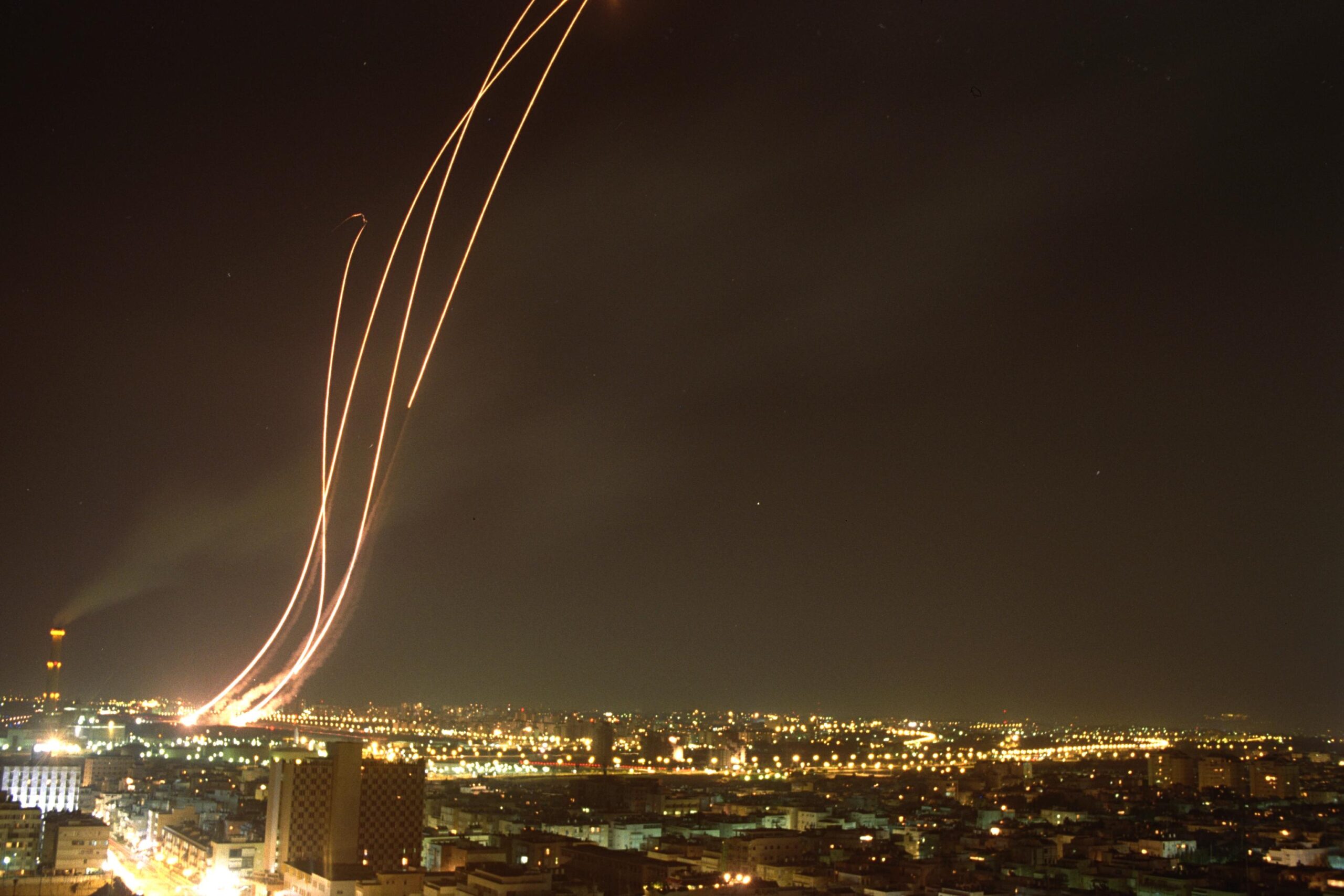
Iran fired more than 3,133 missiles and drones at Gulf states and regional targets in the first two weeks of the war, according to Aviation A2Z tracking data as of March 13, 2026. The Islamic Republic directed roughly 2.5 times more ordnance at Gulf states than at Israel, making the Persian Gulf the primary theater of its offensive campaign — and the primary test of the Gulf’s air defense architecture.
The numbers behind that headline figure carry their own weight. By March 5, Iran had already launched 2,034 missiles and drones at US military bases and Gulf infrastructure, according to CNBC, marking the most sustained ballistic missile campaign against regional targets since the 1991 Gulf War. The UAE absorbed 1,468 projectiles — more than any other single country — reflecting both its geographic exposure and its position as a major US military hub. Kuwait received 562 projectiles, Bahrain 231. Iran spread its fire across 13 countries simultaneously, a deliberate strategy designed to overwhelm not just individual air defense batteries but the coordination capacity of an entire multi-national defense architecture.
What that distribution reveals is an Iranian targeting doctrine built around saturation rather than precision. The Islamic Revolutionary Guard Corps and the regular Iranian military had apparently concluded, in their pre-war planning, that sufficiently dispersed volume would eventually punch through. The Gulf states concluded differently. Fourteen days of evidence supports the Gulf’s conclusion.
| Country / Target | Projectiles Received | Intercept Rate (%) | Primary Targets |
|---|---|---|---|
| United Arab Emirates | 1,468 | 94 | Air bases, ports, US facilities |
| Kuwait | 562 | ~91 | US military installations, oil terminals |
| Bahrain | 231 | ~93 | US Fifth Fleet HQ, air base |
| Saudi Arabia | 176+ | ~96 | Diplomatic Quarter, military sites, infrastructure |
| Qatar | 148 | ~90 | Al Udeid Air Base, LNG infrastructure |
| Oman | 89 | ~88 | Port facilities, military airfields |
| Iraq (US bases) | 312 | ~85 | Ain al-Assad, Erbil facilities |
| Other / Regional | 147 | Varies | Multiple |
| Total | 3,133+ | ~92 |
The geographic spread also illuminates something about Iranian strategic thinking that analysts had debated for years before the war began. Tehran had long argued, in doctrine and in rhetoric, that any conflict would impose catastrophic costs across the entire Gulf system simultaneously — that no single state could be defended while others burned. The first fourteen days tested that proposition. The Gulf states held, collectively, in a way that Iranian planners had apparently not fully anticipated.
The Triple Ledger — Measuring This War on Three Fronts
Wars are not measured in missile counts alone. Any honest accounting of fourteen days of Iranian missile fire against the Gulf states must run three parallel ledgers simultaneously: military, economic, and diplomatic. Each front tells a different story, and the three stories together reveal something that the individual numbers cannot.
The military ledger is the most visible. Iran entered the conflict with approximately 2,500 ballistic missiles and a drone production capacity that intelligence assessments had consistently described as the largest in the Middle East. By March 13, Iran had fired 2,410 of those ballistic missiles. Sixty percent of its missile launchers had been destroyed — by US strikes, by Israeli strikes, and by the attrition of sustained operations. The missile fire rate had collapsed 92 percent from peak levels, according to reporting by the Jerusalem Post. Iran had spent its primary military instrument at an extraordinary rate, and the instrument was nearly gone.
The economic ledger runs in multiple directions simultaneously. Oil production across the Gulf dropped by 10 million barrels per day collectively — the largest supply disruption in the history of the global oil market, exceeding even the 1973 Arab oil embargo in raw volume terms. Saudi Arabia lost an estimated $4.5 billion in revenue in the first two weeks, according to a Wood Mackenzie assessment. Qatar shut down LNG production. The Strait of Hormuz, through which 20 percent of the world’s oil normally moves, fell to near-zero traffic. These are catastrophic numbers on their own. But Brent crude surged more than 40 percent to above $100 per barrel during the same period — meaning that every barrel Saudi Arabia did manage to export generated dramatically higher revenue per unit. The kingdom lost volume and gained price. The net damage was severe, but not existential. The economic disruption has also fundamentally reshaped the social contract between MBS and thirty-five million Saudi citizens, replacing the pre-war prosperity bargain with a wartime protection-for-loyalty pact.
The diplomatic ledger is where the most surprising accounting occurs. Fourteen days of Iranian missile fire produced something that fifteen years of Saudi diplomatic effort, however intensive, had failed to achieve: a near-unanimous international coalition in explicit support of Gulf security. Pakistan deployed troops. The United Kingdom sent fighter jets, helicopters, and a destroyer. The United States approved a $3.5 billion AIM-120C-8 missile sale. The UN Security Council moved toward near-unanimous condemnation of Iran. Arab Foreign Ministers invoked collective defense clauses that had never been used in earnest. The diplomatic product of fourteen days of war exceeded what any peacetime summit could have delivered. Yet beneath that surface unanimity, the six GCC states have pursued radically different war strategies — from Saudi restraint to Oman’s rejection of Washington’s peace framework.
| Dimension | Iran’s Position | Gulf States’ Position | Trajectory |
|---|---|---|---|
| Military Capability | 2,410 of ~2,500 ballistic missiles expended; 60% of launchers destroyed; fire rate down 92% | Air defense systems at ~96% operational rate; no offensive missiles fired at Iran | Deteriorating for Iran |
| Economic Damage Inflicted | Gulf lost $4.5B+ in revenue; production down 10M bpd; Hormuz closed | $100+ oil prices partially offset revenue losses; East-West pipeline diverted exports | Gulf absorbing damage |
| Diplomatic Position | FM rejected ceasefire; near-international isolation; sanctions escalating | Pakistan troops, UK jets, US sales, UN condemnation, Arab unity | Strongly favoring Gulf |
| Alliance Cohesion | IRGC-military friction reported; internal command tensions | GCC states coordinating; unprecedented military interoperability | Gulf cohesion increasing |
| Strategic Narrative | Claimed power projection; actual outcome: arsenal depletion | Claimed resilience; actual outcome: validation of defense investments | Gulf narrative winning |
The Triple Ledger framework matters because it captures what aggregate casualty or intercept numbers cannot: the war is simultaneously depleting Iran’s physical military capacity, damaging the Gulf economically in ways that are partly self-correcting, and generating diplomatic dividends for the Gulf states that will compound well after the shooting stops. Iran entered the war expecting to dominate all three ledgers. At day fourteen, it is losing two of them clearly and absorbing only a partial victory on the economic disruption front.
Iran fired 2.5 times more ordnance at Gulf states than at Israel, making the Persian Gulf the primary test of the region’s air defense architecture — and the primary revelation of its limits.
Aviation A2Z tracking data, March 13, 2026
Is Saudi Arabia’s Air Defense System Actually Working?
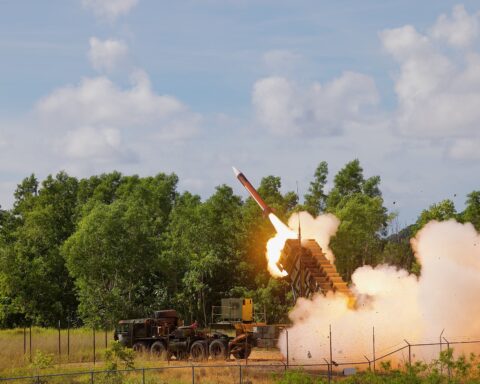
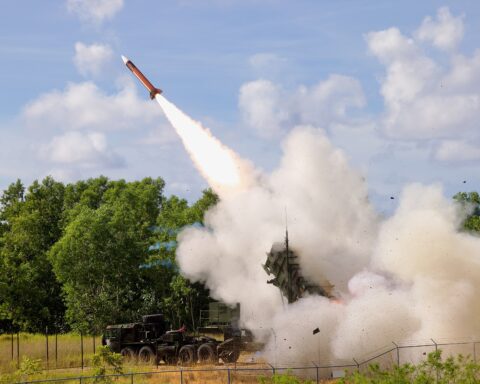
Saudi Arabia intercepted 25 ballistic missiles and 151 drones in the first fourteen days of the conflict while suffering only 2 civilian deaths — both in the southern city of Al-Kharj. That operational record, measured against an Iranian salvo campaign that distributed fire across 13 countries simultaneously, represents the most demanding real-world test of a layered air defense architecture since NATO’s PATRIOT deployments in the 1991 Gulf War.
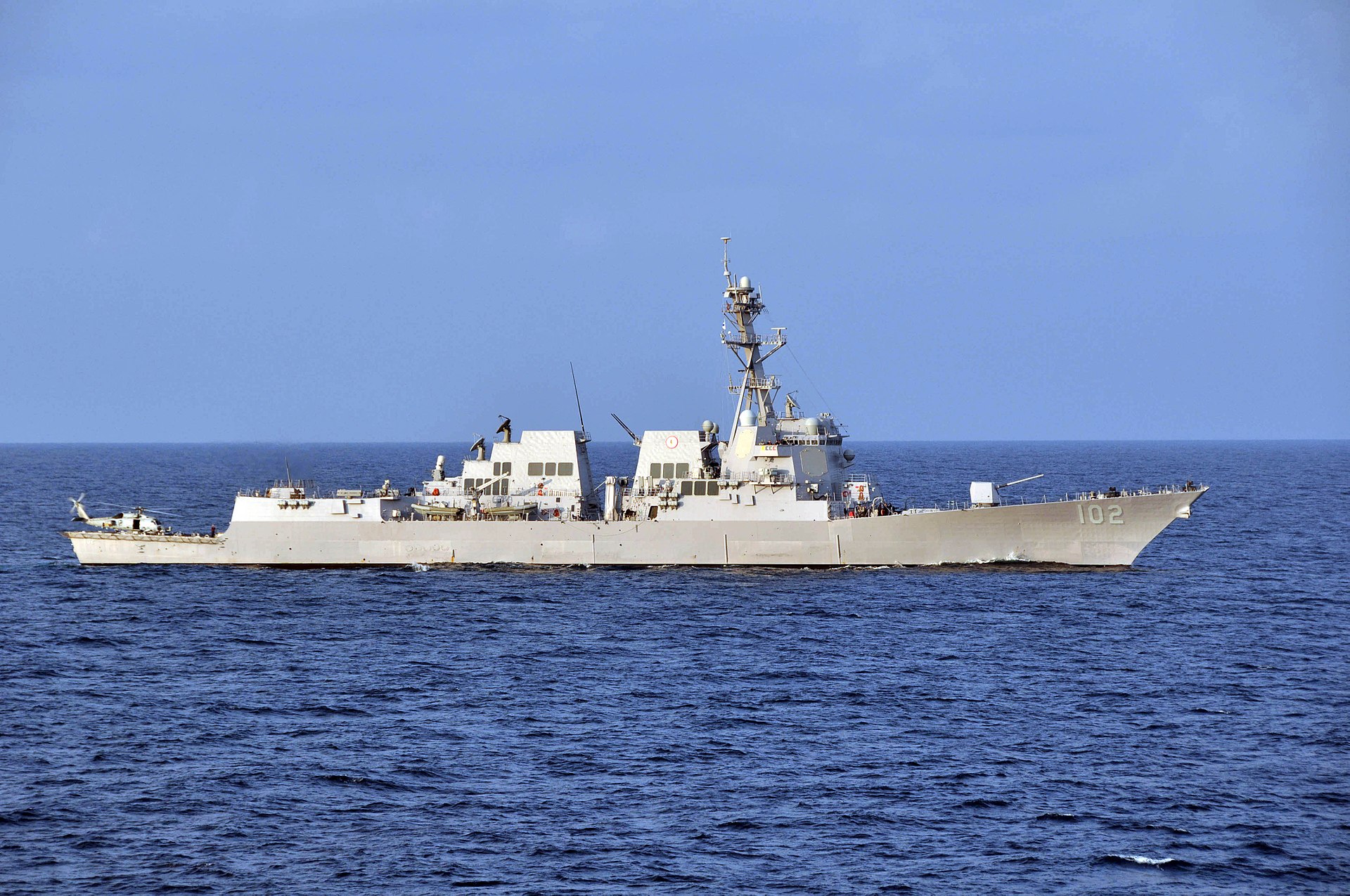
The architecture that performed that interception record is a layered system, not a single battery. Saudi Arabia operates Patriot PAC-3 systems for high-altitude ballistic missile defense, THAAD (Terminal High Altitude Area Defense) for the upper intercept envelope, and Korean KM-SAM systems as a mid-tier component acquired in recent years. The UAE’s system achieved a 94 percent drone intercept rate and 92 percent missile intercept rate according to UAE official data — numbers that, if they hold under independent verification, represent among the highest recorded intercept rates in active combat conditions anywhere in the world.
The cost asymmetry embedded in those numbers, however, presents a strategic problem that the intercept rate alone does not capture. Each Iranian Shahed-series drone costs approximately $35,000 to manufacture. Each interceptor missile costs approximately $4 million. Iran can sustain drone production indefinitely relative to the rate at which Gulf states can replenish interceptor stocks. The mathematics of attrition favor Iran in the long run even as the battlefield results favor the Gulf in the short run. The 96 percent operational rate that Saudi air defense achieved over fourteen days is genuinely impressive. It is also, by every serious assessment of interceptor magazine depth, unsustainable over a campaign measured in months rather than weeks.
The human cost context matters here. Two civilian deaths in Saudi Arabia across fourteen days of sustained assault — the victims were Indian and Bangladeshi migrant workers in Al-Kharj — reflects the extraordinary success of both the technical systems and the civil defense protocols that Saudi authorities implemented in the first hours of the conflict. Oman recorded 2 civilian deaths. Gulf civilian casualties across the entire theater remained, at day fourteen, in the single digits. That figure stands in stark contrast to the scale of the assault.
What the performance record does not show is the strain accumulating beneath it. The 3,133-plus intercept total represents an extraordinary expenditure of irreplaceable interceptor missiles. The US approval of a $3.5 billion AIM-120C-8 missile sale, announced during the conflict, was not coincidental timing — it was emergency resupply. The Gulf states are winning the intercept battle. The question their defense planners are running against right now is how long they can continue winning it at the current consumption rate.
What Did the Hormuz Shutdown Reveal About Global Energy?
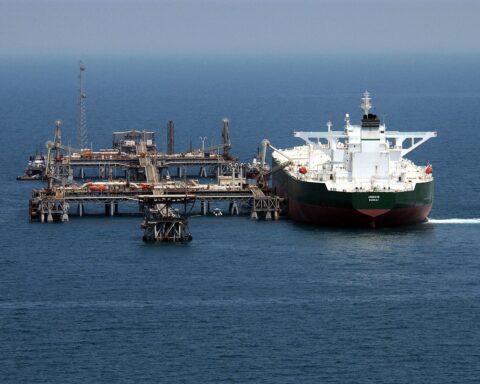
The Strait of Hormuz carries 20 percent of the world’s oil in normal times, threading through a 33-kilometer-wide navigable channel between Iran and Oman. When Iran mined the outer approaches and threatened tanker traffic beginning in the first days of the war, Hormuz traffic dropped 70 percent almost immediately, then to near-zero within days. Approximately 3,000 ships and 20,000 sailors found themselves stranded in the Persian Gulf — unable to transit outbound, unable to receive inbound supplies, anchored in waters where Iranian missiles were landing.
The humanitarian and logistical crisis that resulted was immediate. The scale of the maritime entrapment — 20,000 seafarers holding position in an active war zone — produced the most acute shipping crisis since the Suez Canal closure of 1967. But the Hormuz shutdown also revealed something about energy infrastructure that forty years of investment had quietly prepared for: the Gulf states had built alternative routes. Those alternatives, however, have proven far less secure than planners assumed — Iran struck the Fujairah oil terminal on 14 March, forcing a suspension of loading at the world’s second-largest bunkering hub.
Saudi Arabia diverted more than 25 supertankers to Yanbu, the kingdom’s Red Sea port on the western coast. The East-West Pipeline — a 1,200-kilometer system running from the Eastern Province oil fields across the Arabian Peninsula to Yanbu — became the arterial lifeline of Saudi oil exports. It was built precisely for this contingency. Bahri, Saudi Arabia’s national shipping company, moved aggressively to hire Very Large Crude Carriers capable of the longer Cape of Good Hope routing around Africa. Trump ordered US Navy tanker escorts for vessels attempting Hormuz transit once limited naval operations resumed, but the real pressure relief came from the Red Sea alternative.
Brent crude surged more than 40 percent to above $100 per barrel in response to the Hormuz closure — the first time crude had broken $100 since 2022. The IEA coordinated the release of 400 million barrels from strategic reserves held by member countries, the largest strategic reserve release in the history of the International Energy Agency. Trump’s decision to lift Russian oil sanctions during the crisis added another supply pressure valve, flooding European markets with Russian crude that helped moderate the price spike without fully suppressing it.
What the Hormuz shutdown proved, more than anything else, is that the world’s energy infrastructure remains dangerously dependent on a 33-kilometer bottleneck — and that the Gulf states’ investments in alternative routing, while insufficient to fully replace Hormuz capacity, provided enough resilience to prevent a complete supply catastrophe. China’s response to the Hormuz energy crisis — drawing down strategic petroleum reserves at an accelerated rate while simultaneously pressing Iran through back channels to limit the closure duration — illustrated how deeply the closure threatened Asian economies in particular.
The East-West Pipeline, built for exactly this contingency and ignored in peacetime energy analyses, became the most strategically important piece of infrastructure in the Middle East within seventy-two hours of the Hormuz closure.
Saudi Ministry of Energy operational assessment, March 2026
The Economic Balance Sheet After Fourteen Days
Oil production across the Gulf dropped by 10 million barrels per day collectively in the first two weeks of the conflict — the largest single supply disruption in the recorded history of the global oil market. The number encompasses Saudi Arabia’s voluntary production reductions to protect infrastructure, Qatar’s complete suspension of LNG exports, Kuwaiti terminal closures, and the Bahraini refinery shutdowns forced by proximity to the conflict zone. The 1973 Arab oil embargo, the closest historical parallel in scale, removed approximately 5 million barrels per day from global markets. The Iran war’s disruption exceeded it by a factor of two.
Saudi Arabia’s revenue losses, estimated at $4.5 billion over the first two weeks by Wood Mackenzie, are real and significant. But the accounting is complicated by the price effect. At $100-plus per barrel, every Saudi barrel that did reach export markets — through the East-West Pipeline to Yanbu, through Red Sea routing, through pre-positioned inventory already in transit — generated dramatically higher revenue than it would have in normal conditions. The kingdom lost roughly 40 percent of its export volume while gaining roughly 40 percent on price. The losses were severe but the arithmetic of petrodollar economics provided a partial cushion that a non-oil economy would not have had.
Qatar’s situation was more acute. Qatar shut down LNG production entirely in the first days of the conflict, citing security concerns about the offshore infrastructure. Qatar’s LNG revenues, which fund a substantial fraction of state expenditure, effectively went to zero. European gas markets, which had spent three years diversifying away from Russian supply and increasingly toward Qatari LNG, faced an immediate supply crisis. European spot gas prices spiked to levels not seen since the 2022 energy emergency.
| Indicator | Pre-War (Feb 2026) | Day 14 (March 14, 2026) | Direction |
|---|---|---|---|
| Brent Crude (per barrel) | ~$71 | $100+ | +40%+ |
| Gulf Oil Production (bpd) | ~15M | ~5M | -67% |
| Hormuz Transit Traffic | Normal (18-20% world oil) | Near zero | -99% |
| Yanbu Red Sea Exports | Minimal | 25+ VLCCs diverted | Maximum capacity |
| IEA Strategic Reserves Released | 0 | 400M barrels | Historic release |
| Gulf Shipping Insurance Rates | Baseline | +800-1,200% | War risk premium |
| Saudi Revenue Loss (cumulative) | — | $4.5B (est.) | Significant |
| Qatar LNG Revenue | Full production | Zero | Complete halt |
Insurance rates for Gulf shipping exploded to levels that effectively made commercial voyages economically irrational without government backstops or military convoy escort. The war risk premium added per voyage ran to hundreds of thousands of dollars for a single transit — in some cases exceeding the commercial value of the cargo. The Kharg Island strikes by US forces, which targeted Iranian military infrastructure while deliberately sparing the oil export terminals, reflected a careful calculation by Washington: sufficient damage to degrade Iranian military operations while avoiding the additional oil price spike that destruction of Kharg’s export capacity would have triggered.
The IEA’s 400-million-barrel strategic reserve release was unprecedented in both scale and speed. Previous reserve releases — after Hurricane Katrina in 2005, during the 2011 Libyan civil war, after Russia’s 2022 Ukraine invasion — had involved 60 to 180 million barrels over weeks. The Iran war release moved 400 million barrels within days, a reflection of how acute the supply shock had become.
The longer-term economic reckoning has not yet arrived. Vision 2030 construction projects — NEOM, the Red Sea tourism development, the Qiddiya entertainment complex — are paused but not cancelled. Saudi sovereign wealth fund assets remain largely intact. The kingdom entered the war with foreign exchange reserves sufficient to absorb a prolonged revenue disruption. The bill for the conflict — interceptor missile resupply, infrastructure repair, economic stabilization measures, the social cost of uncertainty — will arrive after the shooting stops. The two-week balance sheet, as painful as it is, does not capture the full accounting.
Why Has Iran’s Missile Fire Rate Collapsed by 92 Percent?
Iran’s missile fire rate dropped 92 percent from its peak within the first two weeks of the conflict, according to Jerusalem Post reporting. The collapse is not primarily a function of Iran choosing to slow its offensive. It is a function of Iran running out of things to shoot. The arithmetic of the campaign makes this clear: Iran entered the war with approximately 2,500 ballistic missiles. By March 13, it had fired 2,410 of them. The ballistic missile component of the Iranian arsenal is, for practical purposes, spent.
The 60 percent destruction of Iran’s missile launchers by US and Israeli strikes compounded the ammunition depletion problem. Even if Iran had retained ballistic missile stocks, the launch infrastructure to deliver them had been systematically targeted. Kharg Island — Iran’s primary oil export terminal and also a site of significant military infrastructure — was struck by US forces with the explicit goal of degrading launch capability while preserving oil export infrastructure. The distinction mattered economically, but the military impact was the same: Iran’s ability to sustain the ballistic missile campaign had been structurally destroyed.
The drone picture is more complicated. Iran’s Shahed-series drone production capacity is genuinely significant — Tehran had invested heavily in domestic drone manufacturing precisely because drones are cheaper, more numerous, and harder to detect than ballistic missiles. Drone production can, in principle, be maintained even as missile stocks deplete. But US strikes on Iranian drone production facilities, conducted in parallel with the missile launcher targeting campaign, had degraded that capacity as well. The 92 percent reduction in fire rate reflects a combined effect: depleted missile stocks, destroyed launchers, damaged drone production, and the operational friction of sustaining a high-tempo offensive while absorbing military strikes on the homeland.
The internal friction within the Iranian military structure added another layer. Reporting from multiple intelligence assessments pointed to significant tension between the IRGC and the regular Iranian military over targeting priorities, resource allocation, and operational control. The IRGC, which commands Iran’s ballistic missile forces, had prioritized the Gulf campaign. The regular military had different views about the appropriate balance between the Gulf theater and the defense of Iranian territory against incoming strikes. That internal friction had not broken into open insubordination, but it had slowed operational coordination at precisely the moment when coordination speed mattered most.
The 92 percent collapse in fire rate is, in retrospect, the clearest single indicator that the Iranian offensive campaign had failed on its own terms. The Islamic Republic had entered the war expecting to impose unsustainable pain on the Gulf states through volume and persistence. After fourteen days, it had achieved volume for approximately ten days before running into the physical limits of its arsenal. The persistence phase never arrived. The Gulf states had absorbed the volume. The equation that Iranian strategic planning depended upon — overwhelming fire leading to political collapse or forced concession — did not materialize.
The Diplomatic Realignment Nobody Predicted
The conventional expectation before the war began was that sustained Iranian missile fire would fracture Gulf unity, isolate Saudi Arabia from nervous trading partners unwilling to be drawn into the conflict, and force a negotiated settlement on terms that Iran could present domestically as a strategic success. The conventional expectation was wrong on every dimension. Saudi Arabia emerged from the first fourteen days of the conflict diplomatically stronger than it had entered them — a result that would have seemed implausible in any pre-war scenario analysis.
Pakistan’s response set the tone. The Pakistani Prime Minister made an emergency visit to Riyadh within the first week, and Pakistani troops and air defense units were deployed to Saudi Arabia in the days that followed. The deployment reflected both the depth of the Saudi-Pakistani strategic relationship and Islamabad’s calculation that Iranian adventurism threatened regional stability in ways that directly affected Pakistani interests. The nuclear dimension of Pakistan’s deployment — the implicit signal that Saudi Arabia now had access to Pakistani deterrence — was not stated explicitly but was understood by every government in the region.
The United Kingdom’s military contribution was operationally significant and politically striking. British fighter jets, helicopters, and a Royal Navy destroyer deployed in support of Gulf air defense operations — the most substantial British military engagement in the Gulf since the 2003 Iraq War. The UK contribution reflected both the bilateral defense relationships London had maintained with Gulf states and the British government’s calculation that Iranian regional hegemony posed a direct threat to UK interests in energy security and regional stability.
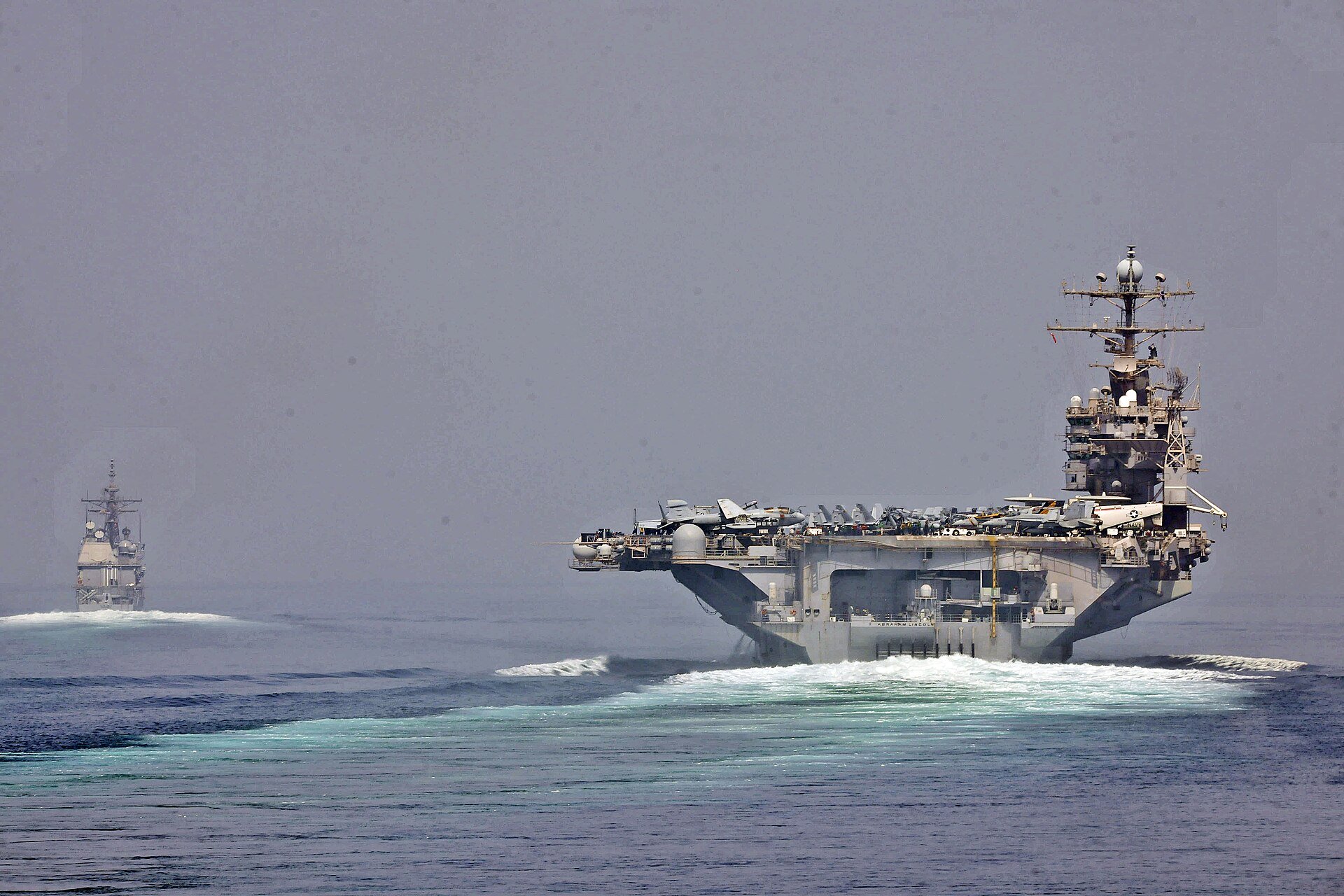
The US approved a $3.5 billion sale of AIM-120C-8 advanced medium-range air-to-air missiles during the conflict — emergency resupply timed to the consumption rate that Gulf air defense operations were imposing on existing stocks. The approval came faster than any comparable arms sale in recent memory, reflecting the urgency of the situation and the depth of the US commitment to Gulf security. Three American carrier strike groups operated in the Gulf region simultaneously, the largest naval concentration in the theater since the 1991 Gulf War.
The Pentagon subsequently ordered the USS Tripoli and 2,200 Marines of the 31st MEU to deploy from Japan to the Gulf, pulling America’s only forward-deployed Marine unit from the Indo-Pacific.
The UN Security Council moved toward near-unanimous condemnation of Iran — a diplomatic outcome that would have seemed impossible before the war, given the expected Russian and Chinese veto positions. Russia, facing its own economic pressures and calculating that an Iranian-generated oil price spike served Moscow’s interests in some dimensions while threatening stability in others, declined to block the condemnation resolution. China’s position was more complex: Beijing’s extraordinary dependence on Gulf energy — and its fury at the Hormuz closure that was devastating Chinese energy security — produced a diplomatic posture toward Iran that was significantly cooler than pre-war patterns had suggested it would be.
Arab Foreign Ministers invoked collective defense clauses under the Arab League framework that had never been activated in earnest in the organization’s history. The invocation was largely symbolic — the Arab League’s military coordination mechanisms are vestigial — but the symbolism mattered. Gulf states that had competed, feuded, and occasionally worked against each other’s interests over the previous decade found themselves, under Iranian missile fire, operating as a genuine collective defense bloc for the first time.
Saudi Arabia’s maintenance of a diplomatic back-channel to Iran throughout the conflict gave the kingdom a negotiating asset that none of its Gulf partners possessed. The channel — maintained through Omani intermediaries even as Oman itself absorbed Iranian projectiles — gave Riyadh a role in any eventual ceasefire negotiation that placed Saudi Arabia at the center of the post-war diplomatic architecture. It was a position that MBS had engineered carefully, and the war had validated the engineering.
The Home Front — How Riyadh Lived Under the Drones
On March 13, 2026 — the thirteenth day of the war — Saudi air defense batteries intercepted 56 drones across the kingdom in a single day. The target list included the Riyadh Diplomatic Quarter, where foreign embassies and international missions are concentrated. Every inbound threat aimed at the city center was intercepted. But the intercepts were audible, visible, and constant. Riyadh lived under a drone war that the intercept rate made survivable and the intercept sounds made undeniable.
The US Embassy ordered non-essential staff to evacuate Riyadh within the first days of the conflict — a standard protocol under State Department security guidelines, but a move that sent a visible signal to the city’s expatriate community about the assessed severity of the threat. Diplomatic missions across the Diplomatic Quarter implemented shelter-in-place protocols. The streets of the quarter, normally busy with the traffic of international commerce and diplomacy, quieted to a wartime rhythm.
Formula 1 cancelled the Saudi Arabian and Bahraini Grand Prix events — a decision that would have seemed extraordinary in any pre-war context, given the enormous economic and prestige investment that Saudi Arabia had made in the F1 calendar as part of Vision 2030’s sports tourism strategy. The F1 cancellation was followed by a cascade of sporting event postponements across the Gulf — football matches, tennis tournaments, golf events — that collectively wiped out much of the entertainment and tourism calendar for March 2026.
Schools adapted. Businesses adapted. The rhythms of commerce continued in modified form — offices shifted to remote work arrangements, supply chains rerouted to avoid infrastructure near military sites, construction crews at Vision 2030 sites stood down. Saudi Arabia is a country that has lived with regional instability for decades; its civil society adapted to the war with a speed and order that reflected both government emergency planning and a population that had processed the possibility of this scenario.
The civilian deaths came on Day 12. Two migrant workers — one Indian national, one Bangladeshi — were killed in the city of Al-Kharj when a projectile that evaded interception struck a residential area. The deaths were the first confirmed civilian fatalities from the conflict on Saudi territory. The Saudi Defense Ministry acknowledged them publicly within hours. The Indian and Bangladeshi governments issued statements. The deaths became a measure of the war’s human cost that the intercept rate statistics could not fully contain.
Despite everything, the Saudi government declared 2026 the Year of Artificial Intelligence — a pre-planned announcement that the government chose not to defer. The decision to proceed with the announcement in the middle of an active missile conflict was deliberate: a statement, addressed simultaneously to the Saudi public and to international investors, that Vision 2030’s trajectory was not being abandoned under fire. Whether that signal was received as intended by international audiences is another question. That it was sent at all says something about how Saudi Arabia’s leadership is framing the war’s relationship to its long-term national project.
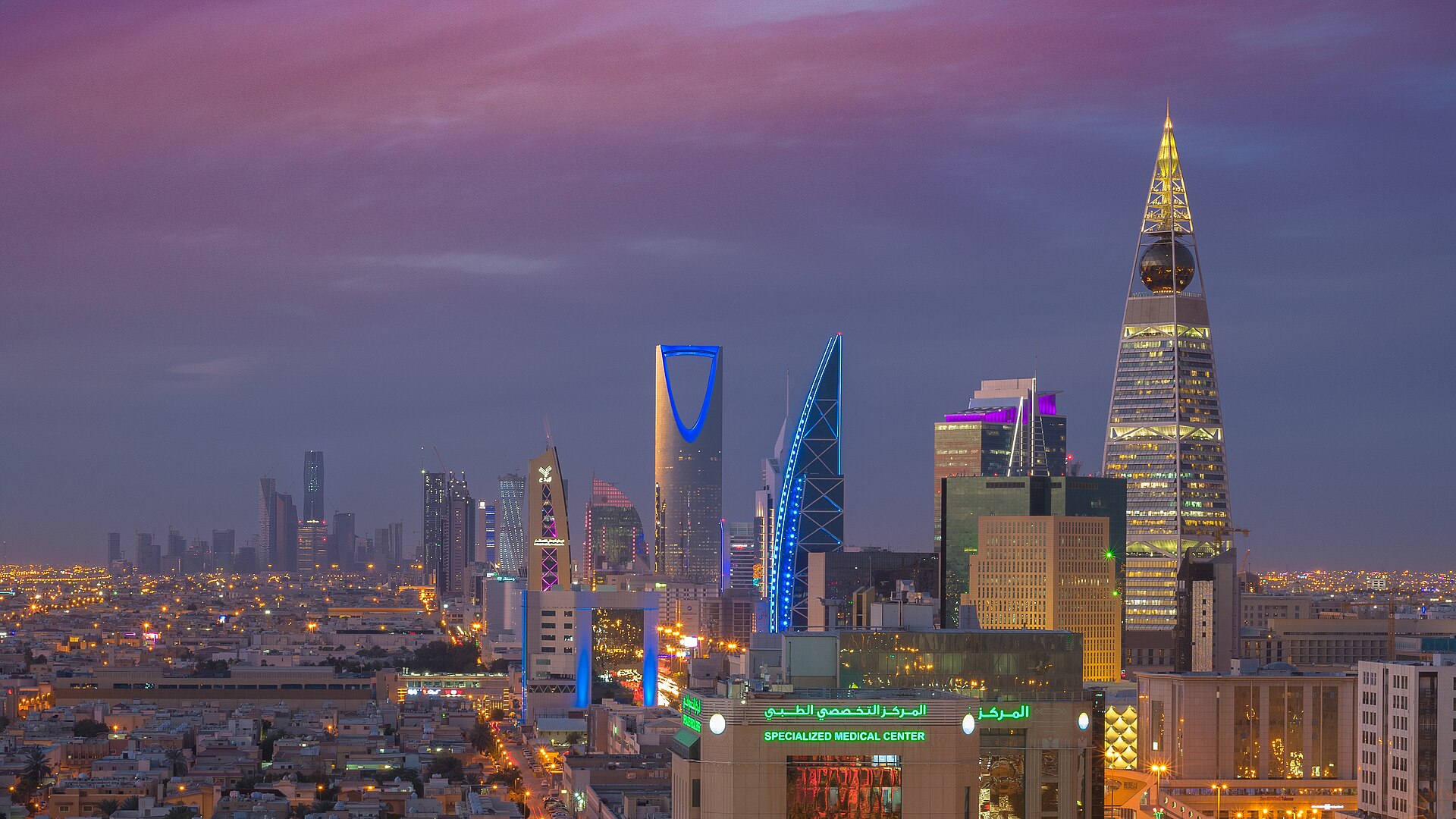
The home front revealed something about the Saudi social contract under pressure. The government provided continuous public information through official channels. Air raid warning systems functioned. Civil defense protocols were executed. The population did not panic. Two civilian deaths in fourteen days of sustained assault is, by the mathematics of modern warfare, an extraordinary outcome — a testament to both the technical performance of the air defense systems and the effectiveness of the civil defense infrastructure that surrounded them.
What Does Saudi Arabia Look Like at the End of Week Two?
At the end of the second week of the Iran war, Saudi Arabia occupies a position that few analysts would have predicted when the first Iranian missiles were fired on February 28: unbroken militarily, diplomatically empowered beyond pre-war levels, economically damaged but absorbing the damage from a position of structural strength, and in possession of a strategic restraint posture that has generated more international goodwill than any offensive action could have produced.
The single most consequential decision Mohammed bin Salman made in the first fourteen days of the conflict was the decision not to fire. Saudi Arabia absorbed more than 176 Iranian projectiles — 25 ballistic missiles and 151 drones — without launching a single offensive strike at Iranian territory. The strategic restraint calculation was not passivity. It was a deliberate choice to position Saudi Arabia as the victim of Iranian aggression rather than a co-belligerent in a bilateral conflict. That positioning produced the coalition that now surrounds the kingdom: Pakistani troops, British jets, American missile sales, UN condemnation, Arab unity. The restraint was the strategy, and the strategy worked.
Vision 2030 projects are paused at the construction level but not at the planning level. The sovereign wealth fund has continued its international investment activities through the conflict. The AI Year announcement signals that the government intends to resume normal programming as soon as operational conditions allow. The question of when “as soon as operational conditions allow” arrives is the central uncertainty of Saudi Arabia’s week-two position.
The Red Sea economic corridor — the routing through Yanbu and the East-West Pipeline that Saudi Arabia built over decades as a Hormuz bypass — has emerged from the conflict not merely as an emergency measure but as a permanent feature of Saudi energy export strategy. The diversification that Saudi planners had designed for exactly this contingency proved its value in real conditions. Post-war planning will almost certainly involve further investment in Red Sea export capacity, treating the Hormuz vulnerability as a structural problem requiring permanent infrastructure solutions rather than a temporary crisis to be managed.
The diplomatic relationships that were cemented under fire are more durable than those formed in peacetime negotiations. Pakistan’s troop deployment, the UK’s fighter jet contribution, the US missile sale, the Arab League’s collective defense invocation — these are not gestures that will be easily walked back when the conflict ends. Saudi Arabia will emerge from the war with a defense relationship portfolio that is deeper, more operational, and more tested than anything it possessed before February 28. That is an asset that will compound across the post-war years.
What Saudi Arabia does not yet know is the full dimensions of the bill. Infrastructure repair costs. Interceptor missile resupply costs. The economic losses that will continue accumulating until Hormuz reopens. The social costs of the paused construction projects and the deferred Vision 2030 timeline. The diplomatic costs of maintaining the back-channel to Iran that will be scrutinized by the coalition partners who expect Saudi Arabia to present a unified front. The full accounting is not yet possible. What can be said, with confidence, at the end of week two is that the kingdom is still standing — and standing in a stronger position than it entered the conflict.
The War Proved What Peace Never Could
For thirty years, the Gulf states spent on defense, hedged diplomatically, and diversified economically — and debated, continuously, whether any of it would matter when the test came. The investments were real: Patriots, THAAD, Korean KM-SAM batteries, the East-West Pipeline, Yanbu port expansion, the GCC mutual defense framework, the bilateral relationships with Pakistan, the UK, the United States. The debate was also real: whether the systems would perform under actual wartime conditions, whether the alliances would hold when the shooting started, whether the economic diversification was deep enough to absorb a supply shock.
Fourteen days of Iranian missile fire answered those questions. Not completely, not permanently, and not without cost — but answered them in ways that thirty years of peacetime exercises and diplomatic assurances never could have. The air defense systems performed. The intercept rates — 92 to 96 percent across different Gulf states and threat categories — exceeded the performance benchmarks that most pre-war assessments had projected for sustained high-tempo operations. The East-West Pipeline functioned as designed. The alliances held, and then strengthened under fire. The GCC states achieved a level of military coordination and political unity that their most optimistic pre-war planners had considered aspirational.
The Iranian theory of the war — that overwhelming volume would break the Gulf’s political will faster than the Gulf’s interceptors could consume Iranian munitions — failed because it misread both the technical capacity of the air defense systems and the political resilience of the Gulf governments. Tehran had calculated, based on a reading of Gulf history that emphasized internal divisions, succession uncertainty, and economic dependence on stability, that the Gulf states would fracture under sustained military pressure. The fracture did not occur. The unity did.
None of this means the war is over or that its ultimate costs have been tallied. Iran’s drone production capacity remains a threat even as its ballistic missile stocks are depleted. The Hormuz closure continues to accumulate economic damage. The interceptor magazine depth problem is real and will require years of resupply investment to fully address. The Gulf civilian populations have demonstrated extraordinary resilience under fire — but resilience is not the same as immunity, and the duration of the conflict will test it further.
The post-war Middle East will look nothing like the pre-war version, regardless of how the conflict concludes. Iran’s ballistic missile arsenal — the central instrument of its regional deterrence strategy for thirty years — is effectively spent. Its international isolation has deepened to levels not seen since the peak of the pre-2015 nuclear sanctions regime. Its economy, already under strain from a decade of sanctions, is absorbing the additional burden of wartime expenditure against a backdrop of revenue collapse. These are not conditions from which a rapid restoration of the pre-war regional order is possible.
The strategic consequences extend beyond the military balance. The war has triggered an acceleration of the global energy transition away from oil that may prove more transformative than the conflict itself — reshaping the economic foundations on which both Gulf and Iranian power ultimately rest.
For the Gulf states, the post-war legacy will be shaped by how they manage the transition from wartime coalition to peacetime relationship maintenance. The partnerships forged under fire with Pakistan, the UK, and the United States will require cultivation, investment, and reciprocal commitments to remain as durable in peace as they proved in war. The comprehensive reckoning with what the Iran war means for Gulf strategy, defense investment, and regional positioning is work that has only begun. The fourteen days of missile fire that opened the conflict proved what the Gulf states had built. The years that follow will determine what they do with that proof.
What the war also proved — quietly, without announcement, through the accumulated evidence of intercept after intercept and alliance affirmation after alliance affirmation — is that the Gulf’s security architecture is not a paper construction. It has weight. It has depth. It absorbed 3,133 Iranian missiles and drones in two weeks, and it held. That is not nothing. In the history of this region and this century, it may turn out to be everything.
Yet the architecture also revealed a paradox that no intercept rate can resolve. The American bases that anchored the Gulf’s defence were simultaneously the assets that drew the heaviest Iranian fire. The basing arrangement that was supposed to deter Iranian aggression instead attracted it — a strategic contradiction that Gulf planners will need to confront long after the last interceptor is reloaded.
Frequently Asked Questions
When did the Iran war start?
The Iran war began on February 28, 2026, when Iran launched its initial missile and drone strikes against US military bases and Gulf state infrastructure following a period of escalating tensions over Iran’s nuclear program. The conflict escalated rapidly in its first 72 hours to involve Iranian strikes across 13 countries simultaneously.
How many missiles has Iran fired in the war so far?
Iran has fired more than 3,133 missiles and drones at Gulf states and regional targets in the first fourteen days of the conflict, according to Aviation A2Z tracking data as of March 13, 2026. Of approximately 2,500 ballistic missiles Iran entered the war with, 2,410 had been fired by mid-March, effectively depleting that component of its arsenal.
What is the Gulf air defense intercept rate?
Gulf air defense systems achieved intercept rates of 92 to 96 percent across the first fourteen days. The UAE recorded a 94 percent drone intercept rate and 92 percent missile intercept rate according to official UAE data. Saudi Arabia intercepted 25 ballistic missiles and 151 drones over the same period, with only 2 civilian deaths on Saudi territory.
How has the war affected global oil prices?
Brent crude surged more than 40 percent to above $100 per barrel following the Hormuz closure, reaching levels not seen since 2022. Gulf oil production collectively dropped by 10 million barrels per day — the largest single supply disruption in recorded history. The IEA coordinated the release of 400 million barrels from strategic reserves in response.
Has Saudi Arabia attacked Iran directly?
No. Saudi Arabia adopted a posture of strategic restraint throughout the first fourteen days of the conflict, absorbing more than 176 Iranian projectiles without firing a single offensive strike at Iranian territory. The restraint was a deliberate political strategy that positioned Saudi Arabia as the victim of Iranian aggression, generating the international coalition — Pakistan, UK, US, and others — that rallied to Riyadh’s defense.
How many casualties has Saudi Arabia suffered?
Saudi Arabia recorded 2 civilian deaths in the first fourteen days of the conflict — an Indian national and a Bangladeshi national, both killed in the city of Al-Kharj. No Saudi military fatalities from Iranian strikes have been officially confirmed. The low civilian death toll reflects both the high performance of Saudi air defense systems and the effectiveness of civil defense protocols implemented at the conflict’s outset.