
The young Saudi Crown Prince, Mohammed bin Salman, is not one to shy away from bold moves that beckon a new era for the traditionally conservative kingdom. His initiation of an array of ambitious projects spanning from luxury resorts in the holy city of Mecca to the advocacy for women’s equal rights including their freedom to drive, are all telltale signs of a changing kingdom.
His vision, aptly christened “Saudi Vision 2030”, is leaving no stones unturned as Arab media reported on Monday, noting a possible Israeli involvement in his upcoming endeavors.
Among the prince’s crown jewels is the futuristic city dubbed as NEOM, an undertaking designed to be in the proximity of Eilat, suggesting an intended Israeli participation. The prince has painted a broader picture of the city facilitating economic collaborations with Egypt and Jordan, who have already penned down peace agreements with Israel, in a strategic move preceding the normalization of Israel and the UAE relations.
As the aftermath of the war in Gaza unveils itself, Israel might have to prioritize its interests and reassess its potential role in the prince’s impressive economic vision which includes the revitalization of Gaza and the bolstering of its local economy. It’s a given that Saudi Arabia and Israel have mutual stakes in the economic build-up of the Middle East, while simultaneously facing common adversaries; the Muslim Brotherhood factions including Hamas and arguably, Iran.
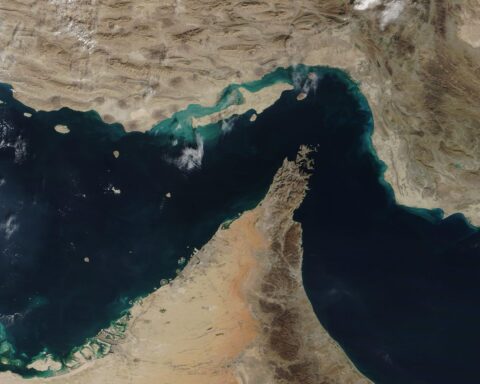
The prince’s dream for his kingdom lies in the grandeur of his mega-projects, including the creation of a high-speed rail network stretching from Jordanian borders to the Persian Gulf, and a driverless underground railway in Riyadh boasting 85 stations.
He hasn’t stopped there. His unveiling of The Red Sea project proposes a quintessential Saudi Riviera spanning 3,800 square kilometers of golden beaches skirted by resorts and sports centers. Despite facing criticism for pushing the envelope of the traditional norms in Saudi Arabia, the prince’s commitment to his vision remains unscathed.
His future plans brim with ambitious undertakings. One of which is “The Square” Project; a sprawling business hub sprawling in Riyadh, as unveiled at the MIPIM conference. This giant project proposes more than 19 square kilometers lined with eco-centric buildings, technology universities, and luxury facilities, aiming to house hundreds of thousands of residents.
However, such proposals of breath-taking magnitude come with their fair share of criticisms and challenges. The prince’s plans to build NEOM was accompanied by the expropriation of lands from the Huwaitat tribe. Unsurprisingly, his initiatives have drawn scrutiny for the harsh working conditions for laborers in Saudi.
Despite these criticisms, the prince wants his legacy marked by the transition of Saudi from oil-dependency to a more diversified economy. However, some experts debate Saudi’s capability to finance these multifaceted projects, critiquing his infrastructure designs for their potential invasiveness towards citizens’ privacy. Furthermore, he continues to face resistance from conservative factions within the kingdom, fervently attempting to uphold the Wahhabi religious tradition.
In the end, it is evident that whether indirectly, Prince Mohammed’s initiatives, including a possible accord with Israel, are indicative of a seismic shift in the Kingdom’s future. All eyes are now on him to see whether these ambitious projects will come to fruition or not.