
Every December, when the shadow of an ancient sundial falls across a stone marker in AlUla’s Old Town, it signals the start of the winter planting season — a tradition stretching back thousands of years. Today that same astronomical moment launches Winter at Tantora, Saudi Arabia’s most prestigious cultural festival and a centrepiece of the Kingdom’s transformation into a global tourism destination. Running from mid-December through early January in the dramatic sandstone canyons of AlUla, the festival fuses world-class concerts at the Guinness World Record-holding Maraya mirror hall with heritage experiences, hot air balloon flights, contemporary art, and fine dining beneath the desert stars. Whether you are planning a dedicated festival trip or weaving it into a broader Saudi Arabia itinerary, this guide covers everything you need to book, pack, and experience.
Best Time to Visit: Mid-December to early January (2025–26 season ran 18 Dec – 10 Jan)
Getting There: Fly to AlUla Airport (ULH) — daily flights from Riyadh (2 hr) and Jeddah (1 hr 20 min) via Saudia and flynas
Visa Required: Yes — tourist e-visa available for 60+ nationalities
Budget: $150–500/day (budget to luxury); concert tickets from SAR 750–5,000+ ($200–$1,300+)
Must-See: Maraya Concert Hall, Hegra After Dark, Old Town Nights
Avoid: Arriving without pre-booked accommodation — AlUla sells out weeks before the festival
What Is Winter at Tantora?
Winter at Tantora launched in December 2018 as the Royal Commission for AlUla’s (RCU) flagship event, designed to place AlUla alongside the world’s great cultural destinations. The festival takes its name from the Tantora sundial, an ancient stone gnomon in AlUla’s Old Town that local farmers used for centuries to mark the onset of winter and the beginning of the planting calendar. When the sun’s shadow aligns with a carved notch on the stone — typically around the winter solstice — it signals the start of the season.
The festival has grown rapidly since its debut. Early editions featured intimate concerts by Andrea Bocelli, Lionel Richie, and Yanni at the newly constructed Maraya Concert Hall. By the 2025–26 season, the programme had expanded into a multi-week celebration encompassing concerts, heritage performances, equestrian sport, culinary experiences, contemporary art, and adventure activities across AlUla’s sprawling canyon landscape.
The Tantora Sundial
The sundial itself is a modest stone marker in the heart of AlUla’s restored Old Town, but its significance is immense. For the Nabataean, Dadanite, and later Arab communities who settled AlUla over millennia, the Tantora stone was a practical tool — an astronomical calendar that regulated agriculture in an arid environment where timing was survival. Visiting the sundial during the festival connects you to a living tradition that predates Islam, Christianity, and Rome. Guided heritage tours of the Old Town typically include a stop at the sundial and explain its astronomical mechanics.
2025–26 Season: Dates, Lineup, and Highlights
The most recent Winter at Tantora season ran from 18 December 2025 to 10 January 2026 under the theme “Winter Brings Us Together.” Here is what the season included:
Concerts at Maraya
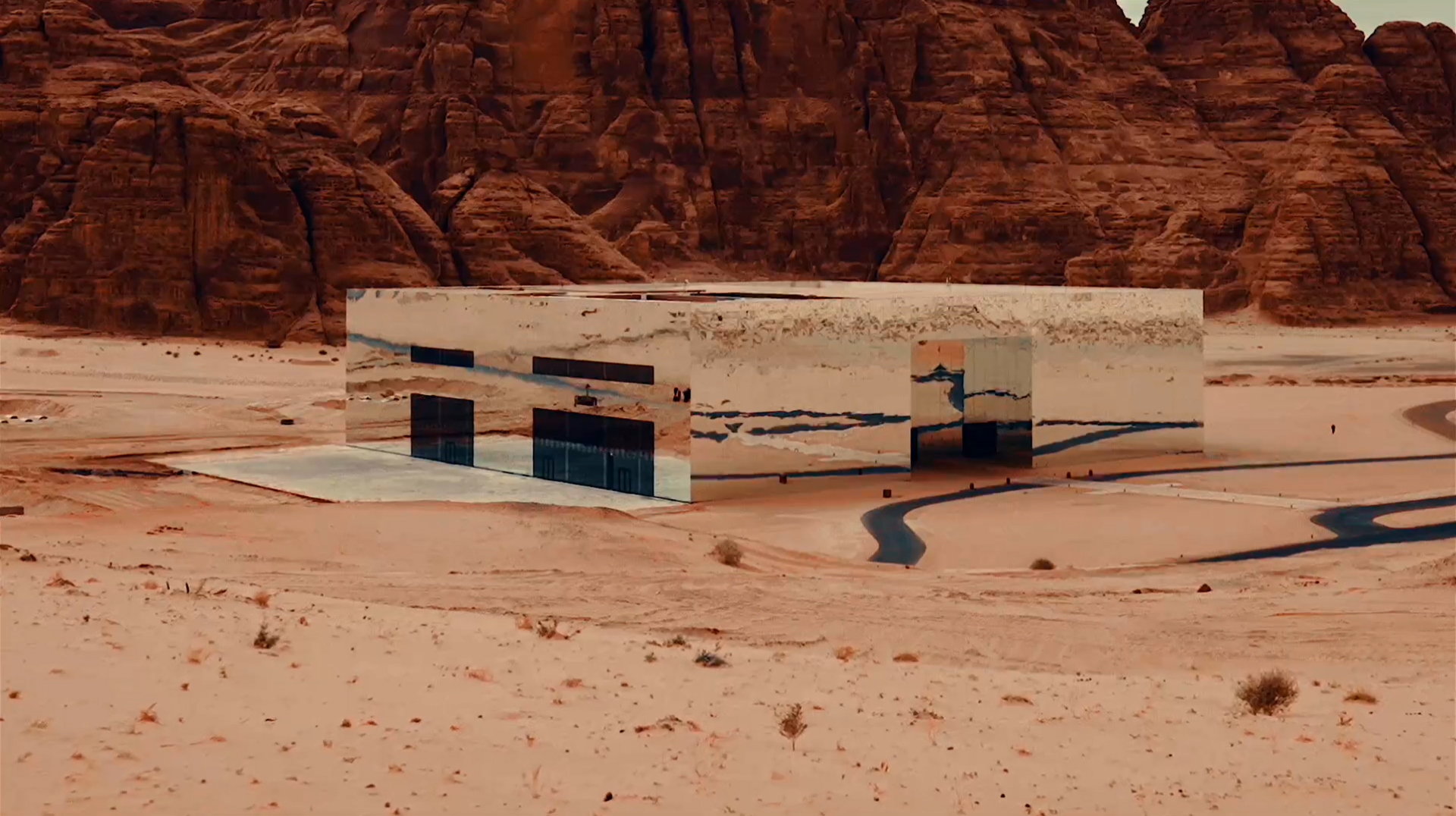
Maraya Concert Hall — a 9,740-square-metre mirror-clad cube that reflects the surrounding sandstone cliffs — hosted headline performances throughout the festival. The 2025–26 lineup featured:
- Wael Kfoury — Lebanese superstar, 19 December (opening night)
- Ahlam — Emirati singer and actress, 26 December
- Assala Nasri — the “Queen of Arab Music,” late December
- Adam — Lebanese star, 31 December (New Year’s Eve)
- Omar Khairat — night of orchestral Arabic classics
- Elissa — Lebanese pop icon, 9 January (closing weekend)
- Saudia — daily flights from Riyadh (RUH, 2 hours) and Jeddah (JED, 1 hour 20 minutes)
- flynas — five flights per week from both Riyadh and Jeddah (Mon, Tue, Wed, Fri, Sun); fares from SAR 260 (~$69)
- flydubai — direct from Dubai
- Qatar Airways — direct from Doha
- Royal Jordanian — direct from Amman
- Budget traveller: $150–200/day — Caravan by Habitas or Airbnb, free Desert X, heritage site tickets, local dining
- Mid-range: $300–500/day — Shaden Resort, one or two Maraya concerts, balloon flight, guided Hegra tour
- Luxury: $700–2,000+/day — Banyan Tree or Habitas, premium concert seating, Old Town Nights dinner, helicopter tour
- AlUla Travel Guide 2026 — The complete guide to visiting AlUla, from Hegra to Elephant Rock
- Hot Air Balloon Over AlUla — What to expect and how to book a sunrise flight
- Best Sunset Spots in Saudi Arabia — AlUla, Jeddah, Abha and more
- Saudi Arabia Hiking Guide — From Asir to AlUla’s canyon trails
- Saudi Arabia Travel Guide 2026 — The complete guide to visiting the Kingdom
- Saudi Arabia Visa Guide — Every visa type explained
Maraya seats approximately 500 guests, making every performance unusually intimate for artists of this stature. Tickets for Maraya concerts typically range from SAR 750 to SAR 5,000+ (roughly $200–$1,300 USD) depending on seating tier. Book early — headline shows sell out within days of release on tickets.experiencealula.com.
Old Town Nights
One of the festival’s signature experiences, Old Town Nights transforms AlUla’s restored mudbrick heritage quarter into an open-air stage. The evening begins with The Book of Kharanif, a 70-minute theatrical performance at the Old Town Amphitheatre inspired by AlUla’s stories and folklore. Premium ticket holders continue to a curated multi-course dinner at the historic AlUla Fort, with the illuminated canyon walls as a backdrop. Old Town Nights ran throughout the festival period (18 December – 10 January).
Shorfat Tantora
These open-air concerts take place in AlUla’s Old Town, offering a more casual and atmospheric alternative to the Maraya headliners. Musicians perform on elevated stages among the mudbrick buildings, with audiences seated on terraced viewing platforms overlooking the heritage quarter.
AlManshiyah Carnival
A family-friendly carnival featuring vintage games, mini parades, live music, artisan workshops, local crafts, and traditional food stalls. This is the most accessible entry point into the festival — relaxed, festive, and ideal for visitors with children.
The Old Town Culinary Voyage
A progressive four-course tasting menu crafted by top chefs across different Old Town restaurants, paired with storytelling about AlUla’s culinary heritage. Each course is served at a different venue as diners walk through the illuminated heritage quarter, making the journey itself part of the experience.
Beyond Tantora: AlUla’s Wider Winter Season
Winter at Tantora is the opening act of a broader AlUla winter programme that extends through February. If you time your visit right — or extend your stay — these events overlap with or follow the festival:
Desert X AlUla 2026
The fourth edition of this internationally acclaimed land-art exhibition ran from 16 January to 28 February 2026, featuring 11 new site-specific artworks installed across AlUla’s canyons and desert plains. Curated by Wejdan Reda and Zoé Whitley under the artistic direction of Neville Wakefield and Raneem Farsi, the 2026 theme was “Space Without Measure,” inspired by Kahlil Gibran. Highlights included Agnes Denes’s The Living Pyramid (a planted structure in the oasis), Tarek Atoui’s The Water Song (instruments emerging from the ground), and Basmah Felemban’s Murmur of Pebbles (monumental limestone sculptures reflecting AlUla’s ancient river geology). Desert X is free to visit.
AlUla Desert Polo
Scheduled for 16–17 January 2026, this equestrian event brings international polo to the desert. Tickets start from SAR 400. The setting — a polo pitch carved from the desert floor with sandstone pillars rising behind the goalposts — is unlike any polo ground on earth.
AlUla Trail Race
A trail running event through AlUla’s canyons in January, attracting endurance athletes from across the Gulf and beyond.
AlFursan Endurance AlUla
An FEI-sanctioned endurance riding event held on 7–8 February 2026, featuring CEI2 (120 km) and CEI3 (160 km) races through the desert terrain.
What to See and Do During Your Visit
Winter at Tantora is reason enough to visit AlUla, but the destination itself is packed with world-class heritage sites and natural landmarks. Build these into your festival itinerary:
Hegra (Madain Saleh) — UNESCO World Heritage Site
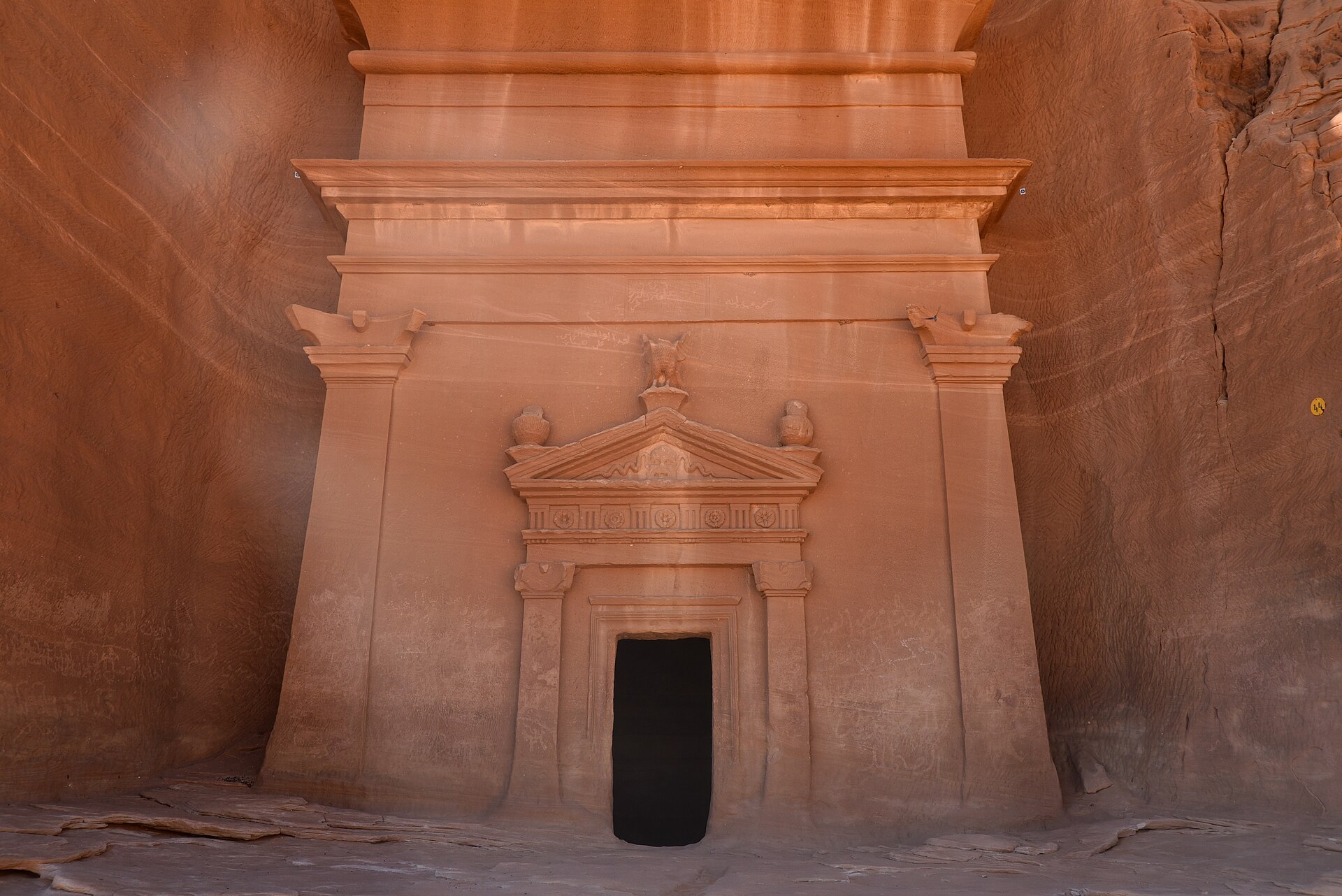
Saudi Arabia’s first UNESCO World Heritage Site (inscribed 2008) is the largest conserved Nabataean site south of Petra in Jordan. Over 100 monumental tombs carved into sandstone outcrops date to the 1st century CE, with intricate facades featuring Nabataeo-Corinthian capitals, eagle sculptures, and inscriptions in Nabataean script. During the festival season, Hegra After Dark offers evening visits with light projections illuminating the tomb facades — a genuinely atmospheric experience that is difficult to replicate elsewhere. Daytime guided tours are also available year-round. Hegra is approximately 22 km north of AlUla town centre.
Elephant Rock (Jabal AlFil)
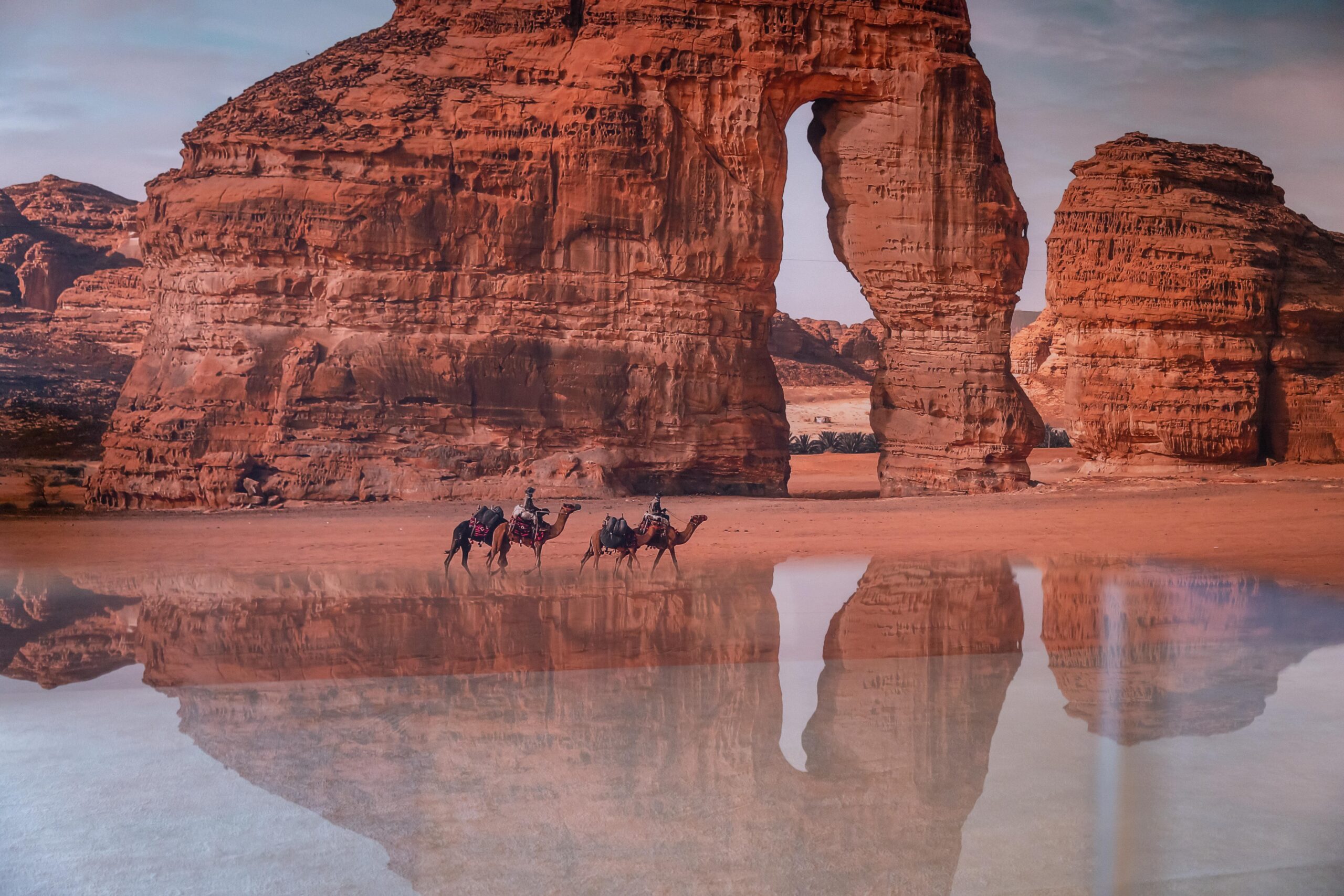
This natural sandstone formation, shaped by millennia of wind erosion into the unmistakable silhouette of an elephant, is one of Saudi Arabia’s most photographed landmarks. Visit at sunset when the rock glows amber and the surrounding café terrace serves Arabic coffee against one of the Kingdom’s most dramatic backdrops. Elephant Rock is about 11 km northeast of AlUla town. For a full guide, see our hot air balloon over AlUla page, which covers aerial views of this formation.
Dadan and Jabal Ikmah
The ancient Dadanite and Lihyanite kingdoms left their mark on AlUla long before the Nabataeans arrived. Dadan features carved lion tombs high on cliff faces, while nearby Jabal Ikmah — sometimes called Saudi Arabia’s largest open-air library — contains hundreds of inscriptions in Dadanite, Lihyanite, Nabataean, and early Arabic scripts. These sites are less crowded than Hegra and offer a deeper dive into AlUla’s layered history.
AlUla Old Town
The historic mudbrick settlement of over 900 houses, clustered along narrow alleyways beneath a hilltop fortress, has been partially restored by the RCU. During the festival, the Old Town comes alive with performances, pop-up dining, and craft markets. Outside festival hours, walk the quiet lanes to appreciate the architecture and the views from the fort. The Tantora sundial is located here.
Hot Air Balloon Flights
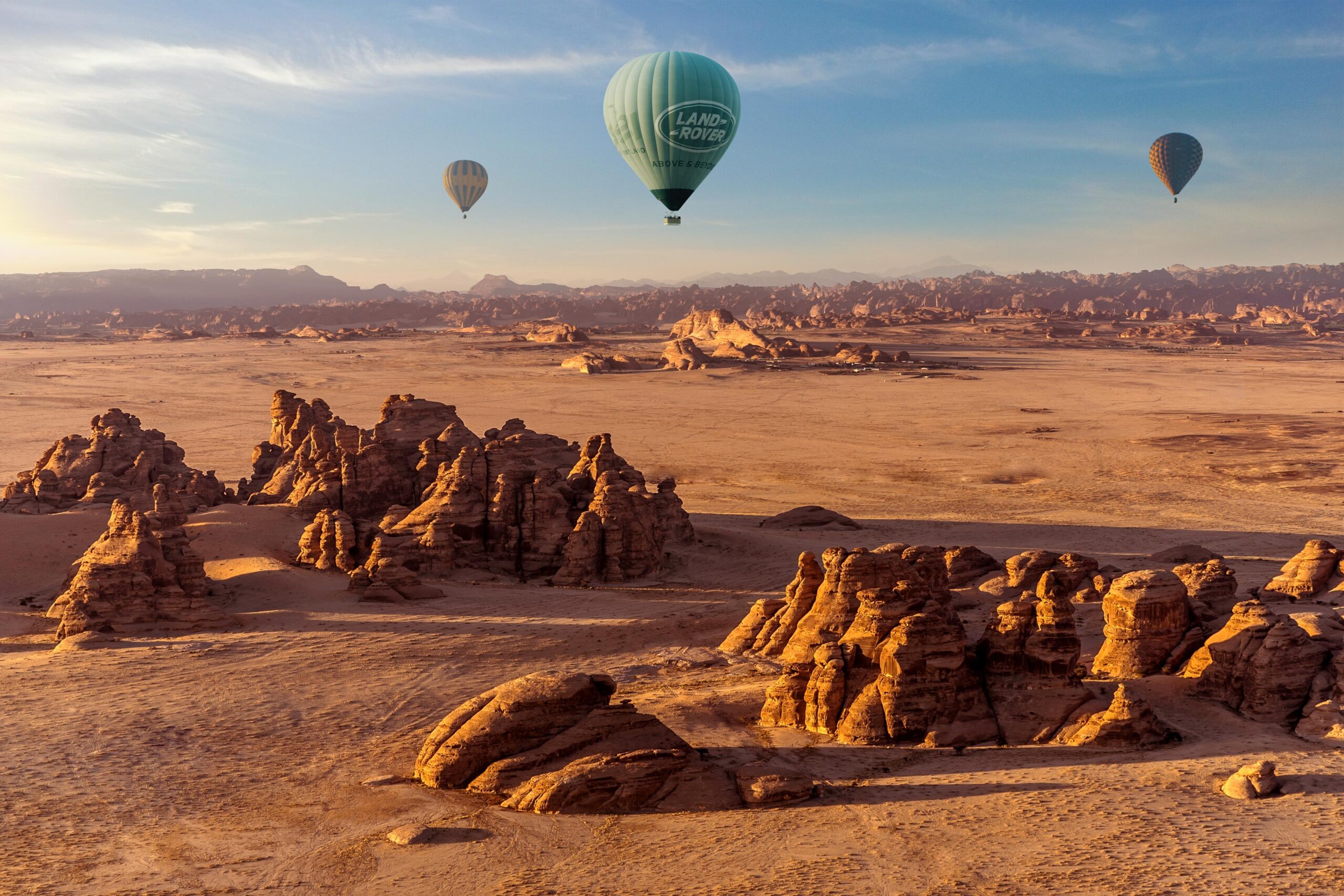
AlUla’s winter season features hot air balloon flights at sunrise, drifting over the sandstone formations, ancient tombs, and oasis palm groves. During festival weeks, dozens of colourful balloons launch simultaneously in what is known as AlUla Skies — a spectacle worth waking before dawn for. Book through experiencealula.com; flights typically start from SAR 800–1,200 per person.
Stargazing
AlUla’s remote desert location and minimal light pollution make it one of the best stargazing destinations in the Middle East. Several operators offer guided astronomy sessions during the winter season, with telescopes set up in the desert. The cool, clear winter nights (5–10°C) are ideal — bring layers.
Adventure Activities
The winter season also brings hiking through AlUla’s canyons, rock climbing on sandstone walls, zip-lining, cycling tours, and helicopter flights over Hegra. For a comprehensive list of outdoor activities, see our Saudi Arabia hiking guide, which covers AlUla’s trail network.
Where to Stay
AlUla’s accommodation ranges from ultra-luxury tented resorts to comfortable mid-range hotels, but capacity is limited and demand during Winter at Tantora is intense. Book as early as possible — ideally two to three months ahead.
Luxury
| Hotel | Style | Starting Price (per night) | Notes |
|---|---|---|---|
| Banyan Tree AlUla | 47 tented villas in Ashar Valley | ~$1,800 | Handcrafted Arabian interiors, private pools, full spa |
| Our Habitas AlUla | Eco-luxury canyon villas | ~$1,150 | Wellness-focused, immersive nature setting |
| Dar Tantora — The House Hotel | Heritage boutique in Old Town | Varies | Inside the restored mudbrick quarter — maximum atmosphere |
Mid-Range
| Hotel | Style | Starting Price (per night) | Notes |
|---|---|---|---|
| Shaden Resort | Desert resort | ~$720 | Good value relative to luxury options; comfortable base |
| Caravan by Habitas | Airstream-style trailers | ~$300–500 | Design-forward glamping experience |
Tip: During the festival, additional pop-up glamping options and Airbnb-style rentals appear. Check experiencealula.com for seasonal accommodation packages that bundle hotel stays with event tickets — these often represent better value than booking separately. Promotional discounts of up to 30–45% have been offered through the Visit Saudi website for 2026 bookings.
Getting to AlUla
By Air
AlUla Airport (ULH), also known as Prince Abdul Majeed bin Abdulaziz Airport, is the primary gateway. As of 2026, five airlines serve AlUla:
International visitors can fly into Jeddah or Riyadh and connect to AlUla on the same day. For a full guide to Saudi airports and transfers, see our Saudi Arabia airport guide.
By Road
AlUla is approximately 300 km (3–4 hours) north of Medina by road, making it feasible as an extension to an Umrah or Hajj trip. The drive from Riyadh is roughly 1,100 km (10–12 hours) — scenic but long. Renting a car in Medina or Jeddah and driving north is a popular option for those who want to explore the Hejaz region at their own pace.
Visa
Most international visitors will need a Saudi tourist e-visa, available online for citizens of 60+ countries. The e-visa is valid for one year with multiple entries and costs approximately SAR 535 ($142) including insurance. Apply at least a week before travel. GCC residents can enter visa-free.
Weather and What to Pack
AlUla’s winter climate is one of the festival’s greatest assets — warm days, cool evenings, and virtually zero rain.
| Metric | December | January |
|---|---|---|
| Daytime high | 20–25°C (68–77°F) | 18–23°C (64–73°F) |
| Nighttime low | 5–10°C (41–50°F) | 3–8°C (37–46°F) |
| Rain | Rare | Very rare |
| Humidity | Low | Low |
Packing essentials: Layered clothing is non-negotiable. Days are pleasant in a light shirt, but temperatures drop sharply after sunset — you will want a warm jacket, scarf, and closed-toe shoes for evening events. Sunscreen and sunglasses remain essential even in winter. For Maraya concerts and Old Town Nights, smart-casual dress is appropriate. For a complete list, see our Saudi Arabia packing list.
Practical Tips
When to Book
The festival programme and ticket sales typically open in October or November on experiencealula.com. Headline Maraya concerts sell out fastest — set calendar reminders for the announcement. Accommodation should be booked by October at the latest for December–January dates. Booking through the Experience AlUla mobile app saves 5% on ticket purchases.
Getting Around AlUla
AlUla’s attractions are spread across a wide area. During the festival, shuttle buses connect key sites (Old Town, Maraya, Hegra). Outside shuttle hours, you will need a rental car or taxi. Uber and Careem have limited availability in AlUla — do not rely on them. Most hotels arrange transfers to festival venues.
Dress Code and Etiquette
Saudi Arabia’s dress code has relaxed significantly for tourists. At festival events, smart-casual Western clothing is the norm. Women do not need to wear an abaya at festival venues but should dress modestly (shoulders and knees covered). Alcohol is not served — AlUla is a dry destination.
Connectivity
Mobile coverage (STC, Mobily, Zain) is reliable in AlUla town and at major sites. Purchase a local SIM card or eSIM before arrival for data access.
Budget Planning
A Suggested 4-Day Itinerary
Day 1: Arrive and Old Town
Fly into AlUla Airport. Check in to your hotel. Afternoon walk through AlUla Old Town — find the Tantora sundial, explore the restored alleyways, climb to the fort for sunset views. Evening: Old Town Nights performance and dinner at the Fort.
Day 2: Hegra and Maraya
Morning guided tour of Hegra — allocate 2–3 hours for the Nabataean tombs. Lunch in AlUla town. Afternoon visit to Dadan and Jabal Ikmah inscriptions. Evening: headline concert at Maraya Concert Hall.
Day 3: Adventure and Art
Pre-dawn hot air balloon flight over the canyons. After landing, breakfast at Elephant Rock café. Midday: explore Desert X AlUla installations across the landscape (if visiting in late December through February). Afternoon: canyon hiking or zip-lining. Evening: Shorfat Tantora open-air concert in Old Town.
Day 4: Sunrise and Departure
Early morning stargazing session (pre-dawn) or sunrise photography at Elephant Rock. Final walk through the Old Town souk for local crafts and souvenirs. Airport transfer for afternoon flight to Jeddah or Riyadh.
Extending your trip? AlUla pairs well with Tabuk and the northwest (5-hour drive) or a return south to Medina for Umrah. For sunset-chasing across the Kingdom, see our guide to Saudi Arabia’s best sunset spots, which features AlUla’s Elephant Rock alongside other iconic viewpoints.