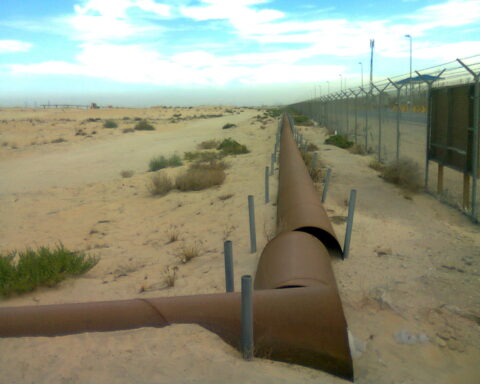
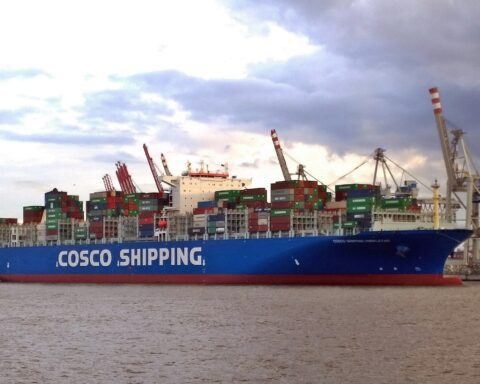
JEDDAH — Saudi Arabia’s East-West Pipeline has reached its theoretical maximum of 7 million barrels per day, but the oil has nowhere to go fast enough. Yanbu, the Red Sea port where the pipeline terminates after 1,200 kilometres, has a nominal loading capacity of roughly 4.5 million bpd across its two terminals — and an effective wartime throughput closer to 4 million bpd. The 7 million bpd headline, celebrated across energy markets on March 28, is an engineering achievement disconnected from a port logistics reality: Aramco is pumping crude to the coast faster than tankers can carry it away.
The gap matters because every barrel that reaches Yanbu but cannot load onto a tanker becomes a storage cost, a production constraint, or a forced output cut upstream. With Brent crude at $112.57 per barrel (CNBC, March 28) and the Strait of Hormuz carrying just five vessel transits per day — down from 125 before the war (Kpler data) — the Yanbu bottleneck is not an inconvenience. It is the binding constraint on the world’s most important wartime oil bypass. And now the Houthis, who launched ballistic missiles at Israel on March 28, threaten to turn the Red Sea itself into a second chokepoint.
In this article:
- The Pipeline Achievement and Its Limits
- What Can Yanbu Actually Load in a Day?
- The Tanker Queue and the Storage Squeeze
- How Wide Is the Gap Between Pipeline and Port?
- Why the Houthis Make Yanbu a Double Bottleneck
- What Would Aramco Need to Build to Close the Gap?
- The Revenue Cost of the Bottleneck
- Oil Market Implications of a Hard Ceiling
- Frequently Asked Questions
The Pipeline Achievement and Its Limits
The East-West Crude Oil Pipeline — known as the Petroline — hit 7 million bpd on March 28, 2026, according to Bloomberg. Aramco CEO Amin Nasser had announced on March 10 that full capacity would be reached “in the next couple of days,” and by March 11 the pipeline was running at its emergency maximum (S&P Global, March 10). The feat required converting accompanying natural gas liquids pipelines to carry crude, a measure that sacrifices NGL export revenue for raw throughput.
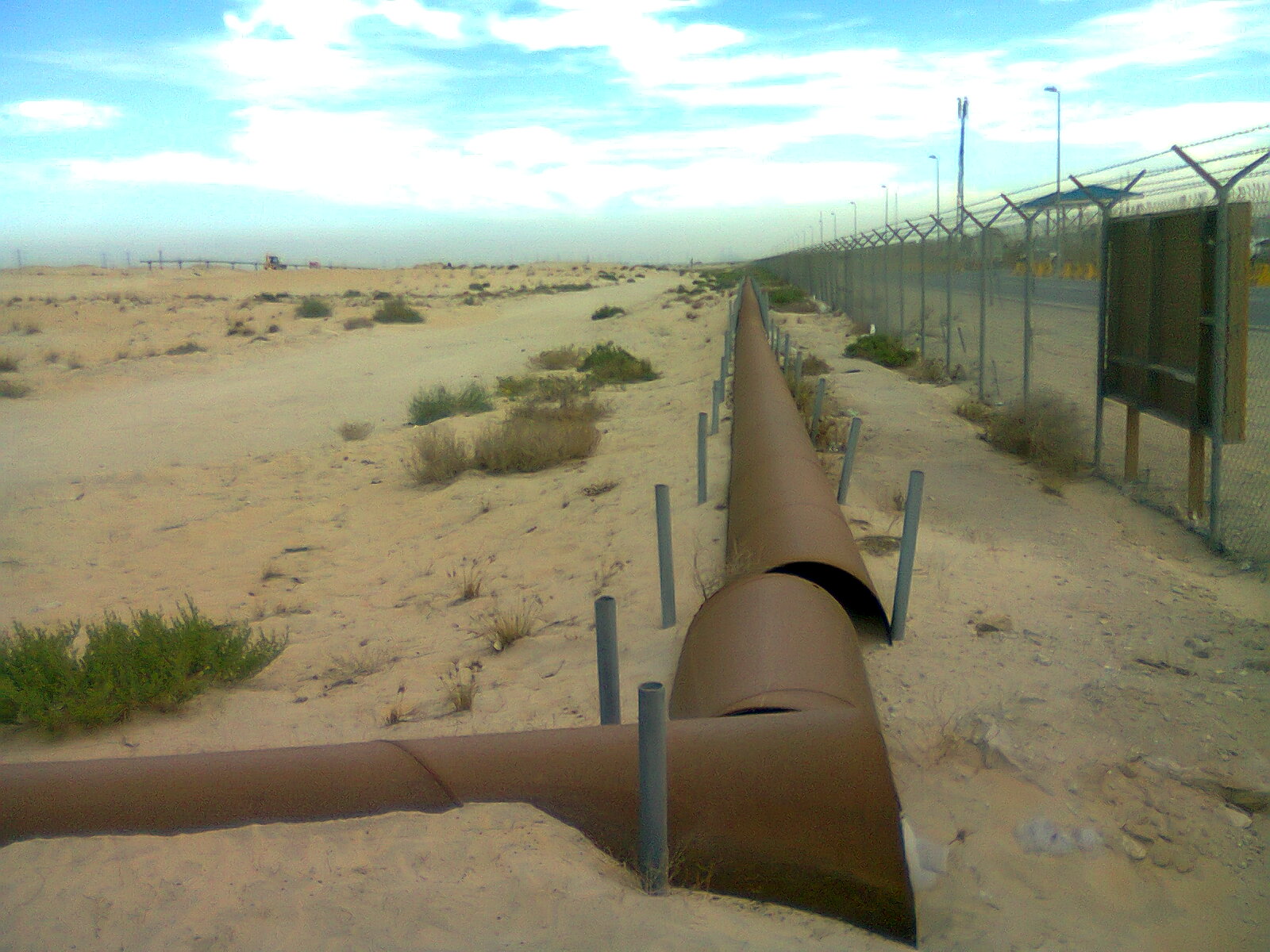
The pipeline runs 1,201 kilometres from the Abqaiq processing centre in the Eastern Province to Yanbu on the Red Sea. Saudi Arabia built it during the 1980-88 Iran-Iraq Tanker War for precisely this scenario — a Strait of Hormuz closure forcing Gulf producers to find alternative export corridors. For most of the past four decades, the Petroline ran well below capacity. Peacetime flows averaged roughly 2-3 million bpd, with Yanbu primarily serving as a petrochemical and refining hub rather than a frontline crude export terminal.
The war changed that calculus overnight. When the Ras Tanura terminal went offline on March 2 after Iran-linked drone strikes, Aramco activated its full contingency ramp-up. Within nine days, the pipeline was carrying more than double its peacetime volume. By March 28, it reached the 7 million bpd ceiling that Aramco had spent years engineering as a theoretical maximum.
But a pipeline is not an export terminal. It moves oil from one geography to another. The oil still needs to load onto tankers, and that is where the arithmetic breaks down.
What Can Yanbu Actually Load in a Day?
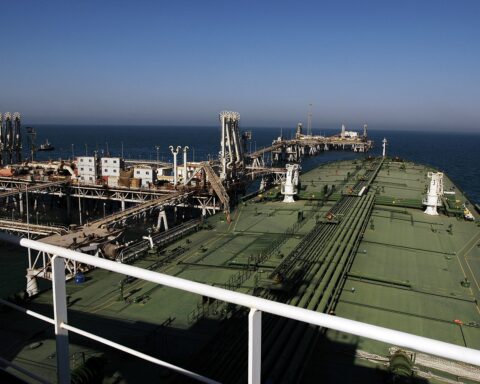
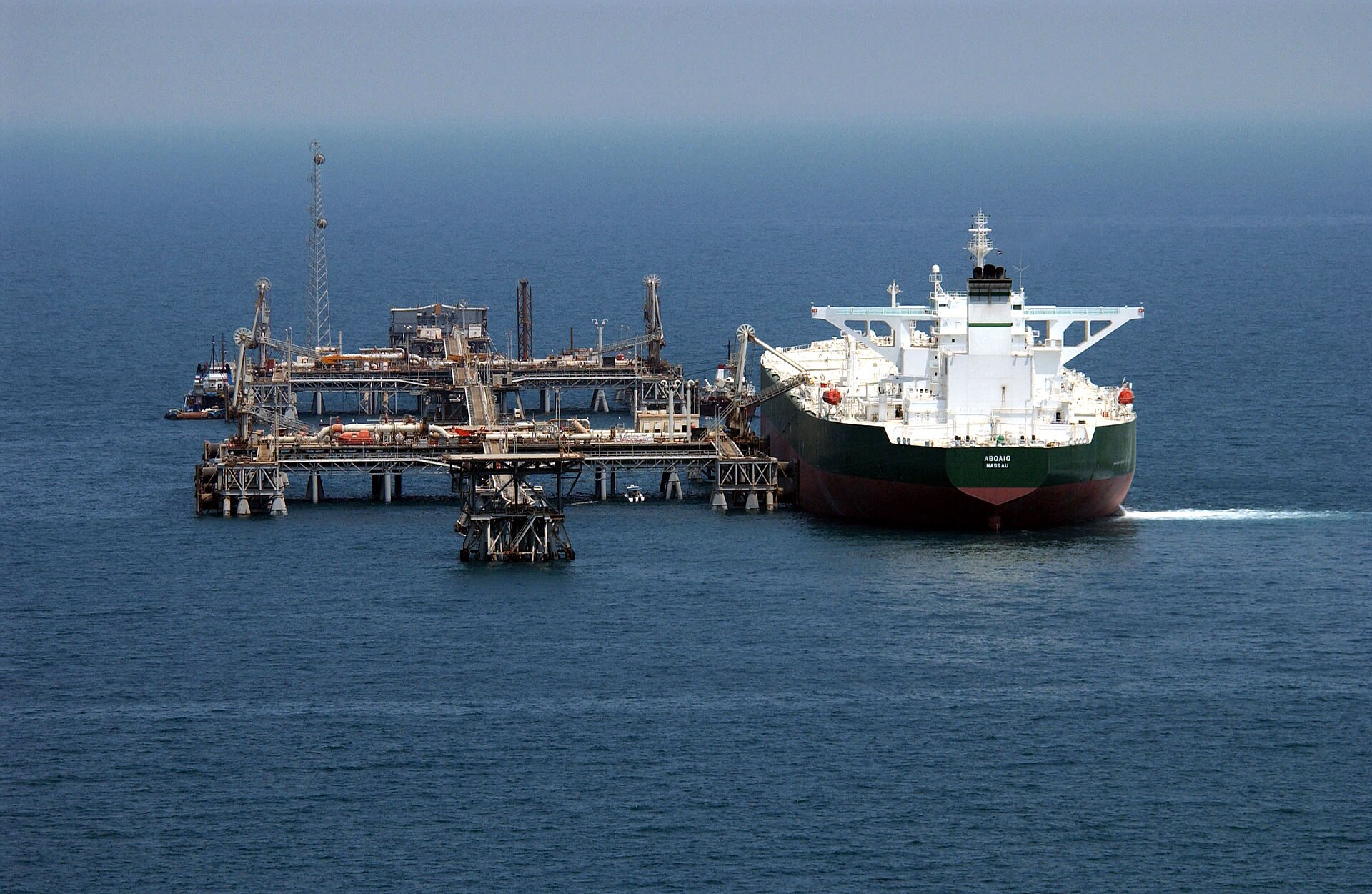
Yanbu’s nominal combined loading capacity across its two crude export terminals is approximately 4.5 million bpd, according to Argus Media. Yanbu North Terminal, the older facility, contributes roughly 1.5 million bpd. Yanbu South Terminal — commissioned in October 2018 when Aramco loaded its first VLCC there — adds 3 million bpd (Aramco, 2018). Together, the two terminals operate seven dedicated VLCC berths, each theoretically capable of loading one very large crude carrier per day under optimal conditions.
The word “theoretically” carries weight. Each crude oil loading arm at Yanbu handles a maximum flow rate of 33,000 barrels per hour. A four-arm berth achieves 132,000 bph at peak throughput. Loading a standard VLCC carrying 2 million barrels therefore takes approximately 15-16 hours — before factoring in berthing, unberthing, terminal scheduling, weather delays, and the inevitable friction of wartime operations.
In practice, Yanbu’s effective wartime throughput is lower than the nominal 4.5 million bpd. Vortexa estimated the operational ceiling at 3-4 million bpd under sustained wartime conditions. A Kpler analyst projected exports could reach “around 5 million bpd by the end of the month,” which would represent Yanbu’s absolute loading maximum when refined products and condensate are included alongside crude.
The distinction between nominal and operational capacity is not academic. Yanbu North Terminal, built in the 1980s, was designed for a lower throughput era. Its infrastructure — jetties, tank farms, marine channels — reflects the engineering assumptions of a port meant to handle 1.5 million bpd as a backup, not 4-5 million bpd as a primary export corridor. Yanbu South is newer and more capable, but even it was designed to supplement Gulf coast exports, not replace them entirely.
The Tanker Queue and the Storage Squeeze
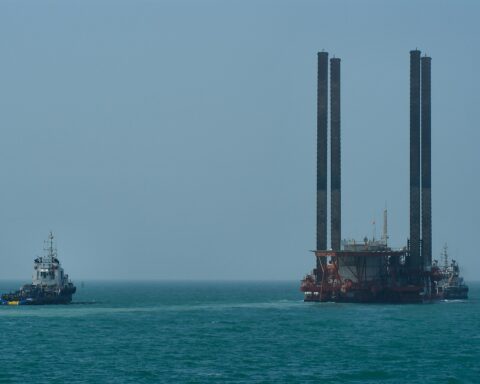
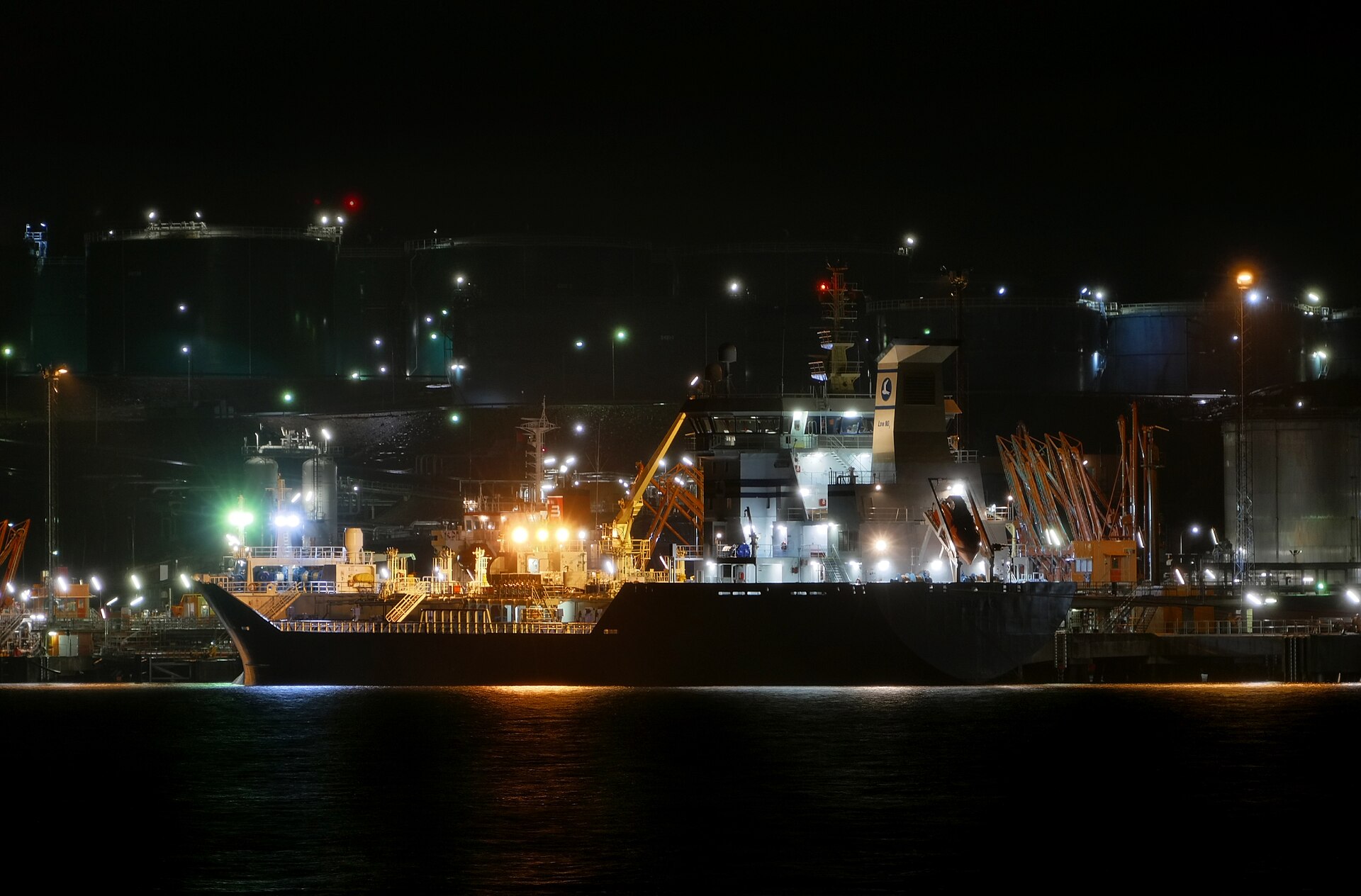
The mismatch between pipeline input and port output has produced a visible symptom: tankers stacking up offshore. As of mid-March, at least 40 VLCCs — each capable of carrying roughly 2 million barrels — were anchored near Yanbu waiting to load, according to Bloomberg vessel-tracking data. By March 13, that number had risen to 50 supertankers heading toward the port (Maritime Executive). The queue is not a sign of abundant supply reaching market. It is a sign of a port choking on more oil than it can physically dispatch.
Yanbu’s tank farm storage currently holds approximately 22 million barrels, roughly 60 percent of capacity (Argus Media). That buffer is eroding. The gap between what the pipeline delivers and what the port can load — quantified in the next section — must either go into storage, feed the adjacent Yanbu refineries, or force Aramco to throttle the pipeline back.
Aramco has limited options. The kingdom has already cut oil output from approximately 10.1 million bpd in February to an estimated 8 million bpd as of mid-March — a 20 percent reduction representing the sharpest involuntary decline since Iraq’s invasion of Kuwait in 1990 (Rystad Energy). Four supergiant offshore fields — Safaniya, Marjan, Zuluf, and Abu Safa — have been idled entirely, removing an estimated 2-2.5 million bpd from production (Maritime Executive, March 27).
The production cuts are partly a response to the Hormuz closure eliminating Gulf coast export capacity. But they also reflect an upstream acknowledgement that Yanbu cannot absorb everything the pipeline can deliver. Cutting production is the pressure-release valve when the port terminal is the bottleneck.
How Wide Is the Gap Between Pipeline and Port?
The gap between the Petroline’s 7 million bpd capacity and Yanbu’s effective loading throughput of 4-4.5 million bpd is approximately 2.5-3 million bpd. That is not a rounding error. It is roughly equivalent to the entire daily oil output of Iraq’s southern fields, or more than the total daily production of the United Arab Emirates.
| Metric | Volume (bpd) | Source |
|---|---|---|
| Petroline maximum capacity | 7,000,000 | Bloomberg, March 28 |
| Yanbu nominal loading capacity | ~4,500,000 | Argus Media / Aramco |
| Yanbu operational wartime capacity | ~3,000,000-4,000,000 | Vortexa estimate |
| Actual Yanbu crude exports (week of March 16) | ~4,000,000 | Kpler, LSEG, Clarksons |
| Yanbu exports (week ending March 22) | 4,100,000 (crude + condensate) | Lloyd’s List |
| Pipeline-to-port gap (nominal) | ~2,500,000 | Calculated |
| Pipeline-to-port gap (operational) | ~3,000,000-4,000,000 | Calculated |
The progression of actual export data tells the story of a port being pushed to its physical limits. In early March, Yanbu averaged 2.2 million bpd (Kpler). By the week of March 12, that rose to 2.9 million bpd. The week of March 16 saw near 4 million bpd. By March 22, Lloyd’s List reported 4.1 million bpd of crude and condensate loaded — more than triple Yanbu’s full-year 2025 average of 1.3 million bpd.
That 4.1 million bpd figure is approaching the hard ceiling. Bloomberg reported combined flows through Yanbu at approximately 5 million bpd of crude plus 700,000-900,000 bpd of refined products, but the crude-only loading rate — the metric that matters for global supply replacement — appears to have plateaued near 4 million bpd.
Engineering News-Record captured the structural problem (March 2026): “Hormuz bypass infrastructure was sized for a short disruption. This is not that.” The pipeline can deliver. The port cannot dispatch. And the gap between the two is measured not in engineering deficiencies but in missing berths, insufficient storage, and tanker scheduling physics.
Why the Houthis Make Yanbu a Double Bottleneck
On March 28, Yemen’s Houthi movement launched a barrage of ballistic missiles at targets in southern Israel — their first major strike since the Iran war began on February 28. The attack announced the Houthis’ formal entry into the conflict as an Iranian-aligned belligerent (Washington Post, March 28). For Yanbu, the implications are direct and severe.
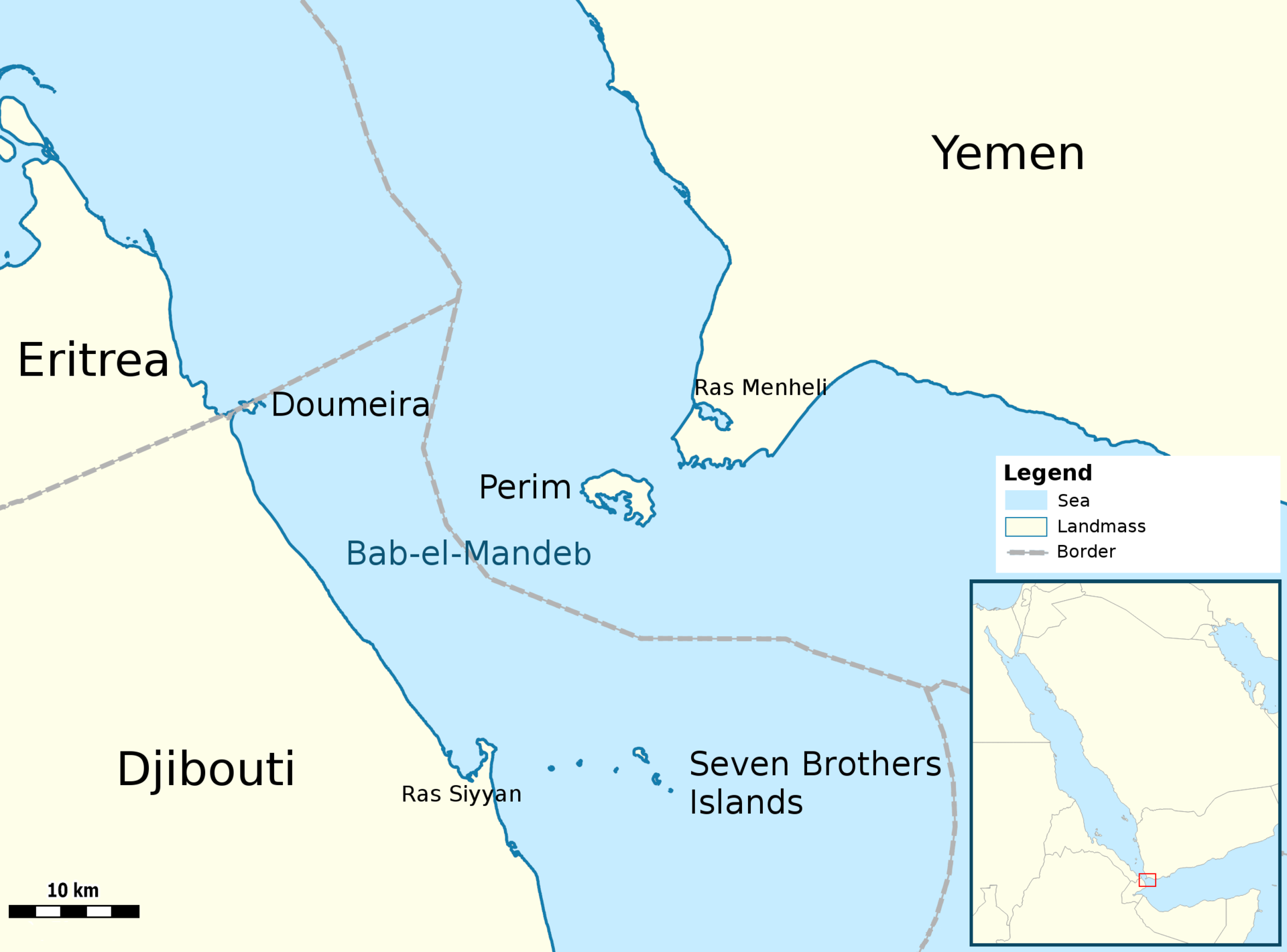
Every tanker that loads at Yanbu must transit the Red Sea. Heading north to the Suez Canal or south through the Bab al-Mandab Strait, the vessels pass through waters where the Houthis demonstrated their strike capability extensively during the 2023-2025 Red Sea crisis. The group operates anti-ship ballistic missiles, sea drones (USVs), aerial drones (UAVs), and cruise missiles — all of which proved effective against commercial shipping during that campaign.
The Houthis have so far shown restraint toward Saudi-loading tankers. The Humanitarian Operations Coordination Center (HOCC), a Houthi-linked body, stated in mid-March that “there is no cause for concern in this regard, and at present there is no reason to prevent this trade from continuing” (Lloyd’s List). But the phrasing — “at present” — is a conditional permission, not a guarantee. Security consultants Diaplous issued an alert citing “credible threat indications” of a potential strike on Yanbu involving USVs, UAVs, missiles, or other attack forms (Maritime Executive).
The Houthis’ entry into the war transforms the Yanbu bottleneck from a logistics constraint into a security vulnerability. Even if the port can load 4.5 million bpd, the tankers carrying that crude into global markets face interdiction risk on both ends of the Red Sea. War risk insurance premiums have already surged. Gulf-transiting hull coverage now costs 0.8-1.5 percent of hull value, with some underwriters seeking 10 percent minimums (Lloyd’s List, March 23). Pre-war premiums ran at 0.15-0.25 percent — a forty-fold increase at the upper bound.
The situation changes by the day, if not the hour, and concerns about disruptions to this suddenly crucial Red Sea trade are rising.
— Lloyd’s List, March 2026
The fragile Saudi-Houthi detente that has held since the 2022 UN-mediated truce is the single most important variable in whether Saudi oil reaches global markets. If the Houthis begin targeting Yanbu-bound or Yanbu-departing VLCCs, the effective export capacity drops not because of port infrastructure but because tanker owners refuse to send vessels into a war zone at any insurance premium. The 2023-2025 Red Sea disruption proved that shipping companies will reroute rather than risk crews and hulls.
What Would Aramco Need to Build to Close the Gap?
Closing the 2.5-3 million bpd gap between pipeline capacity and port throughput would require a construction programme that cannot be executed under wartime conditions in any relevant timeframe. The minimum infrastructure additions include additional VLCC-capable berths at both Yanbu North and South terminals, expanded tank farm storage at the pipeline terminus, and potentially new Single Point Mooring (SPM) buoys offshore — the floating loading platforms that allow tankers to berth without entering harbour.
For context, the Ju’aymah terminal near Ras Tanura on the Gulf coast operates six SPM buoys for crude loading (Aramco terminal specifications). Yanbu’s current infrastructure relies primarily on jetty-based berths rather than SPM buoys, which limits the number of simultaneous loading operations. Adding SPM buoys at Yanbu would increase parallel loading capacity, but each buoy installation requires seabed surveys, mooring system fabrication, pipeline connections, and environmental approvals — a 12-18 month timeline under peacetime procurement conditions.
New VLCC berths are even more capital-intensive. Yanbu South Terminal’s 2018 commissioning — which added 3 million bpd of capacity — took years of planning and construction. Replicating that expansion to bridge the remaining gap would require dredging (Yanbu North’s berths accommodate vessels up to 500,000 DWT at 32 metres below LAT), new jetty construction, additional loading arms, and pipeline laterals connecting the new infrastructure to the existing tank farm.
| Required Infrastructure | Estimated Timeline | Impact on Capacity |
|---|---|---|
| Additional SPM buoys (2-3 units) | 12-18 months (peacetime) | +1.0-1.5 million bpd |
| New VLCC berths (2-3 berths) | 18-30 months (peacetime) | +1.5-2.0 million bpd |
| Tank farm expansion | 12-24 months | Buffer capacity, not throughput |
| Marine channel dredging | 6-12 months | Enables larger vessels at North terminal |
The timeline problem is acute. Even emergency procurement — skipping competitive bidding, airfreighting materials, running triple shifts — cannot deliver new VLCC berths in less than 12-18 months. The war is four weeks old. The oil market needs the capacity now. The infrastructure to provide it does not exist and cannot be built fast enough to matter for this crisis.
Saudi Arabia’s Red Sea pivot may ultimately prove permanent, as some analysts suggest. But the port infrastructure needed to make it work at full pipeline capacity is a post-war construction project, not a wartime solution.
The Revenue Cost of the Bottleneck
Every barrel that reaches Yanbu but cannot load onto a tanker represents foregone revenue at historically elevated prices. At Brent crude’s March 28 close of $112.57 per barrel, the 2.5-3 million bpd gap between pipeline capacity and effective port throughput translates to approximately $281-338 million per day in crude that cannot reach market through this corridor.
The calculation is simplified — not every barrel stuck at Yanbu is a barrel lost, since some feeds local refineries and some enters strategic storage. But the order of magnitude is instructive. Over a 30-day month, the Yanbu bottleneck removes $8.4-10.1 billion in potential export revenue from the supply chain. For a kingdom whose Aramco already reported a $12 billion annual profit decline in 2025, and whose wartime production cuts have already removed millions of barrels per day, the port constraint compounds an already severe fiscal shock.
Goldman Sachs projected Saudi oil output could fall 12 percent from the combined effects of the Hormuz closure, field shutdowns, and export bottlenecks. Qatar and Kuwait face even steeper declines of 25 percent or more, given their complete reliance on Gulf coast terminals with no pipeline bypass. The Yanbu bottleneck is Saudi Arabia’s problem specifically, but the revenue destruction ripples across OPEC’s fiscal planning.
VLCC charter rates reflect the imbalance. The VLCC Kalamos set a record on March 6 at $770,000 per day for a Yanbu-to-India west coast voyage (Breakwave Advisors). Rates on the Yanbu-Asia route peaked above $450,000 per day in early March before settling to approximately $200,000 per day as more vessels repositioned to the Red Sea (OilPrice, March 2026). Even the reduced rate is roughly three times the pre-war average for Middle East VLCC fixtures. The premium is a direct function of port congestion: tankers wait days to load, and waiting time is charterer cost.
Oil Market Implications of a Hard Ceiling
The Yanbu bottleneck establishes a hard ceiling on Saudi Arabia’s wartime export capacity that global oil markets have not fully priced. The 7 million bpd pipeline headline has been widely reported as evidence that the Hormuz bypass is working. The port throughput data tells a different story.
Saudi Arabia normally exports approximately 7.5 million bpd from all terminals combined. With Ras Tanura and the Gulf coast facilities offline, the kingdom’s entire export apparatus now runs through Yanbu — a port designed to handle, at most, 60 percent of that volume. Total Saudi crude exports in March fell to approximately 4.355 million bpd, according to Kpler, down from 7.1 million bpd in February. The Yanbu bottleneck accounts for a significant portion of that 2.7 million bpd decline.
The combined capacity of all three Hormuz bypass pipelines — the Saudi Petroline, the UAE’s ADCOP pipeline to Fujairah, and Iraq’s dormant Kirkuk-Ceyhan route — totals approximately 9 million bpd (Al Jazeera, March 27). The Strait of Hormuz normally handled roughly 20.5 million bpd. Even at full bypass capacity, the pipelines replace less than half the strait’s throughput. And each pipeline terminates at a port with its own loading constraints.
For Asian refiners — the primary customers for Saudi crude — the implications are immediate. Saudi oil exports to China and India are already falling amid the disruptions (Energy Planets). Yanbu-to-Asia voyage times are shorter than the traditional Persian Gulf-to-Asia route, but port congestion negates the transit-time advantage. A VLCC that waits three days at anchor before loading adds the equivalent of a full extra transit leg to its charter cost.
The insurance market adds another layer of cost. War risk premiums for Red Sea transits — already elevated from the 2023-2025 Houthi campaign — now face a second escalation trigger with the group’s March 28 missile strikes. If premiums reach the 5-10 percent of hull value that some underwriters have quoted for Gulf transits (David Osler, Lloyd’s List finance editor), a VLCC owner could face $15-30 million in war risk costs for a single Yanbu loading. At that price, some charterers will source crude from non-Middle East suppliers at a higher per-barrel cost rather than accept the combined risk of port delay and transit interdiction.
Iran’s position compounds the market distortion. Tehran has begun operating a yuan-based toll system at the Strait of Hormuz, allowing select Chinese, Russian, and allied vessels to transit while collecting fees. This creates a two-tier market: buyers with Iranian transit access receive Gulf-loaded crude at lower logistics cost, while buyers dependent on the Yanbu bypass face port congestion, Red Sea risk, and premium charter rates. The Yanbu bottleneck is not just a Saudi problem. It is a market-structure fracture that advantages Iran’s allies at the expense of the kingdom’s traditional customers.
The IEA declared the Hormuz closure the largest oil supply disruption in history. Within that disruption, the Yanbu bottleneck is the specific mechanism by which Saudi Arabia’s export capacity falls short of what the pipeline could theoretically deliver. The 7 million bpd number is real. The oil reaching market through Yanbu is roughly half that. The difference is the war’s silent tax on global supply.
Frequently Asked Questions
Can Saudi Arabia build a new Red Sea export terminal to relieve the Yanbu bottleneck?
Saudi Arabia has considered expanding Red Sea export capacity for years, and the NEOM industrial zone at Oxagon includes preliminary plans for a minerals and energy export port. However, no existing alternative Red Sea crude terminal operates at scale. Building a greenfield terminal with VLCC-capable berths, SPM buoys, tank farms, and pipeline connections would require 3-5 years under normal construction conditions. The kingdom’s post-war infrastructure priorities will almost certainly include Red Sea port expansion, but no relief is available within the current conflict’s timeframe.
How does the Yanbu bottleneck compare to the 1980s Tanker War situation?
During the 1980-88 Iran-Iraq War, Saudi Arabia built the Petroline specifically to bypass Hormuz, but the pipeline initially carried only 1.85 million bpd. The 1980s conflict disrupted but never fully closed the strait — approximately 80 percent of tanker traffic continued throughout the Tanker War. Today’s crisis is fundamentally different: Hormuz transits have dropped 95 percent (Kpler), the pipeline carries nearly four times its original volume, and the port that was adequate for a partial bypass is overwhelmed by a near-total one. The 1980s infrastructure solved a partial problem. The 2026 crisis demands a total solution that does not yet exist.
Are Houthis likely to attack Saudi-loading tankers at Yanbu?
The Houthis’ calculus is strategic rather than ideological. Attacking Saudi oil tankers would rupture the Saudi-Houthi detente that ended eight years of war in Yemen and could trigger direct Saudi military retaliation. The Houthis benefit from Saudi Arabia’s current non-belligerent status — Riyadh’s restraint keeps Houthi-controlled territory safe from Saudi air campaigns. However, Iranian pressure to escalate could override this calculus. The Houthis’ March 28 missile strikes on Israel suggest a willingness to accept escalation risk that did not exist two weeks earlier. Intelligence firm Diaplous has issued credible-threat alerts for the Yanbu area.
What happens to the excess oil that Yanbu cannot load?
Crude that arrives at Yanbu via the pipeline but cannot be loaded onto tankers follows three paths. First, it fills the Yanbu tank farm, which holds approximately 22 million barrels at 60 percent capacity with room for roughly 15 million more barrels before hitting physical limits. Second, it feeds the two major refineries at Yanbu — the Aramco-Sinopec YASREF refinery (400,000 bpd) and the Aramco-ExxonMobil SAMREF refinery (400,000 bpd) — which convert crude into diesel, gasoline, and jet fuel for domestic and export markets. Third, when storage fills and refineries are at capacity, Aramco must reduce pipeline throughput, which in turn forces production cuts at upstream fields.
Could floating storage relieve the Yanbu congestion?
Floating storage — holding crude on anchored VLCCs rather than in onshore tanks — is a common market response to port congestion, and some analysts expect Aramco to begin storing crude on vessels anchored off Yanbu. However, floating storage does not solve the export bottleneck; it merely transfers the storage location from onshore tanks to offshore hulls. Each VLCC used for storage is a VLCC unavailable for transport, tightening an already strained tanker market. At current VLCC day rates of $200,000-450,000, floating storage costs $6-13.5 million per month per vessel — an expensive stopgap that addresses symptoms rather than the loading-rate constraint.