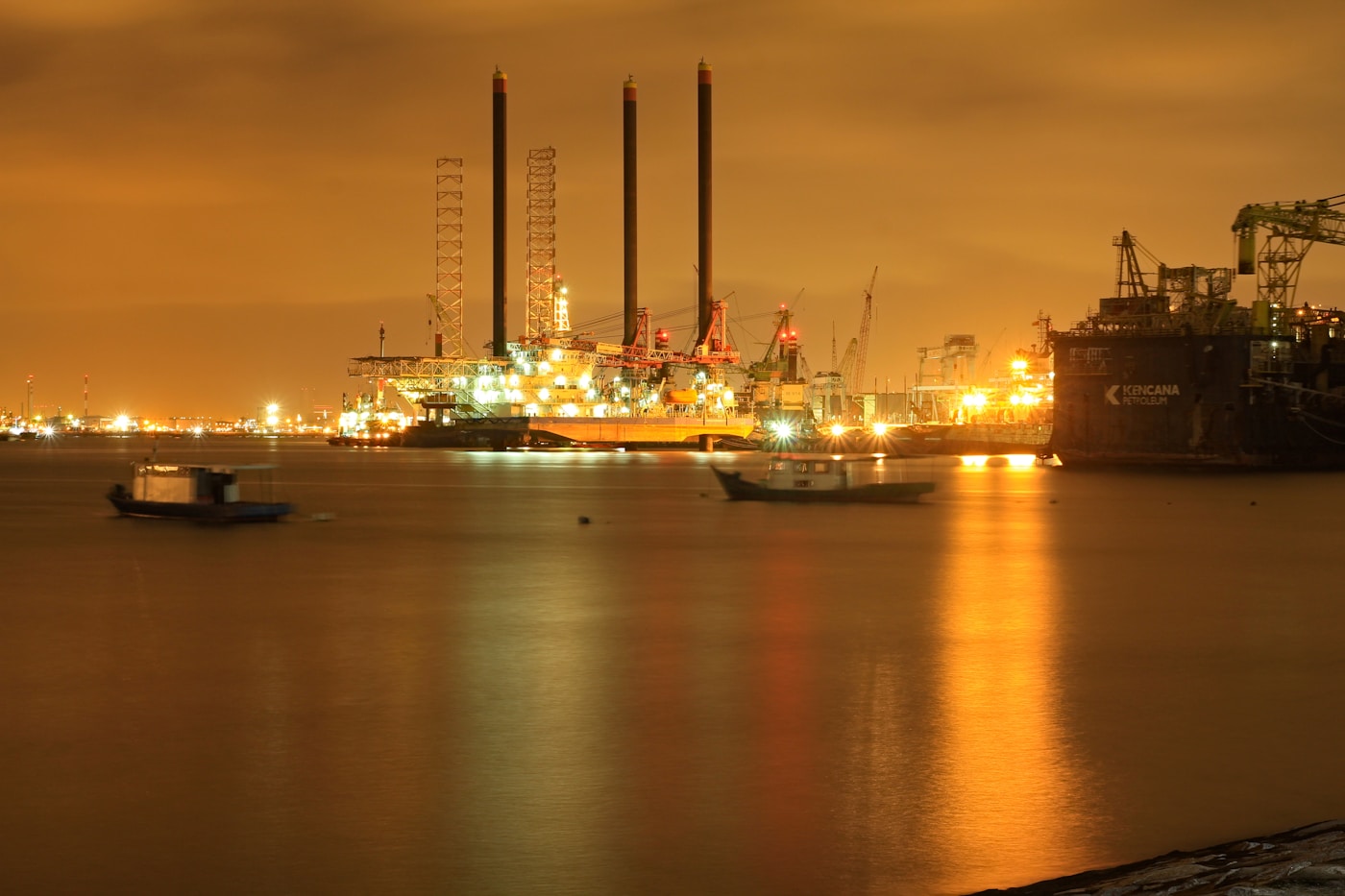

DHAHRAN — The conventional wisdom about Saudi Arabia’s Yanbu terminal goes something like this: the Kingdom is trapped. With the Strait of Hormuz sealed by Iranian naval mines, missile batteries, and the wreckage of at least three commercial tankers, Saudi Aramco can only push a fraction of its crude through a single 1,200-kilometre pipeline to the Red Sea coast. The bottleneck, analysts say, is a catastrophe — proof that decades of infrastructure planning failed to account for a full Hormuz closure. Saudi Arabia, the world’s swing producer, has been reduced to a trickle.
That narrative is wrong. Not because the bottleneck doesn’t exist — it does, and it is severe — but because it misreads who holds power when supply must be rationed. The Yanbu constraint has not diminished Saudi leverage. It has concentrated it. In the three weeks since Iran’s blockade turned the Persian Gulf into a no-go zone, Riyadh has quietly assembled something no OPEC+ quota negotiation ever delivered: the unilateral authority to decide which nations receive oil and which do not. The bottleneck is not a bug. It is, for Saudi strategic purposes, a feature.
What follows is an analysis of how pipeline physics became geopolitical currency — how a 48-inch steel tube running through the Najd desert handed Mohammed bin Salman more allocation power than the 1973 embargo ever gave King Faisal.
Table of Contents
- The Pipeline That Was Built for Exactly This Moment
- What Can Yanbu Actually Handle?
- The Contrarian Case: Why Scarcity Is Power
- The Allocation Leverage Index
- Who Gets Saudi Oil First — and Why?
- Does China’s Petro-Dependence Make It a Supplicant or a Partner?
- Can India Afford to Lose Its Saudi Allocation?
- Why Are Japan and South Korea the Most Vulnerable Buyers?
- Europe’s Strategic Irrelevance in the Yanbu Queue
- Is the UAE’s Fujairah Bypass a Real Alternative?
- The Pricing Weapon: Arab Light at $3.50 Over Benchmark
- The OPEC+ Fiction: Adding Barrels Nobody Can Ship
- The Structural Shift: From Swing Producer to Swing Allocator
- Frequently Asked Questions
The Pipeline That Was Built for Exactly This Moment
The East-West pipeline, formally known as the Petroline, was not built for peacetime convenience. It was built for war. In 1981, with the Iran-Iraq conflict escalating into what historians now call the first tanker war, Saudi Arabia commissioned a pipeline to bypass the Strait of Hormuz entirely. The logic was brutally simple: if Iran could threaten tankers in the Gulf, Saudi crude needed another way out.
The system runs 1,200 kilometres from the Abqaiq processing complex in the Eastern Province — the largest crude oil processing facility on Earth — across the Arabian Peninsula to the port of Yanbu on the Red Sea. It consists of two parallel lines: a 48-inch pipe and a 56-inch pipe, originally designed for crude oil. After a 2019 conversion, the system also handles natural gas liquids, bringing total throughput capacity to approximately 7 million barrels per day.
For four decades, the pipeline functioned as insurance — an expensive, underutilised hedge against a scenario most energy analysts considered improbable. Before the current crisis, Yanbu exported roughly 1.1 million barrels per day in February 2026, a modest fraction of the pipeline’s capacity. The bulk of Saudi exports — some 5.5 million barrels per day, accounting for 38 percent of all crude transiting Hormuz according to 2024 EIA data — moved through Gulf terminals at Ras Tanura, Ju’aymah, and Ras al-Khair.
Then, on February 25, Iran demonstrated that the scenario was not improbable at all. Within 72 hours of the first mines detonating in the strait, 150 freight ships — including dozens of oil tankers — sat stalled in Gulf waters. Commercial insurers pulled coverage. Shipping companies refused transit. The Strait of Hormuz, through which 88 to 90 percent of crude was destined for China, India, Japan, and South Korea, effectively closed.
Aramco CEO Amin Nasser, speaking at an emergency energy forum on March 10, confirmed that the East-West pipeline would hit full capacity “in the next couple of days.” Forty-five years after it was commissioned for exactly this contingency, the Petroline was finally doing its job.
What Can Yanbu Actually Handle?
This is where the arithmetic becomes uncomfortable. The pipeline can carry 7 million barrels per day. But the terminal at the other end cannot load that much crude onto tankers.
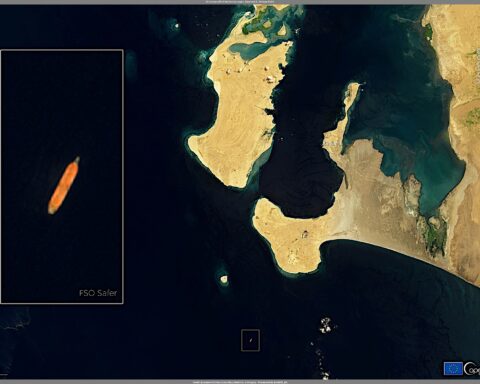
Yanbu’s port infrastructure is divided into two complexes. Yanbu North handles approximately 1.5 million barrels per day. Yanbu South, the larger facility, can process around 3 million barrels per day. Together, nominal terminal capacity sits at 4.5 million barrels per day. But market sources speaking to Argus Media put effective throughput — factoring in berth availability, tanker scheduling, weather, and crude grade segregation — at approximately 4 million barrels per day.
Kpler tanker tracking data for the first nine days of March showed Yanbu exports surging to 2.2 million barrels per day, a 220 percent increase over the 1.1 million barrels per day recorded in February. That ramp-up was achieved rapidly, but it still leaves Yanbu roughly 1.8 million barrels per day short of its practical ceiling — and approximately 1.5 million barrels per day short of what Saudi Arabia was exporting before the war through all terminals combined.
Saudi Aramco’s maximum sustained production capacity is 12 million barrels per day. Even if Yanbu operates at its theoretical maximum of 4.5 million barrels per day, the gap between what the Kingdom can produce and what it can export is 7.5 million barrels per day. The practical gap — between the roughly 4 million barrels per day that Yanbu can realistically handle and the 5.5 million barrels per day Saudi Arabia was exporting through Hormuz — is 1.5 to 2 million barrels per day of lost export capacity. Add in domestic refinery demand and the picture clarifies: Saudi Arabia faces a structural constraint of 2 to 3 million barrels per day that simply cannot reach the global market.
Bloomberg reported in the second week of March that Saudi Arabia had begun cutting oil output as the Hormuz blockade filled domestic storage to near capacity. Crude with nowhere to go was being shut in at the wellhead — an extraordinary reversal for a producer that had spent decades maintaining spare capacity as a badge of market reliability.
The Contrarian Case: Why Scarcity Is Power
The instinct of most market observers is to frame the Yanbu constraint as Saudi weakness. Reuters, the Financial Times, and at least three major investment banks have published analyses describing the Kingdom as “bottlenecked,” “constrained,” or “unable to meet its export commitments.” The framing implies helplessness — as if Saudi Arabia is a victim of its own infrastructure limitations.
Consider an alternative reading. When a commodity is abundant, the buyer holds leverage. They can shop around, play suppliers against each other, negotiate discounts. This was the world of 2024 and 2025, when OPEC+ members cheated on quotas, Russian crude flooded Asian markets at steep discounts, and Saudi Arabia was forced to cut its official selling prices month after month to defend market share.
When a commodity is scarce and controlled by a single allocator, the dynamic inverts. The seller — or more precisely, the allocator — decides who receives supply. Buyers compete not on price alone but on strategic value. They offer concessions. They accelerate diplomatic timelines. They sign defence contracts. They vote the right way at the United Nations.
The Yanbu bottleneck did not weaken Saudi Arabia’s hand. It turned Riyadh from a price-taker competing for market share into a supply allocator choosing its partners. This is 1973 in reverse: instead of withholding oil as punishment, Saudi Arabia is distributing scarce oil as a reward.
— House of Saud analysis
The analogy to 1973 is instructive, but the mechanism is different. King Faisal’s embargo was a blunt instrument: Arab producers collectively withheld oil from the United States and the Netherlands to punish their support for Israel. It was punitive, visible, and politically costly. The Yanbu allocation is none of those things. Saudi Arabia is not withholding oil from anyone. It is simply unable to export enough to satisfy all buyers — a constraint imposed by physics, not politics. The political decision is who gets the barrels that are available.
This distinction matters enormously. An embargo invites retaliation. An allocation driven by infrastructure constraints invites supplication. Countries that want Saudi crude are not protesting at the UN. They are sending envoys to Riyadh, offering arms deals, pledging diplomatic support for Saudi positions on Yemen, on normalization with Israel, on the energy transition, and on postwar Gulf security architecture.
Prince Abdulaziz bin Salman, the oil minister, has said nothing publicly about allocation criteria. He does not need to. The criteria are visible in the diplomatic traffic. Buyers who submitted their April allocation plans by the March 13 deadline — as Aramco required — know that the allocation is not purely commercial. It never was.
The Allocation Leverage Index
To understand how Riyadh is likely distributing its constrained Yanbu barrels, it helps to assess each major buyer across four dimensions that track the factors Saudi decision-makers weigh — whether they articulate them publicly or not. This framework, which we call the Allocation Leverage Index, ranks buyer nations on strategic alignment, payment reliability and willingness to pay a premium, access to alternative supply, and military or diplomatic reciprocity.
| Factor | China | India | Japan | South Korea | Europe (EU) |
|---|---|---|---|---|---|
| Strategic Alignment with KSA | 4 | 3 | 3 | 3 | 2 |
| Payment Reliability / Premium Willingness | 5 | 2 | 5 | 5 | 4 |
| Alternative Supply Access | 4 | 3 | 1 | 1 | 4 |
| Military / Diplomatic Reciprocity | 3 | 2 | 4 | 4 | 3 |
| Composite Score | 16 | 10 | 13 | 13 | 13 |
The scores tell a story that defies the simple assumption that the biggest buyer gets the most oil. China is Saudi Arabia’s largest customer — 25.6 percent of Saudi exports in the first half of 2025, or roughly 1.7 to 1.8 million barrels per day — and it scores highest on the composite index. But China also has the most alternatives: Russian pipeline crude via ESPO, sanctioned Iranian barrels purchased at deep discounts through intermediaries, and a sprawling strategic petroleum reserve estimated at over 900 million barrels.
India, the third-largest buyer at 10.5 percent of Saudi exports, scores lowest. New Delhi has been a persistent discount hunter, frequently pivoting to cheaper Russian and Iraqi crude. Its diplomatic alignment with Riyadh is real but shallow, lacking the military dimension. India’s alternative supply access is moderate — Russian crude arrives, but in limited volumes and with logistical complications.
Japan and South Korea occupy a precarious middle ground. Both are reliable payers willing to accept premiums. Both have minimal alternative supply — neither has pipeline access to any producing region, and both depended overwhelmingly on Gulf crude shipped through Hormuz. Their military and diplomatic reciprocity scores are high: both host American bases that underpin the Gulf security order, and both have made visible diplomatic gestures toward Riyadh since the crisis began. But their vulnerability is the highest of any major buyer, which paradoxically makes them the most likely to offer the most in exchange for guaranteed allocation.
Who Gets Saudi Oil First — and Why?
Aramco’s April allocation notices, sent to term contract holders after the March 13 deadline, were not made public. But fragments have leaked through trading desks, cargo manifests, and diplomatic cables. The emerging picture suggests a three-tier allocation system.
The first tier — full or near-full allocation — appears to include China and Japan. China’s allocation reflects volume reality: it is impossible for Saudi Arabia to cut its largest customer significantly without triggering a diplomatic rupture that Riyadh cannot afford. Japan’s allocation appears to reflect a different calculation: Tokyo has been the most aggressive bidder for Yanbu barrels, and Japanese refiners have reportedly accepted pricing premiums above the already-elevated official selling price.
The second tier — partial allocation with volume cuts of 15 to 25 percent — appears to include South Korea and select European buyers (primarily refiners in the Mediterranean basin, for whom Yanbu is geographically convenient). South Korea’s partial cut reflects its strategic importance as a US ally and defence partner, tempered by the simple fact that there are not enough barrels to give everyone full volumes.
The third tier — significant cuts of 30 percent or more — encompasses India and buyers in Southeast Asia. India’s deep cuts appear to confirm what many in Riyadh have long felt: New Delhi’s price-shopping habit, its continued purchases of sanctioned Russian crude, and its refusal to support Saudi positions on Yemen have made it a lower-priority buyer when barrels are scarce. The allocation hierarchy hardened further in late March when Aramco cut oil supply to Asia for a second consecutive month, signalling that the Yanbu-only export regime and its 39 percent decline in total shipments would persist well into April.
This allocation hierarchy is unprecedented. Even during the 1990-91 Gulf War, when Iraqi and Kuwaiti production was knocked offline, Saudi Arabia increased output and distributed crude through functioning Gulf terminals. The current crisis is the first time in the history of the modern oil market that the world’s largest exporter has been forced to ration supply through a single export corridor — and choose winners and losers.
Does China’s Petro-Dependence Make It a Supplicant or a Partner?
China received 25.6 percent of Saudi crude exports in the first half of 2025, making it by far the Kingdom’s largest customer. In absolute terms, Saudi Arabia shipped 1.7 to 1.8 million barrels per day to Chinese refiners — volumes that cannot be easily replaced, even by a country with China’s diversified import portfolio.
The Hormuz closure hit Chinese refiners with particular force. Before the blockade, 88 to 90 percent of crude transiting the strait was destined for Asian buyers, with China absorbing the single largest share. Beijing’s immediate response was to accelerate purchases of Russian crude via the ESPO pipeline and to increase liftings of discounted Iranian crude — barrels that, paradoxically, continue to flow through intermediary channels even as Iran’s own military action sealed the strait.
But Russian pipeline crude has a ceiling. ESPO delivers roughly 1.6 million barrels per day, and much of that capacity is already committed. Seaborne Russian crude from the Baltic and Black Sea faces its own logistical constraints and lengthy transit times. Iranian crude purchased through sanctions-evading networks is unreliable by definition.
The result is that China needs Saudi barrels more than its diplomatic posture suggests. Beijing’s public stance — calling for “restraint from all parties” and declining to support the US-led naval operation — has frustrated Washington but has not alienated Riyadh. Saudi-Chinese relations operate on a separate track, grounded in mutual economic dependence rather than military alliance. The blockade’s impact on the petrodollar system has, if anything, accelerated the bilateral currency diversification that both sides have pursued since 2023.
China’s Allocation Leverage Index score of 16 — the highest of any buyer — reflects this complex reality. Beijing is too large to cut, too strategically important to alienate, and too well-supplied with alternatives to be truly desperate. The relationship is not supplication. It is mutual dependency with Saudi Arabia holding, for the first time, the marginally stronger hand.
Can India Afford to Lose Its Saudi Allocation?
India took 10.5 percent of Saudi crude exports in the first half of 2025 — a substantial volume, but one that Riyadh has long viewed as underperforming relative to the bilateral relationship’s potential. Indian refiners, led by state-owned Indian Oil Corporation and Bharat Petroleum, have been among the most aggressive shoppers in global crude markets, consistently pivoting to the cheapest available barrel.
When Russian crude flooded Asian markets in 2022 and 2023 at discounts of $15 to $25 below Brent, Indian refiners gorged on it. Saudi Arabia watched its India-bound volumes shrink. The message was clear: for India, price trumps partnership.
The Yanbu allocation has exposed the cost of that strategy. With Saudi Arabia rationing barrels, price sensitivity is a liability, not an asset. Sources at two Indian refining companies told Reuters in the second week of March that their April Saudi allocations had been cut by 30 to 40 percent compared to contractual nominations. India’s petroleum ministry convened an emergency meeting on March 11 to assess the shortfall.
India does have alternatives. Russian crude continues to arrive, and Indian refiners have relationships with producers in West Africa, Latin America, and the United States. But none of these sources can fully replace the volume, quality, and geographic proximity of Saudi crude. Arab Light — the benchmark grade that Aramco is prioritising for Yanbu exports — is a medium sour crude ideally suited to the complex refining configurations that dominate India’s Atlantic-facing west coast.
The allocation cut is a message. Riyadh is not punishing India — the constraint is real, and physical barrels are genuinely scarce. But the decision of where to direct those scarce barrels is discretionary, and India’s low score on the Allocation Leverage Index means it falls to the back of the queue. Whether New Delhi recalibrates its approach — offering defence contracts, supporting Saudi positions in multilateral forums, or simply paying higher premiums — will determine whether future allocations improve.
India’s negotiating position weakened further on 16 March when US strikes near Iran’s Chabahar port threatened to destroy New Delhi’s last independent energy corridor outside the Saudi-controlled Yanbu allocation system.
Why Are Japan and South Korea the Most Vulnerable Buyers?
Neither Japan nor South Korea has a pipeline connection to any oil-producing region. Both are island or peninsular economies entirely dependent on seaborne crude imports. Before the Hormuz closure, both sourced the overwhelming majority of their crude from Gulf producers — Saudi Arabia, the UAE, Kuwait, and Qatar — via tankers transiting the strait.
Japan imported 15.8 percent of Saudi exports in the first half of 2025, making it the second-largest buyer behind China. South Korea’s share was significant as well. For both countries, the Hormuz closure was not merely an inconvenience. It was an existential energy crisis.
Japan’s strategic petroleum reserve, one of the world’s largest at approximately 500 million barrels, provides a buffer — roughly 130 days of import cover at pre-crisis consumption rates. South Korea’s reserve is smaller but still substantial. But reserves are a stopgap, not a solution. Both countries need flowing supply, and with the IEA having already released a record 400 million barrels from member-state reserves, the cushion is thinner than it appears.
This vulnerability explains why Japan and South Korea score highest on the “Military/Diplomatic Reciprocity” dimension of the Allocation Leverage Index. Both have moved aggressively since the crisis began. Japan’s prime minister dispatched a special envoy to Riyadh within days of the Hormuz closure. South Korea offered naval assets — symbolically important, even if operationally limited — to support maritime security in the Red Sea, where the Houthi threat to Red Sea shipping routes has complicated Yanbu’s viability as an export corridor.
Both countries have also demonstrated willingness to pay premiums for guaranteed supply. Japanese refiners, according to Argus Media, accepted April cargoes at prices above Aramco’s already-elevated official selling price — a premium-on-a-premium that reflects the desperation of a buyer with no alternatives. The desperation is well founded: Goldman Sachs GDP projections for Gulf states show that the economic fallout from seventeen days of war has already eclipsed the damage Covid inflicted in 2020, with the worst pain concentrated in precisely the Hormuz-dependent economies that Japan and South Korea rely on for crude.
The irony is stark. Japan and South Korea, as close American allies with significant military relationships with Washington, have been unable to rely on American power to reopen the strait. The failure to assemble a coalition to reopen Hormuz has forced both countries to seek bilateral energy security arrangements with Riyadh — exactly the kind of dependency that Saudi strategic planners have long sought to cultivate.
Europe’s Strategic Irrelevance in the Yanbu Queue
Europe’s composite score of 13 on the Allocation Leverage Index masks a deeper problem: strategic irrelevance. European buyers — primarily Mediterranean refiners in Italy, Spain, Greece, and Turkey — have geographic proximity to Yanbu. A laden VLCC from Yanbu reaches the Mediterranean in 5 to 7 days, roughly comparable to transit times from North African producers. This logistical advantage should, in theory, make Europe a preferred buyer.
But Europe’s strategic alignment with Saudi Arabia has deteriorated over the past decade. European Parliament resolutions criticising Saudi human rights practices, arms export restrictions imposed after the Khashoggi murder, and the EU’s aggressive push for renewable energy — which Riyadh interprets as an existential threat to its economic model — have eroded the bilateral relationship. European leaders have been vocal about the war’s acceleration of the energy transition, a framing that strikes Saudi ears as opportunistic.
Europe also has alternatives that most Asian buyers lack. Norwegian crude, Kazakh pipeline oil via the CPC Blend, Azerbaijani BTC crude, and significant volumes of US shale exports provide a diversified supply portfolio. The EU is less dependent on Gulf crude than it was a decade ago, which means European buyers are simultaneously less desperate and less strategically valuable to Riyadh.
The result is that European allocations from Yanbu are likely modest — sufficient to maintain commercial relationships with established term contract holders but insufficient to replace the volumes that European refiners previously sourced from other Gulf producers through Hormuz. For Europe, the Yanbu queue is a secondary concern. For Saudi Arabia, Europe is a secondary customer. That dynamic became even more explicit on March 16, when European energy ministers meeting in Brussels acknowledged their growing dependence on the Yanbu corridor, with several member states pressing for direct government-to-government supply agreements with Riyadh to secure allocations that commercial channels alone could no longer guarantee.
Is the UAE’s Fujairah Bypass a Real Alternative?
Saudi Arabia is not the only Gulf producer with a Hormuz bypass. The UAE operates the Habshan-Fujairah pipeline, a 360-kilometre line connecting Abu Dhabi’s onshore oilfields to the port of Fujairah on the Gulf of Oman, outside the Strait of Hormuz. Since the blockade began, Fujairah exports have surged to 1.6 million barrels per day — a significant volume, but one that pales beside Yanbu’s throughput.
Fujairah’s advantage is geographic. Located on the Indian Ocean coast, it avoids both the Hormuz chokepoint and the Bab al-Mandab strait at the mouth of the Red Sea, where Houthi forces have periodically threatened shipping. For buyers concerned about Red Sea security — a legitimate worry given Iran’s selective enforcement at the strait and Houthi capabilities — Fujairah offers a marginally safer loading point.
But Fujairah has critical limitations. Its capacity ceiling of approximately 1.8 million barrels per day restricts how much crude ADNOC can reroute. Unlike Saudi Aramco, ADNOC has less production flexibility — the UAE’s maximum sustained capacity is roughly 4.2 million barrels per day, and its pre-war exports through Hormuz were substantial. The Fujairah bypass can handle perhaps 40 percent of UAE export volumes. The rest is stranded.
For global buyers, Fujairah and Yanbu together provide roughly 5.5 to 6 million barrels per day of bypass capacity — a significant volume but still far short of the approximately 17 million barrels per day that transited Hormuz before the war. The deficit of 11 to 12 million barrels per day from Iraq, Kuwait, Qatar, and the portions of Saudi and UAE production that cannot reach bypass terminals remains unresolved.
Fujairah does not meaningfully reduce Saudi leverage. If anything, the UAE’s limited bypass capacity reinforces the centrality of Yanbu. Saudi Arabia controls the largest bypass, the largest production capacity, and the largest portfolio of term contracts. The UAE is a complement, not a competitor, in the allocation hierarchy.
The Pricing Weapon: Arab Light at $3.50 Over Benchmark
In a paradox that has bewildered some market observers, Saudi Aramco cut its official selling price for Arab Light crude to Asia for April to $3.50 per barrel over the Oman/Dubai benchmark — the lowest premium in five years. With Hormuz closed and supply constrained, conventional logic would dictate that Aramco should raise prices, extracting maximum revenue from scarce barrels.
The pricing decision makes sense only in the context of the allocation strategy. Aramco is not trying to maximise per-barrel revenue. It is trying to maximise buyer dependence. A lower official selling price keeps term contract holders locked in — refiners who might otherwise scramble for alternative grades at any price remain tethered to Saudi crude because the headline price remains competitive. The allocation cut, not the price, is the binding constraint.
This is a sophisticated play. By keeping prices moderate, Riyadh avoids the political optics of profiteering during a crisis — a charge that would be levelled instantly by Washington, Brussels, and New Delhi. Simultaneously, the volume constraint ensures that Saudi Arabia captures the scarcity premium through the allocation mechanism rather than the pricing mechanism. Buyers who receive full allocations are getting crude at below-market clearing prices. Buyers who are cut must find replacement barrels at significantly higher spot market prices.
The effect is to create a two-tier market. Favoured buyers — those high on the Allocation Leverage Index — receive Saudi crude at $3.50 over benchmark. Disfavoured buyers pay whatever the frenzied spot market demands, which in the second week of March was running $8 to $12 per barrel above pre-war levels for comparable medium sour grades.
Aramco is also limiting which grades it offers through Yanbu. Reports indicate that only Arab Light and some Arab Extra Light are available — the most sought-after grades in the Saudi portfolio. Heavier and more sour grades, which require different pipeline specifications and blending infrastructure, are not flowing. This narrows the offering but concentrates quality, making the available barrels even more desirable to refiners configured for light-medium crude.
The OPEC+ Fiction: Adding Barrels Nobody Can Ship
Against the backdrop of the Hormuz crisis, OPEC+ announced in early March that member states would add 206,000 barrels per day of production in April — the first tranche of a previously agreed unwinding of voluntary cuts. The announcement drew immediate ridicule from energy traders and analysts.
The absurdity is structural. Iraq, Kuwait, and the UAE — three of the producers scheduled to add barrels — export primarily through the Strait of Hormuz. Adding production capacity is meaningless when the export route is closed. The barrels cannot reach the market. Iraqi production, in particular, has been effectively trapped since the blockade began, with the Basra terminal complex on the Gulf coast entirely inaccessible.
For Saudi Arabia, the OPEC+ announcement served a different purpose. Riyadh’s agreement to the production increase was a political gesture toward the United States, which had been pressuring OPEC+ to ease the global supply crunch. By nominally supporting additional barrels, Prince Abdulaziz bin Salman positioned Saudi Arabia as cooperative while knowing that the physical constraint at Yanbu — not the OPEC+ quota — would determine actual export volumes.
The gap between OPEC+ announcements and physical reality has never been wider. Quotas, compliance rates, and production targets — the traditional tools of oil market management — are irrelevant when the chokepoint is a loading terminal, not a wellhead. Saudi Arabia can produce 12 million barrels per day. It can export, at most, 4 million through Yanbu. The 8-million-barrel difference is the most significant spare capacity the world has never been able to access.
OPEC+ quotas are irrelevant when the constraint is not the wellhead but the loading berth. Saudi Arabia can produce 12 million barrels per day and export 4 million. The other 8 million are the most significant spare capacity the world has never been able to access.
— Energy market observation, March 2026
The Structural Shift: From Swing Producer to Swing Allocator
For decades, Saudi Arabia’s role in global oil markets was defined by a single concept: the swing producer. When the market was oversupplied, Saudi Arabia cut production. When the market was undersupplied, Saudi Arabia added barrels. The Kingdom’s spare capacity — typically 1.5 to 2 million barrels per day of production that could be brought online within 90 days — was the central bank of oil, providing liquidity to a volatile market.
The Hormuz crisis has transformed that role. Saudi Arabia is no longer the swing producer. It is the swing allocator. The distinction is profound.
A swing producer influences price through volume. More barrels lower the price; fewer barrels raise it. The mechanism is impersonal — Saudi production decisions affect all buyers equally, and the market clearing price adjusts accordingly. Individual buyers have no more or less access to Saudi crude than anyone else willing to pay the market price.
A swing allocator influences relationships through distribution. The total volume is fixed by the infrastructure constraint. The allocator decides who gets what share of that fixed volume. Buyers must compete not by bidding higher but by offering strategic value — defence cooperation, diplomatic alignment, investment in Saudi non-oil sectors, support for Saudi leadership of the Iran war‘s eventual resolution.
This shift has implications that extend far beyond the current crisis. If the Hormuz blockade persists for months — and military analysts increasingly believe it will — the allocation hierarchy that Saudi Arabia establishes in March and April 2026 will harden into a structural feature of global energy markets. Countries that secure guaranteed allocations now will build their refining, storage, and economic planning around Saudi supply. Countries that are cut will diversify away, permanently reducing Saudi market share in those destinations.
The strategic question for Riyadh is whether to optimise for short-term leverage — extracting maximum concessions from desperate buyers — or for long-term market position, maintaining broad-based supply relationships that preserve Saudi Arabia’s centrality even after Hormuz eventually reopens. The answer, as with most Saudi decisions, will likely be a blend of both, calibrated by Mohammed bin Salman‘s assessment of each buyer’s long-term value to the Kingdom’s Vision 2030 agenda.
One outcome is already clear. The Yanbu bottleneck has made Saudi Arabia more powerful, not less. In a world of abundant oil and open sea lanes, Saudi Arabia was one producer among many — the largest, the most important, but still subject to market competition. In a world of constrained supply and a single functioning export corridor, Saudi Arabia is the gatekeeper. The bottleneck is the gate.
That gate, however, proved vulnerable. On March 19, the drone strike on Yanbu’s Samref refinery demonstrated that Iran could reach the Red Sea bypass infrastructure that had become Saudi Arabia’s sole economic lifeline — transforming the bottleneck from a source of leverage into a single point of failure.
| Metric | Pre-War (Feb 2026) | During Blockade (Mar 2026) | Change |
|---|---|---|---|
| Total Saudi Exports | ~5.5 million bpd | ~2.2 million bpd (rising) | -60% (recovering) |
| Yanbu Exports | 1.1 million bpd | 2.2 million bpd | +100% (220% of baseline) |
| Gulf Terminal Exports | ~4.4 million bpd | 0 bpd | -100% |
| Yanbu Terminal Capacity (Effective) | 4.5 million bpd (nominal) | ~4 million bpd (practical) | Constraint binding |
| Pipeline Capacity (East-West) | 7 million bpd | 7 million bpd (full) | At capacity |
| Production Capacity (MSC) | 12 million bpd | 12 million bpd | Unused capacity growing |
| Export Gap (Produce vs. Export) | ~0 bpd | 2-3 million bpd | Structural deficit |
Frequently Asked Questions
How much oil can Saudi Arabia export through Yanbu?
Yanbu’s two terminal complexes — Yanbu North and Yanbu South — have a combined nominal capacity of approximately 4.5 million barrels per day. However, effective throughput, accounting for tanker scheduling, berth availability, and crude grade constraints, is closer to 4 million barrels per day according to Argus Media market sources. This is significantly less than the 5.5 million barrels per day Saudi Arabia was exporting through all terminals before the Hormuz blockade. The East-West pipeline itself can carry up to 7 million barrels per day, meaning the bottleneck is at the terminal, not the pipeline.
Why did Saudi Aramco cut its oil price during a supply crisis?
Aramco set its April official selling price for Arab Light to Asia at $3.50 per barrel over the Oman/Dubai benchmark — the lowest premium in five years. This counterintuitive move serves the Kingdom’s allocation strategy. By keeping the headline price competitive, Aramco ensures that term contract holders remain locked in rather than scrambling for alternatives. The scarcity premium is captured through the allocation mechanism — who receives barrels, not what they pay per barrel — rather than through the price itself. Buyers who receive full allocations get crude below the market clearing price. Those who are cut face significantly higher spot market costs.
Can other Gulf producers bypass the Strait of Hormuz?
The UAE operates the Habshan-Fujairah pipeline, which bypasses Hormuz by connecting Abu Dhabi’s onshore fields to the port of Fujairah on the Gulf of Oman. Fujairah has surged to approximately 1.6 million barrels per day since the blockade. However, no other Gulf producer — Iraq, Kuwait, or Qatar — has a functioning bypass. Iraqi crude from the Basra terminal complex is entirely stranded. Kuwait’s production is effectively landlocked. Together, Yanbu and Fujairah provide roughly 5.5 to 6 million barrels per day of bypass capacity against approximately 17 million barrels per day that previously transited Hormuz.
What happened to the 150 ships stalled at Hormuz?
As of mid-March 2026, approximately 150 freight vessels — including dozens of crude oil tankers, LNG carriers, and product tankers — remain stalled in Gulf waters near the Strait of Hormuz. Commercial insurers withdrew coverage for Hormuz transit after Iranian mines damaged three vessels in late February. Shipping companies have declined to risk transit without insurance, military escort, and confirmed mine clearance. The stalled fleet represents billions of dollars in stranded cargo and is contributing to a global shortage of available tanker tonnage, which has driven freight rates on non-Hormuz routes to record levels.
How long can IEA strategic petroleum reserves cover the shortfall?
The IEA coordinated a record release of 400 million barrels from member-state strategic petroleum reserves in early March. At the estimated global supply shortfall of 10 to 12 million barrels per day (the gap between what was transiting Hormuz and what bypass pipelines can handle), this reserve release provides approximately 33 to 40 days of cover. However, the release is not unlimited — IEA member states must maintain minimum reserve levels, and the political will to continue drawdowns diminishes as reserves fall toward those minimums. Japan’s reserve of approximately 500 million barrels, one of the largest, provides roughly 130 days of import cover at pre-crisis consumption, but Tokyo is unlikely to draw down to zero.
Is the Yanbu corridor itself at risk from Houthi attacks?
Yanbu sits on the Red Sea coast, approximately 1,000 kilometres from Houthi-controlled territory in Yemen. Houthi forces have demonstrated the ability to strike targets in the Red Sea with anti-ship missiles and drone boats, raising concerns about the security of tankers loading at Yanbu. However, the distance from Yemen, combined with Saudi air defences along the western coast and the presence of US and allied naval forces in the northern Red Sea, provides a meaningful security buffer. The greater risk may be to tankers after they depart Yanbu and transit the Bab al-Mandab strait at the southern end of the Red Sea, where Houthi capabilities are more concentrated. Some shippers have begun routing Yanbu-laden tankers north through the Suez Canal rather than south through Bab al-Mandab, adding cost but reducing risk.
On March 28, the calculus shifted again: the Houthis struck Israel with ballistic missiles and declared the Bab al-Mandab a legitimate closure target, threatening to trap Saudi oil between two chokepoints controlled by Iran and its proxies.
What grades of Saudi crude are available through Yanbu?
Aramco is currently offering only Arab Light and some Arab Extra Light through the Yanbu terminal. Heavier grades — Arab Medium and Arab Heavy — which were previously exported in significant volumes through Gulf terminals at Ras Tanura and Ju’aymah, are not flowing through the East-West pipeline in commercial quantities. This constraint narrows the range of crude available to global refiners and disproportionately affects complex refineries configured to process heavier, more sour crude grades. The grade limitation is a function of pipeline specifications and blending infrastructure at Yanbu, not a deliberate commercial choice by Aramco.