
Mecca (Makkah al-Mukarramah) is the holiest city in Islam and the spiritual centre of the Muslim world. Every year, millions of believers travel here to perform Hajj and Umrah — the two pilgrimages that define a Muslim’s relationship with this sacred city. Whether you are planning your first Umrah or preparing for the journey of a lifetime during Hajj season, this guide covers everything you need to know about visiting Mecca as a Muslim traveller: from the rituals inside Masjid al-Haram to the practical realities of hotels, transport, food, and budgeting. If you are visiting Saudi Arabia for pilgrimage, Mecca is where your journey begins and ends.
Best Time to Visit: October–April (cooler months, 25–35°C); Ramadan for spiritual intensity; Hajj 2026 dates: approximately 25–30 May 2026
Getting There: Fly to Jeddah (KAIA) then 80 km by road, or use the Haramain High-Speed Railway from Jeddah or Medina
Visa Required: Yes — Umrah e-visa or Hajj visa through licensed operator
Budget: $80–$200/day (budget to mid-range); $300–$600+/day (luxury near Haram)
Must-See: Masjid al-Haram and the Kaaba, Jabal al-Nour (Cave of Hira), Jabal Thawr
Avoid: Travelling without confirmed accommodation during Hajj season — prices triple and rooms sell out months in advance
Masjid al-Haram: The Grand Mosque
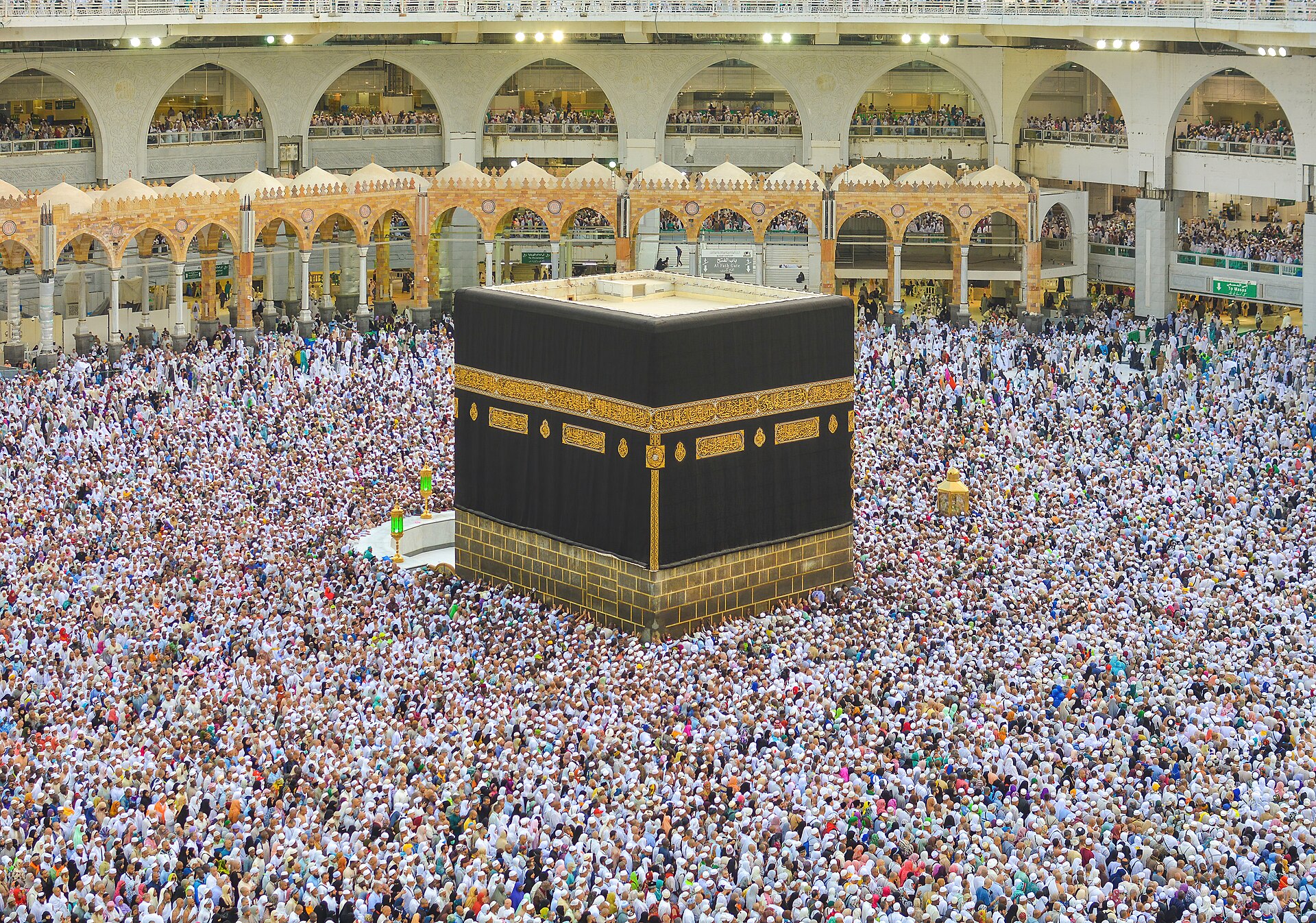
Masjid al-Haram is the largest mosque on Earth and the most sacred site in Islam. At its centre stands the Kaaba — the cubic structure towards which 1.8 billion Muslims direct their daily prayers. The mosque complex covers approximately 400,800 square metres, with a total prayer area of around 912,000 square metres following the Third Saudi Expansion (completed in 2025). During peak periods such as Hajj and the last ten nights of Ramadan, the mosque can accommodate up to four million worshippers across its indoor halls, external courtyards, and multiple floors.
The Grand Mosque has nine minarets, each standing 89 metres tall. The Mataf — the area immediately surrounding the Kaaba where Tawaf is performed — operates across multiple levels, including a rooftop area that is significantly less crowded than ground level. Dedicated lanes exist for wheelchair users and the elderly on all Mataf levels, and electric wheelchairs can be rented inside the mosque. For detailed rituals and step-by-step guidance, see our Umrah for First Timers guide.
The Kaaba
The Kaaba stands approximately 15 metres high with walls measuring roughly 12 metres by 10.5 metres. The Black Stone (al-Hajar al-Aswad) is set into the eastern corner, with an exposed face measuring approximately 20 cm by 16 cm. The Kiswah — the black silk cloth embroidered with gold Quranic verses — is replaced annually before Hajj. Inside the Kaaba (which is not accessible to ordinary visitors), the floor is marble and three wooden pillars support the roof.
The Safa and Marwa Corridor (Mas’a)
The Mas’a corridor connects the hills of Safa and Marwa inside the Grand Mosque complex. The distance between the two hills is approximately 450 metres, and the Sa’i ritual requires seven lengths — a total walking distance of roughly 3.15 kilometres. The corridor is 40 metres wide, spans four levels, and covers 87,000 square metres (expanded to 125,000 square metres under the King Abdullah expansion). Two sets of green fluorescent lights mark the section where, according to tradition, Hajar ran between the hills. Men are encouraged to jog between these green markers; women walk at their normal pace.
Zamzam Well
The Zamzam Well sits 20 metres east of the Kaaba. The well itself is approximately 30 metres deep with a diameter of 1.08 to 2.66 metres. It produces between 150,000 and 400,000 litres per day, depending on demand (output increases during Ramadan and Hajj). The water is mineral-rich — containing 93 mg/L calcium, 42 mg/L magnesium, and 210 mg/L sodium — and peer-reviewed studies confirm it is safe to drink. Zamzam water is freely available throughout the Grand Mosque via coolers and dispensers on every floor. You can fill containers to take home, though airlines have specific rules about carrying liquids.
Hajj Sites: Mina, Muzdalifah, and Arafat
The major Hajj rituals take place outside central Mecca across three key sites. Understanding the geography helps you prepare physically and mentally for the pilgrimage.
| Site | Distance from Grand Mosque | Key Ritual | Time Spent |
|---|---|---|---|
| Mina | 7 km | Stoning of the Jamarat, overnight stays | 3–4 nights |
| Muzdalifah | 10 km | Overnight stay, collecting pebbles | 1 night (can be shortened) |
| Arafat | 20 km | Wuquf (standing) — the climax of Hajj | Afternoon of 9th Dhul Hijjah |
Mina: The Tent City
Mina is a sprawling valley 7 km east of Masjid al-Haram that transforms into the world’s largest temporary city during Hajj. Over 100,000 permanent, fire-resistant, air-conditioned tents cover an area of 2.5 million square metres, housing up to three million pilgrims. Each tent measures 8 by 8 metres and accommodates 6 to 10 pilgrims. Your Hajj operator assigns you a specific tent — you do not choose your own.
The Jamarat Bridge is the five-level complex where pilgrims perform the stoning ritual. The bridge is 950 metres long and 80 metres wide, with a capacity of 300,000 pilgrims per hour. The three stoning pillars were replaced after 2004 with 26-metre-long walls for safety following crowd crush incidents.
The Plain of Arafat
The plain of Arafat lies 20 km southeast of Mecca and covers over 10.4 square kilometres. Standing at Arafat on the 9th of Dhul Hijjah is the single most critical ritual of Hajj — failing to be present invalidates the entire pilgrimage. Jabal ar-Rahmah (the Mountain of Mercy), where the Prophet Muhammad delivered his Farewell Sermon, rises approximately 70 metres above the plain. The Masha’er Railway connects Mina, Muzdalifah, and Arafat, carrying up to 150,000 pilgrims per hour with a journey time of roughly seven minutes between stations.
Muzdalifah
Muzdalifah is the open plain between Mina and Arafat, approximately 5 km from Mina and 8 km from Arafat. Pilgrims spend the night here under the open sky after departing Arafat, collecting pebbles for the stoning ritual at Mina. The area covers approximately 9.6 square kilometres. Women, the elderly, and those with health conditions can depart after midnight rather than waiting until dawn.
Sacred Historical Sites
Beyond the Grand Mosque and Hajj sites, Mecca holds mountains, caves, and mosques that shaped the earliest days of Islam. These are not mandatory parts of Hajj or Umrah, but visiting them deepens your connection to Islamic history.
Jabal al-Nour and the Cave of Hira
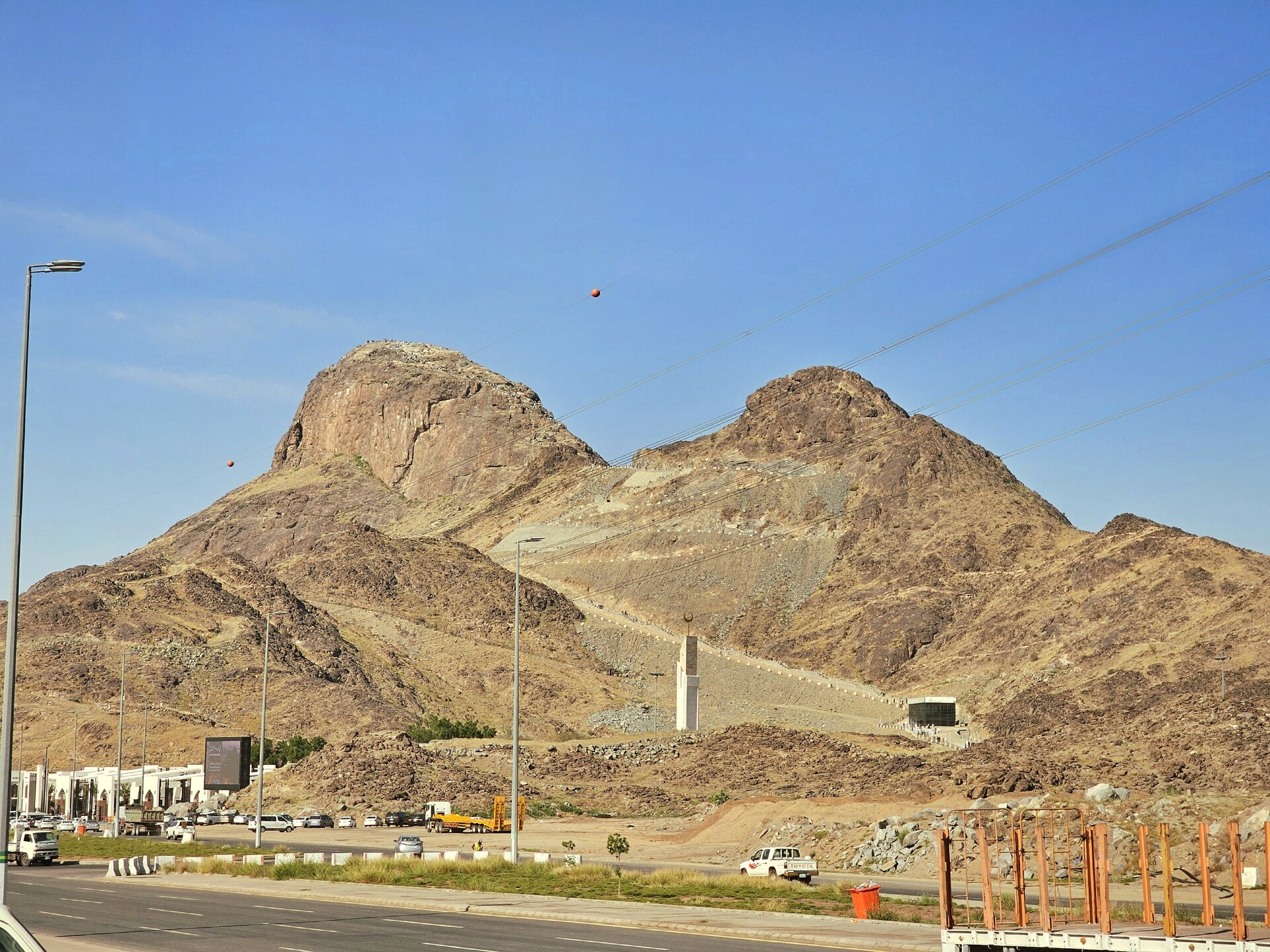
Jabal al-Nour (the Mountain of Light) rises 640 metres above sea level, located 4 km northeast of the Grand Mosque. The Cave of Hira sits at 270 metres on the mountainside — this is where the Prophet Muhammad received the first revelation of the Quran, the opening verses of Surah Al-Alaq, from the angel Jibra’il. The cave itself is modest, measuring approximately 3.7 metres in length and 1.6 metres in width. Reaching it requires climbing 1,750 steps, which takes between 30 minutes (for the fit and determined) to three hours. The Saudi government has recently improved access with a safer road section connecting the top with the main road. Start early in the morning to avoid the heat.
Jabal Thawr and the Cave of Thawr
Jabal Thawr stands 750 metres high, approximately 8 km south of central Mecca. The Cave of Thawr is where the Prophet Muhammad and Abu Bakr as-Siddiq hid for three nights during the Hijra (migration from Mecca to Medina) in 622 CE — one of the most significant events in Islamic history and the starting point of the Islamic calendar. The cave has two entrances, one from the east and one from the west. The climb is steeper and less developed than Jabal al-Nour and is not recommended for those with mobility issues.
Masjid at-Taneem (Masjid Aisha)
Located approximately 8 km from the Kaaba, Masjid at-Taneem serves as the nearest miqat (boundary point) where visitors already in Mecca can enter Ihram for a new Umrah. Named after Aisha bint Abu Bakr, the mosque was originally built in 834 CE and was reconstructed during the reign of King Fahd at a cost of approximately SAR 100 million. The mosque has two minarets, ample parking, and shops selling Ihram garments and Umrah supplies. Taxis from central Mecca cost around SAR 20–30 each way. For information on what to wear and pack, see our Umrah Packing List.
Masjid al-Jinn
Near Jannat al-Mu’alla cemetery, this modest mosque marks the site where, according to Islamic tradition, a group of jinn gathered to hear the Prophet Muhammad recite the Quran and later pledged allegiance to him. This event is referenced in Surah al-Jinn (Chapter 72). The mosque is one of the oldest in Mecca and can be visited briefly between prayers.
The Abraj al-Bait Clock Tower
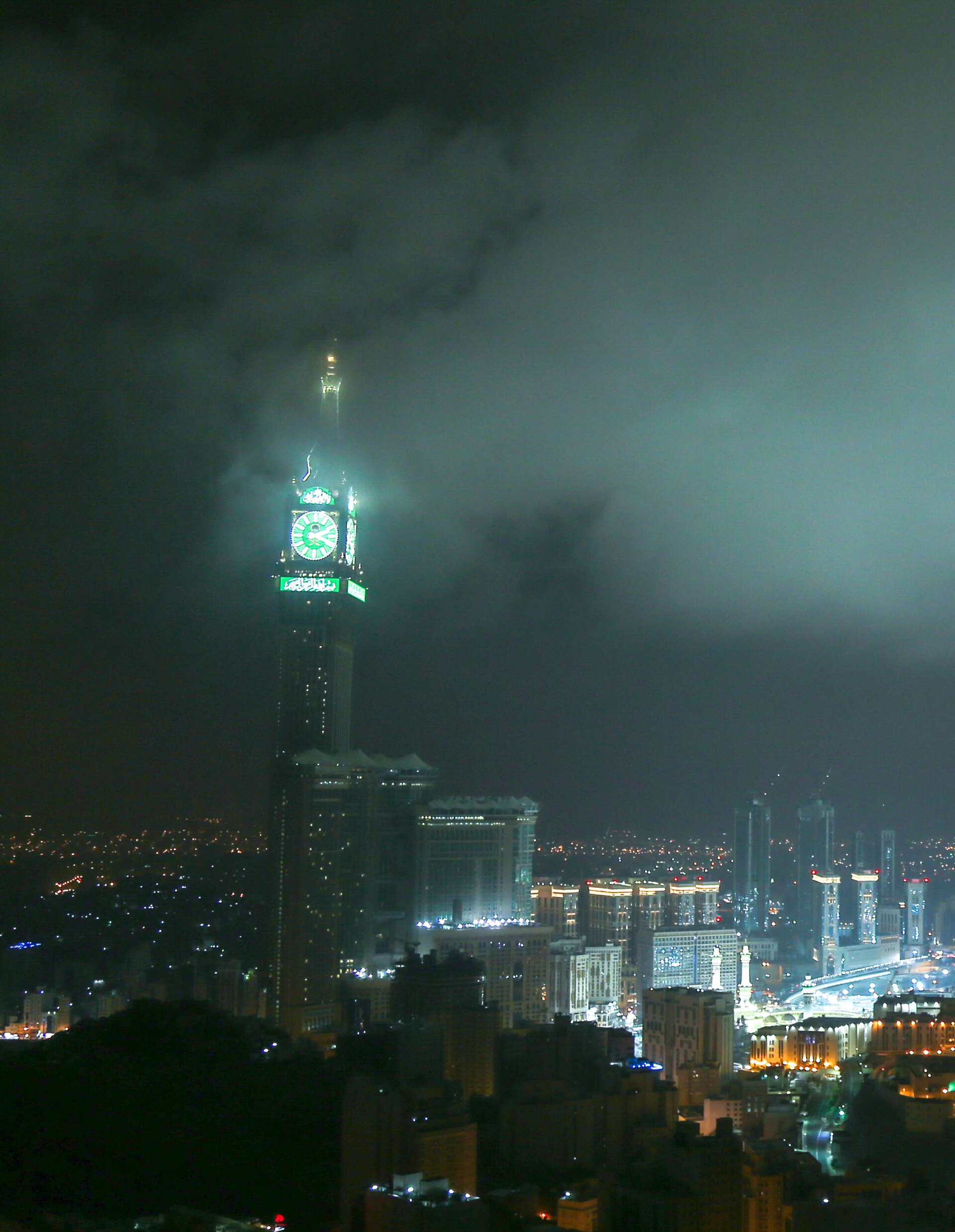
The Abraj al-Bait complex dominates the Mecca skyline. The central clock tower stands 601 metres tall — making it the tallest building in Saudi Arabia and the fourth tallest in the world. The clock face measures 43 by 43 metres, over five times larger than London’s Big Ben, and is visible from up to 25 km away. The complex sits just 300 metres from the Grand Mosque and contains seven towers with hotels, shopping malls, apartments, and a prayer hall at 592 metres elevation.
Clock Tower Museum
The top four floors of the clock tower house the Clock Tower Museum, operated by the Misk Foundation. Opened in May 2019, the museum covers four themed levels: the tower’s own construction and engineering, historical time measurement instruments, astronomical timekeeping using the sun and moon, and space and planetary science. The observation deck offers a panoramic view of the Grand Mosque and the Kaaba — the highest viewpoint in Mecca.
Museums and Cultural Sites
Exhibition of the Two Holy Mosques Architecture
Located in the Umm al-Joud area, this museum is divided into seven halls displaying artefacts dating back to 685 CE, including models of the Kaaba cladding (Kiswah), the old door of the Kaaba, rare photographs of the Two Holy Mosques, and a copy of the Uthmanic Quran (Mushaf Uthman). Established in 2000, admission is free, though it is primarily open on Fridays and Saturdays during Ramadan and Hajj seasons — a permit may be required at other times.
Hira Cultural District
Near Jabal al-Nour, the Hira Cultural District features immersive exhibitions exploring the story of revelation and the message of the Quran through historical artefacts and modern technology. This is a newer development aligned with Saudi Arabia’s Vision 2030 cultural initiatives.
Where to Stay in Mecca
Accommodation in Mecca revolves around one factor: distance from the Haram. Hotels within walking distance of Masjid al-Haram command premium prices, especially during Hajj and Ramadan. For a comprehensive comparison of accommodation across the Kingdom, see our Saudi Arabia Hotels Guide.
| Category | Examples | Price Range (per night) | Distance to Haram |
|---|---|---|---|
| Ultra-luxury | Fairmont Makkah Clock Royal Tower, Raffles Makkah Palace | $400–$2,500+ | Under 200 m |
| Upscale | Hilton Suites Jabal Omar, Conrad Makkah, Swissôtel Makkah | $158–$600 | 200–500 m |
| Mid-range | Elaf Kinda Hotel, Al Marwa Rayhaan, Makarem Ajyad | $80–$200 | 500 m – 1 km |
| Budget | Al Kiswah Towers, various apartment rentals in Al Aziziyah | $30–$80 | 2–5 km |
Booking tip: Prices during Hajj season can be 3–5 times higher than off-peak rates. The Hilton Suites Jabal Omar, for example, ranges from $158 to over $2,200 per night depending on the season. Book at least 4–6 months in advance for Hajj, and 2–3 months ahead for Ramadan. For a full cost breakdown including accommodation, see our Umrah Cost Guide.
Choosing a Neighbourhood
- Jabal Omar: The newest development adjacent to the Haram with upscale hotels, malls, and dining. Walking distance to the mosque.
- Ajyad: South of the Haram, slightly more affordable, with a mix of mid-range and budget hotels. A 5–10 minute walk to the mosque.
- Al Aziziyah: A popular budget area 3–5 km south. Hotels here are significantly cheaper, and free shuttle buses run to the Haram during peak seasons.
- Al Shisha / Ibrahim Khalil Road: Directly west of the Haram with a dense concentration of hotels at various price points.
Getting to Mecca
Mecca does not have its own commercial airport. All visitors fly into one of two gateways, then travel overland.
Via Jeddah (King Abdulaziz International Airport)
Jeddah’s airport is the primary gateway, located approximately 80 km west of Mecca. During Hajj season, a dedicated Hajj Terminal handles pilgrims. From the airport, you can reach Mecca by:
- Haramain High-Speed Railway: The train connects Jeddah Airport directly to Mecca, with a journey time of roughly 50 minutes. Tickets cost SAR 50–250 depending on class. This is the most comfortable option.
- SAPTCO bus: Regular services from the airport, SAR 25–50, taking 1.5–2 hours depending on traffic.
- Private taxi/Uber: SAR 150–250 from the airport to central Mecca. During Hajj, expect higher prices and longer journeys due to traffic.
Via Medina (Prince Mohammad bin Abdulaziz Airport)
Many pilgrims combine Umrah or Hajj with a visit to Medina. The Haramain Railway connects Medina to Mecca via Jeddah, with the full journey taking approximately 2.5 hours. For more transport options across the country, see Getting Around Saudi Arabia.
Important: Non-Muslims are not permitted to enter Mecca. Checkpoints on all roads into the city verify documentation. Ensure your visa type explicitly permits Mecca entry. For full visa details, see our Saudi Arabia Visa Guide.
Getting Around Mecca
Within Mecca, your options include:
- Walking: If your hotel is within 1 km of the Haram, walking is the best option. The pedestrian tunnels and flyovers make access safer.
- Taxi / Uber / Careem: Widely available and affordable. Expect SAR 10–30 for short trips within central Mecca. Ride-hailing apps work well and eliminate haggling.
- Al Mashaaer Al Mugaddassah Metro (Masha’er Railway): Operates during Hajj only, connecting Mina, Muzdalifah, and Arafat. Capacity of 150,000 pilgrims per hour, with a journey time of roughly 7 minutes between stations.
- Hotel shuttles: Many hotels run free shuttle services to the Haram, especially those in Al Aziziyah and other distant neighbourhoods.
Food and Dining
Mecca has no shortage of food options, from street-level restaurants to hotel dining rooms. Everything served in the city is halal. For a broader guide to Saudi cuisine, see our Saudi Arabia Food Guide.
Al Baik
No visit to Mecca is complete without eating at Al Baik — Saudi Arabia’s legendary broasted chicken chain. The Jabal Omar Mall branch near the Haram is the most popular location, though there are multiple outlets across the city including Ajyad Street and Al Aziziyah. Meals range from SAR 14 to SAR 25 — a generous portion of crispy chicken with fries, bread, and the famous garlic sauce. Expect queues during peak hours. Most branches open from 10 AM to 2 AM.
Other Dining Options
- Jabal Omar Mall food court: International chains and local restaurants, all within walking distance of the Haram.
- Ajyad Street restaurants: Dense concentration of affordable South Asian, Turkish, and Arab restaurants.
- Hotel restaurants: Most upscale hotels have buffet restaurants serving international cuisine. Expect SAR 100–250 per person at 5-star hotel restaurants.
- Street food: Fresh samosas, shawarma, roasted corn, and fruit juices from vendors near the Haram. Budget SAR 5–15 per snack.
Tip: During Ramadan, free iftar meals are distributed throughout the Haram and surrounding streets. Many local families and organisations set up food stations — you will never go hungry during Ramadan in Mecca.
Mecca Weather and Best Time to Visit
Mecca has a hot desert climate. Summer temperatures (June–September) regularly exceed 43°C (109°F) during the day. Winter (December–February) is far more comfortable, with daytime highs around 30°C (86°F) and pleasant evenings around 19°C (66°F). There is very little rainfall year-round.
| Season | Months | Daytime High | Conditions |
|---|---|---|---|
| Cool season | November–February | 30–33°C (86–91°F) | Best for outdoor visits and mountain climbing |
| Warm season | March–May | 35–42°C (95–108°F) | Comfortable early morning/evening |
| Hot season | June–September | 42–44°C (108–111°F) | Extreme heat — stay hydrated, limit outdoor time |
| Transition | October | 38°C (100°F) | Heat beginning to ease |
Hajj 2026 falls in late May (approximately 25–30 May), which means temperatures will be in the high 30s to low 40s°C. Prepare for heat: carry water, use sunscreen, and take breaks in air-conditioned spaces. For guidance on planning your trip timing, see Best Time to Visit Saudi Arabia.
What to Wear
Mecca requires conservative dress at all times, but specific rules apply during pilgrimage rituals:
- Men in Ihram: Two unstitched white cloths — one wrapped around the waist (izar), one draped over the left shoulder (rida). No underwear, socks, or shoes that cover the ankles. Sandals only.
- Women in Ihram: Modest, loose-fitting clothing covering the entire body. The face and hands should remain uncovered during Ihram (no niqab or gloves). A headscarf is required.
- Outside of Ihram: Modest clothing is expected throughout Mecca. Men typically wear thobes or trousers with a shirt. Women should wear loose, full-length clothing with a headscarf.
For detailed dress code information, see our Saudi Arabia Dress Code Guide.
Practical Information
Mobile Connectivity
Staying connected in Mecca is essential for navigation, contacting your group, and communicating with family. The best options include:
- STC Sawa Visitor SIM: Prepaid bundles starting at SAR 34.50, with 1–20 GB data plus local and international calls. Available at the airport and STC shops.
- eSIM: Providers like Airalo and eSIM4 offer data plans starting from $2.98, running on STC’s network. Activate before you leave home — no physical SIM needed.
- Wi-Fi: Free Wi-Fi is available inside Masjid al-Haram and most hotels. Coverage can be patchy during peak times when millions of devices are connected simultaneously.
For a full comparison of SIM and eSIM options, see our Saudi Arabia SIM Card Guide.
Money and Costs
The currency is the Saudi Riyal (SAR), pegged to the US dollar at approximately SAR 3.75 = $1. ATMs are plentiful throughout Mecca, including inside the Haram complex and all major malls. Credit cards are widely accepted at hotels, restaurants, and shops. For a detailed budget breakdown, see our Saudi Arabia Cost Guide.
Health and Safety
- Hydration: This is the single most important health concern. Carry water at all times. Zamzam water is freely available inside the Haram.
- Vaccinations: Saudi Arabia requires proof of meningococcal (ACWY) vaccination for Hajj and Umrah pilgrims. Seasonal flu and COVID-19 vaccinations are recommended.
- Crowd awareness: Millions of people share a compact space. Stay with your group, agree on meeting points, and keep your phone charged. Avoid pushing or rushing — the rituals can be completed at a slower pace.
- Medical facilities: Free emergency medical care is available at clinics inside Masjid al-Haram and throughout Mina, Muzdalifah, and Arafat during Hajj.
Shopping
Common purchases in Mecca include:
- Prayer beads (tasbih): SAR 5–500 depending on material
- Zamzam water containers: Available at shops near the Haram, SAR 5–30
- Attar (perfume oils): Traditional fragrances from SAR 20–200
- Dates: Ajwa dates from Medina are the most prized, SAR 100–400 per kg
- Islamic books and Qurans: Available at shops throughout the Haram area
The major shopping centres include Jabal Omar Mall, Makkah Mall, and the Abraj al-Bait commercial floors.
Hajj 2026: Key Dates and Planning
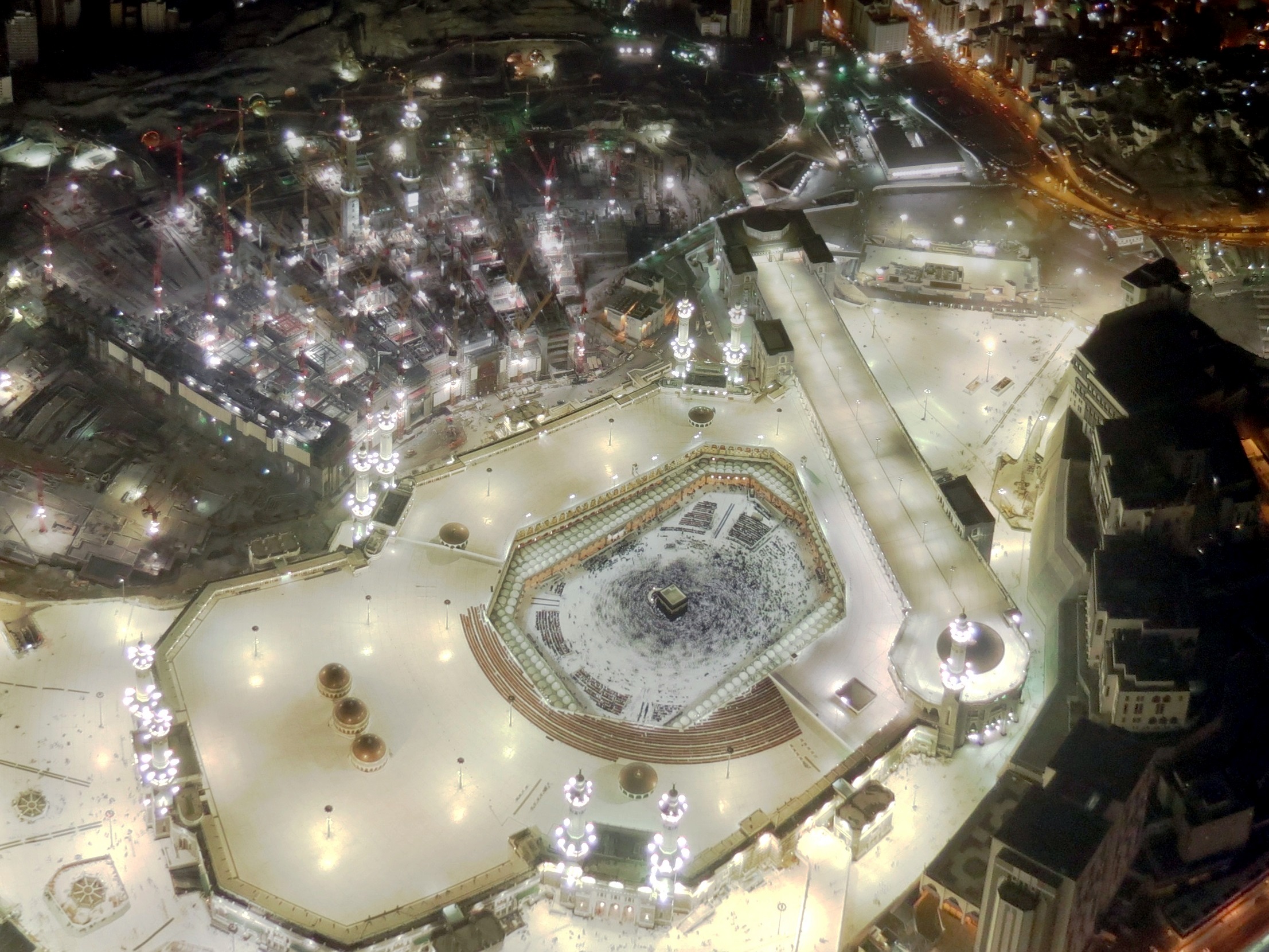
Hajj 2026 is expected to fall on approximately 25–30 May 2026 (8–13 Dhul Hijjah 1447 AH), with the Day of Arafat on 27 May and Eid al-Adha on 28 May. Exact dates depend on the official moon sighting by Saudi authorities.
Registration and Costs
International pilgrims must book through a licensed Hajj operator in their home country. The Saudi Ministry of Hajj sets annual quotas — approximately one pilgrim per 1,000 Muslim citizens of each country. Package costs vary enormously by country and package tier:
- Economy packages: $4,000–$7,000 (shared accommodation in Al Aziziyah, bus transport)
- Standard packages: $7,000–$12,000 (closer hotels, better transport)
- Premium packages: $12,000–$25,000+ (5-star hotels near the Haram, private transport)
These typically include accommodation, transport between ritual sites, meals, and visa processing. For complete details, see our Hajj 2026 Guide.
Umrah: The Shorter Pilgrimage
Unlike Hajj, which has fixed dates, Umrah can be performed at any time of year. The rituals — Ihram, Tawaf, Sa’i, and Halq/Taqsir — typically take 3–5 hours to complete. Many Muslims combine Umrah with a visit to Medina for prayers at Masjid an-Nabawi.
Ramadan is the most popular time for Umrah, as the spiritual rewards are considered equivalent to Hajj. However, Mecca is significantly more crowded during Ramadan, and hotel prices rise accordingly. The quietest (and most affordable) months are generally January, February, and June through August — though summer heat is extreme.
First-time Umrah? Our Umrah for First Timers guide walks you through every step, from entering Ihram to completing the final rituals. Pair it with our Umrah Packing List to make sure you have everything you need.
Extending Your Trip: Medina and Beyond
Most pilgrims visit Medina either before or after their Mecca rituals. The Prophet’s Mosque (Masjid an-Nabawi) is the second holiest site in Islam, and the Haramain Railway makes the journey between the two cities straightforward — approximately 2.5 hours by train. Many travellers also take the opportunity to explore Jeddah’s historic Al-Balad district and Red Sea corniche, which is just 80 km from Mecca.
Explore More Saudi Arabia Travel Guides
- Hajj 2026 Guide — Dates, registration, costs and what to expect for the pilgrimage
- Umrah Guide 2026 — Rituals, costs, best times and everything you need to know
- Umrah for First Timers — Step-by-step guide for your first pilgrimage
- Medina Travel Guide 2026 — The Prophet’s City and the second holiest site in Islam
- Mecca Travel Guide 2026 — The complete guide to the holiest city in Islam
- Saudi Arabia Travel Guide 2026 — The complete guide to visiting the Kingdom
- Saudi Arabia Visa Guide — Every visa type explained