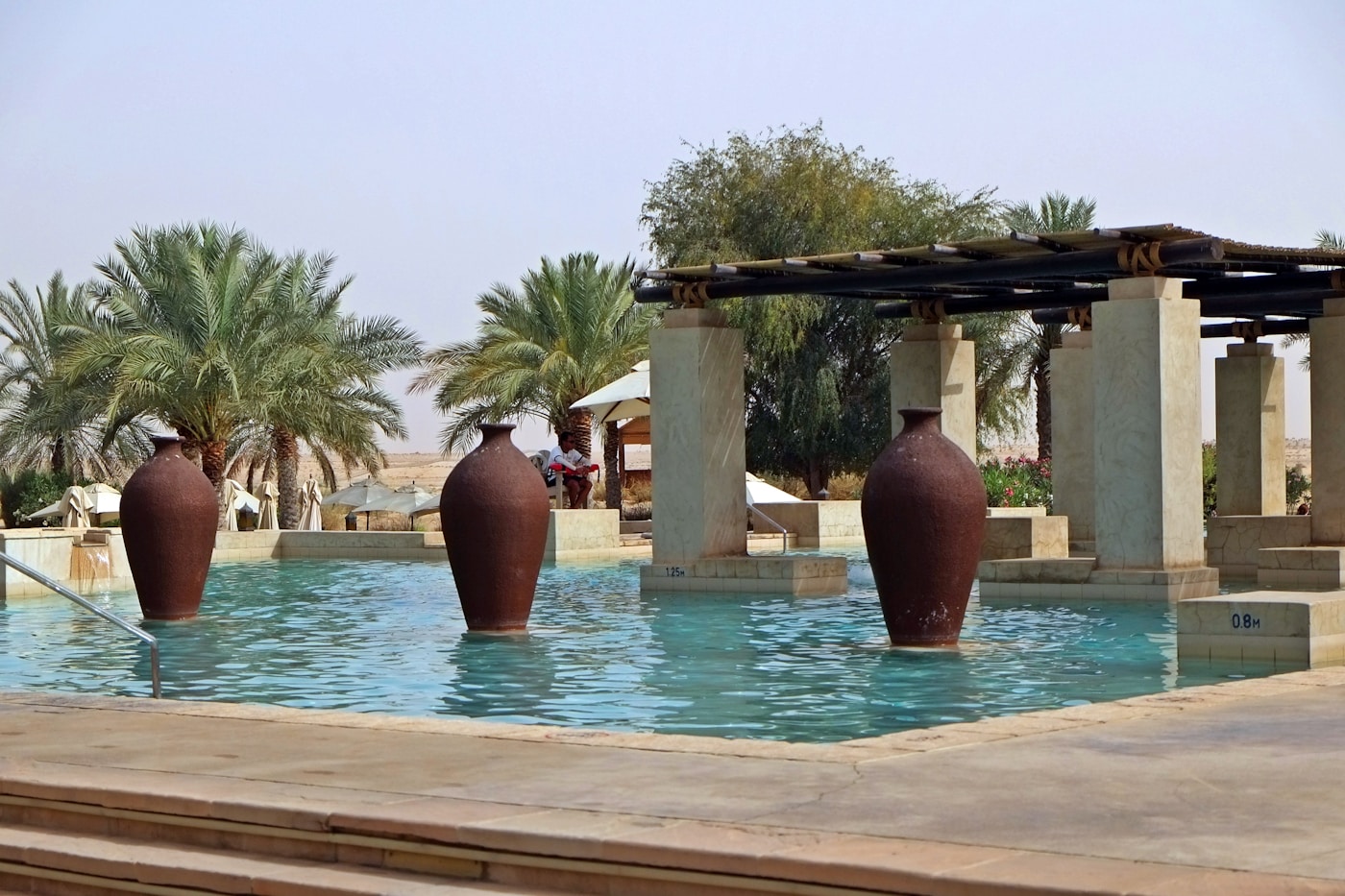

Saudi Arabia’s hotel landscape has undergone a dramatic transformation. From the palatial five-star towers of Riyadh and Jeddah to the tented desert retreats of AlUla, the Kingdom now offers accommodation to rival any destination in the world. Whether you’re a pilgrim heading to Mecca for Hajj, a business traveller passing through the capital, or an adventurer drawn to the sandstone canyons of the northwest, this guide covers every region, every budget tier, and every type of stay across Saudi Arabia.
- Understanding Saudi Arabia’s Hotel Market
- Where to Stay in Riyadh
- Where to Stay in Jeddah
- Where to Stay in Mecca
- Where to Stay in Medina
- Where to Stay in AlUla
- Where to Stay in Abha & Asir
- Where to Stay in Dammam & the Eastern Province
- Red Sea & Mega-Project Resorts
- Budget Hotels & Hostels
- Booking Tips & Seasonal Pricing
- Hotel Etiquette & Cultural Notes
- Complete Guide to Saudi Arabia Hotels: All Pages
- Best Hotels in Mecca
- Best Hotels in Medina
- Saudi Arabia Cost Guide
Understanding Saudi Arabia’s Hotel Market
Saudi Arabia is in the middle of the largest hospitality expansion in the Middle East. The Kingdom’s Vision 2030 tourism strategy targets 150 million annual visits, and the hotel pipeline reflects that ambition: over 300,000 new hotel rooms are planned or under construction across the country, with more than 130 new properties announced for opening between 2025 and 2030.
What to Expect at Each Price Tier
Budget (SAR 130–200 / $35–55 per night): Clean, functional rooms at international economy chains like ibis, Premier Inn, and local brands. You’ll get air conditioning, WiFi, and a private bathroom, but don’t expect a pool or restaurant. Budget hotels cluster around city centres, transport hubs, and pilgrimage zones in Mecca and Medina.
Mid-range (SAR 280–600 / $75–160 per night): This is where Saudi Arabia offers exceptional value compared to Dubai or Abu Dhabi. Expect modern rooms, on-site dining, fitness facilities, and often a pool. Brands like Novotel, Hilton Garden Inn, Courtyard by Marriott, and Holiday Inn dominate this tier. Many mid-range hotels in Riyadh and Jeddah were built within the last five years and feel considerably more upscale than their price suggests.
Luxury (SAR 560–1,500 / $150–400 per night): The Kingdom’s luxury tier competes with the best in the Gulf. Properties from Four Seasons, Ritz-Carlton, Park Hyatt, and Shangri-La offer world-class dining, full-service spas, and the kind of palatial architecture Saudi Arabia does better than almost anywhere. In AlUla, luxury takes a different form — tented villas in desert canyons with private plunge pools and stargazing platforms.
Ultra-luxury (SAR 1,500+ / $400+ per night): The newest category, driven by mega-projects like the Red Sea Global resorts and NEOM’s Sindalah island. These properties aim to redefine luxury travel globally, with private-island resorts, over-water villas, and experiences built around Saudi Arabia’s unspoiled coastline and desert landscapes.
Hotel Star Ratings in Saudi Arabia
The Saudi Tourism Authority (STA) operates its own classification system, which broadly aligns with international standards but places additional emphasis on service quality and cultural compliance. All hotels in the Kingdom are required to maintain gender-appropriate facilities, and alcohol is not served anywhere. Many international chains have adapted their food and beverage offerings accordingly, often with impressive results — Saudi Arabia’s non-alcoholic cocktail and specialty coffee scenes are among the best in the region.
Where to Stay in Riyadh
The capital is the Kingdom’s largest hotel market, with properties concentrated in several distinct districts. Your choice of neighbourhood matters as much as your choice of hotel — Riyadh is a sprawling city, and getting the location right saves hours of travel time. For a full city guide, see our complete Riyadh travel guide.
Olaya Street & King Fahd Road (Business District)
The commercial heart of Riyadh runs along Olaya Street and King Fahd Road, and this is where you’ll find the highest concentration of luxury hotels. The Four Seasons Riyadh at Kingdom Centre is the city’s landmark property, occupying the upper floors of the iconic tower with views stretching across the Najd plateau. Rooms start from approximately SAR 1,800 per night, and the hotel’s Element restaurant is one of Riyadh’s top fine-dining destinations.
The Ritz-Carlton Riyadh is the city’s other flagship, spread across 52 acres of landscaped grounds. Its palatial Najdi-inspired architecture, lush gardens, and multiple dining venues (Italian at Vitello, Asian at Chorisia, Lebanese at Al Orjouan) make it feel more like a resort than a city hotel. The property gained unexpected fame in 2017 when it served as a detention facility during the anti-corruption campaign, but it has long since returned to its role as Riyadh’s most opulent address.
For mid-range business travellers, the Novotel Riyadh Al Anoud on Olaya Street delivers reliable quality from around SAR 250 per night. The Courtyard by Marriott Riyadh Olaya and Hilton Garden Inn Riyadh Olaya are similarly positioned, offering modern rooms and straightforward service at competitive rates.
King Abdullah Financial District (KAFD)
Riyadh’s newest district has rapidly become a hotel hotspot. The JW Marriott Riyadh features 349 rooms across 66 floors of modern Najdi-inspired architecture, with a full-service spa, two outdoor pools, and multiple restaurants. The Fairmont Riyadh occupies a striking tower nearby, with floor-to-ceiling windows, a state-of-the-art convention centre, and several dining options. The W Riyadh-KAFD, which opened in early 2026, brings its signature design-forward aesthetic to 210 rooms, seven restaurants, and a destination spa.
Diplomatic Quarter (DQ)
A leafy, self-contained district on Riyadh’s western edge, the DQ is popular with families and longer-stay visitors. The InterContinental Riyadh and Marriott Riyadh Diplomatic Quarter are both established properties with reliable service and pleasant grounds. The area feels calmer and greener than the commercial centre, with running paths, parks, and a more relaxed atmosphere.
Budget Options in Riyadh
The ibis Riyadh Olaya Street is one of the best-value options in the capital, offering clean, no-frills rooms from around SAR 150 per night. The Premier Inn Riyadh chain operates several properties at similar rates. For longer stays, serviced apartments along Tahlia Street offer studio and one-bedroom units from SAR 200–350 per night, often with kitchenettes and laundry facilities — a practical choice for visitors staying more than a few days.
Where to Stay in Jeddah
Jeddah is the gateway to the holy cities and Saudi Arabia’s most cosmopolitan metropolis. The city’s hotel scene splits between the Corniche waterfront, the historic Al-Balad district, and the northern beach suburbs. For a full city overview, see our Jeddah travel guide.
North Corniche (Luxury Strip)
The stretch of coastline north of the historic centre is home to Jeddah’s most prestigious addresses. The Shangri-La Jeddah occupies floors 9 through 26 of the 64-storey Burj Assila tower, with 220 rooms featuring floor-to-ceiling Red Sea views, a destination spa, and the acclaimed Shang Palace Chinese restaurant. The Park Hyatt Jeddah – Marina, Club and Spa is the city’s resort-style luxury option, set on its own marina with private beach access, single-gender spas with hydrotherapy pools, and outstanding Red Sea views.
The Waldorf Astoria Jeddah – Qasr Al Sharq is perhaps the most distinctive property on the Corniche. The lobby’s Swarovski crystal chandelier sets the tone, and the 46 suites feature high-end Italian linens and personalised butler service. Its restaurant, Aromi, serves some of Jeddah’s best Italian food.
Al-Balad & City Centre
Jeddah’s UNESCO-listed historic quarter is increasingly well-served by boutique accommodation. While large luxury chains haven’t yet opened within Al-Balad’s narrow coral-stone lanes, several heritage-style guesthouses have opened, and the adjacent city centre has reliable mid-range chains including Radisson Blu Jeddah and Mövenpick Hotel City Star Jeddah. Staying centrally puts you within walking distance of the old souqs, the historic mosques, and the waterfront sculpture museum.
Obhur Creek & Northern Beaches
For a beach-focused stay, the northern suburbs around Obhur Creek offer resort-style properties including the Jeddah Hilton and several aparthotels with private beach access. This area is 30–40 minutes from the city centre but ideal for families seeking poolside relaxation alongside their Jeddah exploration.
Budget Options in Jeddah
Jeddah’s mid-range and budget tiers offer strong value. The ibis Jeddah City Centre and Premier Inn Jeddah provide rooms from SAR 150–200. Along Madinah Road, numerous local hotels cater to pilgrims transiting between King Abdulaziz International Airport and the holy cities, with functional rooms from as little as SAR 100 per night.
Where to Stay in Mecca
Accommodation in Mecca is defined by one factor above all others: proximity to the Masjid al-Haram. Hotels within walking distance of the Grand Mosque command premium rates, especially during Hajj and Ramadan. For detailed recommendations, see our dedicated guide to the best hotels in Mecca.
Clock Tower & Abraj Al-Bait District
The Abraj Al-Bait complex, dominated by the iconic Makkah Royal Clock Tower, contains several of Mecca’s most sought-after hotels. The Fairmont Makkah Clock Royal Tower is the flagship, offering direct views of the Kaaba from many rooms and suites. It is one of the closest hotels to the Haram and the most recognisable accommodation in the city. The adjacent Swissôtel Al Maqam Makkah occupies another tower in the same complex, with similarly enviable proximity.
The Raffles Makkah Palace is widely regarded as Mecca’s finest hotel, combining ultra-luxury service with a location that places guests just minutes from the Grand Mosque. The Conrad Makkah offers five-star quality within walking distance of the Haram, with rooms that provide views of the Kaaba.
Jabal Omar District
This massive mixed-use development adjacent to the Haram has added thousands of hotel rooms to Mecca’s inventory. The Hilton Suites Makkah is connected to Jabal Omar Mall and features male and female prayer halls with speakers relaying the call to prayer directly from the Grand Mosque. The Hyatt Regency Makkah Jabal Omar and Address Jabal Omar Makkah are other strong options in this district, all within a 10–15 minute walk to the Haram.
Pilgrimage Budget Hotels
Mecca has a deep inventory of two- and three-star hotels catering to pilgrims. Properties along Ibrahim Al Khalil Road and in the Aziziyah district offer basic but clean rooms from SAR 150–300 per night outside peak season. During Hajj, these same rooms can triple or quadruple in price, and most are sold as part of package deals through authorised Hajj operators. For guidance on planning your pilgrimage, see our Hajj guide and Umrah guide.
Booking During Hajj & Ramadan
Hotels in Mecca fill months in advance during Hajj season and the last ten days of Ramadan. If you’re travelling independently for Umrah, booking at least three months ahead is advisable during peak periods. Outside these windows — particularly in the months immediately after Hajj — rates drop substantially, and five-star hotels become accessible at mid-range prices. For visa requirements and seasonal timing, consult our dedicated guides.
Where to Stay in Medina
Medina is a calmer, more manageable city than Mecca, and its hotel scene reflects that character. The key consideration is proximity to the Prophet’s Mosque (Al-Masjid an-Nabawi). For detailed recommendations, see our guide to the best hotels in Medina.
Central Area Near the Prophet’s Mosque
The Oberoi Medina is one of the city’s newest luxury properties, offering five-star service and exceptional attention to detail, with rates from approximately SAR 1,800 per night. The Dar Al Taqwa Hotel faces the mosque directly, offering one of the most convenient locations in the city at a mid-range price point.
The Pullman Zamzam Medina has earned a strong reputation for its modern rooms, shuttle services for elderly pilgrims, and dedicated women’s prayer space. The Crowne Plaza Medina and InterContinental Dar Al Iman round out the upper-mid tier, both within easy walking distance of the mosque.
Knowledge Economic City & Outskirts
Budget-conscious travellers and those with rental cars can find lower rates in hotels along the Prince Sultan Road corridor and near the airport. These properties range from SAR 100–200 per night and are typically 15–25 minutes by taxi from the Prophet’s Mosque. The trade-off is the commute, but the savings can be significant — particularly during Ramadan when central hotels spike dramatically.
Where to Stay in AlUla
AlUla is Saudi Arabia’s most distinctive hotel destination. Accommodation here is deliberately limited and positioned as experiential luxury, with properties designed to complement rather than compete with the dramatic sandstone landscapes. For a full destination overview, see our AlUla travel guide.
Ashar Valley Luxury Resorts
The Banyan Tree AlUla is the headline property, set within Ashar Valley and surrounded by towering sandstone cliffs. Its 47 tented villas feature private plunge pools, outdoor showers, and uninterrupted views of the desert canyon. The spa draws on both Thai and local Arabian wellness traditions, and the Harrat restaurant serves a blend of Middle Eastern and international cuisine using locally sourced ingredients. Expect rates from SAR 3,500 per night.
Habitas AlUla takes a different approach, emphasising sustainability and community. Its 96 prefabricated villas were built in Mexico and shipped to Saudi Arabia, constructed from bamboo, canvas, and responsibly sourced hardwood. The atmosphere is more bohemian than palatial — think design-forward minimalism with communal dining, sound-healing sessions, and desert excursions. Its sister property, Caravan by Habitas, offers 22 custom Airstream trailers for a more compact (and affordable) glamping experience.
Heritage-Style Accommodation
Shaden Resort is AlUla’s mid-range option, with traditional-style rooms set among date palm gardens near the old town. It offers a more grounded, local experience than the international luxury brands, with rates from approximately SAR 800 per night.
Future Openings
AlUla’s hotel pipeline includes an Aman AlUla resort, which will add one of the world’s most exclusive hotel brands to the valley. Additional boutique and mid-range properties are planned as the Royal Commission for AlUla continues to develop the region’s tourism infrastructure while maintaining strict density limits to protect the landscape.
Where to Stay in Abha & Asir
The cool mountain city of Abha, perched at over 2,200 metres in the Asir region, offers a completely different hotel experience from the rest of the Kingdom. Expect cooler temperatures, green terraced hills, and a more traditional Saudi atmosphere.
City Centre & Al Soudah
The InterContinental Abha is the city’s only international luxury property, positioned on a hilltop with panoramic views of the Asir mountains. For mid-range travellers, the Golden Tulip Abha and Braira Hotel Abha offer comfortable rooms in the city centre from SAR 250–400 per night.
Al Soudah, a mountain resort area 30 minutes from Abha at nearly 3,000 metres elevation, is being developed as part of a Vision 2030 mega-project. The Al Soudah Development project will eventually bring luxury mountain lodges and boutique resorts to the escarpment, though many are still under construction. Currently, local chalets and rental villas serve as the primary accommodation in the area, bookable through local agencies.
Rijal Almaa & Village Stays
For a uniquely Saudi experience, the restored stone villages near Abha — particularly Rijal Almaa, a UNESCO-listed heritage village — offer guesthouse accommodation. These are basic but atmospheric, with traditional stone architecture, cooler mountain air, and a genuine connection to the Asir’s Qahtani cultural heritage. Expect to pay SAR 150–300 per night.
Where to Stay in Dammam & the Eastern Province
Dammam, Dhahran, and Al Khobar form a connected metropolitan area on the Gulf coast that serves as Saudi Arabia’s oil industry heartland. The hotel scene here is geared heavily toward business travellers, with solid mid-range and luxury options but fewer tourist-oriented properties. For a full city overview, see our Dammam travel guide.
Al Khobar Corniche
The Sofitel Al Khobar the Corniche is the standout luxury property in the Eastern Province, set directly on the waterfront with views toward Bahrain. The Mövenpick Hotel Al Khobar and Kempinski Al Othman Hotel are both strong upper-mid options along the Corniche. Al Khobar is generally preferred over Dammam proper for leisure visitors, thanks to its more walkable waterfront and better restaurant scene.
Dhahran & Half Moon Bay
The Sheraton Dammam Hotel & Convention Centre is the largest property in the area, catering to conferences and business events. For a weekend escape, Half Moon Bay — a crescent of sandy beach 30 minutes south of Dammam — has beach resort properties and rental chalets popular with families from Riyadh and the Eastern Province.
Al Ahsa
The oasis city of Al Ahsa, a UNESCO World Heritage Site in the Eastern Province, has limited but growing hotel options. The Sheraton Al Ahsa and several local hotels serve visitors to the date palm oasis, the Qarah caves, and the historic Ibrahim Palace. As Al Ahsa’s tourism profile grows under Vision 2030, expect more properties to open in the coming years.
Jubail & the Industrial Coast
Jubail, Saudi Arabia’s major industrial city on the Gulf coast, caters primarily to business travellers visiting the Jubail Industrial City and the petrochemical complexes. The InterContinental Jubail and Holiday Inn Jubail are the principal options, offering functional business-grade accommodation. The nearby Fanateer Beach area has some resort-style properties and beach chalets, though Jubail remains primarily a work destination rather than a leisure one. Rates are generally 10–20 per cent lower than equivalent properties in Al Khobar or Dammam.
Red Sea & Mega-Project Resorts
Saudi Arabia’s western coastline is the stage for the Kingdom’s most ambitious tourism developments. These projects aim to create entirely new resort destinations from scratch, targeting the ultra-luxury segment. Collectively, the Red Sea Global, NEOM, and AMAALA giga-projects will add over 15,000 hotel rooms to the Kingdom’s inventory by 2030, all positioned at the luxury and ultra-luxury tiers. For international travellers accustomed to the Maldives, the Seychelles, or Bali’s upscale resort corridor, these Saudi developments represent an entirely new option — pristine marine environments, world-class resort brands, and a geographic position that places them within six hours of Europe and four hours of the Indian subcontinent.
Red Sea Global (RSG)
The Red Sea Global development spans 28,000 square kilometres of pristine coastline and islands between Umluj and Al Wajh. The first phase has opened with the St. Regis Red Sea Resort on Ummahat Al Shaykh island, featuring overwater and beachfront villas in an untouched marine environment. A Six Senses Southern Dunes desert resort has also opened inland, combining wellness-focused luxury with desert landscapes.
Additional resorts from Ritz-Carlton, Grand Hyatt, and Edition are in various stages of construction. When complete, Red Sea Global will offer over 8,000 rooms across more than 50 hotels, with strict environmental caps — no more than one per cent of the project’s 90-plus islands will be developed, and the entire destination runs on 100 per cent renewable energy.
NEOM: Sindalah Island
Sindalah, NEOM’s first tourism destination, is a luxury marina and resort island in the Gulf of Aqaba. The island is designed as a yachting hub with a championship golf course, multiple luxury hotels (including properties from Four Seasons and The Luxury Collection), and a curated retail village. The Four Seasons Resort NEOM at Sindalah will feature 225 rooms and suites in terraces overlooking the beach.
AMAALA
Located north of the Red Sea Global project, AMAALA positions itself as the “Riviera of the Middle East.” The Nammos Resort AMAALA at Triple Bay is among the first properties to open, bringing the famous Mykonos beach-club brand to Saudi shores. A Four Seasons Resort and Residences AMAALA focused on wellness is also in development. AMAALA’s three clusters — Triple Bay, The Island, and Coastal Development — will eventually host 25 luxury hotels.
Budget Hotels & Hostels Across Saudi Arabia
Budget travel in Saudi Arabia has improved dramatically since the Kingdom opened to tourism in 2019 with the launch of the tourist e-visa. International economy brands now have a strong presence across every major city, and a growing number of hostels, guesthouses, and serviced apartments offer social, traveller-friendly accommodation at prices that undercut the Gulf average. Saudi Arabia is generally 20–40 per cent cheaper than the UAE at every hotel tier, making it one of the better-value destinations in the Middle East for travellers willing to look beyond the ultra-luxury marketing.
Best Budget Chains
ibis and ibis budget: The Accor economy brands operate more than a dozen properties across Riyadh, Jeddah, Mecca, Medina, and Dammam. Expect clean, compact rooms with air conditioning, WiFi, and en-suite bathrooms from SAR 130–200 per night.
Premier Inn: The British budget chain has expanded aggressively in Saudi Arabia, with properties in Riyadh, Jeddah, and several secondary cities. Quality is consistent and reliable, with rates similar to ibis.
Local hotels and aparthotels: In Riyadh’s Olaya district and Jeddah’s city centre, locally owned hotels offer rooms from SAR 100–180. Quality varies, so checking recent reviews on Google Maps or Booking.com is essential. Serviced apartments represent the best value for stays of three nights or more, often including kitchenettes, laundry, and more space than a hotel room at a comparable price.
Hostels
Saudi Arabia’s hostel scene is small but growing. Riyadh and Jeddah each have a handful of hostel-style properties with dormitory beds from SAR 60–100 per night. These tend to attract younger Saudi travellers and international backpackers, and the social atmosphere can be a welcome contrast to the more transactional nature of budget hotels. Check Hostelworld or Booking.com for current listings.
Booking Tips & Seasonal Pricing
Hotel pricing in Saudi Arabia is among the most seasonal in the world. Understanding the calendar is essential to getting value for money. For a full breakdown of travel costs, see our Saudi Arabia cost guide.
Peak Seasons (Highest Prices)
Hajj (dates shift annually by the Islamic calendar): Hotels in Mecca and Medina reach their absolute peak during the Hajj pilgrimage. Rates in the holy cities can be 3–5 times higher than off-peak, and availability within walking distance of the Haram effectively disappears months in advance. Riyadh and Jeddah prices remain relatively stable during Hajj.
Ramadan (particularly the last ten days): The final third of Ramadan — when many Muslims perform Umrah — drives Mecca and Medina prices close to Hajj levels. Hotels across the country adjust their food and beverage service during Ramadan, with iftar buffets replacing regular dinner service.
Riyadh Season (October–March): The capital’s massive entertainment festival pushes Riyadh hotel prices 30–80 per cent above normal rates, particularly around headline concerts and events at Boulevard Riyadh. Book well in advance if your visit coincides.
Jeddah Season and AlUla Season: Similar to Riyadh Season but smaller in scale, these events create localised price spikes. AlUla’s limited room inventory means even modest demand increases can push rates significantly higher.
Off-Peak (Best Value)
The months immediately after Hajj offer the best hotel value in Mecca and Medina. Across the rest of the country, the summer months (June–August) see lower rates in every city except Abha, where domestic tourists flock to the cool mountain climate. Riyadh and Jeddah are least expensive in summer when temperatures keep casual tourists away.
Practical Booking Advice
- Book direct for loyalty perks: International chains often offer better rates, room upgrades, and late checkout through their own apps and loyalty programmes (Marriott Bonvoy, Hilton Honors, World of Hyatt). Saudi Arabia has an enormous footprint of Marriott and Hilton properties, making elite status particularly valuable here.
- Use Almosafer for local deals: Saudi Arabia’s leading online travel agency sometimes offers exclusive rates at properties not listed on international platforms. The platform also integrates with Saudia Airlines for bundled flight-and-hotel deals.
- Check VAT inclusion: Saudi Arabia charges 15 per cent VAT and a municipal tourism tax on hotel stays. Some booking platforms display prices before these charges; always confirm the total before committing. The effective tax-and-fee burden can add 17–20 per cent to the advertised room rate.
- Airport hotel options: Both Riyadh’s King Khalid International and Jeddah’s King Abdulaziz International have on-site or adjacent transit hotels for layovers. The Riyadh airport has a Holiday Inn Express directly connected to Terminal 5, while Jeddah has several hotels within the airport complex.
- Visa considerations: International visitors need a Saudi tourist visa or transit visa. Hajj and Umrah travellers have separate visa categories with specific hotel-booking requirements tied to authorised travel operators.
- Payment methods: All major international credit cards are accepted at hotels. Saudi riyals (SAR) are pegged to the US dollar at a fixed rate of approximately 3.75 SAR to $1. Contactless payment via Apple Pay and Google Pay is widely supported.
- Check-in requirements: Hotels are legally required to register guests’ passport details. Keep your passport (or a clear photo of it) accessible at check-in. Saudi ID (Iqama) holders use their national ID instead.
Hotel Etiquette & Cultural Notes
Saudi Arabia’s hotels operate within the Kingdom’s cultural and legal framework, and understanding a few key differences from Western or Southeast Asian hotel norms will help you get the most from your stay. The Kingdom has modernised rapidly since 2019, but it remains a conservative society with strong Islamic traditions, and the hotel industry reflects that blend of contemporary service and cultural values.
Alcohol
No hotels in Saudi Arabia serve alcohol. This applies universally — from budget hostels to the most exclusive resorts. International chains have adapted with sophisticated non-alcoholic beverage programmes, and the Kingdom’s specialty coffee and mocktail culture is genuinely impressive. Several hotel bars operate as “dry bars” with creative zero-proof cocktails.
Unmarried Couples
Since the 2019 tourism reforms, Saudi hotels are permitted to accommodate unmarried couples, including foreign visitors. In practice, most international hotels in Riyadh, Jeddah, and tourist destinations will not question the marital status of guests. However, standards may be more conservative in smaller cities and in Mecca and Medina, where religious norms are stronger.
Gender-Separated Facilities
Many hotels offer separate pool, gym, and spa hours or facilities for men and women. This is particularly common in the holy cities and at properties catering to families. Some luxury hotels offer fully separate male and female spa floors. Check facilities in advance if this is a consideration for your stay.
Prayer Times
Hotels in the holy cities often organise their schedules around the five daily prayer times. Restaurants may close briefly during prayer, and you may hear the adhan (call to prayer) clearly from your room — some hotels near the Haram in Mecca pipe it through in-room speakers. Outside the holy cities, prayer-time disruption is minimal at most hotels, though restaurants in malls may briefly close.
Dress Code
There is no specific dress code enforced in hotel lobbies and restaurants, but modest clothing is appreciated and expected in public areas. Swimwear is appropriate at pool areas and private beaches only. In Mecca and Medina, dress standards are more conservative, and pilgrims in ihram clothing are a common sight in hotel lobbies.
Tipping
Tipping is not obligatory in Saudi Arabia, but it is appreciated. A service charge of 10–15 per cent is often included in restaurant bills at upscale hotels. For housekeeping, SAR 10–20 per day is a generous gesture. Bellhops and concierge staff appreciate SAR 10–20 per service. In budget and mid-range hotels, tipping is less common but always welcomed.
Wi-Fi & Connectivity
Free WiFi is standard at virtually all Saudi hotels, from budget to ultra-luxury. Connection quality is generally excellent — the Kingdom has invested heavily in digital infrastructure as part of Vision 2030, and mobile data speeds rank among the fastest in the world. VoIP services (WhatsApp calls, FaceTime) work reliably in most hotels. Note that some VPN services may experience intermittent connectivity issues.
Choosing a Hotel: Families, Business & Solo Travellers
Different travel styles demand different hotel priorities in Saudi Arabia, and the Kingdom’s diverse hotel market caters to each.
Family Travel
Saudi Arabia is an exceptionally family-friendly destination, and hotels reflect this. Most mid-range and luxury properties offer interconnecting rooms, kids’ clubs, and family pools. The resort-style properties along Al Khobar’s Corniche, Jeddah’s Obhur Creek, and the Red Sea coast are particularly well-suited to families with children. In Riyadh, hotels in the Diplomatic Quarter offer a more relaxed, green environment than the commercial centre. Many hotels provide prayer-time childcare and babysitting services on request.
Business Travel
Riyadh dominates the Kingdom’s business travel market, with the KAFD district, Olaya corridor, and Diplomatic Quarter offering the highest concentration of business-grade hotels. The Eastern Province is the second-largest business market, driven by the energy sector. Look for hotels with executive lounges, meeting rooms, and reliable high-speed internet. Most four- and five-star properties in Riyadh and the Eastern Province include complimentary airport transfers for business guests.
Solo & Independent Travellers
Solo travel in Saudi Arabia is entirely safe and increasingly common. The main consideration is transport: outside Riyadh (which has a new metro system) and the holy cities (which have pilgrimage-specific transit), you’ll rely on ride-hailing apps (Uber and the local Careem) or rental cars. Choose a centrally located hotel to minimise transport friction. In Jeddah and AlUla, walkability from your hotel to key attractions matters more than in the car-dependent Eastern Province.
Complete Guide to Saudi Arabia Hotels: All Pages
City & Region Guides
- Riyadh Travel Guide — The capital city: business district hotels, cultural sites, and desert escapes
- Jeddah Travel Guide — Red Sea gateway: Corniche luxury, historic Al-Balad, and beach resorts
- Mecca Travel Guide — The holiest city in Islam: Haram-adjacent hotels and pilgrimage logistics
- Medina Travel Guide — City of the Prophet: hotels near Al-Masjid an-Nabawi
- AlUla Travel Guide — Desert luxury resorts among ancient Nabataean ruins
- Abha Travel Guide — Mountain retreats and cool-climate escapes in the Asir region
- Dammam Travel Guide — Eastern Province: Gulf coast hotels and oil-country business stays
Hotel Guides by Destination
- Best Hotels in Mecca — Ranked guide to Haram-adjacent luxury, mid-range, and budget options
- Best Hotels in Medina — Where to stay near the Prophet’s Mosque at every price point
Pilgrimage Planning
- Hajj Guide — Complete planning resource including accommodation during Hajj season
- Umrah Guide — Year-round pilgrimage planning with hotel booking advice
Practical Guides
- Saudi Arabia Visa Guide — Tourist, transit, Hajj, and Umrah visa requirements
- Saudi Arabia Cost Guide — Full breakdown of travel costs including accommodation budgets