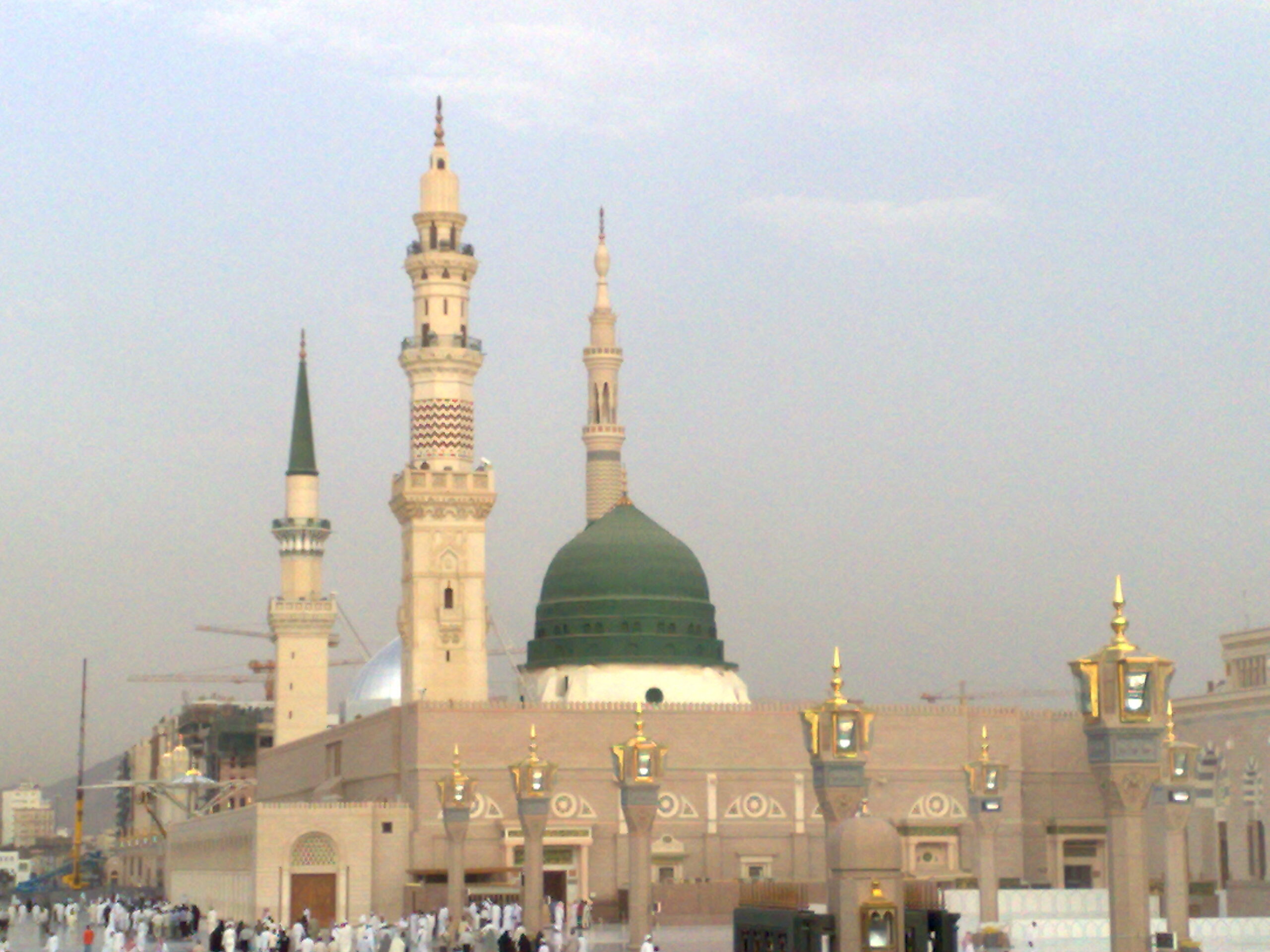

Medina — Al-Madinah Al-Munawwarah, the Radiant City — is the second holiest city in Islam and a destination that every Muslim dreams of visiting at least once. Whether you are combining a trip with Hajj or performing Umrah, Medina deserves far more than a brief overnight stay. The Prophet Muhammad ﷺ chose this city as his home, built his mosque here, and is buried beneath its iconic Green Dome. This guide covers everything a Muslim visitor needs to know: the sacred sites, how to book your Rawdah permit, where to stay, how to get around, and the practical details that make the difference between a stressful trip and a spiritually fulfilling one.
Best Time to Visit: October to March (cooler weather, 18–30 °C)
Getting There: Prince Mohammed bin Abdulaziz International Airport (MED), or Haramain High-Speed Railway from Jeddah/Mecca
Visa Required: Yes — tourist e-visa or Umrah visa
Budget: $80–$200/day (mid-range hotel, meals, transport)
Must-See: Al-Masjid an-Nabawi, Quba Mosque, Mount Uhud
Avoid: Visiting in July–August when temperatures exceed 45 °C
Why Medina Holds a Special Place in Islam
Medina’s significance in Islam cannot be overstated. In 622 CE, the Prophet Muhammad ﷺ migrated from Mecca to Medina — an event known as the Hijra that marks the beginning of the Islamic calendar. He established the first Islamic community here, built his mosque, and governed the early Muslim state from this city until his death in 632 CE. The Prophet ﷺ said: “O Allah, make us love Medina as much as we love Mecca, or even more.”
For Muslim visitors, praying in Al-Masjid an-Nabawi carries immense reward — one prayer here is equivalent to 1,000 prayers elsewhere, according to hadith. The city also contains Quba Mosque, where praying is equivalent to performing Umrah, and the battlefields where early Muslims fought to defend their faith. Unlike Mecca, which is restricted to Muslims only, much of Medina is accessible to all visitors, though the central Haram area around the Prophet’s Mosque is reserved for Muslims.
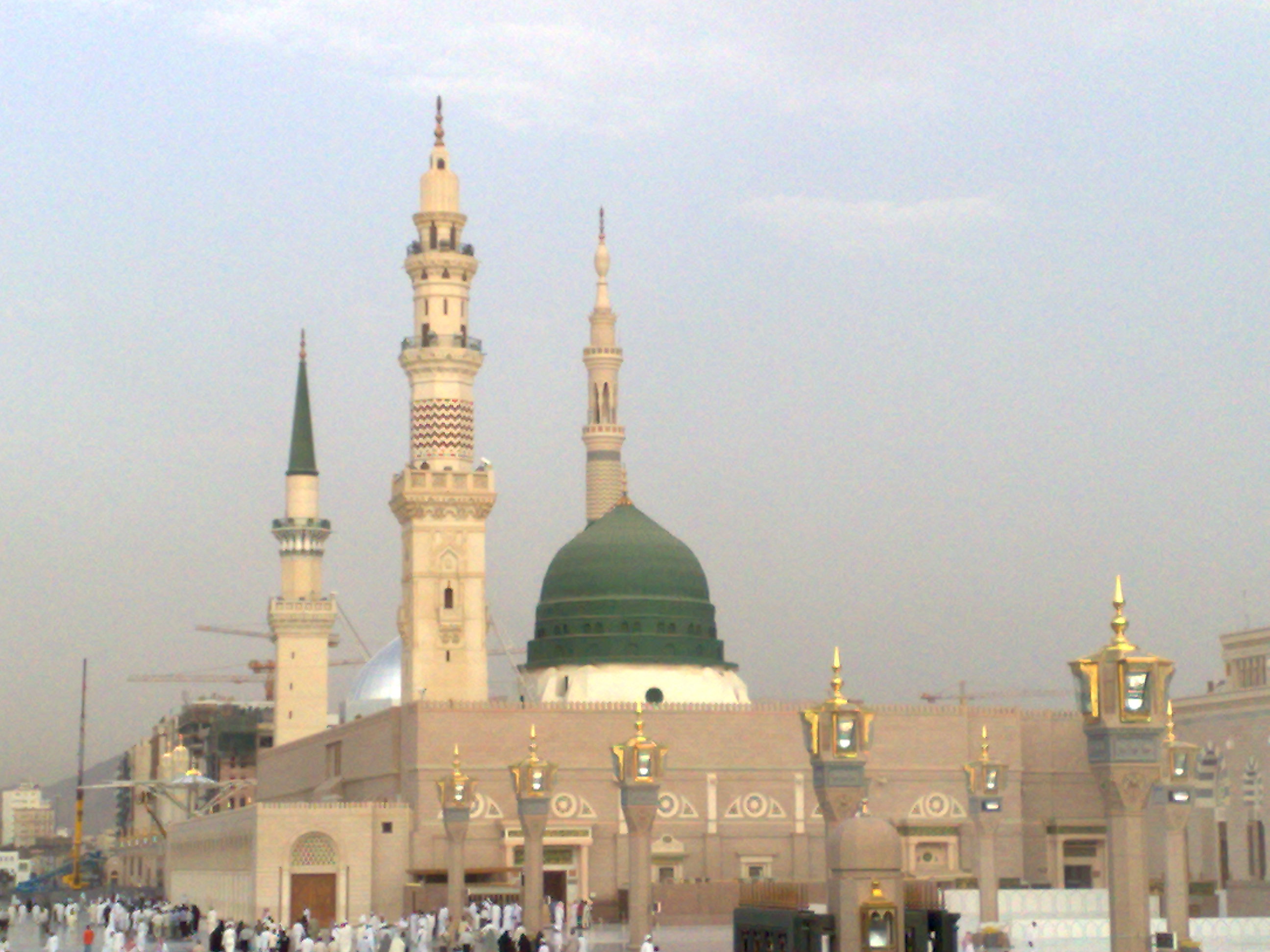
Al-Masjid an-Nabawi — The Prophet’s Mosque
The Prophet’s Mosque is the centrepiece of any visit to Medina. Originally built by the Prophet Muhammad ﷺ himself next to his house in 622 CE, it has been expanded many times over 14 centuries and now spans over 400,000 square metres, making it the second-largest mosque on Earth. Its most recognisable feature is the Green Dome, built in 1279 CE and painted green in 1837, which marks the location of the Prophet’s tomb.
The Green Dome and the Prophet’s Tomb
Beneath the Green Dome lie the graves of the Prophet Muhammad ﷺ, Abu Bakr al-Siddiq, and Umar ibn al-Khattab (may Allah be pleased with them). Visitors can view the tomb area from behind a golden lattice screen. Men may visit throughout the mosque’s opening hours, while women are typically taken in organised groups after Fajr or Dhuhr prayers. The area is managed carefully to prevent overcrowding, so patience and respect are essential.
Tip: The quietest times to visit the tomb area are between Dhuhr and Asr prayers, and late at night after Isha. Avoid the rush immediately after Fajr when large groups congregate.
The Rawdah (Riyad ul-Jannah)
The Rawdah is the area between the Prophet’s pulpit (minbar) and his tomb — a space the Prophet ﷺ described as “a garden from the gardens of Paradise.” It is marked by green carpet, distinct from the red carpet that covers the rest of the mosque. Praying here is one of the most sought-after spiritual experiences in Islam, and access is now strictly controlled through a digital permit system.
Booking a Rawdah Permit via the Nusuk App
Since 2025, all visitors who wish to pray in the Rawdah must obtain a QR code permit through the official Nusuk app. No entry is permitted without a digital permit. Here is how to book:
- Download the Nusuk app from the App Store or Google Play and create an account with your passport details
- Navigate to “Prophet’s Mosque Services” on the home screen and select “Praying in the Noble Rawdah”
- Select your gender and preferred date — men typically have slots between 7:00 AM and 10:00 AM and after Isha until midnight; women usually have slots between 9:00 and 11:00 AM and after Isha
- Slots open 7–10 days in advance, usually on Friday afternoons at 12:00 PM Saudi time — set a reminder
- Arrive on time with your QR code ready on your phone
- Ride-hailing apps: Uber, Careem, and Jeeny all operate at the airport — the most convenient option (SAR 30–50 to the Haram area)
- Airport shuttle: A shuttle service runs directly to the Prophet’s Mosque area
- Car rental: Available at the airport from major providers for those planning day trips to nearby sites
- Walking: The Haram area and surrounding hotels, restaurants, and shops are all walkable. The Prophet’s Mosque courtyard itself is enormous — bring comfortable shoes
- Ride-hailing: Uber and Careem are reliable and affordable throughout Medina. Most rides within the city cost SAR 10–30
- Hop-On Hop-Off bus: A tourist bus service connects major sites including the Prophet’s Mosque, Quba Mosque, Mount Uhud, and the Seven Mosques — a convenient option for a full day of sightseeing
- Taxis: Available throughout the city. Agree on a fare before getting in, or insist on using the meter. A half-day taxi tour covering the major sites can be negotiated for SAR 150–250
- Kabsa: Saudi Arabia’s national dish — fragrant rice with chicken or lamb, slow-cooked with cardamom, cinnamon, and cloves, topped with toasted almonds and raisins
- Madfoon: Lamb or chicken buried in spiced rice and slow-cooked underground, resulting in fall-off-the-bone tenderness
- Harees: A smooth, savoury wheat-and-meat porridge that is a Hijazi speciality, especially popular during Ramadan
- Mutabbaq: A crispy stuffed pastry filled with spiced meat or egg — perfect as a quick street snack
- Pray multiple prayers in the Prophet’s Mosque and visit the tomb
- Visit the Rawdah (with your pre-booked permit)
- Visit Quba Mosque, Mount Uhud, and the Seven Mosques
- Explore the souqs and enjoy the local food
- Simply sit in the mosque and absorb the peaceful atmosphere
- Hydration: Drink plenty of water, especially in warmer months. Free Zamzam water is available throughout the Prophet’s Mosque
- Sun protection: Wear sunscreen and a hat when visiting outdoor sites like Mount Uhud
- Footwear: You will be removing shoes frequently at the mosque — wear slip-on shoes and carry a bag for them
- Crowds: The area around the Prophet’s Mosque can be extremely crowded, especially during Hajj and Ramadan. Keep valuables secure and be patient
- Medical facilities: Medina has modern hospitals and clinics, and pharmacies are easy to find near the Haram
- Wadi-e-Jinn (Wadi al-Baida): About 40 km northwest of Medina, this valley is famous for the optical illusion where cars appear to roll uphill. It is a popular local excursion and can be combined with a desert drive
- Masjid Miqat (Dhul Hulayfah): The miqat point for pilgrims entering Ihram from Medina before heading to Mecca for Umrah. Located about 10 km southwest of the city
- Yanbu: The Red Sea port city of Yanbu is about 3 hours by car from Medina and offers beaches, diving, and a scenic corniche — a refreshing contrast to the desert interior
- Hajj 2026 Guide — Dates, registration, costs, and what to expect for the pilgrimage
- Mecca for Muslim Travellers — The complete Hajj and Umrah city guide
- Umrah Guide 2026 — Rituals, costs, best times, and everything you need to know
- Umrah for First Timers — Step-by-step guide for your first pilgrimage
- Saudi Arabia Travel Guide 2026 — The complete guide to visiting the Kingdom
- Saudi Arabia Visa Guide — Every visa type explained
Important: There is a restriction that may limit you to one Rawdah permit every 365 days, though this policy changes periodically. If no slots are available, the app offers a waitlist option. Book as early as possible — slots fill within minutes.
Prayer Times and Access
Al-Masjid an-Nabawi is open 24 hours a day, seven days a week. The mosque has no entrance fee. Worshippers can pray in the main hall, the open courtyard, or on the rooftop, which features 27 retractable domes that slide open in pleasant weather. The courtyard is covered with large motorised umbrellas that provide shade during the day. Prepare to spend significant time here — many visitors pray all five daily prayers in the mosque and spend hours reading Quran in its peaceful atmosphere. For guidance on what to pack for your trip, see our Umrah packing list, which covers essentials for Medina as well.
Essential Mosques and Islamic Sites
Quba Mosque — The First Mosque in Islam
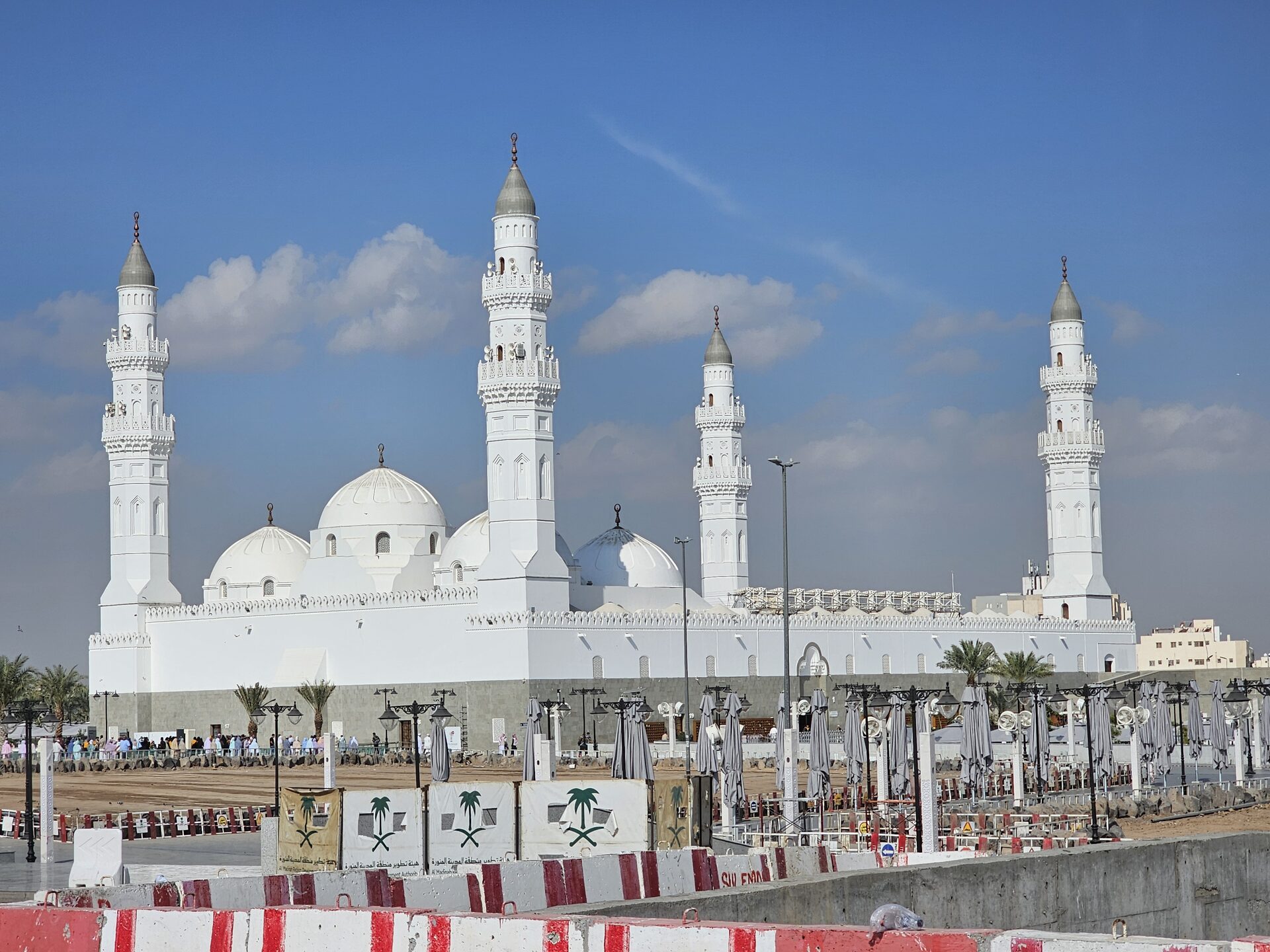
Located about 5 km south of the Prophet’s Mosque, Quba Mosque holds the distinction of being the first mosque ever built in Islam. The Prophet Muhammad ﷺ laid its foundation stones upon arriving in Medina during the Hijra. According to hadith, “Whoever purifies himself at home and then goes to Masjid Quba and prays there, he will have a reward like that of Umrah.”
The current structure is a stunning modern expansion completed in recent years, with white marble walls, elegant minarets, and landscaped gardens. The mosque is open 24/7 and there is no permit required. It is easily reached by taxi (about 10–15 minutes from the Haram area) or by the Hop-On Hop-Off bus that stops nearby.
Masjid al-Qiblatain — The Mosque of Two Qiblas
This mosque is historically significant as the place where the Prophet Muhammad ﷺ received the divine command to change the direction of prayer (qibla) from Jerusalem to Mecca. It originally had two prayer niches (mihrabs) — one facing Jerusalem and one facing Mecca — though the Jerusalem-facing mihrab was removed during renovations. The mosque is located about 4 km northwest of the Prophet’s Mosque and is worth a brief visit for its historical importance.
The Seven Mosques (Sab’a Masajid)
Clustered on the western edge of Mount Sela, the Seven Mosques are small structures built at the site of the Battle of the Trench (Al-Khandaq) in 627 CE. It was here that Salman al-Farisi suggested digging a defensive trench to protect Medina from the attacking Quraysh coalition — a strategy that proved decisive. The mosques are named after key companions, including Masjid Salman al-Farisi, Masjid Umar, and Masjid Abu Bakr. While modest in size, the site offers a tangible connection to one of early Islam’s most critical moments.
Masjid al-Ghamama
Also known as the Musalla of Eid, this mosque marks the spot where the Prophet ﷺ performed the Eid prayers. Located just southwest of the Prophet’s Mosque, it is one of several small historical mosques in the old city centre that are easy to visit on foot.
Historical Battlefields and Sacred Sites
Mount Uhud and the Martyrs’ Cemetery
Rising to 1,077 metres north of the city centre, Mount Uhud is one of the most significant sites in Islamic history. The Battle of Uhud took place here in 625 CE, and the mountain holds deep spiritual meaning — the Prophet ﷺ said: “Uhud is a mountain that loves us and we love it.”
At the foot of the mountain lies the Martyrs’ Cemetery (Shuhada Uhud), where the companions who fell in battle are buried, including Hamzah ibn Abd al-Muttalib, the Prophet’s uncle and one of Islam’s greatest warriors. Visitors can view the cemetery from behind a fence and offer prayers for the martyrs. The area also includes a small museum with displays about the battle.
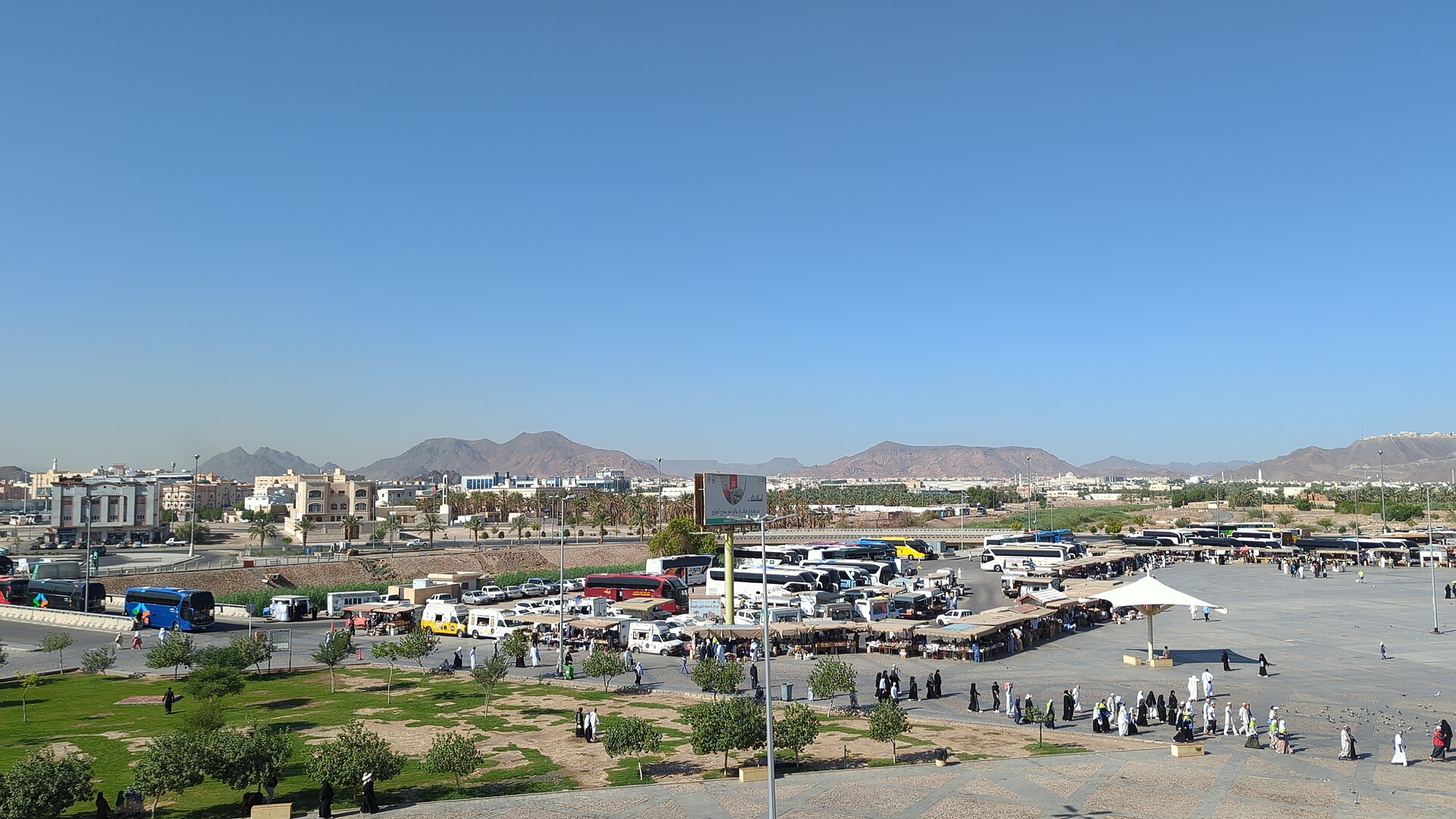
Getting there: Mount Uhud is about 7 km north of the Prophet’s Mosque. A taxi costs approximately SAR 20–30 one way. The Hop-On Hop-Off tour bus also stops here. Visit early morning to avoid the midday heat, especially in warmer months.
Jannat al-Baqi — The Ancient Cemetery
Adjacent to the southeast wall of the Prophet’s Mosque, Jannat al-Baqi is the main cemetery of Medina and the resting place of many of the Prophet’s family members and companions, including Uthman ibn Affan, Fatimah (the Prophet’s daughter, though the exact location is debated), and numerous other early Muslims. The cemetery is open to male visitors after certain prayers — typically after Fajr and Asr. Women are generally not permitted to enter but can view the site from outside. There are no elaborate tombs or structures, in keeping with Islamic tradition.
Where to Stay in Medina
Accommodation in Medina revolves around proximity to the Prophet’s Mosque. If your trip is faith-focused — and for most Muslim visitors it is — staying within walking distance of the Haram saves energy, avoids transport hassles, and allows you to return to your room between prayers. For a broader look at accommodation across the Kingdom, see our Saudi Arabia hotels guide.
Luxury Hotels Near the Haram
| Hotel | Distance to Mosque | Price Range (per night) | Highlights |
|---|---|---|---|
| Pullman Zamzam Madina | 300 m (adjacent to Al Salam Gate) | $180–$350 | 835 rooms, direct Haram views, multiple restaurants |
| Anwar Al Madinah Mövenpick | 200 m | $150–$300 | Panoramic mosque views, three restaurants, underground parking |
| Crowne Plaza Madinah | 400 m | $130–$280 | Adjacent to mall, modern rooms, IHG loyalty programme |
| Sofitel Shahd Al Madinah | 500 m | $140–$260 | Eco-certified, family-friendly, elegant Sofitel service |
| Taiba Madinah Hotel | 600 m | $100–$200 | 208 rooms, fitness centre, buffet breakfast |
Mid-Range and Budget Options
Budget travellers will find plenty of 2–3 star hotels within a 10–15 minute walk of the Haram, with prices starting from around $40–$60 per night. Many offer basic but clean rooms with prayer mats and Quran provided. During Hajj season and Ramadan, prices across all categories increase significantly — book at least 2–3 months in advance for these peak periods. For a detailed budget breakdown, including accommodation costs, see our Umrah costs guide.
Booking tip: Hotels on the south and west sides of the mosque tend to be slightly cheaper than those on the north side near King Fahd Gate. The south side also offers easier access to Quba Mosque and the old city souqs.
Getting to Medina
Medina is well connected by air, rail, and road. For complete details on all Saudi airports, see our airport guide, and for booking tips on flights to Saudi Arabia, check our dedicated page.
By Air — Prince Mohammed bin Abdulaziz International Airport
Prince Mohammed bin Abdulaziz International Airport (IATA: MED) is located approximately 15 km northwest of the city centre. The modern terminal handles both domestic and international flights, with direct connections to major cities across the Middle East, South Asia, Southeast Asia, Africa, and Europe. Airlines serving Medina include Saudia, flynas, flyadeal, Turkish Airlines, Emirates, Pakistan International Airlines, and many others.
From the airport to the city centre takes about 20–25 minutes. Transport options include:
By Train — The Haramain High-Speed Railway
The Haramain High-Speed Railway (HHR) is the fastest and most comfortable way to travel between Medina, Jeddah, and Mecca. Trains travel at up to 300 km/h and the journey from Mecca to Medina takes approximately 2 hours 20 minutes, with stops at Jeddah, King Abdulaziz International Airport, and King Abdullah Economic City (KAEC).
| Route | Economy (SAR) | Business (SAR) | Duration |
|---|---|---|---|
| Medina → Mecca | ~225 | ~380 | 2 h 20 min |
| Medina → Jeddah | ~150 | ~210 | 1 h 50 min |
| Medina → Jeddah Airport | ~150 | ~210 | 1 h 40 min |
Trains run daily from approximately 6:30 AM until late evening, with departures roughly every hour. Book tickets online at the official HHR portal or through the SAR app. The Medina station is located at the airport, so you will need a taxi or ride-hailing service to reach the city centre. For more on Saudi transport options, see our getting around Saudi Arabia guide.
By Road
Medina is connected by well-maintained highways to Mecca (about 4.5 hours), Jeddah (about 4 hours), and Riyadh (about 9 hours). Many pilgrims travel between Mecca and Medina by bus or private car. SAPTCO operates intercity bus services. If you prefer to drive, our car rental guide covers everything you need to know.
Getting Around Medina
Most visitors spend the majority of their time within walking distance of the Prophet’s Mosque, but you will need transport to reach sites like Quba Mosque, Mount Uhud, and the Seven Mosques.
Food and Shopping in Medina
Medina’s Famous Dates
Medina is synonymous with dates, and buying them here is practically a ritual. The most prized variety is Ajwa dates — dark, soft, and rich — which the Prophet ﷺ specifically recommended. Other popular varieties include Sukkari (golden and caramel-sweet), Safawi (dark and semi-dry), and Mabroom (elongated and chewy). The best place to buy dates is Souq al-Tamar (the Dates Market) near the Haram, or Souq Khudra for the widest selection at competitive prices. Expect to pay SAR 40–120 per kilogram depending on variety and grade. Look out for rab — a thick, luxurious date syrup that makes an excellent gift.
Traditional Restaurants and Hijazi Cuisine
Medina’s food scene reflects its position as a crossroads of the Islamic world. Hijazi cuisine dominates, with dishes influenced by centuries of pilgrim cultures. Must-try dishes include:
You will find restaurants of every cuisine near the Haram — Turkish, Indian, Pakistani, Indonesian, and Yemeni food are all well represented, reflecting the diverse origins of pilgrims. Arabic coffee (gahwa), infused with cardamom and served without sugar, is offered everywhere and is a symbol of hospitality. For a deeper dive into Saudi cuisine, see our Saudi Arabia food guide.
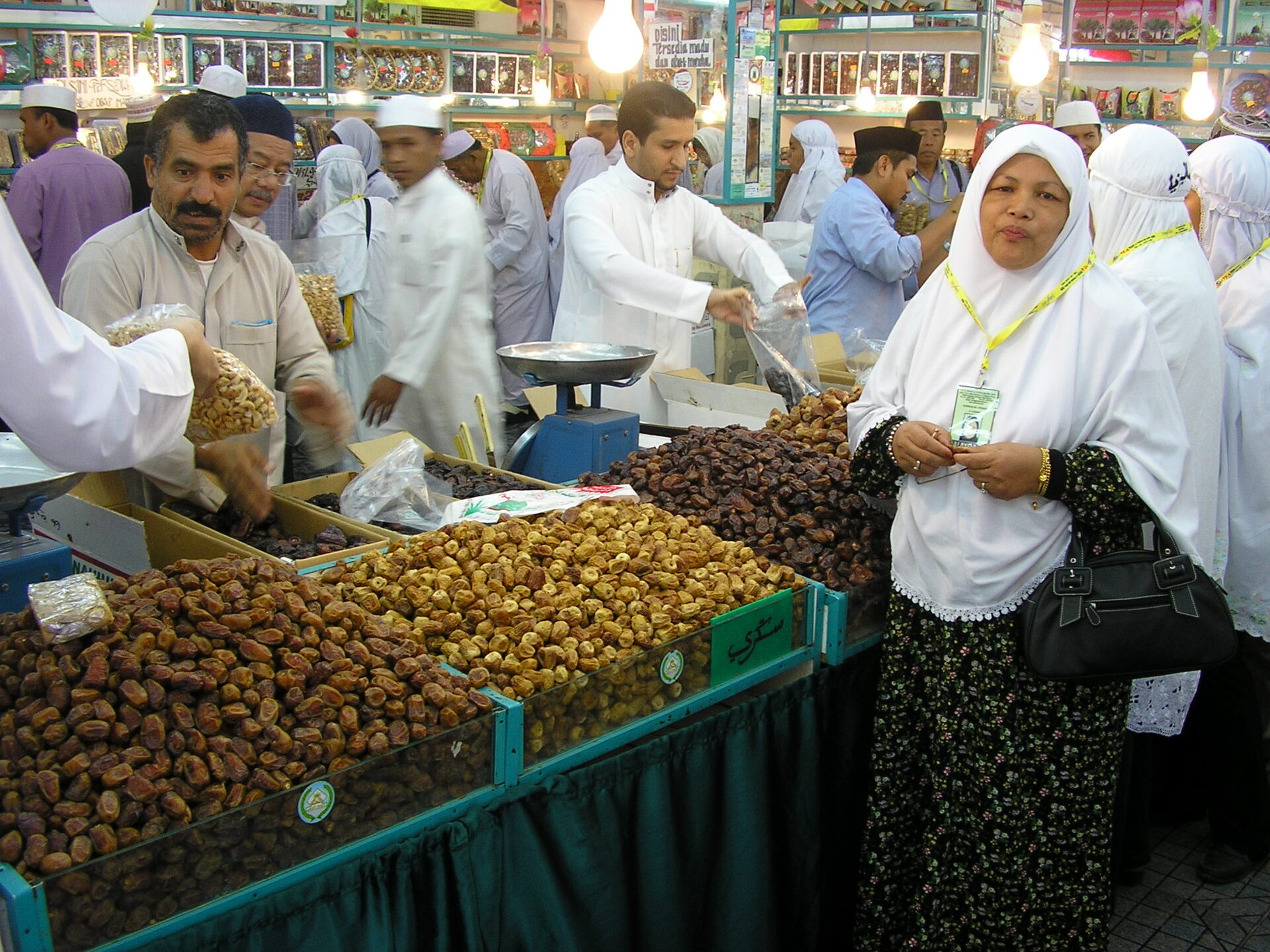
Souqs and Shopping
Beyond dates, Medina’s souqs sell prayer rugs, Islamic calligraphy, attar (traditional perfume oils), miswak (natural toothbrush sticks), tasbeeh (prayer beads), Zamzam water containers, and Islamic books. Sultanah Road near the Prophet’s Mosque is the main shopping street, lined with stores and vendors. Bargaining is expected in traditional markets — start at about 50% of the asking price and negotiate from there.
Shopping tip: The markets near Quba Mosque often have lower prices than those immediately surrounding the Prophet’s Mosque, where tourist markups are higher. Attar perfumes make excellent gifts — a small bottle of genuine oud can last for years.
When to Visit Medina
Medina has a hot desert climate with extreme summer temperatures and mild, pleasant winters. Choosing the right time to visit makes a significant difference to your comfort, especially since you will be spending hours walking and praying.
| Season | Months | Temperature | Verdict |
|---|---|---|---|
| Winter (Best) | November–February | 12–28 °C | Ideal — cool nights, comfortable days, perfect for walking between sites |
| Spring | March–April | 18–35 °C | Good — warming up but still pleasant, occasional sandstorms |
| Summer | May–September | 28–45 °C | Extremely hot — if you must visit, plan outdoor activities for early morning or after sunset |
| Autumn | October | 22–38 °C | Transitional — temperatures dropping, increasingly comfortable |
If you are visiting during Ramadan, Medina takes on a special atmosphere. The Prophet’s Mosque fills to capacity for Taraweeh prayers, and the communal iftars at sunset are an unforgettable experience. However, expect larger crowds and higher hotel prices. For a complete overview of the best travel windows, check our best time to visit Saudi Arabia guide.
Practical Tips for Muslim Visitors
Dress Code and Etiquette
Modest dress is required throughout Medina, particularly in and around the Prophet’s Mosque. Men should wear clean, respectful clothing — long trousers and shirts with sleeves. Women should wear an abaya or similarly modest loose-fitting clothing and a headscarf. For detailed guidance, see our Saudi Arabia dress code guide.
How Many Days to Spend
Most visitors spend 2–4 days in Medina, which allows time to:
If you are combining with Umrah or Hajj, most itineraries place Medina either before or after the Mecca portion. Visiting Medina first can serve as a gentle spiritual warm-up before the intensity of the Umrah rituals. First-time Umrah visitors often find this sequence helpful.
Visa and Entry Requirements
Most visitors to Medina enter Saudi Arabia on either a tourist e-visa or an Umrah visa. The tourist e-visa is available to citizens of over 60 countries and can be obtained online in minutes — see our complete visa guide for eligibility and application details. During Hajj season, a specific Hajj visa is required. Note that non-Muslims may visit Medina but cannot enter the Haram (central mosque) area.
Connectivity and Communication
Saudi Arabia has excellent 5G and 4G coverage throughout Medina. Pick up a local SIM card or eSIM for reliable data — our SIM card and eSIM guide covers the best options and prices.
Health and Safety
Currency and Payments
The Saudi Riyal (SAR) is the local currency, fixed at approximately 3.75 SAR to 1 USD. Credit cards are widely accepted in hotels and larger shops, but carry cash for the souqs and smaller vendors. ATMs are abundant near the Haram. For more details, see our Saudi Arabia currency guide.
Day Trips from Medina
While Medina itself has enough to fill several days, visitors with extra time can explore the surrounding region: