
Saudi Arabia holds the most sacred ground in Islam, and for millions of believers, visiting these sites is a once-in-a-lifetime act of devotion. Ziyarat — the Arabic word for “visitation” — refers to the practice of visiting the graves of the Prophet Muhammad (PBUH), his companions, and other holy places connected to early Islamic history. While Hajj and Umrah have their own defined rituals, ziyarat is the spiritual layer that deepens a pilgrimage beyond the obligatory rites. Whether you are planning your journey as part of a wider Hajj 2026 pilgrimage or visiting independently on a tourist e-visa, this guide maps every major sacred site across Mecca, Medina, and beyond — with practical details on how to reach them, what to expect, and the etiquette that honours these hallowed places.
Best Time to Visit: October to March (cooler temperatures for outdoor sites); Ramadan for heightened spirituality
Getting There: Fly into Jeddah (KAIA), Medina (Prince Mohammad bin Abdulaziz Airport), or use the Haramain High-Speed Railway between Mecca and Medina
Visa Required: Yes — tourist e-visa or Hajj/Umrah visa
Budget: $80–$200 per day depending on accommodation and transport choices
Must-See: Jannat al-Baqi cemetery (Medina), Rawdah in Masjid an-Nabawi, Jabal al-Nour Cave of Hira (Mecca)
Avoid: Climbing Jabal al-Nour or Jabal Thawr in summer midday heat — heatstroke is a genuine risk
What Is Ziyarat and Why Does It Matter?
Ziyarat is not a formal pillar of Islam, but it carries deep spiritual significance for Muslims of every tradition. The Prophet Muhammad (PBUH) himself visited the graves of companions and encouraged believers to do so, saying: “Visit the graves, for they remind you of the Hereafter.” The practice is rooted in reflection, gratitude, and connection to the earliest generation of Muslims who sacrificed everything for their faith.
In practical terms, ziyarat in Saudi Arabia falls into two geographic clusters: the sacred sites of Mecca and the historical landmarks of Medina. A handful of additional sites — including the battlefield of Badr — lie between the two cities. Most pilgrims combine ziyarat with Umrah or Hajj, but the sites are accessible year-round to anyone with a valid visa.
Sacred Sites in Mecca
Mecca is the birthplace of the Prophet Muhammad (PBUH) and the site of the Kaaba, Islam’s holiest structure. Beyond the rites of Umrah and Hajj performed at Masjid al-Haram, several ziyarat sites in and around the city offer pilgrims a tangible connection to the dawn of Islam.
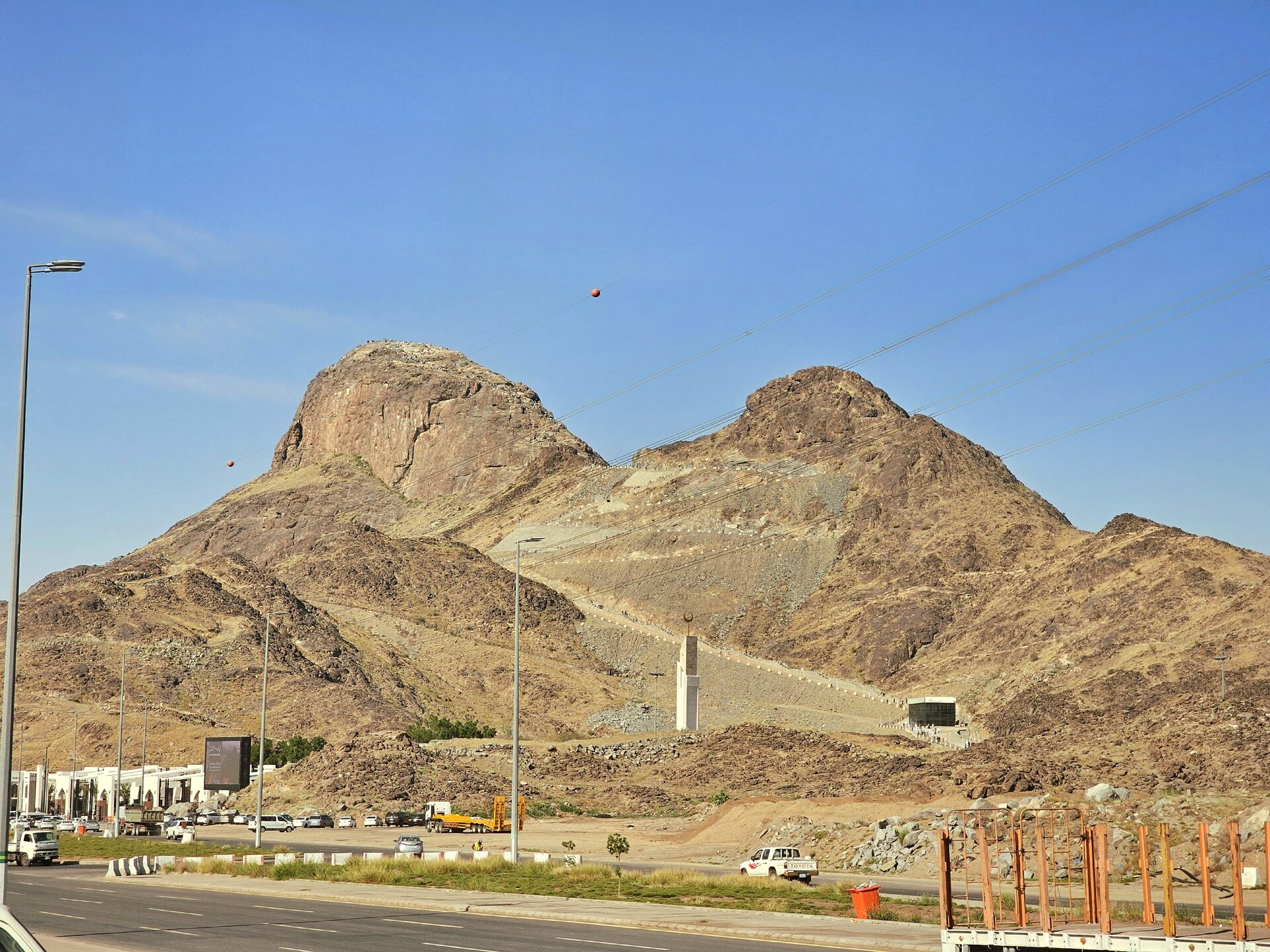
Jabal al-Nour and the Cave of Hira
Jabal al-Nour (“Mountain of Light”) is where the angel Jibra’il (Gabriel) first appeared to the Prophet Muhammad (PBUH) in 610 CE, revealing the opening verses of Surah al-Alaq. The Cave of Hira — a small rock enclosure near the summit — is where Muhammad used to retreat for meditation before his prophethood.
The climb involves roughly 1,750 steps and takes between 45 minutes and two hours depending on fitness. The path is steep and uneven, so sturdy closed-toe shoes are essential. During Hajj season, an estimated 5,000 pilgrims climb the mountain daily. If you enjoy physical challenges in the Saudi outdoors, our Saudi Arabia hiking guide covers preparation tips that apply here too.
Practical tip: Start your climb before dawn or after Asr prayer to avoid the worst heat. Bring at least two litres of water. There is no entrance fee. The mountain is roughly 15–20 minutes by taxi from central Mecca.
Jabal Thawr and the Cave of Thawr
Jabal Thawr lies about 12 kilometres south of Mecca. This is the mountain where the Prophet Muhammad (PBUH) and Abu Bakr (RA) hid for three days during the Hijrah — their migration from Mecca to Medina in 622 CE. According to tradition, Allah sent a spider to spin a web across the cave entrance and a pair of doves to nest there, concealing the two men from pursuing Quraysh scouts.
The climb is significantly more demanding than Jabal al-Nour — expect two to four hours to reach the cave, depending on fitness. The Saudi authorities advise against the climb for anyone with heart, respiratory, or joint conditions. Those who make the ascent are rewarded with panoramic views of the Meccan valley.
Practical tip: The best months to attempt the climb are November to February. Arrange return transport in advance — taxis do not wait at the base. There is no entrance fee.
Jannat al-Mu’alla Cemetery
Jannat al-Mu’alla (also called Al-Hajun) is the principal cemetery of Mecca, located north of Masjid al-Haram near the Mosque of the Jinn. It predates Islam and was used as a burial ground by the Quraysh tribe. After the advent of Islam, it became the resting place of several members of the Prophet’s family and early companions.
Notable figures buried here include:
- Khadijah bint Khuwaylid (RA) — the Prophet’s first wife and the first person to accept Islam
- Abdul Muttalib — the Prophet’s grandfather
- Abu Talib — the Prophet’s uncle and father of Ali (RA), the fourth caliph
- Qasim — the Prophet’s infant son
- Aminah bint Wahb — the Prophet’s mother (some historians dispute her exact burial location)
- Women: After Fajr prayer until Dhuhr, and after Isha until approximately midnight
- Men: After Dhuhr prayer until Isha
- Abbas ibn Abdul Muttalib (RA) — the Prophet’s uncle
- Hasan ibn Ali (RA) — the Prophet’s grandson
- Uthman ibn Affan (RA) — the third Caliph of Islam
- Fatimah (RA) — the Prophet’s daughter (exact location disputed)
- Ibrahim — the Prophet’s infant son
- Sa’d ibn Abi Waqqas (RA) — the commander who conquered Persia
- Abdur-Rahman ibn Auf (RA) — one of the ten promised Paradise
- Abdullah ibn Mas’ud (RA) — an early convert and Quran reciter
- Masjid al-Fath — the largest, where the Prophet prayed for victory
- Masjid Salman al-Farisi — named after the companion who suggested the trench strategy
- Masjid Abu Bakr
- Masjid Umar ibn al-Khattab
- Masjid Ali ibn Abi Talib
- Masjid Fatimah az-Zahra
- Hamza ibn Abdul Muttalib (RA) — the Prophet’s uncle, known as “the Lion of Allah”
- Abdullah ibn Jahsh (RA) — an early companion and military commander
- Mus’ab ibn Umair (RA) — the first ambassador of Islam
- Al-Arish Mosque — where the Prophet’s command tent stood during the battle
- The Martyrs’ Cemetery (Maqbarat Shuhada’ Badr) — an enclosed area containing the graves of 13 of the 14 Muslim martyrs from the battle
- Al-Adwa al-Dunya and al-Adwa al-Quswa — the two slopes on either side of the valley where the armies positioned themselves
- Keep your voice low at graves and cemeteries — these are places of prayer, not conversation
- Do not take selfies at grave sites. Photography policies vary — some sites prohibit it entirely
- Pray for the deceased rather than asking them for intercession, in accordance with mainstream Islamic guidance
- Follow security instructions — Saudi authorities manage crowd flow at major sites, especially during peak seasons
- Remove shoes before entering any mosque
- Do not touch or lean on enclosures and grilles around graves
- Hajj 2026 Guide — Complete guide to performing Hajj, from registration to rituals
- Mecca Travel Guide 2026 — Masjid al-Haram, hotels, Hajj and Umrah tips
- Medina Travel Guide 2026 — The Prophet’s Mosque, Rawdah access, hotels and practical tips
- Umrah Guide 2026 — Rituals, costs, best times, and everything you need to know
- Saudi Arabia Travel Guide 2026 — The complete guide to visiting the Kingdom
- Saudi Arabia Visa Guide — Every visa type explained
The domes and mausoleums that once stood over the graves were demolished in 1925 under King Abdul Aziz Al Saud, in accordance with the hadith prohibiting elaborate structures over burial sites. Today, the graves are marked only by small stone arrangements. The cemetery is open year-round and free to enter.
Masjid al-Jinn (Mosque of the Jinn)
Just north of Masjid al-Haram, adjacent to Jannat al-Mu’alla, stands Masjid al-Jinn. This mosque marks the spot where, according to Surah al-Jinn in the Quran, a group of jinn listened to the Prophet Muhammad (PBUH) reciting the Quran and subsequently embraced Islam. The Prophet later met their leaders here and accepted their oath of allegiance (bay’ah).
The original structure dates to around 1700 CE and was originally underground. The current building features modern air-conditioned facilities and a distinctive contemporary minaret. There are no fixed visiting hours — the mosque is open for prayer at all times. It is also known by the names Masjid Haras, Masjid Bayah, and the Mosque of Allegiance.
Sacred Sites in Medina
If Mecca is where Islam was born, Medina is where it grew into a community. The city of the Prophet holds more ziyarat sites than any other location in Saudi Arabia, from the second holiest mosque in Islam to the graves of thousands of companions.
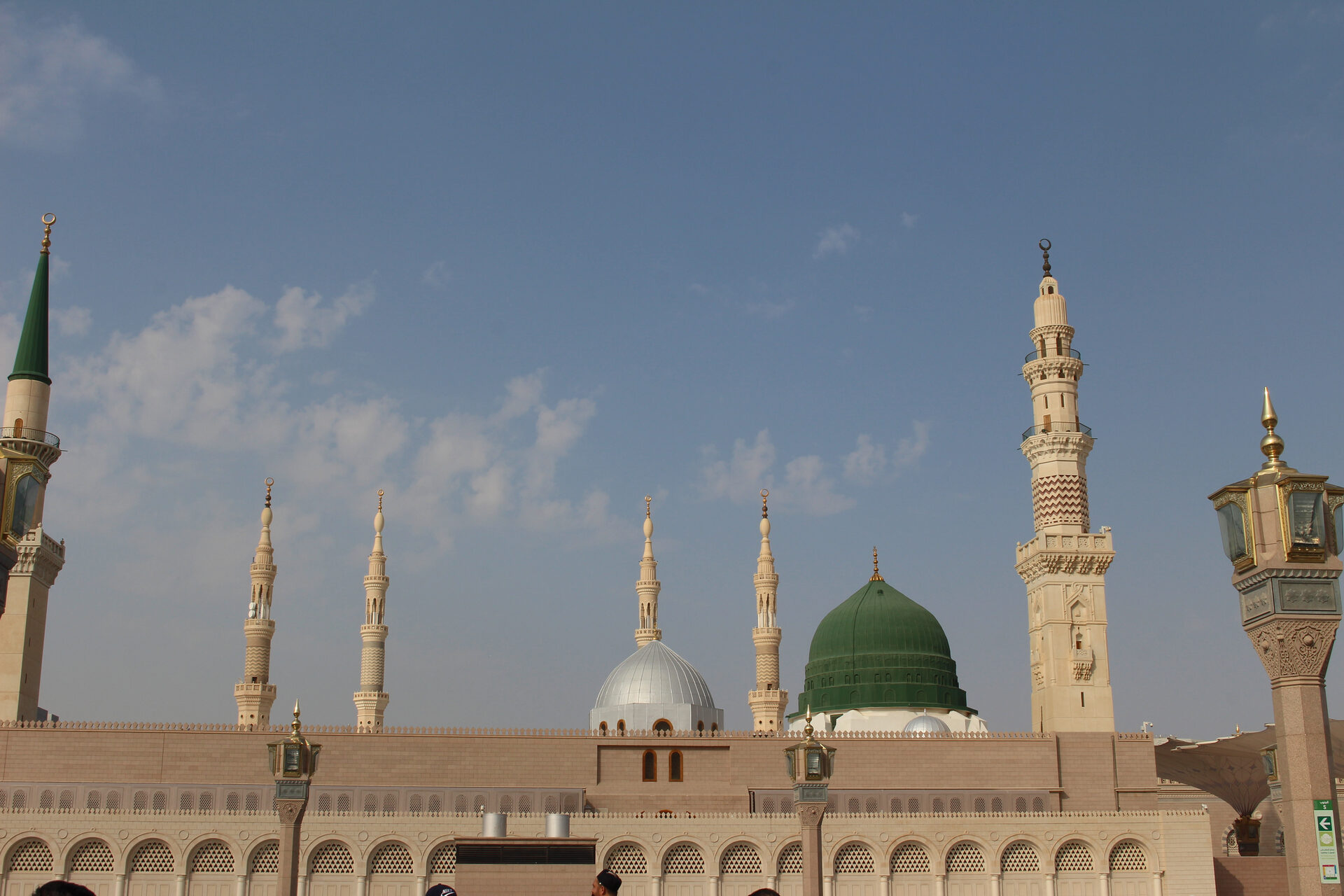
Masjid an-Nabawi and the Rawdah
Al-Masjid an-Nabawi — the Prophet’s Mosque — is the second holiest site in Islam and the spiritual heart of Medina. Built by the Prophet Muhammad (PBUH) himself in 622 CE after his arrival from Mecca, the mosque has been expanded many times and today accommodates over one million worshippers.
Beneath the mosque’s famous green dome lies the burial chamber of the Prophet Muhammad (PBUH), alongside his closest companions Abu Bakr (RA) and Umar ibn al-Khattab (RA). The area between the Prophet’s burial chamber and his pulpit (minbar) is known as the Rawdah (Ar-Rawdah ash-Sharifah), described by the Prophet as “a garden from the gardens of Paradise.”
Visiting the Rawdah requires advance booking through the official Nusuk app. Entry is managed by timed slots:
Visitors typically have 15–30 minutes inside the Rawdah. Use this time for two rak’ahs of nafl prayer and personal du’a. Men enter through Gate 36; women through Gate 25. The mosque is open 24 hours but is quietest just after Fajr or during mid-morning on weekdays.
Practical tip: Download the Nusuk app and book your Rawdah slot as early as possible — spaces fill quickly during Hajj and Umrah season. Observe the Saudi dress code strictly within the mosque. Shoes must be removed before entering.
Jannat al-Baqi Cemetery
Jannat al-Baqi (“Garden of Heaven”) is the main cemetery of Medina, located immediately southeast of Masjid an-Nabawi. Founded during the Prophet’s time, it is the resting place of approximately 10,000 companions (Sahabah) and many members of the Prophet’s family. After Jannat al-Mu’alla in Mecca, it is regarded as the most sacred cemetery in the Islamic world.
Notable figures buried in Jannat al-Baqi include:
Like Jannat al-Mu’alla, all mausoleums and domed structures were demolished in 1925. Today the cemetery consists of open ground with graves marked by simple stones. It is accessible from the eastern gate of Masjid an-Nabawi and is generally open after each of the five daily prayers. There is no entrance fee.
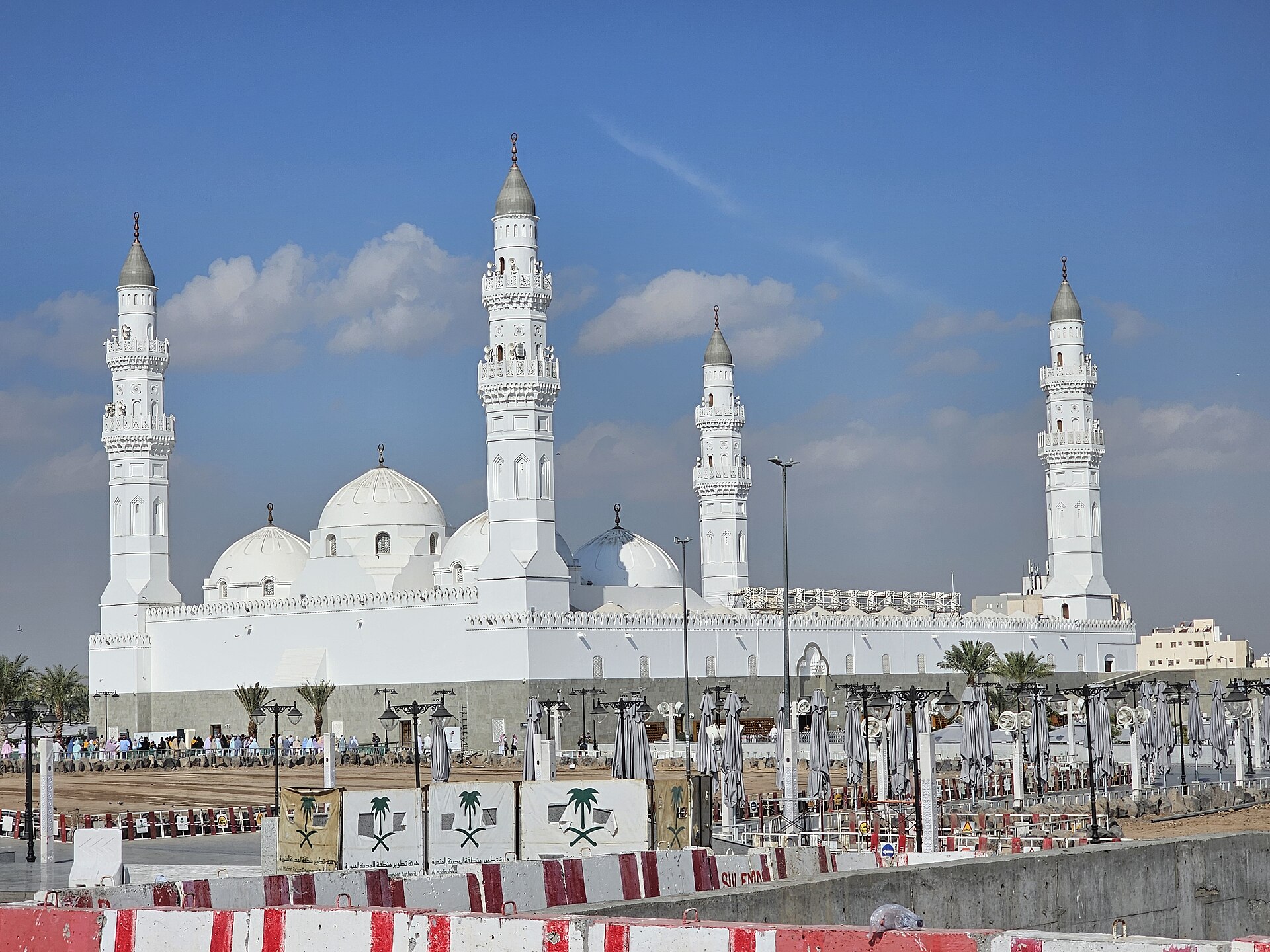
Quba Mosque
Quba Mosque holds a unique place in Islamic history as the first mosque ever built. The Prophet Muhammad (PBUH) laid its first stone upon arriving in the village of Quba during the Hijrah, before continuing to Medina. Abu Bakr, Umar, and Uthman placed the stones that followed.
The Quran refers to Quba as “a mosque founded on piety from the first day” (Surah at-Tawbah, 9:108). The Prophet himself said that performing wudu at home and then praying two rak’ahs at Quba Mosque earns a reward equal to performing Umrah — a powerful incentive for visitors.
The present structure dates to a 1984–1986 reconstruction commissioned by King Fahd and designed by the Egyptian architect Abdel-Wahed El-Wakil. It retains Medina’s distinctive ribbed white domes and basalt-faced exterior. The mosque is located about 3 kilometres south of Masjid an-Nabawi. A paved pedestrian walkway — the Quba Walk — connects the two mosques in about 30–40 minutes on foot. The mosque is open 24 hours.
Masjid al-Qiblatain (Mosque of the Two Qiblas)
Masjid al-Qiblatain commemorates one of the most dramatic moments in early Islamic history: the divine command to change the direction of prayer (qibla) from Jerusalem to Mecca. In approximately 624 CE, while leading congregational prayer, the Prophet Muhammad (PBUH) received the revelation mid-prayer and turned from facing Jerusalem to facing the Kaaba.
The mosque originally featured two mihrabs (prayer niches) — one pointing towards Jerusalem and one towards Mecca. A major renovation in 1987 removed the Jerusalem-facing niche but preserved the historical significance of the site. The current mosque covers approximately 3,920 square metres and is painted in a distinctive bright white. It is open to both Muslim worshippers and non-Muslim visitors interested in its historical significance.
The Seven Mosques (Al-Masajid as-Sab’ah)
The Seven Mosques are a cluster of small mosques in Medina linked to the Battle of the Trench (Khandaq) in 627 CE, when the Prophet Muhammad (PBUH) and his companions defended Medina by digging a trench around the city’s northern approaches. The mosques are named after key figures from the battle:
Some historians include Masjid al-Qiblatain as the seventh. The mosques are clustered together on the western side of Mount Sal’ and can be visited in a single walking tour of about an hour. They are open and free to visit at all times.
Mount Uhud and the Martyrs’ Cemetery
Mount Uhud, located about 5 kilometres north of Masjid an-Nabawi, is the site of the Battle of Uhud (625 CE), one of the defining moments of early Islam. The mountain itself holds special status — the Prophet said: “Uhud is a mountain that loves us and we love it.”
At the foot of Mount Uhud lies the Shuhada Uhud Cemetery, an enclosed graveyard containing the remains of the Muslim martyrs who fell in the battle. The central graves belong to:
Visitors cannot enter the gated enclosure but can view the graves from outside and offer prayers for the deceased. The Prophet himself used to visit the graves of the Uhud martyrs regularly, making it a sunnah to do so. The site is about 15 minutes by taxi from central Medina and is free to visit. Early morning or late afternoon offers the most comfortable conditions.
Beyond Mecca and Medina
The Battlefield of Badr
The Battle of Badr (624 CE) was the first major military engagement in Islamic history and a decisive turning point for the fledgling Muslim community. With just 313 fighters facing a Quraysh army of roughly 1,000, the Muslim victory at Badr confirmed for early believers that their cause had divine support.
The battlefield is located in the town of Badr, approximately 150 kilometres southwest of Medina (a 2–3 hour drive). Key sites at Badr include:
Practical tip: Hire a local guide — signage at Badr is limited, and a knowledgeable guide can identify the exact positions and share authentic battle narratives. Plan a full day for the trip from Medina. Start early, bring water and sun protection.
Planning Your Ziyarat Trip
Best Time to Visit
The ideal months for ziyarat are October to March, when temperatures in Mecca and Medina drop to a more manageable 20–30°C. This is especially important if you plan to climb Jabal al-Nour or Jabal Thawr, where the exposed terrain offers no shade. Summer temperatures regularly exceed 45°C and make outdoor ziyarat sites dangerous.
Ramadan offers a uniquely spiritual atmosphere but brings significantly larger crowds. The weeks immediately following Hajj season (typically late June to mid-July in 2026) are among the busiest. For quieter visits, aim for November or February.
Getting Around
Between Mecca and Medina: The Haramain High-Speed Railway connects the two holy cities via Jeddah and King Abdullah Economic City. Journey time is approximately 2.5 hours. Tickets can be booked through the SAR (Saudi Arabia Railways) app or at stations.
Within cities: Ride-hailing apps (Uber and Careem) are widely available and affordable. For visiting multiple ziyarat sites in a single day, hiring a private car with a driver who knows the sacred sites is the most efficient option — expect to pay SAR 300–500 for a half-day tour. Many hotels in Mecca and Medina can arrange ziyarat tours.
To Badr: No public transport runs to the Badr battlefield. You will need a rental car or private driver from Medina.
What to Wear
All ziyarat sites require modest dress. For mosques and cemeteries, women must cover their hair, arms, and legs. Men should wear clothing that covers the knees and shoulders. If you are combining ziyarat with Umrah, you will already be familiar with the requirements. For a detailed breakdown, see our Saudi Arabia dress code guide.
For mountain sites (Jabal al-Nour, Jabal Thawr), wear sturdy, closed-toe hiking shoes with good grip. Sandals and flip-flops are inadequate for the steep, rocky terrain.
Etiquette at Sacred Sites
Ziyarat is an act of reflection, not tourism. Keep the following principles in mind:
Visa and Entry
Ziyarat sites in Saudi Arabia are accessible to holders of a tourist e-visa, Umrah visa, or Hajj visa. The tourist e-visa is the most flexible option for independent travellers — it allows multiple entries and a stay of up to 90 days. Note that non-Muslims cannot enter the sacred precincts of Mecca or the inner area of Medina around Masjid an-Nabawi. The Badr battlefield and some outer Medina sites are accessible to all visitors.
Suggested Ziyarat Itineraries
| Duration | Itinerary | Sites Covered |
|---|---|---|
| 3 days | Mecca + Medina essentials | Masjid al-Haram, Jannat al-Mu’alla, Rawdah, Jannat al-Baqi, Quba Mosque |
| 5 days | Comprehensive ziyarat | All Mecca sites including Jabal al-Nour + all Medina sites including Uhud and Seven Mosques |
| 7 days | Full pilgrimage + Badr | All sites above + Umrah rites + Badr battlefield day trip + Masjid al-Qiblatain |
For a complete overview of planning your trip to the Kingdom, see our Saudi Arabia travel guide 2026.