
Diriyah is the single most important day trip you can take from Riyadh. Twenty minutes northwest of central Riyadh lies the birthplace of the Saudi state — a walled city of honey-coloured mud-brick palaces overlooking Wadi Hanifah, now crowned as a UNESCO World Heritage Site and surrounded by a $63 billion giga-project that is transforming it into one of the world’s most ambitious cultural destinations. Whether you’re planning a full Riyadh itinerary or just have a single free day in the capital, Diriyah deserves it. This guide covers everything you need for a perfect day: what to see at At-Turaif, where to eat at Bujairi Terrace, how to walk Wadi Hanifah, and the practical details that most guides skip.
Best Time to Visit: October to March (cooler months); evenings year-round
Getting There: 20 km northwest of central Riyadh — 15–25 min by car or taxi
Visa Required: Yes — tourist e-visa available online
Budget: SAR 100–400 per person (approx. $27–$107 USD) depending on dining
Must-See: At-Turaif UNESCO site, Bujairi Terrace, Wadi Hanifah
Avoid: Visiting midday in summer — temperatures exceed 45°C and most outdoor areas are unbearable
Why Diriyah Matters: A Brief History
Diriyah is not just another historical site. It is the founding place of Saudi Arabia itself. In 1446, Mani’ Al-Muraydi — an ancestor of the current royal family — established a settlement on the banks of Wadi Hanifah. Over the following three centuries, Diriyah grew into the most powerful city in central Arabia.
The pivotal moment came in 1744, when the local ruler Muhammad ibn Saud formed an alliance with the religious scholar Muhammad ibn Abd al-Wahhab. That pact created the First Saudi State, with Diriyah as its capital. The city became the political and spiritual centre of a domain that stretched from the Gulf coast to the Hejaz.
It did not last. In 1818, Ottoman-Egyptian forces under Ibrahim Pasha besieged Diriyah for six months, eventually breaching the defences at At-Turaif. They razed the palaces, demolished the walls, and cut down every date palm in the oasis. The Saudi capital moved first to Riyadh, and Diriyah was left in ruins for two centuries.
Today, the Saudi government is spending $63 billion to restore and reimagine Diriyah as a living cultural district — not a museum frozen in time, but a neighbourhood where people eat, shop, and live among architecture built in the traditional Najdi style. The centrepiece is At-Turaif, the fortified hilltop district where the Saudi rulers once governed, now painstakingly restored and open to visitors. If you’re interested in the broader context of Saudi Arabia’s UNESCO sites, Diriyah is the one that tells the story of how modern Saudi Arabia began.
At-Turaif: The UNESCO World Heritage Site
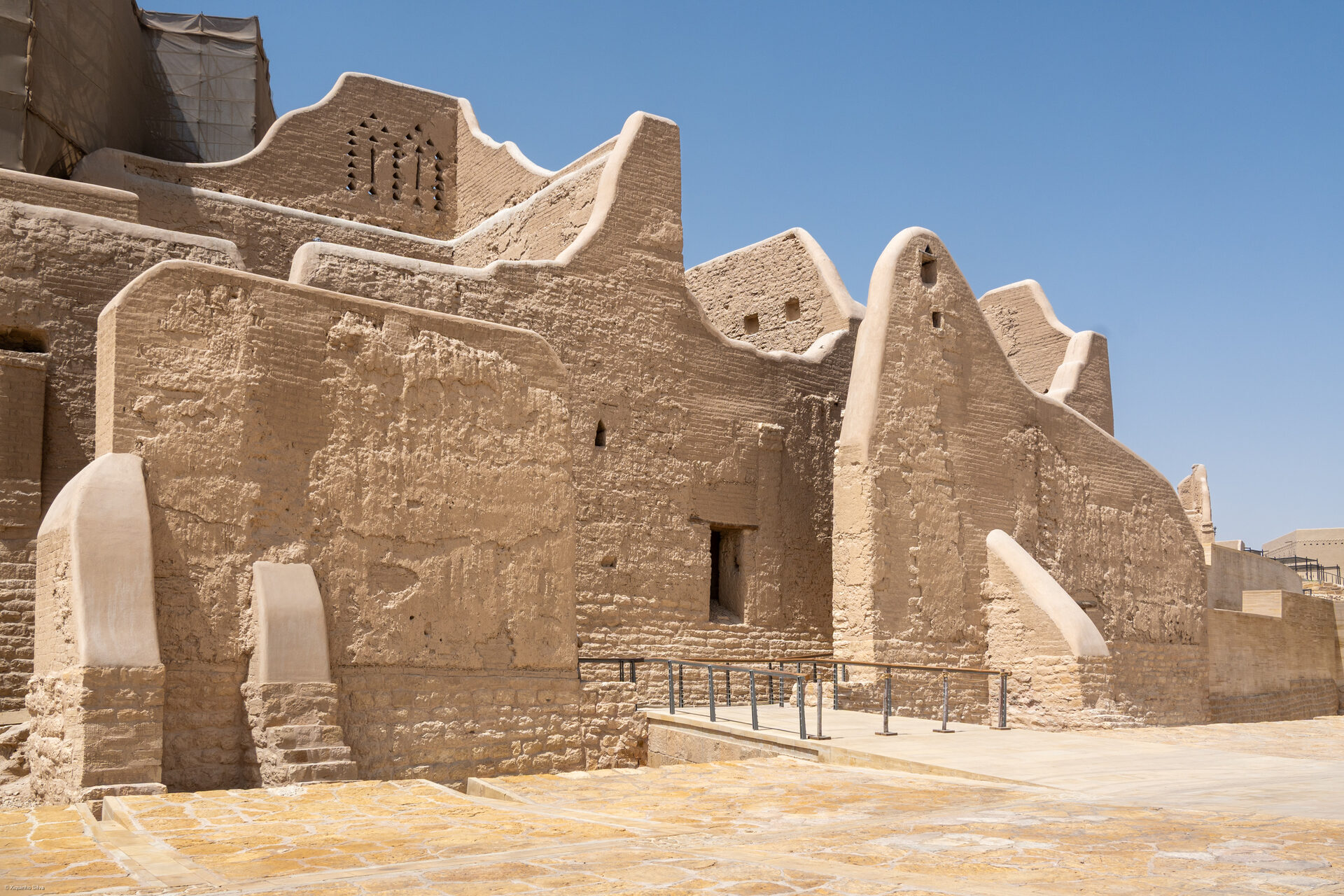
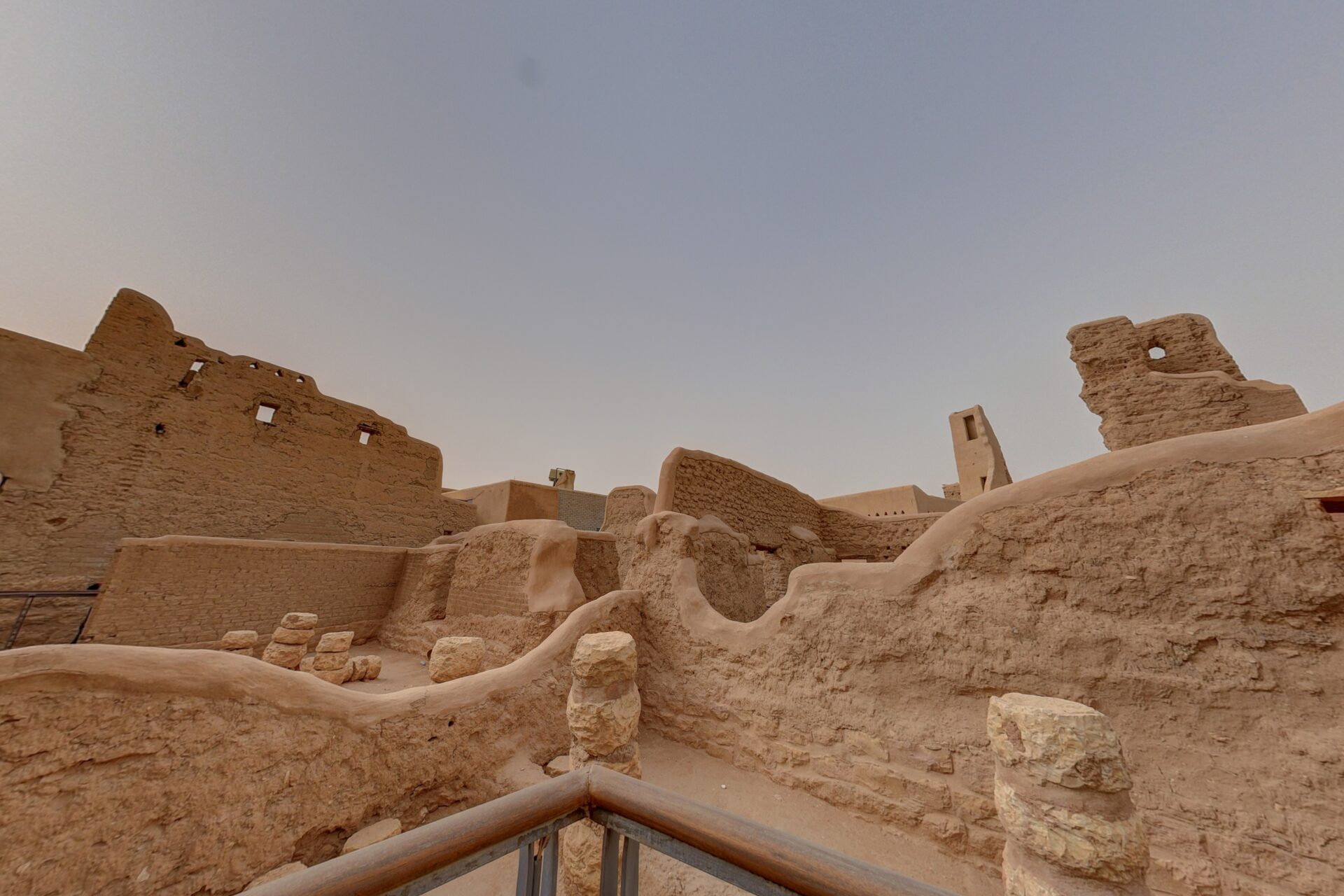
At-Turaif is the heart of any Diriyah visit. This fortified district sits on a cliff above the western bank of Wadi Hanifah, and it was inscribed on the UNESCO World Heritage List in 2010 as a masterpiece of Najdi mud-brick architecture. Walking through it takes one to two hours, depending on how thoroughly you explore the exhibitions.
Salwa Palace
The largest structure in At-Turaif, Salwa Palace covers roughly 10,000 square metres and was built around 1765 during the reign of Imam Abdul Aziz ibn Muhammad. It served as the seat of government for the First Saudi State. The palace has been restored and now houses the Diriyah Exhibition, which traces the history of the Saudi state through artefacts, documents, and immersive displays. The scale of the building — multi-storey, with courtyards, reception halls, and private quarters — gives a clear sense of how powerful Diriyah was at its peak.
At-Turaif Mosque
Nestled beside Salwa Palace and overlooking Wadi Hanifah, At-Turaif Mosque is one of the most beautiful structures in the district. Its clean geometric lines and thick mud-brick walls are a textbook example of Najdi religious architecture. It is not an active prayer mosque for visitors, but it forms an important part of the walking tour.
Exhibitions and Galleries
At-Turaif contains several curated exhibitions spread across its restored buildings:
- Diriyah Exhibition (Salwa Palace) — the flagship gallery covering the city’s history, governance, and the founding of the Saudi state
- Social Life Exhibition — explores the daily customs, traditions, and domestic life of Diriyah’s residents in the 18th century
- Military Exhibition — showcases the weapons, armour, and fortification strategies used during battles, including the 1818 siege
- Arabian Horse Gallery — a celebration of the Arabian horse’s role in Saudi culture, with detailed displays on breeding, horsemanship, and the horse’s significance in war and trade
Tip: Start at the At-Turaif Welcome Centre to pick up a free map. The galleries have a natural walking order, but it’s easy to miss the Military Exhibition, which is tucked into a side courtyard off the main route.
Opening Hours and Entry
| Day | Hours |
|---|---|
| Saturday – Wednesday | 10:00 AM – 12:00 AM |
| Thursday | 10:00 AM – 1:00 AM |
| Friday | 2:00 PM – 1:00 AM |
Entry to At-Turaif requires a Diriyah Access Pass, which you can get free from diriyah.sa. Before 5:00 PM, access is free. After 5:00 PM, the pass costs SAR 50 (approximately $13 USD) — though this fee is redeemable as credit when dining at any Bujairi Terrace restaurant. In practice, if you plan to eat there (and you should), the evening entry is essentially free.
Bujairi Terrace: Where to Eat
Directly across from At-Turaif, on the eastern bank of Wadi Hanifah, sits Bujairi Terrace — Diriyah’s dining and lifestyle district. Opened in December 2022, the terrace features over 20 restaurants and cafés built in the same Najdi architectural style as the heritage site, with outdoor seating that overlooks the illuminated palaces of At-Turaif at night. It is, without exaggeration, one of the best dining locations in Riyadh. For a broader look at the kingdom’s food scene, see our Saudi Arabia food and dining guide.
Fine Dining
- Hakkasan — Michelin-starred Cantonese cuisine. The London and Dubai branches both hold Michelin stars; the Riyadh outpost offers the same calibre of dim sum, Chilean sea bass in honey, and crispy duck salad. Expect to spend SAR 300–500 per person.
- Tatel — Spanish haute cuisine from the Madrid-born brand, with outposts in Ibiza, Doha, and Los Angeles. Known for truffle risotto, red tuna tartare, and slow-cooked beef ribs. Live entertainment most evenings.
- Long Chim — Michelin-starred Thai street food elevated to fine dining, created by Australian chef David Thompson. The name means “come and taste” in Thai.
- Chez Bruno — French truffle specialist, with dishes centred around black and white truffles from Provence.
Casual Dining and Cafés
- Angelina — the legendary Parisian salon de thé, famous for its African hot chocolate and Mont Blanc pastry. Open daily from 9:00 AM.
- Café de L’Esplanade — the first branch outside Paris. Classic French brasserie fare with outdoor terrace seating.
- Cova — Milanese pasticceria founded in 1817, serving Italian pastries, coffee, and light meals.
- Joe & The Juice — reliable option for fresh juices and lighter bites.
Saudi and Regional
- Jareed Samhan — the essential Saudi restaurant on the terrace. Specialises in Najdi dishes: jareesh, matazeez, kabsa, and muqalal (slow-cooked lamb). If you eat at one place that represents the local food culture, make it this one.
- Takya — regional Saudi cuisine with a modern twist.
- Villa Mamas — Bahraini and Gulf comfort food.
Budget tip: The SAR 50 evening access pass is redeemable at any Bujairi Terrace restaurant, so factor this into your dining plans. Book your restaurant in advance on weekends — Hakkasan and Tatel fill up fast, especially on Thursday and Friday nights.
Bujairi Terrace Hours
| Day | Hours |
|---|---|
| Saturday – Tuesday | 9:00 AM – 12:00 AM |
| Wednesday – Friday | 9:00 AM – 1:00 AM |
Wadi Hanifah: Nature Between the Palaces
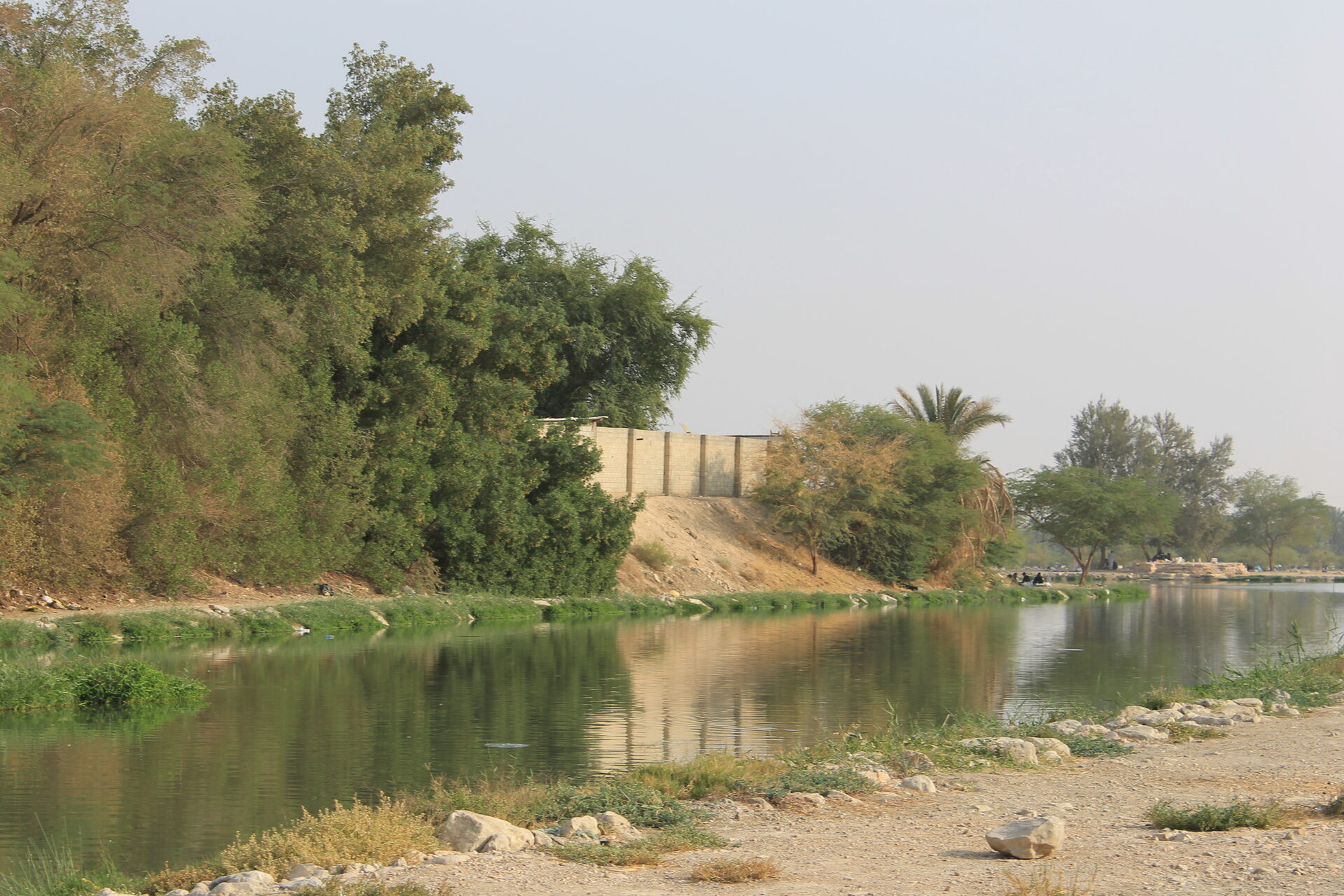
Wadi Hanifah is the green spine of Diriyah — a restored valley that runs between At-Turaif on the west and Bujairi Terrace on the east. Once heavily polluted, the wadi has been the subject of one of Saudi Arabia’s most successful environmental rehabilitation projects. Today it offers kilometres of paved walking and cycling paths, date palm groves, picnic areas, and shallow streams where families gather on weekends.
For a day trip, the Diriyah section of Wadi Hanifah is manageable as a one-to-two-hour walk. The path connects the At-Turaif Welcome Centre to the terrace dining area, making it a natural interlude between history and lunch. Early mornings and late afternoons are the best times to walk — the wadi is shaded in parts but fully exposed in others. If you’re interested in more nature activities in the kingdom, our Saudi Arabia hiking guide covers the best trails from Asir to Tabuk.
The Diriyah Gate Mega-Project: What’s Coming
Diriyah is in the middle of one of the most ambitious urban development projects on earth. The Diriyah Gate project, funded by Saudi Arabia’s Public Investment Fund (PIF), is transforming the area surrounding At-Turaif into a cultural, hospitality, and retail district built entirely in the traditional Najdi architectural style.
When complete, the development will include:
- 38 hotels — including properties by Four Seasons, Aman Resorts, and Edition Hotels
- 300+ retail outlets in traditional souq-style settings
- 100+ dining venues beyond the current Bujairi Terrace offerings
- Museums and galleries — including Diriyah Art Futures, a contemporary art centre
- A performing arts theatre
- Residential neighbourhoods — making Diriyah a living district, not just a tourist attraction
Phases are opening in stages through 2026 and beyond. Bujairi Terrace was the first completed phase. Visitors today will see active construction in surrounding areas, but this doesn’t detract from the core At-Turaif and Bujairi experience. If anything, it adds a sense of witnessing something being built in real time. For the broader picture of Saudi Arabia’s transformation, see our Saudi Arabia travel guide.
Diriyah Season: November to March
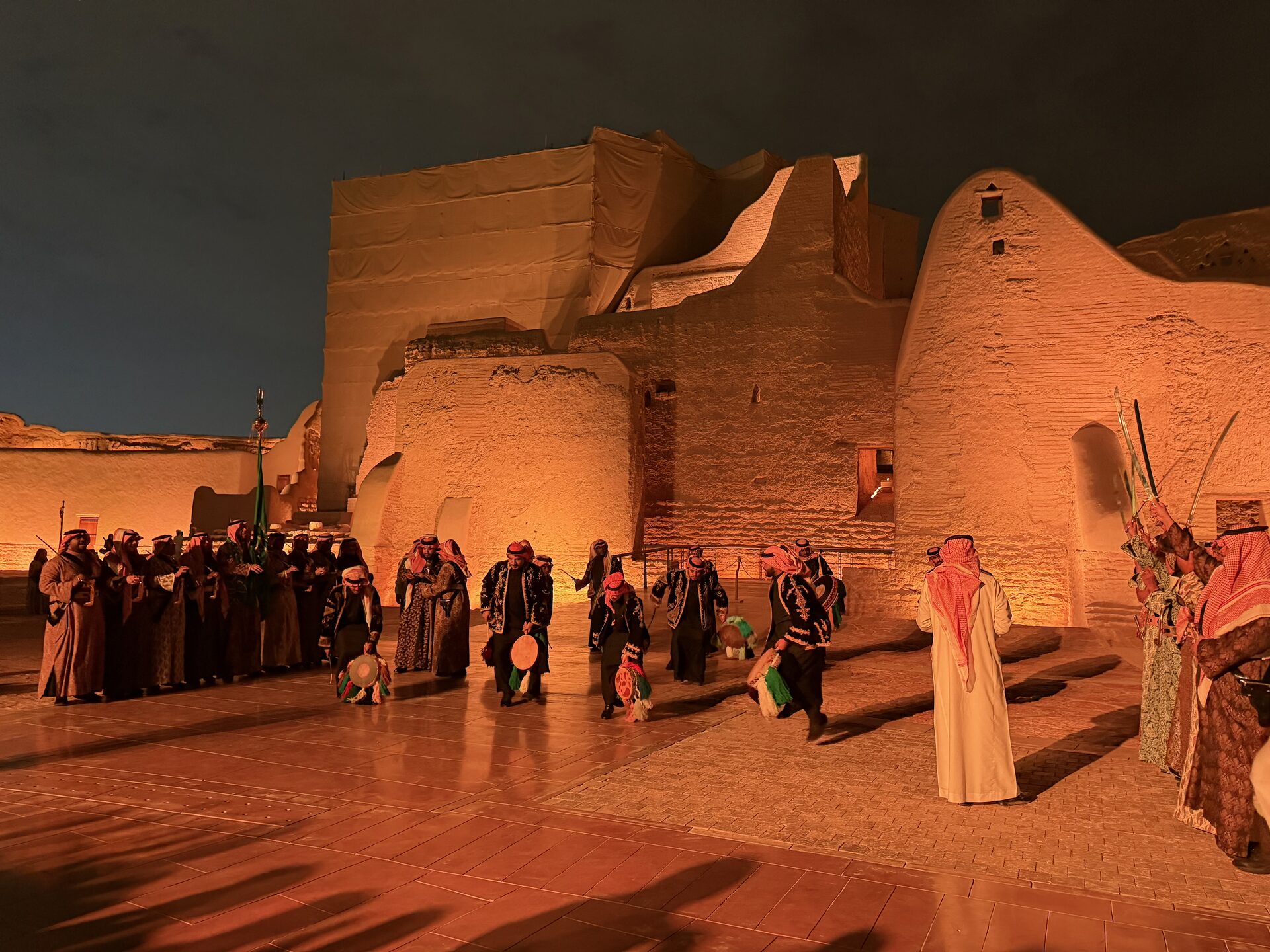
Every winter, Diriyah hosts its own dedicated entertainment season — separate from Riyadh Season — with cultural events, live performances, immersive shows, and outdoor activities spread across the heritage district and surrounding parkland.
The 2025–2026 Diriyah Season ran from 1 November 2025 to 23 March 2026, with headline events including:
- Layali Al-Diriyah — nightly fine dining with live music and views over At-Turaif
- Hal Al-Qusoor — immersive storytelling within the palaces of At-Turaif, bringing the history of Saudi imams and princes to life
- Sada Al-Wadi — evening poetry, music, and Saudi folk art (Samri) set in Wadi Safar
- Souq Al-Mawsim — a cultural market that in 2025–2026 celebrated Saudi-Japanese relations with a Kyoto-themed section
- Minzal — glamping, stargazing, and art installations in Diriyah’s natural surroundings
If you’re visiting Riyadh between November and March, check the Saudi Arabia events calendar for current Diriyah Season programming. Events are ticketed separately and often sell out on weekends.
How to Get to Diriyah from Riyadh
Diriyah is approximately 20 kilometres northwest of central Riyadh. Getting there is straightforward.
By Taxi or Ride-Hail
The easiest option. Uber and Careem both operate in Riyadh and will take you directly to the Diriyah parking area. From central Riyadh (Olaya district), expect a 15–25 minute drive depending on traffic, and a fare of SAR 25–50 one way. Ask to be dropped at the Bujairi Parking entrance.
By Car
Take Highway 65 (King Khalid Road) northwest from central Riyadh, following signs for Diriyah. Paid parking is available at two locations:
- Bujairi Parking — closest to Bujairi Terrace and the At-Turaif Welcome Centre
- Samhan Parking — slightly further, but less crowded on busy evenings
Parking costs SAR 30 for the first three hours and SAR 10 for each additional hour. Valet parking is available at SAR 150. If you’re exploring Riyadh more broadly by car, our Saudi Arabia car rental guide covers the essentials.
By Public Transport
Riyadh’s metro system (opened in stages from 2024) has improved connectivity across the city. While there is no metro station directly inside the Diriyah heritage area, you can take the Orange Line (Line 3) to the nearest station and connect via a short taxi ride. Public bus routes also serve the area — check the Riyadh Bus app for current routes.
Visa note: All visitors to Saudi Arabia need either a tourist e-visa (available to 60+ nationalities), a transit visa, or a residence visa. The tourist e-visa is the simplest option for most travellers — see our complete Saudi Arabia visa guide for the application process, costs, and eligible countries.
Suggested Diriyah Day Trip Itinerary
Here’s how to structure a full day at Diriyah, whether you prefer a morning or afternoon start.
Option A: Morning Start (Best for Photographers)
| Time | Activity |
|---|---|
| 9:00 AM | Arrive at Bujairi Parking. Walk to At-Turaif Welcome Centre |
| 9:30 AM – 12:00 PM | Explore At-Turaif: Salwa Palace, exhibitions, galleries. Morning light is best for photography |
| 12:00 – 1:00 PM | Walk through Wadi Hanifah toward Bujairi Terrace |
| 1:00 – 2:30 PM | Lunch at Bujairi Terrace (Jareed Samhan for Saudi food, Angelina for café fare) |
| 2:30 – 3:30 PM | Browse the retail outlets and galleries on the terrace |
| 3:30 PM | Head back to Riyadh or continue to other Riyadh attractions |
Option B: Afternoon-to-Evening (Best for Atmosphere)
| Time | Activity |
|---|---|
| 3:00 PM | Arrive at Diriyah. Pick up your Diriyah Access Pass at the welcome centre |
| 3:00 – 5:00 PM | Explore At-Turaif in the golden afternoon light |
| 5:00 – 6:00 PM | Walk Wadi Hanifah as the sun sets — the palaces glow amber in the fading light |
| 6:00 – 8:00 PM | Dinner at Bujairi Terrace (book Hakkasan or Tatel in advance for the best views of the illuminated At-Turaif) |
| 8:00 – 9:00 PM | After-dinner stroll along the terrace; coffee at Cova or Angelina |
Tip: The afternoon-to-evening itinerary is the better choice for most visitors. At-Turaif is dramatically lit after dark, and the terrace restaurants are at their most atmospheric in the evening. Sunset over Wadi Hanifah, with the mud-brick palaces glowing on the cliff above, is the single best photo opportunity in Riyadh.
What to Wear and What to Bring
Diriyah is an outdoor site. Most of your time will be spent walking along stone paths, open courtyards, and the wadi trail. Here’s what to keep in mind:
- Footwear: Comfortable walking shoes. The At-Turaif paths are stone and sand — heels and flip-flops are a bad idea.
- Clothing: Saudi Arabia’s dress code for tourists is relaxed compared to a decade ago, but cover your shoulders and knees. Loose, breathable fabrics work best.
- Sun protection: Hat, sunglasses, and sunscreen are essential for morning visits. There is limited shade on the At-Turaif walking route.
- Water: Bring a bottle. There are water stations and cafés at both At-Turaif and Bujairi, but you’ll want water for the wadi walk.
- Camera: Diriyah is extraordinarily photogenic. Bring your best camera — the mud-brick textures, geometric shadows, and wadi panoramas reward a good lens.
Diriyah with Kids
Diriyah works well as a family day trip. The At-Turaif site is stroller-accessible on most main paths (though some side courtyards have steps), and children generally enjoy the fortress-like atmosphere of the palaces and the Arabian Horse Gallery. The Wadi Hanifah walk is flat and easy for older children.
At Bujairi Terrace, family-friendly options include Angelina (pastries and hot chocolate are a hit with younger visitors), Joe & The Juice, and Brunch & Bake. During Diriyah Season (November to March), dedicated children’s events like Al-Huwayett and Msalliyah transform heritage spaces into interactive play areas. For more family-oriented planning, see our Saudi Arabia with kids guide.
Combining Diriyah with Other Riyadh Day Trips
If you have multiple days in Riyadh, Diriyah pairs naturally with other excursions:
- Edge of the World — the dramatic Jebel Fihrayn cliff face, about 90 minutes northwest of Riyadh. You could do Diriyah in the afternoon/evening and Edge of the World the next morning (it’s best at dawn).
- Islamic heritage sites of Riyadh — mosques, madrasas, and historic quarters in central Riyadh, easily combined with a morning of Diriyah and an afternoon in the city centre.
- Riyadh Season events — if your visit coincides with the season (typically October to March), you can fill evenings with concerts, shows, and themed entertainment zones across the city.
Diriyah itself takes a minimum of three to four hours to do justice, and a full half-day if you include a leisurely lunch. Don’t rush it to squeeze in another attraction — the atmosphere rewards slow exploration.
Budget Breakdown: What a Diriyah Day Trip Costs
| Expense | Cost (SAR) | Cost (USD approx.) |
|---|---|---|
| Taxi from central Riyadh (return) | 50–100 | $13–$27 |
| Diriyah Access Pass (before 5 PM) | Free | Free |
| Diriyah Access Pass (after 5 PM) | 50 (redeemable at restaurants) | $13 |
| Parking (3 hours) | 30 | $8 |
| Lunch/dinner at Bujairi Terrace (casual) | 80–150 | $21–$40 |
| Lunch/dinner at Bujairi Terrace (fine dining) | 250–500 | $67–$133 |
| Coffee/pastry | 30–60 | $8–$16 |
Budget day trip: SAR 130–250 ($35–$67) — morning visit, casual lunch, taxi both ways.
Mid-range day trip: SAR 250–450 ($67–$120) — evening visit, one fine dining meal, taxi both ways.
Splurge day trip: SAR 500+ ($133+) — evening visit, Hakkasan or Tatel dinner, valet parking, dessert at Angelina.
For broader budget planning, see our Saudi Arabia cost guide.
Practical Tips
Best Time of Day
Late afternoon into evening is optimal. The light on the mud-brick walls is best from about 4:00 PM, At-Turaif’s illumination starts at sunset, and the terrace restaurants are designed for evening dining. If you’re a photographer, arrive by 3:30 PM to catch the golden hour on At-Turaif’s western-facing walls.
How Long to Spend
Minimum three hours (At-Turaif walkthrough plus quick lunch). Ideal half-day: four to six hours covering the heritage site, Wadi Hanifah, and a proper sit-down dinner. You could spend a full day if you’re combining it with Diriyah Season events.
Ramadan
During Ramadan, opening hours shift significantly. Restaurants close during daylight fasting hours and reopen after iftar (sunset). The evening atmosphere during Ramadan is especially vibrant, but expect larger crowds after iftar. See our guide to travelling Saudi Arabia during Ramadan for detailed advice.
Accessibility
The main At-Turaif walking route and Bujairi Terrace are wheelchair-accessible, though some secondary paths within At-Turaif involve steps. The Wadi Hanifah pathway is flat and paved.
Photography
Photography is permitted throughout At-Turaif and Bujairi Terrace. Drone use requires a permit from the General Authority of Civil Aviation (GACA) — don’t fly one without clearance. The best spots for photography are the At-Turaif overlook point (facing east toward the wadi), the Bujairi Terrace promenade (facing west toward At-Turaif at sunset), and the Wadi Hanifah bridge between the two areas.
Explore More Saudi Arabia Travel Guides
- Riyadh Travel Guide 2026 — everything to see, do, and eat in the Saudi capital
- Edge of the World from Riyadh — the dramatic cliff-top day trip every visitor talks about
- Diriyah Travel Guide — the full guide to Diriyah beyond a single day trip
- Riyadh Season Guide 2025–2026 — events, zones, tickets, and what to expect
- Islamic Heritage Sites of Riyadh — mosques, madrasas, and historic quarters
- Saudi Arabia Travel Guide 2026 — the complete guide to visiting the Kingdom
- Saudi Arabia Visa Guide — every visa type explained