
Riyadh’s Diplomatic Quarter — known locally as the DQ — is one of the most unusual and rewarding neighbourhoods in the Saudi capital. Conceived in the late 1970s as a secure enclave for foreign embassies, it has evolved into a genuinely walkable district of landscaped parks, award-winning architecture, contemporary art spaces, and some of Riyadh’s best cafes and restaurants. For visitors building a wider Riyadh travel itinerary, the DQ offers a side of the city that feels a world apart from the traffic-heavy expressways and sprawling malls elsewhere. Whether you are interested in architecture, nature walks, specialty coffee, or Saudi contemporary culture, the Diplomatic Quarter delivers an experience unlike anything else in the Kingdom.
Best Time to Visit: October to March (daytime highs of 15–28°C; pleasant for walking and outdoor dining)
Getting There: Exit 5 off the Northern Ring Road; 30 minutes from King Khalid International Airport by taxi or ride-hail
Visa Required: Yes — tourist e-visa available for 50+ nationalities
Budget: SAR 150–400 / USD 40–105 per day (cafes, dining, and transport within the DQ)
Must-See: Tuwaiq Palace, Al-Kindi Plaza, Fenaa Alawwal Cultural Centre
Avoid: Visiting in the midday heat between May and September — temperatures regularly exceed 45°C
A Brief History of the Diplomatic Quarter
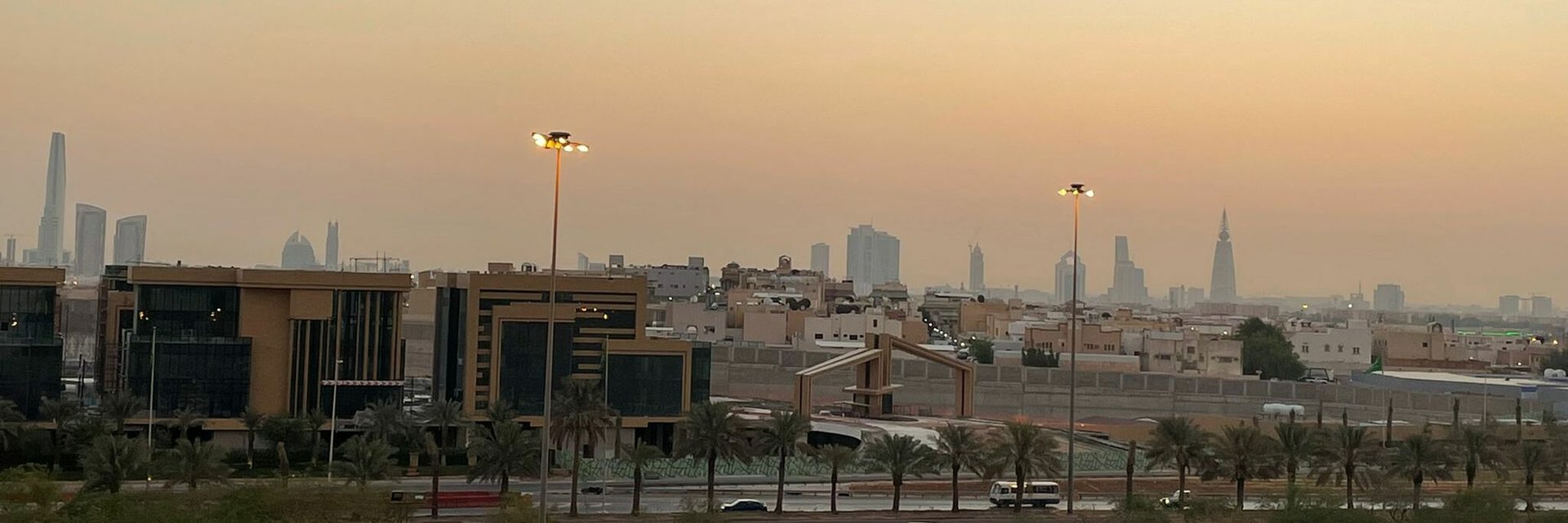
The Diplomatic Quarter owes its existence to a 1975 Council of Ministers resolution during the reign of King Khalid, when the Ministry of Foreign Affairs relocated from Jeddah to Riyadh and foreign embassies needed a new home. The project was championed by Riyadh’s then-governor, Prince Salman bin Abdulaziz al-Saud — the current King — and construction took place between 1978 and 1982.
The master plan was developed in 1979 by Albert Speer & Partners and organises the district around a central core for government and diplomatic facilities, flanked by residential clusters along two primary 47-metre-wide boulevards. The architecture deliberately echoes the traditional Najdi building style of central Arabia: low-rise structures in earthy tones, thick walls that stay cool in summer, and geometric ornamentation drawn from Islamic patterns. The effect is cohesive and remarkably restful.
Covering approximately eight square kilometres in western Riyadh, the DQ allocates a striking 30 per cent of its land to parks, gardens, and plazas — a proportion almost unheard of in Gulf urban planning. A further 14 per cent is given over to embassy sites, with the remainder divided between residential plots, public services, and commercial areas. The landscaping project won the Aga Khan Award for Architecture in 1989, and the district later received the Arab Cities Award for Architecture from the Arab Cities Organization, which praised it as a model for Islamic urban design.
Parks and Gardens: 17 Green Spaces to Explore
The Diplomatic Quarter’s most distinctive feature is the sheer amount of green space packed into a gated district. With 17 parks and gardens threaded through the neighbourhood, it feels more like a Mediterranean hill town than a city in the heart of the Najd desert. For travellers used to the concrete-and-glass aesthetic of most Gulf cities, the DQ is a genuine surprise.
Tuwaiq Park
The largest and most popular park in the DQ, Tuwaiq Park sits near the district’s main entrance and features mature date palms, a spacious playground, fountains, a mosque, and well-maintained restrooms. Large grassy areas make it a favourite for picnics, especially on cooler winter evenings when families spread out blankets and bring portable barbecues. The park is named after the Tuwaiq Escarpment, the dramatic limestone ridge that runs across central Saudi Arabia — a geological feature you can see in the distance from several viewpoints in the DQ.
Al-Yamamah Gardens
One of the biggest of the 17 parks, Al-Yamamah Gardens stretches along Heraa Street and offers broad lawns, play equipment, a football pitch, and seating areas shaded by native trees. A mosque sits adjacent. This is where expatriate families and embassy staff tend to gather on weekday afternoons, and the atmosphere is relaxed and community-oriented. If you are visiting with children, the playground equipment here is in good condition and varied enough to keep younger kids occupied for an hour or more.
Al-Nafl Park
Positioned on the DQ’s western perimeter, Al-Nafl Park offers a stunning view over Wadi Laban — the dry river valley that borders the district. Long walking paths wind through the park, and the elevated vantage point gives a sense of just how dramatically the DQ sits above the surrounding terrain. Come at sunset for the best light across the wadi.
Al-Arudh Park and Rock Park
These two lesser-known parks round out the DQ’s main green spaces. Al-Arudh features picnic benches, grassy areas, and a nearby mosque, while Rock Park incorporates natural sandstone boulders into its landscaping for a more rugged feel. Both are quieter than Tuwaiq and Al-Yamamah, making them good options if you want to avoid weekend crowds.
Walking and Hiking Trails
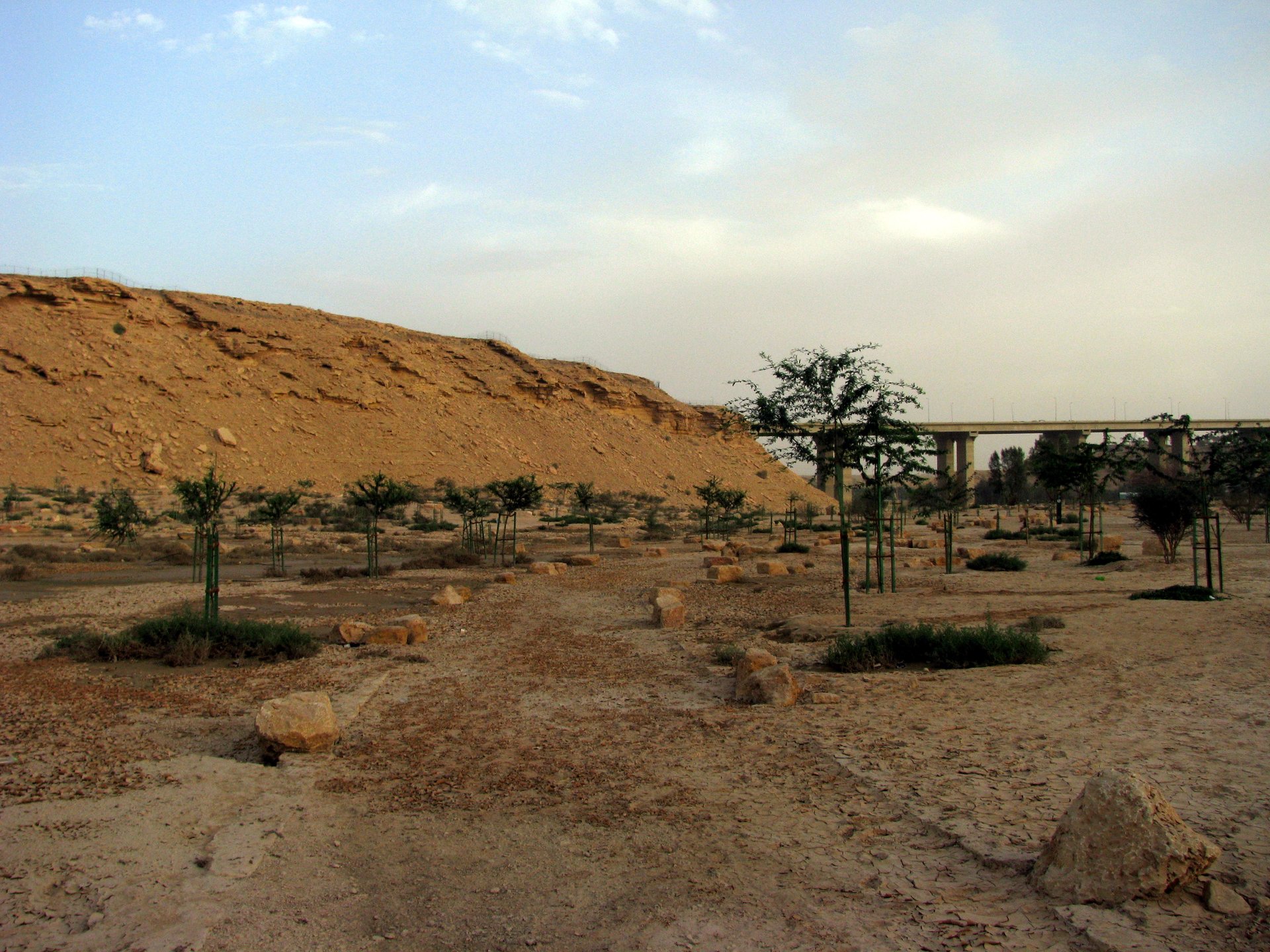
One of the DQ’s best-kept secrets is its network of walking and hiking trails that loop around the perimeter of the district. Altogether, the trails cover roughly 13 to 15 kilometres and connect through the public parks scattered around the edges. A full circuit takes three to four hours at a steady pace, but you can easily do shorter sections.
The terrain varies from paved paths and dirt tracks to rocky boulder sections with small ledge waterfalls hidden in nook passages along the route. The trails are designed to accommodate a range of fitness levels: families with children often tackle the gentler paved sections around the parks, while more committed hikers head for the perimeter paths that follow the wadi edge. If you enjoy hiking in Saudi Arabia’s growing network of trails, the DQ paths make an accessible option within the city itself.
Trail tip: Start your walk from Tuwaiq Park and head clockwise around the perimeter. The path from Al-Nafl Park offers the best views over Wadi Hanifah. Bring water — there are few drinking fountains along the trail. In winter, late afternoon is ideal; in the shoulder months of October and March, early morning before 9 AM is best.
Architecture and Landmarks
Tuwaiq Palace
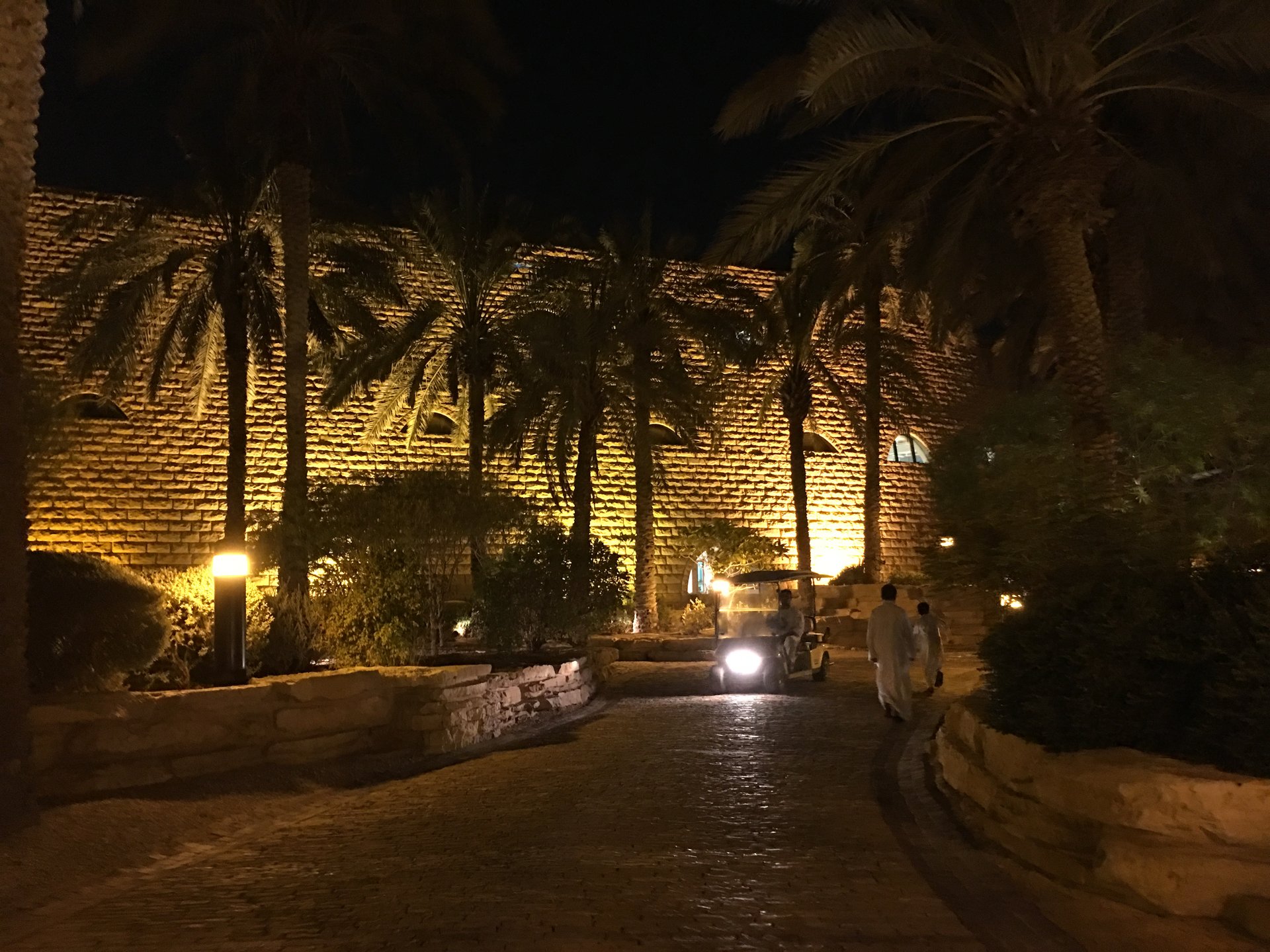
The architectural crown jewel of the Diplomatic Quarter, Tuwaiq Palace was built in 1985 by the OHO Joint Venture — a formidable team comprising the legendary German architect Frei Otto, the engineering firm Buro Happold, and the Saudi practice Omrania. The palace won the Aga Khan Award for Architecture in 1998, making it the second structure in the DQ to receive the honour.
The design is extraordinary. An 800-metre-long sinuous “Living Wall” of reinforced concrete winds on itself and wraps around a lush interior garden. Giant tensile-structure tents — made of Teflon-coated, woven-fibre fabric stretched over steel masts and cables — mushroom from the wall at intervals. Those facing the garden are clad in cable nets coated with custom-made, glazed blue ceramic tiles fastened to timber battens. The overall effect references two local archetypes: the Najdi fortress and the Bedouin tent. The palace reproduces the phenomenon of the desert oasis — a cool, sheltered garden surrounded by defensive walls.
Covering 24,000 square metres, Tuwaiq Palace functions as a club and ceremonial venue with recreational, dining, banqueting, conference, and accommodation facilities. Most embassies in the DQ hold their National Day celebrations here, and the palace regularly hosts government summits, cultural festivals, and art exhibitions. While it is not always open to the general public, keep an eye on Saudi Arabia event calendars — cultural festivals at Tuwaiq Palace are often ticketed and worth attending.
Al-Kindi Plaza
Named after the ninth-century Arab philosopher and polymath Abu Yusuf al-Kindi, Al-Kindi Plaza is the largest public square in the Diplomatic Quarter and has served as the district’s social heart since it was inaugurated in 1986. The plaza incorporates traditional Najdi architecture with modern materials: covered pedestrian passages and arcades connect buildings, fountains, and seating areas shaded by mature trees.
Overlooking the plaza are the headquarters of the Royal Commission for Riyadh City, the DQ’s Grand Mosque, and a series of pedestrian arcades containing restaurants and cafes. The plaza was part of the 1989 Aga Khan Award-winning landscaping project and was singled out as a model for how Arab cities can design public gathering spaces that respect both Islamic architectural traditions and modern functional needs.
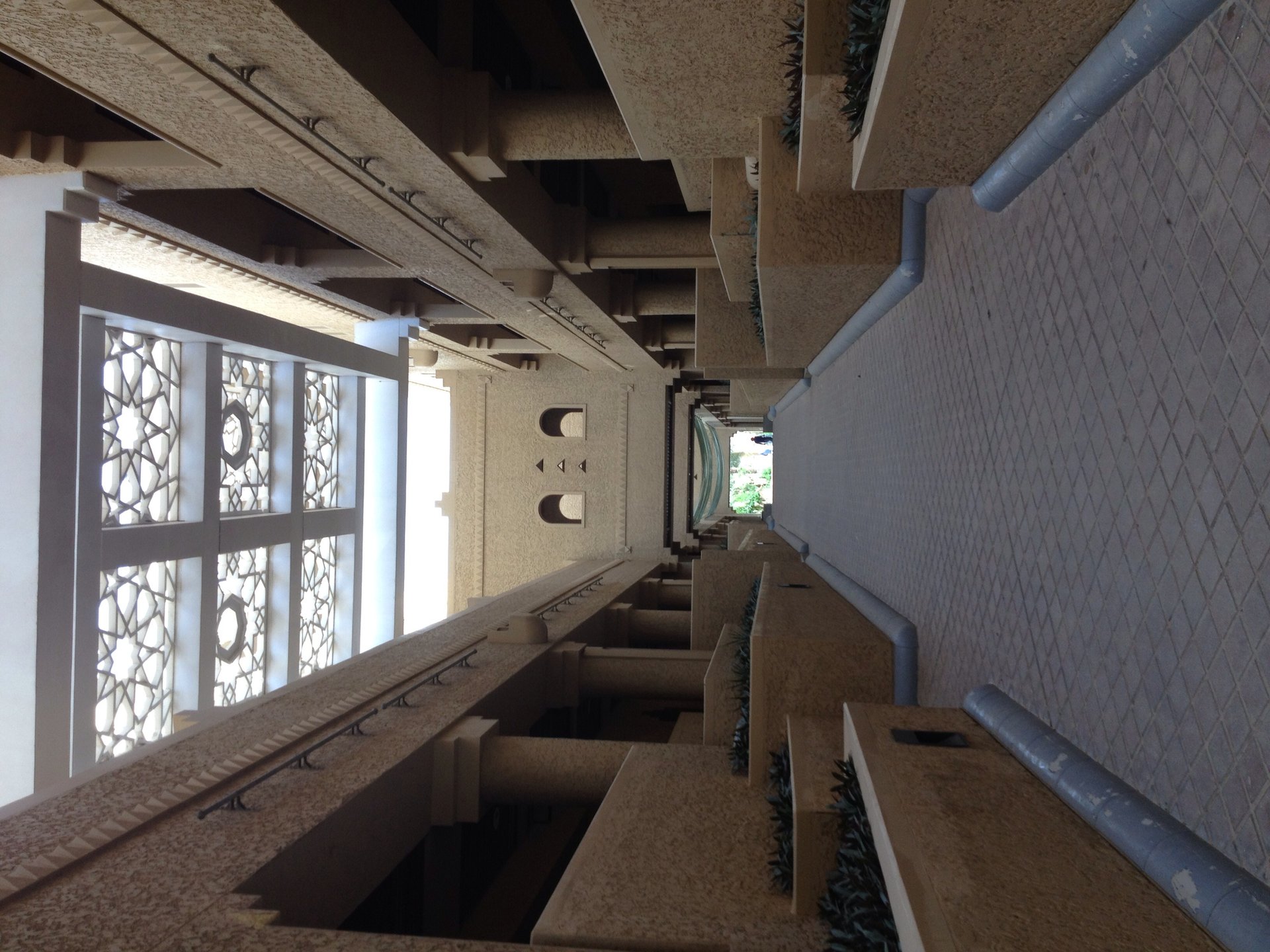
For visitors, Al-Kindi Plaza is the place to sit with a coffee, people-watch, and appreciate the architectural details. The arcades feature intricate geometric screen-work, arched passageways, and stone finishes that repay close attention. Weekend evenings are the liveliest time to visit.
Cultural Attractions
Fenaa Alawwal Cultural Centre
Opened in December 2022 by the Saudi Ministry of Culture, Fenaa Alawwal is the DQ’s most significant recent addition and a flagship of the Kingdom’s Vision 2030 cultural agenda. The centre is housed inside the former headquarters of Al Awwal Bank — the first commercial bank to operate in Saudi Arabia — a distinctive cylindrical white building topped with a square-shaped canopy decorated in traditional geometric patterns.
Inside, the space has been reimagined as a multidisciplinary cultural hub hosting rotating art exhibitions, educational workshops, seminars, film screenings, and book signings. The basement level is given over entirely to exhibitions and programming. A library dedicated to art books occupies part of the ground floor, alongside the indoor-outdoor cafe Circle 3 by Acoustic.
The garden surrounding the building is an attraction in itself, featuring six sculptures by international and local artists. The most notable is Magic Mountain by Swiss sculptor Ugo Rondinone — a stacked-stone cairn described as the first work of its kind in the Arab region. Fenaa Alawwal hosts regularly changing exhibitions and events; check their social media channels before visiting to see what is currently on.
Visitor note: Fenaa Alawwal is free to enter. Opening hours are typically Sunday to Thursday, with extended hours for major exhibitions. The outdoor sculpture garden is accessible even when the indoor galleries are closed.
1364 Lifestyle Destination
Named after the Hijri year in which Saudi Arabia joined the United Nations (1364 AH / 1945 CE), 1364 is a new mixed-use lifestyle complex in the DQ that brings together shopping, dining, entertainment, and cultural programming in a series of seamlessly connected walkways with outdoor terraces.
Among its anchor tenants is The Lighthouse — a Dubai import that functions as part restaurant, part cafe, and part ideas hub, drawing a steady mix of diplomats, Saudi professionals, and creative-industry workers. The complex features live music, family play areas, and a rotating calendar of pop-up events. For travellers based in the DQ, 1364 provides a convenient one-stop destination for an evening out without leaving the neighbourhood.
Cafes and Restaurants
The Diplomatic Quarter has quietly developed one of the strongest dining scenes in Riyadh, benefiting from a cosmopolitan resident population that demands variety and quality. The food options span from casual brunch spots to upscale international restaurants.
Oud Square
Oud Square is the DQ’s most concentrated dining and retail hub — a modern complex of three buildings near the centre of the district, each with shops at ground level and offices above. The ground-floor restaurants include Anago by Masami (Japanese), Cafe Bateel (artisan Arabic), Crazy Pizza (Italian), and Draft Cafe — widely credited as the first coffee provider in Saudi Arabia to let customers choose specific blends and brewing methods. IHOP and Urth Caffe cater to the brunch crowd, while Joe & The Juice offers healthy sandwiches and fresh juices.
Oud Square has a hip, modern vibe that skews younger than Al-Kindi Plaza. If you are interested in Saudi specialty coffee culture, Draft is the place to start.
Al-Kindi Plaza Dining
The arcades surrounding Al-Kindi Plaza house a collection of restaurants with outdoor seating that takes advantage of the plaza’s pleasant microclimate. Don Ruben’s serves Mexican food and came Highly Commended for Best Latin American Restaurant in Riyadh at the Time Out Riyadh Restaurant Awards. La Rustica Terraza offers pizza including truffle and classic Margherita options. Leila Min Lebanon is a regional chain known for authentic Lebanese cuisine and is a reliable choice for mezze and grilled meats.
Hotel Dining
The Marriott Riyadh Diplomatic Quarter houses Goji, which serves international fare and is a solid choice for a more formal dinner. Anardana, the Marriott’s specialty Indian restaurant, is decorated in copper tones with subcontinental wall hangings and offers an extensive a la carte menu. If you are staying at the Radisson Blu Hotel & Residence in the DQ, the in-house restaurants are convenient options for breakfast and late-night dining.
Coffee tip: Saudi specialty coffee culture has exploded in recent years. Draft Cafe at Oud Square and Circle 3 by Acoustic at Fenaa Alawwal are two of the best places to try single-origin brews in the DQ. Both roast their own beans and employ baristas who take their craft seriously.
DQ Souq: Riyadh’s Winter Market
Since 2019, the DQ Souq has become one of Riyadh’s most anticipated winter markets. Running every Saturday from early December through February, the souq takes place behind the Al Arabiya building near Oud Square and is free to enter. Hours are typically 4 PM to 11 PM.
The market features more than 50 diverse booths including food trucks, fresh produce, artisanal goods, potted plants, handmade accessories, abayas, and toys. A game corner caters to children, while a painting corner and live entertainment keep the atmosphere lively. For travellers visiting Riyadh during the cooler months, the DQ Souq is an excellent way to spend a Saturday evening and experience the sociable side of Saudi culture. The market draws a mix of DQ residents, expat families, and Riyadh locals who make the trip specifically for the weekend atmosphere.
Where to Stay in the Diplomatic Quarter
The DQ has two main hotel properties, both well-suited to travellers who want a quieter base than the busy commercial districts elsewhere in Riyadh.
| Hotel | Style | Best For | Key Features |
|---|---|---|---|
| Marriott Riyadh Diplomatic Quarter | Full-service 5-star | Business travellers, couples | Heated outdoor pool, Goji restaurant, spa, 9 meeting rooms, grand ballroom |
| Marriott Executive Apartments | Serviced apartments | Extended stays, families | LEED Certified, 1–3 bedroom apartments with full kitchens, Wadi Hanifa-inspired design |
| Radisson Blu Hotel & Residence | Hotel & residence | Mid-range travellers | Indoor pool, separate male/female gyms, 24-hour room service, 4 meeting rooms |
The Marriott Executive Apartments are particularly good for families or anyone staying more than a few days, as the fully equipped kitchens and washing machines make long stays more practical. If you prefer a base outside the DQ, central Riyadh hotels along King Fahd Road and Olaya Street put you closer to shopping and nightlife but further from the DQ’s parks.
Getting to the Diplomatic Quarter
The DQ sits in western Riyadh, bounded by Wadi Hanifah to the west and King Khalid Highway and Mecca Highway to the east and south. The easiest approach by car is via Exit 5 on the Northern Ring Road.
From King Khalid International Airport
The airport is approximately 30 minutes from the DQ by taxi or ride-hail app (Uber and Careem both operate in Riyadh). Expect to pay SAR 60–100 for the trip depending on traffic and time of day. If you need a tourist visa on arrival, the e-visa process at King Khalid Airport is straightforward and typically takes under 15 minutes.
Riyadh Metro
The Riyadh Metro — the city’s long-awaited rapid transit system — includes stations near King Abdullah Road that will improve access to the DQ. Check the latest operational status before your trip, as service on some lines may still be ramping up in 2026.
Security Gates and Access
Entry to the Diplomatic Quarter is through designated security gates where guards check identification. As a visitor, you will be asked where you are going — mention a specific restaurant, hotel, or park by name. The guards are accustomed to tourists and the process is quick and routine. Once inside, the DQ is remarkably pedestrian-friendly by Riyadh standards: wide pavements, shaded walkways, and low traffic volumes mean you can walk comfortably between most points of interest.
Access tip: If you arrive by Uber, the driver will be asked your destination at the gate. Have a specific venue name ready — “Al-Kindi Plaza” or “Oud Square” both work well. Uber is also available for pickup within the DQ, so you can order a car to leave when you are finished exploring.
Practical Tips for Visiting
- Dress code: While the DQ is cosmopolitan by Riyadh standards, visitors should dress modestly. Women are not required to wear an abaya but should cover shoulders and knees. Men should avoid shorts above the knee.
- Photography: Most of the public areas — parks, plazas, restaurants — are fine for photography. Avoid photographing embassy buildings, security gates, or military personnel.
- Prayer times: Restaurants and cafes close briefly during the five daily prayer times. Plan your meals around prayer schedules, which you can check on any prayer-time app.
- Alcohol: Saudi Arabia does not permit the sale or consumption of alcohol. All restaurants and cafes in the DQ are alcohol-free.
- Cash and cards: Most DQ restaurants and cafes accept credit and debit cards, and Apple Pay is widely available. Carry some cash (SAR) for smaller vendors at the DQ Souq.
- Language: English is widely spoken in the DQ owing to its international population. Restaurant menus are typically bilingual (Arabic/English).
- Best time of day: Late afternoon through evening is the ideal window. The light softens after 4 PM, the parks fill with families, and the restaurants come alive. On Fridays (the weekend), the DQ has a relaxed holiday atmosphere all day.
- Wadi Hanifah: The restored valley that borders the DQ is a destination in its own right, with bioremediation lakes, walking paths, and picnic areas stretching for kilometres. Access points are available from the DQ’s western perimeter.
- Diriyah and At-Turaif: The UNESCO-listed mud-brick ruins of the first Saudi capital sit just a few kilometres north of the DQ. Diriyah is undergoing a massive restoration and now includes the Bujairi Terrace dining precinct.
- Kingdom Centre Tower: Riyadh’s most iconic skyscraper, with its sky bridge observation deck, is a 15-minute drive east from the DQ.
- Riyadh National Museum: Saudi Arabia’s premier museum covers the Kingdom’s history from the geological formation of the Arabian Peninsula to the modern era. Located in the Murabba Historical District, roughly 20 minutes from the DQ.
- Edge of the World (Jebel Fihrayn): The dramatic cliff-edge viewpoint northwest of Riyadh is accessible as a half-day trip from the DQ. Best visited during winter months with a 4WD vehicle.
- Riyadh Travel Guide 2026 — The complete guide to Saudi Arabia’s capital city
- Diriyah and At-Turaif — UNESCO World Heritage Site and the birthplace of the Saudi state
- Kingdom Centre Tower — Riyadh’s iconic skyscraper and sky bridge observation deck
- Riyadh National Museum — The Kingdom’s premier museum of history and culture
- Edge of the World — Dramatic cliff-edge viewpoint for a half-day trip from Riyadh
- Riyadh Neighbourhoods — Where to stay in the capital for every budget and style
- Saudi Arabia Travel Guide 2026 — The complete guide to visiting the Kingdom
- Saudi Arabia Visa Guide — Every visa type explained
Nearby Attractions
The Diplomatic Quarter’s western location puts it within easy reach of several other Riyadh highlights. Pair a DQ visit with any of the following:
How Long to Spend in the Diplomatic Quarter
A focused visit covering Al-Kindi Plaza, Oud Square, and one or two parks can be done in three to four hours. If you add Fenaa Alawwal, a walk along the perimeter trail, and a sit-down meal, budget a full half-day. Visitors staying at one of the DQ hotels can spread their exploration over several days, using the neighbourhood as a calm base from which to explore the rest of Riyadh.
The Diplomatic Quarter rewards slow exploration. It is one of the few places in Riyadh where you can walk from a park to a gallery to a restaurant without getting back in a car — and that alone makes it worth a dedicated visit on any Riyadh itinerary.