
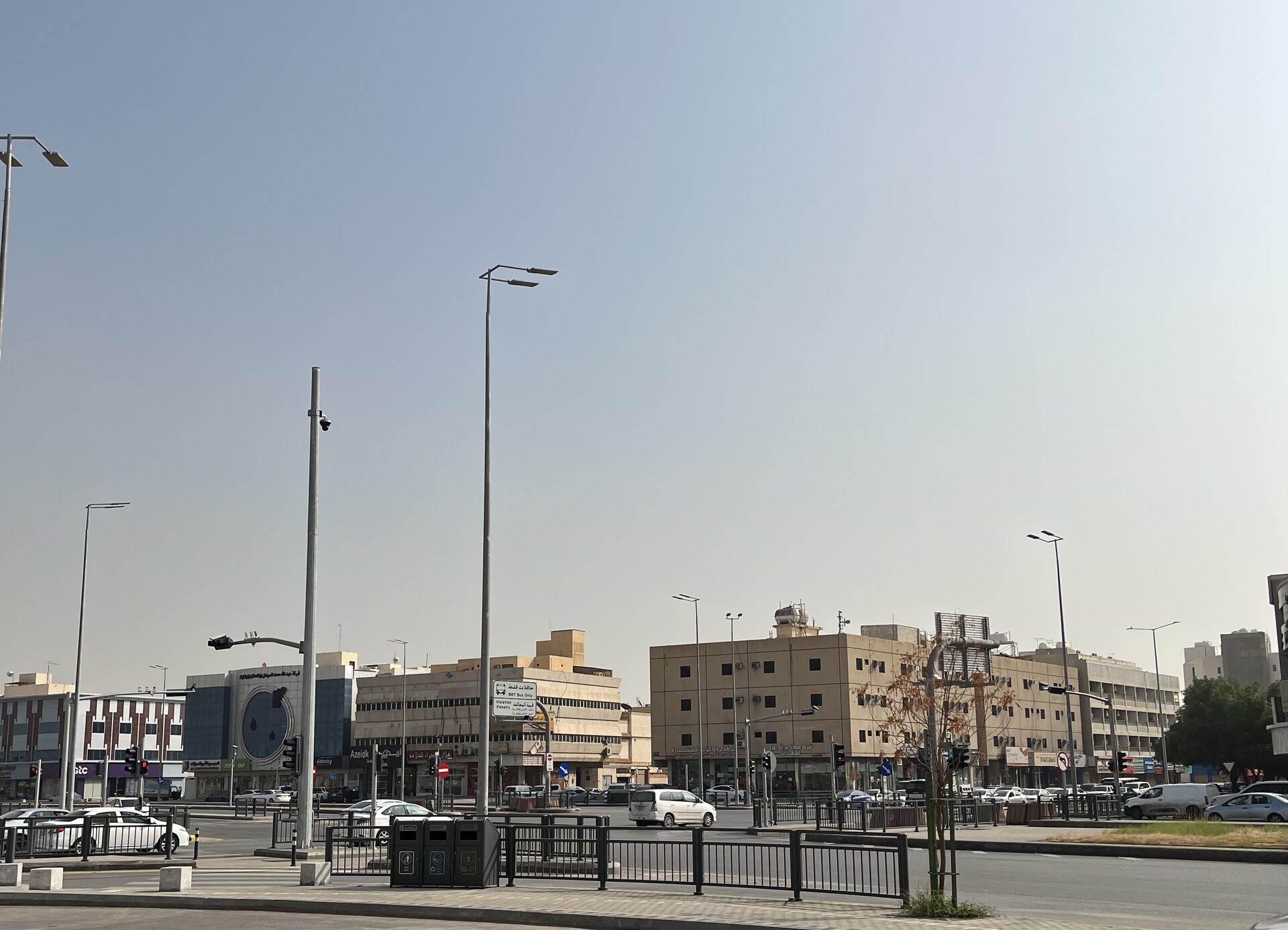
Al Malaz is the district where modern Riyadh was born. Built in the 1950s as Saudi Arabia’s first large-scale government housing project, this central neighbourhood retains a gritty authenticity that the glass towers of Olaya and the polished malls of northern Riyadh cannot replicate. For visitors building a Riyadh travel itinerary, Al Malaz offers something increasingly rare in the capital: a walkable, lived-in quarter where family-run restaurants serve kabsa the way it was made decades ago, where old souq stalls overflow with incense and hand-stitched bishts, and where locals gather at dusk in one of the Kingdom’s largest public parks. This is not the Saudi Arabia of megaprojects and futuristic architecture. This is the Saudi Arabia where you sit cross-legged on a carpeted floor and eat lamb over rice with your hands, surrounded by three generations of the same family.
Best Time to Visit: November to March (daytime highs 20-28°C)
Getting There: Al Malaz Metro station (Orange Line/Line 3); 15-minute taxi from Olaya
Visa Required: Yes — tourist e-visa available online
Budget: SAR 150-400/day ($40-107 USD) — one of Riyadh’s most affordable districts
Must-See: King Abdullah Park, Souq Al Zal, Riyadh Zoo
Avoid: Visiting parks and outdoor areas between 11 AM and 4 PM in summer — temperatures routinely exceed 45°C
A Brief History of Al Malaz
The name Al Malaz derives from the Arabic malaz al-khail, meaning “horse mews” — a reference to the equestrian field where King Abdulaziz ibn Saud watched horse racing shows in the early twentieth century. That open ground, known as al-Malaz Square, is now buried beneath King Abdullah Park, but the district’s identity was forged by what came next.
After King Saud bin Abdulaziz ascended to the throne in 1953, he initiated a sweeping relocation of government ministries from Jeddah to Riyadh. Thousands of civil servants needed housing, and the answer was the Al-Malaz Housing Project — a development of 754 single-family villas, 340 apartment units, a municipal hall, a library, a fire station, schools, a market, and recreation facilities. Designed with modern, non-traditional construction methods (reinforced concrete rather than the mud-brick Najdi style), Al Malaz signalled the Kingdom’s wholesale embrace of urban modernity. According to the urban planner Faisal al-Mubarak, it was the first of numerous government-sponsored housing schemes that would reshape Saudi cities over the following decades.
By 1957, the first campus of King Saud University had opened in the district. Riyadh Zoo followed. The Al Yamamah Hotel was completed in 1958. In the 1960s, the cylindrical Burj al-Malaz (also known as Imarat al-Barmil — “the barrel building”), built by the Egyptian conglomerate Osman Ahmed Osman, became one of the district’s most recognisable landmarks. The tower was eventually demolished in 2009, but its memory persists among long-time Riyadh residents. The Khalidiyah Towers, opened in 1984, were briefly the tallest buildings in the Kingdom.
Today, Al Malaz is no longer the address of choice for the wealthy. That distinction belongs to the northern suburbs. But its central location, metro connectivity, and deep stock of affordable restaurants and shops make it one of the most rewarding districts in Riyadh for visitors seeking the city’s less curated side. It is a genuine working neighbourhood, and that is precisely what makes it worth your time.
What to See in Al Malaz
King Abdullah Park
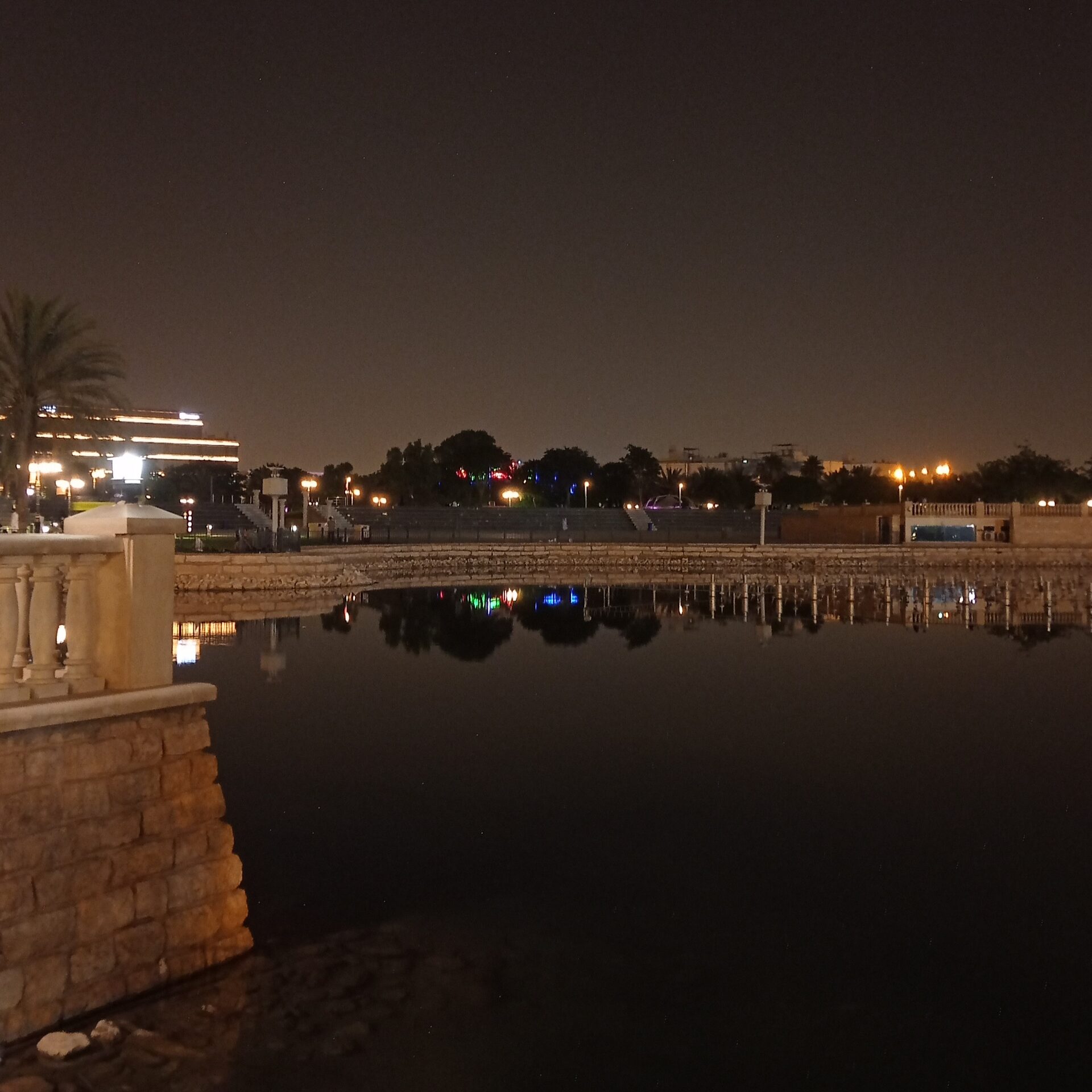
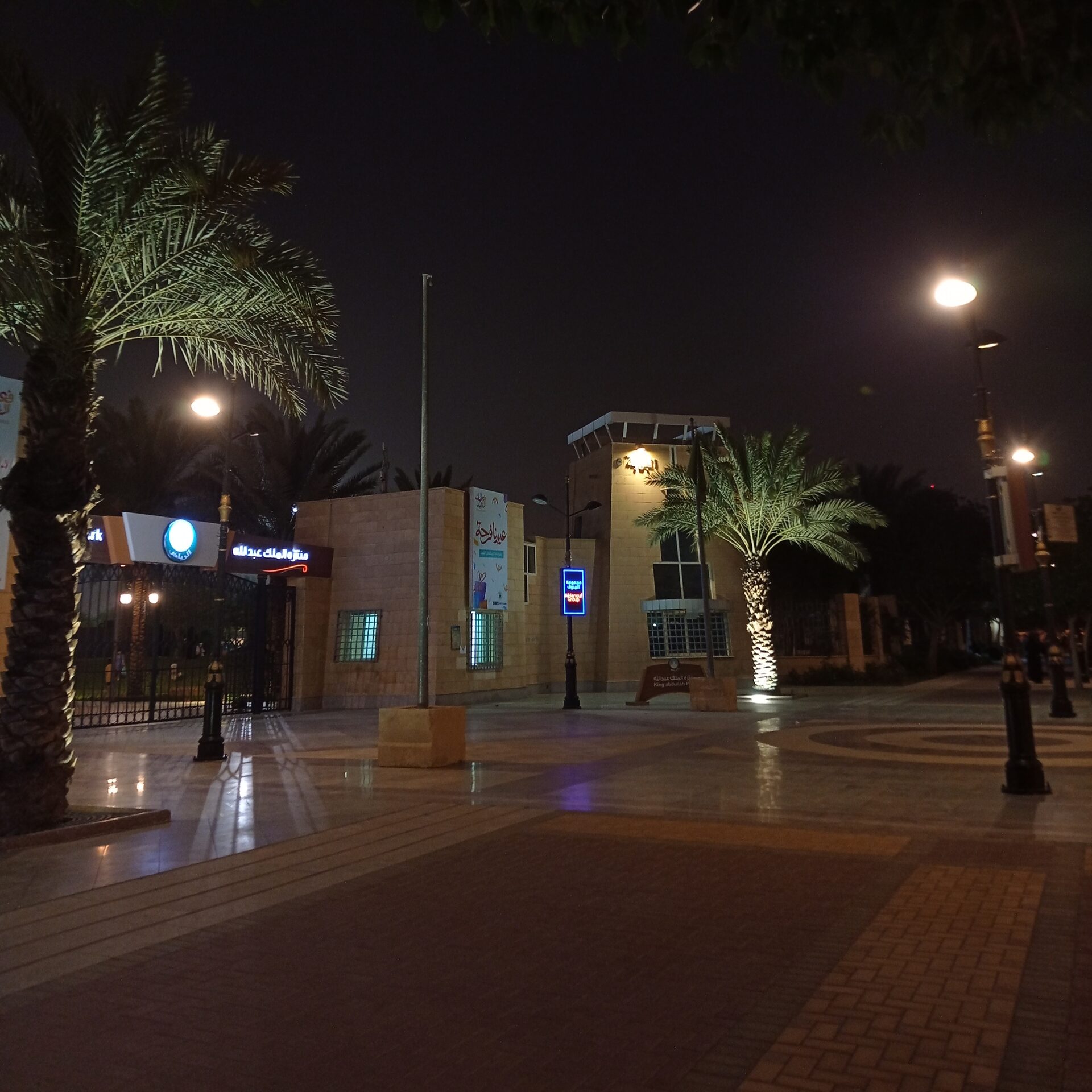
Covering 31.8 hectares (79 acres), King Abdullah Park is the largest public park in Riyadh and the centrepiece of the Al Malaz district. Originally opened to the public in 1987 and extensively renovated before a reopening in October 2013, the park occupies the land where King Abdulaziz once watched his racehorses. It is, in every practical sense, the heart of the neighbourhood.
The park’s most famous attraction is its musical fountain — a 110-metre laser-and-water show that runs daily, typically starting around 6:15 PM (though exact timings shift by season, so confirm locally). The fountain sprays water into choreographed patterns set to music and coloured lighting, and draws large crowds on evenings and weekends. Arrive early if you want a good viewing spot along the artificial lake.
Beyond the fountain, King Abdullah Park offers 12 kilometres of walking and jogging tracks, playgrounds, sports fields for football and basketball, a swimming pool (SAR 35 per person), picnic areas, and a 12-metre-wide pedestrian corridor. The artificial lake has illuminated pathways that are especially pleasant after dark when temperatures drop. On-site cafes sell tea, Arabic coffee, and snacks.
Practical tip: Entry to King Abdullah Park costs SAR 11.50 per person. The park is open Monday to Saturday, 1:00 PM to midnight. It is closed on Sundays for maintenance. Some days are designated families-only, while others allow single visitors — check the current schedule before arriving. If you are planning a longer stay in the capital, consider combining this with other green spaces covered in our Saudi Arabia travel guide.
Riyadh Zoo
Riyadh Zoo occupies over 55 hectares within Al Malaz and is home to more than 1,500 animals across roughly 200 species. Founded in the late 1950s alongside the district’s other public institutions, it is the oldest zoo in Saudi Arabia and remains one of the most popular family attractions in the capital.
The zoo’s collection includes big cats, primates, Arabian oryx (the national animal), elephants, bears, and a range of birds and reptiles. The grounds are green and shaded — a rarity in Riyadh — with walking paths, benches, and kiosk-style food vendors.
Opening hours are Saturday to Thursday, 10:00 AM to 5:00 PM, and Friday from 1:00 PM to 5:00 PM. Entry is affordable, and children under three enter free. During Riyadh Season (typically October to March), there are sometimes free entry days or discounted tickets — check the official Riyadh Zoo website at riyadhzoo.ncw.gov.sa before visiting.
Prince Faisal bin Fahd Stadium (Al-Malaz Stadium)
Located north of King Abdullah Park, the Prince Faisal bin Fahd Sports City Stadium — universally known as Al-Malaz Stadium — has been a fixture of the district since construction began in 1969. Opened in 1971 and officially inaugurated during the 1972 Arabian Gulf Cup, the 22,500-capacity ground has hosted King Cup finals, Saudi Football Association Cup finals, and Arabian Gulf Cup matches.
The stadium is set for a significant upgrade ahead of the 2027 AFC Asian Cup (group stage and round of 16 matches) and the 2034 FIFA World Cup (group stage and round of 32), with a proposed expanded capacity of 46,865. If you are visiting during football season (September through May), check for Saudi Pro League fixtures — tickets are inexpensive and the atmosphere is electric.
The Horse Racing Heritage
Al Malaz’s equestrian heritage runs deeper than any other district in Riyadh. In 1965, Prince Salman (now King Salman bin Abdulaziz), then governor of Riyadh, organised the gathering of equestrian enthusiasts that led to the official establishment of the horse racing club. The original racecourse was located in Al Malaz, with stables on the eastern side of the neighbourhood. As the club’s activities expanded and the residential area grew around it, a decision was made to relocate the track to King Abdulaziz Equestrian Field in al-Janadriya, a purpose-built facility on nine square kilometres where the annual Saudi Cup — the world’s richest thoroughbred horse race, with a purse exceeding $20 million — is now held.
You can still see the old racetrack grounds in Al Malaz, though they are no longer in active use. For horse racing enthusiasts, the King Abdulaziz Racetrack in Janadriya is a 30-minute drive northeast and holds race meetings from November through March.
Where to Eat in Al Malaz
Al Malaz is one of the best neighbourhoods in Riyadh for affordable, authentic food. The dining scene here runs from family restaurants with floor seating and communal platters to hole-in-the-wall shawarma joints and South Asian canteens. This is not Riyadh’s fine-dining district — it is something better. It is the district where Riyadh actually eats.
Traditional Saudi Restaurants
Najd Village (Al-Qaryah Al-Najdiyyah) is the name most often recommended by Riyadh residents when visitors ask where to try authentic Saudi cuisine. With multiple locations across the city (the branches on Abu Bakr As Siddiq Road in Wahah, Takhassusi Street in Olaya, and King Abdul Aziz Branch Road in Yasmin are the most established), Najd Village earned a Bib Gourmand in the 2025 MICHELIN Guide Riyadh — recognition of good quality, good value cooking. The restaurant is designed as a traditional Najdi village, with mud-brick walls, geometric patterns, and intricate wooden detailing. Seating is on the floor under a covered terrace for the full traditional experience. The Village Sofra — a sharing platter with mixed meat stews, goursan (a layered Saudi flatbread), vegetable samosas, and tawa bread — is the signature order. Lamb mandhi (slow-roasted over charcoal in an underground pit) and kabsa are also excellent. Budget SAR 100-150 per person. Open daily, 12:00 PM to 1:00 AM.
Hangar is a restaurant in Al Malaz itself that blends traditional Saudi flavours with a more contemporary presentation. If Najd Village is the classic experience, Hangar is for visitors who want the flavours without the full floor-seating commitment.
Kabsa: Where to Find the Best
Kabsa — Saudi Arabia’s national dish of spiced rice topped with chicken, lamb, or goat — is everywhere in Al Malaz, but quality varies. These are reliable options.
- Al Saudi — Operating since 1994 and now with eight branches across Riyadh, Al Saudi is a kabsa institution. Half-chicken kabsa starts at SAR 19.50. The rice is consistently well-spiced, the portions generous. No-frills but dependable.
- Shawaya House — Widely regarded as one of the best kabsa restaurants in Riyadh for chicken, meat, and fish variants. The chicken is spit-roasted before being served over the rice, giving it a smoky char.
- Tofareya — Prepares kabsa in the mandi, madfoon, and madhbi styles, each using a different cooking method (underground pit, buried in embers, or grilled over charcoal respectively). The caramelised onions are an excellent touch.
- Falafelcom — A dedicated falafel spot in Al Malaz with crispy, well-seasoned falafel and pickled turnips.
- Mac Coy’s — A local fast food chain with reliable shawarma and grilled chicken at budget prices.
- Malaz Restaurant — A neighbourhood favourite for Indian and Pakistani food, with breads and side dishes included in mains priced at SAR 15-25. Popular with the district’s large South Asian community.
- Dress code: Saudi Arabia’s public dress code has relaxed considerably, but Al Malaz is a conservative residential area. Women should cover shoulders and knees; men should avoid shorts. In mosques, women should carry a headscarf.
- Cash vs. card: Small restaurants and souq vendors often prefer cash. ATMs are widely available. Larger establishments accept Visa and Mastercard.
- Language: Arabic is the primary language. English is spoken in hotels and some restaurants but not universally. A few phrases of Arabic (or a translation app) go a long way in the souq.
- Friday schedule: Friday is the Islamic day of communal prayer. Many shops close during the late morning and reopen mid-afternoon. The zoo opens at 1:00 PM on Fridays.
- Photography: Street photography is generally fine, but always ask permission before photographing people, especially women. Photography inside government buildings and some heritage sites may be restricted.
- Safety: Al Malaz is safe. Riyadh as a whole has very low crime rates. Standard urban precautions apply — keep valuables secure, be aware of traffic (Riyadh drivers can be aggressive), and avoid poorly lit streets late at night.
- Water: Carry bottled water at all times, even in winter. Dehydration is a serious risk year-round in Riyadh’s dry climate.
- 10:00 AM: Begin at Souq Al Zal in ad-Dirah. Browse the incense shops, haggle for a bisht or a bag of bakhoor, and soak in the atmosphere of Riyadh’s oldest market.
- 11:30 AM: Walk to Al Masmak Fortress (5 minutes on foot). Tour the museum exhibits on the 1902 recapture of Riyadh. Free entry.
- 12:30 PM: Taxi to Najd Village (Abu Bakr As Siddiq branch, 15 minutes) or one of the Al Malaz kabsa restaurants for lunch. Order the Village Sofra or a lamb mandhi platter.
- 2:00 PM: Walk off lunch at King Abdullah Park. Explore the walking paths and artificial lake.
- 3:00 PM: Visit Riyadh Zoo (adjacent to the park). Allow 1.5-2 hours to see the major enclosures.
- 5:30 PM: Return to King Abdullah Park for the evening. Grab Arabic coffee from one of the park cafes and settle in for the fountain show (typically around 6:15 PM).
- Riyadh Travel Guide 2026 — The complete guide to Saudi Arabia’s capital city
- Al Masmak Fortress — The clay citadel where modern Saudi Arabia began
- Diriyah and At-Turaif — UNESCO World Heritage site and the cradle of the Saudi state
- Riyadh Boulevard — The capital’s mega entertainment district
- Saudi Arabia Travel Guide 2026 — The complete guide to visiting the Kingdom
- Saudi Arabia Visa Guide — Every visa type explained
Budget Eats and Street Food
Al Malaz’s side streets are lined with small restaurants serving shawarma (from SAR 3-5 per wrap), falafel, mutabbaq (stuffed fried bread), and ful medames (stewed fava beans, a popular breakfast). Most of the budget options are concentrated along the commercial strips running parallel to the main roads.
Eating tip: Lunch (12:00 PM to 3:00 PM) is when traditional Saudi restaurants are at their best — many prepare kabsa and mandhi fresh in large batches for the midday rush. If you arrive after 2:30 PM, popular dishes may be finished. For street food, the evening hours (after 8:00 PM) are when stalls and small shops come alive.
Coffee and Cafes
Riyadh’s third-wave coffee scene is primarily concentrated in the northern districts of Al Malqa, An Narjis, and Al Wurud, where roasteries like Jorn Coffee Roasters and concept cafes like Salam Cafe have made the city a serious specialty coffee destination. Al Malaz itself has a more traditional coffee culture — small shops serving Arabic coffee (qahwa) with dates and cardamom, plus Turkish-style brewed coffee. For a full specialty coffee experience, you may want to venture north, but for an authentic qahwa break between souq browsing, the neighbourhood delivers.
Markets and Shopping
Souq Al Zal
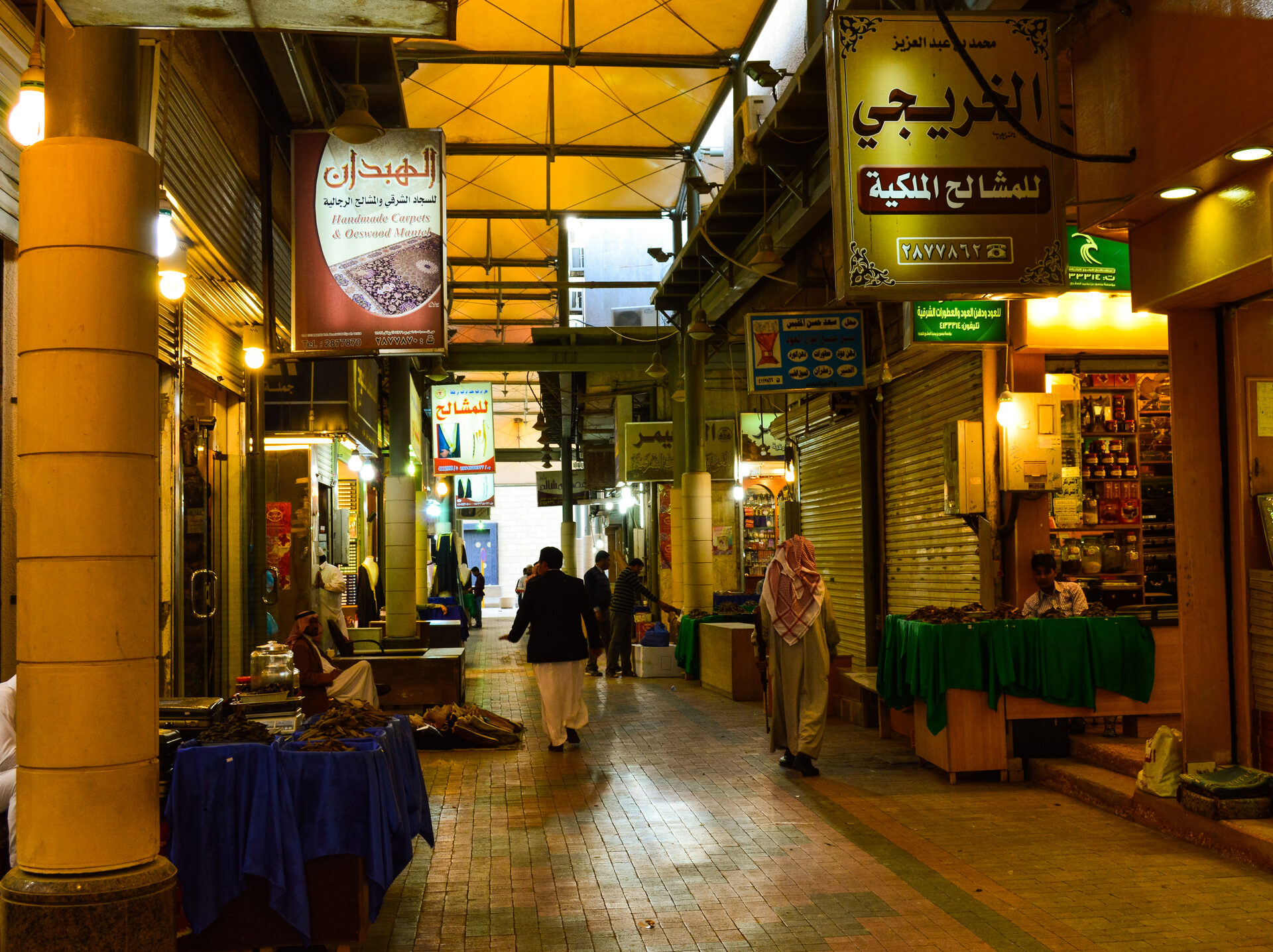
The most significant traditional market near Al Malaz is Souq Al Zal, located in the adjacent ad-Dirah district behind Al Masmak Fortress. Dating back to 1901, Souq Al Zal is one of Riyadh’s oldest continuously operating markets and the most atmospheric shopping experience in the capital.
The souq’s narrow, tiled alleyways are lined with shops selling oud (agarwood incense), bakhoor (scented wood chips), bisht (the traditional men’s ceremonial cloak), abayas, antique daggers, handmade carpets, spices, and jewellery. Unlike the sanitised souqs in some Gulf cities, Souq Al Zal has retained its genuinely traditional character — the architecture is original, the vendors are old hands, and the prices are negotiable.
Souq Al Zal is open daily from 9:00 AM to 12:00 PM and from 4:00 PM to 10:00 PM. The Al Malaz Metro station is the nearest metro stop. If you are planning a broader exploration of Riyadh, combine a morning at Souq Al Zal with a walk to nearby Al Masmak Fortress and the ad-Dirah heritage quarter.
Neighbourhood Markets and Grocery Shopping
For everyday shopping, Al Malaz has several supermarkets including Tamimi Markets (the best in the Kingdom for fresh produce and imported goods) and Panda Supermarket. Along the commercial streets you will find small shops selling clothing, electronics, household goods, and mobile phone accessories — priced significantly lower than the malls in northern Riyadh.
Where to Stay in Al Malaz
Al Malaz is a budget-friendly accommodation zone — less polished than Al Olaya or King Abdullah Financial District, but well-connected by metro and considerably cheaper. It is a strong option for travellers who prioritise authenticity and value over luxury amenities. For premium hotel options, see our Saudi Arabia hotels guide.
| Hotel | Category | Starting Price (per night) | Notes |
|---|---|---|---|
| Boudl Al Malaz | Aparthotel (3-star) | ~SAR 280 ($75 USD) | Kitchenettes in every room; outdoor pool; park views; free Wi-Fi and parking |
| IntercityHotel Riyadh Malaz | Business hotel (4-star) | ~SAR 375 ($100 USD) | Part of Deutsche Hospitality; modern rooms; restaurant and bar; close to metro |
| Burj Al Hayah Tower | Budget apartment | ~SAR 210 ($57 USD) | Self-catering apartments; basic but functional; good for longer stays |
Booking tip: June through September are the cheapest months for Al Malaz hotels (though the heat is extreme). November through February is peak season. Book directly through hotel websites or via Booking.com for the best rates.
Getting to and Around Al Malaz
By Metro
The Riyadh Metro has transformed access to Al Malaz. The Al Malaz station on the Orange Line (Line 3) puts the district within easy reach of the rest of the city. Line 3 runs 41 kilometres from west to east Riyadh, with interchanges to other lines at major stations. The metro operates daily from 6:00 AM to midnight. Fares are paid via the Darb app, which integrates metro, bus, and on-demand transport services. Make sure to download it before you arrive — it is the only way to use the metro. You will need a valid Saudi tourist visa and a local SIM card to register.
By Taxi and Ride-Hailing
Uber and Careem both operate throughout Riyadh and are the easiest door-to-door option. A ride from Al Olaya to Al Malaz typically costs SAR 15-25 (about $4-7 USD). From King Khalid International Airport, expect SAR 70-100 ($19-27 USD) depending on traffic.
By Bus
The nearest bus station to central Al Malaz is King Faisal bin Fahd Stadium, approximately an 11-minute walk from the park. Riyadh’s bus network covers over 80 routes and is integrated into the Darb app.
On Foot
Al Malaz is one of the more walkable districts in Riyadh — the streets follow a grid layout inherited from the 1950s housing plan, and the distances between the park, zoo, stadium, and main commercial streets are manageable. That said, walking is only practical from October to April. In summer, even a 10-minute walk in direct sunlight can be dangerous.
Nearby Attractions Worth Combining
Al Malaz’s central location makes it a natural base for exploring several of Riyadh’s most important sites, all within a short taxi or metro ride.
Al Masmak Fortress
Al Masmak Fortress is the clay-and-mudbrick citadel in the ad-Dirah district where, in 1902, the young Abdulaziz ibn Saud recaptured Riyadh from the Rashidi dynasty — the event that launched the unification of modern Saudi Arabia. The fortress is now a museum, free to enter, and is a 10-minute taxi ride from Al Malaz.
National Museum of Saudi Arabia
Located in the neighbouring Al-Murabba district, the National Museum of Saudi Arabia is part of the King Abdulaziz Historical Centre and offers an in-depth survey of the Kingdom’s history from prehistoric times through the Islamic period to the modern state. Entry is free. The museum is open Monday to Wednesday and Saturday from 9:00 AM to 7:00 PM, Thursday 9:00 AM to 10:00 PM, and Friday 2:00 PM to 10:00 PM. Closed Sunday.
Murabba Palace
Adjacent to the National Museum, Murabba Palace was King Abdulaziz’s official residence and workplace from 1938 until his death in 1953. The palace complex — built around a central courtyard in traditional Najdi style — is now a museum and part of the King Abdulaziz Historical Centre. Combined with the National Museum, a visit here takes 2-3 hours and provides essential context for understanding the district of Al Malaz itself, which was built under King Abdulaziz’s successor.
Diriyah and At-Turaif
The UNESCO World Heritage site of At-Turaif in Diriyah — the original capital of the first Saudi state — is about 25 minutes northwest of Al Malaz by car. If you are spending more than a day in Riyadh, this is essential. The restored mud-brick palaces and the surrounding Bujairi Terrace (a dining and cultural precinct) are among the most impressive heritage sites in the Gulf.
Best Time to Visit Al Malaz
The optimal window is November through March, when daytime highs range from 20°C to 28°C and evenings cool to 9-15°C. This is Riyadh’s “winter” and the only season when prolonged outdoor exploration is comfortable.
| Season | Temperature Range | Conditions | Verdict |
|---|---|---|---|
| November-February | 9-25°C | Cool, dry, occasional rain | Best time — parks and souqs are pleasant all day |
| March-April | 15-33°C | Warming, possible sandstorms | Good if you stick to mornings and evenings |
| May-September | 28-48°C | Extreme heat, intense sun | Only for the heat-tolerant; outdoor activity limited to after dark |
| October | 22-37°C | Transitional, Riyadh Season begins | Improving; good evening conditions |
If you do visit in summer, plan your Al Malaz activities around the late evening — King Abdullah Park stays open until midnight, and the souqs and restaurants are busiest after 9:00 PM when the heat finally subsides.
Practical Tips for Visiting Al Malaz
A Suggested Half-Day Itinerary
This itinerary works best from October to March, starting in the late morning.
Al Malaz for Families
Al Malaz is one of the most family-friendly districts in Riyadh. King Abdullah Park’s playgrounds, the zoo, and the stadium all cater to children. The park’s swimming pool is a particular draw for families with younger children (SAR 35 per person). Restaurants in the district generally welcome families, and many have private dining sections (family sections) where women and children eat separately from single men — a cultural norm that, while relaxing in newer establishments, remains common in traditional Al Malaz restaurants.
For families exploring Riyadh more broadly, our Riyadh travel guide covers other child-friendly attractions including the Riyadh Boulevard entertainment district and the Diriyah heritage quarter.