
Best Time: October to April (cool, dry nights; Milky Way core visible May–September)
Top Locations: AlUla (certified Dark Sky Park), AlNufud Desert — Hail, Rub al Khali Empty Quarter
Visa Required: Yes — tourist e-visa
Equipment: Binoculars or telescope, red torch, star map app (SkySafari / Stellarium), warm layers
Light Pollution: Bortle Class 1–2 in deep desert; Milky Way visible to the naked eye
Avoid: Planning around a full moon — schedule trips within 5 days either side of new moon
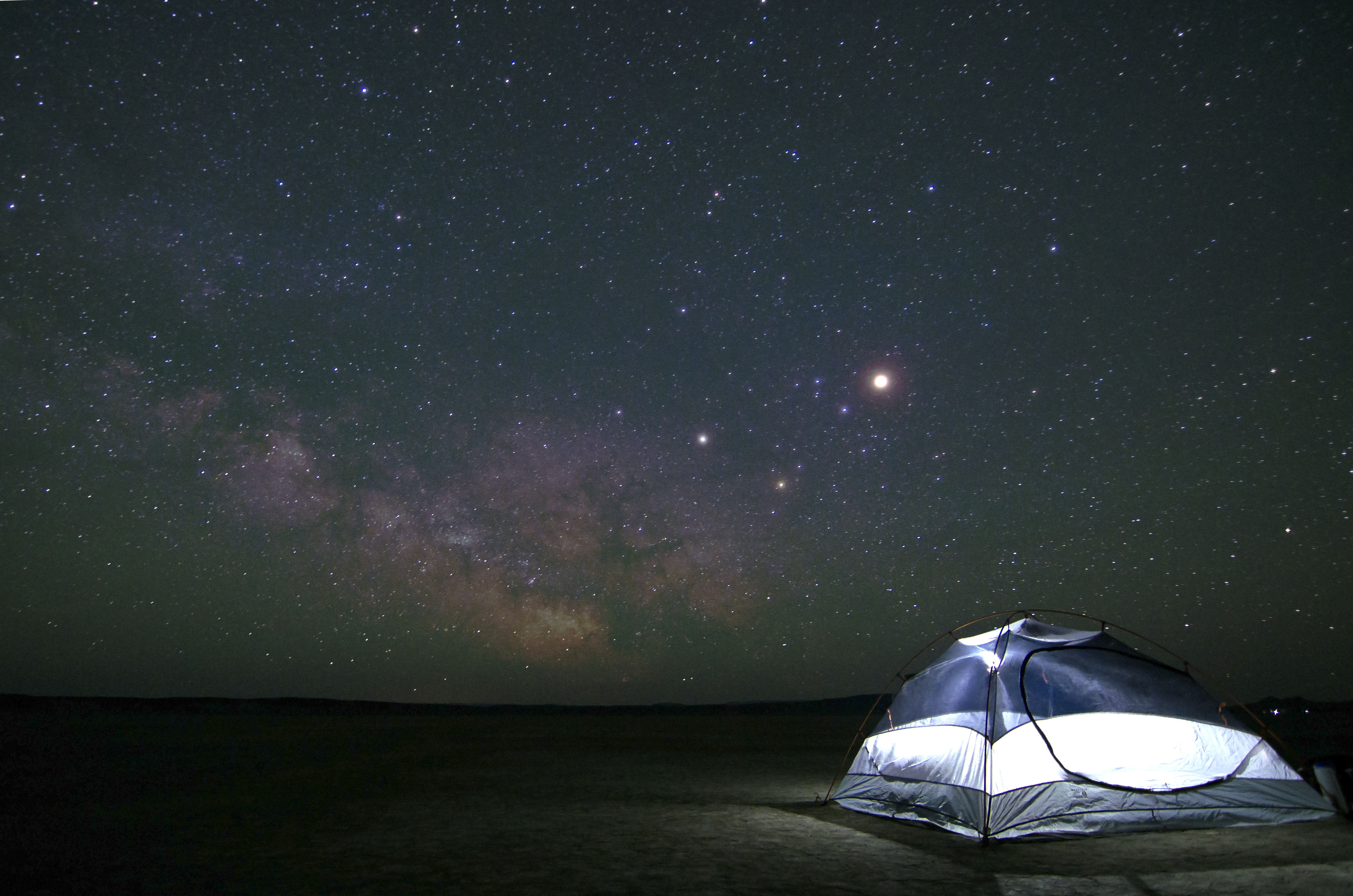
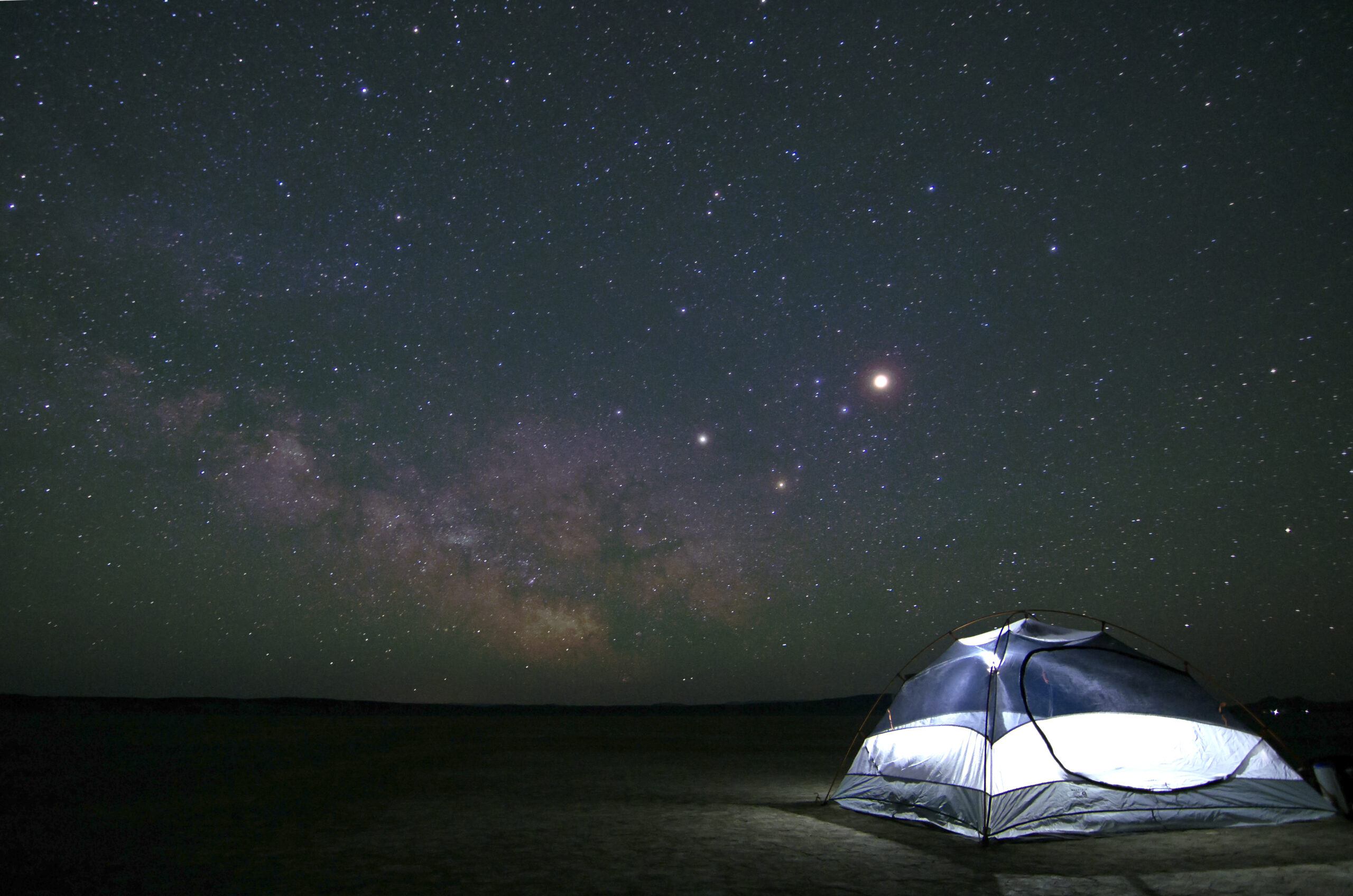
There is a moment, somewhere out in the Arabian interior, when the sky stops being background and becomes the destination. Cities dissolve behind you. The asphalt ends. The silence is total. And then — gradually, then all at once — the Milky Way appears, arching from horizon to horizon like a river of light that has always been there, waiting for you to turn the headlights off. Saudi Arabia offers this experience in a way that is genuinely difficult to replicate anywhere else on earth.
The Kingdom is one of the best places in the world for stargazing. Low humidity, minimal cloud cover for most of the year, vast areas with near-zero light pollution, and altitudes ranging from sea level to over 2,500 metres above it — the conditions align in ways that professional astronomers dream about. As part of the broader Saudi Arabia travel guide, this page covers the five regions that matter most, what you can realistically expect to see from each, and the practicalities of getting there and staying safe.
Why Saudi Arabia Is Exceptional for Stargazing
Most of the factors that ruin dark-sky experiences elsewhere — humidity, industrial haze, heavy rainfall — are structurally absent across much of Saudi Arabia. The Arabian Peninsula receives some of the least rainfall of any inhabited region on earth, and its interior deserts sit beneath a perpetually dry atmosphere with very low water vapour content. Water vapour is the enemy of astronomical seeing quality, because it scatters and absorbs light. Saudi Arabia’s desert air gives you an unusually clean optical window to the sky above.
The second factor is scale. Saudi Arabia is the fifth-largest country in Asia, and huge portions of it contain essentially no permanent settlements. The Rub al Khali, which covers approximately 650,000 square kilometres across Saudi Arabia’s south and southeast, is one of the largest contiguous stretches of unpolluted night sky on the planet. A drive of two to three hours from Riyadh or Jeddah is often sufficient to reach skies that register Bortle Class 2 or lower — skies where the zodiacal light is plainly visible, where shadows are cast by the Milky Way alone, and where the limiting naked-eye magnitude exceeds 7.0.
DarkSky International, the global authority on light-pollution management, has now certified multiple sites in Saudi Arabia. AlUla became the first Dark Sky Park in the Gulf Cooperation Council in 2024, and the recognition has since expanded to include Sharaan National Park, Wadi Nakhlah Nature Reserve, and AlNufud — making Saudi Arabia one of the most credentialled dark-sky destinations in the Middle East.
The Best Stargazing Locations in Saudi Arabia
AlUla — The World’s Third-Largest Dark Sky Park
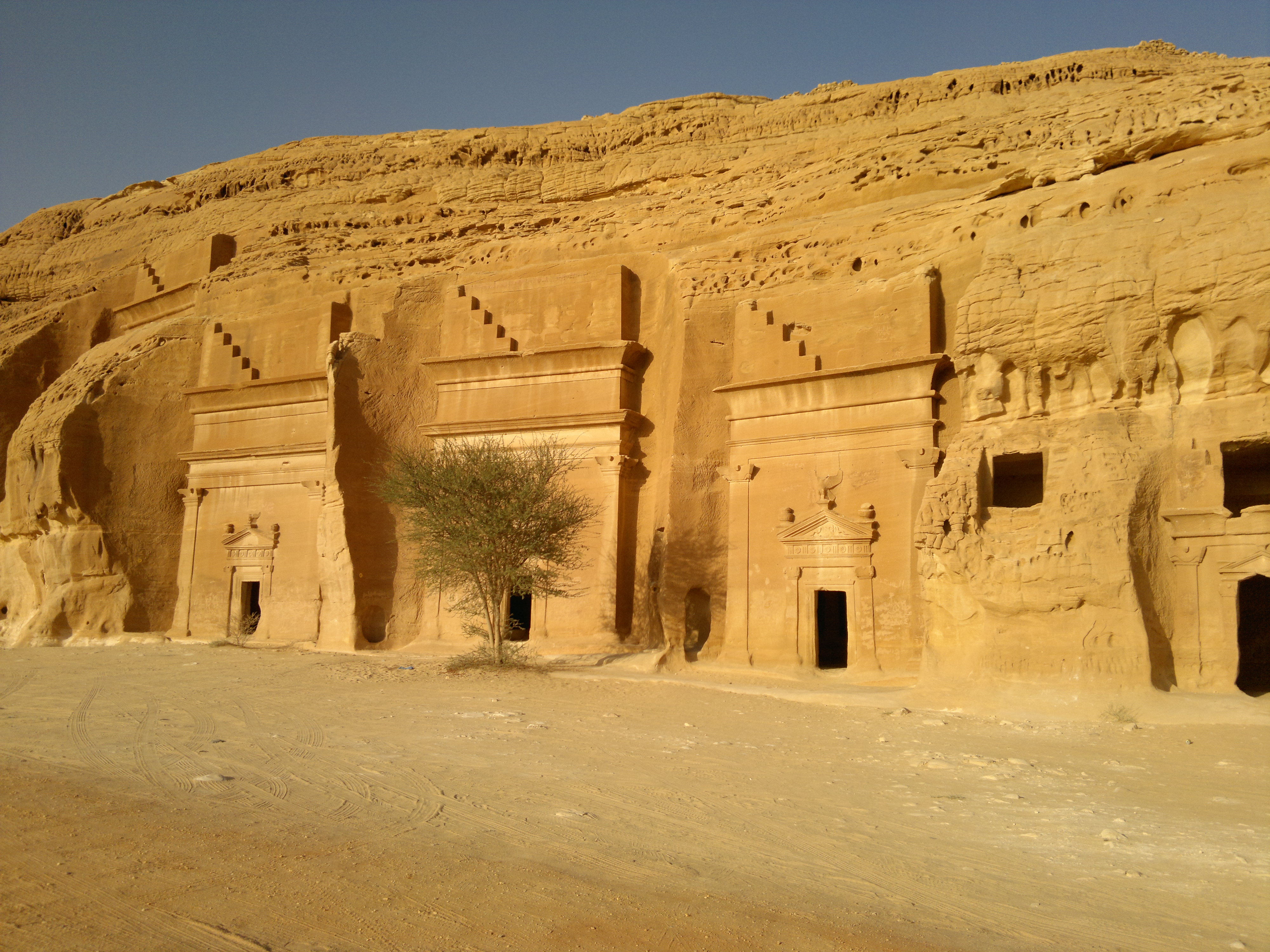
AlUla is the centrepiece of Saudi Arabia’s dark-sky ambitions, and justifiably so. The region covers more than 6,146 square kilometres of certified Dark Sky Park territory — ranking it third globally by area in the Dark Sky Park category. Four separate protected areas contribute to this designation: AlUla Manara Nature Reserve, AlGharameel Nature Reserve (both certified in 2024), and more recently Sharaan National Park and Wadi Nakhlah Nature Reserve.
The combination of certified dark skies and world-class archaeology makes AlUla unique. Nowhere else can you photograph the Milky Way rising over 2,000-year-old Nabataean tombs, or watch Jupiter transit behind a rock formation that has been standing since before the Roman Empire. If you are visiting Hegra and AlUla for its archaeological wonders, staying at least one night specifically for stargazing is not optional — it is the defining experience of the place.
Within the AlUla region, two spots deserve special attention:
AlGharameel: Located roughly an hour north of AlUla town, this volcanic landscape of eroded basalt columns and desert basins sits in a natural bowl that blocks out any remaining light scatter from the nearest settlements. On a moonless night, the Milky Way can be seen overlaying the otherworldly rock formations — a sight that has no equivalent elsewhere in the Kingdom. This was the original nucleus of AlUla’s Dark Sky Park certification.
Sharaan National Park: The dramatic sandstone mountains create a natural amphitheatre that removes the horizon glare entirely. The park runs a four-kilometre night hiking trail that has been specifically designed for dark-sky walks, with guide stations at intervals and red-light-only protocols to preserve night vision. The AlUla Manara Observatory — currently under development — will eventually make this a scientific research hub as well.
Practical note: AlUla is accessible by air (Princess Nourah Airport, code ULH) with regular flights from Riyadh and direct connections from several European cities seasonally. The Royal Commission for AlUla (RCU) runs organised stargazing events, particularly during winter months — check experiencealula.com for the current programme before you travel.
AlNufud Dark Sky Park — The Largest in the Middle East
The Great Nafud Desert in Saudi Arabia’s Hail region is a place of staggering physical scale. Its reddish-orange dunes — many rising to 200 metres — cover 13,416 square kilometres, making the AlNufud Dark Sky Park the largest certified dark-sky site in the Middle East and North Africa. To put that in context: it is approximately three times the land area of Dubai.
AlNufud earned its DarkSky International designation based on quantified light-pollution measurements that place its core areas firmly in the Bortle Class 1–2 range — the kind of sky where the Gegenschein (a faint counterglow of the zodiacal light directly opposite the sun) is visible to the naked eye on the clearest nights. The Hail region’s position at around 1,000 metres elevation adds an extra margin of atmospheric clarity.
The infrastructure here is more developed than in many of Saudi Arabia’s wilder dark-sky spots. A dedicated Dark Sky Park Visitor Centre has opened, featuring compliant low-emission lighting and educational displays on astronomy and light-pollution science. Leaf Camp offers upscale dome accommodation with outdoor seating areas specifically configured for stargazing, plus guided programmes including camel trekking and desert walks.
The AlNufud is also the best option for travellers combining stargazing with broader Hail region exploration. The provincial capital of Hail is a solid base, with regular domestic flights from Riyadh (King Khalid Airport) taking approximately one hour. Independent campers can obtain overnight permits online. If you plan to go off-road into the deeper dune fields — the recommended approach for the very best skies — travel in convoy with a minimum of two 4WD vehicles and carry a satellite communicator.
Practical note: The AlNufud astronomy programme runs primarily in winter (November to February), when temperatures at night drop to comfortable levels and the Orion constellation is high in the southern sky. Summer daytime temperatures can reach 45°C, making independent camping without shade infrastructure genuinely dangerous.
The Rub al Khali — The Empty Quarter
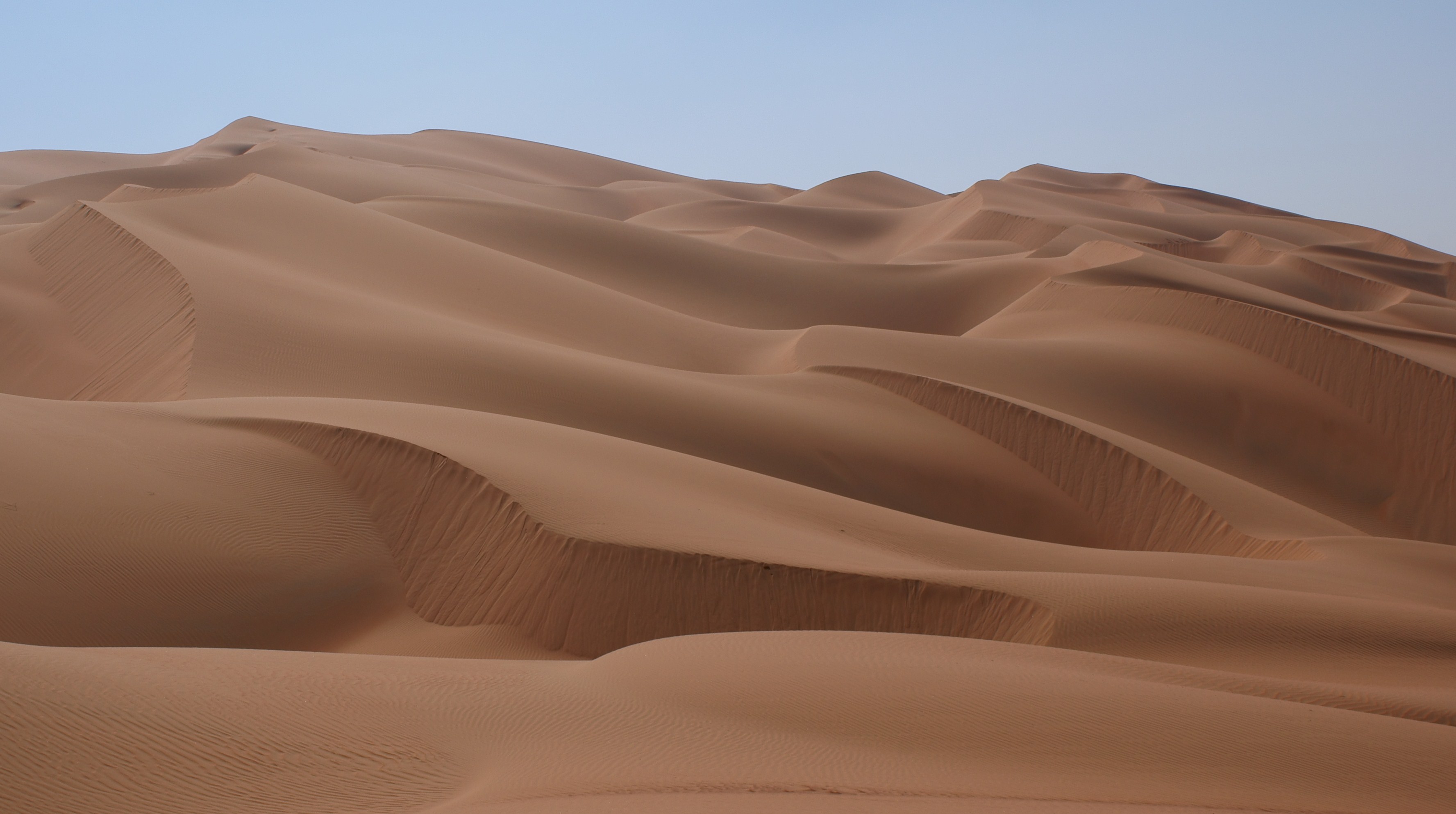
The Rub al Khali is the largest continuous sand desert in the world, covering an area larger than France across Saudi Arabia, Oman, Yemen, and the UAE. Saudi Arabia holds the vast majority of it — roughly 500,000 square kilometres of sculpted dunes, salt flats, and gravel plains that contain essentially no permanent human settlement and almost no artificial light source of any kind.
On a clear moonless night in the Rub al Khali, the sky is not dark — it glows. The Milky Way is bright enough to read by if you have unusually good night adaptation, and familiar constellations become almost unrecognisable because so many more stars are visible between them. The limiting naked-eye magnitude in the deepest areas is estimated at around 7.5 — beyond what most people even know exists. Experienced astrophotographers routinely travel to the Empty Quarter specifically for this quality of sky.
The Rub al Khali deserves its own dedicated read: see the guide to the Rub al Khali for access routes, guided tour operators, and safety protocols. The short version: independent access requires 4WD vehicles with deflated tyres for sand driving, considerable fuel and water reserves, and ideally a guide who knows the terrain. Commercial operators run multi-day desert camping trips from Riyadh, Abha, and Sharurah that include stargazing as a primary activity. October to March is the only sensible window.
For stargazing specifically, the ideal approach is a multi-night desert camping itinerary that gets you two or three nights under these skies — enough time to experience both the Milky Way’s galactic core season and the deeply dark winter nights when Orion and the Pleiades dominate overhead.
Al Wahbah Crater — Volcanic Drama on the Harrat Kishb
Al Wahbah is one of Saudi Arabia’s most dramatic geological features: a maar crater 250 metres deep and two kilometres in diameter, formed by a violent phreatic eruption when rising basaltic magma hit subterranean water. Its floor is coated in brilliant white sodium phosphate crystals. It sits on the Harrat Kishb basalt plateau approximately 250 kilometres north of Taif, in a landscape of ancient lava flows and cinder cones that looks almost Martian under midday sun.
At night, Al Wahbah transforms entirely. The crater rim — at 2,093 metres above sea level — combines elevation, zero immediate light pollution, and a surreal foreground that no purpose-built stargazing venue could replicate. The crater’s steep walls act as a natural light baffle, blocking any residual glow from distant towns. From the rim, the sky overhead is exceptional: Bortle Class 2–3, with the Milky Way arching directly above the void.
Camping is permitted on and around the crater rim, though there are no official facilities — you carry in everything you need, including water. Summer is genuinely dangerous here, with crater temperatures exceeding 50°C. The best visiting window is November to March. The approach road is paved to within a few kilometres, after which a gravel track serves standard SUVs in dry conditions.
Practical note: Al Wahbah sits roughly midway between Taif and the northern Hejaz. It makes a natural stop on a self-drive itinerary linking Taif with AlUla or Madinah. The nearest fuel is in Taif — fill up before departing. The crater descent trail takes approximately 45 minutes down and 75 minutes back up; do not attempt the descent in the dark without a head torch and appropriate footwear.
The Northern Borders — Turaif and Arar
Saudi Arabia’s Northern Borders region is rarely mentioned in mainstream travel guides, and that — from a dark-sky perspective — is part of its value. The elevated plateau around Turaif (870 metres above sea level) and the areas east of Rafha and west of Arar have some of the lowest light-pollution readings in the Kingdom. Arab News has specifically highlighted this region as ideal for astronomers based on Bortle scale data for the area.
The landscape here is different from the south: rolling semi-arid steppe, ancient wadis, and the basalt-strewn floors of lava fields that stretch toward the Jordanian border. It is not classic dune country, but the skies are darker in measurable terms than many more famous Saudi desert destinations, simply because of the near-total absence of major settlements across this region.
Access is via Turaif Domestic Airport (TUI) with flights from Riyadh. The region also connects to Jordan’s Wadi Rum via the Al-Haditha border crossing — making this an interesting route for travellers doing a broader Levant-to-Arabia overland itinerary who want to compare two of the best dark-sky landscapes in the Middle East.
When to Go: The Stargazing Calendar
Best Overall Window: October to April
The prime stargazing season in Saudi Arabia runs from October through April. These are the cool, dry months when nighttime temperatures in the desert drop to between 5°C and 20°C depending on location and elevation, humidity is minimal, and the night is long enough to justify the drive. Winter nights (December to February) run to 14 hours of darkness at latitudes around 24°N — ample time for deep-sky observation and long-exposure astrophotography.
During these months, the winter constellations dominate: Orion is high in the southern sky, the Pleiades are overhead, and the Andromeda Galaxy (M31) is well-placed for viewing. Planets, depending on the year, can be extraordinary — Venus and Jupiter are both visible to the naked eye even from heavily light-polluted skies, but from the Saudi desert their brightness and detail through even modest binoculars is striking.
Milky Way Season: May to September
The Milky Way’s galactic core — the dense, luminous central band — is only visible when it is above the horizon during the dark hours, which in Saudi Arabia means roughly May to October. Peak visibility comes from June to August, when the core rises high into the southern sky after midnight. The trade-off is heat: summer temperatures in the Saudi desert can exceed 45°C during the day, and even nights rarely drop below 30°C. This is not comfortable camping weather.
The practical solution is to visit during shoulder months: late April and early May, or September and October. In these windows, you get the Milky Way core well-placed and temperatures that are manageable — typically 20°C to 30°C at night in the desert lowlands, cooler at elevation.
Moon Phase Planning
This is non-negotiable. A full moon raises ambient light levels enough to wash out the Milky Way and dim fainter deep-sky objects significantly. The ideal window is within five days either side of new moon — approximately 10 days per lunar cycle where conditions are optimal. Plan every stargazing trip around the lunar calendar. Any astronomy app (SkySafari, Stellarium, or even a basic moon phase widget) will show you the new moon dates months in advance.
What You Can See: A Sky Guide for Saudi Arabia
Constellations and Naked-Eye Objects
From Saudi Arabia’s latitude (roughly 18°N to 32°N), the entire equatorial belt of the sky is accessible, plus a significant portion of both the northern and southern hemispheres. You can see Orion, Scorpius, Leo, Virgo, and all of the zodiacal constellations at their best. The Southern Cross (Crux) is visible low in the south during autumn and spring — a sight rarely available from European latitudes.
The Milky Way, from a Bortle Class 1 site, shows structure that will be unfamiliar if you have only ever seen it from suburban or rural skies. The dark nebulae — regions of dense dust that appear as rifts and voids within the band — are plainly visible. The Carina Nebula, the Eta Carinae star-forming region, and the Sagittarius Star Cloud are all above the horizon during Milky Way season and appear without optical aid.
Planets and the Solar System
Jupiter and Saturn are perennial highlights. Through a modest telescope at 100x magnification, Jupiter’s cloud belts and all four Galilean moons are visible; Saturn’s rings are clearly defined and stunning. Mars, when near opposition, shows a reddish disc with polar ice caps distinguishable in good seeing conditions. Venus is frequently visible as an evening or morning star and can show phases through binoculars.
Meteor Showers
Saudi Arabia’s clear skies make it an excellent location for meteor shower observation. The major annual showers that are well-placed for the Kingdom include:
- Perseids (August 11–13 peak) — High activity, but in summer heat
- Orionids (October 20–22 peak) — Ideal weather window, moderate activity
- Leonids (November 17–18 peak) — Variable but occasionally spectacular; perfect temperature
- Geminids (December 13–14 peak) — The most reliably active shower of the year; peak coincides with ideal desert camping conditions
- Red-light head torch: Standard white torches destroy night adaptation, which takes 20–30 minutes to fully develop. A red torch preserves it. Non-negotiable for any serious session.
- Star map app: SkySafari (paid) and Stellarium (free) are both excellent. Download offline star maps before you go — mobile data is patchy in remote desert areas.
- Binoculars: A pair of 10×50 binoculars opens up the sky dramatically. Hundreds of star clusters, nebulae, and galaxies become accessible that are invisible to the naked eye. They are lighter, cheaper, and require less setup than a telescope.
- Reclining chair or mat: Looking straight up for extended periods is surprisingly uncomfortable. A camping chair that reclines flat or a foam mat makes a significant difference to how long you can comfortably observe.
- Warm layers: Desert temperatures drop sharply after sunset. Even in October, the temperature difference between midday and 2am can be 25°C. Bring more than you think you need.
- Sand-resistant cases: If you are bringing a camera, use weatherproof bags and covers. Fine desert sand infiltrates gear in ways that are not immediately obvious but become expensive later.
- Saudi Arabia Travel Guide 2026 — The complete guide to visiting the Kingdom
- Hegra AlUla — Nabataean tombs under desert skies
- Hail Region Guide — Saudi Arabia’s desert rose
- Wadi Walking in Saudi Arabia — Best gorges and canyons
- Camping in Saudi Arabia — Desert camping guide
- Saudi Arabia Visa Guide — Every visa type explained
The Geminids in particular are worth building a trip around. They peak at up to 120 meteors per hour under ideal conditions, the radiant is high in the sky all night from Saudi latitudes, and December nights in the desert are cold enough to be comfortable but not prohibitive.
Practical Guide: How to Plan a Stargazing Trip
Getting There and Visas
Saudi Arabia opened to tourism in 2019. Citizens of 65 countries are eligible for an e-visa on arrival, with many others able to apply online in advance. The process takes minutes and costs approximately SAR 300 (around $80). Full details are in the Saudi Arabia visa guide — check eligibility and apply before you travel rather than relying on arrival processing during busy periods.
For AlUla: fly into Prince Abdul Majeed bin Abdulaziz Airport (ULH). For Hail and AlNufud: fly into Ha’il Regional Airport (HAS). For the Rub al Khali: Riyadh (King Khalid International, RUH) is the most practical gateway for the northern and central Empty Quarter; Sharurah Airport (SHW) for the southeastern reaches.
Equipment Essentials
You do not need expensive equipment to have a transformative stargazing experience in Saudi Arabia. The skies do most of the work. That said, a few essentials make the difference:
Photography Tips for Desert Astrophotography
Saudi Arabia’s dark skies reward astrophotographers generously. The key settings for Milky Way photography are a wide-angle lens (14–24mm), a maximum aperture of f/2.8 or wider, ISO between 1600 and 6400 depending on your camera’s noise performance, and an exposure of 15–25 seconds (use the 500 rule: divide 500 by your focal length to find the maximum exposure before stars trail). A sturdy tripod is essential — even light wind causes blur at long exposures.
For a foreground element — which transforms an astrophoto from a sky record into a composition — Saudi Arabia offers extraordinary options: tent silhouettes, rock formations at AlUla, crater rims, dune ridges. The desert landscape’s geometric simplicity works beautifully against the chaotic texture of the Milky Way.
Safety and Desert Awareness
The same safety principles that apply to wadi walks and desert camping in Saudi Arabia apply to stargazing expeditions. Tell someone your destination and expected return time. Carry at least three litres of water per person per night. Do not venture off-road alone. A portable satellite communicator (Garmin inReach or similar) is strongly recommended if you are going beyond established campsites.
Flash flooding is a real risk in wadi areas during winter, even when the sky above you is clear — a distant storm can send a flash flood down a dry wadi with very little warning. Camp on elevated ground, never in a dry riverbed. Check weather forecasts before departure, particularly in the Hejaz mountain region.
Tip for solo travellers: The organised stargazing programmes run by AlUla’s RCU and the AlNufud Visitor Centre are specifically well-suited to those travelling alone. You get expert interpretation of what you are seeing, purpose-built dark-sky sites, and the security of a guided group — without sacrificing the quality of the sky experience.
The Tradition of Arabian Stargazing
Stargazing in Arabia is not a modern invention. The Bedouin navigated the Empty Quarter by the stars for centuries before GPS, reading the position of Canopus (Suhail in Arabic) to orient south, and tracking the Pleiades (Al-Thurayya) as a calendar marker for planting and rainfall seasons. Arab astronomers of the medieval period gave permanent names to dozens of the stars that Western astronomy still uses today — Aldebaran, Altair, Rigel, Betelgeuse, Deneb — all Arabic words. Looking up at the Saudi night sky, you are standing at the source of much of what we know about the sky above us.
This history gives desert stargazing in the Kingdom a resonance that goes beyond the purely visual. It connects you to a tradition of close observation — of necessity, precision, and wonder — that shaped civilisation here long before the first tourist arrived.