
Hail is Saudi Arabia’s best-kept secret — a high-plateau city perched at 1,000 metres above sea level in the north-central Kingdom, ringed by granite mountain ranges and flanked by one of the world’s great sand seas. While travellers rush to AlUla’s sculpted canyons or Riyadh’s gleaming towers, Hail quietly guards UNESCO World Heritage rock art dating back 9,000 years, a hilltop fortress built in 1840, and a landscape of red Nafud dunes that stretches to the horizon. This guide, part of the broader Saudi Arabia Travel Guide 2026, covers everything you need to plan a trip: what to see, where to stay, when to go, and how to get there. Hail rewards the curious traveller willing to look beyond the obvious.
Best Time to Visit: October to March (temperatures 15–25°C, ideal for outdoor exploration)
Getting There: Direct flights from Riyadh, Jeddah, and Dammam to Hail International Airport (HAS) with Saudia and flynas
Visa Required: Yes — tourist e-visa, available online before travel
Budget: $60–$120 per day mid-range (budget options from ~$36/night)
Must-See: Jubbah Rock Art (UNESCO), A’arif Fort, Aja Mountains
Avoid: Visiting in summer (June–September) — temperatures can exceed 42°C with little shade at outdoor sites
Why Visit Hail?
Saudi Arabia has no shortage of headline destinations, but Hail offers something genuinely different: depth of history without the crowds. The region received over three million visitors in the first half of 2025 alone — remarkable growth, yet it still feels unhurried compared to the tourist infrastructure now building around AlUla or Jeddah’s Al-Balad.
Three things set Hail apart. First, its prehistoric rock art — the Jubbah and Shuwaymis sites form a UNESCO World Heritage property inscribed in 2015, containing petroglyphs from the Neolithic period through to the Islamic era, some dating back 7,000–9,000 years. Second, its landscape — the Aja and Salma Mountains (the highest peaks on the Najd Plateau at 1,544m) create dramatic terrain for hiking, while the Great Nafud Desert wraps around the city’s northern and western edges with vast red-sand dunes. Third, its cultural pedigree — Hail is the homeland of Hatim al-Tai, the pre-Islamic poet whose legendary generosity became a byword in Arabic culture and whose stories appear in the Thousand and One Nights.
Top Attractions in Hail
Jubbah Rock Art — UNESCO World Heritage Site
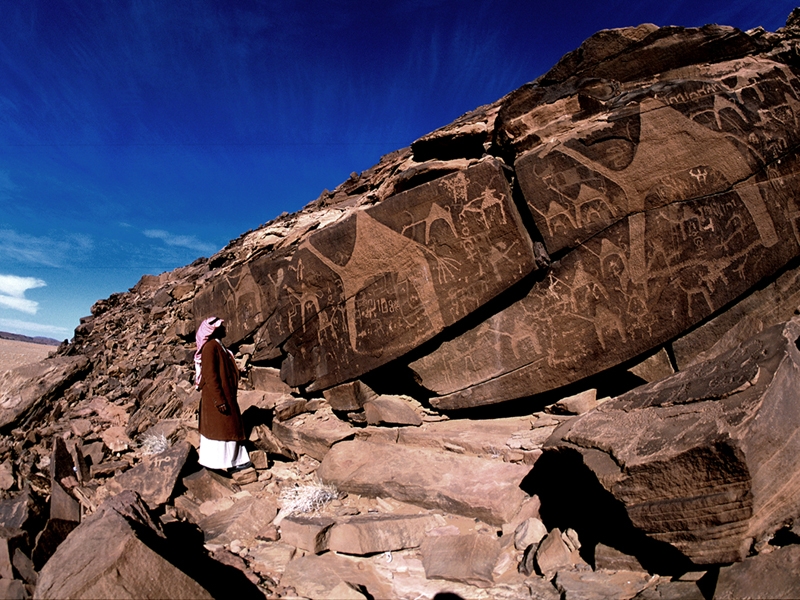
The most important reason to visit Hail, and one of the most significant archaeological sites in the entire Arabian Peninsula. Located approximately 90 km northwest of Hail city, the Jubbah site centres on Jabal Umm Sinman — a sandstone hill that once overlooked a now-vanished freshwater lake at the southern edge of the Great Nafud Desert.
The petroglyphs here span an extraordinary arc of time: from the Pottery Neolithic period (roughly 7,000–9,000 years ago) through the Bronze Age, the Nabataean era, and into the Islamic period. The carvings depict human figures — some wearing elaborate ornamentation that suggests high social status — alongside camels, ibex, cattle, hunting scenes, and ancient inscriptions in several scripts. Together with the companion site at Shuwaymis (Jabal al-Manjor and Raat), these two locations form what archaeologists consider among the richest rock art complexes anywhere in the world.
Practical tip: Hire a local guide or join an organised tour from Hail city to reach Jubbah — the site requires a 4×4 vehicle and road navigation is easier with local knowledge. Allow a full day for the round trip. Entry is free.
A’arif Fort
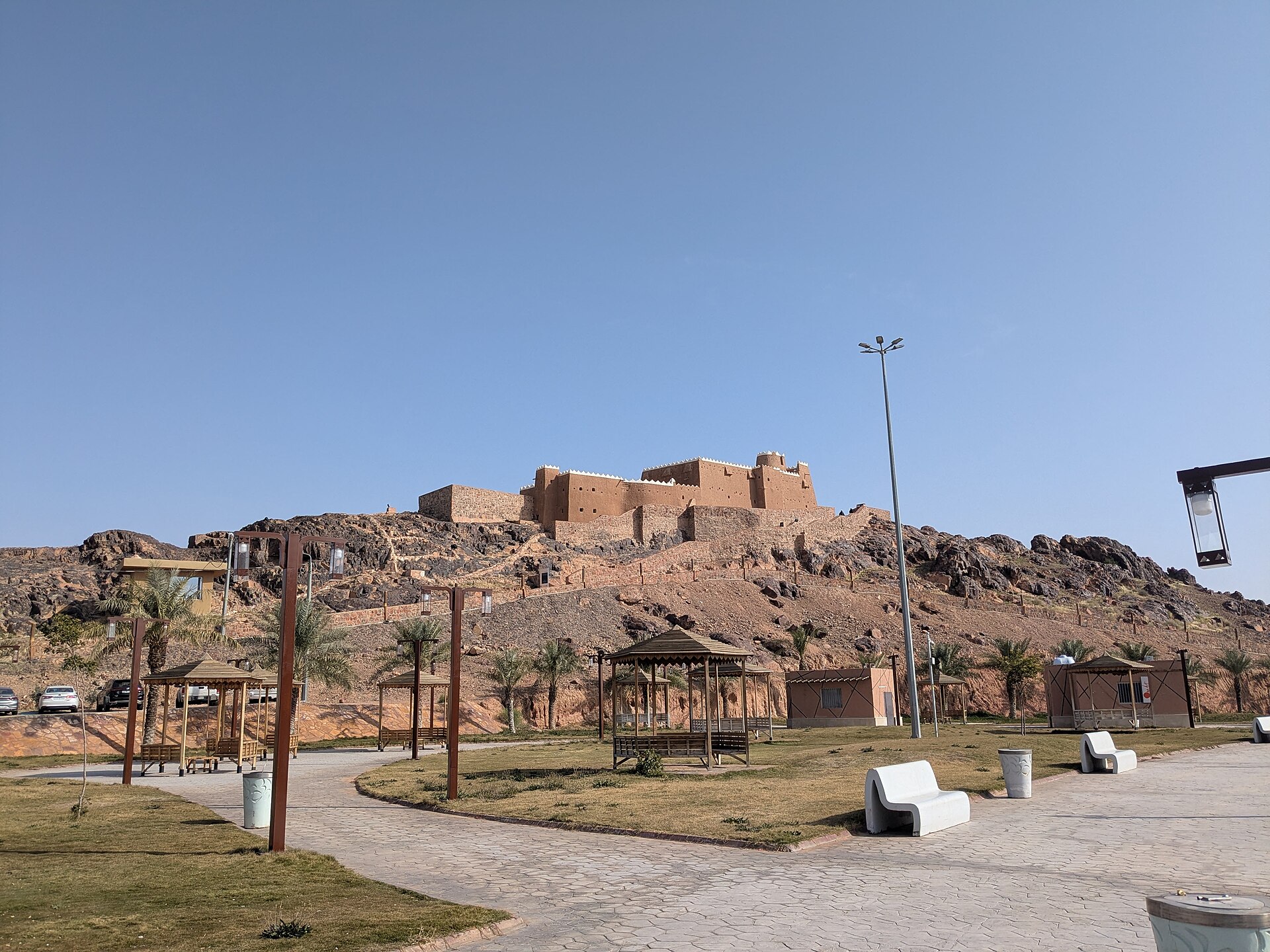
Hail’s most recognisable landmark, A’arif Fort sits atop a rocky hill at an elevation of around 650 metres, commanding panoramic views across the city and the surrounding mountains. Built in 1840 during the era of the Rashidi dynasty (which ruled the region before the unification of Saudi Arabia), the fort is a classic example of Najdi mud-brick military architecture.
Inside its strong outer walls — fitted with large wooden doors bearing hand-carved engravings — the fort contains 30 watchtowers, storage rooms, bedrooms, a prayer room, and bathrooms. Historically, it served as the point from which scholars sighted the Ramadan crescent moon and fired the Ramadan cannon to signal the breaking of the fast.
Opening hours: Saturday–Thursday 8:00am–6:00pm; Friday 2:00pm–6:00pm. Entry is free.
Aja and Salma Mountains
The twin granite mountain ranges that define Hail’s landscape. Aja Mountain reaches 1,544 metres — the highest peak on the entire Najd Plateau — while the companion range, Salma Mountain, rises to approximately 1,430 metres. Both ranges are part of the ancient Arabian Shield, their dark grey granite sculpted over millions of years into dramatic formations of boulders, ridgelines, and hidden valleys.
The mountains offer the best hiking in the Hail region — a mix of day walks, multi-hour scrambles, and 4×4 exploration routes. The terrain changes dramatically with the seasons: after winter rains, the slopes are carpeted with wildflowers and the air is sharp and clear. For photographers, the early-morning light on the Aja range is exceptional.
Safety note: Always carry more water than you think you need. Even in winter, temperatures rise quickly once the sun is up. Inform your accommodation of your hiking plans and expected return time.
The Great Nafud Desert
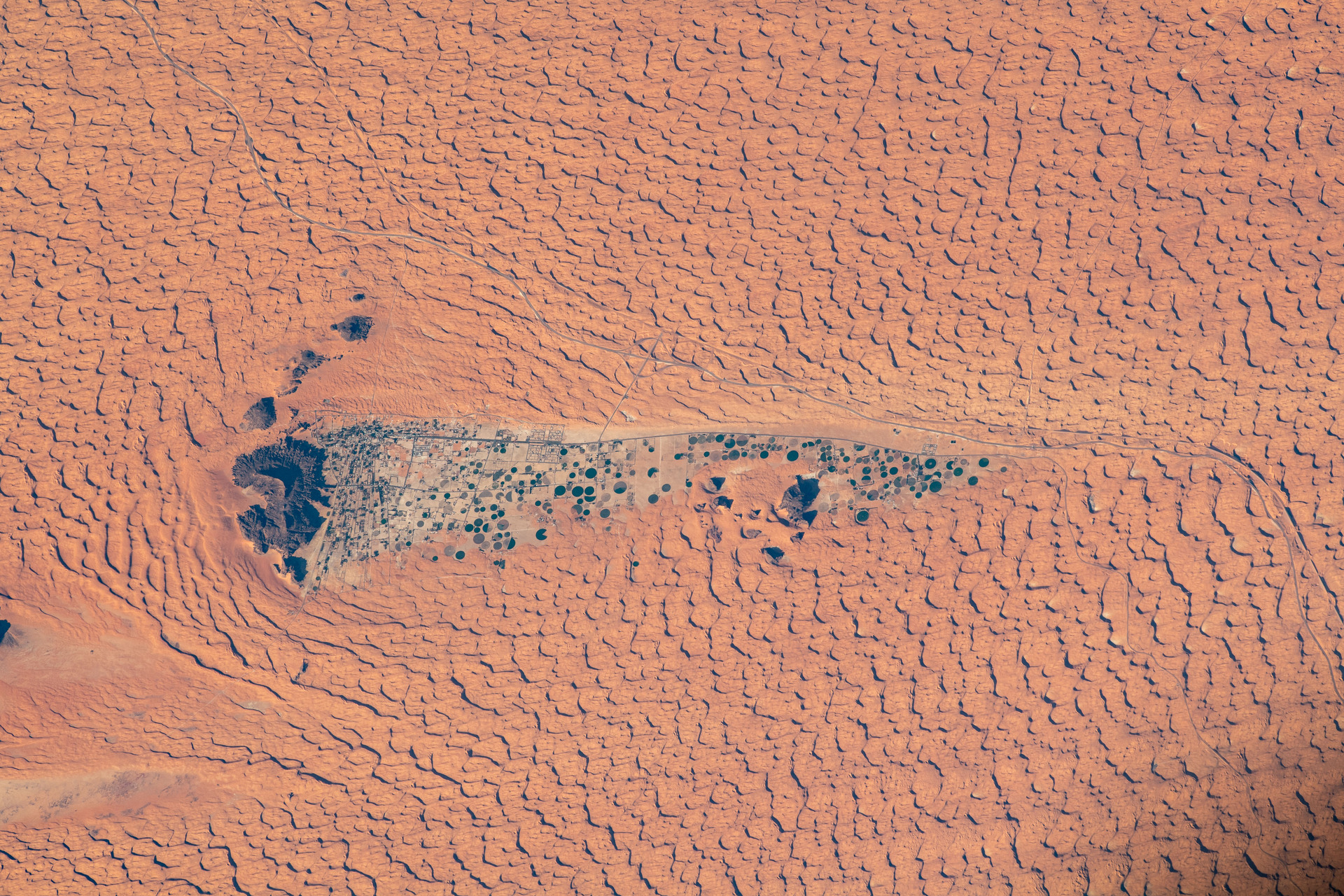
The An-Nafud — the Great Nafud — is one of the Arabian Peninsula’s iconic sand seas, stretching across approximately 65,000 square kilometres to the north and west of Hail. Unlike the Rub’ al-Khali to the south, the Nafud is characterised by its distinctive reddish-orange sand, shaped by prevailing winds into crescent dunes (barchan) and long longitudinal ridges.
From Hail, visitors can access the desert fringes for desert safaris, camel rides, sandboarding, and overnight camping under some of the clearest skies in the Kingdom. The area around Jubbah — sitting in a natural depression within the Nafud — gives the most dramatic impression of the desert environment. Specialist tour operators in Hail city run full-day and overnight desert experiences.
Hail Regional Museum
For an introduction to the region’s history before heading out to the field sites, the Hail Regional Museum provides a well-curated overview of the area’s past — from the prehistoric period through the Nabataean era to the Ottoman period and the founding of modern Saudi Arabia. Exhibits cover traditional Bedouin life, tribal heritage, weapons, jewellery, and the distinctive textiles of the region. The museum’s displays on the rock art sites complement any visit to Jubbah and Shuwaymis.
Samra Park and City Greenery
Within the city itself, Al Samraa Park (also known as Samra Park) is Hail’s largest public green space — covering approximately one million square metres, with a central lake, walking paths, and seating areas shaded by mature trees. It’s a favourite with local families, especially on cool winter evenings, and offers a pleasant contrast to the desert landscape outside the city. Prince Saud Bin Abdul Mohsen Park is another popular option, with mountain views on clear days.
The Legend of Hatim al-Tai
No visit to Hail is complete without understanding the figure of Hatim al-Tai — the pre-Islamic Arab poet and warrior who lived in this region and died in 578 AD, buried at Tuwarin in the Hail area. In Arabic culture, his name is synonymous with generosity itself: the phrase “more generous than Hatim” has been used as a compliment across the Arab world for 1,400 years.
His stories — of slaughtering his own horse to feed unexpected guests, of giving away his last possessions to strangers — spread far beyond Arabia, appearing in the Persian and Turkish literary traditions and eventually in the Thousand and One Nights. In the Indian subcontinent, his legend inspired numerous films, plays, and books in Urdu and Hindi. He embodies the ancient Arab concept of diyafa — the sacred obligation of hospitality — in its most extreme form.
For travellers, Hail’s cultural identity is inseparable from this legacy. The city’s reputation for warm hospitality to strangers is, locals will tell you, a direct inheritance from Hatim’s tradition.
Festivals and Events
Hail International Festival
Held annually between January and March, the Hail International Festival is the region’s flagship cultural event — celebrating Bedouin heritage through folk dances, traditional music, handicraft exhibitions, camel beauty contests, equestrian displays, and food stalls serving regional specialities. The festival draws visitors from across Saudi Arabia and the Gulf, and coincides with the best weather of the year for outdoor activity.
Hail Rally
For motorsport fans, the Hail Rally is a major international desert rally event typically held in February or March. The course runs through the Nafud Desert and surrounding terrain, attracting international drivers and teams. It’s part of the FIA Middle East Rally Championship circuit and offers spectators a dramatic spectacle set against the red-dune landscape.
Best Time to Visit Hail
Hail’s climate is desert continental — much more temperate than coastal Saudi Arabia, thanks to its 1,000-metre elevation. This makes the timing of your visit particularly important.
| Season | Months | Conditions | Verdict |
|---|---|---|---|
| Winter | Dec–Feb | Days 15–20°C, nights can drop near freezing | Excellent for hiking and archaeology sites |
| Spring | Mar–May | Warming rapidly, 20–35°C, occasional flowers | Good early in season, hot by May |
| Summer | Jun–Sep | 42–45°C, very dry and sunny | Avoid outdoor sites; city activities only |
| Autumn | Oct–Nov | Cooling to 25–35°C | Good, especially October onwards |
The festival season (January–March) coincides perfectly with the best weather, making this the peak time to visit. Rainfall is rare — the region receives only about 80mm annually, almost entirely between October and April — but when it does rain in winter, the wadis and mountain slopes transform overnight.
Getting to Hail
By Air
Hail International Airport (HAS) is the main gateway, served by Saudia and flynas with direct flights from Riyadh, Jeddah, and Dammam. Flight time from Riyadh is approximately 90 minutes. The airport is about 15 minutes from the city centre by taxi or ride-hailing app.
By Road
Hail is approximately 600 km north of Riyadh and well-connected by the Saudi highway network. The drive from Riyadh takes around five to six hours via Route 65. If you are self-driving, renting a 4×4 vehicle is strongly recommended to access Jubbah, the mountain tracks, and desert fringes.
Before travel, ensure your Saudi tourist e-visa is approved. The process is straightforward for most nationalities, and the visa is typically approved within 24–72 hours of application online.
Where to Stay in Hail
Hail’s accommodation market has grown substantially alongside its tourism development, ranging from international four-star hotels to budget apartment stays.
Mid-Range and Upscale
- Golden Tulip Hail — The most established four-star option, with a fitness centre, restaurant, and parking. Located near Ha’il Stadium, about 2 miles from central attractions.
- Millennium Hotel Hail — Another four-star property offering the standard international-brand experience, with reliable Wi-Fi, business facilities, and a restaurant.
- Holiday Villa Hail Hotel — Mid-range option with a terrace, fitness centre, free Wi-Fi throughout, and concierge service. Rates from approximately SAR 491 per night.
- Al Eairy Furnished Apartments — Multiple locations across the city, these self-catering apartments are well-maintained and popular with families. Budget-friendly with basic facilities.
- Raoum Inn Serviced Apartments — Good value for travellers wanting flexibility, with kitchen facilities for longer stays.
- Language: Arabic is the official language; English is spoken in hotels and at tourist sites
- Currency: Saudi Riyal (SAR). ATMs are widely available. Cards accepted at hotels and larger restaurants
- Dress code: Conservative dress is expected in public. Women are required to dress modestly; abaya is no longer legally mandatory for non-Muslim foreign women but modest clothing (covering shoulders and knees) is respectful and expected
- Photography: Always ask permission before photographing people. Photography is permitted at archaeological sites but check for any signage indicating restrictions
- Ramadan: If visiting during Ramadan, restaurants may operate reduced hours. Public eating and drinking during daylight hours is discouraged out of respect for those fasting
- Emergency: Police 999, Ambulance 911
- Saudi Arabia Travel Guide 2026 — The complete guide to visiting the Kingdom, covering all regions and practical essentials
- AlUla Travel Guide — Saudi Arabia’s headline archaeological destination: Hegra, Elephant Rock, and Dadan
- Tabuk Travel Guide — The northwest frontier: NEOM, Wadi Disah, and Saudi’s Red Sea coast
- Saudi Arabia Hiking Guide — The best trails across the Kingdom, from Asir highlands to the Nafud fringe
- Saudi Arabia Visa Guide 2026 — Every visa type explained: tourist e-visa, umrah visa, and more
- Saudi Arabia Hotels Guide — Where to stay across the Kingdom, from luxury resorts to budget picks
Budget Options
Budget hotels in Hail start from approximately $36 per night. For mid-range options, expect to pay $80–$130. Book via international platforms (Booking.com, Agoda, Expedia) for the widest choice and best prices.
Food and Drink in Hail
Hail’s culinary scene reflects the traditional food culture of the Najd region. Kabsa — fragrant basmati rice cooked with meat (usually chicken or lamb) and a blend of warm spices — is the undisputed centrepiece of any meal. Jareesh, made from slow-cooked crushed wheat with yogurt or broth, is a Najdi staple with a rich, porridge-like texture. Mandi — slow-cooked meat over rice, traditionally done in an underground pit — appears at family gatherings and traditional restaurants throughout the region.
Note that Saudi Arabia does not serve alcohol anywhere, and restaurant dining is family-friendly. Dates, Arabic coffee (qahwa), and fresh juices are ubiquitous. International fast-food chains have a presence in Hail city, but the best meals are in local restaurants serving traditional Najdi food.
Getting Around Hail
Within the city, ride-hailing apps (Uber and Careem both operate in Hail) are the most convenient option. Taxis are available but negotiate the fare in advance. For day trips to Jubbah, Shuwaymis, and the mountain and desert areas, a rental 4×4 vehicle is the most practical choice — several international car rental agencies operate at the airport.
Distances to key sites from Hail city:
| Destination | Distance from Hail | Travel Time |
|---|---|---|
| A’arif Fort | 3 km | 10 min |
| Hail Regional Museum | 5 km city centre | 15 min |
| Aja Mountains trailheads | 15–30 km | 20–40 min |
| Jubbah Rock Art | 90 km | ~1 hr 15 min |
| Shuwaymis Rock Art | ~250 km | ~3 hrs |