
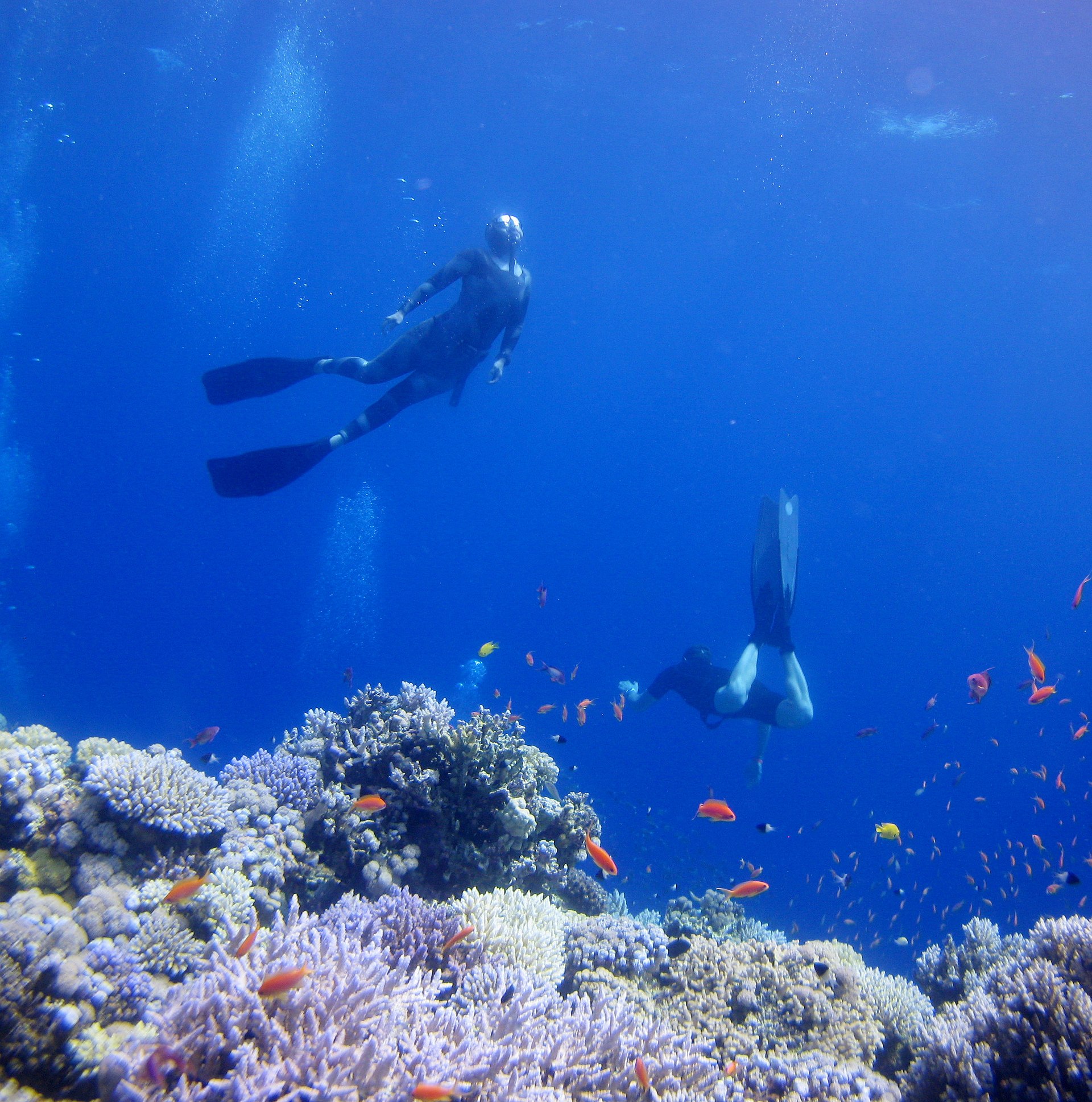
Saudi Arabia’s Red Sea coastline stretches more than 1,800 kilometres from the Gulf of Aqaba in the north to the Farasan Islands archipelago in the south, and it conceals one of the planet’s most underrated freediving frontiers. Visibility regularly exceeds 30 metres, water temperatures hold between 22 and 30 degrees Celsius year-round, and more than 300 coral species carpet reef walls that plunge from shallow plateaus to abyssal drop-offs beyond 100 metres. For anyone planning a broader Saudi Arabia diving and snorkelling itinerary, freediving here offers something that scuba cannot: silence, simplicity and the raw sensation of descending on a single breath into some of the most biodiverse waters on earth.
The sport is still young in the Kingdom. Saudi Arabia’s first dedicated freediving school opened in Jeddah only in 2020, and competitive freedivers from the country have only recently begun setting records on the international stage. That youth is precisely the appeal. Where Egypt’s Dahab Blue Hole and the Philippines’ Panglao draw crowds, Saudi Arabia’s reef systems remain comparatively empty. You can train on pristine walls with minimal boat traffic, encounter pelagic species without jostling other divers, and explore coastline that most of the world has never heard of.
Best Time to Visit: October to May (water 22–28°C, visibility 30 m+)
Getting There: Fly to Jeddah (JED) for the central Red Sea coast; Jizan (GIZ) for the Farasan Islands; Yanbu (YNB) for the northern reefs
Visa Required: Yes — tourist e-visa available for 63 nationalities
Budget: USD 80–200 per day (course fees, boat trips, accommodation)
Must-See: Jeddah’s offshore reef walls, the Farasan Banks, Umluj’s island archipelago
Avoid: July–August surface temperatures above 32°C; freediving alone without a buddy or safety diver
Why Freedive the Saudi Red Sea
The Saudi side of the Red Sea remained closed to international tourism until 2019, when the Kingdom began issuing tourist visas for the first time. That decades-long isolation preserved reef systems that have suffered degradation on the busier Egyptian and Jordanian coasts. For freedivers, three qualities set this coastline apart from anywhere else in the region.
Exceptional Visibility
The Saudi Red Sea is among the clearest bodies of water accessible to recreational divers. According to dive operators based along the coast, visibility regularly reaches 30 to 40 metres in the Jeddah corridor and can exceed 50 metres in the cleaner waters off Yanbu and the Farasan Banks during winter. The Red Sea’s high salinity — approximately 40 parts per thousand — and minimal river input keep plankton loads low and the water column gin-clear.
Depth Access from Shore
Unlike many freediving destinations where reaching deep water requires a lengthy boat ride, several Saudi Red Sea sites offer dramatic depth profiles within a short distance of shore or easily accessible reef edges. Reef plateaus at 10 to 12 metres drop to 30 metres before sloping to 70 to 100 metres. This topography is ideal for freediving training: shallow coral gardens for warm-up dives, clean vertical walls for depth work, and sandy bottoms for static and dynamic apnea practice.
Biodiversity Without the Crowds
The Saudi Red Sea supports more than 300 species of hard and soft coral and over 1,000 recorded fish species. Freedivers regularly encounter hawksbill turtles, reef sharks, giant moray eels, barracuda schools, and — in the southern Farasan Banks between November and May — whale sharks, manta rays and tiger sharks. The difference between freediving here and freediving in heavily touristed waters is stark: boat traffic is light, underwater encounters feel genuinely wild, and many reef systems see only a handful of divers per week.
Where to Freedive in Saudi Arabia
The Red Sea coastline divides naturally into three zones, each with distinct character. Your choice depends on whether you want structured training, exploratory boat dives, or remote wilderness freediving. All three are within reach as part of a wider Saudi Arabia travel itinerary.
Jeddah — The Training Hub
Jeddah is Saudi Arabia’s freediving capital. The city sits on the central Red Sea coast, and its offshore reefs begin just minutes from the corniche. Several reef systems within a 30-minute boat ride offer the depth profiles and conditions that freedivers need for training and certification.
Jeddah Freediving School (JFS) — founded in 2020 by Osama Jouhari, Ishaq Farsi and Mariam Shalan — was the first dedicated freediving centre in Saudi Arabia. JFS is an SSI (Scuba Schools International) authorised centre located on Prince Abdulmajeed Road in the Alamwaj district. The school offers courses from introductory try-dives through to advanced certification levels. The co-founders have collectively broken local, GCC and continental freediving records over more than a decade in the sport.
Other Jeddah-based operators that include freediving in their programmes are 17Sixty, which offers PADI Freediver Level 1 and Level 2 courses, and Al-Haddad Scuba, one of the city’s longest-running dive centres. For anyone combining freediving with scuba diving in Saudi Arabia, Jeddah offers both under one trip.
Key Jeddah reef sites for freediving include wall dives where coral heads sit in 18 metres of water along vertical faces that slope to 65 metres — ideal for constant-weight training. The Jeddah city guide covers accommodation, restaurants and logistics for planning your stay.
Yanbu — Northern Reefs and Wrecks
Yanbu, approximately 300 kilometres north of Jeddah, is the gateway to the Seven Sisters — a reef system renowned among scuba divers but equally spectacular for freediving. The reefs feature sea fan forests, dramatic swim-throughs and the Iona, a World War I-era shipwreck sitting in clear water. Hammerhead sharks frequent the northern sites between June and September.
Visibility in Yanbu often exceeds 30 metres and can approach 50 metres during winter months. The reef architecture is varied: shallow coral gardens for relaxed sessions, medium-depth walls for training, and deep channels where pelagic species patrol. The Yanbu travel guide has full details on getting there and where to stay.
Umluj — Island Archipelago
Nicknamed “the Maldives of Saudi Arabia,” Umluj sits between Yanbu and the NEOM megaproject zone. Its archipelago of small islands is fringed by shallow reefs that give way to deep blue water. The setting is more remote than Jeddah, with less dive infrastructure but cleaner water and a genuine sense of isolation. For experienced freedivers seeking exploration rather than structured courses, Umluj rewards the effort of getting there.
Farasan Islands — Deep South Wilderness
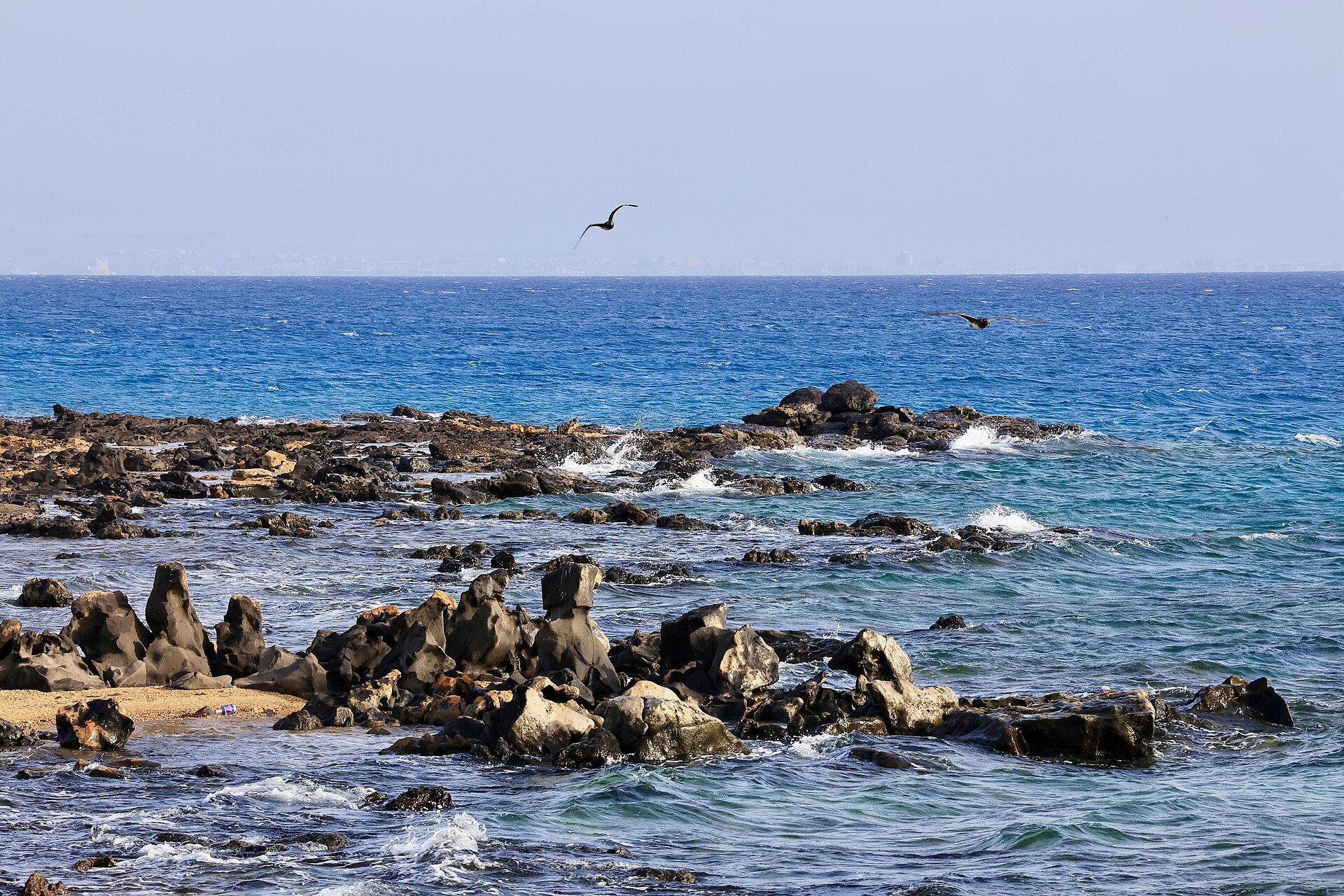
The Farasan archipelago, reached by ferry or flight from Jizan on the southern coast, is Saudi Arabia’s wildest diving territory. The Farasan Banks are where the big animals are: whale sharks between November and May, manta rays, tiger sharks, and dense schools of barracuda and trevally. Coral coverage is exceptional, and macro life — nudibranchs, seahorses, colourful reef fish — is rich.
Freediving infrastructure on the Farasan Islands is minimal. You will need to bring your own equipment or arrange logistics through Jizan-based operators. Liveaboard vessels increasingly service the Farasan Banks, and these can accommodate freedivers alongside scuba divers. The remoteness is the point: this is frontier freediving in every sense.
Saudi Freedivers Making Waves
Freediving is a young sport in Saudi Arabia, but the Kingdom’s competitive scene is developing rapidly. Two names stand out.
Mariam Shalan, the Egyptian-born co-founder of Jeddah Freediving School who holds Saudi-Egyptian heritage, is recognised as the deepest Arab woman in multiple disciplines. She has broken records in both Egypt and the GCC region, and her work establishing JFS in 2020 created the institutional foundation for freediving in Saudi Arabia.
Salma Shaker, a 25-year-old Saudi freediver who trained under Shalan, has taken the competitive circuit by storm. Competing at the elite Vertical Blue competition in the Bahamas — one of the world’s most prestigious depth contests — Shaker broke four Saudi national records: 55 metres in free immersion, 62 metres in constant weight with fins, 42 metres in constant weight without fins, and 66 metres in constant weight bi-fins. She has also claimed the title of Deepest Arab Woman with a dive to 70 metres and is preparing for the CMAS World Championship. Her trajectory shows how quickly the sport is growing in the Kingdom.
Freediving Courses and Certifications
If you have never freedived before, Saudi Arabia is a superb place to learn. Warm water, excellent visibility and calm conditions make the Red Sea far more comfortable for beginners than temperate-water training locations. Here is what to expect from the main certification paths available in the Kingdom.
SSI Freediving (at JFS)
Jeddah Freediving School follows the SSI curriculum, which is one of the two largest freediving certification systems globally alongside AIDA. SSI courses progress through levels:
- Basic Freediver: Pool-based introduction covering breath-hold techniques, safety procedures and relaxation methods. No open-water component.
- Freediver Level 1: Theory, confined-water sessions and open-water dives to a maximum depth of 20 metres.
- Freediver Level 2: Advanced techniques, deeper dives (to 30+ metres), rescue skills and buddy procedures.
- Freediver Level 3: Expert-level training for competition preparation and deep diving beyond 40 metres.
- Never dive alone. This is the cardinal rule of freediving worldwide, and it applies doubly in remote Saudi sites where emergency medical response times may be longer than in urban areas.
- Hydration. Saudi Arabia’s heat — particularly in summer — accelerates dehydration, which impairs breath-hold performance and increases blackout risk. Drink heavily before and between sessions.
- Sun protection. Surface intervals between dives expose you to intense UV. Reef-safe sunscreen, a hat and a rash guard are essential.
- Marine life awareness. Lionfish, stonefish and fire coral are present on Saudi reefs. Maintain neutral buoyancy and avoid touching reef structures. Reef sharks are common but not aggressive toward freedivers.
- Boat traffic. In Jeddah, recreational boat traffic can be heavy on weekends (Friday–Saturday). Use a surface buoy with a dive flag to signal your presence.
- Nearest hyperbaric chamber. While freediving-specific injuries differ from scuba decompression illness, knowing the location of the nearest chamber is prudent. King Fahd Armed Forces Hospital in Jeddah has hyperbaric facilities.
- Introductory course (1 day): SAR 500–800 (USD 130–215)
- Freediver Level 1 certification (2–3 days): SAR 1,500–2,500 (USD 400–670)
- Boat trip (half day): SAR 200–400 (USD 55–110)
- Equipment rental (full day): SAR 100–200 (USD 27–55)
- Mid-range hotel in Jeddah: SAR 300–600 per night (USD 80–160)
- Saudi Arabia Diving and Snorkelling Guide — The complete guide to Red Sea diving, from reef sites to operators and marine life
- Scuba Diving in Saudi Arabia — Detailed breakdown of dive sites, certification options and what to see underwater
- Snorkelling in Saudi Arabia — The best Red Sea sites for non-divers and surface explorers
- Umluj: The Maldives of Saudi Arabia — Complete guide to this remote Red Sea archipelago
- Yanbu Travel Guide — The Red Sea port city with world-class reef systems
- Saudi Arabia Travel Guide 2026 — The complete guide to visiting the Kingdom
- Saudi Arabia Visa Guide — Every visa type explained
PADI Freediver (at 17Sixty and Others)
PADI’s freediving programme runs parallel to SSI’s structure. 17Sixty in Jeddah offers PADI Freediver Level 1 (introductory, to 16 metres) and Level 2 (advanced, to 24+ metres). PADI courses tend to be more widely recognised among recreational divers, while SSI and AIDA certifications carry more weight in the competitive freediving world.
AIDA Courses
AIDA International — the oldest dedicated freediving organisation — sets the standards used in most competitive freediving events worldwide. While no AIDA-specific centre currently operates full-time in Saudi Arabia, several visiting instructors and regional operators run AIDA courses on the Saudi Red Sea coast periodically. Check with JFS or local dive centres for upcoming AIDA-certified courses.
Practical tip: Whichever certification system you choose, ensure your instructor is currently certified and insured. Freediving is a safe sport when practised correctly, but proper buddy protocols and rescue training are essential. Never freedive alone.
Best Time to Freedive in Saudi Arabia
The Saudi Red Sea is diveable year-round, but conditions vary by season. The following table summarises what to expect month by month.
| Season | Months | Water Temp | Visibility | Notes |
|---|---|---|---|---|
| Winter | Dec–Feb | 22–24°C | 30–50 m | Best visibility. Whale sharks in Farasan Banks. Comfortable surface conditions. |
| Spring | Mar–May | 24–28°C | 25–40 m | Excellent balance of warmth and clarity. Peak whale shark season continues to May. |
| Summer | Jun–Aug | 28–32°C | 20–35 m | Hot. Surface temps can exceed 32°C. Hammerheads near Yanbu. Shorter sessions advisable. |
| Autumn | Sep–Nov | 26–30°C | 25–40 m | Water cools gradually. Excellent conditions return. Whale sharks appear in south from November. |
For most freedivers, the sweet spot is October through May. Winter and spring combine the best visibility with comfortable water temperatures and the highest probability of large pelagic encounters.
Equipment and What to Bring
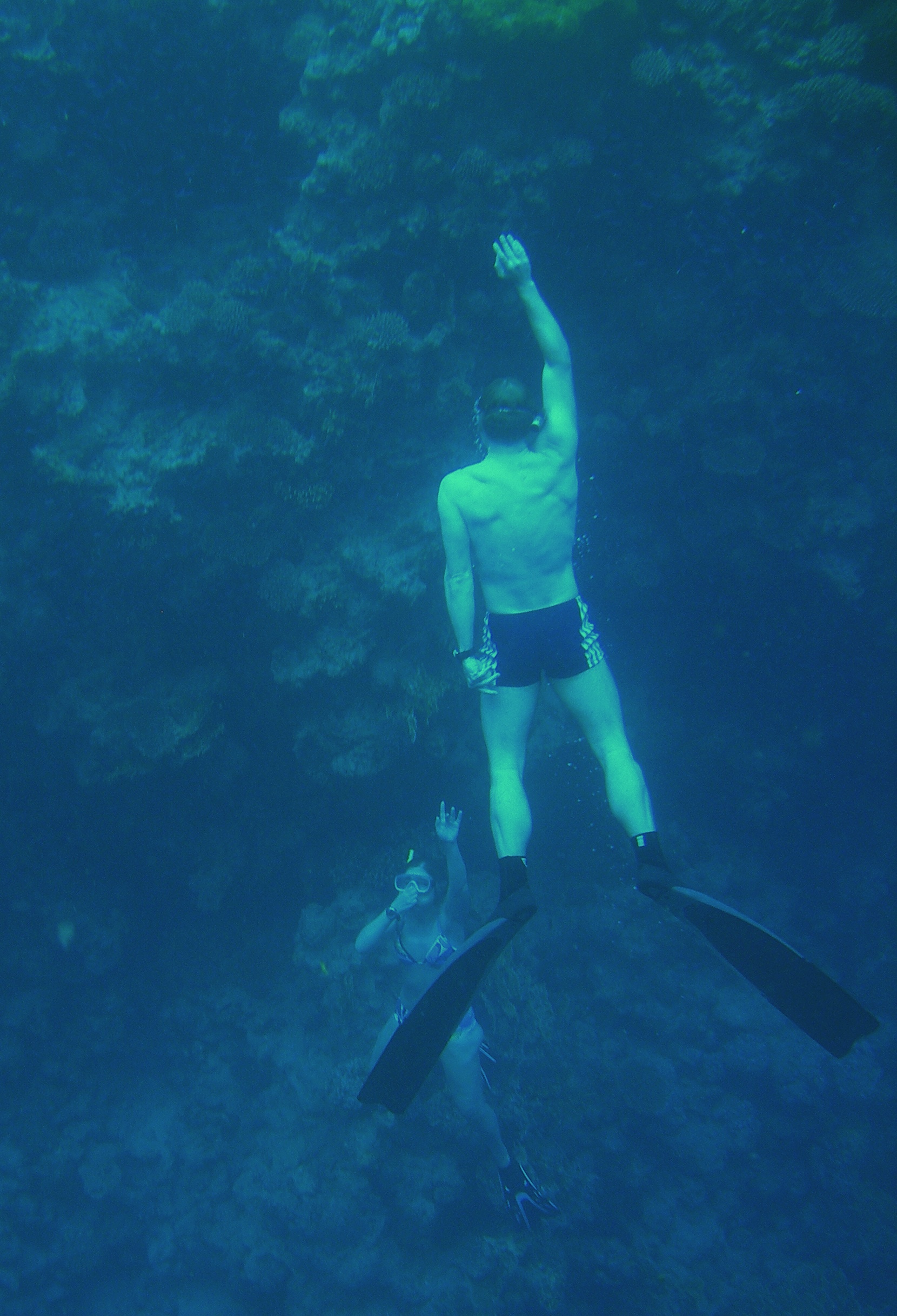
Freediving equipment is minimal compared to scuba, but choosing the right gear for Red Sea conditions matters.
Wetsuit
A 1.5 mm to 3 mm wetsuit is sufficient for most of the year. In winter (December to February), when water temperatures drop to 22°C at depth, a 3 mm suit provides adequate thermal protection for extended sessions. In summer, many freedivers use a rash guard or 1 mm suit. Open-cell neoprene suits, standard in competitive freediving, work well here but require careful handling (lubricant for donning).
Fins
Long-blade freediving fins (either fibreglass or carbon fibre) are essential for efficient depth dives. Bi-fins are standard for most recreational and competitive freedivers; monofins are used in specific competition disciplines. JFS and other schools typically provide fins for course participants, but bringing your own ensures a proper fit.
Mask and Snorkel
A low-volume freediving mask reduces equalisation effort at depth. Standard scuba masks have too much internal volume for comfortable deep freediving. A simple snorkel is useful for surface swimming between dives.
Weight Belt
The Red Sea’s high salinity (approximately 40 parts per thousand, significantly saltier than the ocean average of 35 ppt) means you will need slightly more weight than in less saline waters. A rubber weight belt with quick-release buckle is standard. Your instructor will help you calibrate buoyancy during your course.
Safety Equipment
A surface buoy with dive line is essential for depth training. Lanyard and safety systems should meet competition standards even in recreational settings. If freediving independently (outside a school), carry a dive computer or depth gauge rated for freediving, a surface marker buoy, and ensure you always have a trained buddy.
Gear rental: JFS in Jeddah and 17Sixty rent basic freediving equipment. For trips to Yanbu, Umluj or the Farasan Islands, bring your own gear — rental availability outside Jeddah is limited.
Freediving Safety in Saudi Arabia
Freediving is statistically safe when practised with proper training and buddy protocols. The following points are specific to the Saudi Red Sea environment.
Practical Information
Getting There
Jeddah’s King Abdulaziz International Airport (JED) is the primary gateway, with direct flights from most major international hubs. Yanbu has a domestic airport (YNB) with connections via Jeddah and Riyadh. Jizan’s King Abdullah bin Abdulaziz Airport (GIZ) serves the Farasan Islands, with a free ferry from Jizan port to Farasan. The Saudi Arabia airport guide covers terminal details and transfers.
Visa
Citizens of 63 countries can obtain a Saudi tourist e-visa online before travel. The visa costs approximately SAR 480 (USD 128) including insurance and is valid for one year with multiple entries of up to 90 days each.
Accommodation
Jeddah has the widest range of accommodation, from budget hotels to luxury waterfront resorts. For Yanbu, the Holiday Inn and Radisson Blu are reliable options near the dive sites. Umluj has limited but growing accommodation — small resorts and Airbnb-style rentals dominate. On the Farasan Islands, options are basic: a few guesthouses and one government rest house. The Saudi Arabia hotels guide covers the full range.
Budget
Freediving is significantly cheaper than scuba diving because it requires less equipment and no tank fills. Expect to pay:
Combining Freediving with Other Activities
A freediving trip to Saudi Arabia pairs naturally with other Red Sea and coastal activities. Consider adding snorkelling for rest days, kite surfing at Umluj or Jeddah for variety, or a side trip to Jeddah’s UNESCO-listed Al Balad old town for cultural contrast. If you are travelling to the south for Farasan, the tropical coast around Jizan offers mangrove kayaking and mountain day trips into the Asir highlands.
Freediving Disciplines Explained
For those new to the sport, freediving encompasses several distinct disciplines, all practised on a single breath. Understanding them helps you choose the right course and know what Saudi freedivers like Salma Shaker are achieving.
| Discipline | Abbreviation | Description |
|---|---|---|
| Constant Weight | CWT | Diver descends and ascends under their own power using fins. The classic depth discipline. |
| Constant Weight No Fins | CNF | Same as CWT but without fins — using arm strokes only. Considered the purest discipline. |
| Constant Weight Bi-Fins | CWTB | Depth diving with two separate long-blade fins (as opposed to a monofin). |
| Free Immersion | FIM | Diver pulls themselves down and up a vertical rope. No fins used. |
| Static Apnea | STA | Breath-hold duration while floating face-down on the surface. No depth component. |
| Dynamic Apnea | DYN/DNF | Horizontal distance swimming underwater in a pool, with or without fins. |
Most recreational freedivers focus on CWT and CWTB, which are the disciplines taught in standard certification courses. The Red Sea’s warm, clear water and accessible depth profiles make it ideal for all depth disciplines.