
King Fahd International Airport (IATA: DMM, ICAO: OEDF) is the gateway to Saudi Arabia’s Eastern Province and holds a distinction no other airport on earth can claim: it is the largest airport in the world by total land area, covering 776 square kilometres — larger than the entire nation of Bahrain. Whether you are arriving for business in the oil-industry hub of Dhahran, heading to the beaches and restaurants of Al Khobar, or beginning a wider Dammam and Al Khobar travel itinerary, this guide gives you everything you need to navigate KFIA efficiently. From terminal layout and transport options to lounges, prayer facilities, and the airport’s remarkable history, consider this your complete practical companion to travelling in Saudi Arabia through its Eastern Province gateway.
IATA / ICAO Code: DMM / OEDF
Location: Approximately 20 km northwest of Dammam city centre, Eastern Province
Getting There: Taxi (SAR 70–110 to Dammam, SAR 90–150 to Al Khobar), SAPTCO bus (SAR 21–26), Uber/Careem ride-hailing
Visa Required: Yes — tourist e-visa available for 60+ nationalities
Total Area: 776 km² (world’s largest by land area)
Annual Passengers: ~13 million (2025), capacity expanding to 32 million
Must-See: The airport mosque (capacity 2,000), the 215,000 m² plant nursery, modernist Yamasaki-designed terminal
Avoid: Arriving without a pre-booked ride for late-night flights — SAPTCO buses do not run 24/7 and taxi queues thin out after midnight
Why KFIA Holds the World Record
King Fahd International Airport covers 776 square kilometres (300 square miles) of land, a figure certified by Guinness World Records. To put that into perspective, the airport’s total area is equivalent to the five boroughs of New York City combined. It is roughly 15 times the size of London Heathrow and more than six times the size of Denver International Airport, the largest in the United States.
However, the vast majority of that land is undeveloped desert set aside for future expansion. The airport’s utilised area is approximately 36.75 square kilometres (14.19 square miles, or 3,675 hectares), which is still enormous by global standards. The masterplan, originally drafted in 1977, anticipated decades of growth for the Eastern Province and reserved land accordingly — a decision that is now paying dividends as the Kingdom’s Vision 2030 investment programme drives record demand for air connectivity.
How KFIA Compares to the World’s Largest Airports
| Airport | Total Area | Annual Passengers (approx.) |
|---|---|---|
| King Fahd International (DMM) | 776 km² | ~13 million |
| Denver International (DEN) | 137 km² | ~77 million |
| Dallas/Fort Worth (DFW) | 70 km² | ~75 million |
| Istanbul Airport (IST) | 76 km² | ~76 million |
| King Khalid International, Riyadh (RUH) | ~225 km² | ~35 million |
A Brief History of King Fahd International Airport
The origins of KFIA trace back to the mid-1970s. Saudi Arabia’s Eastern Province was experiencing explosive growth driven by the oil boom, and the existing Dhahran International Airport — which had served the region since the 1940s as a joint military-civilian facility — could no longer cope with rising traffic. In 1976, the Saudi government launched the Airports Development Programme to build three entirely new international airports: one in Riyadh (King Khalid), one in Jeddah (King Abdulaziz), and one in Dammam.
Design and Construction (1977–1999)
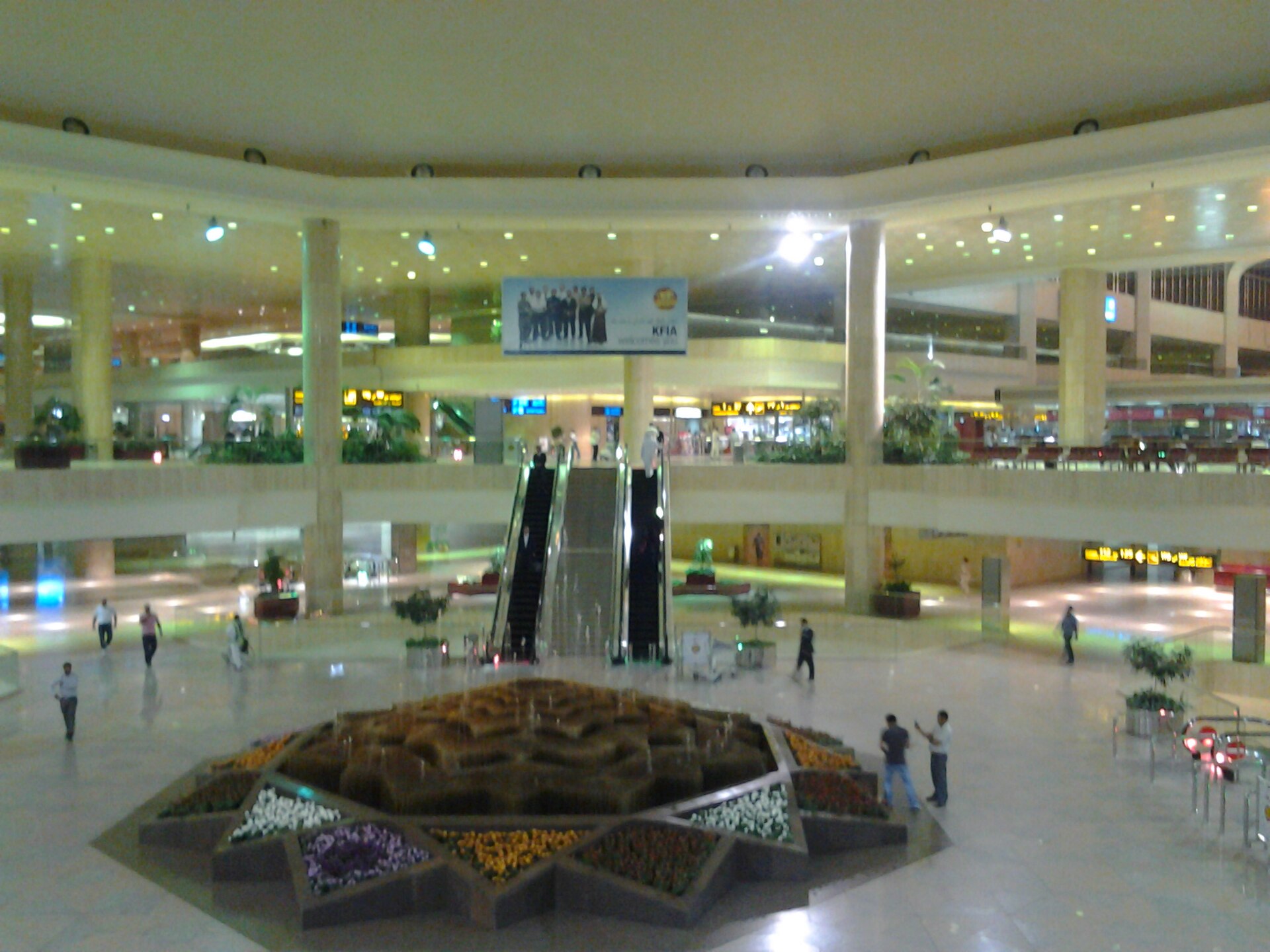
The site masterplan was completed in 1977 by Minoru Yamasaki & Associates — the same architectural firm that designed the original World Trade Center towers in New York — in collaboration with Boeing Aerosystems, which handled the aviation-specific engineering. Yamasaki’s design draws on modernist principles filtered through regional Islamic aesthetics: clean arches, generous use of natural light, and geometric ornamentation that echoes traditional Arabian patterns.
Construction began in 1983. By the end of 1990, the basic infrastructure — runways, taxiways, and core terminal structures — was complete but not yet certified for commercial use. That timing proved consequential: during the 1991 Gulf War, US-led coalition forces used the airport as a staging ground for military aircraft. It was one of several Saudi installations that supported Operation Desert Shield and Desert Storm.
After the war, work continued on the passenger terminal, commercial areas, and the airport’s distinctive mosque. The General Authority of Civil Aviation officially inaugurated King Fahd International Airport and opened it to commercial traffic on 28 November 1999. The airport is named for King Fahd bin Abdulaziz Al Saud (reigned 1982–2005), under whose rule it was both built and inaugurated.
Terminal Layout and Facilities
KFIA has three distinct terminal buildings. Understanding the layout before you arrive will save time, particularly if you are connecting between a domestic flight and an international departure.
The Main Passenger Terminal
The heart of the airport is a six-storey passenger terminal covering 327,000 square metres (3.52 million square feet). The first construction phase delivered 247,500 m²; subsequent expansions brought it to its current footprint. The terminal handles both domestic and international flights from a single integrated building, with separate departure levels for each.
Key features of the main terminal:
- 15 gates with 11 fixed boarding bridges (jet bridges)
- 30 remote aircraft stands for additional capacity
- 9 cargo aircraft stands
- Two helipads for helicopter and private aviation
- Duty-free shopping zones, restaurants, prayer rooms, and lounge access (detailed below)
- Dammam – Jeddah (multiple daily flights, ~2 hours)
- Dammam – Riyadh (hourly shuttle service, ~1 hour)
- Dammam – Medina (daily service, popular for Umrah pilgrimage)
- Dammam – Abha (connecting to the Asir highlands)
- Dammam – Taif (seasonal service)
- Dammam city centre: SAR 21 one-way, approximately 30 minutes
- Al Khobar: SAR 26 one-way, approximately 40 minutes
- International brands: Hertz, Budget, Sixt, Alamo, Enterprise
- Regional brands: Theeb, Hanco, Yelo
- SAR 3 per hour via self-payment machines or the Mawgif App
- SAR 4 per hour if paid at the exit window
- 15% VAT applies on top
- Saudia Al-Fursan Lounge — Available to Saudia first- and business-class passengers and SkyTeam Elite Plus members. Features luxury seating, a hot buffet, shower facilities, and complimentary Wi-Fi.
- Plaza Premium Lounge — Open to all passengers (pay-at-door or via Priority Pass / LoungeKey). Live cooking stations with interactive dining, comfortable work areas, and shower facilities. Can be pre-booked online.
- Primeclass Lounge — Pay-per-entry lounge with comfortable seating, snacks, beverages, and quiet areas. A practical option for economy passengers with a long layover.
- naSmiles Lounge — In the domestic departures area, accessible via the flynas loyalty programme or pay-at-door.
- Perfumes and cosmetics
- Electronics and accessories
- Luxury watches and jewellery
- Tobacco products and confectionery
- Traditional Saudi gifts: dates, oud, Arabian perfume oils, handmade crafts
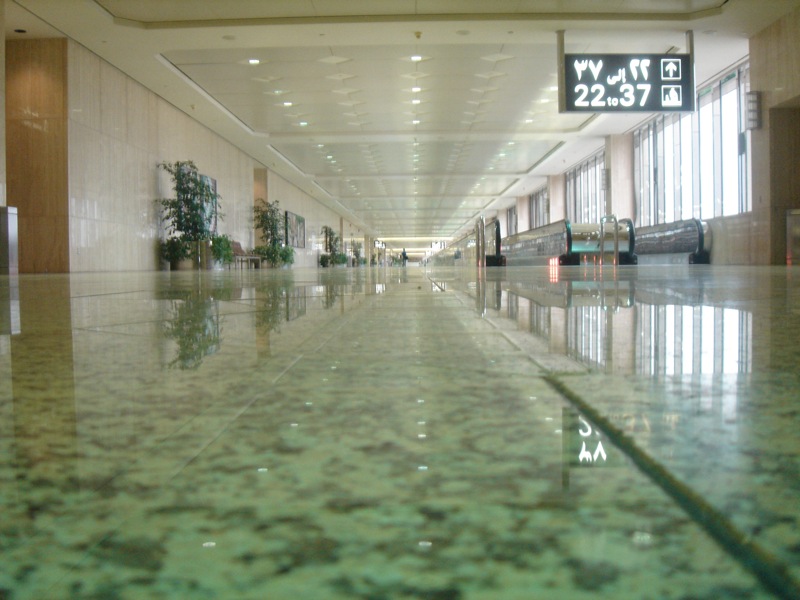
- Two enclosed, air-conditioned walkways with moving belts (travelators)
- One open pedestrian bridge
- Medical clinic: A staffed medical centre is available within the terminal for emergencies and minor ailments.
- Wheelchair and mobility assistance: Contact your airline at least 48 hours before departure for complimentary assistance.
- Left luggage: Baggage storage is available for passengers with extended layovers.
- SIM cards: STC, Mobily, and Zain kiosks in the arrivals area sell prepaid SIM cards with data packages from SAR 50–100.
- Visa: Most visitors need a tourist e-visa, which can be obtained online in minutes. Citizens of GCC countries do not need a visa.
- Dress code: Saudi Arabia has relaxed its dress code significantly for tourists, but modest clothing (shoulders and knees covered) is appreciated, especially in the Eastern Province, which is more conservative than Riyadh or Jeddah.
- Alcohol: Saudi Arabia prohibits the import and consumption of alcohol. Do not bring any in your luggage.
- Medications: Some common medications (including certain painkillers, antidepressants, and ADHD medications) are controlled substances in Saudi Arabia. Carry a doctor’s letter and check the Saudi FDA list before travelling.
- Arrive 3 hours early for international flights and 90 minutes for domestic — immigration queues can be lengthy, particularly during Hajj and Umrah season.
- Download the Uber/Careem app before landing to ensure seamless ground transport.
- Bring a power adapter — Saudi Arabia uses Type G sockets (same as the UK). Charging stations are available throughout the terminal but can be busy.
- Carry Saudi Riyals: While cards are widely accepted, some smaller taxis and airport services may prefer cash.
- Visiting the airport mosque and its surrounding gardens — genuinely worth the walk, even for non-worshippers, as the architecture is striking.
- Purchasing a lounge pass at the Plaza Premium Lounge for SAR 150–200 (~$40–$53), which buys you comfortable seating, food, and shower access.
- If your layover exceeds 6 hours and you hold a valid visa, consider a quick excursion to the Dammam Corniche or the King Abdulaziz Center for World Culture (Ithra) in Dhahran, both within 30 minutes of the airport by car.
- Kempinski Al Othman Hotel (Al Khobar) — Luxury five-star option, approximately 35 minutes from the airport.
- Braira Al Dammam Hotel — Mid-range option in Dammam city, approximately 25 minutes from the airport.
- Hotels near the airport — Budget and mid-range chains are clustered along the airport access road and the Dammam–Dhahran highway, many offering free airport shuttle services. Check our Saudi Arabia hotels guide for current recommendations in the Eastern Province.
- Dammam city centre (20–30 min) — The provincial capital, with the Dammam Corniche, Marjan Island, and Heritage Village.
- Al Khobar (30–45 min) — The Eastern Province’s dining and entertainment capital, with the Corniche, Al Rashid Mall, and sunset views over the Gulf.
- Dhahran (15–25 min) — Home to Saudi Aramco’s headquarters and the stunning King Abdulaziz Center for World Culture (Ithra), a world-class cultural institution designed by Snøhetta.
- Half Moon Bay (40–50 min) — The most popular beach destination in the Eastern Province, with white sand, clear water, and waterfront resorts.
- King Fahd Causeway (50–60 min from airport) — The 25-kilometre bridge connecting Saudi Arabia to Bahrain.
- Al Hofuf / Al-Ahsa Oasis (90–120 min) — A UNESCO World Heritage Site and the world’s largest oasis, with 2.5 million date palms.
- Dammam & Al Khobar Travel Guide — Beaches, Ithra, the Corniche, and everything to see in the Eastern Province
- Riyadh Travel Guide 2026 — The capital city’s top attractions, neighbourhoods, and day trips
- Jeddah Travel Guide 2026 — The Red Sea gateway with Al-Balad, the Corniche, and Formula 1
- Hajj 2026 Guide — Everything you need for pilgrimage to Makkah and Madinah
- Saudi Arabia Travel Guide 2026 — The complete guide to visiting the Kingdom
- Saudi Arabia Visa Guide — Every visa type explained, including the tourist e-visa
The terminal is served by two parallel runways, each 4,000 metres (2.5 miles) long — sufficient to handle the largest wide-body aircraft in service, including the Airbus A380.
The Aramco Terminal
A dedicated facility used exclusively by Saudi Aramco, the world’s largest oil company, which is headquartered in nearby Dhahran. Aramco operates its own aviation fleet to shuttle employees between company sites across the Kingdom. Unless you work for Aramco, you will not use this terminal.
The Royal Terminal
Reserved for the Saudi royal family and visiting heads of state. The Royal Terminal covers 16,400 square metres and has four dedicated jet bridges. It functions independently from the main passenger operations.
Airlines and Destinations
As of 2026, approximately 37 airlines operate scheduled services from KFIA, connecting the Eastern Province to more than 90 destinations across the Middle East, North Africa, South Asia, Southeast Asia, and parts of Europe. The airport serves as a base for low-cost carriers flynas and flyadeal.
Major Airlines Operating at DMM
| Airline | Key Destinations |
|---|---|
| Saudia (SV) | Riyadh, Jeddah, Medina, Cairo, Dubai, London, Islamabad, Mumbai |
| flynas (XY) | Riyadh, Jeddah, Cairo, Istanbul, Tbilisi, Baku |
| flyadeal (F3) | Riyadh, Jeddah, Abha, Taif |
| Emirates (EK) | Dubai |
| Gulf Air (GF) | Bahrain, London |
| Qatar Airways (QR) | Doha |
| Kuwait Airways (KU) | Kuwait City |
| Air India (AI) | Mumbai, Delhi, Kochi, Hyderabad |
| Pakistan International (PK) | Lahore, Islamabad, Karachi |
| Philippine Airlines (PR) | Manila |
| EgyptAir (MS) | Cairo |
| Turkish Airlines (TK) | Istanbul |
Popular Domestic Routes
The busiest domestic corridors from Dammam are:
Popular International Routes
The busiest international route is Dammam–Dubai, with approximately 70 weekly flights across multiple carriers. Other high-traffic routes include Dammam–Manila, Dammam–Kathmandu, Dammam–Dhaka, and Dammam–Cairo — reflecting the large expatriate workforce in the Eastern Province’s oil, construction, and services sectors.
Getting To and From the Airport
King Fahd International Airport sits approximately 20 kilometres northwest of Dammam city centre and about 40 kilometres from Al Khobar. A modern highway network connects the airport to all major Eastern Province cities, but public transport options are limited compared to European or East Asian airports. Plan your ground transfer in advance, especially for late-night arrivals.
Taxi
Taxis operate 24/7 from the designated pick-up area immediately outside the arrivals hall. Fares are government-regulated and metered, ensuring consistent pricing:
| Destination | Fare (SAR) | Fare (USD approx.) | Journey Time |
|---|---|---|---|
| Dammam city centre | 70–110 | $19–$29 | 20–30 minutes |
| Al Khobar | 90–150 | $24–$40 | 30–45 minutes |
| Dhahran | 60–100 | $16–$27 | 15–25 minutes |
| Jubail | 200–280 | $53–$75 | 60–80 minutes |
Tip: Always confirm the fare or ensure the meter is running before departure. Licensed airport taxis are white or green sedans with official markings. Unlicensed private cars sometimes approach arriving passengers in the terminal — avoid these for both safety and pricing transparency.
Ride-Hailing (Uber / Careem)
Uber and Careem (Uber’s Middle East subsidiary) both operate at KFIA. The designated pick-up zone is on the departures level. Ride-hailing is typically 10–20% cheaper than a metered taxi for the same route, with the advantage of upfront fare confirmation in the app. Both apps accept international credit cards.
Tip: For early morning arrivals (before 5:00 AM), driver availability on ride-hailing apps can be limited. Consider pre-booking through the app the evening before if the feature is available, or have a taxi as a backup plan.
SAPTCO Bus
The Saudi Public Transport Company (SAPTCO) operates scheduled bus services from the airport:
Buses depart every 30–60 minutes depending on time of day. This is the most budget-friendly option, though service does not run through the night. Check the SAPTCO website or app for the current timetable.
Car Rental
Several international and local car rental companies maintain desks in the arrivals hall:
Average daily rates range from SAR 115 (~$31) for an economy car to SAR 165 (~$44) for a premium sedan. An international driving permit is required alongside your home country licence. Saudi Arabia drives on the right.
Tip: If you plan to cross the King Fahd Causeway into Bahrain, confirm with the rental company that cross-border travel is permitted — not all policies cover it, and you will need additional insurance documentation.
Parking
KFIA offers a three-storey covered car park with 5,000 spaces, directly connected to the main terminal via enclosed walkways. Rates are:
A long-term parking area with shuttle bus service to the terminal is available for multi-day stays.
Inside the Terminal: Lounges, Dining, and Shopping
Airport Lounges
KFIA offers several lounge options for business travellers and those willing to pay for a more comfortable wait:
Tip: If you hold a Priority Pass, LoungeKey, or Dragon Pass membership (often included with premium credit cards), check current partner lounge access at DMM before your trip — participating lounges rotate.
Restaurants and Cafes
The terminal hosts approximately 17 restaurants and 11 cafes, spread across both landside (before security) and airside (after security) areas. Options range from global fast-food chains to outlets serving Arabic coffee, shawarma, and regional Saudi cuisine. A number of sit-down restaurants offer more substantial meals with views of the runway.
Duty-Free Shopping
The duty-free zone is located in the International Departures area (airside, after passport control). Product categories include:
Approximately 12 retail shops are spread across the terminal. Prices are generally competitive with other Gulf airports, though selection is smaller than the mega-duty-free operations at Dubai or Doha.
The Airport Mosque
One of KFIA’s most distinctive features is its on-site mosque, located on the roof of the parking complex. The mosque is an architectural landmark in its own right — designed with the same modernist-Islamic aesthetic as the terminal — and can accommodate up to 2,000 worshippers simultaneously.
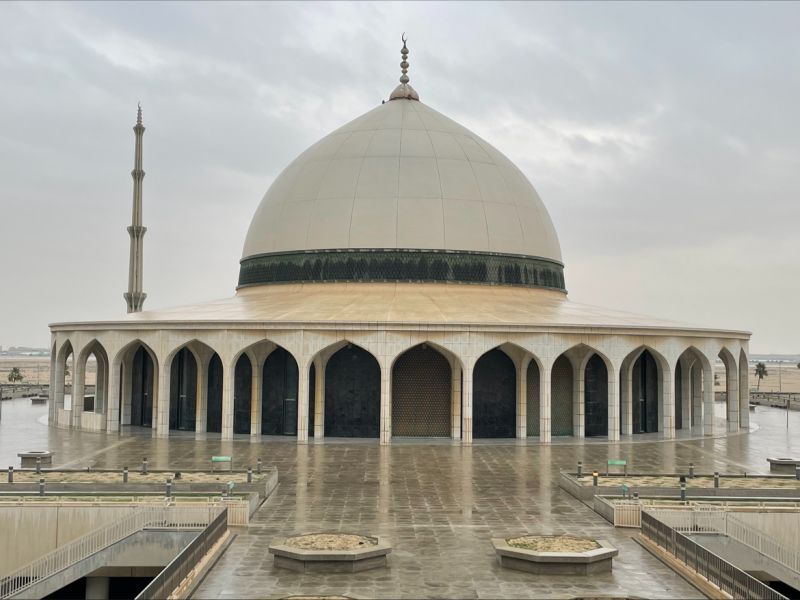
Access from the main terminal is via three bridges:
The mosque is surrounded by a landscaped garden — a peaceful contrast to the terminal environment. For travellers on tight connections, smaller prayer rooms are located throughout the terminal, including near Gates 10 and 20, each with ablution facilities directly outside. All prayer facilities are open 24 hours.
Practical Services and Amenities
Free Wi-Fi
Complimentary Wi-Fi is available throughout the terminal. Connect to the network named “DAMMAM AIRPORT FREE WIFI” and use the password DAMMAM123. Speeds are adequate for browsing and messaging; streaming may be inconsistent during peak hours.
Currency Exchange and ATMs
Currency exchange counters are located in both the departures and arrivals areas, before the security checkpoint. Al Rajhi Bank also offers exchange services on the boarding level in the domestic gate area. ATMs operated by Alinma Bank, NCB (SNB), and others are positioned throughout the terminal — again, primarily on the landside.
Tip: The Saudi Riyal (SAR) is pegged to the US dollar at a fixed rate of approximately 3.75 SAR per USD. Airport exchange rates are rarely the best available — withdraw SAR from ATMs using a debit card with low foreign-transaction fees for a better rate. Most shops, taxis, and restaurants in the Eastern Province accept Visa, Mastercard, and mada (the Saudi debit network).
Lost Luggage
If your baggage does not appear on the carousel, report it immediately at your airline’s baggage service desk in the arrivals hall (before exiting customs). Each airline maintains its own lost-luggage process, but all comply with the Montreal Convention, which entitles you to compensation for delayed baggage and interim expenses. The airport’s general Lost and Found office can assist with items left in the terminal itself.
Other Services
The Plant Nursery and Landscaped Grounds
An unusual feature of KFIA — and one that few travellers know about — is its 215,579 square-metre plant nursery. Located within the airport grounds, the nursery grows all of the trees, shrubs, and flowering plants used throughout the airport’s extensively landscaped areas. It supplies greenery for the gardens surrounding the mosque, the terminal approaches, and the roadways linking the various facilities. In a desert climate where temperatures regularly exceed 45°C, maintaining this level of horticultural infrastructure requires significant desalinated water resources and horticultural expertise.
Expansion Plans: Vision 2030 and Beyond
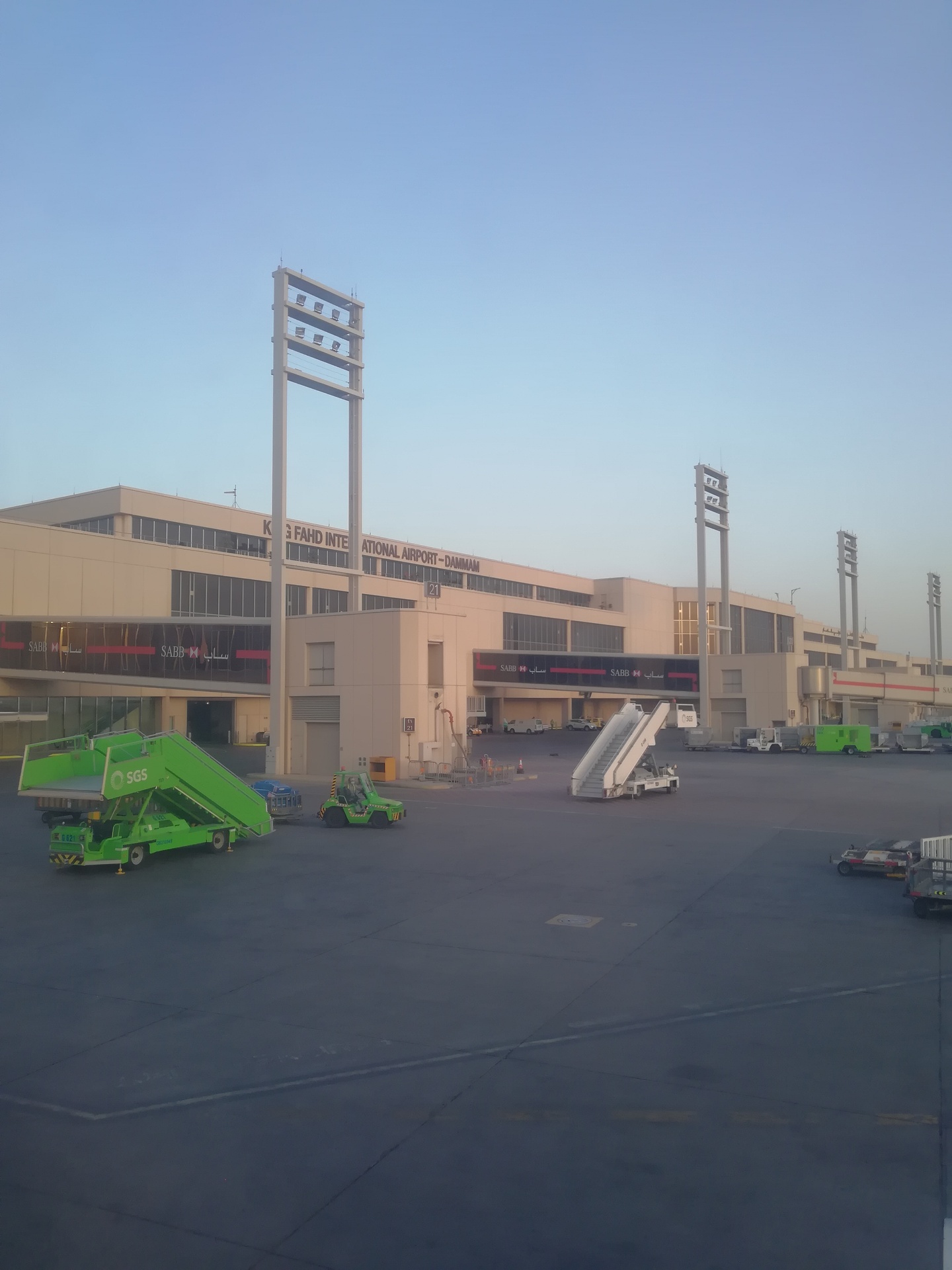
KFIA is undergoing a major modernisation drive as part of Saudi Arabia’s broader airport infrastructure programme under Vision 2030. In 2024, the Dammam Airports Company (DACO) unveiled a new strategic masterplan supported by a SAR 1.6 billion (approximately $426.5 million) investment package encompassing 77 infrastructure projects.
Key Expansion Targets
| Metric | Current (2025) | Target (2030) |
|---|---|---|
| Annual passengers | ~13 million | 19.3 million (phase 1), 32 million (full build-out) |
| Aircraft movements per hour | ~40 | 77 |
| Annual cargo capacity | ~60,000 tonnes | 600,000+ tonnes (1,000% increase) |
The expansion programme includes a new general aviation terminal (contracted to SRACO), comprehensive apron upgrades, advanced navigation systems including GBAS (Ground Based Augmentation System) for precision approaches in poor visibility, and a full passenger experience overhaul with new retail, dining, and lounge concepts. A new national low-cost carrier based at DMM has also been announced as part of the strategy.
By the end of 2024, KFIA had already recorded a 35% increase in passenger traffic compared to 2022, validating the investment thesis. The airport is positioning itself as a regional logistics hub for the Eastern Province’s transformation from a purely oil-dependent economy to a diversified industrial and tourism base.
Tips for First-Time Visitors
Before You Fly
At the Airport
Layovers and Long Waits
If you have an extended layover at KFIA, consider:
Nearby Accommodation
If you have an early morning flight or arrive late at night, several hotels are located within a short drive of the airport:
Connecting to the Wider Eastern Province
KFIA is your starting point for exploring one of Saudi Arabia’s most dynamic and culturally diverse regions. From the airport, you can easily reach:
Tip: If your Eastern Province itinerary includes the Dammam and Al Khobar area, plan for at least 3–4 days to do the region justice. There is far more here than most first-time visitors to Saudi Arabia expect.
Essential Contact Information
| Service | Details |
|---|---|
| Airport code | DMM (IATA) / OEDF (ICAO) |
| Official website | kfia.gov.sa |
| General enquiries | +966 13 883 4445 |
| Lost and Found | +966 13 883 4151 |
| SAPTCO bus service | saptco.com.sa |
| Emergency (Saudi Arabia) | 911 (police/ambulance/fire) |